Top 10 Advantages of Outsourcing Web Development in 2026

Join our Newsletter!

Featured Posts

Support Is One Click Away

Home

Top 10 Advantages of Outsourcing Web Development in 2026

outsourcing web development

Top 10 Advantages of Outsourcing Web Development in 2026

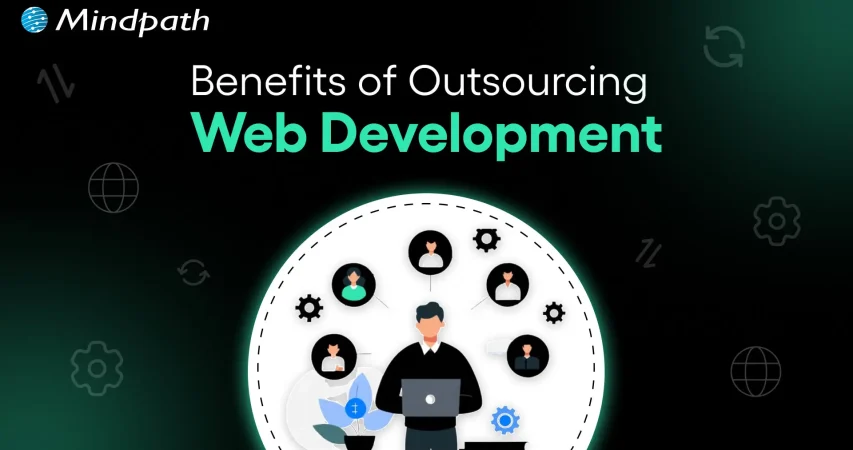
In the present world, maintaining a strong online presence has become a necessity for any business. That’s where outsourcing web development can help you. As a matter of fact, this can be your most strategic growth accelerator. It is currently being used by organizations of both large and small scale to get access to global talent and unlock innovation, which keeps them on the competitive edge.

If you want to update your current website or introduce a new one, outsourcing can help you facilitate smooth management of this process, giving you time to work on other crucial issues. This post will help you know what outsourcing web development truly means and explore the 10 amazing benefits of the same.

Struggling to keep up with rising development costs, talent shortages, and faster digital demands in 2026? Mindpath’s web development services help you outsource with confidence, delivering scalable solutions that accelerate business growth.

Web Development Outsourcing- A Short Brief

In simple words, outsourcing web development is a practice of hiring an external team of professionals to handle a development project. Instead of investing in creating an in-house team, some businesses prefer to opt for outsourced web development services. The major factors that have caused this are minimized costs, shorter project durations, and the availability of specialized skills.

This will enable the businesses to concentrate on the major operations without the need to worry about web development and maintenance. It has become a norm amongst companies. Over 76 percent of the enterprises outsource their IT functions (Source: Deloitte). This is useful for startups and enterprises. 

Should You Outsource Web Development?

Still not sure if you should outsource web development? Here are some questions that can help you make a decision: 

1. Do you require any specialized skills not available in-house? 

2. Is scalability important to your business growth?

3. Do you want to speed up time-to-market and lower costs? 

If your answer is yes, you can prefer to outsource web development projects. This will offer you a perfect combination of expertise, innovation, as well as efficiency. If you are looking for some more reasons, check out the selections below, where we have covered some impressive benefits of outsourcing web development. 

Want to build a tailored digital solution that perfectly aligns with your business goals and user needs? Check out our guide on custom web development services to discover how personalized solutions can give you a competitive edge.

10 Key Advantages of Outsourcing Your Web Development

Outsourcing web development is not just about reducing costs; it’s also about working smarter without compromising quality. Read on to know the major advantages of outsourcing web development and the reasons why several businesses are drawn towards it. 

1. Access to Global and Top Talent

Outsourcing opens the door to highly experienced and skilled UX/UI designers, programmers, creative experts, project managers, and more. You are not limited by location anymore. The outsourced companies use advanced technologies such as blockchain and AI, and have skilled experts in frontend and backend development.

Based on your budget and requirements, you can outsource projects to regions well known for their tech expertise, such as Poland, Europe, or the United States. It allows you to leverage top-tier talent at competitive hourly rates.  

2. Reduced Development Cost

The most obvious advantage of outsourcing is lower web development costs. When you hire an in-house team, you will have to deal with multiple expenses. For instance, salaries, office space, software, benefits, employee training, and more.

You don’t have to worry about full-time salaries when you outsource. You only have to pay for the services you need. Besides, most outsource web development companies follow a flexible pricing structure. That can help startups and SMEs scale quickly. 

3. Fast Development Time

An experienced outsourced development team can start working on your project instantly. They have access to all web development tools and web development technologies to complete the task on time. 

Besides, they always follow streamlined workflows and agile methodologies to ensure faster prototyping and deployment. This gives you a chance to launch your website or web app faster to stay ahead of your competitors. 

4. Scale Up or Down Conveniently

The fact is, your web development needs are not constant. When you need to launch a new product, you may need a large team. And for maintenance, a few developers will be enough. Outsourcing lets you adjust your team as per your needs. 

Furthermore, scaling will be more predictable. You can plan ahead, understanding your requirements and adjusting team skills and size quickly. This is useful for seasonal companies and startups moving through a rapid growth stage. 

5. Access to The Latest Tech

Everyone is aware that technology is dynamic. It may not be easy to keep abreast with new security measures, web development trends, web development frameworks and web programming languages. However, outsourcing companies usually invest in the state-of-the-art tools and platforms.

They also assure you of working with best practices and current security features in developing your web apps. With chatbots, AI, and other high-level cybersecurity solutions, they transform your site into a masterpiece.

Curious how AI is transforming the way modern websites are built and optimized for better performance? Discover our in-depth guide on AI in web development to learn how it can enhance efficiency, personalization, and scalability.

6. Risk Mitigation

Creating a website comes with various risks, including security issues, non-compliance, and unexpected costs. These factors can easily derail your project. If you don’t want to deal with all these risks, partnering with an outsourcing company would be an ideal option. 

Trusted web development outsourcing companies practice the best security, compliance, and coding standards. In addition, their special QA teams constantly ensure your new website complies with the accessibility guidelines and performance. In addition, their SLAs or service-level agreements can be of benefit to you.

7. 24/7 Technical Support and Maintenance

A website needs to be updated as well as optimized regularly after it is developed. The majority of businesses fail to maintain their websites through their in-house team. Outsourcing provides continuous maintenance and technical support.

They keep an eye on your website, fixing things and making sure your site is equipped with the most recent laments to run without any hassle.

8. Reduced Burn Rate

You may find developing an in-house team appealing. However, it comes with major overhead. For instance, recruitment expenses, equipment leases, back-office operations, team onboarding, and more. 

For early-stage businesses or startups without consistent revenue, these expenses can inflate the burn rate. Well, outsourcing web development provides you with a leaner alternative. Pay only when you opt for their services, and you can stay financially agile. 

9. More Time for Core Operations

Web development is a process that should be carefully monitored, and it needs much of your attention. That means when done in-house, you may not get enough time for core business operations. 

By handing over the task to an external team, you can dedicate your time to other crucial things, such as sales, marketing, customer acquisition, strategic partnerships, etc. As a result, when your web app is fully developed, you will be in a good position to execute a successful launch. 

10. Enhanced Transparency and Project Management

Reputed outsourcing companies utilize modern project tracking tools, agile methodologies, and focus on transparent communication. They ensure you get regular updates and reports about your project. 

Furthermore, they ensure a smooth collaboration between you, designers, developers, and the project manager. With such facilities, you can ensure your web development aligns with the company’s vision. 

Looking to improve collaboration and speed up your web development process with a more flexible approach? Explore our detailed guide on agile methodology in web development to discover how it helps deliver faster and more efficient results.

Common Web Development Services to Outsource

You can assign the entire project or specific parts to your outsourced web development company. Here are some of the common services that are usually outsourced:

1. UI/UX Design

To develop interesting and user-friendly interfaces.

2. Web Consulting

Assists in idea validation and making web development easy.

3. Tailored Web Development

This includes both backend and frontend coding.

Must Read: Frontend Development Trends

4. E-Commerce Development

Creating a superior online store. 

5. API Development and Integration

To create custom APIs for enhanced user experience and functionality.

6. Database Management

To design as well as manage databases in a secure manner. 

To achieve desired outcomes, outsourcing web development to an experienced and reliable company is important. 

Planning to build a successful digital product but unsure about the right steps and timeline to follow? Discover our complete web development roadmap to understand each phase and make smarter outsourcing decisions.

Ready to Kick Start Your Business Growth by Outsourcing Web Development?

Outsourcing web development is more than a cost-saving strategy. It allows businesses to access global talent, adopt the latest technologies, scale efficiently, and focus on core operations. Smart outsourcing ensures faster project delivery, improved quality, and long-term business growth.

At Mindpath, we offer end-to-end web development services tailored to your unique needs. From UI/UX design and web apps to maintenance and support, our expert team ensures seamless execution, timely delivery, and innovative solutions that help your business scale confidently and achieve measurable results.
Related Post

Discover the ultimate guide to hiring Node.js developers in London. Learn about the skills, benefits, and cost factors involved in finding the right talent for your project.

Related Post

Node js libraries for AI

 As we know, with Node.js libraries, adding AI to your projects is becoming easier. These Node.js libraries for AI can offer you the ability to develop apps that can think, respond, and learn over time. If you enjoy working in JavaScript and you are curious about the new AI features like chatbots, smart predictive features (like those in Google Assistant), and apps that recognize voice input, then now is your chance. You don’t need to begin from scratch. If you use the right libraries, you can build smarter apps at less cost and more value.

These Node.js AI libraries come with beginner-friendly options that are powerful enough for advanced applications. You can add new features such as understanding language, detecting images, or performing machine learning without deep knowledge of AI. They are built to seamlessly integrate into your existing Node.js stack, enabling you to save time and effort in your development workflows. In this blog post, we’ll discuss some of the best libraries to quickly get started with AI in Node.js applications.

Are you looking to elevate your business’s web development with the use of Node.js? At Mindpath, we offer Node.js development services that aim to grow your business by providing reliable and AI-powered web solutions tailored to your unique needs.

Importance of Integrating AI into Node.js Applications

Node.js is increasingly becoming a leading option for creating smart, dynamic applications because it is lightweight and driven by events. Thus, can Node.js be used for AI? Yes, it can! Developers are already using Node.js as an API or tool for AI with tools like TensorFlow.js and Natural. In the 2024 Developer Survey by Stack Overflow, JavaScript continued to be the most popular programming language, which means that Node.js is a great starting ground for AI initiatives.

Integrating Node.js with AI applications allows developers to make applications that change and adapt in real-time. The asynchronous nature of Node.js allows developers to execute several operations simultaneously, making it a good platform for artificial intelligence features like chatbots and live prediction tools. More and more AI libraries support Node.js, as development can happen more quickly. As demand for AI using more efficient and adaptable models rises, Node.js is a new practical, scalable programming option for any developer who wants to create smart digital experiences.

Let us have a quick look at the benefits of integrating AI in Node.js applications:

Benefits of Integrating AI in Node.js Applications

1. Real-time Performance

AI integration with Node.js handles real-time tasks like chatbots and fraud detection efficiently with its non-blocking, event-driven architecture. It supports thousands of concurrent requests, delivering quick and responsive AI features.

2. Unified JavaScript Stack

With Node.js AI integration, developers can use JavaScript for both frontend and backend, including AI features. This reduces context switching and makes the development process faster and more efficient.

3. Fast AI Inference

Node.js runs on the V8 engine, which ensures high-speed execution for AI models. This is perfect for real-time predictions like dynamic pricing or personalized recommendations.

4. Smooth API Integration

Node.js makes it easy to connect with external AI services and pre-trained models through APIs. It works well with AI built in other languages like Python, enabling flexibility in integration.

6. Growing AI Library Support

The Node.js ecosystem offers a wide range of AI libraries via npm, such as TensorFlow.js and ONNX.js. These tools allow developers to implement machine learning directly in JavaScript.

7. Enhanced User Experience

AI features like intelligent chat, personalization, and predictions improve how users interact with your app. Node.js helps deliver these features in a fast and seamless way.

8. Automation and Insights

AI in Node.js apps can automate repetitive tasks and analyze data in real-time. This leads to smarter applications that save time and improve performance.

Looking to streamline your web development in 2025? Check out our blog on Top 25 NodeJS Libraries in 2025 to find the best tools that will help you build powerful and efficient applications.

What are the Top Node.js Libraries for AI Integration?

Building intelligent apps is now simpler with the rise of Node.js artificial intelligence libraries that support machine learning, NLP, and smart automation. These powerful AI Node.js libraries help developers create responsive and data-driven features without complex setups. Here are some of the best Node.js libraries for AI integration:

Top Node.js Libraries for AI Integration

1. TensorFlow.js

TensorFlow.js is one of the top Node.js libraries for machine learning, allowing developers to build, train, and run models entirely in JavaScript. It works both in the browser and with Node.js, making it versatile for a wide range of projects. The library is a good example of how Node.js libraries for AI can power real-world communication tools.

2. Brain.js

Brain.js is a simple neural network library that’s ideal for beginners working on small AI projects. It uses JavaScript to make machine learning accessible without complex configuration. Found in the list of useful npm libraries, it helps developers get started quickly with AI-powered features.

3. Synaptic

Synaptic offers a flexible system for creating different types of neural networks, including feedforward and recurrent ones. It supports supervised and unsupervised learning, giving developers options based on their use case. As one of the advanced Node.js libraries for AI, it works well for experimental and custom AI models.

4. Natural

Natural is a powerful Node.js natural language processing library that provides tools like stemming, classification, tokenization, and sentiment analysis. It’s great for applications that need to work with text data in real-time. This is one of the most complete Node.js libraries for AI when it comes to language-based features.

5. ML5.js

ML5.js is built on TensorFlow.js but focuses on simplicity and creative use, making it perfect for artists, designers, and beginners. It lets you easily create interactive AI experiences on the web. As part of the growing set of npm AI tools, it balances power with ease of use.

6. Neuro.js

Neuro.js focuses on building intelligent features for chatbots and virtual assistants using JavaScript. It’s tailored for tasks in NLP and conversational AI. The library is a good example of Node.js support for AI development in real-world communication tools.

7. Compromise

Compromise is a fast and lightweight library for real-time text processing. It’s designed for performance and currently supports only English, making it efficient for many use cases. As part of the JavaScript libraries used in NLP, it’s a useful choice for developers needing quick language insights.

8. KerasJS

KerasJS is a browser-based library that allows you to run deep learning models built with Keras using JavaScript. It supports several pre-trained models like Inception v3 and ResNet, useful for tasks such as image recognition and sentiment analysis. As one of the top Node.js libraries for machine learning, it offers flexibility for deploying models in web environments, with Node.js support in CPU mode.

9. OpenAI Node SDK

The OpenAI Node SDK helps developers connect easily with models like GPT and Codex for generating text, images, and code. It simplifies integration with OpenAI services using Node.js. Available among advanced npm libraries, it enables powerful generative AI in modern apps.

10. Face-api.js

Built on TensorFlow.js, face-api.js provides tools for face recognition, detection, and expression tracking. It runs on both browsers and Node.js, making it suitable for cross-platform apps. As part of modern Node.js libraries for AI, it brings computer vision capabilities to JavaScript projects.

Choosing the right libraries is just the start; you can also enhance Web Performance with Node.js Development Services, which are built to support advanced AI workflows.

Looking to Enhance Your App with Node.js and AI?

The growth of powerful Node.js libraries for AI integration is making it easier to build applications that think, learn, and adapt. AI libraries will help a developer create smarter, faster, and more sensible digital experiences, from real-time predictions, natural language processing, to so much more. With JavaScript at the core, the path to intelligent development is now more accessible.

At Mindpath, we provide professional Node.js development services for current and future applications that are powered by AI. We build intelligent backend systems, provide seamless API integrations, and build scalable features with Node.js, and when combined with AI, we are empowered to deliver increasingly smarter solutions. If you are looking to build an application soon, then we are ready to provide fast, reliable, and intelligent solutions focused on performance and innovation.

Frequently Asked Questions

1. How should the right Node.js AI library be selected for a specific project?

The choice depends on the project’s goal, complexity, and data requirements. Lightweight libraries work well for simple tasks, while advanced frameworks are better for deep learning or large-scale models. Evaluating performance, community support, and integration flexibility helps ensure the right fit.

2. Is it necessary to have strong AI knowledge to use Node.js AI libraries effectively?

Basic understanding of AI concepts is helpful, but many Node.js libraries are designed to simplify implementation. Pre-trained models, clear documentation, and API-based integrations allow developers to add intelligent features without deep expertise in machine learning algorithms.

3. How do Node.js AI integrations handle performance in real-time applications?

Node.js supports non-blocking operations, which allows multiple processes to run simultaneously. This makes it suitable for handling real-time AI tasks like predictions or interactions, ensuring fast responses while maintaining efficiency even under high user demand.

4. What are the common challenges when integrating AI into Node.js applications?

Challenges often include managing large datasets, ensuring model accuracy, handling latency, and maintaining scalability. Proper architecture, efficient APIs, and optimized models are essential to overcome these issues and ensure smooth, reliable AI functionality within applications.

5. How secure are AI integrations in Node.js applications?

Security depends on how data is handled and processed. Using secure APIs, encrypting sensitive data, and following best practices for authentication and access control are essential. Regular monitoring and updates also help maintain the integrity and safety of AI-powered systems.

Discover top Node.js libraries for AI integrations and learn to enhance your applications with machine learning, NLP, and more.
types of artificial intelligence  

Artificial intelligence is quickly becoming the backbone technology of our modern day, enabling a wide-ranging variety of advanced technologies, from smart assistants on our phones to an advanced analytics platform. AI enables machines to translate data into useful information by recognizing patterns in the data and eventually making decisions that once required human intelligence. Learning the different types of artificial intelligence is critical to understanding how such human-like systems function and advance from there. As innovation unfolds in real-time, AI is quickly becoming the key enabler of automation, personalization, and intelligent decision-making across industries.

At present, AI development aims toward systems that can reason, adapt, and improve efficiency in the real world. The advancement of these changing and evolving technologies is increasing limitations and changing the way we interact with digital systems. In this blog, we will cover the main types of AI that exist and how each level leads to the next generation of intelligent technology.

Want to step into the future of technology with AI? Mindpath’s  AI development services will help you provide smart and intelligent solutions tailored to your business demands.

Understanding the Types of Artificial Intelligence

Artificial intelligence uses data, logic, and algorithms to simulate human thought processing and action in machines, enabling computers to recognize patterns, make decisions, and learn from past experience. According to SAS, AI systems can manage vast amounts of data and apply logic in real time to intelligently and effectively handle functions like speech processing, visual analysis, image recognition, and natural language understanding.

It is important to understand the types of artificial intelligence, as they indicate how sophisticated a system is and what it can actually do. Knowing about the various AI classifications will provide clarity regarding what AI systems exist today, and what systems are theoretical at this point in time. This knowledge can help businesses select the proper technology, manage risk, and plan strategies more confidently in a world that is becoming increasingly unified through intelligent automation.

Here are the three types of artificial intelligence:

1. Artificial Narrow Intelligence (ANI)

2. Artificial General Intelligence (AGI)

3. Artificial Super Intelligence (ASI)

Ever wondered how AI systems focus on the most relevant information while processing massive datasets? Discover the attention mechanism to learn why it is foundational to deep learning models and advanced AI intelligence.

What is ANI AI?

Artificial narrow intelligence, or ANI artificial intelligence, operates within a specific functional role, or related functions, within a narrow field of inquiry. ANI does this very effectively, but it cannot go beyond what it has been programmed to do. Businesses use ANI to promote efficiency in work, and individuals employ ANI daily in ways such as digital assistants and recommendation systems to help them work more efficiently, quickly, and accurately.

ANI works by identifying data from prescribed sources and performing assigned tasks with accuracy. It improves business processes from manufacturing to services to customers. ANI also learns over time and employs machine learning and deep learning techniques. Businesses can rely on ANI to increase productivity, reduce risk, and support humans in executing rote or specialized tasks.

Here are the benefits of ANI AI:

1. Higher Efficiency

ANI automates repetitive tasks like data entry and scheduling. Employees can instead work on creative and complex work.

2. Faster Decisions

ANI analyzes large datasets quickly. Companies can confidently make decisions that are based on data.

3. Stronger Security

ANI monitors transactions and user activity in real time. It detects fraud faster than individuals can.

4. Better Customer Support

AI chatbots help customers with whatever they want 24/7. Human agents will manage more complex customer questions.

5. Smarter Marketing

Recommendation engines make intelligent suggestions around helpful products and content. This increases engagement and sales.

Want to see how ANI-powered chatbots deliver real business value? Discover AI chatbot examples to learn how intelligent automation boosts engagement and conversions.

What is AGI AI?

AGI artificial intelligence is a kind of system that can think, learn, and understand like a human being. It does not only refer to a system that is limited to specific tasks like ANI. AGI can reason logically, solve problems, and understand languages in varying contexts. It is significant progress in the domain of artificial intelligence types.

AGI uses information collected previously to create new experiences and applicability of information in a new experience. It can also make decisions relating to healthcare, finance, and technology without the need for detailed programming. AGI artificial intelligence is set apart by its adaptability and flexibility and gives a clear guide to the extent of sophistication apparent between different types of artificial intelligence in ability to cross over between a humanistic understanding of the world and efficiency of a machine.

Here are the benefits of AGI Artificial Intelligence:

1. Faster Research

AGI examines enormous datasets at incredible speeds. It speeds and improves advances in medicine, science, and technology.

2. Solve Big Problems

AGI can help tackle global challenges, including climate change and resource management. It may create sustainable or efficient solutions.

3. Boost Productivity

AGI can automate mundane or advanced activities. This will allow humans to focus their time on creative and strategic input.

4. Personalized Services

AGI can personalize education and healthcare for them. It can suggest educational paths and treatment plans based on specific personalized information.

5. Better Collaboration

AGI reads tone, intention, and context in conversations. It guides humans and gives insights about what is happening in real-time.

Wondering how advanced AI capabilities align with long-term business goals? Discover AI in business strategy to learn how organizations use intelligent systems to gain a competitive advantage.

What is ASI AI?

ASI, artificial intelligence, is a stage of AI that is beyond human intelligence. It is capable of thinking, learning, and solving problems in many areas independently. It handles complex tasks with superhuman speed and accuracy, unlike ANI and AGI, which have limitations. ASI sits at the top of the types of artificial intelligence levels.

ASI or Artificial Super Intelligence could create profound change in areas such as science, medicine, and the arts, by processing greater amounts of data, making choices, and understanding emotions greater than human capacity. Although ASI technology is still hypothetical, investigating the implications and possibilities prepares researchers and organizations for the next generation of artificial intelligence and its social benefits.

Here are the benefits of ASI Artificial Intelligence:

1. Smarter Decisions

ASI examines vast sets of data and simulates complicated systems. It can help solve problems like health, climate change, and poverty.

2. Faster Innovation

ASI automates research and experimentation. It brings breakthroughs in science, technology, and even space exploration.

3. Higher Productivity

ASI efficiently performs any cognitive task. While efficiency increases, humans can spend their time on more creative and strategic work.

4. Personalized Customer Experience

ASI is accurate in anticipating customer needs. ASI provides personalized marketing and services that are well-targeted.

5. Stronger Risk Management

ASI can quickly identify potential threats. It can protect against fraud and strengthen cybersecurity across operations.

Need efficient AI training without excessive computing costs? Discover Low-Rank Adaptation (LoRA) to learn how modern AI models are optimized while maintaining performance and scalability.

ANI vs AGI vs ASI: A Detailed Comparison

Comparing ANI, AGI, and ASI shows how these different forms of intelligence operate. This table explains their capabilities, learning ability, and impact within the types of artificial intelligence.

Category ANI (Artificial Narrow Intelligence) AGI (Artificial General Intelligence) ASI (Artificial Superintelligence)
Intelligence Level Performs specific tasks well Performs human-level tasks across all areas Performs tasks beyond human intelligence
Learning Ability Learns only in its trained tasks Learns and applies knowledge across multiple areas Learns independently and creates new knowledge
Capabilities Limited to single tasks Matches human reasoning and problem-solving Solves complex problems instantly and invents new methods
Development Status Already in use Theoretical, may take decades to develop Hypothetical, comes after AGI
Resource Needs Moderate computing power and data High computing power and advanced hardware Extremely high computing power and energy required
Applications Chatbots, recommendations, image recognition Scientific research, education, creative industries Global problem-solving, advanced research, innovation

Ready to Unlock Your Business Growth with the Power of AI?

Understanding types of artificial intelligence like ANI, AGI, and ASI helps businesses and individuals see the potential of AI in everyday life and industry. From improving efficiency and decision-making to driving innovation and solving complex problems, AI is transforming the way we work, create, and interact with technology in ways that were once unimaginable.

Mindpath offers professional AI development services to help companies implement ANI, AGI, and ASI solutions. Our team builds intelligent systems that enhance business productivity, automate processes, and deliver personalized experiences. With expertise in the latest types of artificial intelligence, Mindpath ensures your AI projects are efficient, scalable, and aligned with your strategic goals for measurable results.

AI use cases 

Currently, cloud computing, data analytics, and machine learning are influencing the way companies are innovating. Do companies have the capability to leverage AI use cases to remain competitive in the market? All industries are under pressure to become efficient and customer-focused and make better decisions. Investigating these technologies stimulates novelties and challenges leaders with the need to reconsider the old methods.

With smarter systems embraced in organizations, the actual question is what AI applications are the most valuable. Is it possible to have teams that open up and simultaneously cut down on mistakes and costs? Numerous leaders are creating, trying and revising solutions every day. In this blog, we are going to examine the most successful AI business use cases that are going to transform business in 2026. So, keep reading further!

Planning to adopt AI but unsure how to turn emerging use cases into measurable business outcomes? Mindpath offers end-to-end AI development services that guide you from strategy to implementation.

Why are Businesses Turning to Artificial Intelligence?

Businesses embrace the use of artificial intelligence to operate more quickly, cheaply, and make better decisions. Numerous businesses using AI automate routine work and enhance day-to-day operations. Data insights help the leaders to influence strategy and planning. McKinsey reports that about two thirds of organizations continue to test or pilot AI with careful adoption across industries.

Careful consideration of real value AI use cases has become a priority among companies. Teams make the experiences of customers personal and their supply chains efficient through intelligent systems. According to McKinsey, 64 percent of the respondents claim that AI helps support innovation goals. Companies that pair AI with their expansion policies tend to achieve greater productivity and quicker innovations and improved competitive placements.

Not sure how to move from AI ideas to real business impact? Discover the AI roadmap to check out how structured planning turns AI use cases into scalable results.

Practical AI Use Cases Driving Business Transformation

Businesses do not consider AI as an experiment anymore, they use it to solve daily problems. The current trends of many businesses utilizing artificial intelligence are based on measurable results and quicker outcomes. AI helps make smarter decisions, smoother operations and makes industry growth scalable. Below are the use cases that demonstrate how companies can transform AI strategies into a real business impact.

1. Personalized Customer Journeys

AI assists brands to know customer preferences and behavior patterns in real time. The AI use cases in teams are used to customize recommendations and interactions. This will enhance interactivity and customer retention. The experiences offered by many companies using AI make them appear relevant and timely.

2. Predictive Equipment Monitoring

AI monitors the machine information by sensors and performance history. Such AI applications detect problems prior to failure. There is a decrease in downtime and maintenance costs incurred in business. Repairs are scheduled ahead of time and unexpected breakdowns prevented.

3. Intelligent Customer Support

AI chatbots respond to queries in real-time in digital mediums. These applications of AI decrease response time and workload. Customers are provided with regular assistance all the time. Support teams are responsive to complicated customer demands.

Looking for practical inspiration beyond theoretical AI use cases? Discover AI chatbot examples to check out how businesses are automating support, sales, and workflows.

4. Smart Workforce Planning

AI forecasts the staffing requirement based on the previous demand. AI use cases provide managers with the ability to manage workloads. Staffs are given timetables that are based on availability and capabilities. Teams do not experience staffing problems during peak times.

5. Content and Campaign Creation

AI examines trends with the purpose of recommending topical content. GenAI use cases assist teams to write articles and social posts more quickly. Marketers minimize tasks used up in repetitive work. Creative teams dwell on message and strategy.

Must Read: Generative AI Tools for Content & Code Creation

6. Advanced User Security

AI makes authentication based on biometrics and behavioral monitoring. These AI use cases minimize fraud and unauthorized entry. Real-time systems identify the abnormal activity. The users enjoy secure and easier logins.

7. Quality Testing Automation

During development cycles, AI tests applications are tested continuously. Enterprise AI use cases enable teams to identify defects in the beginning. Products are developed to fix bugs prior to release. Enterprises provide quality software with a reduced amount of errors.

Want to know what makes AI applications smarter behind the scenes? Check out the role of vector databases in AI applications and discover how they improve relevance and decision-making.

8. Operational Intelligence Management

AI is used to keep track of systems in order to detect problems in performance. AI use cases help teams to avoid service outages. Issues are resolved faster with the use of automated alerts. Operations continue to be stable and efficient.

9. Safety and Risk Monitoring

AI examines the surroundings based on camera and live data. There are the AI use cases that detect risks in advance of events. Companies enhance the safety conformity in operations. Simultaneously, the teams react quicker to threats.

10. Conversational Product Assistance

Artificial intelligence assistants help customers in choosing products. AI agents use cases provide real-time questions and recommendations. Customers get the correct answers immediately. Brands enhance interactivity and buying assurance.

Ready to understand what powers self-learning and action-oriented AI applications? Discover the role of AI agents to learn how they manage tasks, decisions, and execution end to end.

Real-World AI Use Cases Examples

Companies have outgrown strategy and are concerned with real achievement in their daily activities. These AI use cases demonstrate how companies use intelligence to address real-world problems in various sectors. The following are illustrative of the ways AI is providing quantifiable value to real businesses.

1. Amazon suggests products about browsing and buying history, enhancing cross-selling and upselling using the AI use cases in action.

2. Netflix applies AI to recommend films and movies according to viewing history to keep the users active and decrease churn.

3. Tesla enhances car security through the Autopilot that helps them monitor the road and drivers to avoid collisions.

3. Apple makes iPhones secure using Face ID which offers quick and smooth authentication but ensures sensitive user data remains intact.

4. Walmart trains new workers with AI, which guarantees consistency in training and leaves managers to do valuable work.

5. Coca-Cola manages logistics and inventory through AI to enhance the efficiency of the supply chain and minimize operational expenses.

6. IBM uses Robotic Process Automation on routine work, enhancing precision and allowing workers to undertake high-value tasks.

7. L’Oréal applies conversational AI to provide individual beauty tips and recommendations, which enhances engagement and purchases.

Wondering what separates traditional automation from true AI-driven transformation? Learn about AI models to check out how they power modern enterprise use cases.

Ready to Transform Your Business with AI?

AI is reshaping how companies operate, improve efficiency, and engage customers. Practical AI use cases help businesses automate tasks, enhance decision-making, and boost innovation. From personalized experiences to predictive maintenance, AI is driving measurable value. Companies adopting these technologies can grow faster, reduce costs, and stay ahead in competitive markets while building smarter and scalable operations.

At Mindpath, we offer expert AI development services to help businesses implement these solutions. Our team builds custom AI systems, chatbots, and predictive tools that fit your operations. With Mindpath, companies using artificial intelligence can automate workflows, personalize customer experiences, and improve efficiency. We guide businesses to apply AI effectively and achieve real growth through smart technology.

FAQs

1. What are common AI use cases in business?

Artificial intelligence is used to automate work, assess information, and create better customer experiences. There are numerous applications of AI use cases in many businesses aimed at efficiency. Predictive analytics, chatbots, and recommendation engines are commonly used.

2. How do businesses identify the right AI use cases?

Begin with redundant operations or data-intensive processes that reduce the speed of teams. Analyze the areas that businesses using artificial intelligence achieve the best outcomes. Focus on the high-value areas in accordance to the goals.

3. Will AI replace human jobs in companies?

AI does the routine work and human beings concentrate on strategy and creativity. AI in real life is not a substitute, but a partner. Reskilling will be fundamental due to its increasing adoption.

4. What industries lead in adopting AI technologies?

AI is applied in finance, healthcare and retail to make predictions, analyze and recommend. Enterprise AI use cases are effective in boosting efficiency and customer experience. Every industry implements AI to address certain issues.

5. How can small businesses benefit from AI adoption?

AI schedules, reports and supports small teams automatically. Companies using AI are able to conserve time and minimize errors. Smart tools allow small businesses to compete better.