Home

How Much Does It Cost to Build an AI Agent in 2026? Pricing, Timelines, Budget & More 

How Much Does It Cost to Build an AI Agent in 2026? Pricing, Timelines, Budget & More 

Join our Newsletter!

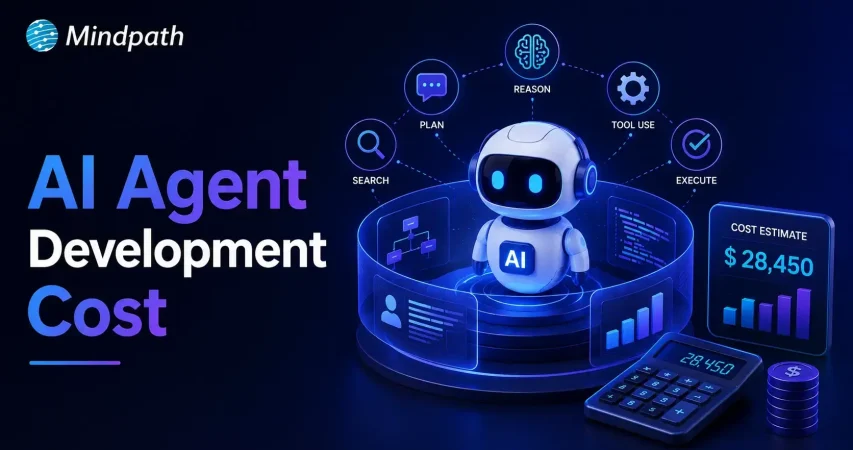
AI Agent Development Cost

Building an AI agent requires careful planning because every project involves different business goals and technical requirements. AI agent development cost depends on features, integrations, AI models, deployment needs, and long-term maintenance. Understanding these factors helps businesses plan realistic budgets and avoid unexpected expenses during development.

Key Takeaways

  • 01
    AI agent costs vary based on complexity, integrations, infrastructure, and deployment requirements.
  • 02
    Project type directly impacts development timelines, implementation effort, and ongoing operational expenses.
  • 03
    Hidden costs like maintenance, monitoring, and security significantly affect long-term AI investments.
  • 04
    Careful budgeting prevents unexpected expenses and supports successful AI agent implementation projects.
  • 05
    Defining clear business goals improves cost estimation and maximizes long-term return on investment.

Many businesses ask how much does it cost to build an AI agent before starting their projects. The answer depends on the agent’s complexity, customization, infrastructure, and ongoing operational needs. In this blog, you will explore pricing ranges, cost factors, development timelines, budgeting tips, and practical ways to estimate your investment. So, let’s keep reading further to know more!

Looking to build an AI agent that fits your budget and business goals? We offer AI Agent Development Services to design and deploy custom AI agents tailored to your needs.

How Much Does It Cost to Build an AI Agent? Breakdown by Project Type

Project scope plays the biggest role in determining development costs because every AI agent serves different business needs. Understanding AI agent pricing by project type helps businesses estimate realistic budgets before starting development.

The following breakdown explains what each project type typically includes, its estimated development cost, expected delivery timeline, and ongoing monthly operating expenses.

1. Prototype or Proof of Concept (PoC)

A prototype focuses on validating one business idea with basic functionality, simple interfaces, and limited security features. Development typically costs $5,000 to $30,000, takes 3 to 6 weeks, and ongoing monthly costs usually range from $20 to $300.

2. Simple Reactive or FAQ Agent

This type of AI agent answers common customer questions, handles simple conversations, and follows predefined decision paths. Development generally costs $10,000 to $50,000, requires 4 to 8 weeks, and monthly operating costs typically range between $500 and $2,000.

3. RAG Knowledge Agent

A Retrieval-Augmented Generation (RAG) agent searches internal documents, knowledge bases, PDFs, and contracts to deliver accurate, context-aware responses. Building this solution usually costs $50,000 to $120,000, takes 3 to 5 months, and ongoing monthly expenses range from $2,000 to $5,000.

4. Workflow or Process Automation Agent

These AI agents connect with business systems such as CRM, ERP, and HR platforms to automate multi-step workflows and repetitive operations. Development generally costs $70,000 to $150,000, requires 3 to 5 months, and monthly operating costs typically fall between $3,000 and $8,000.

5. Enterprise Multi-Agent System

Enterprise solutions combine multiple specialized AI agents that collaborate to plan tasks, review outputs, automate decisions, and maintain security compliance. These advanced systems typically cost $150,000 to $500,000+, require 6 to 12 months to develop, and ongoing monthly costs often exceed $10,000 to $30,000+.

Project Type Core Capabilities Development Cost Delivery Timeline Ongoing Monthly Cost
Prototype / Proof of Concept (PoC) Single use case with basic functionality. $5,000–$30,000 3–6 weeks $20–$300
Simple Reactive / FAQ Agent Answers FAQs with predefined conversation flows. $10,000–$50,000 4–8 weeks $500–$2,000
RAG Knowledge Agent Searches internal knowledge and documents. $50,000–$120,000 3–5 months $2,000–$5,000
Workflow / Process Automation Agent Automates business workflows across systems. $70,000–$150,000 3–5 months $3–$8,000
Enterprise Multi-Agent System Coordinates multiple AI agents for enterprise tasks. $150,000–$500,000+ 6–12 months $10,000–$30,000+

Hidden Costs of AI Agent Development

The initial investment represents only part of the total AI agent development cost. Businesses should also budget for long-term operational, maintenance, and governance expenses.

1. Operation & Infrastructure

Cloud infrastructure and AI inference costs increase as usage grows.

2. Data Integration

Connecting and maintaining business data requires continuous engineering effort.

3. Network & Storage

Data transfer, storage, and logging increase recurring cloud expenses.

4. Maintenance & Quality Assurance

Regular testing keeps AI agents accurate, reliable, and up to date.

5. Human Oversight & Governance

Human supervision ensures safe decisions and regulatory compliance.

6. Security & Compliance

Security controls and audits protect sensitive business and customer data.

7. Change Management

Employee training supports successful AI adoption across business workflows.

What Factors Affect AI Agent Development Cost?

AI agent development prices vary because every project has unique technical and business requirements. Features, integrations, data quality, deployment, and security directly influence the overall development budget.

1. Complexity and Autonomy

More advanced AI capabilities require greater development effort, increasing overall project costs.

2. Architecture and Technology Stack

The chosen AI models and infrastructure significantly influence development and operating expenses.

3. Integrations and Data

Connecting business systems and preparing quality data increases implementation complexity and costs.

4. Compliance and Security

Strict regulations and stronger security requirements demand additional development, testing, and validation.

5. Ongoing Operational Costs

Hosting, monitoring, API usage, and maintenance create recurring expenses after deployment.

Key Tips on Budgeting for AI Agent Development

Planning a realistic budget helps businesses avoid unexpected costs during AI agent development. Understanding AI agent development pricing makes it easier to allocate resources and prioritize essential features.

1. Define your business goal

Start with one clear use case to avoid unnecessary development costs.

2. Prioritize essential features

Build core functionalities first and add advanced capabilities in later phases.

3. Choose the right AI model

Use existing foundation models before investing in custom model development.

4. Plan system integrations

List the business applications your AI agent must connect with.

5. Prepare your data

Clean and organize business data before development to reduce implementation delays.

6. Include infrastructure costs

Budget for cloud hosting, API usage, databases, and monitoring services.

7. Account for maintenance

Reserve funds for updates, performance optimization, security, and model improvements.

8. Request a detailed project estimate

Review development, deployment, and ongoing operational costs before starting.

Ready to Estimate Your AI Agent Development Investment?

Building an AI agent requires balancing business goals, technical requirements, and long-term operational expenses. Understanding the custom AI agent development cost helps businesses set realistic budgets, prioritize essential features, and choose the right development approach for sustainable business growth.

At Mindpath, we build custom AI agent solutions tailored to your business goals, workflows, and scalability needs. Our experienced team delivers end-to-end AI agent development services with transparent planning and reliable execution. Contact us to discuss your project and receive a tailored cost estimate.

Frequently Asked Questions

A prototype suits businesses validating one use case with minimal investment. A full-scale AI agent becomes a better choice when multiple workflows, system integrations, security requirements, and long-term automation goals require a production-ready solution that can scale with business growth.
Development is only the initial investment. Ongoing expenses include cloud infrastructure, AI model usage, monitoring, maintenance, security updates, data management, and performance improvements. These recurring costs keep the AI agent accurate, reliable, secure, and aligned with changing business requirements.
A detailed estimate requires a clear business objective, expected users, required features, system integrations, available data sources, security needs, and deployment preferences. Providing these details helps create a realistic budget and reduces unexpected development changes later.
Businesses can reduce costs by starting with an MVP, prioritizing essential features, using existing AI models, preparing clean data, and planning integrations early. This approach minimizes rework while delivering a scalable solution that supports future enhancements.
Enterprise AI agents require advanced workflows, multiple system integrations, stronger security, compliance measures, extensive testing, continuous monitoring, and higher infrastructure capacity. These additional technical requirements increase development complexity, delivery time, and ongoing operational expenses compared with basic AI solutions.

Support Is One Click Away

Featured Posts

Related Post

LLaMA LLM

Are you hearing a lot about the LLaMA LLM lately and wondering what it is and why it’s special? If so, you’re not alone. Buzz regarding this powerful open large language model (LLM) continues to build and spread from technology forums to developer circles and the larger AI community. It’s fundamentally reshaping how many people think about AI tools and putting the spotlight on open-source innovation that has never been seen before.

The emergence of open-source LLMs fundamentally reshapes how AI is developed, shared, and scaled. Until now, the primary focus in the industry has been on the deployment and governance of closed prompts within a closed model. Large language models with open-source options, like LLaMA, are a welcome addition that now allows access for researchers, developers, and even startups, with fewer restrictions to experiment, customize, and build. It will not only provide greater access to advanced AI but also create a larger momentum for innovation across many sectors. In this blog, we’ll explore what sets LLaMA apart and how it’s driving this change. 

Looking to harness the power of LLMs and AI for your business but don’t know where to start? Mindpath offers AI Development Services to help you build, customize, and deploy intelligent solutions that drive real results.

Before diving further, let us have an idea about open LLMs: 

Understanding Open LLMs

Open-source large language models (LLMs) are incredible power AI models that can be deployed, changed, and shared for free by anyone. Where closed or paid models like OpenAI’s GPT are restricted to only those who pay to access the models, open-source LLMs are built on being open and transparent, meaning that developers and researchers can inspect, make improvements and train on their own data. These models are often contributed as a collaborative effort by communities or organizations who believe in promoting open innovation making it possible for others to learn and create new things with AI. 

There are many benefits to using open-source LLMs. They can save researchers a lot of money, because there’s no licensing fee and they can be adapted in very precise ways to what the researcher wants. Developers can also rely on strong open-source communities from which they can freely draw robust sets of tools, tutorials, and updates. This community effort often supports not only researchers’ progress but also helps more people get involved in shaping the future of these technologies. 

Curious about the different kinds of AI and how they impact businesses? Learn about the types of AI to understand where LLMs like LLaMA fit in the broader artificial intelligence landscape.

Among these Open-source LLMs, the most popular one is LLaMA LLM. Let’s dive into that! 

large-language-models-market

What is LLaMA LLM?

LLaMA is a large language model developed by Meta that can understand and generate human-like text. It learns from a huge amount of data and uses a special design, or architecture, to figure out patterns in language. This helps it give smart and relevant answers, whether it’s writing something, translating, or answering questions. 

What makes LLaMA stand out is its strong performance and the way it is available for the tech community. Many people ask, is LLaMA open source? While it’s not fully open like some models, Meta has made it available to researchers and developers, making it easier for them to explore, test, and build new AI tools using LLaMA. 

Why is LLaMa LLM So Popular?

LLaMA AI has quickly gained popularity in the AI community, and it’s easy to see why. Its performance, accessibility, and flexibility make it a strong choice for developers, researchers, and businesses alike. Here are some key reasons behind its rising popularity: 

1. Scalability and Efficiency

LLaMA is scalable, which means it can run on different kinds of hardware — from powerful GPUs to everyday computers. This makes it easier for researchers and developers who may not have access to expensive systems. By making advanced AI tools more reachable, LLaMA helps more people experiment and innovate. That’s why many developers now use LLaMA in app development without needing a huge setup or high costs. 

2. Adaptability

LLaMA can be trained for specific uses, which makes it really flexible. Whether it’s a chatbot for customer service or a tool that creates content, it’s possible to fine-tune LLaMA to fit different industries and goals. This adaptability means it can work well in many real-world situations. It’s not just a one-size-fits-all model, rather it adjusts to what you need it to do. 

3. State-of-the-Art Performance

LLaMA has shown top performance in different language tasks like translation, classification, and more. These results come from how well the model is designed and trained. Meta’s AI team used smart methods and architecture to make sure LLaMA performs at a high level. Because of this, it stands out as one of the most powerful tools in the language model space today. 

4. Open-Source Initiative

Meta has taken steps to make LLaMA more open and available to the research community. By releasing the models and sharing detailed documentation, they’ve made it easier for others to use, study, and build on LLaMA. As a leading example of an open source LLM, LLaMA is helping more people explore and contribute to the future of AI in a truly collaborative way.  

Want to customize large language models to fit your specific business needs? Learn how OpenAI’s Fine-Tuning API enables developers to fine-tune AI models for more accurate and specialized applications.

Real–World Applications of LLaMA

LlaMA LLM is being used in many real-life projects today. Its open nature makes it easier for developers to build and improve solutions, and it’s often seen as a strong example of how open models can drive real innovation. Here are a few practical ways people are using LLaMA today:

1. Faster Content Creation for Marketing Teams

A digital marketing agency can use LLaMA to write content like blog posts, social media captions, or newsletters. This helps them save time and focus more on creative ideas and strategies. Since LLaMA can quickly generate useful content, the team can keep up with deadlines without stress. It’s a great LLaMA open source LLM example that shows how AI can help marketing teams work faster and smarter. 

2. Smarter Chatbots for Customer Support

A business can use a chatbot powered by LLaMA to answer customer questions. The bot gives fast, helpful replies to common queries, so human support agents can handle more complex problems. Over time, the chatbot can learn from interactions and get even better. This helps improve customer satisfaction. You can even build one yourself by following a simple LLaMA open source LLM tutorial, which makes it easier for teams to create smart support tools. 

3. Breaking Language Barriers with AI

An international company can use LLaMA to translate emails, documents, or messages into different languages. This helps their teams communicate better across regions. LLaMA can provide quick and accurate translations, making global teamwork easier. With an open-source model like this, it’s possible to build tools that support real-time communication without high costs or complex setups. 

4. Understanding Customers Through Sentiment Analysis

A brand tracking tool can use LLaMA to understand how customers feel by reading reviews or social media posts. The tool can spot trends, positive feedback, or complaints. This helps companies make better decisions to improve their products or reputation. Because LLaMA is flexible and open, teams can customize it to track the right kind of feedback for their needs. 

Want to see AI in action, improving business outcomes? Explore AI chatbot examples to understand how LLM-powered chatbots are driving real-world results.

Curious about Using LLaMA for Your Business?

LLaMA LLM is changing the way people use and develop AI by making powerful language models more open and accessible. Its flexibility, strong performance, and the support of an open community allow researchers, developers, and businesses to build smarter, faster, and more customized AI solutions. As an open-source LLM example, LLaMA is helping drive innovation across many industries, breaking barriers and making advanced AI tools available to more people than ever before. 

If you want to harness the power of LLaMA in your own projects, Mindpath AI Development services can help. We specialize in building tailored AI tools using open-source models like LLaMA to meet your unique business needs. Whether you want to improve customer support, create content, or analyze data smarter, our team can guide you through every step to bring your AI vision to life efficiently and effectively. 

Frequently Asked Questions

1. How is LLaMA LLM different from other large language models available today?

LLaMA LLM stands out because of its balance between performance and accessibility. Unlike many closed models, it allows developers to explore and customize it more freely. This makes it easier to build tailored solutions while still benefiting from strong language understanding capabilities.

2. Can LLaMA LLM be used by small businesses or startups?

Yes, LLaMA LLM is suitable for startups and small businesses due to its flexibility and lower cost of access. It allows teams to build AI-powered tools without heavy investment, making advanced language technology more practical for businesses with limited resources.

3. What kind of skills are needed to work with open LLMs like LLaMA?

Working with open LLMs usually requires basic knowledge of programming, data handling, and machine learning concepts. Familiarity with tools like Python and AI frameworks can help. With strong community support, even beginners can gradually learn and build useful applications.

4. Are there any limitations when using open-source LLMs?

Open-source LLMs offer flexibility, but they may require more setup, maintenance, and technical expertise compared to managed solutions. Performance tuning, data handling, and infrastructure management are important factors to consider when planning real-world implementation.

5. How can businesses start experimenting with LLaMA without major risks?

Businesses can begin with small pilot projects to test LLaMA in real use cases like chatbots or content generation. This approach helps understand performance and value without large investment, allowing teams to scale gradually once they see positive results.

node js development company

Imagine you need to create a high-speed, scalable web or mobile app, what technology do you think you should use? Well, most companies will opt for Node.js since it has emerged as one of the leading options in providing high-performance digital solutions. Whether you are starting a new startup or refactoring an existing platform, the success of your project usually begins with selecting the right Node.js development company. But with so many Node.js companies out there, isn’t it difficult to make the right choice? Don’t worry, we’ve got you covered!

This blog offers a nicely constructed checklist through which you can be guided in choosing the optimal Node.js development agency. By following this checklist, you will have some idea and direction during the selection process and also be assured of being aligned with a company that not only meets your technical needs but also comes with you through your long-term success. 

Need professional assistance with your upcoming project? Hire Node.js developers from Mindpath to make sure your application is highly scalable, faster, and high performing.

Understanding Node.js

Node.js is a technology that helps developers create the back end of websites and applications using JavaScript. It is server-side and open source, so programmers can use the same language, JavaScript, on both the front end and back end. It makes the development process easier by making it faster and simpler.

Node.js can handle real-time apps, single-page apps, and applications with a lot of users at the same time. It is used in mobile app development because it has a strong system and beneficial tools. With frameworks like Nest.js, the developer can make elegant, well-structured apps using Node.js. 

Wondering why NodeJS is the preferred choice for modern business applications? Read our blog on advantages of NodeJS for business to discover how it boosts performance, scalability, and development efficiency.

Benefits of Choosing Node.js Development Company

Selecting a Node’s web development company, which is trusted, can make your project faster, smoother and more scalable. With the abilities of Node.js, your app can handle high traffic and real-time updates with ease. Let us look at some of its benefits: 

Benefits of choosing nodejs development

1. Skilled and Experienced Team

A Node.js development firm can bring a team of experts who know how to build strong and flexible applications. They have hands-on experience with different types of projects and can offer smart, custom solutions and their knowledge can also help to avoid mistakes and deliver better results from the start. 

2. Complete Development Services Availability

A Node.js development services provider takes care of everything, starting from the discussion to launching and maintaining your app. You don’t need to work with different teams for each part, which can save a lot of time and effort.  Having all the services in one place keeps your project organized and moving forward smoothly. 

3. Latest Tools and Practices

A trusted Node.js web development company always works with the latest tools, updates, and frameworks as they follow modern development practices to build fast, secure, and scalable applications which means your app will be future-ready and can perform well under changing user needs. 

4. Strong Security and Stability

Security is a top priority for a professional Node.js development agency, and they take steps to protect your app from threats by using tested methods to keep your data safe and your app stable. You can count on them to deliver a secure and reliable product that works smoothly. 

5. Quick Launch and Results

When you hire a Node.js development firm, your project moves quickly from idea to launch as their process is streamlined, so that you can get your product out to users much faster which helps you stay ahead of the competition and respond to the market more effectively. 

Looking to supercharge your applications with AI capabilities? Explore our blog on NodeJS Libraries for AI Integrations to learn which NodeJS libraries can simplify and enhance your AI-powered applications.

By now, you must have had a clear idea about Node.js, so let us learn about the most important topic: 

Key Considerations While Choosing the Right Node.js Development Company

When you are looking for the right company, keep in mind that not all software development companies providing Node.js services are the same. Understanding the following key factors can help you find a team that delivers quality and meets your specific needs: 

Factors to consider while choosing a Nodejs development company

1. Industry Experience Matters

How long a company has been working in software development shows their reliability and knowledge. Experienced Node.js companies know the best ways to work with clients and handle projects smoothly. They are familiar with popular Node.js tools and frameworks and use proven methods like Agile and DevOps to deliver projects on time and with quality. 

2. Skilled Team

A good Node.js company has a strong team with different skills, so they can start your project quickly and build exactly what you need. A team that understands micro services in Node.js can divide tasks smartly and deliver results faster. Having experts like project managers, DevOps specialists and cloud professionals makes the process smoother and more efficient. 

3. DevOps Implementation

Using DevOps helps a company build software faster and more smoothly. It brings developers and operations teams together, so everyone works closely and avoids delays. This way of working also makes the project more secure and organized. A company that follows DevOps can handle changes better and deliver a high-quality product with fewer issues. 

Also Read: Benefits of DevOps

4. Takes Full Responsibility

A good Node.js company takes full responsibility for the work they do. If something goes wrong, they don’t hide it or blame others. Instead, they fix it and learn from it. This honest attitude builds trust, improves communication, and shows they truly care about the success of your project. 

5. Company Working Methods

The way a Node.js company handles projects says a lot about them. It’s not just about good reviews, but also how they talk to you and what value they bring. You can learn more by checking their website, blogs, case studies and social media to see how they share ideas and show their work to the world. 

6. Focused on Your Business Goals

The right Node.js development firm takes time to understand what your business wants to achieve. They work in a way that supports your goals and helps your business grow. With the right knowledge and experience, they can build a strong and future-ready project that fits your budget and timeline. 

7. Strong Partnership Mindset

A trusted Node.js company doesn’t just build your project and leave. They work with you like a real partner, staying connected and involved at every step.  They provide clear communication, teamwork, and support, even after the project is done which helps make everything run smoothly and lead to better results for your business. 

Want to ensure your NodeJS applications run efficiently and reliably? Explore our blog on hire expert NodeJS developers for high-performance apps to learn how skilled developers can boost performance and scalability.

Ready to Choose the Right Node.js Development Company?

Selecting the right Node.js Development firm plays a big role in how fast, secure, and scalable your project becomes. By focusing on experience, team skills, DevOps culture, and a true partnership approach, you can ensure you’re working with a reliable team. A trusted Node.js development company will not only build a great product but support your long-term success too. 

At Mindpath, we offer end-to-end NodeJS development services that are designed for speed, performance, and future scalability. From building real-time apps to using micro services in Node.js, our team brings deep experience and modern practices. As a top-rated Node’s web development company, we ensure your product is secure, stable, and ready for the market. 

Looking to hire Node.js developers who understand your goals? At Mindpath, our experts bring strong technical skills, creativity, and a collaborative mindset. Startups and enterprises trust us for quality, future-ready solutions. Connect with Mindpath and let’s build something great together. 

Frequently Asked Questions

1. How to know if a Node.js development company is the right fit for a project?

A good fit depends on how well the company understands your goals, communicates clearly, and shows relevant experience. Reviewing past projects, technical expertise, and their approach to problem-solving can help ensure they can handle your requirements effectively.

2. What should be expected when working with a Node.js development company?

A professional company usually offers a structured process, including planning, development, testing, and support. Clear communication, regular updates, and a focus on performance and scalability are common expectations when working with an experienced development team.

3. Is Node.js suitable for handling high-traffic applications?

Yes, Node.js is designed to handle multiple requests at the same time without slowing down. Its non-blocking architecture makes it ideal for applications that need to manage high traffic, real-time updates, or large numbers of users efficiently.

4. How does a Node.js development company support long-term project growth?

A reliable company builds applications with scalability in mind, allowing easy updates and expansion. They also provide ongoing support, performance monitoring, and improvements, helping the application adapt to changing business needs over time.

5. Why is communication important when choosing a Node.js development company?

Clear communication ensures that project requirements are understood correctly and reduces the chances of errors. Regular updates, feedback, and transparency help keep the project on track and build trust between the business and the development team.

Discover key factors for choosing the right Node.js development company. Learn how Mindpath ensures success!
ai in manufacturing industry 

AI in manufacturing industry has experienced a fundamental transformation which now enables factories to operate differently in the digital age. Modern manufacturing operations benefit from smart systems which process production data to predict equipment breakdowns and enhance manufacturing precision throughout all production stages. The benefits of AI are evident in quicker production cycles, reduced costs, and higher quality outputs, making innovation the core of modern manufacturing.

Manufacturers are moving to the next level of connected intelligence as a result of persistent improvements in automation and data analytics. Basically, every process, choice, and way of working is being upgraded by AI-generated insights that are at the core of both efficiency and expansion. The change is going beyond tech; it’s a total revamp of how industries function. This article will look into the ways in which artificial intelligence is a main driver of Industry 4.0 and is influencing the manufacturing industry’s ‍‌future.

Looking for a reliable solution to overcome bottlenecks and accelerate your business transformation? Mindpath offers AI development services that help manufacturers unlock new levels of operations excellence.

Understanding the Basics of AI in the Manufacturing Industry

AI ‍in manufacturing is the deployment of intelligent computer systems that work alongside factories to enhance efficiency and speed. It broadly means the employment of AI instruments in various factory operations such as production, quality checks, supply chain, and machine maintenance. Such tools have the capability to reason, draw learning from data, and even choose the most viable solution to a problem promptly, thereby making manufacturing processes better every day.

Manufacturers ‍are able to save time, lower their errors, and produce top-quality products through the use of AI. This is accomplished by giving the teams the ability to foresee equipment failures before they occur and, hence, maintain the efficiency of the processes. In general, AI is a key enabler of more efficient planning, quicker manufacturing and improved business expansion in the manufacturing ‍ ‍‌sector.

Must Read: Top AI Trends

Role of AI in the Manufacturing Industry

Artificial intelligence significantly influences the manufacturing industry where it is used to make the factories more intelligent, quicker, and also more efficient. The following are the main functions of AI in the manufacturing‍‌ sector.

1. Smarter Machine Maintenance

By analyzing the real-time data of the machines, AI can foresee the time when they will break down. Thus, producers are facilitated to troubleshoot the problem ahead of time, thereby, they do not experience heavy periods of non-operation, and they are able to keep the equipment in good working ‍condition.

2. Better Quality Checking

With the help of cutting-edge visual analysis, AI technologies are able to detect even the minutest blemishes on products. Consequently, the quality of the products is enhanced, and the amount of discarded products or recalls resulting from the production process is ‌lowered.

3. Efficient Supply Chain

AI enhances supply chain management by keeping an eye on stock, coordinating the transport of goods, and forecasting the requirements for shipments. In this way, factories are enabled to free time, reduce expenses, and maintain the continuity of the supply of ‍‌‌‌‍ ‍‌materials.

4. Faster Product Innovation

Intelligent simulations and virtual testing are used by an AI-powered system to elevate product design. In this way, a manufacturer is able to produce a quality product in less time and at the same time reduce the defective production ‍output. ‍ ‌‍ ‍‌ ‍ ‌‍ ‍‌

5. Improved Demand Planning

Using AI in the manufacturing industry can significantly streamline the demand planning process by effectively analyzing consumer data and market trends. This practice is instrumental in ensuring that products are not only produced but also delivered on time, thereby saving material costs and increasing the ‍earnings.

Want to ensure your manufacturing processes are guided by accurate, data-driven decisions? Explore AI in decision making and learn how AI enhances strategic choices across the factory floor.

How Does AI Improve Efficiency in Manufacturing?

Artificial Intelligence (AI) is the primary reason for the manufacturers working smarter and finishing the tasks in less time. It promotes the best utilization of the time, materials and the resources in each and every process. These are the main impacts of AI on manufacturing ‍industry.

1. Faster Production Cycles

Manufacturers can use AI to increase the pace of their operations as it cuts down on process delays and enhances the interaction between machines. With AI, factories are capable of producing higher volumes in shorter periods of time without fluctuating product‍‌ quality.

2. Reduced Downtime

Artificial intelligence can foresee when a machine will require service even without a malfunction if it monitors in real-time the data of the apparatus. Passing from this, the machinery will be able to operate for a more extended time, and the production schedules will be more ‍‌stable.

3. Smarter Resource Management

Artificial intelligence in the manufacturing sector offers the possibility to firms of using their materials, time, and energy in a more efficient manner. As a result, the waste that is generated is minimized, the expenses of production are reduced, and the situation of environment-friendly running is ‍facilitated.

4. Accurate Demand Planning

Through the analysis of customers’ habits and market trends by AI, a production plan can be drawn up reasonably. Hence, the company saves itself from overproduction, inventory is maintained at a proper level, and the efficiency of the whole system is ‍‌improved.

5. Consistent Product Quality

The use of AI instrumentation in the monitoring of manufacturing lines helps to keep the standardization of each product at the same level. The result is that the reliability gets higher, mistakes become fewer, and customer loyalty is ‍‌strengthened.

6. Enhanced Workforce Productivity

By taking over the monotonous tasks, AI in the manufacturing industry frees the workforce to concentrate on the creative and technically challenging aspects of their work. The combination of human expertise and advanced technology is a clear indication of how AI is increasingly influencing the manufacturing ‍‌sector.

Want to see how AI can influence not just production but your entire business strategy? Explore AI in business strategy to learn how intelligent insights drive smarter decisions across manufacturing operations.

AI in Manufacturing Examples

AI in manufacturing is implementing in a variety of practical ways that lead to improvements are production speed, quality, and overall efficiency.

1. Predictive Maintenance

AI in manufacturing industry is instrumental in early detection of malfunction prediction of machines, like the case of GE and Siemens who are employing AI analytics to cut down on ‍downtime.

2. Quality Control

AI-powered systems are employed by giants such as BMW and Foxconn to scrutinize products with great accuracy, thereby enhancing quality and reducing the number of production errors.

3. Supply Chain Forecasting

The use of AI in manufacturing industry facilitates more accurate demand forecasting and inventory management, which in turn enables companies like Coca-Cola to streamline their ‍logistics.

4. Robotics and Automation

One of the key factors that has led to the improvement of both the safety and the efficiency of the production process. It is the AI-enabled robots that Tesla and other automakers use to perform complex tasks.

5. Product Design Innovation

Generative AI tools usage by engineers enables them to create smart and energy-saving products in a shorter period and also the product development ‍cycle becomes ‍‌faster.

Curious how AI is transforming industries beyond manufacturing? Explore Generative AI use cases in diverse industries to understand how companies are taking advantage of AI for innovation and efficiency.

Ready to Transform Your Manufacturing with AI?

Artificial Intelligence (AI) in the manufacturing industry is the main factor that is causing a transformation to very bright, fast, and more economical production. With the help of AI, companies are able to reduce downtime. Also improve the quality of their products, and also use resources in a more efficient way. AI will still be the prominent power that determines the shape of the worldwide manufacturing industry and the source of continuous improvement for every process.

At Mindpath, we specialize in crafting sophisticated AI development services that enable manufacturers to upgrade their operations and realize substantial efficiency gains. Our team engineers intelligent systems that increase productivity, quality, and business growth. Partner with Mindpath to infuse your manufacturing journey with the power of intelligent automation and ‍innovation..