Low-Code vs. No-Code Development: Which is Better in 2026?

Join our Newsletter!

Featured Posts

Support Is One Click Away

Home

Low-Code vs. No-Code Development: Which is Better in 2026?

low code vs. no code

Low-Code vs. No-Code Development: Which is Better in 2026?

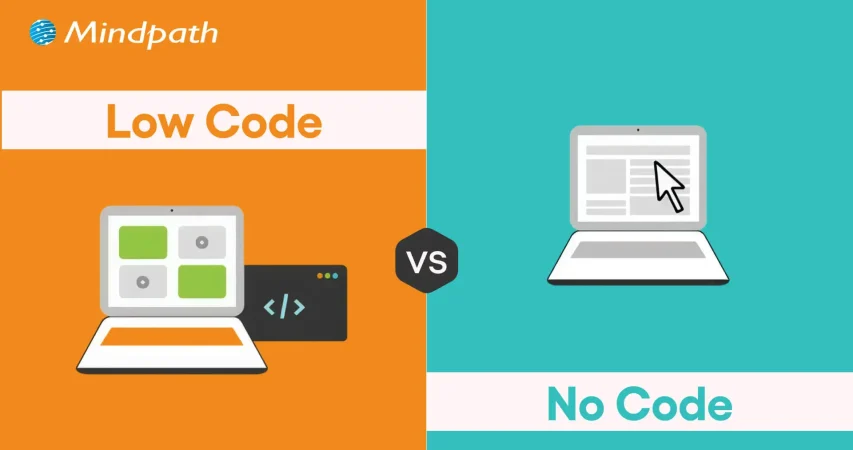
The rapidly growing demand for digital transformation has had many businesses thinking about effective ways to align with new trends. You must have heard about the low-code vs. no-code debate in discussions about software development in 2026. As a matter of fact, Gartner has pointed out that 70% of new applications will use low-code or no-code technologies by 2026.

Do you feel that the modern technology landscape is evolving at a speed that you find difficult to match? Your business must also be struggling to find the ideal developer talent for your new IT projects. No-code and low-code solutions can address these concerns by offering convenient alternatives to the conventional software development process. 

The right development choice makes a huge difference. Contact us, and we will guide you on whether low-code or no-code development best suits your business.

Understanding the Basics of Low-Code

You can know a lot about low-code from the name itself, which implies the use of less code. Low-code is a new approach to software development that involves automated code generation with visual building blocks. The functionality of low-code platforms revolves around automation that offers a middle ground between manual coding and no-code development. It allows developers to add code in auto-generated code, thereby retaining the human element.    

Common applications of low-code development in business process management platforms and cross-department tools have been gaining traction. Low code serves as the most useful solution for web and mobile app development and achieving integration with external plugins. Many businesses have successfully leveraged the low-code approach for the modernization of legacy apps. 

Where Does No-Code Come into the Picture?

The curiosity about no-code development is also gaining momentum in 2026 as businesses seek new avenues for innovation. You can describe the answers to “what is no-code development” as a prominent subset of the low-code development approach. The no-code development approach is completely free of human intervention and depends completely on visual tools.

You can find the most applications of no-code development in self-service apps for business users and dashboards. Businesses can rely on the no-code development approach to build standalone apps with simple UIs and automation. One of the notable examples of no-code development is evident in tools for online order management and automated customer service in e-commerce. 

Are your low-code and no-code apps delivering the best possible user experience for your audience? Explore the latest UX/UI design trends to discover how modern interfaces and interactions can make your apps more engaging and effective.

How is Low-Code Different from No-Code?

Many people generally assume that low-code and no-code approaches are essentially the same thing, with different terminology. However, the answers to ‘what is low code development’ and the definition of no-code development showcase a completely different picture. You must know the differences between low-code and no-code development to pick the ideal development approach for your next project.

1. Coding Skill Requirement

The first thing you must check while choosing between low-code and no-code development is the requirement of professionals with coding skills. In the case of low-code development, you will need professionals who have a basic understanding of coding. You must know at least one programming language fluently to use the low-code development approach. Therefore, low code is a difficult approach in cases where non-technical employees don’t know about coding or any programming language.

On the other hand, answers to ‘what is no-code development’ clearly reveal that anyone can use the no-code approach without coding skills. It helps you build applications by replacing the coding portion with blocks of code. You can just drag and drop the blocks of code to build the application you want.

2. Best Use Cases

The next point of comparison between low-code and no-code draws the limelight towards scenarios where they serve the right fit. You can rely on low-code application development platforms to develop applications with many complex features. Low-code development approach involves the use of an exhaustive component library that can be used for applications with heavy logic. In addition, the low-code approach also supports scalability and integration with other apps and external APIs. 

You can leverage no-code platforms for creating apps that deal with analytics, workflow management, project tracking, and progress reporting. It is also important to know that no-code application development platforms also have features that can help you build complex apps without writing code. No-code is a trusted development approach for front-end apps that pull data from different sources. It can serve as a useful solution to repetitive administrative tasks like reporting in business teams.  

3. Development Speed

Another notable aspect in the comparison between low-code and no-code development approaches is the speed of development. The low-code development approach is a rapid application development methodology tailored to develop applications at a faster pace. However, the low-code approach requires coding for certain parts of an application, which leads to longer development time. 

On the other hand, the no-code development approach does not require any coding. You can refer to the difference between low code and no code to understand that the no-code approach does not rely on coding skills. Business owners and entrepreneurs can build applications or create working prototypes in no time. As a matter of fact, some businesses have reported that they created apps with no-code development within a year.

Looking to deliver apps quickly but unsure if your business needs custom solutions? Discover the signs that indicate it’s time for a custom web application to accelerate growth and efficiency.

4. Target Users

The discussions around differences between the low-code and no-code development approaches will also focus on who should use them. Low-code development approach is the ideal pick for professional developers who want to avoid the burden of replicating basic code. It offers more space for developers to focus on complex aspects of development and encourages innovation. The low-code approach ensures automation of the standard parts of coding without depending on the syntax. You should know that low code benefits professional developers by offering opportunities for reskilling.      

The no-code development approach is more suitable for business users who have extensive domain knowledge. It complements their lack of ability to write code and allows them to use their domain expertise efficiently. Hybrid teams with software developers and business owners are also the most prominent target users of no-code development. Small business owners as well as HR, legal and finance teams in an organization, can also choose no-code over low-code development approach.  

5. Expansion of Architecture

The search for differences between low-code and no-code development approaches will also lead you to think about their architectural range. How will the two approaches support your applications as they grow in future? The no code vs. low code comparison suggests that the low-code development approach offers more support for scalability. In addition, it also offers space for cross-platform compatibility, thereby making it an ideal choice for modern business apps. The low-code approach also offers flexibility for using custom code and custom plugins to achieve a broad range of implementations.

On the other side of the debate, no-code approach has limited potential when it comes to flexibility. You cannot extend no-code apps and they showcase limitations in achieving integration with other platforms or legacy systems. It is important to remember that no-code development is useful only for a narrow collection of use cases. Furthermore, the no-code approach also implies limited scope for scalability.

6. Open or Closed System

The low-code development approach follows an open system as it allows users to extend the functionality of apps through code. It offers the advantages of enhanced flexibility and reusability. Users can develop custom plugins or data oracles according to their use cases and add them later in the apps. However, you will have to test the new upgrades and patches with manually introduced code.

The review of no-code benefits in software development reveals that it works best as a closed system. You have to rely on templates of feature sets to extend the functionalities of no-code apps. As a result, you will find limited use cases with no-code apps and restrictions on access to boilerplate integrations and plugins. However, the no-code approach offers support for backward compatibility as it does not involve manually written code.

Trying to build mobile applications quickly without compromising quality? Check out the top mobile app development tools to learn which frameworks and technologies help teams deliver robust, scalable apps faster.

The following table provides an overview of the differences between low-code and no-code development approaches.

Criteria Low-Code No-Code
Coding Skill Requirement Low-code development requires prior coding knowledge and fluency in one programming language. No-code development does not need coding expertise or awareness of coding languages.
Best Use Cases Low-code development is suitable for complex apps that require heavy business logic. No-code development is ideal for front-end apps, UI apps and internal apps that don’t require extensive functionalities.
Development Speed Low-code is faster than traditional development albeit with need for manual coding. No-code is faster than the low-code approach as it follows a plug-and-play approach.
Target Users Low-code is more suitable for professional developers. No-code is the ideal choice for business users, non-IT teams and hybrid development teams.
Expansion of Architecture Low-code supports scalability and cross-platform compatibility. No-code has limitations in integration with legacy systems and reduced scalability.
Open or Closed System Low-code approach works as open system that supports extension of functionalities through code. No-code approach is similar to a closed system as you can add features only through pre-defined template sets.


Final Thoughts

The decision to choose between low-code and no-code development in 2026 may be a difficult one. Each development approach is meant to help you build and deploy applications quickly without compromising functionality. However, you can pick one from low-code or no-code development according to your project requirements and technical expertise.

Mindpath is one of the leading software development agencies with specialization in low-code and no-code development methodologies. We have achieved fluency in the modern software development approaches with experience in different types of projects. Our experts have delivered high-performance solutions tailored to the needs of clients with unparalleled perfection. Reach out to us and find the ideal development solutions for your business right now.
Related Post

Discover the benefits of hybrid cloud for businesses, including improved performance, innovation, and flexibility.
Discover the ultimate guide to hiring Node.js developers in London. Learn about the skills, benefits, and cost factors involved in finding the right talent for your project.

Related Post

Web design trends

In 2026, website design is all about going beyond the conventional approach. Web designers are now exploring more options, embracing a combination of user-centric, authentic, and bold web design trends. Well, the goal is to craft a website that is not just beautiful, but also interactive, human-centric, and memorable. 

As technology advances and expectations of users evolve, staying ahead of new trends in web design is crucial for businesses to stand out. Whether you are optimizing your local business site or creating a new one, these top web design trends in 2026 will surely trigger ideas and enhance your digital experience. Keep reading to explore some leading web design trends that are set to define modern websites with Mindpath. 

If you are looking to implement these latest modern web design trends in your business, you require expertise. Mindpath offers web development service that helps you stay ahead of your competitors and deliver a website tailored to your business needs by turning your ideas into reality.

Focus On Smart Design For A Smarter Web

In 2026, web design will no longer be a choice between personality and performance. It will be a combination of both. Designers are leveraging design systems and frameworks that offer super-fast load times without affecting brand storytelling and visual impact. 

This shift has created a new era where creative expression and technical precision go hand in hand. Websites are getting smarter, emotionally resonant and leaner, resulting in a digital experience where design creates a lasting impression and functionality drives engagement. 

Wondering who can bring these design trends to life? Discover our website design company blog to see how the right team can turn trends into impactful websites.

Let’s talk about the trends that businesses need to focus on to achieve designs that deliver. 

21 Web Design Trends to Consider in 2026

Trends in web design are driven by advanced technologies and a desire to develop sites that are highly functional, interactive, memorable, and have elements to showcase a brand’s identity authentically. From sustainable designs to hyper-personalized interfaces, here are 21 web design trends to consider. 

1. Expressive Fonts and Maximalist Typography

Typography is a major visual element in every website. Businesses can expect to see layered, bold, and oversized text that will be the centerpiece of a web page. Besides, web designers are now creating playful, custom typefaces along with high-contrast pairings for a powerful statement. 

2. Micro Animations/ Interactions

Small details can make a huge impact. Micro interactions can help reinforce actions and guide users. For example, button ripples, hover effects, form feedback, or loading indicators. These are subtle yet powerful and can enhance the overall user experience.  

3. Experimental Navigation

Are you still using dropdown and hamburger menu designs? Well, it’s time to take a break. 2026’s trending web designs focus on scroll-as-navigation, gesture-based, and radial navigation styles, increasing engagement. 

4. Brutalist Designs with Some Modern Twists

A reaction template-driven, overly polished designs, brutalism is back, but with a modern twist. This modern style features unpolished, raw elements, bold typography, subtle animations, and pops of color. This design can be an ideal way to add a unique attitude and authenticity to websites. 

5. Illustration-led Web Design

This is gaining popularity among web designers in 2026 for conceptual clarity, quick load times, as well as brand originality. Utilizing illustrations offers a visually engaging alternative to heavy images, making them an excellent choice for service-based websites. 

Also Read: Web Development Technologies

6. Immersive Scrolling

Most websites are now becoming cinematic due to the integration of scroll-triggered animations. As users move down pages, elements zoom or fade in, crafting a narrative-like or dynamic user journey. With this, you can make a simple scrolling into an immersive experience. 

7. Dark Mode and Custom Palettes

Dark mode has become a standard design, but designers are tweaking it to add more effects. You can now see custom dark mode and palettes that utilize rich grays along with muted tones, offering a more branded and sophisticated experience while reducing strain on the eyes. 

8. Monochromatic Design

It is a simple yet powerful visual approach that utilizes a single base color and its different tones, tints, and shades throughout websites. Such designs emphasize cohesion, elegance, and simplicity. The distraction factors will be less as it creates a unified aesthetic. 

9. Hyper-Personalized Interfaces

Inclusion of machine learning and AI in web design has enabled a new level of customization. Websites will adapt their layout and content to every user, providing them with dynamic content and tailored recommendations based on their browsing history.   

10. Sustainable Web Design Trends

In 2026, the focus will be more on developing environmentally-friendly websites. While designing and developing websites, developers would prioritize eco-friendly hosting providers, accessibility, and streamlined code. These things help lower carbon emissions related to the internet. 

Curious how AI is transforming modern web experiences? Explore our AI in Web Development blog to learn how smart features enhance usability and performance.

11. Sci-Fi Gaming and Futuristic UI Aesthetics

Website interfaces inspired by sci-fi films and games are getting popular.  How about HUD-style overlays, neon glows, glitchy transitions, etc.? These designs can create high-tech and bold digital experiences. 

12. Bento Grid Layouts

Influenced by the elegance of the Japanese bento box, this design utilizes a modular grid of boxes. These layouts offer an efficient and clean way to organize information in a structured way. These website layout ideas are an ideal option for complex content websites and portfolios. 

13. Neumorphism Web Design Trends

It combines flat and skeuomorphism design using minimal contrast and soft shadows for a monochromatic and clean look. It suits web apps but requires proper handling of UX to avoid usability problems. 

14. Power of White Space in Web Design

Emphasizing negative space in a web design can enhance focus and clarity by balancing content with open, clean areas. Strategic use of typography and spacing boosts readability, creates an intuitive experience, and guides user attention. You can consider Apple.com as an example. 

15. Custom Mouse and Cursors Interactions

Custom cursors can play a major role in branding. Designers use them to instill interactive flair and personality, with responsive shapes, sparkly trails, brand logos, and more. It may look simple, but it works well in making a website look unique. 

Must Read: Web Development vs Software Development

16. 3D Elements

Another popular modern web design that can make your site look stunning is the use of 3D elements. From interactive product demonstrations to full-screen 3D backgrounds, these elements add realism and depth, making your site more immersive and captivating. 

17. Smart and Dynamic Videos

Videos on websites are becoming ambient design elements. They are generally looped seamlessly, silent, and optimized for faster performance. By using videos on homepages, you can make the website engaging without reducing the site’s speed. 

18. Gamified Designs

When talking about 2026’s web design trends, we can’t ignore these designs. These designs add game-like elements to websites, like challenges, rewards, or points, enticing visitors to spend more time on websites. 

19. Combining Photos with Graphical Elements

Web designers are getting creative by combining photography with beautiful graphical overlays. For instance, elements like arrows, doodles, or collage elements can add a unique layer of creativity. 

20. Detailed Footers in Web Design Trends

Enhanced footers are now redefining web design and development trends. A footer has evolved from a basic contact section into a content-rich, dynamic section, playing a crucial role in brand storytelling. Check out the website of 360gardalife for inspiration. 

21. Collage-Like Scrapbook Layouts

These layouts create an asymmetrical, layered, and handcrafted feel. These designs mimic a scrapbook with text and images scattered in a compelling way. With it, you can add an artistic, human touch while avoiding those rigid grid systems. 

Planning a new web application for your business? Discover our Web App Development Roadmap blog to understand each stage and avoid common pitfalls.

Top Modern Website Design Examples

Are you searching for the best web design inspiration? Well, here are some modern website design examples you should check out. 

1. Stripe

Utilizes minimal UI, geometric shapes, and interactive visuals to craft a conversion-focused and sleek website.

2. Apple

The design combines 3D product previews, cinematic storytelling, seamless transitions, etc., for better user engagement. 

3. Spotify

Combines animated CTAs, dark mode, and bold colors to provide users with an immersive and personalized music discovery platform.

4. Mantis Pro

A perfect combination of high-contrast visuals, bold fonts and amazing layouts while emphasizing speed and performance. 

5. Datel

Includes layers, visuals, scroll animations, and modern typography that clearly highlight the brand’s product innovation and tech-forward approach. 

6. Velux

The design has interactive sliders, soft gradients, and natural imagery that help the brand support its vision, i.e., promoting sustainability.

These cool website designs clearly showcase how their functionality and design can be combined to craft memorable user experiences. 

Looking to make your website more engaging and user-friendly? Read about UI/UX Design Trends to learn what design elements boost interaction and retention.

Website Design Trends- More Innovations in the Future

Whether you are creating a new website or planning to revamp the existing one, here are some future-forward website design trends that you should consider. 

1. Voice User Interface

Voice search and commands integration streamline navigation and offer users hands-free browsing, enhancing accessibility.

2. AI-Powered Design

Various AI tools personalize content, optimize UX, and automate layouts, making a website faster, and smarter.  

3. IoT

Websites connected with smart devices can offer real-time data, personalized automation and remote-control features. 

4. Accessibility-First Design

Focus on inclusive designs to ensure easy access for every user, including people with disabilities, through keyboard navigation, alt text, and readable fonts. 

5. Minimalistic Design

The best web design utilizes strategic whitespace, focused content, and a clean layout to enhance readability, mobile performance while reducing load time

6. Integration of Blockchain

This will ensure enhanced security and transparency for identity verification and transactions on modern websites. 

7. 3D Visuals

3D elements add visual depth, interactivity, and realism, especially for immersive storytelling and product showcases. 

Apart from these web design trends, collaboration between developers and designers is vital. This will help you ensure that your new website is not just visually great, but also secure, high-performing and stable. 

Looking for the right team to bring your web ideas to life? Read our Website Development Company blog to see what to look for before hiring.

Create Web Designs that Move your Business Forward

The future of web design is an exciting combination of purpose, interactivity, sustainability, and authenticity. By incorporating these 21 web design trends 2026, businesses can craft a website that will not just look incredible, but also create an effective and engaging experience. 

For businesses looking to translate trending website designs into a visually appealing and high-performing website, partnering with an expert is crucial. This is where they can count on Mindpath. We offer web development services that integrate advanced technologies, a customer-centric approach, bespoke web design solutions, and follows the latest web development trends to create websites that every business needs. Let us craft digital experiences for businesses that engage, inspire, as well as convert. 

proactive vs reactive

Businesses can leverage software solutions to stay ahead of their competition in different markets. However, the risks of breakdowns in software systems present the possibilities of disruption and rising costs. The discussions around proactive vs. reactive software maintenance have been gaining attention as effective maintenance offers a strong foundation for asset management. Without an effective maintenance strategy, you can just watch your revenue slip away slowly from your hands.

Anyone is likely to have a favorite food which is like the last meal they would say no to. At the same time, it is reasonable to wonder whether you will eat only that particular meal for the rest of your life. The comparison between proactive and reactive maintenance sheds light on the fact that a specific maintenance strategy won’t work in all situations. An overview of the differences between the two software maintenance approaches will help you choose the right one.

Want to move from fixing problems to preventing them in your software systems? Mindpath’s maintance and support services provide proactive solutions that streamline maintenance and enhance performance.

Understanding the Variants of Software Maintenance

Software maintenance is an integral component of every software development lifecycle and plays a crucial role in developing more efficient software systems. You can come across questions like “What are the 4 types of software maintenance?” during your search for insights on software maintenance. 

The general variants you may come across in software maintenance include corrective maintenance, adaptive maintenance, perfective maintenance and preventive maintenance. Each variant of software maintenance aims to achieve specific goals, aligned with the needs of diverse software systems.

Different software maintenance engineers have their maintenance guidelines, which help them manage their everyday work. On the other hand, choosing one specific strategy creates restrictions for software maintenance. You can achieve better results with a strategy that blends different maintenance approaches, such as proactive and reactive maintenance.

Curious about which development approach best supports proactive and reactive maintenance strategies? Learn about the different types of software development to select the ideal methodology for your software projects.

Learning the Definition of Reactive Maintenance

The most common approach to software maintenance has always focused on maintenance efforts after identifying any error or technical problem. As a matter of fact, the reactive vs. proactive maintenance comparison revolves largely around how reactive maintenance addresses issues only after they happen. You can also describe it as a ‘fix-on-failure’ method that does not rely on oversight or anticipation of problems beforehand. Therefore, reactive maintenance results in higher downtimes and increased repair costs along with unplanned approaches to issue resolution. 

Reactive maintenance strategy also presents the risks of unprecedented operational breakdowns in software systems. It is also important to remember that reactive maintenance is the most effective solution for non-critical software systems. You can incorporate reactive maintenance in a balanced maintenance strategy to deal with systems where the consequences of failure are minimal.

Unraveling the Meaning of Proactive Maintenance

Proactive maintenance is the exact opposite of reactive maintenance and focuses on preemptive approaches to prevent breakdowns before they happen. The difference in meaning of proactive and reactive software maintenance also emphasizes how proactive maintenance relies heavily on oversight. Proactive maintenance requires predictive analytics, routine inspection and servicing for early identification of potential issues. Software maintenance companies leverage proactive maintenance to maintain seamless operations and optimal performance of software systems.  

The biggest advantage of using proactive software maintenance approach is the assurance of timely maintenance, thereby reducing the possibility of unexpected breakdowns. With the help of proactive maintenance, you can minimize downtime as well as the cost required for repairs. Most important of all, proactive maintenance plays a major role in enhancing software reliability and efficiency.     

Looking to create tailored software solutions that integrate seamlessly with your maintenance strategy? Discover how custom software development can help you build efficient, scalable, and maintainable systems.

Decoding the Differences in Proactive vs. Reactive Software Maintenance

The evolving role of software companies in defining the transition from reactive to proactive maintenance is a huge topic of discussion. You can come across the proactive versus reactive comparison for the maintenance of your existing software systems or new solutions. However, choosing one approach from the two is like taking the best pick between control and chaos. The proactive and reactive software maintenance approaches are at the two ends of a spectrum. Identifying the differences between proactive and reactive maintenance will help you prepare an effective maintenance strategy.

1. Timing of Maintenance

The timing of maintenance is a major differentiator between proactive and reactive software maintenance strategies. When do you have to implement maintenance schedules in the two distinct approaches? The reactive versus proactive debate in software maintenance emphasizes how reactive maintenance happens only after breakdown. Software maintenance teams adopt the reactive approach as a way to deploy maintenance services after a problem has occurred. Therefore, most of the reactive maintenance activities are unplanned and don’t have any specific timing. 

On the other hand, the proactive approach to software maintenance follows a specific schedule for maintenance services. The schedule for proactive maintenance may vary from one organization to another. The timing of maintenance in proactive approach focuses on allocating timelines for regular assessment and predictive analytics. Proactive maintenance also includes schedules for preventive actions that will prevent unprecedented software breakdowns.  

2. Cost of Maintenance

You can also use cost as a crucial factor to determine the best choice for software maintenance between reactive and proactive approaches. The proactive vs. reactive maintenance comparison shows that you will need a large upfront investment in proactive maintenance. You should also note the costs involved in regular assessments and advanced technology used for analytics and diagnostics. However, it offers the assurance of significant savings in the long run as you can avoid larger and unprecedented breakdowns. Without downtime and emergency repairs, proactive software maintenance helps you save a lot on long-term expenses.

The reactive approach to software maintenance does not require any upfront investments as it does not require preventive measures. You don’t have to spend money on regular inspections or other preventive measures with the reactive software maintenance approach. The decision to choose proactive or reactive software maintenance becomes easier when you learn about long-term costs of reactive maintenance. You have to deal with emergency repairs, losses due to extended downtime and service charges in reactive maintenance.   

Want to understand the investment required to maintain software proactively versus reactively? Check out insights on software development cost to plan your budget effectively for long-term savings.

3. Downtime and Impact on Operations

The losses due to downtime are one of the biggest concerns for any business owner in the digital landscape. You must know that proactive maintenance ensures maximum reduction in downtime by identifying potential issues and resolving them. The reactive vs. proactive maintenance debate tilts more towards proactive maintenance when it comes to operational stability. With proactive software maintenance, you don’t have to worry about disruptions in operation of the software. As a result, you can have more reliable and consistent software systems in your technical infrastructure.

Reactive software maintenance brings the burden of additional downtime, which may extend indefinitely in some cases. The focus on repairing software only after a breakdown is the primary culprit behind longer downtime with reactive software maintenance. You can also notice that reactive maintenance leads to unprecedented failure that may disrupt operations. The operational disruptions that come with reactive maintenance can lead to massive losses in productivity. 

4. Strategic Approach and Resources

The comparison between proactive and reactive software maintenance also draws attention towards the strategy and resources used in each approach. Proactive maintenance strategy involves comprehensive planning and clear allocation of resources. In addition, proactive maintenance also involves creating a structured plan for preventive measures. You will find a systematic strategy in proactive maintenance to keep your software working seamlessly with optimal performance levels.

The reactive and proactive maintenance debate also sheds light on how reactive software maintenance requires minimal planning. On top of it, the allocation of resources in reactive approaches for software maintenance happens on an ad-hoc basis. The unplanned strategy in reactive software maintenance leads to a rushed approach for solving software problems.

Wondering how the latest innovations can improve software maintenance and reduce downtime? Discover the current software development trends shaping proactive and reactive maintenance strategies.

You can find a brief overview of the reactive vs. proactive maintenance comparison in the following table.

Criteria Proactive Maintenance Reactive Maintenance
Timing Proactive maintenance focuses on identifying and resolving issues before they cause problems. Reactive maintenance comes to play after an issue occurs.
Cost Proactive maintenance requires larger upfront costs and delivers long-term savings. Reactive maintenance is cost-effective in the initial stages and leads to high repair costs in the long run.
Downtime and Operational Stability Proactive maintenance causes limited downtime and does not disrupt operations. Reactive maintenance causes extended downtime and disruptions in operations.
Strategic Approach and Resources Proactive maintenance requires a strategy with comprehensive planning and preventive measures with deliberate resource allocation. Reactive maintenance involves minimal planning and facilitates resource allocation on an ad-hoc basis.

Final Thoughts

The difference between proactive and reactive software maintenance reveals that you can rely on proactive maintenance for multiple benefits. However, there is no way to ignore reactive software maintenance completely. You must know that both these approaches in IT software support serve distinct benefits tailored to different maintenance requirements. With the right consultant by your side, you can identify the maintenance approach that will deliver the best results. 

Mindpath is a leading destination for software maintenance and support services in an extremely competitive digital space. We have helped thousands of business owners create a strong and appealing digital presence with our innovative solutions. Over the years, our experts have made us one of the most trusted software maintenance companies with their dedication and perfection. Reach out to us and discover the best solutions for software maintenance right now.

ReactJS and AI

The demand for interactive user interfaces has gone beyond expectations. The requirement for an app that will learn from users’ behavior and adapt according to the user preferences is an essential part of modern web development. So, this effective resolution has pushed developers to rethink how modern frontends are built. This is where ReactJS and AI come together. 

The market size of AI is most likely to reach USD 826.73 billion by 2030. So, every reputed ReactJS development company has been fueling its strategies through AI tools. By combining React’s component-driven architecture with AI, your team can build frontends that continuously improve experiences. This blog explores how AI and React are shaping smarter frontend development and why this combination is necessary for your future-rich applications. 

Planning to combine ReactJS with AI for smarter web applications? Mindpath offers AI development services to build intelligent and scalable solutions for your business.

Why ReactJS Remains the Top Pick for Modern Frontend Development?

ReactJS is tagged as an open-source JavaScript library developed by Facebook to create user interfaces specifically for single-page apps. It allows you to generate large web apps that can render and upgrade effectively in response to your data changes. This is why the library has become a top preference of the developers. 

1. Reusable Components

Components are more likely to be building blocks. So, once they are created, your developers can reuse them across multiple parts of the application. 

2. Easy to Learn

The learning curve of React is comparatively much lower than Angular or Vue.js. So, if you are well aware of JavaScript, you can easily get started with ReactJS. 

3. Effective Rendering

The virtual DOM of ReactJS encourages rendering performance. Additionally, it enables you to leverage seamless user experiences. 

4. Precise Adaptability

The developer tools browser extension of React can help you inspect your component hierarchies. This approach can help your team debug more easily. 

5. SEO-Effectiveness

It is easy for you to render React on the server with the use of Next.js or similar frameworks. This can increase your search engine optimization. 

Ready to select a front-end framework that supports AI-enhanced features? Discover React vs Vue to check out their pros, cons, and ideal use cases.

How AI Impacts Frontend Development?

Artificial intelligence has become much more than just being used in backend analytics and experimentation. Moreover, it has become an essential force that shapes modern frontend experiences. In the recent scenario, AI is influencing the user interactions with apps and how interfaces respond to user behavior. Additionally, AI in React ensures frontend development is shifting from static design to futuristic interactions. 

1. Captures User Behavior

AI-driven React applications can assist you in analyzing the user behavior, patterns, and preferences. This is how your audience can expect a seamless user experience from your application that also builds trust. 

2. Real-time Content Personalization

React frontends can make you acquainted with custom content through the behavior of your audience and AI models. Starting from product recommendation to custom dashboards, AI ensures your users see data that aligns with their preferences and intent. 

3. Prompt UI Testing

AI-integrated testing features can easily assess the inconsistencies present in your UI, along with usability gaps and performance risks. This concept fastens the development cycles in AI and React environments. Further, it can reduce manual testing efforts while continuously optimizing your user experience. 

4. Better Accessibility and Interactive Design

AI plays a vital role in enhancing accessibility by adopting interfaces for users with multiple abilities. Moreover, React applications have the power to adjust your text size and assistive features along with the navigation flow. This ensures your customers are gaining credible digital experiences. 

Ready to get the most value from AI in your front-end projects? Discover the benefits of AI consulting to check out how guidance from specialists can improve outcomes and efficiency.

How ReactJS and AI Can Enhance Your Frontend Development?

Developers can elevate their front-end development efforts with the combined approaches of ReactJS and AI. React can make sure your UI is functioning properly while maintaining your customer interactions. Similarly, AI prioritizes futuristic predictions & pattern learning. So, when you make sure to leverage the work of ReactJS and AI together, it gives rise to a continuous feedback loop that directly enhances the interface. 

1. Assesses Behavior

AI models use the data captured from the interaction to assess trends and search patterns of the audience. Further, such models can detect frequently used features or engagement signals. This helps in forming a foundation for smarter UI decisions within AI/React applications. 

2. Catches User Interactions

React can seamlessly trace user interactions by assessing your customers’ clicks and scrolling behavior. Such interactions are extremely important as they make you aware of customers’ preferences and intent. So, by managing state changes in real time, React offers a structure and potential way to gather frontend behavioral data. 

3. UI Upgrades

React strongly sticks to the data and updates leveraged by AI, and accordingly refines the interface. This encourages customized content while streamlining your UI elements to be much more goal-oriented.

4. Access Intelligent Decision Making

Implementation of AI insights into the React components can help your application to abide by real-time decision-making. Moreover, this leverages faster responses and reduces friction for a more effective digital experience. So, the AI+React stack changes frontends from static presentation layers into adaptive systems. 

5. Ensures Continuous Learning

As users interact with your updated UI, new data is processed in the AI models. This gives rise to a continuous improvement cycle where your frontend becomes smarter with every interaction it makes. Moreover, it also enhances long-term user experience. 

Ready to achieve peak performance in your ReactJS applications? Discover the best techniques to optimize ReactJS performance to check out expert approaches for enhancing efficiency.

What are Some Real Use Cases of AI and React Applications?

Here, you can go through some real use cases of ReactJS and AI that have helped a series of companies establish their relevance in the digital space. 

1. Smart Search

Search experience through AI and React has gone beyond keyword assessment. AI can easily assess the search intent and relevance. Similarly, React values instant UI feedback. This component can offer faster searches while satisfying your customers with better results. 

2. Personalized User Interfaces

AI models have the power to understand what your customers demand. Further, React renders recommendations, customized layouts, and content in real time. This approach is widely valued in platforms like e-commerce and streaming services. 

3. Predictive Assessment

With React development with AI, applications can easily detect the behavior of your customers and what they are most likely to do. Whether they click, scroll, or convert, the UI flow will be adjusted proactively. This feature can increase user retention, conversion rates, and overall efficiency of your user experience. 

Planning to integrate AI into your next web or mobile app? Learn about AI app development to discover strategies for building intelligent and responsive applications.

What are Some Ethical Considerations You Need to Adopt In AI-Driven Frontends?

No doubt AI development with React can energize your frontend abilities. However, it also gives rise to critical security and ethical responsibilities. As per the trends, around 97% share of organizations reported an AI-related security incident. AI-driven interfaces generally process sensitive user data. So, it becomes necessary to be transparent in decision-making efforts. Further, users should understand how predictions and recommendations are generated to ensure trustworthiness. 

1. It is also important for you to avoid bias in data inputs. AI models processed with inefficient datasets can leverage misleading UI behavior. This can negatively hamper your user experience and brand credibility. 

2. You must consider regular audits and bias evaluation to keep the outcomes ethically positive. Further, securing data is an essential requirement in AI and React apps. Further, this reduces data exposure.

3. Compliance with privacy regulations is extremely important. So, a well-curated AI+React stack balances your innovation with responsibility. Further, this ensures your intelligent experiences are ethical and secure. 

Want to stay ahead in front-end development with AI-powered solutions? Discover AI trends to learn how the latest advancements are shaping smarter, more interactive interfaces.

Conclusion

Combining AI and React is no longer a future concept in 2026. It has turned out to be a competitive necessity. Starting from personalization to accessibility and automation, this combination can assure you of smarter and user-centric frontend experiences. Moreover, you can predict what your customers demand and how their search patterns have been evolving with time. 

However, proper success with AI in React is far beyond just adopting the trending tools. Your architectural vision should be very clear. Further, your performance optimization knowledge should strive to leverage goal-oriented results. So, if you are someone who is looking forward to adopting AI in React, you require a development partner that has plenty of experience in understanding the frontend architecture. 

This is where Mindpath can become your ultimate partner. Our expertise in AI development services and ReactJS development services have already helped a series of clients with scalable frontend development. Further, we ensure the solution matches your vision while putting you ahead in the competition. 

FAQs

1. Can Using AI and React Upgrade My App’s Performance?

If you leverage the help of experts and take care of the structure, AI combined with React can easily update your app. Further, it can optimize rendering while enhancing the resource loading strategies. 

2. Is It Viable to Consider AI React Development for My Small Business?

Your small business can discover a series of benefits through AI React development, including customization, authentic predictions, and smart search. 

3. How Can We Integrate AI with React Applications?

It is possible to integrate AI through API or microservices. Further, React handles UI updates while AI models process data and return predictions. 

4. What Type of Industries Benefits Mostly from AI and React Solutions?

Industries like e-commerce and healthcare can be beneficial through AI and React solutions. 

5. Is It Necessary to Follow Ethical Usage in React-based Frontends?

You must keep your AI logic transparent in the recent scenario and avoid biases in your datasets. 

Learn how combining React and AI enhances front-end development, offering smarter, personalized user experiences and dynamic features.