How AI is Transforming E-Commerce: A Deep Dive into Personalized Shopping Experiences

Join our Newsletter!

Featured Posts

Support Is One Click Away

Home

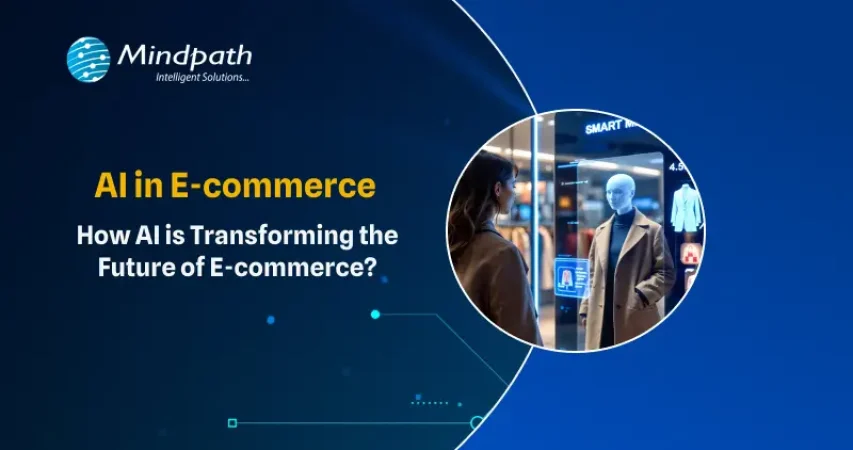
How AI is Transforming E-Commerce: A Deep Dive into Personalized Shopping Experiences

AI in E-commerce

How AI is Transforming E-Commerce: A Deep Dive into Personalized Shopping Experiences

Have you ever wondered how some online stores seem to know exactly what you want? What if your shopping experience could be personalized just for you, making it faster and easier than ever? As AI continues to evolve, it’s transforming e-commerce in ways we never thought possible. How is this technology changing the way we shop, interact with brands, and make purchases? In this blog, we will explore how AI is reshaping e-commerce and what it means for the future of online shopping. 

The term artificial intelligence, or AI, describes computer programs created to carry out operations that normally call for human intellect. This includes understanding speech, decision-making, and pattern recognition. Artificial Intelligence (AI) comprises several technologies, including natural language processing (NLP), deep learning, and machine learning. 

Artificial intelligence (AI) plays a key role in e-commerce today, revolutionizing how firms run and connect with customers. E-commerce companies can employ AI to better make decisions and improve the entire buying experience by using user data. AI is a vital tool in the rapidly changing world of e-commerce since it helps online companies remain competitive and adapt to shifting customer requirements. 

Want to know more? Let’s dig in! 

How is AI Transforming E-commerce?

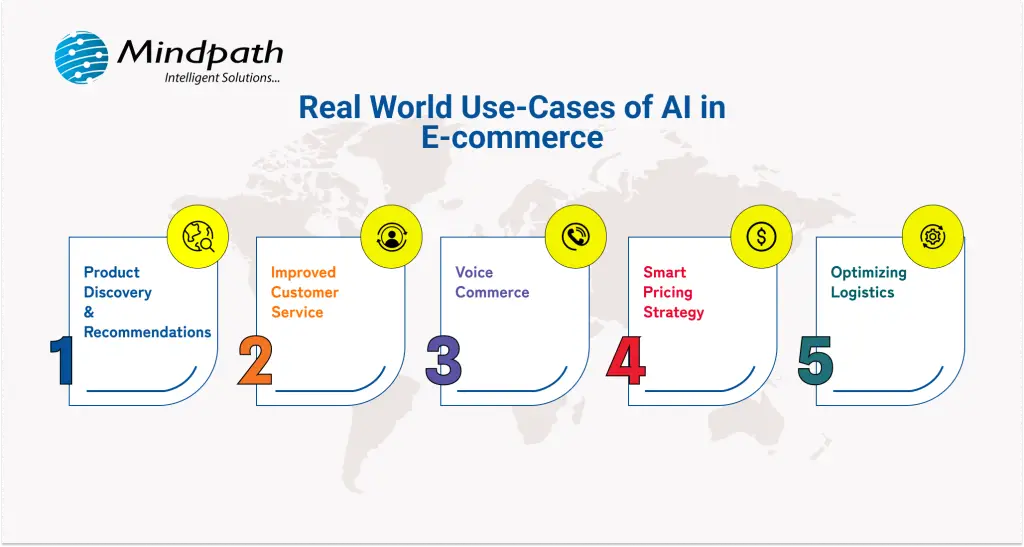
1. Automating Customer Help

Chatbots and virtual assistants are fantastic for offering customer care online. They make use of artificial intelligence (AI) to determine the needs of customers. Natural language processing (NLP) is the ability for chatbots to understand queries and requests. They learn and become more skilled at serving clients as they engage with them more. 

Chatbots are a great resource for customers and online retailers alike. They never require a break and are constantly accessible, even late at night. They are polite, calm, and typically know the answers to a lot of queries. They take care of basic questions so that human agents can concentrate on more complex problems. Recent advancements in AI have made chatbots even more intelligent, which gives customers greater confidence when interacting with them. Many customers are willing to purchase goods from chatbots, particularly since some of those can offer exclusive offers just for them. 

2. Reducing Manual Work

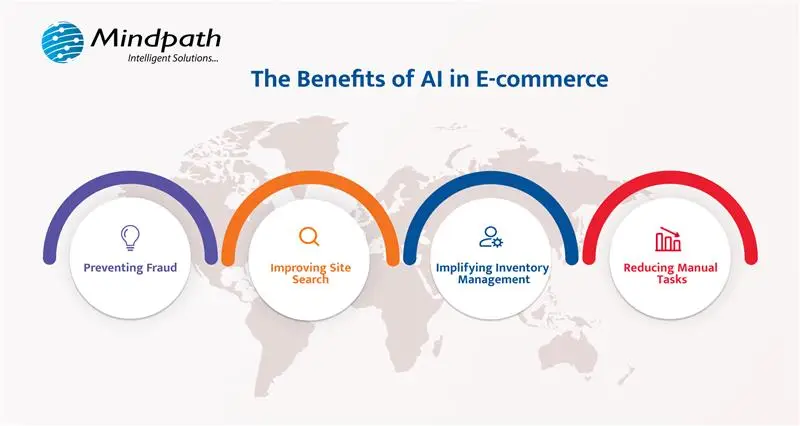
Artificial intelligence (AI) is revolutionizing e-commerce by replacing routine everyday operations that usually call for human labor. This change lessens the need for a big workforce while enabling organizations to run more effectively. 

While it is unfortunate that automation can result in the loss of certain retail associates, many businesses believe artificial intelligence (AI) offers more opportunities for cost savings and productivity gains. Businesses can optimize their processes and lower human error by entrusting AI with routine jobs. Over time, this can result in clients receiving faster service and having a more responsive purchasing experience. So, adopting AI will ensure that employees can participate in more meaningful ways and help e-commerce businesses prosper in a competitive marketplace. 

3. Preventing Online Fraud

E-commerce businesses face a serious threat from online fraud, which costs them billions of dollars annually. Thankfully, AI offers sophisticated methods to address this issue. Machine learning algorithms have made the task of manually reviewing transactions for unusual patterns, which once required a large number of personnel, faster and simpler. 

To identify suspicious activity, these algorithms can instantly evaluate millions of data points. An AI system can detect abnormalities rapidly, such as when someone tries to commit fraud by inputting the wrong delivery address and flags the entry for evaluation.  E-commerce companies can drastically lower financial losses and safeguard both themselves and their clients from fraud by utilizing AI for fraud detection. This makes everyone’s online buying experience safer. 

4. Smart Recommendations

AI-driven recommendations raise the bar for personalization in online shopping. AI is able to examine a customer’s browsing history, previous purchases, and even their interactions with items, unlike traditional businesses. This makes it possible for AI to make tailored product recommendations and anticipate what a buyer might be interested in. 

Customers will find shopping easier and more fun thanks to these very accurate recommendations that are customized to everyone’s tastes. AI helps buyers find the proper items by making relevant suggestions; this increases the likelihood of a purchase and improves the entire shopping experience. Brick and mortar establishments are just unable to match this level of customization. 

5. Easy Cross-Selling

AI enables e-commerce companies to provide customers with product recommendations while they buy. AI can employ their past purchases and preferences to suggest relevant products that customers might like to add to their basket while they are checking out. Businesses can more easily provide appropriate ideas by deploying AI-powered recommendation engines, which leverage data on frequently purchased goods. Customers are encouraged to purchase more as a result, increasing revenues through upselling and cross-selling without being intrusive.

6. Personalized Shopping

Personalization is essential in e-commerce to provide a customized purchasing experience for each unique client. Customization strengthens the bond with clients, encouraging loyalty and improving the pleasure of buying. Personalized experiences are increasingly expected by many customers, but not all merchants have completely integrated them into their platforms. 

AI has greatly enhanced the personalization of e-commerce by analyzing vast volumes of user data and providing real-time insights. This enables websites to function as personal shopping advisors by making product recommendations and presenting customized discounts. Through customization of the purchasing experience, businesses can raise revenue and establish enduring bonds with their customers. 

AI Development Services at Mindpath

At Mindpath, we offer AI development services that help businesses use the power of artificial intelligence to improve their operations. Our team creates AI solutions tailored to your needs, whether it’s automating tasks, analyzing large amounts of data, or improving customer experiences.  We use advanced AI technologies like machine learning and natural language processing to build smart systems that can make decisions, learn from data, and solve complex problems. With Mindpath’s AI development services, your business can become more efficient, make better decisions, and stay ahead of the competition in the fast-changing digital world. 

Wrapping Up!

Artificial Intelligence is rapidly transforming the e-commerce landscape, making shopping experiences more personalized, efficient, and secure. From automating customer support to offering personalized recommendations, AI has become an essential tool for businesses looking to stay competitive and meet evolving customer expectations. As AI technology continues to advance, its impact on e-commerce will only grow, offering endless possibilities for innovation and enhanced customer satisfaction. Partner with Mindpath today to leverage AI’s power and drive your e-commerce success into the future. 

Ready to transform your e-commerce business with the power of AI?

At Mindpath, we specialize in creating intelligent solutions tailored to your needs.

Related Post

Discover how DevOps can save your business costs by improving efficiency, and enhancing collaboration across teams for high-quality delivery.
Explore OpenAI’s o1 models, revolutionizing AI and learn how Mindpath’s expert AI development services deliver innovative solutions.
Master state management in React with this in-depth guide. Learn about local state, global state, and third-party libraries.

Related Post

Benefits of Using NodeJS Development Services (1)

Node.js stands at the forefront of web development, seamlessly integrating frontend and backend tasks with its JavaScript foundation. Its event-driven architecture and expansive npm ecosystem enable rapid development of scalable applications. Backed by a thriving community, Node.js continues to redefine digital landscapes, making it the premier choice for innovative, high-performance web solutions.

Are you curious about the tools that power some of the most efficient and dynamic web applications today? If you’re in the web development space, you have probably heard of Node.js. But what makes Node.js stand out among the myriads of options available? Let’s explore why Node.js might just be the game-changer you’ve been searching for. 

In this blog, let’s dive deep into the advantages of Node.js to uncover how it enhances application performance, scales seamlessly to meet growing demands, and streamlines development processes.

An Overview of Node.js 

Node.js is a web development platform that is revolutionizing the way applications are developed and distributed on the internet. It is a standout force in the dynamic field of online development. Node.js, which leverages the widely used JavaScript language, enables developers to easily integrate the frontend and backend development processes. Node.js development services benefit from its lightweight, event-driven design, which is very useful in the modern digital environment.  

It makes it possible to develop scalable, highly responsive apps that can manage several connections at once. Because of its effectiveness, Node.js is the best option for real-time applications where responsiveness is crucial, such chat platforms, online games, and collaboration tools. Additionally, Node.js encourages creativity by streamlining the development process. Its robust package and library ecosystem, made possible by npm (Node Package Manager), speeds up development and enables programmers to take advantage of pre-existing tools for a range of features. This feature improves web applications’ scalability and maintainability while also saving time and resources.  

Key Benefits of using Node.js 

  •  High Performance 

Node.js development services achieves great performance because of its non-blocking, event-driven architecture, which enables it to handle several requests concurrently without waiting for prior actions to finish. In real-time applications where responsiveness is essential, this efficiency is crucial. Node.js translates JavaScript straight into machine code by using the V8 JavaScript engine, which is well-known for its speed and optimization. This leads to quicker execution times.  

The core of Node.js’s ability to provide great performance across a range of applications is this Google-developed engine. For example, Node.js is used by PayPal and LinkedIn because it can easily handle large amounts of traffic and provides real-time updates.  

  • Scalability 

Node.js excels in scalability because of its unique architecture and features designed for large-scale applications. Because of its event-driven, non-blocking architecture, Node.js servers can process several requests at once without experiencing I/O operation blocking. Applications that need to manage massive data streams in real-time or serve a high number of concurrent users must have this capacity.  

Node.js is lightweight and efficient, allowing it to scale horizontally across multiple cores or servers, enhancing its scalability. Because Node.js is an asynchronous programming language, developers may leverage its ease of deployment across distributed systems to maximize resource consumption and maintain excellent performance even under severe loads. 

  • Efficient Development Process   

By using JavaScript for both frontend and backend development, Node.js streamlines the development workflow and lowers the learning curve for developers who are already familiar with JavaScript, enabling an efficient development process.  

By writing code for the complete stack using a single language, developers can increase code reuse and reduce the amount of time they spend moving between multiple programming languages.  

The strong npm (Node Package Manager) module ecosystem of Node.js is another element that makes development easier. A sizable collection of reusable tools and libraries that make typical development tasks easier are provided by npm. Third-party modules are simple for developers to incorporate into their projects, which shortens development timeframes and eliminates the need to create essential features from scratch. 

  • Rich Ecosystem 

Node.js has a rich ecosystem, which increases its attractiveness and usability in modern web development. The largest open-source library ecosystem in the world, npm (Node Package Manager) is at the center of this ecosystem. With more than a million packages, modules, and tools covering almost every facet of application development, npm provides developers with an extensive repository.  

With the help of this large library of npm packages, developers may speed up development processes by using pre-made solutions for typical tasks like database integration, testing frameworks, UI components, and authentication.  

  • Strong Community Support 

Strong community support is one of Node.js’s greatest assets and is essential to its expansion, uptake, and continuous improvement. This dynamic group of contributors, enthusiasts, and developers works together to enhance Node.js, exchange information, and offer helpful resources to other developers.  

The accessibility and inclusion of the Node.js community is one of its main advantages.  Developers of all skill levels, from beginners to seasoned professionals, are welcomed and encouraged to participate. A large number of people contribute to the ecosystem by making npm packages, frameworks, tools, and instructional materials. This collaborative effort ensures that Node.js remains innovative, responsive to industry trends, and capable of addressing evolving development challenges. 

Case Study and Success Stories   

Node.js development service has shown its mettle in a number of well-known applications, showcasing its adaptability and reliable performance in a variety of sectors.  

Walmart, a massive retailer, is the subject of an interesting case study. The company used Node.js to improve its online shopping experience. By choosing to hire Node.js developers for their backend services, Walmart improved page load speeds and overall site performance, which raised consumer happiness and increased sales conversions

Similarly, Netflix has streamlined its content delivery systems with Node.js, guaranteeing millions of consumers globally a flawless streaming experience. These triumphs demonstrate the tactical benefit of working with a professional Node.js development services firm. Through these collaborations, companies may efficiently utilize Node.js’s capabilities, utilizing its event-driven, non-blocking design to create scalable, high-performance apps that satisfy the demands of the contemporary digital landscapes. 

How to Hire Node.js Developer 

  • Define Project Requirements: Clearly outline the skills and experience needed, such as JavaScript proficiency, knowledge of asynchronous programming, and experience with frameworks like Express.js. Understanding why hire NodeJS developers can help ensure you bring in the right talent to leverage these skills for your project’s success.
  • Draft a Detailed Job Description: Highlight the required technical skills and any additional qualifications, including database management or API development experience.
  • Conduct Thorough Technical Interviews: Assess problem-solving abilities, Node.js knowledge, and hands-on skills through technical interviews and coding challenges.
  • Evaluate Cultural Fit and Communication Skills: Ensure candidates can collaborate effectively and fit well with your team dynamics, especially if working in a remote environment.
  • Check References and Past Work: Validate reliability and performance by checking references and reviewing past work experiences. 

Conclusion 

Conclusively, Node.js emerges as a key component of contemporary web development, presenting unmatched advantages including high performance, scalability, a productive development process, an extensive ecosystem, robust community support, and proven performance in the real world. Node.js stays ahead of the curve as web development patterns change over time, adding new features and developing its ecosystem. Adopting Node.js enables companies to develop and prosper in a cutthroat online marketplace while also ensuring reliable and scalable systems. 

At Mindpath, we specialize in leveraging Node.js to drive transformative solutions for businesses of all sizes. Whether you’re looking to optimize performance, scale your applications, or innovate with new features, our expertise in Node.js development services can empower your digital journey. What are you waiting for? Contact us today to explore how we can help you harness the full potential of Node.js. 

Looking for a NodeJS Developer for your next project?

Transform your web development with Node.js: integrate frontend & backend effortlessly, leverage event-driven power, and join a thriving developer community.
Benefits of AI consulting

In today’s fast-paced digital world, organizations need direction, as well as technology. Understanding the benefits of AI consulting can help companies see their way through the muddy landscape of choices and complex AI opportunities. Organizations need to understand how AI can be a catalyst for efficiency, better decision-making, and other growth-related opportunities; it is vital to bring experts who guarantee concrete results.

AI consultants help organizations turn abstract possibilities into concrete, achievable strategies that generate measurable outcomes and prepare the organization for the future. Working alongside AI specialists, organizations can identify high-value opportunities for companies to take action and execute a plan of action that blends seamlessly with their day-to-day work.

AI consultants provide clarity through roadmaps to success, help organizations identify pain points, and create value while ensuring projects remain aligned with strategic goals. Working together smooths the pathway toward innovation, builds organizational AI capabilities, and instills confidence for teams to lead AI adoption. In this blog, we will discuss AI consulting benefits and the superiority of helping your organization succeed.

Curious about how AI is transforming business as a game-changer? Explore our AI Consulting Services to discover how we turn cutting-edge technology into powerful growth opportunities.

Why Do Businesses Need AI Consulting?

Businesses regularly encounter obstacles such as complicated AI technologies and limitations of expertise in-house. Hiring an experienced AI consultant helps organizations overcome these complications by designing tailored solutions for companies that build towards their strategic goals. By doing this, they make sure that AI initiatives return value, increase efficiencies, and have longevity so that AI can be adopted organization-wide in a fluid and meaningful way.

AI consulting provides organizations with the guidance and direction to be successful with artificial intelligence. The major benefits of hiring an AI consultant include improved operations, smarter decision-making, and actionable productivity yields. AI consultants offer specialized as well as targeted strategies for businesses or organizations. They engage businesses to analyze their needs, flag viable AI applications, and pinpoint an ideal approach to navigating operational demands.

Also Read: AI transforming future.

Key Benefits of AI Consulting

As AI continues to drive change across the landscape of business and industry, companies are often grappling with knowing and deploying it effectively. Below are the benefits of AI consulting and notes about why organizations are increasingly turning to professionals with expertise in complex AI decision-making and delivering solutions.

1. Expert AI Guidance

AI consulting firms possess specialized knowledge in machine learning, predictive analytics, and natural language processing. They will help to design solutions for your complex problems to assist you in developing creative and customized solutions for your business. They will also guide you through applying the newest methods and tools and the industry’s best practices to yield measurable and sustainable results for your company.

2. Tailored AI Solutions

The benefits of AI consulting include developing solutions built around your business goals and business challenges. The AI consultant evaluates your business and recognizes areas where AI can improve efficiencies, increase automation, and drive enhanced customer experiences. They provide a comprehensive, customized service to ensure your business achieves higher outcomes and makes the most of its return on investment.

3. Scalability and Flexibility for Growth

AI business consulting focuses on creating systems that are adaptable to shifting business necessities and workloads. Consultants build solutions that can accommodate more data better and new capabilities or functionalities at your pace as your business grows. The key to unlocking your long-term AI return on investment is flexibility to change and support new long-term growth.

4. Cost Efficiency

Companies get a much higher ROI from AI consulting when they prioritize the high-impact areas and avoid spending unnecessarily. AI consultants then deliver scalable solutions that save costs compared to having a hospitality AI team in-house. By working with a consultant, it also lowers the cost of trial and error and optimizes value from every AI initiative.

5. Data-Driven Decision Making

AI consulting for enterprises helps to analyze extremely large amounts of data to make sense of it. AI consultants use an AI analytics tool to identify trends, improve processes, support strategic decisions, and answer more complex questions. These insights give companies speed to insight, speed to decisions, and maintain their market competitiveness.

Want to know how an AI Consultant helps businesses in driving digital transformation? Explore our detailed blog on the role of AI consultant.

6. Enhanced Customer Experience

The benefits derived from AI consulting are enhancing the way businesses think about their relationship with customers through the interaction of AI-powered tools. AI consultants offer chatbots, recommendation engines, and sentiment analysis to help provide instant, thorough, and personalized support for every question. All these features can help increase engagement, loyalty, and satisfaction for AI consulting customers.

7. Reduced Business Risks

The benefits of AI consulting also cover risks associated with how companies use and apply AI technologies. Consultants will address issues around data security, compliance with regulations and other operational issues. In general, the consultant’s expertise helps lower operational and legal risk, thus implementing AI is a safer and more reliable prospect.

8. Stronger Competitive Edge

A benefit of AI in business strategy consulting is that we support organizations in implementing innovative solutions that give them an advantage in the marketplace. We help consultants create and develop AI tools for improving operations, delivering services, and minimizing expenses. Positioning improvements like these take you to the forefront of your field and maximize your chances for sustainable growth.

9. Ongoing Support and Optimization

The benefits of AI consulting services are more extensive due to continuous support for maintaining AI systems. In general, consultants make updates as needed, optimize algorithms, and resolve problems quickly. A lasting commitment on the part of consultants equates to effectiveness, dependability, and consistency in delivering results will be sustained over time.

10. Stay Ahead with Latest Innovations

One of the major benefits of AI consulting is allowing your business to maintain knowledge about current and developing AI technologies, etc. Consultants will keep your systems fresh, modern, efficient, and relevant to the marketplace. This way, you give your company every chance to prepare for the future and remain competitive.

Organizations are relying on AI, but don’t know the right way to use it effectively. Discover why organizations need AI consulting services to unlock growth and guide their business towards success.

Want to Unlock the Full Potential of AI?

AI consulting advances organizations to operate smarter and faster while driving real business value. By collaborating with an expert, organizations can undertake AI initiatives that can be scaled, adjusted, and cost-controlled while delivering tangible benefits to customer experiences, decreasing operational and legal risks, and enhancing competitive edge. Working with an AI consultant allows organizations to implement strategies with confidence and better utilize their resources while monitoring changing technology trends that can prepare them for the future and help sustain innovation and success.

Our AI consulting services help businesses create and implement AI strategies that align with organizational goals. The team provides ongoing support, integrates state-of-the-art AI technologies, and ensures every AI project maximizes return on investment. Mindpath enables smooth implementation, operational efficiencies, and ongoing value by providing practical, hands-on solutions to companies.

Multi Cloud vs Hybrid Cloud

Deciding between multi-cloud vs. hybrid cloud strategies is becoming an important choice for organizations that want to remain agile and scalable. Every organization needs to find a way to balance flexibility, security, and performance, and this holds true with cloud architecture as well. The more complex challenge is determining which model can optimize operations while allowing the teams in the organization to innovate unhindered. As technology progresses to new heights, a strong cloud architecture can be a differentiating element within an organization’s growth.

It is essential to be certain of how both cloud models serve your business objectives and technical goals to make the better decision. It is not just an issue about infrastructure, but positioning your organization for the future and digital resilience. Understanding their differences helps organizations make confident and data-driven decisions in a world where technology changes rapidly. In this blog, we will explain some of the fundamental principles of multi-cloud and hybrid cloud so that the decision on which is best for you will be less difficult.

Want to determine which cloud strategy will be ideal for your organization? Contact us to get deeper insights and make smart business decisions that lead to future growth.

Understanding the Fundamentals of Hybrid Cloud and Multi-Cloud

A hybrid cloud combines both private and public cloud services in order to provide an adaptable and secure environment for computing. Organizations can house sensitive data in a private cloud to protect it, while still utilizing the on-demand, scalable, and cost-effective computing of the public cloud. Hybrid clouds offer enhanced control, resource utilization, and performance. Utilizing a hybrid cloud allows organizations to efficiently manage workloads across the types of cloud while enjoying the benefits of both cloud types.

A multi-cloud strategy uses multiple cloud service providers to achieve specific corporate objectives. In the multi-cloud vs. hybrid cloud debate, companies will tend to prefer multi-cloud solutions for flexibility, avoiding being locked into a single vendor platform, and minimizing operational risks such as downtime or loss of data. Each application in a multi-cloud environment can run on a public cloud platform or private cloud platform based on relative performance or cost needs.

Advantages of Hybrid Cloud

A hybrid cloud gives companies the right combination of flexibility and control, helping companies manage data securely and securely provide scalability and efficiency for operations.

1. Strong Security and Data Control

Hybrid cloud allows companies to maintain improved control of sensitive data and mission-critical systems. Companies can use private servers to store private information and public clouds for everyday tasks, allowing for a balance between security and freedom.

2. Smarter Cost Management

Businesses can reduce their costs by maintaining constant workloads on private systems, while variable workloads can move to the public cloud. This model allows for a pay-as-you-go system that reduces risk of overspending and improves cost optimization.

3. Faster Performance and Low Latency

Hybrid cloud enhances performance by positioning time-sensitive jobs, such as analytics or IoT applications, nearer to the end user. The configuration call for helps to reduce latency and increase response times for the users.

4. Reliable Disaster Recovery

Businesses are able to store crucial data in the public cloud while ensuring that a main version is also preserved on their premises and if there is a systems failure, they can quickly restore and resume business as usual with minor interruptions.

5. Greater Scalability on Demand

Organizations can easily scale their capacity up or down via the public cloud when they find themselves in busy periods or running promotional activities that bring in high traffic. After the busy period ends, they can scale down their capacity, so they aren’t wasting money and resources.

6. Better Compliance and Data Governance

Hybrid cloud helps companies follow data protection rules by keeping customer data on local servers. At the same time, they are still able to carry out non-sensitive work in a public cloud, thus making an informed decision on multi-cloud vs hybrid cloud.

7. Boosted Innovation and Flexibility

Teams can experiment with fresh tools and services in the public cloud without interfering with core systems. This illustrates that the difference between multi-cloud vs hybrid cloud can drive business innovation and flexibility within the digital age.

Examples of Hybrid Cloud

These are some real-world hybrid cloud examples and how organizations use this approach to improve business flexibility, security, and efficiency.

1. Digital Transformation

A hybrid cloud modernizes IT systems with a remote workforce and protects data in a secure environment.

2. Disaster Recovery

Hybrid clouds help your business continue operating normally by recovering data at a fast speed in the event of outages.

3. Development and Testing

Developers develop and test apps in their public clouds, then port to private clouds.

4. Cloud Bursting

During peak traffic, additional workloads move from private clouds to public clouds without impacting performance.

5. Edge Computing

Delivers and processes data near the user, resulting in faster and lower latency experiences.

6. AI & Machine Learning

A hybrid cloud supports AI workloads with the best scalability and the security of their data.

Advantages of Multi-Cloud

The following are the main benefits of a multi-cloud strategy that will help to improve business performance and facilitate better operations.

1. Business Continuity Edge

In comparing multi-cloud vs. hybrid cloud, one advantage of multi-cloud is that it allows operations to continue even if one of the providers has an outage. By spreading workloads across a combination of platforms, businesses provide continued performance and reliability.

2. Flexible Cost Management

In the hybrid cloud vs. multi-cloud comparison, another of the advantages of multi-cloud is improved cost control. This allows companies to choose the cheapest cloud provider for each workload and optimize resources effectively.

3. Customized Security Approach

Multi-cloud allows organizations to engage with providers that best suit their compliance and security requirements. This helps to ensure improved data security and better alignment with regulatory standards.

4. Independent Provider Choice

Using a multi-cloud strategy, organizations will have less reliance on one vendor. They will have the flexibility to move workloads, negotiate terms, and meet changing demand in the market.

5. Optimized Technology Access

Each cloud provider has a service that they do best, e.g., AI, analytics, or integration. Multi-cloud allows organizations to select the cream of the crop and combine them together to get the best performance and innovation.

6. Enhanced Global Reach

Multi-cloud allows applications to be deployed across multiple locations to minimize latency and enhance speed. This is especially useful for global companies that need to provide consistent, reliable speeds globally.

7. Ongoing Innovation Power

By utilizing countless ecosystems in the cloud, firms are able to engage with new, emerging technologies that give them flexibility and even a competitive advantage regarding innovation and continued growth.

Examples of Multi-Cloud

Here are real-world examples of multi-cloud that demonstrate how businesses use multiple providers to enhance their performance, flexibility, and reliability.

1. Specialized Services

A business may use Google Cloud for analytics and AWS or Azure for AI tools to get the best of each platform.

2. Disaster Recovery & Continuity

A financial firm can rely on OCI for core apps and IBM Cloud as a backup to ensure uninterrupted operations.

3. Cost & Performance Balance

A retailer may host its e-commerce site on one cloud and run analytics on another to save costs and improve speed.

4. Diverse SaaS Usage

An organization can follow a multi-cloud approach by using Salesforce for CRM and Workday for HR management.

5. Compliance & Data Security

A healthcare provider may store patient data in a private cloud while using a public cloud for general operations.

Multi-Cloud vs. Hybrid Cloud: A Comparison Table

Below is a brief comparison table showcasing the primary differences between hybrid cloud and multi-cloud, so you can gauge which model may work better for your business requirements.

Aspect Hybrid Cloud Multi Cloud
Definition Combines private and public clouds to work as one integrated environment. Uses multiple public cloud providers for different workloads.
Primary Goal Balance security with scalability by keeping sensitive data on private clouds. Maximize flexibility and performance by choosing the best services from each provider.
Architecture Integrates on-premise infrastructure with one or more cloud services. Operates across multiple independent cloud platforms without tight integration.
Data Management Data moves between private and public clouds based on need. Data is distributed across several cloud platforms for specific tasks.
Security Control Offers stronger control and compliance for sensitive workloads. Security depends on each provider’s standards and your management strategy.
Cost Efficiency Reduces cost by keeping predictable workloads in private environments. Optimizes cost by comparing pricing and using best-fit providers.
Use Case Ideal for regulated industries needing data privacy and scalability. Perfect for businesses aiming for high availability and vendor flexibility.
Example A bank using private cloud for transactions and public cloud for analytics. A retailer using AWS for e-commerce, Google Cloud for data, and Azure for AI.

Ready to Choose the Right Cloud Strategy for Your Business?

Deciding between multi-cloud vs. hybrid cloud depends on your organization’s needs for flexibility, performance, and security. Both approaches empower businesses to innovate and scale effectively. Understanding their core differences helps you design a cloud strategy that aligns with your goals and builds a strong foundation for long-term digital success.

At Mindpath, we deliver expert cloud computing services to help businesses design secure and scalable environments. Our team builds tailored multi-cloud vs. hybrid cloud solutions that enhance performance, reduce costs, and boost efficiency. Partner with us to create a future-ready infrastructure that keeps your business innovative, adaptable, and competitive in a fast-changing digital world.

Learn the key differences between multi-cloud and hybrid cloud strategies and discover how Mindpath’s cloud services can help.