Home

How Much Does It Cost to Build a Custom GenAI Solution in 2026? A Real Pricing Breakdown

How Much Does It Cost to Build a Custom GenAI Solution in 2026? A Real Pricing Breakdown

Join our Newsletter!

generative ai development cost

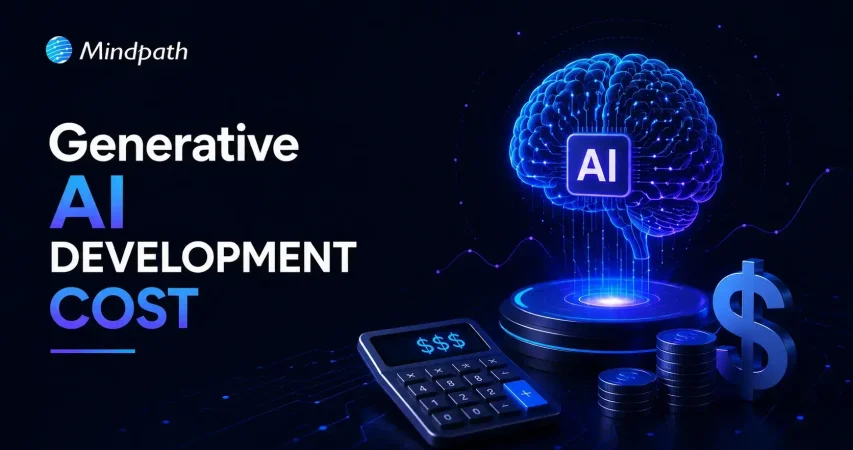
Planning a custom GenAI solution often begins with one difficult question: what will it cost? The generative AI development cost can look simple at first, yet many details shape the final investment. Data preparation, model selection, security, integrations, and ongoing support all influence pricing. So, how can you budget confidently without missing essential costs?

Key Takeaways

  • 01
    A basic GenAI MVP typically requires a $20,000 starting investment. 
  • 02
    Enterprise GenAI platforms can exceed $500,000 with complex security requirements. 
  • 03
    Data preparation and RAG setup can add $10,000 to $40,000. 
  • 04
    Monthly API and cloud usage can significantly increase long-term project costs. 
  • 05
    Clear scope and vendor expertise prevent budget overruns during GenAI implementation. 

That question becomes even more important when every decision affects your project’s value. A basic tool and a fully customized solution can require very different investments. You also need clarity before resources, timelines, and expectations start moving forward. Interested in knowing the real pricing breakdown? We have got you covered! This article breaks down the cost to build a GenAI solution, major pricing factors, hidden expenses, and practical planning considerations. So, let’s get started!

Need a cost-effective custom GenAI solution for your business? We offer generative AI development services to build secure, scalable, and ROI-driven AI solutions.

Why Are Businesses Seeking Custom GenAI Solutions in 2026? An Overview

As we know, custom GenAI development creates tailored AI applications for specific business needs. These solutions combine foundation models with internal data, workflows, and brand requirements. They help organizations automate complex work, protect sensitive information, and deliver more relevant insights than standard tools.

Businesses are seeking custom GenAI solutions because standard tools cannot fully support unique processes and goals. They need AI that understands internal data, protects sensitive information, and delivers relevant outcomes.

Here’s what custom GenAI solutions can do for a business.

1. Smarter Business Decisions: Turn scattered internal data into faster, more informed decisions.

2. Secure Innovation: Use proprietary knowledge to support product development, coding, and content creation.

3. Personalized Customer Support: Deliver relevant recommendations, interactions, and assistance at scale.

4. Streamlined Daily Workflows: Automate repetitive tasks across systems, teams, and business processes.

5. Stronger Compliance Controls: Generate secure, compliant outputs for sensitive and regulated operations.

 Must-Know Insights

  • Over 80% of enterprises will use GenAI in production. (Gartner)
  • 74% of companies plan multi-agent AI deployments soon. (Gartner)
  • AI spending could reach $2.59 trillion worldwide. (IMF)
  • Security incidents will shape enterprise GenAI design decisions. (Gartner)

What Drives the Cost to Build GenAI Solution?

A custom GenAI solution does not come with a fixed price tag. Each business brings different data, goals, systems, and security needs to the project. That is why GenAI development pricing can vary widely. The following are the key factors that influence the final cost.

1. Data Preparation and RAG

Clean, structured business data forms the foundation of a useful GenAI solution. Secure data pipelines and vector databases can increase the custom generative AI development cost.

2. Security and Compliance

Strong security controls protect sensitive business and customer information. Compliance requirements can add significant effort to the overall generative AI implementation cost.

3. Integration and Workflow Design

Connecting GenAI with existing systems requires careful planning and development. Complex workflows and multi-agent capabilities can raise the cost to build GenAI solution.

4. Model Strategy and API Usage

The selected model directly affects GenAI development pricing and ongoing expenses. High API usage, fine-tuning, and longer outputs can increase costs.

5. Infrastructure and Compute

Cloud hosting, storage, GPUs, and data transfers support reliable GenAI performance. Higher usage and scaling needs can increase long-term operational costs.

How Much Does Generative AI Development Cost in 2026?

Every GenAI project has a different price because every business has different needs. So, how much does generative AI cost for your goals? The answer depends on the solution’s scope, data, integrations, and security needs. For a clear understanding, let us break down the expected cost ranges.

1. Proof of Concept or GenAI MVP

Estimated cost: $20,000 to $60,000

This option helps businesses test one focused GenAI idea before making a larger investment. It may include a basic interface, model API integration, limited data access, and simple workflows.

2. Production GenAI Features

Estimated cost: $60,000 to $150,000

This range suits customer assistants, content tools, internal knowledge search, and automated workflows. It usually includes stronger integrations, better user controls, and more complete testing.

3. Custom AI Agents and Workflow Automation

Estimated cost: $100,000 to $250,000

These solutions complete multi-step tasks by connecting with business tools and systems. Costs increase when agents need approvals, memory, tool access, monitoring, or complex workflow logic.

4. Enterprise GenAI Platforms

Estimated cost: $250,000 to $500,000+

Enterprise solutions support multiple teams, larger data volumes, and broader business use cases. They often require scalable infrastructure, advanced security, governance controls, and detailed audit records.

What Is Included in the Custom Generative AI Development Cost?

A reliable custom generative AI development cost estimate should cover more than coding. It should include the work needed to make the solution useful, secure, and ready for real business use.

1. Discovery and solution planning: $5,000 to $20,000

2. UI/UX design and application development: $8,000 to $30,000+

3. Data preparation and RAG setup: $10,000 to $40,000

4. API and model integration: $10,000 to $50,000+

5. Testing and quality assurance: $5,000 to $30,000

6. Security and compliance: $10,000 to $50,000+

Hidden Costs to Consider Before Building a GenAI Solution

The initial Generative AI implementation cost does not cover every expense. These ongoing or overlooked costs can affect the total cost to build GenAI solution over time.

1. Cloud hosting and GPU compute: $1,000 to $30,000+ per month

2. API usage and token consumption: Varies based on users, prompts, and output length

3. Model monitoring and evaluation: $10,000 to $40,000+ per year

4. Data updates and scheduled retraining: $15,000 to $80,000 per year

5. Third-party tools and subscriptions: Varies by platform and workflow needs

6. Ongoing maintenance and support: $15,000 to $80,000 per year

7. Security reviews and compliance audits: $10,000 to $50,000+

Custom Generative AI Development Cost Planning Checklist

To understand the cost to build GenAI solution in a better way, follow this table. You will have better knowledge and can plan your budget accordingly.

Cost Area  Include in Initial Budget  Plan as Ongoing Cost  Why It Matters 
Discovery and solution design Yes No Defines scope, priorities, and technical requirements
Data preparation and RAG setup Yes Yes Internal data needs setup, updates, and quality checks
Application development and integrations Yes No Connects GenAI with workflows and business systems
Security and compliance Yes Yes Requires implementation, reviews, monitoring, and updates
API and token usage No Yes Costs grow with users, prompts, and response length
Cloud hosting and infrastructure No Yes Supports storage, processing, availability, and scaling
Testing and model evaluation Yes Yes Maintains accuracy, safety, and output quality
Maintenance and support No Yes Covers fixes, improvements, and model or API changes

Best Practices to Plan GenAI Budget More Effectively

Businesses can control costs by defining the right scope before development begins. A phased approach also helps teams prove value before scaling investment.

  • Start with one high-value and measurable use case
  • Define success metrics before selecting technology
  • Separate one-time build costs from ongoing operating costs
  • Confirm data security and compliance needs early
  • Plan for testing, monitoring, and future improvements
  • Work with a GenAI development partner that understands your industry

  Consider these Factors to Choose the Right GenAI Development Partner

1. Review Technical Expertise: Choose a partner with proven RAG, agent, integration, and evaluation experience.

2. Check Security and Compliance Practices: Confirm how they protect data and support relevant compliance requirements.

3. Understand Their Cost Approach: Ask for clear build, API, cloud, maintenance, and support estimates.

4. Discuss Outcome-Based Engagements: Align project pricing with measurable business goals and expected results.

5. Set Clear Service Agreements: Define uptime, response times, support responsibilities, and knowledge transfer expectations.

Looking for a Custom GenAI Solution Built Around Your Business?

A successful GenAI project starts with a clear scope, realistic budget, and long-term operating plan. By considering data, integrations, security, and maintenance early, businesses can manage the generative AI development cost while building a solution that delivers meaningful and measurable value.

At MindPath, we create custom GenAI development solutions around your business goals, workflows, and growth plans. Our team helps you define the right approach, control costs, and build secure AI capabilities that scale.


Frequently Asked Questions

Not always. A development partner can assess existing data, identify gaps, and create a preparation plan. Early data review helps avoid delays, unreliable outputs, and unexpected costs later.
Existing tools suit general tasks, while custom solutions support unique workflows, internal knowledge, and stronger controls. The right choice depends on your use case, data sensitivity, and long-term goals.
Set measurable goals before development, such as faster response times, reduced manual work, improved accuracy, or higher customer satisfaction. Tracking these outcomes helps demonstrate value and guide future investment.
Ask about relevant project experience, data protection methods, integration capabilities, testing processes, support plans, and cost transparency. Clear answers help you select a partner that matches your technical and business needs.
Yes, when teams design it with flexible architecture, scalable infrastructure, and modular integrations. A phased approach lets businesses add features, users, data sources, and workflows as needs evolve.

Support Is One Click Away

Featured Posts

Related Post

Hire ReactJS developers in New Jersy

New Jersey is gradually emerging as a popular tech hub with many big enterprises and budding startups setting up their base in the Garden State. These organizations want to hire ReactJS developers in New Jersey to create the most attractive interfaces that grab the attention of customers. The demand for skilled ReactJS developers is on the rise due to the growing competition among businesses to establish a robust online presence.

Do you want to build dynamic web apps that can stand up to the emerging benchmarks of performance? ReactJS offers you the best open-source framework to translate your ideas into real web solutions that bridge the gap between your business and customers. This post offers a comprehensive guide to understanding the important things to keep in mind while hiring React developers in New Jersey.

Looking to engage your users with an interactive and seamless web application? Mindpath’s expert ReactJS developers in New Jersey specialize in creating solutions that are perfectly aligned with business goals.

Exploring the Tech Landscape in New Jersey

The first thing that you must know before hiring ReactJS developers is the way in which New Jersey is an ideal place for ReactJS projects. The demand for Hiring ReactJS developers in New Jersey is growing consistently as the state harbors a vibrant and thriving tech landscape. It is also important to remember that cities like Princeton, Jersey City, and Newark are gradually emerging as notable technology hubs. On top of it, the arrival of major corporations and startups in New Jersey has also made the state more attractive for skilled tech professionals.

Another prominent factor that contributes to the growth of the tech landscape in New Jersey is the presence of academic institutions that contribute to the state’s talent pool. The React Developer Job Market in New Jersey has also been gaining momentum owing to its geographical proximity to New York. New Jersey might have a higher cost of living than the national average. However, it has a lower living cost than New York, which makes it a promising choice for top-tier tech talent.

Is ReactJS Still Relevant in New Jersey in 2025?

The world has progressed a lot since the arrival of ReactJS in 2013. With many new frontend development tools and frameworks in the market, it is reasonable to wonder about the reasons to choose ReactJS. Before you hire React developer in New Jersey, you must know why ReactJS is still a powerful framework for designing intuitive web apps. The one thing that no one can take away from ReactJS is the fact that it was developed by Meta, one of the biggest tech giants in the world. On top of it, it is an open-source JavaScript library, making it easier to access and understand.

The most prominent features of ReactJS that have been responsible for its popularity are the component-based architecture, declarative syntax, and virtual DOM. Component-based or modular architecture of ReactJS enables developers to break down UIs into smaller and reusable components. The reusable components play a crucial role in accelerating development and improving efficiency. On top of it, the declarative syntax helps in declaring exactly how you want the user interface to look. The virtual DOM helps in enhancing performance by identifying the most efficient approach to update the actual DOM.

Businesses have been searching for React developer hiring tips to capitalize on these features and build high-performance, maintainable, and scalable web applications. ReactJS is also a powerful choice for web UI development with its massive community that offers a treasure of libraries, tools, and resources. The actively growing community also offers the assurance of faster and efficient development alongside support for troubleshooting.

Curious why businesses are choosing ReactJS for their web projects? Discover the top benefits of React JS development services that make web applications more scalable and maintainable.

Crucial Skills to Look for in ReactJS Developers

Choosing the best ReactJS developers in New Jersey is not all about finding developers who know ReactJS. Business owners and hiring managers must verify whether candidates for React developer jobs have the essential skills required to address the responsibilities. The list of crucial ReactJS developer skills to look for in candidates includes a blend of technical and soft skills. Furthermore, employers should also keep an eye on candidates with skills that may add more value to web projects.

1. Core Technical Skills

You cannot expect to hire ReactJS developers without any technical skills. Every ReactJS developer must have an in-depth understanding of ReactJS and its core principles. The candidate must know about the component lifecycle, React hooks, the virtual DOM, state management, and props. In addition, React developers must be fluent in the ES6+ specifications of JavaScript with proficiency in new JavaScript features. The notable modern JavaScript features include arrow functions, modules, restructuring, and promises.

The answers to “What skills should a ReactJS developer in New York have?” will also focus on state management libraries such as Redux, routing libraries like React Router, and version control tools like Git. ReactJS developers must have a strong command of these aspects of ReactJS development to deliver effective results. On top of it, candidates for ReactJS developer jobs should know how to work with HTML and CSS, build tools, and API integration.

2. Must-Have Soft Skills

The skill requirements for React developer jobs also focus beyond the code as technical fluency alone cannot lead to success. Hiring managers must look for developers who have the soft skills required to work as part of an organization in changing environments. The essential soft skills required for a ReactJS developer include problem-solving, communication, collaboration, attention to detail, and adaptability.

Soft skills are the most crucial influencers of ReactJS developer cost in New Jersey as businesses need developers who create and nurture projects with other teams. You cannot expect a ReactJS developer without problem-solving skills to come up with an innovative UI design for your next web app. On the contrary, a developer with critical thinking can break down the problem and come up with elegant solutions.

Communication and collaboration are essential skills for React developers as they help in fostering teamwork. With multiple experts working in coordination on web development projects, ReactJS developers can achieve the best output. Furthermore, adaptability is a useful skill in the modern technology landscape, where new technologies and trends can lead to changing requirements for web development.

3. Bonus Skills

The search for skilled ReactJS developers may also bring you across some candidates with additional skills. Will the additional skills of the candidates be of any value to your business? Organizations that want to hire ReactJS developers in New Jersey must know the bonus skills that are nice to have in React developers. For instance, developers with fluency in server-side rendering frameworks like Next.js are a huge plus for employers.

The other additional skills that you can look for in React developer job applicants include TypeScript, testing frameworks, performance optimization, and UI component libraries. Each additional skill enhances how developers work and offers the assurance of a better final output. On top of it, knowledge of web accessibility standards and practical experience with cloud platforms like AWS and Azure can make ReactJS developers more useful.

Is your business looking for a reliable framework to power modern web experiences? Learn how React web development can improve performance, usability, and scalability.

Selecting the Ideal Hiring Model to Recruit React Developers

The choice of a hiring model is also another crucial decision in the hiring process. Most important of all, the answers to “What is the cost of hiring a ReactJS developer in New Jersey?” depend significantly on the hiring model adopted by an organization. Businesses can choose in-house developers, remote developers, freelancers, or professional ReactJS development services. Each hiring model presents distinct implications for your web development project, and you should choose one according to your requirements.

1. In-House ReactJS Developers

In-house ReactJS developers become a part of an organization’s internal teams and its culture. Business owners can have direct control over in-house developers and their work. In-house developers will be deeply integrated into the business as they align with the company’s values and vision. The biggest setback of choosing in-house ReactJS developers is the time-intensive recruitment process and the higher cost of hiring.

2. Remote Developers and Freelancers

Hiring managers can choose remote ReactJS developers in New Jersey to avoid the troubles that come with hiring in-house developers. Remote developers can work dedicatedly on web projects without imposing the costs of hiring a full-time employee. Freelancers, vetted thoroughly for their skills and experience, can also help businesses complete web projects with desired results.

3. Professional ReactJS Development Services

As a business owner, you must know that professional service providers are a trusted pick for any project. The experience of New Jersey-based ReactJS development services in web development projects across different industries can work in your favor. For instance, you will get to work with the best ReactJS developers without the need to manage them. As a result, businesses can also get relief from the burden of management overhead.

Is your business struggling to find the right tech talent locally? Discover the Key benefits of hiring remote developers to explore how remote teams expand your access to skilled developers worldwide.

Steps in the Process to Hire ReactJS Developers

Once you are familiar with the prerequisites before hiring, the next step is about preparing for the hiring process. Hiring managers might come up with many complex ideas to make the hiring process more meticulous and effective. On the contrary, you can rely on the following steps to hire the best ReactJS developers for your web projects.

1. Create an Attractive Job Description

Many people don’t know that the job description gets half the job done in the hiring process. How? The job description provides an outline of the job title, key responsibilities, skill requirements, and complexity of the job. As a result, the right applicants who check all the boxes in the job description will apply for the job.

Hiring managers can attract top ReactJS talent in New Jersey with job descriptions when created in the best way possible. You can create better job descriptions with details about the web projects and the level of experience required for the job.

2. Find the Best Platforms to Discover Talent

The job description is obviously the most powerful resource to help businesses get the best ReactJS developers. At the same time, hiring managers need to identify the right places to publish the job descriptions and seek talent. Professional networking platforms like LinkedIn or job boards can be some of the top places to begin with.

Hiring managers can also opt for unconventional approaches and visit online forums, conferences, and meetings between React developers to interact with them. Business owners can always rely on professional ReactJS development services to capitalize on the skills and experience of pre-vetted developers.

3. Comprehensive Screening and Interview

The screening process helps in picking the most capable candidates from the multiple applications for React developer jobs. In the initial screening, hiring managers must review the resume and portfolio of applicants. Hiring managers can also opt for a phone call or video call to evaluate their communication skills and experience of candidates.

After the screening is complete, you must have a structured interview process. The mandatory steps in an interview to hire ReactJS developers in New Jersey include coding challenges in simulated exercises, live coding sessions, and code reviews. The interview questions should test the depth of knowledge of the applicants about React concepts, JavaScript fundamentals, and UI design. Most important of all, the interview must also include questions to test the behavioral competence of candidates. Behavioral interview questions should measure whether the applicant will fit into the organization’s culture.

4. Know the Costs of Hiring ReactJS Developers

The most crucial aspect in any hiring process is the cost of hiring ReactJS Developers to the organization. Hiring managers look for ReactJS developer hourly rates when they need freelancers or remote developers. On the contrary, the salary or the hourly compensation does not represent all hiring costs.

According to ZipRecruiter, the average annual salary of ReactJS developers in New Jersey is almost $130,000 (Source). On the other hand, Glassdoor indicates that ReactJS developers can earn around $119,000 on average in New Jersey (Source). The hiring costs will not only include the salary but also the recruitment and onboarding costs.

Looking for a trusted partner to build scalable and high-performing React applications for your business? Explore how a React development company can turn your ideas into reliable, growth-driven digital solutions.

Ready to Find a ReactJS Developer in New Jersey Who Actually Delivers?

The task of finding a competent and experienced ReactJS developer in New Jersey can be significantly challenging for hiring managers. After reading a guide on how to hire ReactJS developers, you can get the confidence to pick the top ReactJS talent for your business. If you think that hiring ReactJS developers is a tough job, then you can rely on professionals.

We have the solutions for end-to-end web development at Mindpath with a team of experienced developers. Our specialization in ReactJS has helped us earn the trust of clients with outputs that deliver desired results. We strive to complete every project in alignment with the client’s vision while offering the assurance of cost-effectiveness and efficiency. Reach out to us for developing elegant as well as scalable web applications.

Frequently Asked Questions

1. How to hire ReactJS developers in New Jersey without getting overwhelmed by the process?

Break it down into clear stages: define the project scope, write a detailed job description, screen thoroughly, and interview with purpose. Having clarity on budget and experience level before posting the job saves significant time and prevents the common mistake of hiring the wrong fit entirely.

2. How does New Jersey compare to New York for hiring ReactJS developers cost-wise?

New Jersey offers a noticeable cost advantage. With a lower cost of living than New York, ReactJS developers based in New Jersey typically command lower salaries while still bringing comparable technical expertise. For budget-conscious businesses in the tri-state area, New Jersey is genuinely worth considering as a hiring destination.

3. What should a ReactJS developer portfolio actually show before shortlisting someone?

Real projects, not just personal experiments. Look for evidence of component architecture decisions, state management implementation, and API integration work. Bonus points for projects that show performance optimization or Next.js usage. A strong portfolio tells far more about a developer’s actual capabilities than a resume ever could.

4. Are bonus technical skills like TypeScript or Next.js worth paying extra for?

In most cases, yes. These skills directly impact code quality, scalability, and long-term maintainability of web applications. Developers with Next.js expertise add SEO and server-side rendering capabilities out of the box. Paying slightly more upfront for these skills typically saves significant rework costs later in the project lifecycle.

5. How should behavioral interviews be structured when hiring ReactJS developers?

Focus on real situations rather than hypothetical ones. Ask candidates how they handled tight deadlines, resolved conflicts within a team, or adapted when project requirements changed mid-development. Behavioral questions reveal whether someone will collaborate effectively, communicate honestly, and genuinely fit into the existing team culture long term.

Discover the ultimate guide to hiring Node.js developers in London. Learn about the skills, benefits, and cost factors involved in finding the right talent for your project.
The cost of hiring a ReactJS developer in New Jersey varies based on several factors, including experience level, project complexity, and location. Developers charge different rates depending on their expertise, with junior developers costing less than senior professionals. Additionally, project costs can range from a few thousand dollars for simple applications to tens of thousands for complex enterprise solutions. Understanding these costs can help you budget effectively and find the right developer for your needs. Below is a breakdown of ReactJS developer costs in New Jersey.

1. Hourly Rates by Experience Level

Hourly rates for ReactJS developers depend on their expertise. Junior developers charge between $12 and $40 per hour, making them ideal for basic projects. Mid-level developers charge $40 to $80 per hour and are suitable for more complex applications and API integrations. Senior developers with extensive experience in large-scale projects can cost $80 to $150+ per hour. The higher the experience level, the higher the rate, but also the greater the efficiency and quality of work.

2. Cost for Simple ReactJS Projects

For small-scale applications, prototypes, or basic websites, hiring a ReactJS developer in New Jersey can cost between $5,000 and $15,000. These projects often involve standard UI development, minimal backend integration, and basic features. If you need a simple yet effective React-based solution, hiring a junior or mid-level developer may be the most cost-effective approach. However, ensuring quality requires choosing a developer with at least some hands-on experience.

3. Cost for Complex ReactJS Applications

If your project requires advanced functionalities, API integrations, database management, and optimized performance, expect to pay anywhere from $20,000 to $60,000 or more. These applications often need mid-level to senior developers who can write scalable, maintainable code and handle challenging development tasks. Costs also increase if you require additional services like UX/UI design, third-party tool integrations, or real-time features.

4. Factors That Affect the Cost

The total cost of hiring a ReactJS developer isn’t just about hourly rates; it also depends on factors like project timeline, required skill set, and location. Developers in major cities may charge higher rates, and if your project demands full-stack development, additional frameworks, or post-launch support, the cost will rise. To optimize your budget, clearly define project needs and hire the right developer with the necessary expertise.

Looking for skilled ReactJS developers in New Jersey? Mindpath offers expert ReactJS development services tailored to your project needs. Whether you need a simple web app or a complex enterprise solution, our experienced developers deliver high-quality, scalable, and cost-effective solutions. Hire top ReactJS talent today and bring your vision to life with Mindpath’s expertise.
Contact us now to get started!

Discover the ultimate guide to hiring Node.js developers in London. Learn about the skills, benefits, and cost factors involved in finding the right talent for your project.
ai and business

Have you ever considered how AI and business actually fit together? You may have heard a lot about AI being faster and smarter, but is your business actually prepared for it? Many people are excited about new technology, but they often overlook whether they have a solid foundation. Take a second to think about it- is your business possibly ignoring some signs that say you are not prepared for AI yet?

AI can help any business develop, but starting without preparation can create issues. There are companies that jump into AI without having the right tools or people, or even ideas. This could waste valuable time and resources and lead to frustration. Integrating AI in business strategy from the start ensures you’re prepared and can identify potential challenges early. In this blog post, you’ll learn five easy indicators that show your business may not be ready for AI yet.

Want to future-proof your business with AI? We at Mindpath offers exceptional AI development services that help your business get AI-ready and unlock next level of growth! 

What Being ‘AI Ready’ Really Looks Like?

Being ready for AI means your business has the right people, tools, and plan to make it work well. When you think about AI and business together, it’s more than just buying new software. You need good data that’s easy to use, a team that knows how to work with AI, and clear goals that AI can help you reach. A business ready for AI knows how to bring people and smart technology together.

Look at Amazon. They show how AI in e-commerce can work side by side with business to help customers and save money at the same time. This happens because they plan ahead and know exactly how AI will help. If you want your business to be ready to use AI, start by checking your data, training your team, and making a simple plan that fits your real needs. When you get this right, AI in business can really help you grow.

What is an AI Readiness Checklist?

An AI Readiness Checklist is a simple tool that helps you see if your business is really ready to use AI in the right way. It covers important things like your data, your technical tools, and how well your team understands AI. When you think about AI helping your business grow, this checklist shows you what’s strong and what needs more work.

A good AI checklist looks at your technical setup, the quality of your data, your team’s skills, and whether your company is open to new ways of working. This way, you can fix any gaps before you bring AI into your business. By using an AI checklist, you can make sure you’re set up for success and get real value from AI in business.

How is AI reshaping the way websites are built and optimized? Explore our detailed article on AI in Web Development to see how it’s driving smarter design, faster deployment, and better user experiences.

AI Readiness Checklist for Businesses

Before you bring AI into your daily operations, it’s important to know where you stand. A good AI readiness checklist will help you see if your business is truly prepared for this step. Here are the key areas to focus on as you plan your AI and business journey.

AI Readiness checklist for businesses

1. Robust Data Foundations

Good data is the backbone of any artificial intelligence business idea. Check that your data is clean, organized, and ready for AI tools to use well. Strong data governance keeps your insights trusted and prepares your business for AI integration.

2. Leadership and Team Alignment

A strong AI and business plan starts with people who believe in it. Make sure leaders fully support your strategy and teams understand the goals. A clear roadmap and open communication help everyone move toward strategic AI adoption together.

3. Technology and Process Readiness

Your tools and workflows must support AI smoothly. Research the best AI solutions for your existing systems and test them with pilot projects. Use simple frameworks to track results and find the best areas for automation.

4. Governance, Ethics, and Security

Responsible AI needs strong rules and security in place. Create clear ethical guidelines and monitor how AI works in your company. A good AI checklist helps protect your artificial intelligence business ideas and builds trust for the long term.

5. Financial Planning and ROI

Every digital transformation roadmap needs clear budget planning. Create realistic budgets, show expected returns, and track savings as you go. This makes it easier to get leadership buy-in and keeps AI and business costs under control.

Looking to streamline your business operations and enhance customer experiences? Discover how conversational AI chatbots can help your business transform its workflows and boost efficiency in our blog.

5 Signs Your Business is Not Ready for AI

Many companies jump into AI without checking if they’re really prepared. Missing a few basics can lead to wasted time and money. Here are five signs that show your business is not ready for AI yet.

5 Signs Your Business is Not Ready for AI

1. Stuck in Paper-Heavy Processes

Paper forms, files, and manual approvals slow down daily work and limit growth. AI needs clean, digital data that is easy to find and process. If you’re still tied to paper, you’ll struggle to get real results from AI. Going digital is the first step to connect AI and business ideas that really work.

2. Running on Outdated Technology

Old systems can hold you back from adding smart AI tools. If your technology can’t talk to modern platforms, your AI plans won’t go far. Keeping rigid, legacy software in place only adds roadblocks. Updating your systems is essential for future-proofing your business with AI.

3. Poor Data Quality and Structure

Messy or incomplete data will confuse even the best AI tools. AI needs clear, well-organized data to find patterns and deliver insights. If your data is spread everywhere and filled with errors, you’re not ready yet. A strong data foundation helps your AI and business strategy succeed.

4. No Clear Data Strategy in Place

Without a clear plan, your data might be scattered, outdated, or not useful at all. AI can’t do much if it doesn’t have good data to work with every day. A strong data strategy shows what to collect, how to store it, and who can use it. This is key for turning business ideas AI into real results and leveraging AI in decision-making.

5. Lack of Real-Time Data Insights

AI works best when it has fresh, up-to-date information at its fingertips. If you only rely on old monthly reports, you will miss the full power of AI. Real-time data helps AI spot changes and take action fast. It’s a big step for future-proofing businesses with AI in any industry.

Want to future-proof your AI strategy? Don’t miss our insights on the Top AI Trends in 2025 every business should be ready for.

Ready to Make AI and Business Work Together?

Preparing your business for AI means more than just buying new tools. It’s about building strong data foundations, modern systems, and a clear strategy that connects people and technology. Knowing the signs that you’re not ready yet can save time, money, and stress. With the right plan, AI can help your business grow stronger together and bring real results.

Mindpath’s expert AI development services help you create practical, future-ready solutions. Our team works closely with you to plan, build, and integrate AI into your daily operations. We focus on clean data, secure systems, and smart strategies that fit your business needs. Let us help you connect AI and business in ways that truly work.

Frequently Asked Questions

1. How do you realistically assess AI readiness before committing significant budget to implementation?

Begin with an honest internal audit covering data quality, technology infrastructure, team capabilities, and leadership alignment. Businesses that skip this assessment almost always encounter expensive surprises mid-implementation. An AI readiness checklist provides a structured starting point that identifies genuine gaps before they become costly, time-consuming problems during actual deployment.

2. Can a small business with limited resources realistically prepare for AI adoption?

Absolutely. AI readiness is not about budget size but about foundational preparedness. Cleaning data, digitizing paper processes, and establishing clear goals cost relatively little compared to the waste caused by premature AI implementation. Small businesses that build strong foundations first consistently achieve better outcomes than larger organizations that rush in underprepared.

3. How long does it typically take a business to become genuinely AI ready?

It varies considerably depending on current data infrastructure, team expertise, and technology maturity. Businesses with organized data and modern systems can prepare within months. Those still relying on paper processes or legacy technology may need a year or longer. Rushing readiness to meet competitive pressure almost always produces disappointing results and wasted investment.

4. Why does poor data quality cause AI projects to fail even with the right technology in place?

Because AI models learn entirely from the data provided. Disorganized, incomplete, or error-filled data produces unreliable outputs regardless of how sophisticated the AI tool is. Technology cannot compensate for a weak data foundation. Establishing proper data governance and cleaning existing datasets before implementation is the single most impactful preparation step any business can take.

5. What role does leadership alignment play in successful AI and business integration?

A critical one. AI initiatives without genuine leadership support consistently stall due to budget conflicts, unclear priorities, and team resistance. When leadership understands the strategy, communicates goals clearly, and actively champions adoption, teams follow with significantly less friction. Cultural readiness driven from the top determines whether AI integration delivers sustainable value or simply creates organizational disruption.