
Latest Insights On
GenAI, Tech, and Digital Transformation
Stay updated with expert insights, success stories, and real-world applications of cutting-edge technology.

Hiring the right ReactJS developers in Canada requires evaluating both technical and soft skills to ensure a successful project. Developers must have a strong understanding of React fundamentals, JavaScript proficiency, frontend development expertise, and workflow management. Additionally, assessing problem-solving abilities, communication skills, and industry experience helps in selecting the best candidate. Understanding market trends and salary expectations in Canada also plays a crucial role in making an informed hiring decision. Below are four key factors to consider when hiring a ReactJS developer for your team.
1. Evaluate Core Technical Skills
A skilled ReactJS developer should have a solid grasp of React fundamentals like JSX, Virtual DOM, component lifecycle, and hooks. Proficiency in JavaScript (ES6+), state management libraries (Redux, Context API), and API integration is crucial. Candidates should also have experience with testing frameworks like Jest or Mocha to ensure code reliability. Performance optimization knowledge, including lazy loading, memoization, and efficient rendering, is an added advantage. Evaluating these core technical skills ensures you hire a developer who can build scalable and high-performance applications.
2. Assess Frontend Development Expertise
Beyond ReactJS, a strong developer should be proficient in HTML, CSS, and responsive design principles. Familiarity with CSS preprocessors like Sass or Less helps maintain structured and scalable stylesheets. Experience in UI/UX best practices ensures intuitive and visually appealing applications. Developers should also understand front-end performance optimization techniques such as code splitting and efficient asset loading. The ability to build cross-browser and mobile-friendly applications is essential. Ensuring expertise in these areas guarantees a seamless user experience and well-structured web applications.
3. Review Workflow, Collaboration, and Soft Skills
A good ReactJS developer must be proficient in Git for version control, understand npm or Yarn for package management, and work with build tools like Webpack or Parcel. Strong communication skills help in team collaboration, discussing technical challenges, and understanding project goals. Problem-solving ability is essential for debugging issues efficiently. Adaptability to new technologies and changing project requirements ensures long-term success. Reviewing these workflow and soft skills helps in selecting a candidate who can seamlessly integrate into your team and contribute effectively.
4. Consider Market Trends and Salary Expectations in Canada
Understanding the Canadian job market helps in setting realistic expectations when hiring ReactJS developers. Developers in cities like Toronto, Vancouver, and Montreal may have higher salary expectations than those in smaller cities. The average salary for a React developer in Canada ranges from CAD 80,000 to CAD 120,000, depending on experience. Staying updated on industry trends, emerging technologies, and hiring demands ensures you attract top talent. Considering these factors helps in making a competitive and well-informed hiring decision.
Need expert ReactJS developers in Canada? Mindpath, connects you with top-tier talent to build high-performance web applications. From front-end expertise to scalable React solutions, we ensure the right fit for your project. Partner with Mindpath today and hire the best ReactJS developers!

Are you looking for skilled ReactJS developers in Canada to build a modern, high-performing web application? Do you need experts who can turn your ideas into reality with seamless, scalable solutions? Finding the right developers can be challenging, but with the right approach, you can hire top ReactJS talent in Canada to elevate your project.
Hiring ReactJS developers in Canada is a strategic decision for businesses looking to build fast, scalable, and user-friendly web applications. With a strong tech industry and a growing pool of experienced developers, Canada offers access to top-tier talent specializing in ReactJS development. Whether you’re looking for a dedicated developer or an entire team, choosing skilled professionals ensures smooth project execution, high-quality code, and seamless user experience. Investing in expert ReactJS developers will help you stay ahead in the competitive digital landscape.
Let’s explore how you can find and hire the best developers for your needs!
Steps to Hire ReactJS Developers in Canada
1. Define Your Project Requirements Clearly
Before hiring a ReactJS developer in Canada, it’s essential to define your project needs. Clearly outline the scope, technical requirements, and desired functionalities of your web application. Identify whether you need a simple front-end development service or a full-stack ReactJS expert who can manage backend integrations. Also, determine the experience level—junior developers are great for smaller tasks, while mid-level and senior developers handle complex applications. Understanding your project’s technical needs helps in shortlisting candidates with the right expertise. A well-defined job description attracts qualified professionals and streamlines the hiring process. Consider scalability, performance optimization, and integration needs to ensure the selected developer can meet long-term business goals. Proper planning at this stage avoids hiring mismatches and ensures a smooth development journey.
2. Search on Relevant Job Boards and Networks
To find the best ReactJS developers in Canada, leverage multiple hiring platforms. Popular job boards like LinkedIn, Indeed, Glassdoor, and AngelList are excellent for connecting with skilled professionals. Additionally, specialized platforms like Toptal, Upwork, and Stack Overflow Jobs offer access to freelance and contract developers. Engaging with local tech communities, attending ReactJS meetups, and networking on developer forums can also help you discover top talent. Many experienced developers participate in open-source projects, so reviewing GitHub profiles can provide insights into their coding expertise. Recruitment agencies and staffing firms specializing in tech hiring can further simplify the search. A multi-channel approach increases your chances of finding a developer with the right skills and experience. Since Canada has a competitive tech market, actively sourcing candidates through various platforms ensures a more efficient hiring process and better access to top-tier ReactJS developers.
3. Screen Resumes and Portfolios for Technical Expertise
Once you have a pool of potential candidates, the next step is resume and portfolio screening. Focus on developers with strong experience in ReactJS fundamentals, including JSX, components, hooks, and lifecycle methods. Assess their familiarity with related technologies like JavaScript, HTML, CSS, TypeScript, and state management libraries such as Redux or Context API. For full-stack roles, check their proficiency in Node.js, databases, and RESTful APIs. A candidate’s portfolio is equally important—it provides real-world examples of their skills and problem-solving abilities. Look for projects that demonstrate responsiveness, performance optimization, and clean code structure. Open-source contributions and side projects can indicate passion and expertise. Beyond technical skills, ensure their past work aligns with your project needs. A structured resume and well-documented portfolio reflect a professional approach, making it easier to identify the most qualified developers for the next stage of evaluation.
4. Conduct Technical Assessments and Interviews
To ensure a candidate’s practical skills, conduct a technical assessment before hiring. Start with a coding challenge that tests problem-solving abilities, React component structuring, state management, and API handling. Online coding platforms like HackerRank, Codility, or LeetCode can help streamline this process. During the technical interview, dive deeper into React best practices, performance optimization techniques, debugging strategies, and security considerations. Ask candidates about their experience with responsive design, testing frameworks (Jest, React Testing Library), and DevOps deployment workflows. Apart from coding skills, a behavioral interview helps assess soft skills such as communication, teamwork, and adaptability. Understanding how a developer approaches problem-solving, and collaboration ensures they align with your work culture. A well-rounded evaluation process guarantees you hire someone with the right mix of technical expertise and interpersonal skills, making them a valuable asset to your development team.
5. Consider Location, Salary Expectations, and Hiring Model
When hiring a ReactJS developer in Canada, consider regional salary variations and the hiring model that best suits your business needs. Salaries differ based on location—developers in Toronto, Vancouver, and Montreal tend to have higher salary expectations due to the competitive job market, while smaller cities may offer cost-effective hiring options. Define whether you need a full-time, contract, freelance, or remote developer, as each model impacts cost and availability. Discuss salary expectations early to avoid misalignment. The average salary for a ReactJS developer in Canada ranges between CAD 80,000 to CAD 120,000 per year, depending on experience. If hiring remotely, factor in time zones and work flexibility. For startups and small businesses, outsourcing or hiring through IT staff augmentation firms can be a cost-effective alternative. Considering these factors ensures a smooth hiring process and helps you secure the right ReactJS developer within your budget and project requirements.
Looking for skilled ReactJS developers in Canada? At Mindpath, we provide top-tier ReactJS experts to build scalable and high-performance web applications. Whether you need a dedicated developer or a full development team, we ensure a seamless hiring process tailored to your project needs. Partner with Mindpath today and accelerate your digital success!
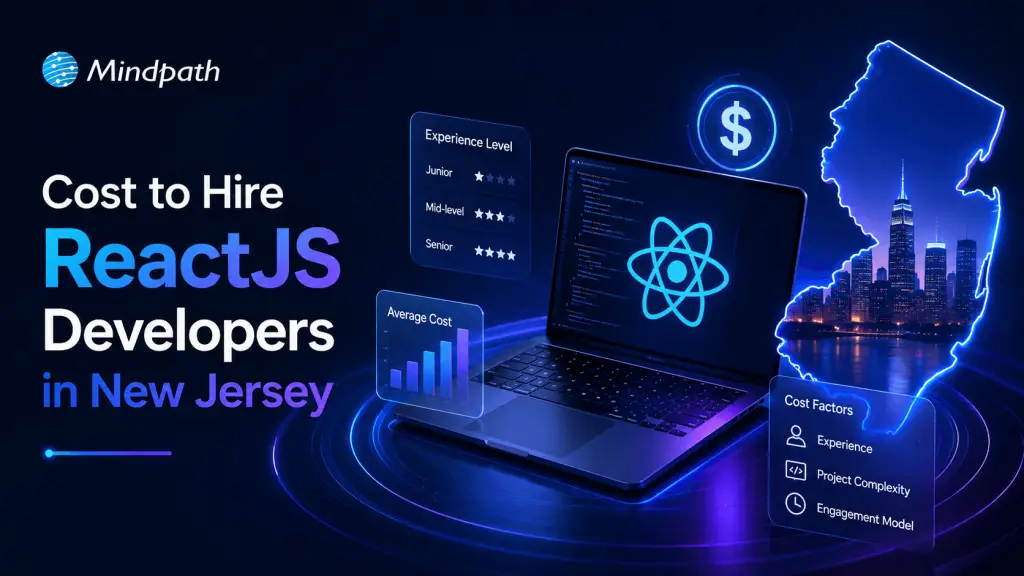
The cost of hiring a ReactJS developer in New Jersey depends on several factors, including experience, project complexity, development requirements, and the level of support you need. While a simple ReactJS website may require a smaller investment, complex enterprise applications can cost significantly more.
Understanding the cost of ReactJS developers in New Jersey can help businesses plan their budgets and choose the right development model. Hourly rates, project scope, technical expertise, integrations, and post-launch requirements all influence the final cost. Therefore, it is important to evaluate the complete project rather than focusing only on the developer’s hourly rate.
This guide explains the average ReactJS developer rates in New Jersey, project-based costs, key pricing factors, and ways to manage your development budget effectively.
How Much Does It Cost to Hire a ReactJS Developer in New Jersey?
ReactJS developer costs in New Jersey can vary based on experience and project requirements. Junior developers generally charge less, while senior developers with experience in complex applications and large-scale systems command higher rates.
As a general estimate, ReactJS developers may charge between $12 and $150+ per hour, depending on their experience level. Project-based development can start at around $5,000 for a simple application and exceed $60,000 for complex ReactJS solutions.
The following sections provide a closer look at these costs.
1. ReactJS Developer Hourly Rates by Experience Level
One of the biggest factors affecting the cost of hiring ReactJS developers is their level of experience. A junior developer may be suitable for straightforward tasks, while advanced applications often require senior developers with strong technical expertise.
-
Junior ReactJS Developer
Junior ReactJS developers typically charge between $12 and $40 per hour. They are generally suitable for basic websites, simple interfaces, UI development, and smaller ReactJS projects.
Hiring a junior developer can be a cost-effective option when the project has a clearly defined scope and does not involve complex integrations or advanced functionality. However, businesses should still evaluate practical experience and technical skills before making a decision.
-
Mid-Level ReactJS Developer
Mid-level ReactJS developers generally charge between $40 and $80 per hour. They can handle more complex applications, API integrations, reusable components, and broader development responsibilities.
For businesses developing a moderately complex web application, a mid-level developer can offer a good balance between cost and technical expertise. Moreover, their experience can help reduce development issues and improve project efficiency.
-
Senior ReactJS Developer
Senior ReactJS developers can charge $80 to $150+ per hour. Their experience is particularly valuable for enterprise applications, complex architectures, performance optimization, advanced integrations, and large-scale development projects.
Although the hourly rate is higher, experienced developers can often handle challenging requirements more efficiently. As a result, businesses may benefit from better scalability, maintainability, and development quality.
2. Cost of Hiring a ReactJS Developer for a Simple Project
A simple ReactJS project may cost between $5,000 and $15,000. This range is suitable for smaller applications, prototypes, basic business websites, and projects with limited functionality.
These projects may include standard UI development, responsive layouts, basic API integration, and limited backend requirements. Therefore, a junior or mid-level ReactJS developer may be sufficient for this type of work.
However, businesses should not choose a developer based only on the lowest price. Even simple projects require clean code, responsive design, reliable functionality, and proper testing to ensure the website can perform effectively.
3. Cost of Developing a Complex ReactJS Application
Complex ReactJS applications can cost between $20,000 and $60,000 or more. The final price depends on the number of features, technical requirements, integrations, development timeline, and expertise required.
Complex applications may include advanced API integrations, database management, user authentication, real-time functionality, performance optimization, dashboards, and custom business logic. Consequently, these projects often require mid-level or senior ReactJS developers.
Additional requirements can increase the overall development cost. For example, businesses may need UX/UI design, third-party integrations, testing, maintenance, security improvements, or post-launch support. Defining these requirements early can make budgeting more accurate.
4. Key Factors That Affect ReactJS Development Costs
The cost of hiring a ReactJS developer in New Jersey is not determined by hourly rates alone. Several project-related factors can influence the final budget.
-
Project Complexity
A basic website requires less development effort than a complex enterprise application. More features, workflows, integrations, and technical requirements naturally increase development time and cost.
-
Developer Experience
Experienced ReactJS developers generally charge higher rates. However, their expertise can help businesses manage complex requirements, identify technical issues earlier, and build scalable applications.
-
Required Features
Features such as real-time updates, authentication, payment systems, dashboards, custom APIs, and advanced user interactions can increase development costs.
-
Third-Party Integrations
Integrating external APIs, payment gateways, analytics platforms, CRM systems, or other business tools requires additional development and testing. Therefore, the number and complexity of integrations should be considered when preparing the project budget.
-
UI/UX Design Requirements
If the ReactJS developer is also responsible for implementing a completely custom UI/UX design, the project may require additional time. Businesses should clearly define whether design services are included in the development scope.
-
Maintenance and Support
ReactJS development does not necessarily end when the application goes live. Businesses may require bug fixes, updates, performance improvements, security maintenance, and feature enhancements. Including ongoing support in the initial plan can make long-term costs easier to manage.
5. How to Choose the Right ReactJS Developer in New Jersey
Choosing the right developer requires more than comparing hourly rates. Start by reviewing their ReactJS experience, previous projects, technical skills, and understanding of your business requirements.
- Review their portfolio: Check whether they have worked on projects similar to yours.
- Evaluate technical expertise: Consider their knowledge of ReactJS, APIs, databases, frontend architecture, and related technologies.
- Discuss project requirements: Clearly explain your goals, features, timeline, and expected outcomes.
- Compare development proposals: Review scope, estimated timelines, costs, and deliverables before making a decision.
- Consider long-term support: Confirm whether the developer or development company can provide maintenance after launch.
6. How to Optimize Your ReactJS Development Budget
Businesses can manage ReactJS development costs by defining requirements before development begins. A clear scope helps prevent unnecessary changes and reduces the risk of budget increases during development.
Starting with an MVP can also be useful for businesses with limited budgets. Instead of building every feature at once, you can prioritize essential functionality, launch the initial version, collect feedback, and expand the application gradually.
Additionally, choosing a developer based on the complete value they provide rather than their hourly rate can lead to better results. A developer with stronger technical expertise may complete complex tasks more efficiently, reducing the overall development effort.
Why Hire ReactJS Developers from Mindpath?
Looking for skilled ReactJS developers in New Jersey? Mindpath offers ReactJS development services tailored to different project requirements. Whether you need a simple web application or a complex enterprise solution, our experienced developers focus on building scalable and high-quality applications.
Our approach considers your project goals, technical requirements, expected functionality, and long-term growth. By choosing the right development approach from the beginning, businesses can manage costs while building a ReactJS application that supports future needs.
Conclusion
The cost of hiring a ReactJS developer in New Jersey can range from $12 to $150+ per hour, while project-based development can range from approximately $5,000 to $60,000 or more. The final cost depends on developer experience, application complexity, features, integrations, design requirements, timeline, and ongoing support.
Therefore, businesses should define their requirements carefully and compare developers based on expertise, project experience, development approach, and overall value. A well-planned ReactJS project can help you control costs while creating a scalable and reliable web application. Contact us.
Hiring the right ReactJS developer is essential for building a high-quality online application. A talented developer should have a solid JavaScript background, knowledge of React ideas, and front-end programming experience. They must also be skilled in state management, user interface creation, testing, debugging, and version control to guarantee that the program runs smoothly. Aside from technical capabilities, problem-solving ability and collaboration are equally crucial. The following are the main abilities to look for when hiring a ReactJS developer in New Jersey
1. Strong JavaScript and React Fundamentals
A skilled ReactJS developer should have a solid grasp of JavaScript fundamentals, including ES6+ features like arrow functions, promises, and async/await. They must also be proficient in React concepts such as JSX, components, props, state management, and lifecycle methods. A deep understanding of rendering optimization ensures smooth application performance. Since React is built on JavaScript, hiring a developer with strong expertise in both JavaScript and React ensures they can efficiently build dynamic and responsive user interfaces tailored to your project’s needs.
2. State Management and Component-Based Architecture
Efficient state management is essential for handling complex applications. Look for developers with experience in Redux, Context API, or MobX to manage app-wide state effectively. They should also understand component-based architecture, which helps in building reusable, scalable, and maintainable UI components. A developer with expertise in React hooks and modular design can streamline development, reduce redundancy, and improve overall application performance, making your web solution more efficient and easier to scale.
3. Proficiency in HTML, CSS, and UI Development
A ReactJS developer should have strong HTML and CSS skills to create well-structured, visually appealing, and responsive user interfaces. Knowledge of CSS frameworks like Tailwind, Bootstrap, or Material-UI is a plus. They should also understand flexbox, grid layouts, and media queries to ensure the application works seamlessly across different devices. Well-structured UI components enhance user experience and performance, so hiring a developer who excels in front-end development is crucial for a successful project.
4. Testing, Debugging, and Version Control
Testing is key to building error-free applications, so ensure the developer is familiar with Jest, React Testing Library, or Enzyme for unit and integration testing. Strong debugging skills help identify and resolve issues quickly. Additionally, expertise in Git and GitHub is essential for version control, collaboration, and managing code changes efficiently. A developer with these skills can ensure a smooth workflow, minimize bugs, and maintain high-quality code throughout the development process.
Finding the right ReactJS developer can be challenging, but Mindpath makes it easy! Our expert developers have strong JavaScript skills, deep React knowledge, and experience with state management, UI development, testing, and debugging. Whether you need a junior, mid-level, or senior developer, we help you find the perfect fit for your project.
Let’s build something great together! Contact Mindpath today to hire top ReactJS developers in New Jersey!

Are you searching for skilled ReactJS developers in New Jersey to build a high-performance web application? Do you need experts who can create fast, scalable, and interactive user interfaces? Finding the right talent can be challenging, but with the right team, your project can thrive.
In today’s fast-paced digital surroundings, a dynamic and flexible web application is essential for business success. ReactJS, which is recognized for its quickness and versatility, has become the ideal tool for developing modern web applications. If you’re seeking talented ReactJS developers in New Jersey, hiring the right professionals can make all the difference. Experienced ReactJS developers, with their knowledge in generating high-performance applications, can assist you in developing scalable, user-friendly, and creative digital solutions customized to your company’s demands.
Let’s explore how hiring top ReactJS developers in New Jersey can bring your vision to life!
Steps to Hire ReactJS Developers in New Jersey
1. Define Your Project Requirements
The first step in hiring a ReactJS developer in New Jersey is to outline your project’s needs explicitly. Determine the scope of your project, including essential features, functions, and projected timetable. Understanding your requirements can assist you in determining the suitable experience level—whether a junior, mid-level, or senior developer is most suited. Consider the React frameworks and technologies unique to your project, such as Redux for state management, Material-UI for UI components, or Next.js for server-side rendering. Outlining these technical criteria can make your hiring process more efficient since you will be able to filter individuals who are knowledgeable about the essential technologies. Proper planning also ensures that you hire a developer who can deliver exactly what your project demands, reducing the risk of misalignment. By defining your needs upfront, you set a strong foundation for finding the right ReactJS talent in New Jersey.
2. Source Qualified Candidates
Once you’ve determined your project’s requirements, the following step is to aggressively seek skilled ReactJS developers in NJ. Use several hiring channels to improve your chances of discovering the perfect candidate. Online employment platforms such as LinkedIn, Indeed, and Glassdoor provide a vast pool of individuals with ReactJS experience. You may also look at specialized tech employment sites like AngelList or Toptal for highly competent developers. Furthermore, use your professional network to request references from colleagues or industry contacts. Another useful technique is to join local tech meetings and events in New Jersey, where you can meet experienced developers and find possible candidates in person. Engaging with different sourcing methods ensures that you reach top-tier talent who may not be actively searching for jobs but are open to new opportunities. A diverse sourcing approach increases the likelihood of finding the ideal developer for your project.
3. Screen Candidates Based on Skills and Experience
After sourcing individuals, the next stage is to test them for technical proficiency, experience, and problem-solving ability. Begin by reading their credentials and portfolios to determine their experience with ReactJS, JavaScript, HTML, CSS, and front-end frameworks. Pay particular attention to their prior projects and see if they have worked on applications comparable to yours. Conduct a technical evaluation to determine their practical coding abilities. This can be an online coding test, or a take-home project centered on React development. Ask specific questions during the first screening to assess their comprehension of React’s key principles, state management (Redux or Context API), component lifecycle, and recommended practices. By thoroughly evaluating each candidate’s skills and hands-on experience, you can filter out unqualified applicants and focus on those who have the necessary expertise to contribute effectively to your project’s success.
4. Conduct a Thorough Interview Process
A systematic interview process is essential for finding the ideal ReactJS developer. Begin with an initial phone screen to confirm the candidate’s qualifications, background, and interest in the position. If they pass the screening, they will proceed to a technical interview where they will exhibit their problem-solving abilities and ReactJS expertise. During this step, ask detailed questions about their expertise with React Hooks, Redux, testing frameworks like Jest, and deployment methods. You can also offer a live coding session to test their ability to develop clean, efficient code. After assessing technical capabilities, do a behavioral interview to identify soft skills like communication, teamwork, and flexibility. Understanding how they collaborate with others and handle challenges is essential for ensuring they fit well within your team. A well-structured interview process helps you identify not only technically skilled developers but also those who align with your company culture.
5. Make the Hiring Decision and Finalize Terms
After you’ve interviewed candidates and evaluated their talents, it’s time to make your final recruiting choice. Compare their technical knowledge, problem-solving methodology, and capacity to collaborate with your team. Consider their ReactJS experience, previous project success, and adaptability to new technologies. After you’ve chosen the best applicant, discuss compensation, benefits, and work arrangements (remote or on-site). To minimize future misunderstandings, be transparent when addressing employment requirements, contract conditions, and any additional benefits. Once everything has been agreed upon, create an onboarding procedure that involves providing access to project tools, scheduling team meetings, and establishing starting duties. A smooth onboarding experience helps new hires integrate quickly and contribute effectively. By carefully evaluating and finalizing the hiring process, you ensure a successful partnership with a skilled ReactJS developer who can drive your project forward.
Looking for expert ReactJS developers in New Jersey to bring your vision to life? At Mindpath we provide highly skilled ReactJS professionals who specialize in building scalable, high-performance web applications tailored to your business needs. Whether you need a dedicated developer or a full development team, we have the expertise to deliver top-notch solutions.
Let’s turn your ideas into reality! Contact Mindpath today. to hire the best ReactJS developers and take your project to the next level.
Read our next blog: Factors to Consider While Hiring Expert ReactJS Developers in New Jersey

Looking to hire skilled NodeJS developers in California for your next project? Whether you’re building a real-time application, optimizing backend performance, or scaling your system, finding the right talent is crucial. But how do you navigate the hiring process, evaluate candidates, and ensure you’re making the best investment?
This guide covers everything you need to know—step-by-step hiring strategies, key skills to look for, important factors to consider, and a breakdown of hiring costs in California. By the end, you’ll have a clear roadmap to hiring top NodeJS developers in California who can bring your vision to life. Let’s dive in!
Why Hire NodeJS Developers in California?
California is home to some of the best tech talent in the world. If you need skilled NodeJS developers, this is one of the best places to find them. Here’s why hiring NodeJS developers in California is a great choice:
1. Top Talent Availability
California has a strong tech industry, with many experienced NodeJS developers who have worked on high-level projects.
2. Latest Technology & Trends
Developers here stay updated with the latest tools, frameworks, and best practices, ensuring high-quality development.
3. Strong Tech Community
With many tech events, meetups, and networking opportunities, California developers continuously improve their skills.
4. Fast & Scalable Development
NodeJS is known for its speed and efficiency, and hiring experts in California ensures smooth and scalable backend solutions.
5. Access to Innovation
Being in a tech hub, California developers bring innovative ideas and problem-solving skills to your project.
Hiring NodeJS developers in California means working with experts who can build high-performance, future-ready applications for your business.
How to Hire NodeJS Developers in California: A Simple Guide
Finding the right NodeJS developer in California can help your business build fast and scalable applications. With the state’s thriving tech scene, you can access top talent, but hiring the right developer requires a structured approach. Follow these six simple steps to ensure you hire the best NodeJS developer for your project.
1. Know What You Need
Start by clearly defining your project requirements. Identify the skills your NodeJS developer should have, such as expertise in JavaScript, Node.js frameworks (like Express.js), databases (MongoDB, PostgreSQL), and cloud platforms (AWS, Azure). Decide if you need a junior, mid-level, or senior developer and whether you want a full-time employee, a freelancer, or a contract-based hire. Having a clear job role makes hiring easier and ensures you attract the right candidates.
2. Write a Clear Job Description
A well-written job description helps you find the right talent faster. Include the developer’s responsibilities, required skills, experience level, and any preferred tools or frameworks. Post your job on platforms like LinkedIn, Indeed, and tech-specific job boards like Toptal or Stack Overflow Jobs. If you prefer local candidates, attend California-based tech meetups or networking events to connect with skilled NodeJS developers.
3. Screen Resumes and Portfolios
Once you receive applications, carefully review resumes and portfolios to shortlist the most suitable candidates. Look for experience in NodeJS development, past projects, and problem-solving skills. Conduct an initial phone or video interview to assess their communication skills, technical knowledge, and ability to work with your team. A well-planned screening process saves time and ensures you focus on top candidates.
4. Test Technical Skills
Before making a decision, evaluate the developer’s coding skills through technical tests or live coding challenges. Use platforms like HackerRank or LeetCode to test their problem-solving abilities. Consider giving them a small project, such as building an API or optimizing a database query, to see their practical approach. Check their understanding of asynchronous programming, RESTful APIs, and error handling, as these are key skills for NodeJS development.
5. Conduct the Final Interview
The final interview should focus on both technical and soft skills. Discuss real-world challenges like handling high-traffic applications, debugging complex issues, and working with cloud platforms. Assess their teamwork, adaptability, and ability to handle feedback. A developer with strong communication and collaboration skills will fit well into your team and contribute effectively.
6. Make the Offer and Onboard Smoothly
Once you’ve chosen the right developer, finalize salary negotiations, contract terms, and project expectations. Ensure a smooth onboarding process by providing access to necessary tools, setting clear communication channels, and outlining project goals. A well-organized onboarding process helps the developer integrate quickly and start contributing to your project.
Key Considerations for Hiring ReactJS Developers in California
Finding the right ReactJS developer in California requires more than just checking coding skills. With the state’s booming tech industry, competition for top talent is high. A skilled ReactJS developer should have strong technical expertise, problem-solving abilities, and the ability to work in a team. Additionally, understanding California’s hiring trends can help you attract the best candidates. Here are five key factors to consider while hiring ReactJS developers in California.
1. Look for Strong JavaScript and React Skills
A ReactJS developer should have a deep understanding of JavaScript, React fundamentals, and modern frontend development techniques. Knowledge of React hooks, Redux, and component-based architecture is essential for building efficient applications. Experience with UI frameworks like Material-UI, Tailwind CSS, and Next.js can be an added advantage.
2. Evaluate Problem-Solving Abilities
Beyond technical skills, a great ReactJS developer should be able to tackle complex UI challenges and optimize application performance. Look for candidates who can debug issues, improve website speed, and create scalable solutions. Real-world experience in handling large-scale applications can be a good indicator of their capabilities.
3. Assess Communication and Teamwork Skills
A ReactJS developer needs to work closely with designers, backend developers, and product managers. Clear communication and teamwork are essential for ensuring a smooth development process. Candidates who can explain technical concepts, participate in discussions, and provide constructive feedback will contribute to a stronger development team.
4. Understand California’s Competitive Hiring Market
California’s demand for ReactJS developers is high, making it essential to offer competitive salaries and benefits. Tech hubs like San Francisco and Los Angeles attract top-tier talent with perks such as remote work options, flexible hours, and learning opportunities. Being aware of industry standards can help you create attractive job offers.
5. Structure a Well-Planned Hiring Process
To hire the best ReactJS developer, create a streamlined hiring process that includes technical tests, coding challenges, and live coding interviews. Reviewing a candidate’s GitHub contributions and past projects can provide insights into their expertise. A structured approach helps ensure you find a developer who aligns with your company’s goals.
By focusing on these key factors, you can successfully hire ReactJS developers in California who bring both technical excellence and teamwork to your projects.
Essential Skills to Look for When Hiring a NodeJS Developer in California
Hiring a skilled NodeJS developer in California requires evaluating their technical expertise and ability to work efficiently in a fast-paced development environment. A strong candidate should have a deep knowledge of JavaScript, experience with backend frameworks, and the ability to optimize performance. Additionally, familiarity with databases, API development, and security best practices ensures smooth project execution. Here are the top skills to look for when hiring a NodeJS developer in California.
1. Expertise in JavaScript and Modern ES6+ Features
A NodeJS developer must have a solid foundation in JavaScript, including ES6+ syntax, closures, promises, and event-driven programming. Mastery of these concepts ensures that they can write clean, efficient, and scalable code. Strong debugging skills and knowledge of performance optimization techniques further enhance application stability.
2. Strong Understanding of Backend Frameworks
Frameworks like Express.js, NestJS, and Koa help developers build scalable and maintainable applications. A skilled NodeJS developer should know how to implement middleware, manage authentication, and create optimized APIs using these frameworks. Familiarity with microservices architecture and serverless computing can also be beneficial.
3. Proficiency in Database Management
Effective data handling is crucial for any application. A NodeJS developer should be comfortable working with both SQL databases (PostgreSQL, MySQL) and NoSQL databases (MongoDB, Firebase). Knowledge of query optimization, indexing, and ORM tools like Sequelize or Mongoose improves database performance and efficiency.
4. Ability to Develop and Secure APIs
NodeJS developers should be proficient in building RESTful APIs and working with GraphQL for efficient data communication. They should also understand authentication mechanisms like JWT and OAuth to enhance security. Experience with WebSockets for real-time applications is an added advantage.
Familiarity with DevOps and Deployment Strategies
A great NodeJS developer should have experience with cloud platforms like AWS, Azure, or Google Cloud. Understanding CI/CD pipelines, Docker, and Kubernetes ensures smooth deployment and maintenance of applications. Knowledge of monitoring tools and performance tuning techniques helps maintain application reliability. Breaking Down the Cost of Hiring NodeJS Developers in California
Hiring a NodeJS developer in California comes with significant costs due to the state’s booming tech industry and high cost of living. Salaries and hourly rates depend on experience, location, technical expertise, and the hiring model. Businesses must carefully analyze these factors to ensure cost-effective hiring while securing skilled developers. Here are five key cost considerations when hiring a NodeJS developer in California.
1. Developer Experience and Salary Expectations
A developer’s experience level significantly impacts their salary. Junior NodeJS developers (0-2 years) typically charge $60-$80 per hour, while mid-level developers (3-5 years) demand $80-$120 per hour. Senior professionals with expertise in backend architecture and system scalability can charge $120-$150+ per hour. Investing in an experienced developer often leads to better project efficiency and long-term savings.
2. Location-Based Salary Variations
The cost of hiring NodeJS developers in California varies based on location. Developers in tech hubs like San Francisco, San Jose, and Los Angeles often command $100-$150 per hour due to high demand and living expenses. In contrast, hiring in cities like Sacramento or Fresno can reduce costs to $80-$120 per hour. Businesses should evaluate whether hiring remotely from lower-cost regions is a viable alternative.
3. Specialized Skills and Premium Pricing
Developers with expertise in microservices, cloud computing (AWS, GCP), and real-time applications using WebSockets or GraphQL tend to charge premium rates of $120-$160 per hour. Similarly, expertise in DevOps, AI integration, and cybersecurity can increase costs. While hiring a specialized developer is more expensive, it ensures better scalability, performance, and security for complex projects.
4. Comparing Freelance, In-House, and Agency Hiring
The hiring model affects overall costs. Freelancers charge around $60-$120 per hour and are suitable for short-term projects. In-house developers require a full-time salary, benefits, and workspace, costing $150,000-$200,000 annually for senior roles. Hiring a development agency provides access to a team of experts but comes at a higher hourly rate of $100-$180. Businesses must choose based on project scope and long-term needs.
5. Additional Costs: Tools, Training, and Benefits
Beyond salaries, hiring NodeJS developers involves costs for software tools, cloud services, training, and employee benefits. In-house developers may require ongoing training and healthcare benefits, adding to expenses. Freelancers and agencies may include these costs in their pricing, affecting overall budgets. Factoring in these additional costs ensures better financial planning for hiring decisions. Hiring the right NodeJS developer in California is essential for building high-performance, scalable applications. With access to top-tier talent, cutting-edge technology, and a thriving tech ecosystem, California offers the ideal environment for finding skilled developers. By following a structured hiring approach—defining project needs, screening candidates, assessing technical skills, and considering cost factors—you can secure the best NodeJS professionals for your business. Whether you choose freelancers, in-house developers, or agencies, the right hire will ensure smooth development and long-term success.
Looking for expert NodeJS developers in California? Mindpath offers top-tier development services, ensuring scalable, high-performance applications tailored to your business needs. Our experienced developers bring innovation, efficiency, and expertise to every project.
Let’s build something great together! Contact us today.
Understanding California NodeJS Developer Hiring Costs is essential before starting your recruitment process. California is one of the most competitive technology markets in the United States, where the demand for skilled NodeJS developers continues to grow. The overall hiring cost depends on several factors, including the developer’s experience, technical expertise, location, hiring model, and project requirements. By understanding these cost drivers, businesses can plan their budgets effectively while hiring developers capable of building secure, scalable, and high-performance applications.
Searching for ReactJS experts who can help you launch innovative web applications faster? At Mindpath, we offer highly skilled NodeJS developers who accelerate development while ensuring performance, security, and long-term scalability.
Developer Experience Significantly Impacts Hiring Costs
Junior, Mid-Level, and Senior Developers Have Different Rates
One of the biggest factors influencing California NodeJS Developer Hiring Costs is experience. Developers with more years of hands-on experience typically charge higher rates because they can solve complex challenges faster and deliver scalable backend solutions.
Generally:
- Junior Developers (0–2 years): Suitable for basic applications and maintenance tasks.
- Mid-Level Developers (3–5 years): Ideal for most business applications with moderate complexity.
- Senior Developers (5+ years): Best for enterprise platforms, cloud-native applications, microservices, and system architecture.
Although senior developers require a larger investment, they often reduce long-term development costs by writing cleaner, more maintainable code and minimizing technical debt.
Technical Skills Influence NodeJS Developer Pricing
Specialized Expertise Comes at a Premium
Not every NodeJS developer has the same skill set. Developers with expertise beyond core NodeJS development generally command higher compensation because they can build modern, enterprise-grade applications.
Highly valued skills include:
- Express.js and NestJS
- TypeScript
- RESTful APIs and GraphQL
- MongoDB and PostgreSQL
- AWS, Azure, and Google Cloud
- Docker and Kubernetes
- Microservices Architecture
- WebSockets and Real-Time Applications
- CI/CD and DevOps
Hiring developers with specialized expertise may increase your initial investment, but it often leads to better application performance, stronger security, and faster project delivery.
Location Within California Affects Hiring Costs
Hiring Costs Differ Across California
Another important factor affecting California NodeJS Developer Hiring Costs is geographic location. Developers working in major technology hubs usually have higher salary expectations due to increased living expenses and stronger market demand.
Businesses hiring in cities like San Francisco, San Jose, or Los Angeles often pay more than companies recruiting developers from smaller California cities or offering remote opportunities.
Expanding your hiring strategy to include remote professionals across California can help you access highly skilled developers while maintaining better budget control.
Your Hiring Model Directly Impacts the Total Cost
Choose the Right Hiring Approach
The hiring model you select plays a major role in determining your overall development budget.
Common hiring options include:
- Freelancers – Best for short-term or small projects.
- Dedicated Developers – Ideal for ongoing development and long-term collaboration.
- In-House Employees – Suitable for businesses requiring full-time technical resources.
- Development Companies – Perfect for businesses needing a complete development team and project management support.
Each model offers different advantages depending on your project timeline, budget, and scalability requirements. Evaluating your business needs before hiring helps maximize your return on investment.
Why Understanding California NodeJS Developer Hiring Costs Matters
Hiring a NodeJS developer isn’t simply about finding the lowest rate. Businesses should balance cost with technical expertise, communication skills, scalability, and long-term value. Investing in experienced professionals often results in faster development, fewer maintenance issues, and higher-quality applications.
Understanding the factors that influence California NodeJS Developer Hiring Costs allows businesses to set realistic budgets, choose the right hiring model, and avoid unexpected development expenses.
Hire Experienced NodeJS Developers in California with Mindpath
Looking for skilled NodeJS developers without the complexity of traditional hiring?
At Mindpath, we help businesses hire experienced NodeJS developers in California who specialize in backend development, cloud-native applications, API development, real-time systems, and scalable enterprise solutions. Our carefully vetted developers work as an extension of your team, delivering secure, high-performance applications tailored to your business objectives.
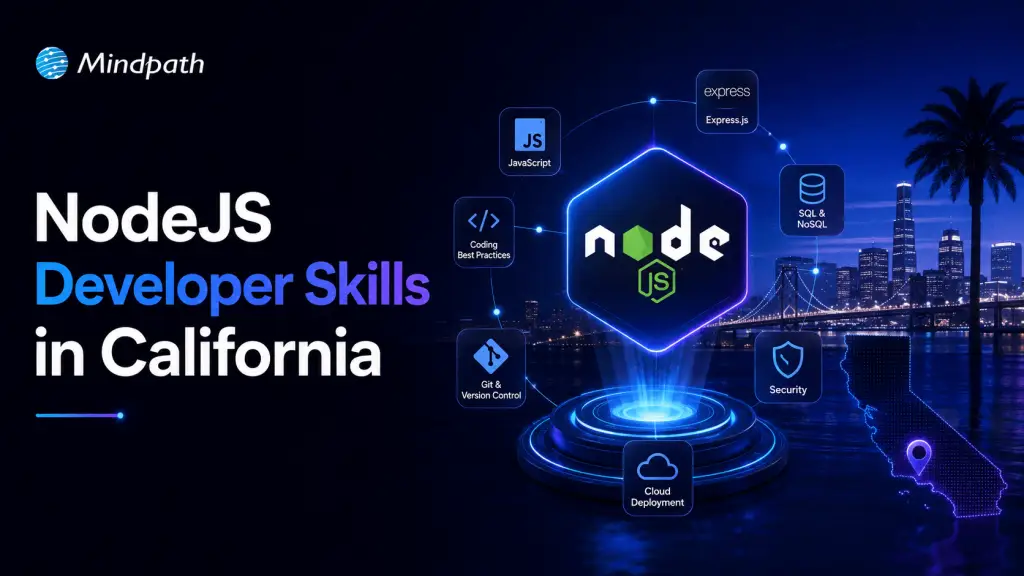
Hiring a Node.js developer in California necessitates assessing their technical skills and abilities to operate in a fast-paced development environment. An experienced Node.js developer should be well-versed in JavaScript, capable of asynchronous programming, and have firsthand knowledge with Node.js frameworks, databases, and API development. Furthermore, experience with version control and optimal coding standards allows easy communication. Here are the main abilities to look for when hiring a Node.js developer for your company.
1. Strong JavaScript Fundamentals
A Node.js developer must be well-versed in JavaScript, which serves as the foundation for Node.js applications. Proficiency with ES6+ features, closures, prototypes, event handling, and object-oriented programming is required. Since JavaScript is essential for backend development with Node.js, excellent coding abilities ensure developers can create efficient, maintainable, and scalable apps. A thorough understanding of error handling, debugging, and performance optimization also contributes to application dependability.
2. Experience with Asynchronous Programming
Since Node.js is based on a non-blocking, event-driven design, developers must be familiar with asynchronous programming. Mastery of callbacks, Promises, and async/await is required to handle concurrent requests efficiently. Asynchronous operations are properly implemented to provide smooth performance, decrease latency, and avoid difficulties such as callback hell. Understanding event loops and dealing with tools like Bluebird or RxJS can help improve speed in Node.js apps.
3. Proficiency with NodeJS Frameworks
A skilled Node.js developer should be conversant with popular frameworks such as Express.js, NestJS, and Koa in order to quickly construct online applications. These frameworks make routing, middleware management, and API creation easier, allowing developers to build strong apps faster. A thorough grasp of middleware, authentication mechanisms, and scaling approaches inside these frameworks leads to improved speed and security in Node.js applications.
4. Database Management Skills
A Node.js developer must be capable of dealing with both SQL (MySQL, PostgreSQL) and NoSQL (MongoDB, Firebase) databases. Understanding database design, performing optimized queries, and managing data effectively are critical to application performance. Knowledge of ORMs (Sequelize, TypeORM) and ODMs (Mongoose) facilitates database interfaces and increases development efficiency. Developers should also be able to use database indexing, caching, and security best practices.
5. API Development and Integration
Building and integrating RESTful APIs is an important skill for Node.js developers. They should be able to create safe, scalable, and well-organized APIs with Node.js and Express.js. Knowledge of GraphQL, WebSockets, and API authentication techniques (OAuth, JWT) is also useful. Strong API development abilities guarantee that frontend apps and third-party services integrate seamlessly, allowing for effective cross-platform data transmission.
Looking for expert Node.js developers to build high-performance applications? Mindpath connects you with top Node.js talent skilled in JavaScript, API development, databases, and scalable backend solutions. Whether you need a custom web application, API integration, or real-time features, our experienced developers ensure seamless project execution.
Boost your development team with the best Node.js experts! Contact Mindpath today to find the right developer for your project.

Recruiting a Node.js developer in California inecessitates a thorough assessment of technical knowledge, soft skills, market trends, and the recruiting process. With the state’s highly competitive technology economy, finding the appropriate personnel requires going beyond coding abilities. A good Node.js engineer should be familiar with backend frameworks, databases, and cloud technologies, as well as possess excellent communication and problem-solving skills. Understanding California’s employment market and creating an efficient recruiting procedure can also help you attract the top applicants. Here are some important aspects to consider when hiring a Node.js developer in California.
Looking for a trusted NodeJS development company to build feature-rich web applications that stand out in the market? At Mindpath, we offer expert NodeJS developers who deliver customized solutions designed to improve user engagement and business growth.
1. Technical Proficiency and Experience
When hiring a Node.js developer, make sure they are proficient in JavaScript, asynchronous programming, and Node.js frameworks such as Express.js or Nest.js. Knowledge of databases (MongoDB, PostgreSQL), RESTful APIs, and cloud services (AWS, Azure) is essential for developing scalable apps. Experience with unit testing, CI/CD pipelines, and version control (Git) contributes to a smoother development process. Additionally, match their experience level with the intricacy of your project to obtain the appropriate competence. Reviewing their previous projects and contributions to open-source repositories might help them evaluate their real-world coding abilities.
2. Soft Skills and Team Collaboration
A Node.js developer should be able to communicate effectively, work well in groups, and solve problems. They must work well with front-end developers, designers, and product managers to ensure that the project runs smoothly. Adaptability is also important, as the Node.js environment changes frequently with new upgrades and best practices. Look for applicants that can troubleshoot effectively, think critically, and perform well under deadlines. A developer with great soft skills can easily fit into your team and contribute to a healthy work atmosphere.
3. Understanding California’s Market Trend
The California tech business is very competitive, with a growing demand for talented Node.js developers. Salaries vary according to experience, region, and sector, so analyzing market trends and pay packages is essential. Companies in large tech hubs such as San Francisco, Los Angeles, and San Diego frequently provide competitive bonuses to attract top people. Offering remote or hybrid work opportunities might also help your job commercial stand out. Understanding these variables allows you to establish an effective hiring strategy and attract the best developers for your company.
4. Interviewing and Hiring Process
A systematic interview method helps you hire the top Node.js developers. Begin with a technical test, such as coding challenges, whiteboarding activities, or homework projects, to measure their problem-solving abilities. Next, perform behavioral interviews to assess communication skills, collaboration, and flexibility. Reviewing their portfolio and GitHub contributions provides insight into their real-world development experience. Finally, base your compensation, perks, and job expectations on market research. A well-planned recruiting strategy can help you identify the best Node.js talent for your project.
Finding the right Node.js developer can be challenging but Mindpath makes it easy! Our experienced Node.js developers specialize in building scalable, high-performance applications tailored to your business needs. Whether you need backend development, API integration, or cloud-based solutions, we have the expertise to deliver.
Ready to build your next project with top Node.js talent? Partner with Mindpath today and bring your vision to life!

Hiring top NodeJS developers in California requires more than reviewing resumes or conducting technical interviews. With California being one of the world’s largest technology hubs, businesses compete for experienced backend developers who can build scalable, secure, and high-performance applications. Following a structured hiring process helps you identify the right talent while reducing hiring risks and project delays.
Want to reduce development time while building a scalable NodeJS application for your business? At Mindpath, we offer experienced NodeJS developers who deliver efficient, cost-effective, and business-focused development solutions.
Define Your Project Requirements Clearly
1. Identify Your Business Goals
Before starting the hiring process, define exactly what you want to build. Whether you’re developing a SaaS platform, enterprise application, RESTful API, real-time chat application, or microservices architecture, having clear project objectives helps you hire developers with the right expertise.
2. List the Required Technical Skills
Create a detailed list of technical requirements, including experience with:
- Node.js and JavaScript (ES6+)
- Express.js or NestJS
- REST APIs and GraphQL
- MongoDB, PostgreSQL, or MySQL
- AWS, Azure, or Google Cloud
- Docker and Kubernetes
- Git version control
Clear technical expectations make it easier to shortlist qualified candidates and avoid costly hiring mistakes.
Write an SEO-Friendly and Detailed Job Description
1. Attract Qualified NodeJS Developers
Your job description should clearly explain:
- Project overview
- Key responsibilities
- Required technical skills
- Preferred experience
- Employment type
- Salary range
- Growth opportunities
A detailed job posting attracts experienced professionals while filtering out candidates who don’t meet your requirements.
2. Post on the Right Hiring Platforms
To reach top NodeJS developers in California, publish your opening on platforms such as LinkedIn, Indeed, GitHub, Stack Overflow Jobs, and trusted developer communities. You can also partner with a specialized software development company to speed up the hiring process.
Screen Candidates Beyond Their Resume
1. Review Portfolios and Real-World Projects
A resume only tells part of the story. Review each candidate’s:
- GitHub repositories
- Previous backend projects
- API development experience
- Open-source contributions
- Case studies and technical achievements
This helps you evaluate coding quality and practical experience.
2. Evaluate Communication Skills
NodeJS developers regularly collaborate with designers, frontend developers, QA engineers, and project managers. Strong communication skills are essential for successful teamwork, especially in remote or hybrid environments.
Conduct Technical Assessments and Coding Tests
1. Test Practical Problem-Solving Skills
Instead of relying solely on theoretical questions, assess candidates using real-world coding challenges.
Evaluate their knowledge of:
- Asynchronous programming
- Event-driven architecture
- API development
- Database optimization
- Authentication and security
- Performance optimization
- Error handling
Hands-on assessments provide a better understanding of how developers perform under real project conditions.
2. Review Code Quality
Look beyond whether the solution works. Evaluate:
- Code readability
- Scalability
- Maintainability
- Security best practices
- Testing approach
High-quality code reduces future maintenance costs and improves long-term project stability.
Conduct Structured Interviews Before Making the Final Decision
1. Assess Both Technical and Soft Skills
During the interview, discuss previous projects, architectural decisions, debugging approaches, and experience working with distributed teams.
Ask candidates how they have handled:
- High-traffic applications
- Performance bottlenecks
- System scalability
- Production issues
- Agile development processes
Their responses provide valuable insights into practical experience.
2. Evaluate Cultural Fit
The best NodeJS developer isn’t always the strongest coder. Look for professionals who are collaborative, adaptable, eager to learn, and capable of working effectively within your company’s culture.
Why Hiring Top NodeJS Developers in California Matters
Experienced NodeJS developers help businesses accelerate development, improve application performance, and build scalable backend systems that support future growth. Investing time in a structured hiring process ensures you recruit professionals who can deliver reliable, secure, and maintainable applications while reducing long-term development costs.
Hire Top NodeJS Developers in California with Mindpath
Finding top NodeJS developers in California doesn’t have to be complicated. At Mindpath, we help startups, enterprises, and growing businesses hire experienced NodeJS developers with proven expertise in backend development, API integration, cloud-native applications, and scalable software architecture.
Whether you need a dedicated developer, a complete development team, or end-to-end NodeJS development services, we provide professionals who align with your technical requirements and business goals.
Ready to hire top NodeJS developers in California? Contact Mindpath today and build scalable, high-performance applications with confidence.
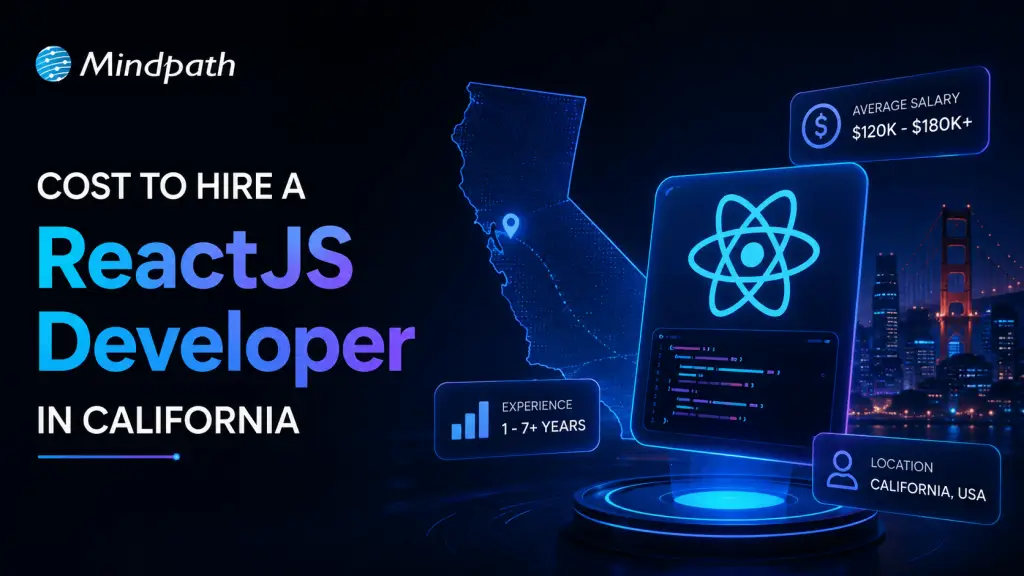
The cost to hire a ReactJS developer in California depends on several factors beyond just hourly or monthly rates. Experience, project scope, hiring model, technical expertise, and location all play an important role in determining the final cost. California remains one of the largest technology hubs in the world, making it home to highly skilled ReactJS developers, but also one of the most competitive hiring markets. Understanding these factors will help you set a realistic budget and choose the right developer for your business goals.
Key Takeaways
- 01
Developer experience levels directly determine hourly rates and overall React.js hiring costs. - 02
California tech hubs like San Francisco typically command higher developer salaries than other cities. - 03
Complex projects requiring AI or cloud integration increase development time and expenses. - 04
Developers specializing in Next.js, Redux, or TypeScript often charge premium hourly rates. - 05
Full-time hiring requires salary and benefits, while freelancers can reduce short-term hiring overhead.
1. Developer Experience
A developer’s experience has the biggest impact on hiring costs. Entry-level ReactJS developers are generally more affordable and are well-suited for basic website development, UI updates, or ongoing maintenance tasks. Mid-level developers bring stronger problem-solving abilities and can independently manage complex application development.
Senior ReactJS developers typically charge higher rates because they have extensive experience building scalable applications, improving performance, and solving technical challenges. If your project requires architecture planning, code optimization, or leadership, investing in an experienced developer often delivers better long-term value.
2. Location Within California
Although California offers access to exceptional tech talent, hiring costs differ by city. Developers based in technology hubs like San Francisco, San Jose, and Silicon Valley usually command higher salaries due to increased demand and higher living expenses. Cities with a lower cost of living may offer equally talented professionals at more competitive rates.
Businesses should compare talent availability, project requirements, and budget before deciding where to hire ReactJS developers in California.
3. Project Requirements and Complexity
The complexity of your project directly affects development costs. A simple business website or dashboard typically requires fewer development hours than a large enterprise application.
Projects involving features such as real-time communication, cloud integration, payment gateways, AI functionality, advanced security, or third-party API integrations require experienced ReactJS developers and additional development time. Clearly defining your project scope before hiring helps estimate costs more accurately and prevents unexpected expenses later.
4. Technical Skills and Specialized Expertise
Not every ReactJS project requires the same level of technical expertise. Developers with advanced knowledge of technologies such as Next.js, Redux, TypeScript, GraphQL, REST APIs, performance optimization, testing frameworks, and responsive UI development often charge premium rates because they can deliver faster, more scalable, and future-ready applications.
Hiring developers with the right technical skill set ensures your application performs efficiently while reducing maintenance costs over time.
5. Hiring Model
Your hiring approach significantly influences the overall investment.
- Full-time developers are ideal for long-term projects and ongoing product development but require salaries, employee benefits, and operational costs.
- Freelancers can be a cost-effective option for short-term projects or specific development tasks.
- Dedicated development teams or outsourcing partners provide flexibility, faster onboarding, and access to experienced professionals without the overhead of building an in-house team.
Selecting the right hiring model depends on your project timeline, budget, and business objectives.
Hire Experienced ReactJS Developers with Mindpath
Finding skilled ReactJS developers at a competitive price doesn’t have to be difficult. At Mindpath, we help businesses hire expert ReactJS developers in California who match their technical requirements, project goals, and budget. Whether you need a dedicated developer, a complete development team, or specialized ReactJS expertise for a short-term project, we provide flexible hiring models designed to deliver quality without unnecessary costs.
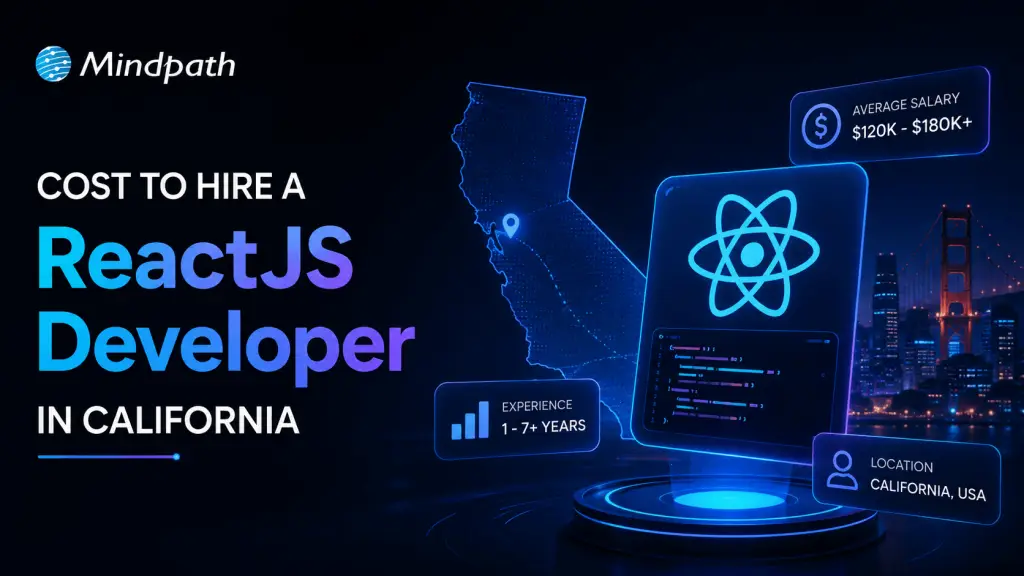
Hiring the right ReactJS developer in California is one of the most important decisions for businesses planning to build modern, scalable, and high-performing web applications. California has one of the most competitive technology job markets, making it essential to evaluate candidates beyond their coding skills. The ideal developer should possess technical expertise, problem-solving abilities, strong communication skills, and experience working on real-world projects. Considering the following factors will help you hire ReactJS developers who align with your business goals and contribute to long-term project success.
Looking to hire ReactJS developers who can turn your business ideas into high-performing web applications? At Mindpath, we offer dedicated ReactJS developers who create intuitive, scalable, and user-centric applications that drive business success.
Offer a Competitive Salary to Attract Top ReactJS Developers
1. Understand California’s Competitive Tech Market
California is home to thousands of startups and global technology companies competing for skilled ReactJS developers. Because demand continues to exceed supply, experienced developers often receive multiple job offers. Offering a competitive salary significantly increases your chances of attracting high-quality candidates.
2. Pay According to Skills and Experience
Compensation should reflect a developer’s expertise and experience. Developers skilled in ReactJS, Next.js, TypeScript, Redux, REST APIs, GraphQL, and performance optimization generally command higher salaries than entry-level professionals. Senior developers with experience leading projects or building enterprise applications typically expect premium compensation packages.
3. Include Performance-Based Incentives
Salary is only one part of an attractive job offer. Consider providing:
- Performance bonuses
- Annual salary reviews
- Stock options or equity
- Project completion incentives
- Employee recognition rewards
A well-structured compensation package helps attract experienced ReactJS developers while improving employee retention and reducing future hiring costs.
Provide Comprehensive Benefits to Improve Employee Retention
1. Prioritize Employee Well-Being
Today’s developers look beyond salary when choosing an employer. A comprehensive benefits package demonstrates that your company values employee well-being and long-term career growth.
Consider offering:
- Medical, dental, and vision insurance
- Mental health support
- Paid vacation and sick leave
- Paid parental leave
- Retirement plans with employer contributions
These benefits improve employee satisfaction while creating a healthier workplace.
2. Invest in Learning and Career Development
Technology evolves rapidly, and ReactJS developers appreciate employers who support continuous learning. Providing access to online courses, certifications, workshops, conferences, and technical training helps employees stay current with the latest React ecosystem.
Supporting professional development not only benefits developers but also improves the quality of your software projects.
3. Offer Additional Workplace Perks
Small benefits can make a significant difference when candidates compare job offers. Popular perks include:
- Home office allowance
- Internet reimbursement
- Flexible working hours
- Gym memberships
- Wellness programs
- Team-building activities
A strong benefits package helps you attract and retain skilled ReactJS developers in California.
Offer Remote and Hybrid Work Flexibility
1. Access a Larger Talent Pool
Many experienced ReactJS developers prefer remote or hybrid work arrangements. Restricting hiring to one city can limit your access to qualified professionals. Expanding your search across California allows you to recruit developers based on skills rather than location.
2. Build an Efficient Remote Development Team
Successful remote collaboration depends on using the right tools and processes. Platforms like Slack, Microsoft Teams, Jira, Trello, GitHub, and Zoom help development teams communicate effectively and manage projects efficiently.
Setting clear expectations for sprint planning, deadlines, documentation, and code reviews ensures productivity regardless of where developers work.
3. Improve Employee Satisfaction Through Flexibility
Flexible work arrangements contribute to better work-life balance, higher job satisfaction, and increased employee retention. Companies that embrace remote work often gain a competitive advantage when hiring top ReactJS talent.
Why These Factors Matter When Hiring ReactJS Developers in California
Hiring ReactJS developers isn’t just about evaluating technical skills. Competitive salaries, attractive employee benefits, and workplace flexibility all influence whether experienced developers choose your company over another. Businesses that invest in their employees are more likely to build stable, productive, and high-performing development teams.
Hire Experienced ReactJS Developers in California with Mindpath
Looking for experienced ReactJS developers who can build scalable, secure, and high-performance web applications?
At Mindpath, we help businesses hire pre-vetted ReactJS developers in California with expertise in modern frontend development, API integration, responsive UI development, and scalable application architecture. Whether you need a dedicated developer, an extended development team, or end-to-end ReactJS development services, our experts are ready to accelerate your project.
Ready to build your ReactJS team? Contact Mindpath today and hire skilled ReactJS developers in California with confidence.
Why this structure is SEO-friendly:
- Primary keyword: Hire ReactJS Developers in California appears naturally throughout.
- Clear H2 and H3 hierarchy for featured snippets and readability.
- User-focused content with scannable sections.
- Improved topical relevance and EEAT by explaining why each factor matters instead of simply listing features.
- Commercial CTA at the end to improve conversions.
Join our Newsletter!
categories
Join the world's largest training library and unlock new opportunities!
Featured Posts



Turn Insights Into
Real Business Solutions
Exploring trends is only the beginning. Whether you’re planning AI adoption, modernizing legacy systems, or building scalable software, our experts help transform ideas into practical business outcomes.