Latest Insights On
GenAI, Tech, and Digital Transformation
Stay updated with expert insights, success stories, and real-world applications of cutting-edge technology.
Imagine a website that learns from user behavior, offers personalized suggestions, and even predicts what visitors need before they know it themselves. Sounds futuristic, right? But with the integration of AI into web development, this is becoming a reality. In this blog, we’ll explore how AI can be seamlessly integrated in web development.
Artificial intelligence (AI) is transforming the landscape of web development, going well beyond the fundamentals of site building. Websites nowadays must be smarter, quicker, and more intuitive to satisfy user expectations. AI plays a critical part in doing this by automating repetitive operations, reducing human error, and providing personalized information suited to each visitor. It improves user engagement by analyzing behavior, forecasting trends, and optimizing design to provide a smooth experience. As digital competition heats up, organizations that use AI in their web development strategy not only keep up, but also stay ahead by providing cutting-edge solutions that attract and retain customers.
Now, let’s dig in to explore how AI can be integrated in web development!
How is AI Being Integrated in Web Development?
1. Natural Language Processing
Back-end developers can enhance online applications by employing Natural Language Processing (NLP) to comprehend and analyze user-generated natural language input. By using NLP technologies or APIs, applications will become more conversational, allowing users to communicate using normal language rather than technical commands.
NLP enables online systems to comprehend user intent and respond properly, resulting in more user-friendly and intuitive experiences. The back end processes the language, determines the user’s wants, and provides appropriate replies. This connection improves the whole interface, making online applications smarter and more sensitive to human input.
2. Intelligent Resource Management
Artificial intelligence (AI) is quickly emerging as a game-changing technology, transforming numerous sectors, including resource management. Every organization requires efficient resource distribution, which entails managing assets such as time, money, and labor to achieve optimal output.
AI development allows bespoke web development firms to considerably improve their resource allocation tactics and apps. AI aids in the optimization of resource distribution and utilization by analyzing data trends and forecasting demands. This leads to significant cost savings, increased efficiency, and more informed decision-making. Furthermore, AI can predict possible problems before they occur, allowing businesses to respond proactively and maintain smooth operations.
3. Design Assistance
AI can be an invaluable resource for front-end developers, assisting them in creating visually appealing and user-friendly designs. AI-powered design tools and layout generators can offer design components, color palettes, and layouts that are appropriate for the website’s aims and user preferences.
AI in design acts as a creative and supporting tool, making it accessible to people of all skill levels. One of the most significant benefits of adding AI into web development is that it allows designers to create high-quality designs more rapidly and affordably than ever before. This not only simplifies the design process, but also enables more experimentation and creativity in online design.
4. Processing Image and Video
AI can play an important role in image and video processing activities such as image identification, tagging, and summarization. Front-end developers can employ AI-powered APIs for image and video processing to improve the visual content on their websites.
Integrating these AI technologies allows developers to automate the process of labelling images and videos, making it easier for users to search for and identify relevant information. Video summarization algorithms can also create previews or highlight reels, converting long recordings into brief, compelling chunks. This feature not only enhances the user experience by making navigating easier, but it also encourages users to engage with additional information.
5. Chatbots and Virtual Assistance
AI chatbots and virtual assistants are quickly becoming vital technologies in front-end development, providing customers with fast support and help. These AI-powered assistants improve customer service and increase user engagement by responding quickly to enquiries. Front-end developers can simply include chatbot APIs into their websites, enabling automated conversations and efficient issue solutions.
These AI-powered chatbots can handle a variety of duties, including answering frequently asked enquiries, directing users through certain procedures, and aiding with debugging difficulties. Chatbots improve the user experience by simplifying interactions, allowing businesses to better serve their customers while freeing up human resources for more complicated enquiries. As a consequence, including AI chatbots into web development is a wise decision for increasing overall service quality.
6. Voice User Interface
With the growth of voice-activated devices such as Amazon Echo and Google Home, voice user interfaces (VUIs) have become an important part of web development. The AI technology behind these interfaces recognizes and responds to voice requests, making websites more user-friendly and accessible.
Integrating a VUI into web development has various benefits. It enhances accessibility for disabled individuals, making it easier to explore websites. Voice interfaces also provide hands-free interaction, which improves user convenience by allowing users to interact with material without the need to type. As a consequence, users can offer orders and receive replies more swiftly and intuitively.
VUIs also decrease the requirement for manual entry, which saves users time and effort. They also improve user engagement and retention by providing a more engaging experience. Voice interfaces improve web application usability by allowing users to multitask while interacting with the website. Incorporating VUI technology into web construction is a forward-thinking strategy that matches with customer preferences.
Also Read: AI in Hyperpersonalization: A New Era of Tailored Customer Solutions
Integrating AI in Web Development at Mindpath
Wrapping Up!
Integrating AI into web development is more than a trend; it’s a game-changer that enhances user experience, improves efficiency, and drives innovation. By utilizing technologies like Natural Language Processing, intelligent resource management, AI-assisted design, image and video processing, chatbots, and voice user interfaces, businesses can create smarter and faster websites that cater to user needs.
At Mindpath, we harness the power of AI to elevate web development. Our AI development services are tailored to help you deliver personalized and engaging online experiences. As the digital landscape evolves, incorporating AI into your web strategy is essential for staying competitive. Partner with Mindpath to embrace the future of web development and propel your business forward.
Ready to transform your online presence with cutting-edge AI solutions?
Partner with Mindpath today and let us help you create smarter, more engaging websites!
The software development market size is expected to reach USD 1.11 trillion by 2031. Software development is all about building applications and programs that are used on our mobile devices and computers. This is why the trend of hiring offshore developers has escalated drastically due to the global shortage of skilled IT talent. Further, offshoring experts can be cost-effective while lowering your overhead charges.
As per a detailed survey of Manpower, around 76% of employers in the recent scenario lack the right talent in the IT sector. So, businesses growing with escalating digital demands need offshore development to stay competitive without overburdening their budgets.
Let us explore the major steps involved in choosing the right offshore developers while preventing common pitfalls.
Looking to scale your team quickly without long hiring delays? At Mindpath, we offer expert staff augmentation services to fill your talent gaps efficiently.
Who are Offshore Developers?
Offshore developers generally work from distant regions to assist in certain software development tasks. So, by sticking to the expertise of offshore developers, your company can leverage the values of skilled experts to generate or balance its programs. Moreover, such professionals can include backend engineers, DevOps Experts and much more.
When you hire offshore developers, make sure to maintain collaboration through advanced communication tools and effective workflows. Further, they also value structured project management processes.
What are Some Advantages of Hiring Offshore Developers?
Hiring offshore developers can be extremely beneficial for your company while unlocking potential opportunities. Some of the convenient aspects have been given here for your reference.
1. Enjoy Access to Global Technical Expertise
Local hiring markets majorly suffer from skill shortages and high competition. So, offshore software engineers give your business access to a wider pool of experienced professionals. Further, the experts will have utmost knowledge about emerging technologies like data engineering and AI to make your software perform effectively.
This global rich can make it easy for you to hire offshore development with industry-rich skills that you might not get locally.
2. Faster Development Cycles
Your team will be distributed across different time zones. This can support faster development cycles without hampering quality. So, while your one team signs off for the day, the other one will continue to make progress.
3. Cost Optimization with Sacrificing Quality
One of the most essential advantages of offshore hire is cost-effectiveness. Your company can easily reduce the development charges while still working with skilled professionals. Additionally, lower operational charges allow your business to invest more in product innovation and customer satisfaction.
Planning to scale your project without overspending? Explore our comprehensive guide on offshore software development strategies for expert insights..
What are Some Different Ways to Hire Offshore Developers?
It is very important for you to pick the right engagement model to achieve success. So, consider the values of hiring offshore developer as they are flexible and businesses can adapt them as per the project requirements.
1. Project-Oriented Offshore Development
This type of model suits businesses with a clear and defined scope while holding clarity about their budget and timeline. You can hire offshore developers to leverage specific features or applications. This makes it convenient for short-term or fixed-requirement projects.
2. Dedicated Teams
A dedicated offshore team majorly works on your project and functions as an extension of your in-house team. Additionally, this approach can benefit your long-term projects or evolving projects. This is efficient when you want to strengthen your team by scaling it up.
3. Offshore Staff Augmentation
Such an offshore development model allows your company to strengthen existing teams by adding software engineers with specific skill sets. This approach is extremely useful during peak workloads.
Want to know the best practices for managing an offshore development team successfully? Explore our comprehensive blog on offshore software development for business for actionable tips.
How to Hire Industry-Leading Offshore Developers?
You can go through the steps below to make your offshore hiring process effective and result-oriented. Moreover, these streamlined steps have always been advantageous for many leading tech giants.
1. Assess Your Requirements
Before you pick any offshore developers, it is necessary for you to understand your requirements. Figure out what you actually want to achieve from the project and what features it should include. As different projects require different skill sets, determine the specific talent you need from your offshore developers.
Set a timeline for your project and assess how much you are willing to spend on this development success. This approach can narrow down your search while fulfilling your requirements on time.
2. Search for Desirable Candidates
Once you are assured about your project requirements, you can start searching for the right candidate. Browse online platforms and efficient job portals to find reliable candidates. Further, you can value the recommendations and referrals of your colleagues and friends to find talented developers.
You can also search in the professional networks and communities to find a suitable offshore development team that strives for better results.
3. Conduct Interviews and Verify the Candidates
Prepare a list of useful questions before you conduct any interviews. Always include those questions that can help you assess the candidate deeply. You can ask about their experience in custom software development and how they are committed to their service. Further, you can also assess their technical expertise.
You can also ask them to explain certain concepts and how they can easily solve multiple levels of project risks. Also, verify their communication skills and how transparent they are with their points of view.
4. Onboard Your Developers
Once you are done with hiring the best developers from around the globe, you can onboard and manage them as per your project requirements. Further, to be assured of successful communication and effective collaboration, use necessary tools like Skype and Slack.
Wondering how remote developers can enhance your project efficiency without breaking the budget? Discover the benefits of hiring remote developers to optimize your offshore hiring strategy.
How to Evaluate the Talent of Offshore Developers?
Hiring an offshore development team requires more than just reviewing the resumes. So, a detailed assessment can ensure you are getting your hands on the right professionals.
-
Communication Expertise
Your offshore development team will work remotely. So, it becomes essential for them to value clear communication. You need to assess if they are capable of explaining multiple technical concepts, and they must respond to your feedback quickly.
-
Technical Knowledge
It is necessary to go through the offshore developers’ previous projects. Moreover, consider experts who have experience working with similar type of technologies that your industry prioritizes on daily basis.
-
Problem-Solving Techniques
Offshore developers should also be aware of authentic analytics skills instead of just coding knowledge. They should innovate and instead of strictly working on instructions.
Are you finding it challenging to keep your offshore development team aligned and productive? Learn about top remote work tools that simplify team management.
Conclusion
Hiring offshore developers comes with its own incredible benefits. However, the complete process of picking the right development team might feel challenging to you. So, if you are willing to leverage the expertise of the best offshore team of developers, then Mindpath can be your ultimate solution.
We bring a trusted expertise in custom software engineering and staff augmentation. With a focus on quality and long-term collaboration, we help businesses turn their offshore development into a competitive benefit.
FAQs
1. Is Offshore Development Convenient for Entrepreneurial Businesses?
Startups often value the work of offshore development to reduce costs and adapt quickly as per the changing markets. Further, this approach can help you maintain product quality without harming your pockets.
2. Can Offshore Developers Work with Complicated Projects?
Professional offshore developers can easily handle complex projects when they are supported with the right planning and tools.
3. What Is One of the Biggest Challenges in Offshore Hiring?
Unclear expectations and poor communication are the most dangerous risks, and both can hamper your workflows.
4. How Do Offshore Developers Integrate with My In-House Team?
Offshore developers can easily integrate with your in-house team through shared workflows and multiple collaboration tools like Skype.
5. What Should I Include in an Offshore Development Contract?
Your offshore development contract should clearly mention the objective of the work along with the pricing model and confidentiality protocols.
Enterprise technology leaders are under constant pressure to leverage innovations while managing operational expenses effectively. Moreover, software development, digital product engineering or AI integration needs skilled expertise. So, hiring full-time experts can sometimes go out of your budget. In such a situation, staff augmentation has emerged as a strategic workforce model. It enables your company to minimize development costs without compromising on quality.
As per the recent trends by Verified Market Research, IT staff augmentation is ready to touch USD 857.2 billion by 2032. Unlike traditional hiring models, staff augmentation allows your company to extend its in-house teams on demand. Let us further discuss how cost-effective IT staff augmentation can boost your operations.
Looking for reliable staff augmentation solutions to fill critical skill gaps in your team? At Mindpath, we offer customized staff augmentation services that connect you with highly skilled professionals for seamless project execution.
What is Cost-Effective IT Staff Augmentation?
IT staff augmentation is generally a hiring model where your business will temporarily add skilled technology professionals to your existing teams. Further, such professionals work alongside your internal staff to support your ongoing projects while filling the skill gaps. Most importantly, it is capable of easily accelerating the development timelines.
- Cost-effective IT staff augmentation allows you to retain full control over the project management while benefiting from the external expertise.
- This approach is viable for companies that demand specialized technical skills for short-term projects.
- It is also essential for people who want to scale their development teams quickly.
- So, if you are looking forward to reducing IT hiring costs, this staff augmentation can be flexible without any long-term commitments.
As per the recent reports, around 26% of cybersecurity jobs go unfilled in the U.S because of the talent gap. Further, tech skills only last for 2.5 years, which requires constant up-skilling.
Curious about how to seamlessly integrate external experts into your existing workflows without delays? Discover how effective augmentation staff onboarding can streamline collaboration and boost productivity from day one.
Why Affordable IT Staffing Can Be Your Smartest Choice in 2026?
It takes around 35 days to hire IT professionals in the US. So, here, affordable IT staffing can be a great choice for you in the current age. Let us go through the reasons why IT staffing is convenient for your business.
1. It Prevents Exceptional Budgets
Augmentation can easily reduce the recruitment charges, employee overheads and training expenses. For example, outsourcing Indian staff allows organizations in the US to optimize their staff augmentation pricing without compromising on quality aspects.
2. It Offers Faster Access to Talent
Global organizations can easily select specialists from a huge pool of worldwide talent. So, instead of waiting for months, you can achieve the talent that your company desires.
3. Flexibility
Businesses can easily scale their team up or down as per the needs of their projects. So, you don’t need to deal with long-term contracts and inefficient headcount.
4. Bridge Your Skills Gaps
To seek digital transformation, you require niche expertise in cybersecurity, AI or cloud technologies. So, IT staff augmentation ensures you can hire the needed experts quickly. This approach is also viable for short-term project requirements.
5. Achieve Collaborative Terms
With remote work setting the trends, cost-effective IT staff augmentation can enable your company to work seamlessly with professionals from all around the globe.
Planning to scale your tech team quickly while maintaining efficiency in a remote-first environment? Check out how IT staff augmentation helps businesses access global talent while ensuring seamless collaboration.
Why Traditional IT Hiring is Expensive?
To understand the true values of staff augmentation, it is necessary to look at the expensive side of traditional hiring, as mentioned below.
1. Recruitment Expenses
You need to go through a series of steps, like job postings, recruiting agencies and internal HR resources. These aspects can increase your overall hiring charges.
2. Time-Taking Hiring Process
Finding the right candidate can take a long time. So, this aspect can delay your projects and overall productivity.
3. Training Approaches
Your new employees might require thorough training sessions and onboarding guidance to understand your workplace culture and functionality.
4. Essential Add-Ons
A company needs to offer a series of benefits to its employees for a long-term partnership. All these get added to the overall cost.
5. Risk of Hiring Wrong Candidates
Hiring the wrong candidate can result in project delays and additional recruitment expenses.
For businesses that handle multiple technology initiatives, these costs can quickly escalate their budget. So, you can easily reduce IT hiring costs through staff augmentation.
Wondering whether there’s a more flexible and cost-efficient alternative to traditional hiring models? Learn the key differences in staff augmentation vs managed services to make a more informed business decision.
A Quick Comparison between IT Staff Augmentation and Traditional Hiring
Here, you can go through the individual approaches of IT staff augmentation and traditional hiring through a table.
| Major Elements | Traditional Hiring | Affordable IT Staffing |
| Time to Hire | Comparatively slow and takes between 3 and 6 months. | You can access quick onboarding within one to two weeks. |
| Cost | Remains High | Comparatively low |
| Flexibility | Fixed employees are hard to scale. | Offers on-demand scaling. |
| Suitable For | Long-Term Projects | Dynamic and for specialized roles. |
How to Successfully Implement Staff Augmentation?
To upgrade your budget effectiveness and IT workforce optimization, your team requires a proper integration approach as given below.
1. Define Clear Skill Requirements
Always make sure to understand the precise technical expertise required by your company. Whether you need cloud engineers or developers, always stay strong with your decisions.
2. Prefer a Strategic Expert
Selecting the right partner ensures your access to professionals with proven industry-grade knowledge. Experts will always streamline the staff augmentation strategies with effective transformation goals. This can help the augmented teams to integrate effortlessly with the existing ore team.
Looking to hire the right talent without long recruitment cycles or overhead costs? Discover how staff augmentation hiring can help you quickly onboard skilled professionals aligned with your project goals.
Major Challenges that Most Businesses Face in IT Staff Augmentation
While IT staff augmentation leverages a series of benefits, you should also understand the challenges related to this hiring model. Further, being aware of these factors can help your business manage the augmented teams more efficiently while maximizing the value of your investments.
1. Getting Along with the Internal Team
One of the biggest risks is ensuring the augmented experts get along with your team members effectively. Differences in workflows and time zones might give rise to coordination gaps. So, it is essential to handle them efficiently.
2. Picking the Right Talent Partner
The success of cost-effective IT staff augmentation mainly depends on the quality of professionals being hired. So, working with unreliable teams can lead to skill mismatches while delaying your productivity & project delivery.
3. Maintaining Consistent Project Communication
When your team includes both in-house teams and external professionals, maintaining consistent communication can be a bit tough for you. Moreover, without proper coordination, you might slow down the progress, and it can affect your project quality.
4. Managing Security Elements
When your external professionals access the internal systems or sensitive data, your organization must include essential security measures. Additionally, you should implement strict access controls.
Despite all these challenges, businesses that adopt the right management practices can still leverage the essentiality of affordable IT staffing to build scalable teams.
Wondering how businesses are evolving their workforce strategies while maintaining security and efficiency? Discover the latest IT staff augmentation trends that are shaping how organizations scale teams and manage distributed talent securely.
Conclusion
Your enterprise must innovate continuously in this vast technology landscape. Traditional hiring models somehow limit your agility while increasing the fixed expenses. So, cost-effective staff augmentation can work as an alternative approach by providing flexible access to specialized talent.
Organizations that want to boost their technological relevance in a cost-efficient way, such as providers like Mindpath, can make a difference. Clients from all around the world have believed in our expertise, and this has led us to become an industry expert. So, schedule an appointment with us and let our professionals handle your requirements.
In the year 2025, the debate of WordPress vs Webflow is hotter than ever. This is because business entities and content creators are looking for the best platform to build secure as well as SEO-friendly websites. It is true that WordPress has been dominating the CMS market thanks to its vast plugin ecosystem coupled with high flexibility. But it is essential to bear in mind that Webflow has been gaining momentum with designers as well as startups, thanks to its no-code visual editor along with built-in hosting.
In case you are wondering, is Webflow better than WordPress? You need to look at the main difference between these tools. You need to know which one is better so that you can choose the tool that perfectly aligns with your needs. The guide breaks down everything you need to know while choosing Webflow or WordPress.
Choosing the right platform makes all the difference when it comes to performance and growth for your online presence. Explore Mindpath’s WordPress development services for expert guidance on what your business needs.
A Deep Dive into WordPress
WordPress is undoubtedly the most popular content management system in the world. It powers a large number of websites that exist in the online realm. WordPress has gained massive popularity thanks to its ease of use coupled with flexibility. It serves as an ideal tool for beginners, professionals, and businesses in the digitalized setting.
At the core of WordPress is open-source software. It means that WordPress is free to use. Moreover, it is supported by a global community of developers. One of the biggest strengths of WordPress is its SEO-friendly structure. The novel platform generates clean and crawlable code that adds value to search engines’ index content efficiently. Users can even leverage useful plugins such as Yoast SEO and Rank Math for optimizing titles and meta descriptions that can improve the visibility in search results.
An Insight into Webflow
Webflow serves as a robust no-code website builder. It is capable of bridging the gap between design and development. Unlike conventional drag-and-drop platforms, Webflow provides a visual interface that allows users to write clean and production-ready code. This feature of Webflow certainly makes it a favorite among designers who want to have creative freedom without relying on developers.
A standout feature of Webflow that you need to be aware of is related to its design flexibility. Users have the option to create fully custom layouts as well as animations without having to write a single line of code. Webflow basically combines the best of graphic design tools along with the functionality of a content management system. For businesses that need more tailored solutions, custom WordPress development offers similar flexibility with the added power of plugins, themes, and scalability, allowing organizations to build websites that precisely meet their unique requirements. It serves as a valuable tool for businesses and startups that wish to leverage its ability to deliver professional and responsive websites effectively and efficiently.
Must Read: WordPress Developer Checklist
Comparison Between WordPress and Webflow
Now that you have an insight into Webflow WordPress, it is time to look at the difference between these novel tools. Developers as well as businesses need to understand the difference between WordPress and Webflow so that they can make a wise selection. The core differences have been presented by focusing on specific areas such as ease of use, design, customisation, and many other features.
1. Ease of Use
Webflow offers a visual no-code editor. It is highly appealing to designers as well as marketers. In fact, it is great for rapid prototyping along with pixel-perfect layouts. On the other hand, WordPress requires setup with a theme or page builder. So beginners may take some time to learn how to use the tool. However, developers with proper knowledge and experience can get full control over the tool. Thus, while discussing Webflow vs WordPress, a major difference between them revolves around the ease of use.
2. Design and Customization
Webflow serves as an ideal tool for making custom designs without requiring any coding. The responsive control built in can ensure that users can derive optimum value from the tool even if they have limited coding-related skills. On the other hand, WordPress has a large ecosystem of themes as well as plugins. These elements make it highly customizable in nature. But this maturity also makes it plugin-dependent at times.
3. SEO Features
Webflow provides built-in SEO tools such as meta tags and schema options. It even delivers strong performance when it comes to integrated hosting. However, WordPress relies on plugins such as Yoast SEO for advanced SEO control. Thus, this feature makes WordPress extremely powerful, which is capable of precise optimization. You need to bear in mind that, starting from Webflow to WordPress, the role of top SEO features is a must for users.
Stuck deciding whether WordPress or Drupal is a better match for your business? Our WordPress vs Drupal guide breaks down key differences to help you pick the perfect solution.
4. Security
While talking about WordPress vs Webflow, it is a must to take into account the security aspects. Webflow is certainly more secure by default in comparison to WordPress. This is mainly because it offers built-in security features such as DDoS and SSL protection. The top-notch security feature of Webflow acts as its major strength. When it comes to WordPress, the security mainly depends on users. You need to manage separate security plugins and carry out frequent maintenance in order to prevent vulnerabilities. In order to boost the level of security, you need to make sure that you, as a user, maintain cybersecurity resilience while developing your website.
5. Performance
Webflow is capable of offering better out-of-the-box performance. This is mainly because of integrated hosting coupled with a global Content Delivery Network and clean code. On the other hand, when it comes to WordPress, its performance mainly depends on the chosen hosting and plugins. The selected theme can also impact the performance that is delivered by the tool. If you use Webflow, your website can load faster by default. But if you choose WordPress, you can rest assured about the site performance if you choose appropriate hosting.
6. Pricing
If you are wondering – is Webflow similar to WordPress in terms of pricing, the answer is no. The pricing of WordPress is variable in nature. You may have to incur separate costs for different things, such as hosting and a domain. Similarly, the price also depends on the chosen plugins and themes. So it may seem cheaper initially, but its price may increase with additional functionality. When it comes to Webflow, the pricing is based on the all-inclusive subscription model. It can become expensive for you if you opt for higher-tier plans.
Want to make sure your WordPress site is accessible to everyone? Check out our post on improve WordPress web accessibility to learn practical steps for making your site more inclusive and user-friendly.
WordPress vs Webflow – Comparison Table
The difference between WordPress and Webflow has been presented in the table below. You need to understand how Webflow and WordPress are different from each other so that you can choose the ideal tool wisely. The insight can surely guide you to decide which platform you intend to use to fulfil your specific needs.
| Features | Webflow | WordPress |
| Ease of Use | No Coding Knowledge needed | Coding knowledge is not strictly needed but can help for advanced customization |
| Design and Customization | Highly flexible in nature | Availability of extensive themes for customization |
| SEO Features | Built-in SEO tools | Availability of SEO friendly structure |
| Security | High security | Low security |
| Performance | High optimization for speed | Performance depends on hosting |
| Pricing | Subscription-based pricing model | Variable pricing model |
Final Winner Between WordPress and Webflow
You must choose Webflow if you prioritize visual design control along with built-in hosting. Webflow is the better choice if you need to manage your website in a simple way. It is well-suited for small business entities as well as startups that want to launch their site quickly with a clean and modern design.
WordPress is an ideal choice for you if you are looking for scalability and advanced SEO capabilities, along with flexibility through plugins. In such cases, WordPress can certainly act as a stronger platform that can meet your needs perfectly. The platform is best-suited for enterprises and e-commerce stores that wish to have full control over SEO as well as integrations.
Therefore, both Webflow and WordPress serve as useful tools. You need to choose between WordPress and Webflow by considering your needs. In case you are wondering – Does Webflow work with WordPress? The good news is, yes! Webflow can definitely work along with WordPress if you utilize the official Webflow Pages plugin. It will certainly allow you to build pages in Webflow while serving them on your WordPress site.
Worried about security risks and vulnerabilities on your WordPress site? Read our guide on safeguarding WordPress vulnerabilities to learn how to protect your site and keep it secure against threats.
Final Words
The emergence of WordPress and Webflow has been transformational in the prevailing business world. Both these platforms have their unique strengths and advantages. The ultimate choice between WordPress and Webflow in the year 2025 mainly depends on the goals of your website and your budget. You also need to take into consideration the long-term growth plan before making the choice between WordPress and Webflow.
If you wish to derive optimum value from WordPress, you need to partner with a reliable partner. Mindpath’s top-grade WordPress development services can certainly help you develop a world-class website. It can offer the ultimate go-to solution in terms of scalability as well as limitless customization. You can also take advantage of the advanced SEO-friendly structure in order to boost the online visibility of your website. It can certainly give an edge to businesses in the competitive business world.
Businesses want to prepare for the future by embracing new technologies like AI in different business functions. You can notice the growing influence of generative AI in HR operations as organizations transition from traditional processes to smarter and more adaptive models. Generative AI not only provides automation but also the ability to extract actionable insights from large datasets and transform hiring practices.
According to Gartner, the number of HR leaders planning or actively deploying generative AI increased from 19% in June 2023 to 61% in January 2025 (Source). The meteoric growth in generative AI adoption showcases that more HR professionals have been recognizing the power of generative AI to redefine HR processes. You can learn more about the significance of gen AI in HR by unraveling its use cases and benefits.
Looking to leverage Generative AI to boost efficiency and innovation in your business? At Mindpath, we provide custom Generative AI solutions to help your business grow.
Understanding the Impact of Generative AI in HR Processes
Generative AI is gradually becoming an inseparable component of modern HR operations. It has introduced the benefits of automation, scalability and intelligence that bring huge transformation in traditional HR processes. You must discover the utility of generative AI for HR by identifying how it helps in defining hiring practices for the future. Strategic implementation of generative AI can help HR professionals design future-proof hiring practices.
1. Faster Resume Screening
The thought of going through hundreds and even thousands of resumes manually gave sleepless nights to recruiters. With generative AI, screening resumes has become a lot easier as generative AI tools can help with automation.
HR professionals can leverage generative AI for automatic analysis of resumes and identifying suitable candidates on the basis of skills, cultural fit and experience. As a result, the shortlisting process will take lesser time than the traditional process while also reducing human error.
2. Creating Perfect Job Descriptions
Developing good job descriptions is also a critical part of the recruitment process. HR leaders have to go through various struggles to create perfect job descriptions. The significance of generative AI in human resources becomes clearly evident in how generative AI tools can create role-specific and accurate job descriptions.
Generative AI tools can evaluate existing data and labor market trends to craft descriptions that will attract the right applicants. HR managers can also rely on generative AI for reducing bias in the creation of job descriptions. The ability to reduce bias can help organizations craft inclusive job descriptions that will attract the right candidates.
Want to use AI more effectively across your business? Learn how generative AI tools can streamline content creation and boost efficiency.
3. Delivering Real-Time Employee Guidance
Employee onboarding is probably one of the prominent stages in the hiring process and also presents the biggest concerns for HR leaders. The use cases of generative AI in hiring can help in moving over the limitations that come with traditional onboarding documents. Generative AI can help in creating personalized onboarding journeys for new recruits, which help with faster onboarding.
HR teams can provide interactive walkthroughs and orientation programs to new employees with generative AI. The personalized guidance provided by generative AI tools streamlines the onboarding journey. AI chatbots can serve as helpdesks in HR portals and offer instant answers to queries about leave policies, appraisals, and compliance and remuneration details.
4. Streamlining Performance Reviews
The ability of generative AI to transform hiring practices for the future is also evident in how it transforms performance reviews. You can witness the future of hiring taking shape right now in the use of generative AI tools for performance assessment. The biggest reason to trust generative AI for employee performance reviews is the assurance of freedom from unconscious bias in the review process.
HR departments can also use generative AI for comprehensive evaluation of employee performance on different relevant metrics. Generative AI tools offer an accurate evaluation of how employees perform in different business functions. HR leaders can leverage generative AI to create new performance management frameworks with a focus on consistency.
Are you prepared for the next wave of AI-driven transformation? Discover key generative AI predictions shaping the future of technology and work.
Unraveling the Top Benefits of Generative AI in HR Management
The biggest benefit of adopting generative AI in the domain of HR comes from replacing manual and repetitive workloads. Generative AI can help HR professionals focus on more strategic functions, such as employee well-being, talent development and succession planning. As a matter of fact, embracing generative AI can not only help employees but also the organization with multiple advantages.
-
Smarter Decisions Powered by Data
The combination of generative AI and human resources empowers HR professionals with the power of data. Generative AI offers the capabilities required to analyze large datasets and find actionable insights that help in measuring employee satisfaction and attrition rates. HR professionals can make decisions supported by evidence rather than relying on intuition alone in workforce planning.
-
Reduced Costs and Efficient Operations
HR departments can discover new ways to reduce costs by adopting generative AI. You can notice how generative AI tools help with automation of repetitive tasks that require human resources. With generative AI, you won’t have to allocate personnel for scheduling interviews, data entry and processing leave requests. The reduced human intervention in different HR processes plays a vital role in enhancing efficiency. In addition, automation also helps in achieving significant reduction in administrative costs.
Wondering how generative AI innovations outside HR could impact your organization? Explore more insights in Generative AI Revolution to see how these innovations are transforming the business landscape.
-
Enhanced and Consistent Employee Experiences
The best thing about transforming HR operations with generative AI is the ability to deliver personalized support to employees. You can figure out how the role of AI in HR is not limited only to benefits for the organization in the different ways in which generative AI helps employees. Generative AI systems can provide instant answers to HR queries of employees and provide custom training plans, thereby enhancing engagement. On top of it, HR teams don’t have to worry about consistency of communication and service delivery with generative AI tools.
-
Creating More Diverse and Inclusive Workplaces
HR leaders all over the world have been wondering about the ideal approaches to promote diversity and inclusivity in the workplace. Generative AI can provide the ideal solution to eliminate gender-biased language in job descriptions. It also helps in reducing bias in candidate screening procedures and performance assessments. The utility of generative AI also empowers employees with equitable access to professional development opportunities.
How Do You Think Generative AI Future-Proofs HR Practices?
The most pressing concern for HR leaders in every industry now is about adapting to emerging trends and new technologies. You wouldn’t want to take the risk of missing out on the benefits of generative AI in HR operations when your competitors are actively deploying AI in their HR departments. The best way to understand how generative AI transforms hiring practices for the future will require examples of gen AI applications in HR.
-
Smart Resume Parsing
Generative AI can make resume screening a lot faster and more efficient. HR departments will not struggle to assign workers for sifting through resumes and identifying the right candidates. Generative AI tools can do the heavy lifting and extract relevant details from applicant resumes to choose candidates with relevant skills. As a result, HR professionals can eliminate unqualified candidates in early stages of the hiring process.
-
AI Taking Over as the Interviewer
Interviews are also one of the notable areas where generative AI can showcase transformative impact on hiring practices of an organization. As a matter of fact, generative AI tools can take over the role of interviewers in the preliminary interviews. HR managers can rely on generative AI tools to ask role-specific questions, create candidate reports and evaluate sentiment. The efficient use of generative AI can not only save time for recruiters but also drives decisions supported by data.
-
Enhancing the Experience of Candidates
The growing use of generative AI for the transformation of hiring practices will also bring positive outcomes for candidates. Generative AI models focus on skill-based valuations while removing unconscious human bias. In addition, candidates can find complete transparency in the hiring process with access to information about interview schedules, assessment criteria and feedback.
Curious about the broader applications of generative AI in the corporate world? Learn from Generative AI for Business how AI is transforming workflows, strategy, and overall business performance.
Final Thoughts
The use cases of generative AI in human resources operations will play a major role in creating new hiring practices for the future. Generative AI can streamline the hiring process by facilitating automated resume screening, easier employee onboarding and enhancing inclusivity. HR managers must acknowledge the benefits of generative AI in hiring processes and discover the ideal ways to incorporate generative AI in their workflows.
Mindpath is a trusted provider of generative AI solutions for different business functions. We have been catering to the needs of businesses seeking new avenues for digital transformation with generative AI. Our bespoke solutions have helped clients achieve desired results with optimal use of resources. Consult with our expert and build your generative AI solution for HR workflows now.
FAQs
1. How does generative AI transform HR?
Generative AI helps in creating materials that would have taken days or weeks with traditional methods. HR departments can create relevant job descriptions or interview questions for specific roles within seconds. Generative AI can also help in creating personalized training materials for new employees during the onboarding process.
2. What are the benefits of generative AI in HR?
Generative AI transforms the HR operations with benefits of data-driven decision making and automation. HR teams can use generative AI to take decisions based on data rather than intuitions. Automation of repetitive tasks in HR departments will help in reducing costs and improving efficiency and productivity.
3. What will employees gain from use of generative AI in HR?
Employees will find a significant improvement in their experiences with the adoption of generative AI in HR. The applications of generative AI tools in different HR functions will introduce the advantage of personalization. Employees can find instant responses to their queries while also leveraging the benefits of reduced administrative burden and employee friction.
4. How does generative AI transform performance management in HR?
Generative AI systems can serve as ideal tools for delivering continuous feedback in performance management plans. HR teams can use these systems to conduct regular performance conversations and tracking feedback patterns. Businesses can leverage generative AI to develop more consistent and dynamic performance management approaches driven by data-backed decisions.
5. Does generative AI present any risks for the future of HR?
While generative AI brings a lot of benefits to the table for HR departments, it also presents some critical risks. The notable risks of adopting generative AI in human resources include bias and limitations in data privacy. On top of it, the resistance to change is also one of the biggest risks that come with initiatives for adopting generative AI.
Automated machine learning is a process of automating the complex machine learning process that traditionally requires in-depth technical expertise. It is a valuable practice of automating the end-to-end development of ML models. So, if you are asking what AutoML is, it uses non-experts to generate and implement artificial intelligence systems. Other than this, it can align the AI workflows for keen developers and data scientists.
Due to its heavy usage, automated machine learning market value will reach USD 22.3 billion by 2035. Similarly, AutoML tools can simplify your ML model creation capabilities.
Ready to simplify your machine learning processes with the power of AutoML? Contact us today to discover how automated solutions can accelerate your AI journey and drive better results.
What is AutoML Through a Practical Perspective?
If we define AutoML through a practical perspective, it is a framework that automates the complete lifecycle of building, training, testing, and deploying machine learning models. So, instead of manually assessing the algorithms and parameters, AutoML systems can intelligently experiment with multiple combinations. This can help you land on the most efficient solution.
How Does AutoML Process?
After learning what is AutoML, let us proceed towards its working process. So, the solution works by creating a series of machine learning pipelines to handle the given task, and afterwards it identifies the optimal choice. Moreover, model assessment and selection are automated as part of the iterative process of picking the best solution. Here, you can go through the working steps of automated machine learning.
1. Data Creation and Pre-processing
In this step, developers gather raw data and integrate it into a training dataset. With proper data preparation, your training data will remain free from any type of bias and encourage your model to be successful. Accurate data can offer you more authentic predictions and insights.
You should connect the automated machine learning platform with the training data source. Further, you should remember that the data preparation process occurs before the deployment of an AutoML solution. The AutoML solution preprocesses and cleans the data efficiently. So, thorough data processing can also sharpen your AI model performance vastly.
2. Feature Engineering
After we define the AutoML pre-processing step, let us get into feature engineering. So, data features are the major elements of a dataset that ML models use to make predictions or any integral decisions. Feature engineering is a transformative procedure through which a data scientist gathers new information from input data. Further, they prepare it for machine learning.
Automated feature engineering automates the process of finding the feature space and fills the missing values while selecting the best features to use. However, it can be very difficult for you to build a single feature manually. So, let AutoML AI handle the task for you.
3. Model Selection along with Hyperparameter Tuning and Training
Now, as you are well aware of what is AutoML, can you identify which model is required for the use case? When it comes to traditional machine learning, model selection needs expert knowledge about AI model types along with their abilities and limitations.
AutoML tools can easily enhance the traditional process. It helps in automatically creating and training several models at a time with a series of hyperparameter configurations and algorithms. There are many AutoML solutions that put together multiple models in a process called ensemble learning.
4. Testing and Validating the Solution
Data scientists are required to validate the progress of an ML algorithm during the training phase. After the training, the following model is tested with new datasets to assess its performance in real-world conditions. The performance of the model is verified with metrics that include an F1 score, a confusion matrix, etc.
5. Deployment of the Model
Model generation is just the initial phase in the timeline of the product. Thorough models need to be made available to users and should be assessed for their performance. This step ensures they are reliable and serving with accuracy. So, without any automation, development teams need to write scripts and generate systems to integrate the model into the operations.
This structured automation enables organizations to garner faster outcomes with consistent quality. So, when teams define AutoML, they can express it as a productive multiplier that eliminates the gap between raw data and actionable intelligence.
Ready to take AutoML to the next level? Check out how large language models are transforming machine learning with smarter predictions and advanced automation.
Why Automated Machine Learning is Reliable for Modern Businesses?
The increasing importance of automated machine learning is directly related to the growing demand for AI-driven data. Traditional machine learning pipelines need extensive manual intervention, which can significantly limit your speed and scalability. So, automation eliminates such barriers and enables your businesses to operate AI more efficiently.
Major reasons organizations have been adopting automated machine learning include,
1. Consistent model performance.
2. Faster delivery to market for AI solutions.
3. Non-experts can improve their accessibility.
4. Better usage of data science teams.
Planning to leverage machine learning without a large data science team? Explore AI solutions for small businesses to see how AutoML and intelligent tools help streamline processes.
How Do Multiple Industries Use AutoML?
As per the recent scenario, the AutoML market has a CAGR of 38.0%. A series of industries has been adopting AutoML to verify patterns in huge datasets.
1. Telecommunications
These companies can use AutoML to predict which customers are more likely to renew their contracts. This is how the following companies can enhance their decision-making abilities, starting from marketing to customer service.
2. Insurance
AutoML is capable of simplifying the working structure of insurance companies while encouraging their actuarial processes. So, insurers can get more time for in-depth analysis and validation. This is how they can justify their policies to regulators.
3. Data Science
AutoML is generally useful for non-experts, but it can also empower pro data scientists. So, AutoML accesses data scientists to use several algorithms to find the best models effectively.
Curious how to customize AI models for specific tasks? Explore OpenAI’s Fine-Tuning API guide to learn how fine-tuning enhances AutoML workflows and delivers more accurate, tailored results.
What Type of AutoML Tools Have Been Signifying Their Performance in the Market?
There is a series of AutoML tools that creators have been utilizing in recent scenarios. Let us learn about them.
1. Auto-pyTorch
This is an autoML solution curated to automate the ML projects generated with PyTorch.
2. AutoKeras
This is known to be an open-source tool built on the Keras library and TensorFlow.
3. Lale
This is an open-source, semi-automated Python library that helps ensure seamless integration with scikit-learn pipelines.
4. Google Cloud AutoML
It is Google’s AutoML solution available on its Cloud platform for ML.
These are some of the eminent AutoML tools you need to be knowledgeable about. Similarly, AutoML AI has also been seeking the attention of users because of its endless capabilities. This represents the combination of artificial intelligence with automation techniques to optimize machine learning workflows. So, instead of completely depending on static rules, AutoML AI systems can learn from your previous experiments and enhance your future model selections.
Looking to optimize large language models efficiently? Explore Low-Rank Adaptation (LoRA) to learn how it enables fast and resource-friendly fine-tuning for LLMs alongside AutoML workflows.
Advantages of AutoML over Traditional Machine Learning
AutoML serves plenty of advantages over traditional and manual machine learning workflows by reducing complexities and accelerating execution abilities.
1. Quick Model Development
AutoML effectively reduces the time needed to build machine learning models by automating data preparation. Further, it incorporates faster feature engineering, algorithm selection, and hyperparameter tuning.
2. Minimal Skill Barrier
Traditional machine learning needs strong knowledge in programming, statistics, and model optimization. So, AutoML minimizes such a barrier by enabling you to build an effective model without intense data science knowledge.
3. Reduces Human Error
Manual experimentation can give rise to mistakes in pre-processing, feature selection, and tuning. On the other hand, AutoML standardized the workflows by reducing inconsistencies and errors caused by manual approaches.
4. Consistent Evaluation
AutoML ensures models are properly trained, tested, and compared with the usage of consistent evaluation metrics. So, this makes your performance reliable and enables organizations to make data-driven decisions.
Curious how AutoML builds smarter AI systems? Explore AI models to learn how different architectures and algorithms power automated machine learning and enhance predictions.
Disadvantages and Other Concerns
While AutoML can offer an endless automation facility, it can’t completely replace the human expertise requirements. So, it is necessary to understand its disadvantages to be a responsible user.
1. Risk of Over-Fitting
AutoML might create highly authentic models that perform well on training data. But, somehow, they might lack good performance on new data if you do not validate them precisely. So, it is necessary to monitor them continuously.
2. Dependence of High-Range Data
AutoML systems depend heavily on the quality of input data. So, poor data can’t offer you authentic predictions that you desire, no matter how effective the automation process is.
3. Lags Behind in Transparency
This limitation can be a risk in regulated industries where decisions need to be transparent.
Final Words
Understanding what is AutoML necessary for industries that want to remain competitive in this data-driven economy. By automating the complicated aspects of machine learning, AutoML can empower your business to be faster and more scalable with AI initiatives. This is where Mindpath comes as your ultimate partner.
Here, you can get modern AutoML solutions to transform your raw data into meaningful and valuable insights. Further, you can streamline your decision-making abilities while adopting scalability. As a user, the experts here can help you adopt the best features of AutoML that can make you understand the deep learning systems more efficiently.
Have you ever wondered how some online stores seem to know exactly what you want? What if your shopping experience could be personalized just for you, making it faster and easier than ever? As AI continues to evolve, it’s transforming e-commerce in ways we never thought possible. How is this technology changing the way we shop, interact with brands, and make purchases? In this blog, we will explore how AI is reshaping e-commerce and what it means for the future of online shopping.
The term artificial intelligence, or AI, describes computer programs created to carry out operations that normally call for human intellect. This includes understanding speech, decision-making, and pattern recognition. Artificial Intelligence (AI) comprises several technologies, including natural language processing (NLP), deep learning, and machine learning.
Artificial intelligence (AI) plays a key role in e-commerce today, revolutionizing how firms run and connect with customers. E-commerce companies can employ AI to better make decisions and improve the entire buying experience by using user data. AI is a vital tool in the rapidly changing world of e-commerce since it helps online companies remain competitive and adapt to shifting customer requirements.
Want to know more? Let’s dig in!
How is AI Transforming E-commerce?
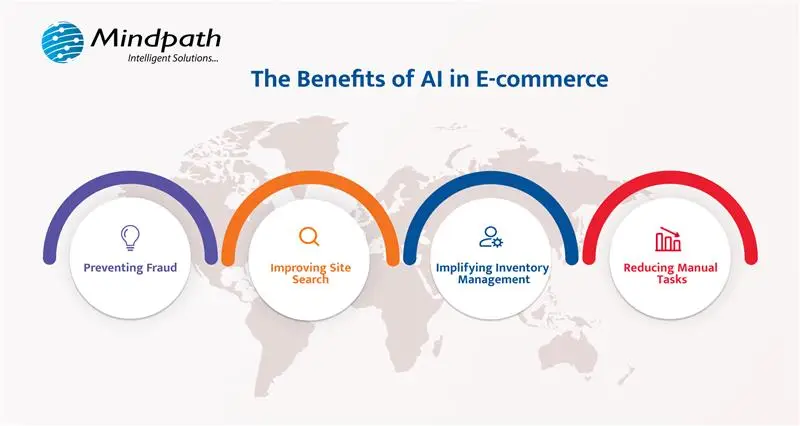
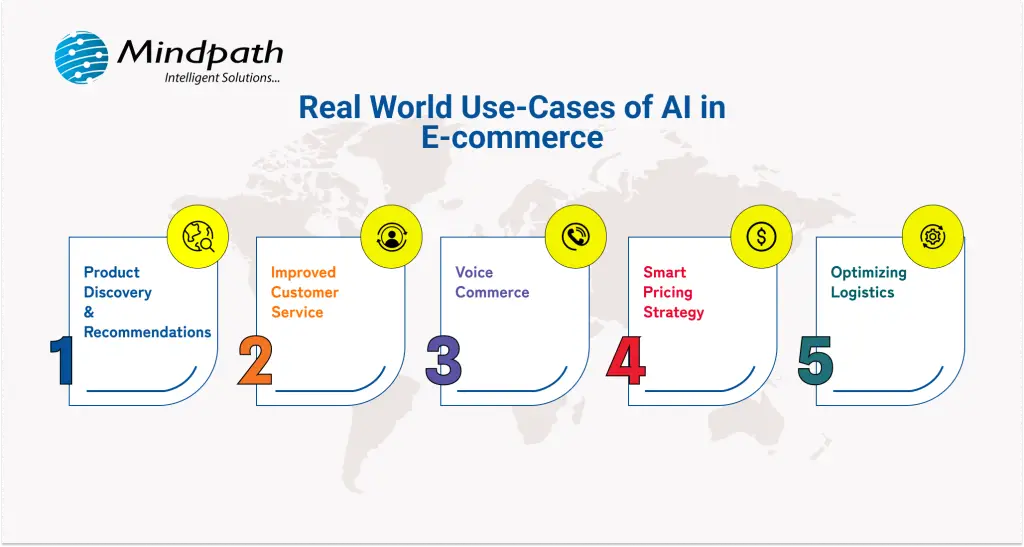
1. Automating Customer Help
Chatbots and virtual assistants are fantastic for offering customer care online. They make use of artificial intelligence (AI) to determine the needs of customers. Natural language processing (NLP) is the ability for chatbots to understand queries and requests. They learn and become more skilled at serving clients as they engage with them more.
Chatbots are a great resource for customers and online retailers alike. They never require a break and are constantly accessible, even late at night. They are polite, calm, and typically know the answers to a lot of queries. They take care of basic questions so that human agents can concentrate on more complex problems. Recent advancements in AI have made chatbots even more intelligent, which gives customers greater confidence when interacting with them. Many customers are willing to purchase goods from chatbots, particularly since some of those can offer exclusive offers just for them.
2. Reducing Manual Work
Artificial intelligence (AI) is revolutionizing e-commerce by replacing routine everyday operations that usually call for human labor. This change lessens the need for a big workforce while enabling organizations to run more effectively.
While it is unfortunate that automation can result in the loss of certain retail associates, many businesses believe artificial intelligence (AI) offers more opportunities for cost savings and productivity gains. Businesses can optimize their processes and lower human error by entrusting AI with routine jobs. Over time, this can result in clients receiving faster service and having a more responsive purchasing experience. So, adopting AI will ensure that employees can participate in more meaningful ways and help e-commerce businesses prosper in a competitive marketplace.
3. Preventing Online Fraud
E-commerce businesses face a serious threat from online fraud, which costs them billions of dollars annually. Thankfully, AI offers sophisticated methods to address this issue. Machine learning algorithms have made the task of manually reviewing transactions for unusual patterns, which once required a large number of personnel, faster and simpler.
To identify suspicious activity, these algorithms can instantly evaluate millions of data points. An AI system can detect abnormalities rapidly, such as when someone tries to commit fraud by inputting the wrong delivery address and flags the entry for evaluation. E-commerce companies can drastically lower financial losses and safeguard both themselves and their clients from fraud by utilizing AI for fraud detection. This makes everyone’s online buying experience safer.
4. Smart Recommendations
AI-driven recommendations raise the bar for personalization in online shopping. AI is able to examine a customer’s browsing history, previous purchases, and even their interactions with items, unlike traditional businesses. This makes it possible for AI to make tailored product recommendations and anticipate what a buyer might be interested in.
Customers will find shopping easier and more fun thanks to these very accurate recommendations that are customized to everyone’s tastes. AI helps buyers find the proper items by making relevant suggestions; this increases the likelihood of a purchase and improves the entire shopping experience. Brick and mortar establishments are just unable to match this level of customization.
5. Easy Cross-Selling
AI enables e-commerce companies to provide customers with product recommendations while they buy. AI can employ their past purchases and preferences to suggest relevant products that customers might like to add to their basket while they are checking out. Businesses can more easily provide appropriate ideas by deploying AI-powered recommendation engines, which leverage data on frequently purchased goods. Customers are encouraged to purchase more as a result, increasing revenues through upselling and cross-selling without being intrusive.
6. Personalized Shopping
Personalization is essential in e-commerce to provide a customized purchasing experience for each unique client. Customization strengthens the bond with clients, encouraging loyalty and improving the pleasure of buying. Personalized experiences are increasingly expected by many customers, but not all merchants have completely integrated them into their platforms.
AI has greatly enhanced the personalization of e-commerce by analyzing vast volumes of user data and providing real-time insights. This enables websites to function as personal shopping advisors by making product recommendations and presenting customized discounts. Through customization of the purchasing experience, businesses can raise revenue and establish enduring bonds with their customers.
AI Development Services at Mindpath
Wrapping Up!
Ready to transform your e-commerce business with the power of AI?
At Mindpath, we specialize in creating intelligent solutions tailored to your needs.
Sustainable technology has become one of the incredible sources of progress. It is discovering the beneficial combination of environmental responsibility along with innovations. The global green technology market size is going to reach USD 105.26 billion by 2032. As per a Deloitte Survey, around 90% of companies consider sustainable tech to be improving their brand trust.
The world is dealing with challenges of climate change and resource exhaustion. So, sustainable technology is striving to redefine the approach of development while reducing environmental impact and uplifting operational efficiency. Let us further explore what sustainability in technology defines today and how it is reshaping the industries.
Looking to transform sustainability into a powerful growth strategy? Contact us at Mindpath to turn your vision into real business results.
What is Sustainability in Technology?
Sustainable technology is characterised by its focus on social and economic advancement while valuing natural resources. Further, it aims to offer products with minimal environmental invasion.
1. The replacement includes transforming from non-biodegradable to biodegradable materials during the manufacturing efforts. Additionally, you also need to replace non-renewable resources with efficient renewable alternatives.
2. The ultimate manufacturing process maintains a prohibition approach. So, it actively avoids pollution, degradation, and other harmful environmental consequences related to traditional strategies.
3. Sustainability in technology is calculated by the efficiency of technology in terms of resource usage and energy.
What are Some Business Elements that Drive Sustainable Technology Adoption?
Modern businesses are valuing sustainability technology not just to be ‘Green’, but to eliminate certain everyday challenges.
1. Expectations of the Stakeholders
In the recent scenario, customers, investors, and employees are mainly valuing sustainability. So, firms that showcase their commitment to sustainable technology are more likely to shine. Starting from transparent supply chains to carbon-smart operations, you can build trust while adopting loyalty.
2. Regulatory Pressure
Many governments and international bodies are being strict about the environmental standards. Regulations like CSRD and the UN Sustainable Development Goals influence corporate reporting requirements. This is forcing businesses to integrate technology that can track and report ESG performance effectively.
3. Cost Efficiency
Sustainable technology is not just eco-friendly; it often reduces costs. You can get your hands on waste reduction systems, energy optimisation tools, and predictive maintenance. So, you can cut your operational expenses significantly.
wondering how businesses can reduce their IT energy consumption while still maintaining high performance and scalability? Explore how energy-efficient computing is helping organizations cut costs and lower their carbon footprint.
Top Sustainable Tech that is Encouraging Businesses in 2026
Sustainability and technology include a wide range of innovations. These viable innovations are capable of eliminating real-world problems. Here, you can go through some top sustainable technologies that are uplifting the functionality of businesses.
1. AI-Enabled Energy Management Systems
Artificial intelligence and machine learning can effectively optimise how your business can consume energy. Such systems can assess real-time usage patterns and can adjust operations dynamically. Further, it can help your company eliminate energy charges while reducing carbon emissions.
2. Workflow Automation
Businesses are now shifting to digital processes, from contracts and records to project workflows. Moreover, it can reduce paper waste while aligning your operations. Further, sustainable documentation solutions are now essential to minimise official footprint while encouraging data security.
3. IoT & Smart Building Tech
Internet of Things devices are known to be a leading sustainable tech in smart buildings and industrial facilities. Additionally, the sensors can trace energy use, equipment performance, and air quality. This can empower your business to cut down waste while preventing frequent breakdowns. It can also help your business operate more efficiently.
4. Circular Economy Tech
The principles of the circular economy prioritise recycling, reuse, and repurposing instead of the traditional model. Moreover, some companies are now employing e-waste recovery systems that extract valuable materials like gold and copper from used electronics. This can prevent hazardous waste while fueling your revenue streams. It is the best example of sustainable technology you can think of.
5. Sustainable Supply Chains
Blockchain and modern tracking systems can enhance your supply chain transparency. This is offering businesses the tools to monitor carbon emissions across partners. Further, this can impose ethical sourcing while meeting consumer requirements.
These are some of the best sustainable technology examples your company can adopt to be ahead in the competition.
Must Read: AI in Business Strategy
What are Some Major Benefits of Sustainable Technology?
Sustainable technology mainly aims to lessen the negative social and environmental influences. Such an aspect can safeguard your company’s reputation and finances. This can also help you leverage a positive impact while valuing ethical principles.
1. Keeps You Unique in the Market
Adopting sustainable technology can set your business apart in the crowded marketplace. Recently, consumers have been opting for environmentally conscious services and products. This offers a unique selling proposition while making you trustworthy among the customers.
2. Managing Risks
The usage of sustainable technology can lessen company risks by helping businesses and the environment through the reduction of climate change’s negative effects. Moreover, companies leveraging exclusive ESG rankings find more favour from long-term investors.
3. Encourages Financial Performance
Technology and sustainability combined allow efficient resource usage within your company. This strategic approach can upgrade your company’s value among the competitors while increasing its profits and competitiveness.
Sustainable Tech Across Multiple Industries
83% of consumers believe that companies should majorly shape ESG best practices. So, a series of industries are valuing sustainability in technology adoption.
1. Healthcare
Healthcare facilities have been using data-driven systems to minimise energy usage while streamlining patient care. Further, they are managing resources more sustainably through HVAC controls and digital records.
2. Manufacturing Units
Real-time monitoring and smart automation allow factories to reduce energy waste while optimising production schedules. Further, predictive analytics can assist you in anticipating equipment failures.
3. Retail Businesses
Sustainable supply chain tech is transforming how products move. Recently, retailers have been using sophisticated tracking systems to reduce inventory waste while optimising delivery routes.
How are retailers managing complex digital systems while focusing on sustainable business growth? Discover the smart strategy behind retail IT outsourcing and how it supports modern retailers.
Challenges You Might Expect while Adopting Sustainability in Technology
Despite a lot of promises, sustainability adoption might face a lot of challenges, as given below.
1. Integration and Complexity
Combining complicated systems like IoT devices, AI platforms, and legacy infrastructure might be difficult for you. So, it is essential for you to encourage strategic planning and expert implementation to be successful.
2. Upfront Investment Charges
Sustainable systems generally need initial investment, and this can affect small businesses. However, falling technology charges and measurable ROI make adoption increasingly reliable.
3. Governance and Regulatory Standards
As sustainability reporting becomes more regulated, businesses are now integrating robust frameworks for tracking and verifying data. So, your sustainability technology must evolve along with the recent global standards.
Want to understand how AI is empowering companies to innovate faster and stay competitive in the digital era? Explore our article on AI and business transformation strategies to learn how businesses are using AI to boost efficiency and innovation.
Conclusion
Now you are well aware of what sustainability is in technology. So, adopting sustainable features has become a necessity for multiple businesses. Moreover, a significant mindset shift is essential for getting a successful, sustainable adoption. Companies that adopt such a perspective can enhance their competitive position.
If you seek such reliable partners who understand both the strategic value of sustainability, Mindpath can be your viable option. We deliver custom approaches that can give rise to innovations while transforming your digital.
FAQs
1. Why is sustainability in tech one of the most important adoptions for businesses?
Sustainability in tech can enhance your operational efficiency and help you comply with regulations. Further, it meets stakeholders’ expectations while enhancing your brand values.
2. How can technology track sustainability performance?
Effective tools like sensor networks and platforms can easily offer your business the data it requires on time.
3. How should I initiate my tech journey with sustainable functions?
Begin with a sustainable audit to understand your requirements and set your goals. Further, invest in scalable tech solutions that can evolve with your growing demands.
4. What are some major examples of sustainable tech?
Some famous examples include IoT devices, AI-enabled energy systems, green data centres, etc.
5. Is sustainable technology only viable for large enterprises?
Small and mid-level businesses can also adopt sustainable technology like cloud optimisation and digital workflows.
Imagine a world where websites not only look great but also adapt to user needs in real time, offer personalized content, and even predict future trends. Sounds futuristic, right? Well, with AI now playing a pivotal role in web development, this is becoming a reality. But how exactly can artificial intelligence transform the way we design, build, and maintain websites? And what advantages does it offer for businesses and developers alike? In this blog, we will explore how AI can be leveraged in web development.
Artificial intelligence (AI) is the development of computer programs that are capable of doing activities that would typically require human intelligence, such as pattern recognition, decision-making, and voice understanding. It encompasses technologies such as natural language processing, deep learning, and machine learning. AI is playing an increasing part in web development since it makes websites smarter and more effective. Websites can utilize AI to provide personalized content, learn from user behavior, and even automate processes like chat assistance and recommendation systems. By streamlining repeated tasks, it saves developers time and enhances the user experience overall, making websites more approachable. AI can help in improving security, speeding up performance, and creating more intelligent search functions, which will make websites easier to create and more beneficial for customers.
Want to know more? Let’s explore how leveraging Ai in web development can be beneficial!
Benefits of AI in Web Development
1. Minimized Human Errors
AI reduces the possibility of human errors during web development, such as errors or bugs. It can automate testing, which enables AI to swiftly identify and address coding errors. This not only speeds up the entire development process but also improves the stability and dependability of the product. Developers can guarantee fewer mistakes and produce websites of a higher quality by outsourcing these responsibilities to AI. In the long term, it improves efficiency and saves time by enabling engineers to concentrate on more difficult jobs. In order to ensure seamless operation and reduce the need for ongoing manual monitoring, AI can also continually monitor the website, identifying any problems even after launch. This leads to improved site stability and user experience.
2. Personalized Solutions
AI is rapidly being used by web developers to provide personalized user experiences on websites. AI enables websites to personalize content based on each user’s choices, behavior, and past interactions. AI-powered systems can provide personalized content, product recommendations, and targeted marketing messages by analyzing user data. This personalization increases user engagement and conversion rates, making users more inclined to act on the site. A customized experience also helps to promote client loyalty by making people feel valued and appreciated.
Furthermore, AI can forecast future user behavior by identifying patterns and trends, allowing businesses to stay one step ahead in satisfying client wants. This proactive strategy can improve client satisfaction and sales.
3. Optimized Communication
There are many different types of websites, and some can be difficult to use. Artificial intelligence-powered virtual assistants and chatbots offer real-time customer care, answering queries and supporting customers around the clock. They can manage a wide range of interactions, from simple enquiries to more complicated activities, increasing customer satisfaction while reducing the effort for support workers.
These AI technologies help develop user trust by providing quick assistance, making them feel supported and appreciated. This short response time can substantially enhance the entire user experience, increasing the likelihood that visitors will return to the website. Furthermore, since AI learns from interactions, these chatbots can enhance their replies over time, delivering even greater service and awareness of customer needs.
4. Elevated User Experience
Businesses can now provide personalized experiences to each visitor thanks to AI-powered websites, which greatly increases engagement levels. AI can adapt to users’ choices and tailor material to their interests and behaviors. Web designers use this feature to provide a more personalized experience for each user, ensuring that the material is relevant to their interests. AI improves the entire user experience by offering relevant information, recommendations, and features that are both pleasurable and engaging. This level of personalization not only keeps customers on the site longer, but also motivates them to explore further, resulting in higher satisfaction and loyalty. As a consequence, organizations can develop stronger relationships with their target audience and achieve greater conversion rates.
5. Responsive Design Enhancement
AI plays an important role in optimizing websites for responsive design, guaranteeing a consistent user experience across devices and screen sizes. It enables developers to construct flexible layouts that can dynamically modify information in response to user preferences and device capabilities.
AI allows websites to analyze how visitors engage on various mobile, tablet, or desktop platforms and adapt appropriately. This implies that users will get a consistent and user-friendly experience no matter how they visit the site. Businesses that offer responsive design can improve customer happiness, lower bounce rates, and ultimately generate more engagement and conversions. This versatility not only improves the overall aesthetic appeal of the site, but also guarantees that customers discover what they need fast and simply, regardless of the device they are using.
6. Enhanced SEO and Ranking Improvement
AI improves SEO strategy by analyzing search engine algorithms, detecting relevant keywords, and offering optimizations to boost search ranks. AI systems can analyze website performance in real time, watch rivals’ activity, and recommend SEO modifications to increase organic traffic.
AI’s capacity to digest large volumes of data quickly allows it to discover insights that human marketers might not recognize right away. This enables organizations to keep on top of trends and adjust their plans accordingly. Websites that use AI-driven suggestions can boost their exposure in search engines, attract more visitors, and eventually increase conversions. This emphasis on continual optimization guarantees that organizations can effectively compete in the digital world while maintaining a strong online presence.
Leverage AI in Web Development at Mindpath
Mindpath leverages artificial intelligence to improve web development and boost innovation. Our AI development services use modern algorithms and machine learning. Our Predictive Analytics solution helps you forecast trends, while Machine Learning Applications improve operational efficiency. Automation Solutions frees your team from everyday activities, allowing them to focus on strategic goals. With our Business Intelligence solution, we turn raw data into usable insights, providing visualizations and reports to help you make educated decisions. Our Conversational AI services create chatbots and virtual assistants that increase user engagement and offer immediate assistance.
Final Note!
Implementing AI in web development enables firms to improve user experiences and optimize processes. AI builds websites that surpass user expectations by eliminating human error, personalizing information, optimizing communication, and enhancing responsive design. Additionally, AI-driven SEO tactics assist organizations in remaining competitive in a rapidly changing digital market.
Mindpath leverages AI’s potential to generate innovation and success. Our services, ranging from predictive analytics to conversational AI, are meant to keep you ahead of the curve, allowing you to make informed decisions and provide amazing user experiences. With Mindpath, you can embrace the future of web development and open up new chances for growth.
Ready to elevate your web development with AI?
Partner with Mindpath today to unlock innovative solutions tailored to your business needs.
Have you ever wondered how AI can generate text, images, and even music? What if a single AI model could understand and create across multiple formats? This is where Multimodal Generative AI steps in. In this blog, we’ll dive into the fascinating world of Multimodal Generative AI and explore how it’s shaping the future of AI.
What is Multimodal Generative AI?
Multimodal generative AI is an advanced form of AI that can comprehend and generate several types of data, including text, images, audio, and video. These systems can combine and analyze several types of input to process data from multiple sources and produce new content. Multimodal AI combines various sources of data to accomplish more complicated tasks and call for a greater understanding of the data. Although there is a lot of potential for this technology in fields like accessibility, education, and content creation, there are also issues to be resolved, like preserving accuracy and relevance and handling ethical concerns about privacy and authenticity.
Benefits of Multimodal Generative AI
1. Improves Accessibility
Through the creation of various kinds of content, these systems improve accessibility and facilitate information access for all. By ensuring that people with different abilities can interact with content in ways that best meet their requirements, they contribute to promoting inclusion and understanding on various platforms. By offering substitute formats, these systems seek to remove obstacles and make the user experience more inclusive for all users.
2. Creates High-Quality Content
Multimodal generative AI can lead to more complex and intelligent content by mixing several forms of data. It can include text, graphics, audio, and other components to provide interesting content. This skill enables the creation of a wide range of instructional materials or media that deepen comprehension and spark users’ interests. For everyone, it makes for a more engaging and educational experience by combining different forms. This method not only grabs the interest of individuals but also accommodates various learning styles, which makes it simpler for people to understand difficult ideas and concepts. This results in more effective and richer content that appeals to a larger audience.
3. Boosts User Experience
Multimodal generative AI can adapt content in user interfaces to the context and the demands of the user. When voice isn’t possible, it can provide visual explanations to make sure customers receive information most conveniently. It also improves interactive experiences, like video games, by producing lifelike people and language that react differently to human input.
Because of its versatility, technology becomes more user-friendly and accessible and creates a more engaging experience. Multimodal generative AI can offer tailored suggestions by comprehending the context, which raises customer satisfaction and facilitates more seamless, pleasurable interactions with digital material.
4. Combines Data Effectively
These systems are capable of smoothly fusing data from many sources to deliver a more thorough and coherent knowledge of intricate circumstances. Their ability to integrate text, audio, and visual data improves analysis and decision-making. This capacity is especially useful for security, since it can improve threat identification and monitoring by combining textual, auditory, and visual analysis.
These algorithms can find patterns and relationships by combining several kinds of data that would not be apparent when looking at a single source. By using a holistic strategy, organizations can improve their ability to respond to possible hazards and improve operational safety and efficiency.
5. Improves Understanding and Insights
These models can get a better knowledge of both content and context than single-mode AI systems by combining many sources of data, such as text, pictures, and sound. With the capacity to understand both verbal and non-verbal aspects of a user’s question, this feature makes replies in applications such as virtual assistants more accurate and relevant.
These systems improve communication and engagement by considering several factors, giving users a more efficient and natural experience. This enhanced comprehension leads to deeper interaction and more significant conversations, which eventually boosts the efficiency of AI applications as a whole.
6. Drives Creative Marketing and Advertising
By combining consumer data from several sources to create personalized advertising material, multimodal generative AI can enhance marketing initiatives. These technologies can offer customized advertising materials that engage consumers on several sensory levels by analyzing interactions across various forms. Using this strategy, companies can generate ads that are more relevant and engaging for their target demographic, which improves consumer engagement and boosts the efficiency of marketing efforts.
Use - Cases of Multimodal Generative AI
1. Human-Computer Interaction
Multimodal AI enables more natural and intuitive human-computer interactions by processing inputs from several sources, including voice, gestures, and facial expressions. This feature facilitates more seamless communication and allows customers to interact with technology in a more comfortable and familiar way. Multimodal AI improves user experiences and opens technology to a larger audience by comprehending various input formats.
2. Healthcare
Multimodal models are essential for medical image analysis in the healthcare sector because they integrate data from several sources, including written reports, medical scans, and patient records. The capacity of medical professionals to diagnose patients accurately and create efficient treatment programs is improved by this integration. These technologies eventually enhance patient care and results by offering a greater understanding of a patient’s state.
3. Multimedia Content Creation
Multimodal AI can generate multimedia material by mixing data from a variety of sources, such as text descriptions, audio recordings, and visual references. This feature makes the process of creating content more efficient and enables the automatic production of interesting and rich content. These systems improve efficiency and creativity by combining several modalities, which makes it simpler to create varied content that meets the tastes of various audiences.
4. Sensory Integration Devices
Multimodal artificial intelligence (AI) improves augmented reality, virtual reality, and assistive technology user experiences by combining touch, visual, and audio inputs into one device. These gadgets build settings that are more interactive and immersive by merging many sensory inputs. This integration allows for a more thorough and pleasurable experience across a variety of apps while also improving user engagement and accessibility to technology.
Multimodal artificial intelligence (AI) Services at Mindpath
Our AI development services help organizations better understand their requirements and make decisions by utilizing text, photos, audio, and other inputs. Our ability to integrate data from several sources gives us a full understanding of your initiatives and objectives. Our AI models make interactions more relevant and engaging by producing personalized information and responses based on your unique needs. By utilizing a variety of input methods, technology is made easier to use and more pleasurable for the user overall.
Our services also provide valuable insights that assist businesses in making better decisions, leading to more effective strategies. At Mindpath, our aim is to harness the power of multimodal AI to empower your business and improve outcomes through innovative solutions.
Final Thoughts
Multimodal generative AI is transforming the way humans engage with technology and consume content. It improves user experiences across a range of industries, increases accessibility, and fosters creativity by mixing diverse sources of data effortlessly. This technology has enormous potential to change industries and improve our daily lives as it develops further. At Mindpath, we’re thrilled to take the lead in applying multimodal AI to develop cutting-edge solutions that enable companies and improve user engagement. Unlock countless opportunities for development and innovation by embracing the AI of the future with us.
Ready to unlock the potential of your projects?
At Mindpath, we harness the power of advanced AI solutions to elevate your business.
The radical growth in the amount of data generated by devices connected to the internet created concerns regarding the traditional approaches to computing and data storage. Many companies have shifted their business models towards cloud computing to accommodate the demand for storing more data, while also paying attention to cloud security. However, the search for answers to ‘what is edge computing’ is gaining momentum due to the limitations of cloud computing. One of the biggest setbacks of cloud computing is the latency, which is a direct outcome of the distance between users and cloud data centers.
Edge computing has emerged as a promising alternative by providing a distributed computing model in which computation and data storage are closer to the source of data generation. Understanding the strengths and limitations of edge computing offers the ideal foundation to integrate it effectively in enterprise operations.
Is your business struggling to act on data fast enough to stay competitive? Contact us to deliver real-time processing to power faster and smarter decisions.
Discovering the Ideal Definition of Edge Computing
The traditional cloud-based infrastructure has been the favorite choice of companies who prefer agility and scalability. On the other hand, the limitations of cloud computing have created setbacks in supporting emerging use cases and workloads. Apart from the high latency, cloud computing makes you dependent on central data centers and burdens you with costs. Therefore, an alternative like edge computing has become the need of the hour for thousands of businesses worldwide.
Upon searching for edge computing definition on different platforms, you will come across multiple entries. The most common definition of edge computing paints it as a distributed computing approach that involve shifting computing resources as close as possible to the source of data generation. It involves carrying out data processing tasks on or near the devices on the edge, thereby reducing network costs and latency requirements.
You must know that the edge may be a router, routing switches, ISP, multiplexers or integrated access devices. The only thing required for edge computing is that the network edge must be in proximity of the device.
Also Read: Cloud Security Risk
Understanding the Components in Edge Computing Architecture
You might have many questions about the way in which edge computing overcomes the challenges with cloud computing. The basic edge computing meaning does not shed light on the fact that edge computing works with different components. Without understanding the architecture of edge computing, you cannot figure out how it is better than cloud computing. A breakdown of the important components in edge computing architecture can help you decipher how edge computing works.
1. Edge Devices
Edge device refers to the actual device on the edge, such as a camera, IoT device or a sensor. It is the source where raw data is generated and serves as the first point of contact in the edge computing architecture. The edge device can support minimal processing tasks, such as data filtering.
2. Edge Gateways
The next crucial component after edge computing devices is the edge gateway, which serves as a data aggregator. Edge gateway is the place where the system aggregates data from multiple devices and deals with basic analytics and preprocessing tasks.
3. Edge Servers
You cannot think about using edge computing for real-time tasks without edge servers in the picture. Edge servers handle the local processing tasks for real-time applications and running AI inference models or containerized workloads. As a matter of fact, edge servers take care of critical data on a temporary basis before sending it to the cloud.
4. Network Layer
The network layer helps in ensuring the use of 5G, LAN, Wi-Fi or satellite connection for connecting edge components to each other and the cloud.
5. Data Center or the Cloud
The data center or the cloud in edge computing architecture is useful for long-term storage and in-depth analytics. It also facilitates easier prospects for model training alongside the utilities like component orchestration and centralized management.
Want to understand how edge computing enables faster and real-time applications closer to users? Check out serverless architecture in cloud computing to learn how scalable workloads run without managing servers.
Unraveling Real-World Use Cases of Edge Computing
The introduction to edge computing also creates curiosity about the different ways in which businesses can use it. You can find edge computing examples in almost every industry and even in your daily lives. Learning about the real-world use cases can help you get a better idea of how edge computing can revolutionize the future of computing.
1. Retail
Edge computing serves the ideal resource for real-time processing and analytics in the retail sector to provide seamless customer experiences. Retailers can use edge computing in inventory management, customer analytics and personalized advertising to improve operations as well as the customer experience.
2. Manufacturing
The widespread use of edge computing in IoT applications provides the foundation for leveraging the new computing approach in manufacturing. IoT devices allow manufacturers to monitor their equipment, production lines and quality control. With the help of edge computing, manufacturing processes gain the benefit of automation, thereby ensuring faster manufacturing.
3. Autonomous Vehicles
The examples of different types of edge computing applications in the real world will be incomplete without mentioning autonomous vehicles. Edge computing can provide the lowest levels of latency required for processing input data from cameras. The low latency plays a major role in enhancing safety and navigation in autonomous vehicles.
4. Smart Cities
If you talk about autonomous vehicles among use cases of edge computing, then you should not leave smart cities from the discussion. The faster and localized data processing with edge computing offers a formidable boost for various tasks in smart cities. Edge computing has the potential to streamline energy optimization, public safety monitoring and real-time traffic management.
Wondering how edge computing environments stay secure against modern threats? Discover cloud computing attacks to understand how attackers target distributed systems and how to protect them effectively.
Does Edge Computing Have Any Variants?
Most of the discussions about edge computing focus only on its definition, its applications and benefits. The search for answers to ‘how does edge computing work’ does not lead you to the more intricate details of the new computing approach. You should also know that edge computing works at different levels with distinct utilities in different scenarios.
1. Regional and Local Edge
The regional and local edge locations help in extending the capabilities of cloud computing with reduced latency. The regional hubs work like the cloud to facilitate compute and storage services near end-users. Positioning of regional and local edge hubs before the last-mile network ensures that they can support applications which need moderate latency and enhanced data throughput.
2. On-site Edge Computing
Another notable variant of edge computing is on-site edge computing in which edge servers and devices are present in the physical premises of an organization. The on-site edge computing systems are more reliable choices for mission-critical applications as they enable real-time decision making without external networks. On-site edge computing also provides the assurance of more autonomy, control and security for enterprises.
3. Device Edge Computing
The diverse applications of edge computing also draw references to device edge computing with IoT endpoints. Device edge computing involves a combination of IoT devices, embedded systems and sensors which interact directly with the physical environment. The utility of device edge computing is primarily evident in distributed edge networks as they reduce data transfer and support localized actions.
Curious how edge computing fits into the rapidly evolving cloud landscape? Check out the latest cloud computing trends to learn how innovations like edge, AI, and distributed cloud are shaping the future.
How Can Edge Computing Help Your Business?
Edge computing offers significant advantages that make it a better alternative to cloud computing. As a matter of fact, the benefits of edge computing make it a powerful option for many emerging use cases.
1. Lower Latency
One of the most notable entries among the benefits of edge computing is low latency. With the help of local processing, edge computing ensures that the data never goes to the cloud for processing. As a result, edge computing can ensure significantly faster response times, which is essential for time-sensitive applications.
2. Enhanced Reliability
The local processing in edge computing ensures that it does not have to depend on external networks or resources. You can notice that the advantages of edge computing don’t give up on you in times of outages. You will not need a stable internet connection at all times to make the most of edge computing in real use cases.
3. Reduced Bandwidth Costs
Edge computing plays a major role in reducing network congestion, which ultimately leads to lower operating costs. With limited data transfer to the cloud, edge computing provides the assurance of improved performance in limited bandwidth. As a result, edge computing can help you avoid the costs of uninterrupted high-speed internet connectivity.
4. Better Flexibility
The isolated processing on devices in edge computing not only showcases how the power of computing can come at low costs but also with more flexibility. Edge computing allows you to add more connected devices without the urgency to connect them to central servers. On top of it, edge computing also facilitates hybrid scaling with the help of cloud resources and flexibility for deploying new edge nodes with growing demand.
Planning to build applications optimized for edge environments? Explore about cloud-native development to learn how modern architectures support scalable, resilient, and edge-ready applications.
Final Thoughts
Edge computing is a new paradigm that aims to revolutionize compute and data storage services. It provides a better alternative to cloud computing by enabling data processing on the devices at the network edge. The difference between cloud and edge computing is clearly evident in latency and resource requirements. Edge computing consumes significantly fewer resources than traditional cloud computing and delivers lowest latency. The adoption of edge computing in smart cities, autonomous vehicles and smart manufacturing units is a proof of how the new computing approach is better than its predecessors.
Mindpath is a leading end-to-end IT solutions provider with years of experience in catering to clients from different industries. We specialize in edge computing solutions tailored to modern specifications and capable of delivering the best results in alignment with your business goals. Take the first step to embrace the power of edge computing in your business with us.
Have you ever wondered how artificial intelligence (AI) could impact our lives if left unchecked? As AI continues to evolve, ensuring its safe and responsible use has become a major concern. What exactly is AI safety, and why is it so important for the future? In this blog, we’ll explore what AI safety means and why it’s needed to protect both humanity and technological progress. So, let’s dive in!
What is AI Safety?
AI safety is the act of ensuring that artificial intelligence (AI) systems function properly without causing damage or creating unexpected risks. It entails developing rules and policies that govern how AI is created, developed, and used. The objective is to avoid mistakes, safeguard customers, and guarantee that AI works as developers planned. AI safety entails ensuring that algorithms are dependable, data is secure, and systems adhere to ethical and legal guidelines. This helps ensure that AI benefits society while posing minimal hazards.
Why is AI Safety Important?
AI safety is particularly essential because as AI grows more powerful, it will have an impact on many aspects of our life, including how we work, interact with computers, and make decisions. Without adequate safeguards, AI can worsen inequality by favoring specific groups or making unjust decisions based on biassed data. Another important reason for AI safety is to keep AI from being used harmfully, such as distributing misleading information or compromising privacy. By prioritizing safety, we can ensure that AI contributes to the improvement of our environment rather than creating difficulties. This makes AI safety essential for creating a better, more equitable future for everyone.
Best Practices for Ensuring AI Safety
1. User Education and Training
2. Comprehensive Incident Response Strategies
Developing robust incident response procedures is essential for dealing with AI safety problems promptly and efficiently. These strategies should contain specific actions for recognizing, reporting, and responding to any events or breaches that occur. A well-defined response strategy enables organizations to quickly isolate and resolve problems, limiting potential harm while preserving the system’s security and reliability. Organizations can secure their AI systems while still maintaining user confidence by being prepared.
A thorough incident response plan should also include frequent team training and simulations to ensure that everyone understands their roles and responsibilities during an event. This proactive attitude promotes confidence and readiness to deal with unanticipated problems successfully.
It is also important to evaluate and update response plans on a regular basis, taking into account new threats and learning from previous catastrophes. Organizations can improve their reaction tactics over time by taking feedback into account and adjusting to the changing environment of AI hazards.
Furthermore, good communication throughout an event is crucial. The strategy should contain procedures for notifying stakeholders, users, and regulatory organizations of any breaches or safety issues. Transparent communication promotes confidence and reassures users that the organization is treating the matter seriously.
3. Frequent Audits and Compliance Reviews
Conducting frequent audits and compliance checks is essential for guaranteeing AI safety. These audits should evaluate Artificial Intelligence systems to ensure that they meet established safety standards, ethical norms, and regulatory requirements. By completing these assessments on a regular basis, organizations can find possible hazards and areas where they may not be compliant, allowing them to make required modifications and improvements swiftly.
These audits not only assist in detecting flaws, but they also encourage accountability and openness inside the organization. They urge teams to take AI safety seriously and make sure that everyone understands the necessity of following standards.
4. Data Confidentiality
Data confidentiality is a crucial strategy for ensuring privacy in AI operations. This method entails eliminating personally identifying information (PII) from data sets, rendering it hard to link data back to people. Techniques like k-anonymity, differential privacy, and synthetic data creation are frequently employed to safeguard individual privacy while still making the data relevant for training and analysis.
Organizations can use anonymized data to build AI models while protecting user privacy. Users will feel more confident knowing their personal information is secured, which helps to create trust. Furthermore, anonymized data can comply with numerous privacy standards, allowing organizations to avoid legal concerns while still gaining important insights.
5. Secure Development Lifecycle
A secure development lifecycle (SDL) is essential for assuring AI safety. This strategy incorporates security precautions into all stages of AI development, from planning and design to implementation, testing, and deployment. This lifecycle’s key practices include undertaking security risk assessments, adhering to secure coding standards, and thoroughly testing to find and fix vulnerabilities.
Organizations that include security throughout the development process can spot possible concerns early and mitigate risks before the AI system goes live. Furthermore, security measures must be updated on a regular basis to respond to new threats and technological advancements. This proactive strategy not only contributes to the development of safer AI systems, but it also improves general technological reliability and confidence.
6. Cross-Disciplinary Teams
Utilizing cross-disciplinary groups in AI research is essential for improving AI safety by providing a varied variety of viewpoints and experience. These teams should include professionals from a variety of domains, including ethics, psychology, law, and particular industrial areas, as well as AI experts. This variety is essential for addressing the difficult issues of AI safety because it assures that the systems built are not just technically strong, but also socially responsible and ethically sound.
Cross-disciplinary groups can detect possible concerns that people focused primarily on technical elements might have ignored. This collaborative approach fosters a more thorough grasp of the implications of AI systems, resulting in better decisions and more deliberate solutions.
AI Safety with Mindpath
Mindpath is committed to ensuring the safety and security of AI. Our approach is focused on ensuring that AI systems function effectively and do not cause harm. We take significant precautions to secure users and data, ensuring that everything is handled appropriately. We give training to users to assist them understand how to utilize AI safely. Our teams comprise specialists from several domains, including ethics and technology, to ensure that we cover all elements of AI safety.
We periodically check our systems to detect possible hazards and enhance our procedures. We also employ techniques such as data confidentiality to safeguard people’s personal information. By following a secure development methodology, we ensure that safety is included in every stage of the AI creation process.
Final Thought!
In a society dominated by artificial intelligence, understanding and prioritizing AI safety is essential for establishing a responsible technology environment. As previously discussed, successful AI safety measures include user education, robust incident response techniques, frequent audits, data confidentiality, a secure development lifecycle, and collaboration among cross-disciplinary teams.
At Mindpath, we are committed to following these guidelines, ensuring that AI systems not only function well but also adhere to the highest safety and ethical standards. We hope to increase trust and confidence in artificial intelligence technology by taking proactive actions to reduce risks and secure user data. As we traverse the difficulties of AI development, our dedication to safety will play an important part in defining a future in which AI serves as a beneficial force for society, empowering individuals and promoting equitable progress.
Curious about how Mindpath can enhance your AI safety?
At Mindpath, we prioritize responsible AI development to protect users and data.
Join our Newsletter!
categories
Join the world's largest training library and unlock new opportunities!
Featured Posts
Turn Insights Into
Real Business Solutions
Exploring trends is only the beginning. Whether you’re planning AI adoption, modernizing legacy systems, or building scalable software, our experts help transform ideas into practical business outcomes.