Hyperautomation Technology: The Power of End-to-End Automation

Join our Newsletter!

Featured Posts

Support Is One Click Away

Home

Hyperautomation Technology: The Power of End-to-End Automation

hyperautomation technology

Hyperautomation Technology: The Power of End-to-End Automation

The rapid evolution of the business landscape has made organizations think about approaches to improve efficiency and customer satisfaction while reducing costs. The adoption of hyperautomation technology is a testament to the fact that businesses want more than traditional automation. Hyperautomation represents a huge paradigm shift that helps businesses achieve comprehensive automation in all their operations. 

Many people believe that automation is the sole answer to queries regarding the adaptability of businesses in competitive markets. However, the scope of automation is limited to specific tasks. Hyperautomation calls for using multiple technologies together to optimize their business operations with an integrated approach. Let us learn more about hyperautomation and how it is better than simple automation.  

Ready to take advantage of Hyperautomation for your business? Contact us to discover the customized solutions can bring to the table, which streamline your processes and boost efficiency.

Understanding the Fundamentals of Hyperautomation

The definition of hyper automation by Gartner describes it as a disciplined and business-centric approach used to recognize, refine, and ensure automation of different business and IT processes. The distinctive highlight of hyperautomation is the fact that it involves the coordinated use of different technologies, tools, and platforms. Some of the notable technologies that drive hyperautomation include robotic process automation or RPA, low-code/no-code tools, business process management, event-driven architectures, and machine learning. 

Upon diving deeper into answers to “what is hyperautomation,” you will also find how each technology helps with hyperautomation. The following technologies serve distinct advantages to every business that adopts hyperautomation.

Also Read: AI Trends

1. Robotic Process Automation

Robotic process automation serves as the foundation layer for automation of repetitive tasks in high volumes. The working of RPA systems is almost similar to how human users would interact with digital systems. 

2. Artificial Intelligence

You might come across queries like “what is the difference between AI and hyperautomation” when you learn about hyperautomation. The primary difference between AI and hyperautomation is that artificial intelligence is a technology that drives hyperautomation. AI technologies such as machine learning, computer vision, and natural language processing offer the cognitive capabilities required to understand, analyze, and draw predictions or decisions.

3. Low-code/No-code Platforms

The effectiveness of hyperautomation strategies also depends on how a business utilizes low-code or no-code platforms. These platforms can help developers craft and deploy applications with minimal coding. As a result, businesses can automate processes while enjoying the benefits of faster time to market and accelerated adoption.

4. Business Process Management Suites

Business process management tools and intelligent BPM suites also play a major role in fostering hyperautomation in 2026 through optimized workflows. The BPM tools and suites offer the ideal framework to design, execute, monitor, and optimize complex business workflows alongside managing different automation components. 

5. Process Mining, Task Mining, and Analytics

The effectiveness of hyperautomation strategies depends significantly on the identification of the right processes and tasks for automation. Process mining and task mining are crucial processes for the discovery, mapping, and analysis of existing processes. The two mining methods help in identifying opportunities for automation as well as the potential bottlenecks for the same. On top of it, real-time analytics and reporting can offer useful insights before, during, and after automation to ensure data-backed decisions and continuous improvement. 

The combined use of these technologies explains the hyperautomation vs. automation difference, as hyperautomation focuses on more than automating tasks. On the contrary, hyperautomation emphasizes adaptability and a cycle of continuous improvement in the automation process.      

Struggling to scale automation across your business without a clear strategy? Explore digital transformation for businesses to see how end-to-end automation and modern technologies work together to drive efficiency and growth.

How Does Hyperautomation Work?

Many of you might be wondering about the necessity of adopting hyperautomation when businesses can opt for automation of individual steps. The focus on end-to-end automation makes hyperautomation better than simple automation. Hyperautomation aims to ensure automation of all business processes from their beginning to completion. The scope of hyperautomation can include processes that span different systems and departments. You can rely on hyperautomation for automation of processes that rely on structured data and even the ones that use unstructured data.

You can use a simple example of a customer onboarding process to understand how hyperautomation works. If you use a traditional RPA system for the customer onboarding process, it will automate the data entry process. The RPA system will only facilitate automated entry of data from a structured form into CRM systems.

Hyperautomation delivers more than just automated data entry for the customer onboarding process. You can notice the end-to-end automation with hyperautomation in business processes with the customer onboarding process, where other technologies like NLP, AI, and ML come into play. For instance, NLP will help in extracting information from unstructured data, like customer emails. Subsequently, hyperautomation can leverage RPA for populating multiple systems with the data and use AI/ML for risk assessment and identity verification. The use of BPM tools can help in managing approvals, while analytics can support monitoring of the onboarding process to ensure compliance and efficiency.

Almost all answers to “what is an example of hyperautomation” will help you understand that hyperautomation is a holistic approach. It focuses on achieving seamless integration between different systems and processes, thereby reducing manual handoffs and errors. Hyperautomation breaks down departmental silos and supports a unified workflow for all business operations rather than relying on fragmented automation.

Looking to automate processes without increasing energy costs or resource usage? Discover how energy-efficient computing supports sustainable, high-performance automation across end-to-end business operations.

Unraveling the Advantages of Hyperautomation

The effectiveness of hyperautomation is clearly visible in the different ways in which it helps in transforming automation. The following benefits of hyperautomation will encourage more businesses to embrace it right away.

1. Reduced Costs

The most obvious benefit of hyperautomation is the assurance of cost reduction. Businesses can reduce operational costs across various processes by replacing manual efforts, reducing errors, and time invested in administrative tasks. The combination of hyperautomation tools and technologies with redefined operations and processes can reduce operational costs by a significant margin.        

2. Better Productivity

The automation of repetitive and time-intensive tasks with lower chances of human errors helps in reducing the workload of employees. As a result, employees can focus on more strategic activities that require critical thinking, empathy, and human creativity. Organizations can achieve improvements in overall productivity as hyperautomation empowers employees to add more value to the business.

3. Agility and Scalability

The widespread adoption of hyperautomation technology also empowers businesses to adapt quickly to fluctuating market conditions. Hyperautomation also helps in adapting to changing customer demands and regulatory requirements, thereby improving agility. On top of it, hyperautomation also enables easier scaling of processes to meet changing workloads and achieve competitive advantage.

4. Enhanced Customer and Team Experience

The benefits of hyperautomation, such as reduced manual errors and faster processing times, ensure that employees can have better experience. In addition, the customer experience also gets better with round-the-clock availability of automated services. The utility of intelligent tools in hyperautomation plays a vital role in ensuring job satisfaction and improving customer engagement.

5. Accurate and Timely Decisions

The keyword in any hyperautomation meaning is automation with an integrated approach. The innovative approach to automation ensures better precision and consistency with the use of technologies like AI and ML. Furthermore, the technologies for hyperautomation also help in drawing more insights from process data. As a result, the organization can take improved data-driven decisions and draw predictions for future trends with ease.

Wondering how to streamline automated workflows while maintaining speed and reliability? Explore devOps best practices to learn how optimized pipelines and continuous automation support scalable, end-to-end hyperautomation.

Ready to Unlock the Full Potential of Hyperautomation in Your Business?

As the world steps into a new age of digital transformation, automation becomes more important than ever. The benefits derived from hyperautomation use cases across different industries encourage more businesses to choose hyperautomation. It is an integrated approach to automation that focuses on automating all business processes from initiation to completion. 

At Mindpath, we aim to deliver the best end-to-end automation solutions tailored to your business requirements with different technologies. We believe in crafting our hyperautomation approach in alignment with the client’s business goals and vision to achieve the ideal results. Consult with us and discover the promising advantages of hyperautomation right now.

Frequently Asked Questions

While the introduction to hyperautomation may have helped you learn its fundamentals, there might be many other doubts on your mind. Let us take a look at some of the common FAQs to resolve the biggest doubts regarding hyperautomation.

1. What is the difference between RPA and hyperautomation?

The primary difference between RPA and hyperautomation is that RPA, or Robotic Process Automation, is one of the technologies used in automation. On the other hand, hyperautomation is a novel approach to automation that relies on the integrated use of different technologies, including RPA.

2. How does hyperautomation work?

Hyperautomation works by using different tools and technologies to recognize and vet organizational processes and tasks for automation. It involves coordinated use of technologies such as RPA, AI, machine learning, business process management tools, and low-code or no-code platforms. 

3. What are the benefits of hyperautomation?

The benefits of hyperautomation include reduced costs, limited chances of human error, and better overall productivity of an organization. Hyperautomation also empowers businesses with the essential tools to draw accurate insights from process data to make relevant and informed decisions.

4. How is hyperautomation different from traditional automation?

Hyperautomation is different from traditional automation in the fact that it does not focus on a single task or process. On the contrary, it aims to achieve comprehensive automation of all business processes and workflows while ensuring continuous improvement.

5. Which industries use hyperautomation?

Hyperautomation has found applications in various industries, such as finance, telecommunications, retail, healthcare and manufacturing. The use cases of hyperautomation in these industries help in reducing costs, enhancing decision-making, and improving efficiency in different tasks.

Related Post

Discover how generative AI for businesses can drive innovation, efficiency, and creativity. Explore its impact in our latest blog.
Explore key factors for hiring talent through staff augmentation, compare with other methods, and discover Mindpath’s services for scaling and modernizing your tech.

Related Post

top genAI tools

If you’ve been paying attention to the tech world lately, you must have seen how the best GenAI tools are revolutionizing the way we can accomplish our jobs. Whether it is writing content in seconds or smartly developing sophisticated apps without heavy layers of coding, innumerable examples exist of how these tools are helping people do more with less effort. These AI tools are quickly becoming the new solution for developers, creators, and organizations who want to increase their speed and get better results.

The evolution of GenAI is transforming how industries approach work and innovation. Work that could take hours, and manual efforts are now being dramatically reduced to minutes through intelligent tools. Developers and organizations are employing GenAI tools in many everyday tasks. They provide efficiency, less effort, and improved outcomes. In this blog, we will showcase the most powerful GenAI tools carving the future of AI development. You’ll get a quick look at what they do and why they matter.

Looking to transform your ideas into intelligent, future-ready solutions with Generative AI? Our expert AI development services help you build scalable, smart systems that drive real business impact.

What is Generative AI?

Generative AI is an intelligent technology that creates new things using AI, like text, images, video, and even code. Generative AI can move beyond simply answering questions or completing simple tasks; it is able to generate something new. This allows businesses to operate more quickly and continually come up with new ideas.

Countless organizations are now taking advantage of generative AI to save time and operational efficiencies. Businesses apply it to write emails, design graphics, make advertisements as well as create chatbots. By leveraging generative AI, businesses can reduce manual labor, have fewer errors, and provide customers with their services in a more personalized and timely manner.

Here are some advantages of generative AI for businesses:

  • Creativity and Innovation – Generative AI allows businesses to develop more ideas and make new content.
  • Productivity – It saves time by taking responsibility for boring, menial tasks.
  • Efficiency – It allows work to be completed more quickly and with fewer errors.
  • Personalized Customer Experience – Business can create more personalized and relevant content for the customer.
  • Product Development – It can develop new products faster through automated coding, idea generation, and design enhancements.
  • Support Service/AI chatbots – It supports customer service chatbots that are capable of answering customer questions.
  • Better Decision-making – It provides some basic recommendations to businesses using data so they can make better decisions.
  • Reduction in Costs – It results in cost savings through automation of tasks and improved operations.

Curious about where Generative AI is headed next? Explore the top Generative AI Trends for 2025 and stay ahead of the innovation curve.

Best Generative AI Tools Driving the Future

Generative AI tools are making a big impact by helping businesses create content, improve services, and speed up their workflows. These tools are easy to use and offer smart solutions for many daily tasks. Below is a generative AI tools list that showcases the top tools shaping the future of work and technology.

1. Gemini 

Gemini is one of the best AI tools for students who need help with research, writing, and learning new topics. It works like a smart assistant that gives clear answers, supports multiple languages, and connects well with Google’s tools. It’s great for organizing ideas and understanding complex information more easily.

2. ChatGPT

ChatGPT is a helpful AI tool for writing, support, and idea generation. It can answer questions, create content, and help you think through new ideas. Whether you’re stuck on a project or need help with writing, it’s like having a smart assistant that’s ready to guide you anytime.

3. Cohere

Cohere is one of the useful generative AI tools for developers who want to build smart apps with language features. It helps create text for chatbots, search tools, and marketing content. Developers can use its API to train custom models and add natural language understanding to different types of projects.

4. GitHub Copilot

This tool is a great example of generative AI for coding, helping developers write code faster with real-time suggestions. It works smoothly with popular editors like Visual Studio Code and supports many languages. It also learns your coding style to give more personalized tips, making your development process easier and quicker.

5. AlphaCode

AlphaCode is a helpful generative AI coding tool that supports developers with tasks like writing code, fixing bugs, and learning new programming languages. It can save time by handling repetitive work and giving smart suggestions. It also helps improve code quality and makes team coding easier with shared ideas and solutions.

6. Microsoft Copilot

Microsoft Copilot is a smart assistant that helps with both coding and office work. It gives helpful code suggestions, writes documentation, and works well with tools like Visual Studio and Microsoft 365. It’s a great support tool for developers and teams who want to work faster and more efficiently.

7. Canva AI

Canva AI makes graphic design simple and fast, even if you’re not a designer. With its easy drag-and-drop setup and ready-made templates, you can create eye-catching visuals in minutes. It also gives smart design suggestions and helps keep your brand style consistent across all your projects.

8. DALL-E 2

This is one of the most creative generative AI applications, turning simple text into detailed images. You just describe what you want, and it creates visuals in different styles. It’s great for bringing ideas to life, whether you’re designing something new or showing a concept in a fun, visual way.

9. Microsoft Power Apps

This tool makes building apps easier by letting you use simple chat-like prompts instead of writing a lot of code. It helps create database layouts and app designs quickly. It’s great for teams working together and speeds up the whole process, though it works best within the Microsoft environment.

10. Turing’s CodeGen Copilot

This tool is one of the useful generative AI tools for programmers who want to save time and avoid repeating the same coding tasks. It fits well with tools like GitHub and Jira, making the workflow smoother. It helps boost productivity and lets developers focus more on creative and important work.

To explore how Generative AI is reshaping mobile and web experiences, check out our in-depth article on the Role of Generative AI in App Development. It dives into real-world applications and how this technology accelerates innovation in app design and functionality.

Want to Boost Your Workflows with the Best GenAI Tools?

GenAI tools are changing how we work, learn, and innovate. From faster coding to better customer service and content creation, these tools help users do more in less time. They are now essential for staying efficient, creative, and competitive in today’s fast-moving digital world.

Mindpath offers GenAI powered solutions to help businesses automate tasks, build smarter apps, and improve customer experience. Our expert team delivers AI tools that fit your goals, helping you reduce time, cut costs, and grow faster. Let us help you transform your business with our world-class, customised AI development services.

Frequently Asked Questions

1. How can businesses choose the right generative AI tools for their needs?

Choosing the right generative AI tools depends on business goals, tasks, and team requirements. Some tools focus on content creation, while others support coding or design. Evaluating ease of use, integration options, and scalability helps businesses select tools that deliver the best value.

2. Are generative AI tools easy to use for non-technical users?

Many generative AI tools are designed with simple interfaces that allow non-technical users to get started easily. Features like drag-and-drop design, natural language prompts, and guided workflows make it possible to use these tools without deep technical knowledge.

3. Can generative AI tools replace traditional software completely?

Generative AI tools are powerful, but they do not fully replace traditional software. Instead, they enhance existing tools by adding automation and intelligence. Businesses still rely on standard systems, while AI tools help improve speed, creativity, and overall efficiency.

4. How do generative AI tools improve productivity in daily tasks?

Generative AI tools help automate repetitive work like writing, designing, and coding. This reduces manual effort and allows teams to complete tasks faster. By handling routine activities, these tools free up time for more strategic and creative work.

5. What are the key challenges when using generative AI tools in business?

While generative AI tools offer many benefits, challenges include data privacy concerns, accuracy issues, and dependency on quality input. Businesses need proper guidelines and monitoring to ensure reliable outputs and responsible use while getting the most out of these tools.

Discover top GenAI tools revolutionizing AI development. Enhance creativity, automate tasks, and streamline processes for your business success!

Are you looking for skilled NodeJS developers in California to build a fast and scalable web application? Do you need experts who can turn your ideas into reality with efficient backend solutions? Whether you’re launching a startup or upgrading an existing system, hiring the right NodeJS developers can make all the difference.

Finding the appropriate NodeJS developers in California is essential for organizations that want to create high-performance, scalable apps. With the growing need for real-time and data-intensive solutions, hiring competent NodeJS developers guarantees smooth backend operations, faster development, and better user experiences. Whether you’re building a powerful web application, an API, or a microservices architecture, having the proper team is essential. California, being a tech hotspot, has access to top NodeJS developers that can assist bring your concept to reality.

Let’s explore how you can find the best talent for your project!

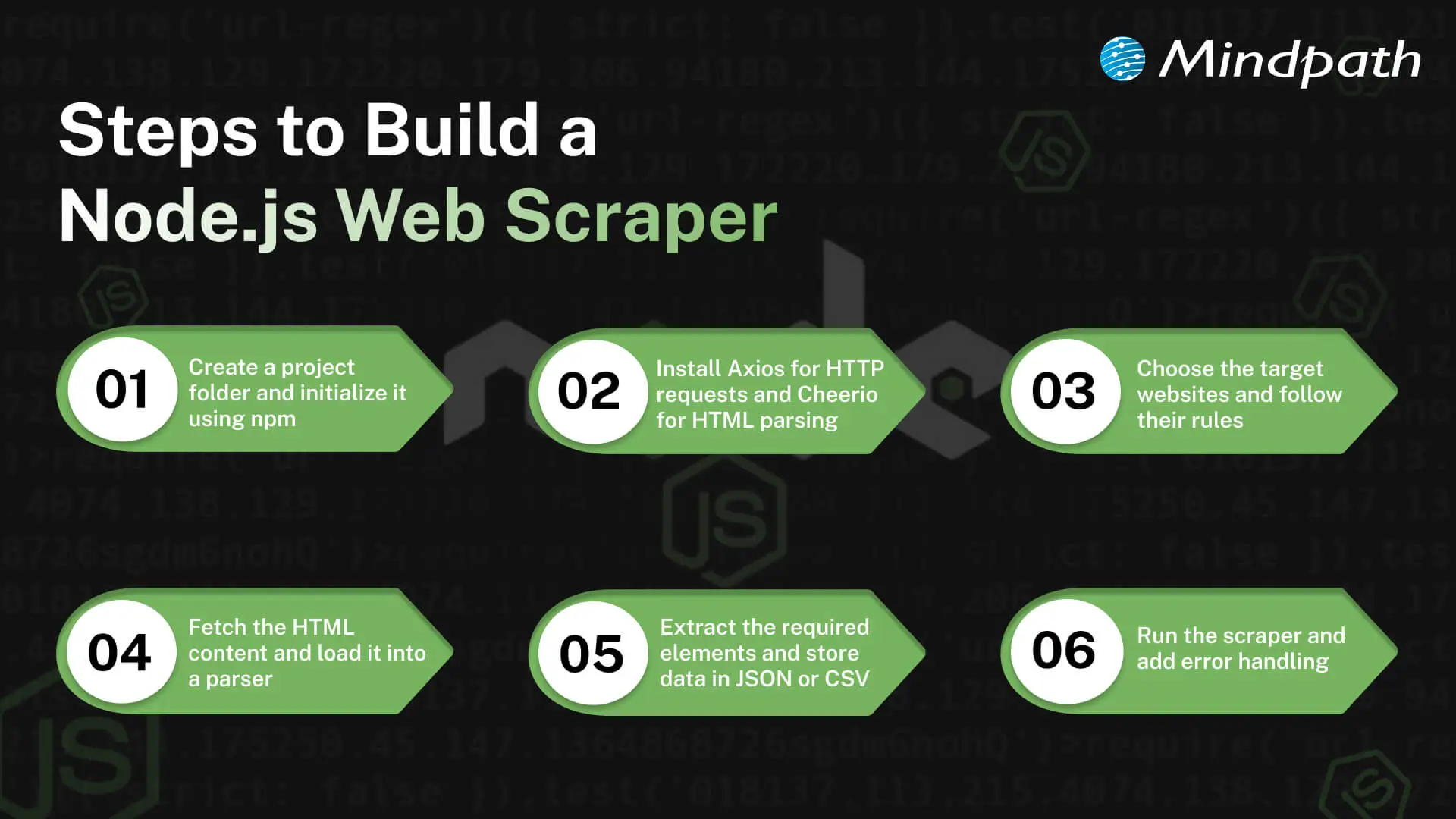
Steps to Hire NodeJS Developers in California

1. Define Your Requirements

Before you begin the hiring process, carefully define your requirements for a Node.js developer. Determine the technological requirements, such as knowledge of JavaScript, Node.js frameworks (Express, Nest.js), databases (MongoDB, PostgreSQL), and cloud services (AWS, Azure). Depending on the intricacy of your project, you might need a junior, mid-level, or senior developer. Also, specify the sort of employment: full-time, contract, or freelance. Setting a budget is also important, as developer prices in California vary depending on experience and competence. A well-documented criteria list guarantees that you attract qualified individuals who meet your company’s demands.

2. Create A Detailed Job Listing

Once you’ve determined your needs, the following step is to write a thorough job description and promote it on appropriate sites. Include important tasks, necessary skills, preferable experience, and information about your organization. Posting on job boards like LinkedIn, Indeed, and Glassdoor, as well as specialized tech recruiting sites like Toptal, Upwork, or Stack Overflow Jobs, boosts your chances of obtaining top talent. If you want to find local talent in California, check into networking events, tech meetings, and development groups. A well-written job posting attracts talented Node.js developers while screening out unqualified applications.

3. Shortlist And Screen Candidates

After receiving submissions, thoroughly analyze resumes and portfolios to narrow down the most potential applicants. Look out for relevant Node.js programming experience, past projects, and industry-specific knowledge. Conduct a first screening via phone or video conversations to evaluate their communication skills, problem-solving strategy, and cultural fit. Examine credentials or other technical skills, such as DevOps understanding, API development, or performance optimization, as needed. Effective screening helps limit the pool of applicants to those that genuinely meet your project demands.

4. Conduct Technical Assessments

To employ a professional Node.js developer, a comprehensive technical examination is required. Begin with coding challenges on sites such as HackerRank, Codility, and LeetCode to assess problem-solving abilities, algorithmic thinking, and code efficiency. Assess their knowledge of asynchronous programming, RESTful APIs, error handling, and database management—all of which are required for Node.js development. In addition to standardized assessments, a live coding session or take-home project can help students analyze their approach to real-world challenges. This might entail creating a basic API, optimizing a database query, or addressing performance concerns. Reviewing their code quality, logic, and debugging abilities can help you establish their level of experience. In addition, evaluate their capacity to work with frameworks such as Express.js and technologies such as Docker or AWS, if applicable. A well-structured technical examination guarantees that you employ a qualified and efficient Node.js developer who can contribute effectively to your project’s success.

5. Conduct An Interview And Finalize The Hire

The final stage in recruiting a Node.js developer is to conduct organized interviews to assess both technical and soft abilities. Begin by addressing their prior projects, familiarity with Node.js frameworks, and problem-solving techniques. Enquire about real-world problems such as managing high-traffic apps, improving API performance, and adopting security best practices. This helps to examine their practical knowledge and ability to operate under pressure. In addition to technical capabilities, assess their communication, cooperation, and adaptability—all of which are required for smooth collaboration. Examine how they manage comments, contribute to debates, and fit within your company’s culture. A candidate that knows agile development, CI/CD pipelines, and cloud technologies can provide significant value. Once you’ve discovered the right developer, negotiate a wage, finalize contract conditions, and talk about job objectives. Ensure a smooth onboarding process by providing project details, necessary tools, and clear communication channels. A well-structured hiring process guarantees the right Node.js talent for your team.

Looking for skilled Node.js developers in California to build high-performance applications? At At Mindpath , we connect you with experienced Node.js experts who can deliver scalable, secure, and efficient solutions tailored to your business needs. Whether you’re developing a web app, API, or enterprise platform, our developers have the expertise to bring your vision to life.

Ready to hire the best Node.js talent in California? Contact Mindpath today and let’s build something great together!

Discover the ultimate guide to hiring Node.js developers in London. Learn about the skills, benefits, and cost factors involved in finding the right talent for your project.
scalable software architecture

Business and technology leaders have to deal with one of the biggest challenges that come with rapid growth, which is scalability. You have to think how to expand technical teams, accelerate product development and obtain new funding as your business grows. This is where CTOs are under pressure to rely on scalable software architecture to accommodate the new demands emerging as the business grows bigger. Do you think that scalability in 2026 is all about managing a holiday season spike in demand for your products and services?

Technology leaders have to think beyond adopting specific solutions and build architectures that can survive amidst the chaos of emerging technologies. Gartner predicted that almost 90% of organizations worldwide will have adopted hybrid cloud architectures by 2027 (Source). Do you notice that buying more servers or adopting cloud architecture will only pile up costs on a business? CTOs should think of ideal solutions that help them in scaling technology without increasing the cost burden.

Ready to scale your technology without increasing operational costs or complexity? Mindpath offers managed IT services to help you optimize infrastructure, reduce expenses, and support sustainable business growth.

Unraveling the Need to Choose an Ideal Approach for Scaling Technology

Many business leaders are worried about the ‘how’ of scaling technology and miss the ‘what’ of scaling. It is important to understand that cost-efficient tech scaling is possible only when CTOs know scaling as something more than handling an increasing amount of work. You have to focus on the difference between horizontal and vertical scaling to figure out how to achieve scaling at lower costs.

Vertical scaling is similar to buying a bigger and faster grill for your burger shop when you get more customers. Even though the new grill will work for some time, you will eventually have to need another grill to meet growing demand. On the other hand, horizontal scaling is like building ten more shops with a small machine, which offers limitless capability to deal with increasing demand.

You can consider vertical scaling as something like trying to make cars drive faster on a highway. Horizontal scaling is like adding more lanes to the highway, thereby making driving safer while reducing traffic on the highway. It definitely sounds like a recipe for long-term growth in the context of software architecture.

Must Read: Multi Cloud vs. Hybrid Cloud

Defining the Mental Approach to Scaling Technology

CTOs should also think about the type of approach they want to follow for scaling technology. Most of the companies choose cloud optimization or other scalability techniques as a reactive measure. It means that organizations respond to increasing traffic or system downtime by pressurizing CTOs to bring more power. However, the reactive approach does not rely on planning and ultimately leads to a pile of unorganized resources, which increase costs.

How would a CTO think of an innovative solution to this problem? The ideal answer will come with a predictive approach to scaling technology. CTOs should assume that their software architecture will grow in future and they will focus on building architectures that can accommodate the growth naturally. It is just like building a Lego set with the help of clear instructions rather than throwing them in a pile.

The high level of planning and organization of resources in the predictive approach to scaling ensures easier management alongside reducing costs.

Planning to scale your technology infrastructure without inflating your cloud expenses? Explore our guide on cloud cost optimization to discover strategies for reducing costs while maintaining performance and scalability.

Solving the Technology Scaling Problem with Architecture

Every CTO must know that the decisions made for designing the architecture of software will have the largest impact on costs of scaling in future. Fixing the problems in a faulty architecture will be more expensive than building the right one in the first place. Which software architectures do you think will improve engineering efficiency and provide room for scaling technology at lower costs?

1. Explore the Potential of Serverless Computing

The traditional approaches to software architecture revolved primarily around renting a server and keeping it operational even when no one is using the app. Serverless computing offers a promising solution to build your software architecture in a way that delivers specific functions as services.

With serverless architecture in cloud computing, you will only have to pay when someone actually uses your app or clicks a button. If your app does not have any users, then you don’t have to pay anything, thereby saving your from costs you pay for idle time.

2. Building Smaller Components with Microservices

One of the biggest trends in software architecture that has gained traction in recent times is the use of microservices. You don’t have to build a huge and resource-intensive application with microservices. On the contrary, you build small and independent pieces for your app, which will work in unison with each other.

If one of your components is busy and experiencing more traffic, then you can focus on scaling that component alone. As a result, you will save a lot of money by avoiding the need to scale the whole application.

Looking to break down your monolithic applications for greater flexibility and scalability? Discover our guide on transitioning from monolith to microservices to explore how this approach reduces complexity and optimizes costs.

How Will Data Management Help in Scalable Software Architecture?

Databases form a huge portion of the tech stack in your software architecture. The ideal solution to achieve efficient architecture scaling with reduced costs will obviously involve choosing smarter approaches for database management. You can end up with a huge budget to achieve scalable systems design when you fail in database management. CTOs should opt for innovative approaches to manage databases to design software architecture for enhanced scalability.

1. Caching

Your app adds more to your budget every time it requests the database for information. Caching involves maintaining a ‘cheat sheet’ of the most frequently provided answers. It ensures that your app will not recalculate a complex request and ask the database for information. On the contrary, your app will look towards the cache and help you manage most of the traffic to your app.

2. Storage Tiers

Data storage takes up a lot of your budget and choosing one monolithic approach to data storage is not cost-efficient during scaling. Therefore, you should choose a mix of hot and cold storage for your data to reduce data storage fees. Hot storage is the ideal option for data required in everyday uses of your app while cold storage stores data that is required only for audits or history. You can move old data to cold storage and reduce your monthly storage fees during scaling initiatives.

Looking to build scalable and resilient applications that fully leverage the cloud? Discover our guide on cloud-native development to explore how this approach enhances performance, flexibility, and cost-efficiency.

Scaling Technology without Bankruptcy with Spot Instances

The CTO will also have to think about the financial aspects of scaling solely for performance. You can build scalable software architecture with AI resources that eat up a huge share of your scaling budget. Will it prove feasible in the long run? No. It is important to look for modern orchestration tools that consider budget as a huge constraint. For instance, configuration of Kubernetes clusters to scale up with spot instances for non-critical workloads will offer cheaper cloud capacity.

Final Thoughts

The burden of the responsibility of scaling technology has a huge impact on the decisions taken by CTOs. It is important to know that building scalable architectures from scratch is the ideal approach to scale with high costs. You can choose microservices and serverless computing to facilitate easier scalability with lower costs. Most important of all, CTOs have to choose resources that are cost-aware and provide the benefits of scaling.

Mindpath is a leading IT service provider, specializing in technology scaling solutions. We have built software architectures for diverse use cases for different organizations across industries. Our primary focus on quality alongside helping clients achieve resource efficiency makes us a reliable choice for technology scaling initiatives. Reach out to our experts and discover the ideal approach to scale technology without excessive scaling costs now.

FAQs

1. What are the key strategies to achieve secure scalability?

You can achieve secure scalability by focusing zero trust architecture, continuous code reviews and privileged access management. Zero trust architecture indicates that you don’t assume trust in any element of the software architecture. Continuous code reviews help in avoiding amplification of vulnerabilities as you scale up technology stacks. Privileged access management helps in implementing strict access controls for security.

2. What are the notable techniques to maintain performance while scaling?

The ideal approach to scaling technology involves maintaining performance as the demand grows. You can rely on microservices architecture and caching as the most reliable techniques to maintain performance while scaling. Microservices facilitate independent scaling of certain components of the application while ensuring resource optimization. Caching helps in reducing load times without burdening you with database costs.

3. Does serverless computing means that there will be no servers?

Serverless computing is a new paradigm in computing in which the management of the server remains completely invisible to the user. Traditional computing requires attention to the OS, memory and health of the server. On the other hand, serverless computing ensures that the provider takes care of all these aspects of server management. It ensures that you incur costs only for the time your code was running.

4. What are the key parameters you need to focus on in technology scaling?

The key parameters that you should focus on in technology scaling include performance, security, data protection and control. It is important to decide the type of approach you want to follow between predictive and reactive scaling. At the same time, you should also choose architectural decisions like serverless computing and microservices architecture for reducing costs.