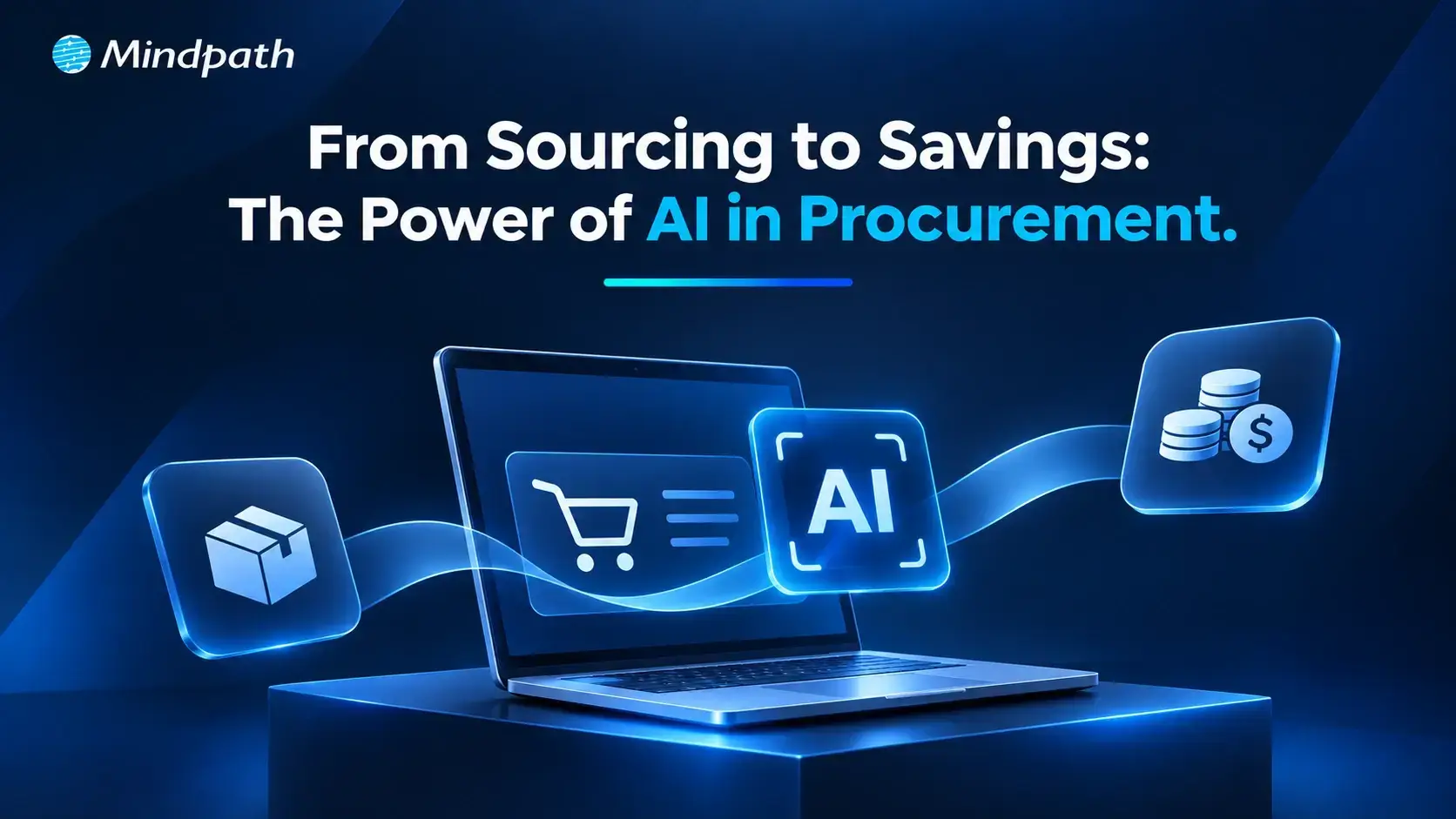
Traditional procurement often involves fragmented supplier data, lengthy approval cycles, manual paperwork, and limited spending visibility. These inefficiencies can increase operational costs and slow business decisions. AI for procurement is changing how organizations manage these activities by bringing automation, predictive insights, and intelligent data analysis into everyday procurement operations.
Key Takeaway
- 01
AI helps procurement teams automate repetitive tasks and make faster purchasing decisions. - 02
Intelligent supplier discovery and bid comparison improve sourcing efficiency and supplier selection. - 03
AI-powered contract analysis helps identify compliance issues and important contractual terms. - 04
Spend analysis AI reveals spending patterns, unusual expenses, and potential cost-saving opportunities. - 05
Predictive analytics helps businesses manage supplier risks and anticipate supply chain disruptions.
As supply chains become increasingly complex, businesses need faster ways to evaluate suppliers, control spending, and manage procurement risks. AI helps procurement teams make informed decisions while reducing repetitive work and improving operational efficiency. In this blog, we’ll explore what AI for procurement means, its key benefits, and 10 practical use cases across the procurement lifecycle.
Ready to Make Procurement Smarter?
Mindpath offers AI consulting services to help businesses develop AI-powered solutions tailored to their operational needs.
What Is AI for Procurement?
AI for procurement refers to the use of artificial intelligence to automate purchasing activities, analyze supplier data, and support procurement decisions. It combines technologies such as machine learning, natural language processing, predictive analytics, and generative AI to help teams manage procurement tasks more efficiently.
Key applications include:
- Machine learning: Identifies spending patterns, evaluates supplier performance, and predicts potential supply chain risks.
- Natural language processing: Extracts key details from contracts, supplier documents, invoices, and purchase requests.
- Predictive analytics: Forecasts demand, estimates price fluctuations, and identifies potential procurement disruptions.
- Generative AI: Summarizes contracts, answers procurement queries, and assists with supplier communications.
- Intelligent automation: Processes purchase orders, validates invoices, and reduces repetitive administrative work.
Unlike traditional rule-based automation, AI can identify patterns across large datasets and support decisions that require contextual analysis. When integrated with existing procurement and ERP systems, it helps connect sourcing, purchasing, contract management, and spend analysis within a more informed workflow.
Key Benefits of AI in Procurement
AI helps procurement teams improve efficiency, control spending, and make informed purchasing decisions. By reducing manual work and analyzing procurement data, businesses can gain better control over their purchasing operations.
1. Better cost control
Identify unnecessary expenses, compare supplier pricing, and uncover opportunities to reduce purchasing costs.
2. Faster sourcing decisions
Use AI in sourcing to identify suitable suppliers, evaluate bids, and compare supplier capabilities more efficiently.
3. Reduced manual workload
Automate repetitive activities such as purchase order processing, invoice matching, and document verification.
4. Improved supplier management
Evaluate supplier performance, monitor delivery reliability, and identify potential risks before they affect operations.
5. Greater spending visibility
Apply spend analysis AI to categorize expenses, identify spending patterns, and highlight potential savings opportunities.
6. Stronger compliance
Monitor purchasing activities, check contract requirements, and flag transactions that may violate procurement policies.
7. Proactive risk management
Analyze supplier data and market conditions to anticipate disruptions and support timely decisions.
10 Practical Use Cases of AI in Procurement
AI is changing how businesses manage procurement activities, from identifying suppliers to monitoring spending and managing supply chain risks. The following use cases show how organizations can apply AI to improve efficiency, accuracy, and purchasing decisions.
1. Intelligent Supplier Discovery
Finding reliable suppliers requires evaluating multiple factors, including pricing, product quality, certifications, and delivery capabilities. AI analyzes supplier databases, market information, and historical records to identify potential vendors that match business requirements.
- Supplier identification: Find suitable suppliers based on purchasing requirements and capabilities.
- Market analysis: Compare supplier pricing, availability, and market trends.
- Capability assessment: Evaluate certifications, delivery history, and supplier performance.
2. Automated Bid Comparison
Comparing multiple supplier quotations manually can delay sourcing decisions, especially when proposals contain different pricing structures and contract terms. AI extracts relevant details and presents them in a consistent format, helping procurement teams evaluate bids more efficiently.
- Price comparison: Identify differences in product costs, discounts, and additional charges.
- Term evaluation: Compare delivery schedules, payment conditions, and contract requirements.
- Bid assessment: Highlight pricing inconsistencies and missing information across supplier proposals.
3. Predictive Supplier Risk Assessment
Supplier-related risks can affect production schedules, product availability, and procurement costs. AI evaluates financial records, delivery performance, market developments, and external risk indicators to identify potential problems before they disrupt business operations.
- Financial monitoring: Identify signs of supplier financial instability.
- Delivery tracking: Detect recurring delays and inconsistent fulfillment patterns.
- Risk alerts: Flag potential disruptions based on changing market and supplier conditions.
4. AI-Powered Contract Analysis
Procurement contracts often contain lengthy clauses, compliance requirements, renewal conditions, and pricing agreements. AI for procurement helps teams review these documents by extracting important information, summarizing terms, and identifying clauses that require further attention.
- Clause extraction: Identify payment terms, renewal dates, penalties, and obligations.
- Compliance checks: Flag clauses that may conflict with internal procurement policies.
- Contract summaries: Generate concise summaries to support faster reviews and approvals.
5. Automated Purchase Order Processing
Creating and processing purchase orders involves repetitive data entry, verification, and approval activities. AI automates several steps by extracting information from purchase requests, checking order details, and identifying missing or inconsistent information.
- Data extraction: Capture product details, quantities, prices, and supplier information.
- Order validation: Check purchase requests against predefined procurement rules.
- Approval support: Route purchase orders to the appropriate personnel for authorization.
6. Intelligent Invoice Matching and Reconciliation
Matching invoices with purchase orders and delivery records can consume significant time, particularly when businesses process large transaction volumes. AI compares these records, identifies discrepancies, and helps finance teams resolve payment-related issues.
- Invoice matching: Compare invoice details with purchase orders and delivery records.
- Discrepancy detection: Flag differences in quantities, pricing, and payment amounts.
- Duplicate identification: Detect repeated invoices before payments are processed.
7. AI-Powered Spend Analysis
Understanding where procurement budgets go is essential for controlling expenses and identifying savings opportunities. Spend analysis AI examines purchasing transactions, categorizes expenses, and identifies patterns that may remain difficult to detect through manual reporting.
- Spend categorization: Group transactions by supplier, department, category, or business unit.
- Anomaly detection: Identify unusual spending patterns and unexpected cost increases.
- Savings identification: Highlight duplicate purchases, excessive spending, and opportunities for supplier consolidation.
- Spending forecasts: Analyze historical purchasing data to estimate future expenditure.
8. Automated Vendor Onboarding
Bringing new suppliers into a procurement system requires collecting documents, verifying business details, and checking compliance requirements. AI simplifies this process by extracting information, validating submitted records, and identifying incomplete applications.
- Document verification: Extract details from tax records, certifications, and registration documents.
- Information validation: Identify missing or inconsistent supplier information.
- Compliance screening: Flag records requiring additional checks before supplier approval.
9. Supply Chain Disruption Prediction
Unexpected supply chain disruptions can affect inventory availability, delivery schedules, and business continuity. AI analyzes internal and external data to identify early warning signals and help procurement teams prepare alternative sourcing plans.
- Market monitoring: Track commodity prices, geopolitical developments, and market changes.
- Disruption forecasting: Identify potential delays using supplier and logistics data.
- Alternative sourcing: Help teams evaluate backup suppliers and procurement options.
10. Supplier Performance and Sustainability Monitoring
Supplier evaluation needs to continue after onboarding to ensure consistent quality, reliable deliveries, and responsible business practices. AI monitors supplier performance data and sustainability indicators to support ongoing evaluations.
- Performance tracking: Monitor delivery timelines, product quality, and order fulfillment.
- ESG monitoring: Evaluate available environmental, social, and governance information.
- Supplier scoring: Compare vendors using performance metrics and predefined business criteria.
- Continuous alerts: Identify declining performance and potential compliance concerns.
How to Choose the Right AI Procurement Tools?
Selecting the right technology is important for getting measurable value from procurement automation. Businesses should evaluate their existing processes, data requirements, and operational goals before investing in AI procurement tools.
Consider these factors when evaluating available options:
1. Integration capabilities
Check compatibility with existing ERP, accounting, inventory, and supplier management systems.
2. Automation features
Look for capabilities such as invoice processing, contract analysis, supplier evaluation, and purchase order automation.
3. Data security
Evaluate encryption, access controls, data privacy policies, and compliance requirements.
4. Analytics and reporting
Choose tools that provide spending insights, supplier performance reports, and predictive analytics.
5. Scalability
Ensure the platform can handle growing transaction volumes, additional suppliers, and changing procurement requirements.
6. Ease of adoption
Consider user-friendly interfaces, employee training requirements, and the level of technical support available.
7. Customization
Check whether workflows, approval rules, and reporting features can be adapted to business requirements.
The right selection should address specific procurement challenges while fitting existing workflows and supporting future business growth.
Ready to Transform Your Procurement Operations with AI?
AI for procurement helps businesses improve sourcing, strengthen supplier relationships, automate routine tasks, and gain better spending visibility. From supplier discovery to spend analysis, these applications support faster decisions, better cost control, and more efficient procurement operations across the business.
At Mindpath, we help businesses develop AI-powered solutions through AI consulting, custom AI development, and intelligent automation services. Our team builds tailored solutions that align with procurement workflows, improve operational efficiency, and support long-term business goals.