Understanding the Real Cost of Hiring NodeJS Developers

Home

Understanding the Real Cost of Hiring NodeJS Developers

Understanding the Real Cost of Hiring NodeJS Developers

Join our Newsletter!

NodeJS developer cost

In today’s competitive digital landscape, businesses are increasingly investing in scalable and high-performance applications. Technologies like Node.js have become a preferred choice for backend development due to their speed, flexibility, and ability to handle real-time data. As a result, many organizations are actively exploring Nodejs development services to build modern applications.

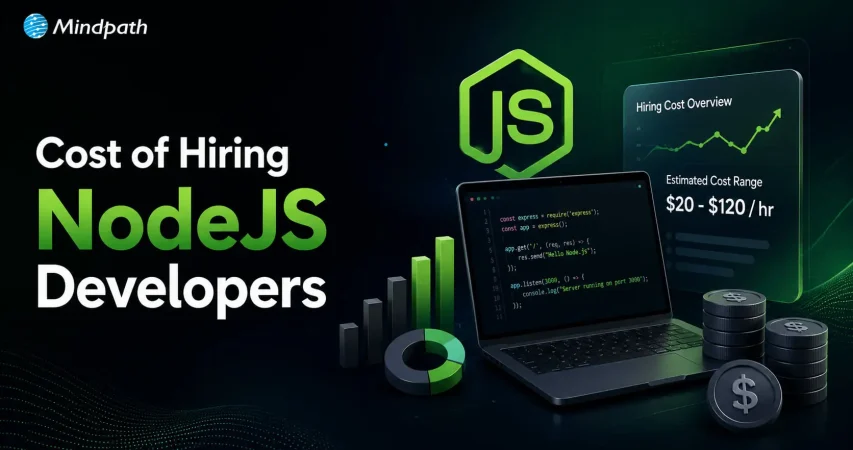
However, one of the most common questions businesses ask is: how much does it cost to hire a Nodejs developer? The answer is not straightforward. The NodeJS developer cost can vary significantly depending on several factors, including experience level, project complexity, hiring model, and geographic location.

Understanding these factors is essential for making informed decisions and optimizing your development budget. This guide provides a clear and practical overview of the cost of hiring nodejs developers and what businesses should consider before making a hiring decision.

Ready to control your development costs without compromising on quality and performance? Mindpath provides professional services where you can hire expert NodeJS developers tailored to your budget and project requirements.

Why Businesses Invest in NodeJS Development?

A lot of people like Node.js since its architecture is event-driven and doesn’t block. It’s perfect for real-time programs like chat rooms, streaming services, and tools for working together because it can handle a lot of requests at once.

Node.js is popular with businesses because it can handle systems that need to grow and perform well. It also speeds up building because developers may use JavaScript on both the front end and the back end.

Node.js is a wonderful solution for enterprises of all sizes who need to make nodejs because of these qualities.

How Much Does It Cost to Hire a NodeJS Developer?

Keep in mind that prices can be very different when you want to know how much it costs to hire a Nodejs developer.

Where you live and how much experience you have will affect how much you make every hour:

  • Junior developers: less expensive, but not as skilled at what they do
  • Mid-level developers: a fair balance of abilities and cost
  • Senior developers: cost more, have more experience, and have been working in the field longer.

Also, where you live in the globe is quite essential. In North America and Western Europe, developers normally charge more than they do in Asia or Eastern Europe.

The price of hiring a Nodejs developer also depends on whether you hire freelancers, developers that work for your company, or a company that handles the work for you.

Key Factors That Affect NodeJS Developer Rates

To fully understand how much it costs to recruit Nodejs engineers, we need to look at what makes their prices go higher.

1. Experience Level

More experienced developers charge more since they know how to design programs that are safe and can grow.

2. Project Complexity

You need more experienced developers to make complicated programs that include advanced features like microservices architecture or real-time processing. This costs more.

3. Hiring Model

Prices vary based on how you hire:

  • Freelancers: less expensive and more adaptable
  • Developers who work with the company: more expensive but better control
  • Outsourcing: a fair balance of cost and knowledge

4. Location

Prices for developers vary widely based on their location, and hiring people from other nations is usually less expensive.

5. Technology Stack

If the complete Nodejs project needs more technologies or integrations, it may cost more to build.

NodeJS Developer Hiring Cost Breakdown

You need to look at the major aspects of the price to find out how much it will cost to hire a NodeJS developer.

1. Development Costs

This covers the cost of writing the code, testing it, and using it.

2. Costs of Infrastructure

Costs for hosting, cloud services, and maintaining servers up to date.

3. Maintenance Costs

There are always new features, bug patches, and speed enhancements.

4. Team Collaboration Costs

The total cost will go up if you need to recruit both frontend and backend engineers.

All of these things add up to the full cost of making a Node.js app.

Hiring Models and Their Cost Impact

Choosing the right way to hire people is highly crucial if you want to keep costs low.

1. Freelancers

Freelancers are great for minor jobs or chores that don’t take long to finish. But they may not be in it for the long haul.

2. In-House Developers

You have greater control when you hire full-time developers, but it costs more because you have to pay for their salaries, benefits, and infrastructure.

3. Outsourcing to a Development Company

If you engage a company that does Nodejs development, you may work with competent teams and follow clear steps. This pick usually strikes a nice balance between price and quality.

Cost vs Value: What Businesses Should Consider?

Companies should think about both the cost and the value of a NodeJS developer when deciding how much to pay them.

At first, hiring cheaper engineers might save you money, but it could lead to problems like poor code quality, delays, and higher maintenance costs. On the other hand, experienced developers may charge more, but they will give you better performance and dependability over time.

The right Node.js development solution will help you get the most for your money.

Hidden Costs to Watch Out For

When companies try to figure out how much it will cost to hire nodejs programmers, they often neglect about expenditures that aren’t obvious.

  • The price of training new workers and getting them up to speed
  • More money for managing and talking to individuals
  • They take longer since they don’t know enough

We had to redo the work because the coding wasn’t good enough.

Finding these fees early will help you plan your money better.

Comparing NodeJS with Other Development Costs

Node.js is often less expensive than other backend technologies because it is easier to build and can handle more users.

It saves money by letting JavaScript be used all over the stack, which means fewer developers are needed. There are also a lot of libraries and tools that make development move faster, which means that items can get out faster.

This is why Node.js is a wonderful choice for making affordable, modern apps.

Future Trends in NodeJS Developer Cost

As more companies employ modern technology, the requirement for Node.js experts will grow. This demand could influence how rates go up or down, especially for people who know a lot about it.

There is a lot of talent all across the world, and people can work from home, which can help keep prices down. This makes it easy for businesses to find cheap answers.

Conclusion

You need to know how much it costs to hire a NodeJS developer in order to make wise hiring decisions. The cost depends on the person’s level of expertise, the difficulty of the job, the sort of work they do, and where they live.

Companies may keep an eye on their money and find out the best approach to hire individuals by looking at what makes the pricing of Nodejs developers go up or down. The most important thing, whether you engage freelancers, specialists in-house, or a company that offers Nodejs development services, is to focus on quality, scalability, and long-term value. Partner with mindpath, a trusted Node.js development company that provides expert solutions to overcome your development challenges.

Hiring the proper people is the most critical thing you can do to get your tasks done on time and grow your business.

FAQs

1. How much does it cost to hire a Nodejs developer?

The cost varies based on experience, location, and project complexity, ranging from lower rates for junior developers to higher rates for senior professionals.

2. What factors affect Nodejs developer rates?

Factors include experience level, project complexity, hiring model, and geographic location.

3. What is included in Nodejs project development cost?

It includes development, infrastructure, maintenance, and collaboration costs.

4. Is outsourcing Nodejs development services cost-effective?

Yes, outsourcing can provide experienced developers at a lower cost compared to in-house hiring.

5. Should I hire frontend developers along with Nodejs developers?

Yes, for full-stack development, hiring frontend developers alongside Nodejs developers ensures better project execution.

Related Post

Agile methodology in web development

Web development is the priority of every business that wishes to have a strong digital presence. Your business must adapt to new trends and emerging user behavior patterns in diverse web development projects with ease. The utility of agile methodology in web development has been gaining a lot of traction due to the assurance of multiple benefits. 

Do you think that thousands of software engineers praise the agile methodology just for fun? Agile approaches to web development not only bring adaptability but also the benefits of innovation and efficiency in the development process. You can stay ahead of the competition in the modern technological landscape with a dynamic approach to web development.

Do you want a website that adapts quickly to your business needs and drives growth? Mindpath’s web development services deliver custom agile solutions that enhance performance, user experience, and scalability.

Understanding the Agile Methodology

Many people may think that agile methodology is a newly formulated approach for web development. On the contrary, it is one of the most popular approaches in software and web development. The reason to choose agile for web development is the emphasis on delivering more value to the end users and developers. One of the biggest highlights of the agile methodology is how it facilitates collaboration between different members of development team. 

The primary way in which agile methodology works for web development involves breaking projects into sprints. The sprints are manageable iterations and can help in ensuring consistent progress in web development projects. With the agile approach, development teams can adapt quickly to user feedback, new business requirements and market conditions. The flexibility for cross-functional teams to work closely improves collaboration and enhances decision-making.  

The most prominent thing about the agile approach is the emphasis on customer expectations and needs. Agile development promotes a culture of continuous improvement with the use of sprint reviews and daily updates. The assurance of continuous improvement ensures that the final product delivers the value that end users want. The continuous refinement in different iterations helps in delivering high-quality web projects.

Planning to enhance your Agile strategy with cutting-edge tools and frameworks? Discover the latest insights in our web development trends blog to stay ahead of industry changes.

How is Agile Different from Traditional Web Development?

The popularity of the agile methodology has grown by huge margins as organizations embrace it in different domains, including project management. You might think about how the agile methodology for website development delivers better results than traditional development approaches. You can use the differences between the two approaches for web development to understand how the agile approach is better. 

1. Scope for Adaptability

The biggest reason to choose agile over traditional web development approaches is the assurance of adaptability. Traditional development focuses more on prior planning with detailed specification of project requirements and needs at the beginning. On the other hand, agile methodology recognizes that a web development project’s requirements will change at different stages. Therefore, agile development emphasizes flexibility while supporting iterative modifications on the basis of continuous feedback.

2. Iterative Development Process

You can differentiate agile web development and traditional web development in terms of the facility of an iterative development process. Traditional web development follows the waterfall approach in which you complete one step after the other. Agile development relies on an iterative development process by breaking down a project into smaller iterations. The iterative approach offers continuous feedback loops and easier recognition of potential problems in the early stages.

3. Enhanced Collaboration

Traditional web development works with clear demarcation of roles and responsibilities of team members. It also restricts stakeholder involvement with formal review processes at different stages of the development project. You can notice the benefits of agile development in how it promotes cross-team collaboration and collaboration with stakeholders. Team members can work together and share their expertise with the objective of achieving shared goals. Agile development calls for regular meetings and feedback to encourage continuous collaboration with all stakeholders.

4. Emphasis on End User Requirements

Another crucial point of difference between agile and traditional development is how they focus on requirements of the end user. Traditional web development relies heavily on extensive documentation and can be susceptible to delays or failures. In addition, traditional development approaches cannot adapt to the emerging needs of end users. However, agile methodology boasts of adaptability and can respond faster to changes in customer needs or market trends. Most important of all, agile development aims to deliver value to the end user rather than creating comprehensive documentation.

Want to make your Agile web development process smarter and more data-driven? Check out our AI in web development blog to discover how intelligent automation enhances productivity and innovation.

How Does the Agile Methodology Enhance Web Development?

The biggest question that any business owner will have about agile development revolves around its advantages for their web project. Why should you ditch the traditional development approach for agile development? You must know the advantages of agile software development to give the best answer to this question. While it is better than traditional web development in many ways, agile development is an ideal choice for achieving more value with web development projects. 

1. Assurance of Better Quality in the Final Product

Agile development follows an iterative approach, which involves testing each feature when it is developed. The continuous feedback and quality improvement in each sprint offers the assurance of creating a better final product. Development team members and stakeholders work in collaboration to fix the loopholes together in early stages of development. The flexibility to refine the product at different stages provides the assurance of high-quality final products.

2. Emphasis on Customer Needs

The discussions about agile development will be incomplete without mentioning how it focuses on customer needs. You can notice the advantages of agile methodology in how it keeps customers in the loop. Developers can make changes in the web project prototype on the basis of feedback from product owners. As a result, agile development helps in building products that align closely with customer expectations. Weekly meetings and feedback sessions with stakeholders ensures that agile methodology will deliver a customer-centric product.

Want better results from your Agile web projects? Discover our web apps features blog to learn the key features that drive success.

3. More Flexibility and Control over the Project

New web development teams have been looking up to agile methodology for the benefit of flexibility. Team members can make changes in the project for their respective sprints according to the feedback of customers. If a stakeholder needs a new feature in the product, the development team can repeat the process to make the required modifications. It helps in avoiding disruptions to the overall development process. At the same time, agile development ensures that all stakeholders enjoy better control. Each member in agile development teams is accountable for their actions while maintaining complete independence in their sprints.

4. Faster Launches and Continuous Improvement

Another notable addition among the advantages of agile development is the time to market for web projects. Web developers can launch websites or web apps quickly as the agile methodology always leaves room for continuous improvement. The collaboration between web developers and stakeholders offers the ideal ground for continuous improvement and timely project delivery. With the agile methodology, developers can deliver incremental changes in all iterations to deliver a better product.

5. Resource Optimization and Cost Reduction

Agile development empowers teams to verify assumptions and obtain feedback in the early stages of the development process. As a result, development teams can allocate resources according to the most critical features. The effective optimization of resource allocation ensures that you can achieve more savings in web projects with the agile methodology.     

Wondering which tools can streamline your workflow and improve project delivery under Agile methodology? Learn more in our web development tools blog to explore platforms and technologies that boost productivity and performance.

Final Thoughts

The benefits of the agile methodology in web development showcase that it can facilitate a more efficient and seamless development process. You should understand that agile approaches to web projects involve breaking the larger project into smaller sprints. It promotes collaboration between teams working on the development project alongside ensuring the involvement of stakeholders. The scope for flexibility and continuous improvement ensures that developers can create a final product that aligns with customer expectations and needs.

Mindpath has been one of the leading platforms for web development with years of experience in this domain. Our web development services have always earned the appreciation of clients with the assurance of multiple benefits. We have specialized in the agile methodology with expertise in renowned agile development frameworks and tools. Reach out to us and build your next web project with the agile methodology now.

Frontend and Backend

Creating a strong business application depends on an important understanding of how you connect the frontend and backend to develop a consistent experience for the user. Picture a user on a platform that is fast, responsive, and intuitive. At every click, scroll, and keyboard input, there are systems running in the background to simulate that experience, all while interacting with a framework and keeping the user interface interesting. Technology, in turn, must be aligned with user experience and growth expectations to ensure a platform operates without flaws while keeping users satisfied.

As businesses grow, the proportion of back-end and front-end becomes more important than ever. The front-end dictates the manner in which users experience your platform, while the back-end powers the processes that allow everything to run smoothly. Ensuring that the two work closely together enhances performance, increases efficiencies, and guarantees a consistent user experience. This blog outlines the ways that both frontend and backend can be used to build a scalable business application.

Ready to build an application that provides your business with a unique and secure digital presence from front end to back end? Mindpath offers expert full-stack development services to help you design and develop scalable web application.

What are Backend and Frontend?

Frontend refers to the section of an application that users notice and directly participate with. The front end includes everything users can see and all the visual and interactive elements that facilitate interaction with the application. Frontend developers use technologies such as HTML, CSS, or JavaScript, and frameworks such as React, Angular, or Vue.js to create interactive designs and usability of the platform.

The backend is the server-side component of an application that enables the frontend to function. The backend is responsible for data management, processing user requests, and ensuring that everything works correctly. Backend developers use programming languages such as Python, Java, PHP, or Node.js, along with databases such as MySQL, SQL, or MongoDB. The backend layer ensures that the application functions reliably and efficiently, delivering the information the frontend needs.

How Frontend and Backend Work Together for Building Scalable Applications

The front-end and back-end collaborate appropriately to manage both user actions and the appropriate background processes that will occur. This collaboration will promote the applications’ responsiveness and scalable properties for more users and maintain the performance expected by the user.

1. API Communication

One of the main methods by which the frontend and backend cooperate is through APIs such as REST or GraphQL. The backend thus offers the frontend certain endpoints from which it can get data or to which it can send data.

The frontend on its part performs HTTP requests like GET, POST, and PUT to communicate with these endpoints. Such a division provides a possibility for different teams to develop the UI and business logic separately and thus more efficiently.

2. Microservices Structure

In order to handle the complexity of huge applications, an option is to split the backend into several small units referred to as microservices. Each microservice is responsible for one specific area of the application, for example, payments, user accounts, or products.

The front-end and back-end interact with each other through APIs for every service, thus being able to work on different parts at the same time. This organizational pattern allows applications to become scalable and the process of development to be more efficient.

3. Asynchronous Communication

The frontend and backend have the ability to interact asynchronously, which contributes to a better performance. In a situation where a user makes a request that takes a long time, the front end is able to give an immediate response to the user.

The backend is handling the request silently and when it is done, it sends a message to the frontend. This method is free from the problem of users having to wait for a long time and their experience is thus made better.

4. Efficient Data Handling

The data that is being transferred from the frontend to the backend and vice versa must be of the highest standard in terms of speed and efficiency. The backend is to send only the necessary data to the frontend, thus lessening the network or bandwidth usage.

One of the ways through which it is possible to load large datasets of records into small pieces is pagination. The use of JSON or some other lightweight formats is the way to shorten the response times.

5. Independent Scaling

Apps work better when the frontend and backend are allowed to scale separately as per their requirements. In such a case, the front-end servers will be able to deal with the increased traffic without inhibiting the backend services.

On the other hand, the backend can scale its database or processing power as per its needs without any intervention from the frontend. It is, therefore, a great way to ensure that performance remains steady, even at times of user activity spikes.

Ready to leverage frontend and backend roles to build scalable applications? Discover how full-stack development works together to unlock growth potential.

6. Secure Interaction

Front-end and back-end security are the basis of their cooperation. The frontend securely sends user credentials and handles authentication requests. The backend, on the other hand, is the one that verifies credentials, keeps sessions safe, and stops attacks such as SQL injection and XSS. Therefore, both sides must be in sync to keep data and users safe.

7. Centralized Data Management

Centralized state management keeps data consistent between frontend and backend. The frontend keeps API responses in a state that is shared by all components and thus accessible to them. This makes redundant API calls impossible, and all application parts having the same information and show it. Centralized data refresh the application faster and make it easier to update.

8. Performance Optimization

On the performance side, the frontend and backend teams are exerting a joint effort. Frontend developers minimize the sizes of assets, introduce lazy loading, and apply client-side caching. Backend developers optimize database queries and set up server-side caching for quicker API responses. Frequent coordination keeps the application fast and responsive.

9. Load Balancing

Load balancers are instrumental in making the frontend and backend capable of handling increased traffic efficiently. To users, the frontend with the help of the load balancer offers a single-entry point, thus giving the impression of an application that is seamless.

The backend, through the load balancer, is able to spread the incoming requests to different servers, thus sending the traffic to those servers which are the healthiest. This step not only avoids the overload of the servers but also keeps the performance at a good level and, hence, the application is able to handle sudden spikes in the number of users without crashing.

10. Centralized Logging and Monitoring

Frontends and backends through a centralized logging system can immensely improve their performance. Frontend logs are able to capture the situations of pages that take a long time to load, API calls that fail, or UI errors.

Backend logs monitor server health, API response time, and database queries. By uniting these logs, developers get the opportunity to quickly locate the problems, understand their source, and have a chance to optimize the application in terms of both reliability and speed.

Want to make sure that your applications are not only functional but also secure, compliant, and trustworthy for your users? Discover our blog on application security best practices to explore essential techniques for protecting your software and building trust.

Looking to Build Scalable Business Applications?

Understanding the role of frontend and backend is essential for building scalable, efficient, and user-friendly business applications. When the front-end and back-end work together seamlessly, applications run smoothly, respond quickly, and deliver a consistent experience. Focusing on clear communication, performance optimization, and security, ensure that your platform meets both user expectations and business growth needs effectively.

At Mindpath, we offer professional full-stack development services that ensure your application performs reliably and scales efficiently. Our team focuses on the role of frontend and backend, creating intuitive user interfaces supported by powerful backend processes. By combining technical expertise and best practices, we help businesses deliver high-quality applications that are fast, secure, and easy to manage.

Support Is One Click Away

Featured Posts

Related Post