Why AI Security Matters in the Age of Generative AI?

Join our Newsletter!

Featured Posts

Support Is One Click Away

Home

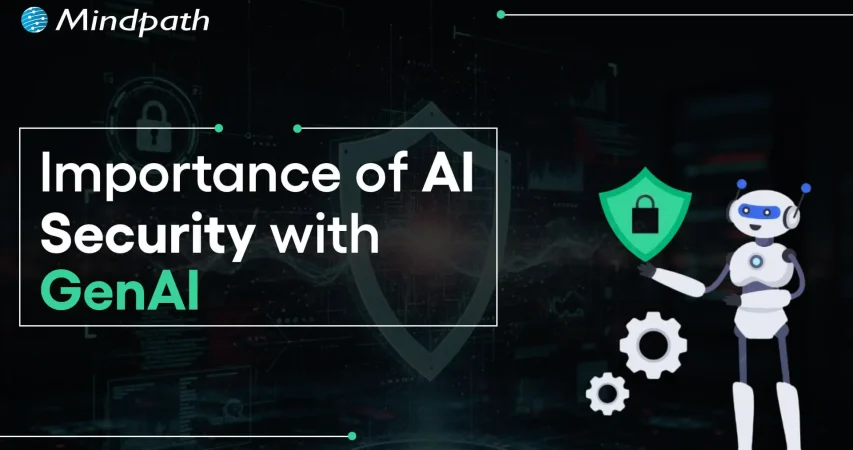
Why AI Security Matters in the Age of Generative AI?

importance of AI Security

Why AI Security Matters in the Age of Generative AI?

Artificial intelligence has grown beyond a specific technology and is working as a massive force that is reshaping our everyday lives. Among all the essential developments, generative AI has been winning the trends that can write text, create images, and simulate human communication. The market size of Gen AI is going to reach 967.65 billion by 2032 (Source). So, while generative AI unlocks a series of possibilities with automation and innovations, it comes with its own security risks as well.

Here, in this blog, we will explore the importance of AI security and address all of its essential characteristics. Through this, you can easily get clarity about the user’s fears and how to implement the techniques in real-world scenarios.

Struggling to balance innovation with AI security in the age of generative AI? Our AI development services help businesses deploy advanced AI while keeping data and systems protected.

How Generative AI has been Setting Its Strong Presence in the Market?

Generative AI defines a system that is capable of producing content. Starting from natural language text to multimedia optimization, it can do everything. Further, these systems empower a business by automating the whole process while generating insights at scale. In order to do this, it assures you of custom customer experiences like never before.

However, with great power comes great responsibility. As many organizations just rush to adopt generative AI tools, some of them might underestimate the security risks behind this adoption. Traditional AI systems were already under high pressure from cyber threats. So, adding generative AI to the list can encourage benefits as well as vulnerabilities.

Why is AI Security Important?

Many users might wonder Why is AI security important. So, AI security assures that the generative AI that powers the modern tools is protected against misuse. Further, it also keeps your system away from breaches, manipulation, and operational defects. So, AI and cybersecurity are considered to be the foundational requirements that ensure safety, reliability, and trustworthy tech adoption.

If you overlook security considerations, your organization might face risks like data leaks and unauthorized access to sensitive data. This might lead to intellectual property loss while causing you to go through severe financial and reputational damage. Moreover, poorly secured AI systems can behave unpredictably or can be easily manipulated to make the outcomes harmful.

Wondering which generative AI trends could directly impact your organization’s security strategy? Explore our insights on generative AI trends to better understand what’s driving the next wave of AI transformation.

What is the Importance of AI Security in the Age of Generative AI?

Generative AI systems are not experimental tools anymore. They precisely process sensitive data, generate content, and automate decisions while interacting with users massively. So, with the growth of their influence, the risks of security failures also increase. This is why the consequences of ignoring AI security solutions can worsen the situation.

1. AI Models Can Be Manipulated

One of the highly seen risks of generative AI is model manipulation. Attackers can feed misleading data into your systems intentionally. This causes your system to produce inaccurate and false results. In other terms, it is known as data poisoning. So, without the use of AI in security, your organization might compromise with the results unintentionally. AI security solutions can easily safeguard your customer trust while maintaining compliance.

2. Generative AI Maintains Highly Sensitive Data

Generative AI models majorly rely on huge sets of data that include internal documents, customer information, and business intelligence. In order to do this, if the following systems are not effectively secured, there is a serious risk of data leakage. Unlike traditional software, AI can easily expose patterns or fragments in the sensitive data. This makes security a critical concern from the start.

3. Cybercriminals are Using AI to Initiate Smarter Attacks

You can’t consider AI to be a defensive tool only. Cybercriminals are using generative AI to generate realistic phishing emails and bypass traditional security systems. So, your organization might face faster and more convincing attacks more than ever. However, the use of AI in security can help you detect and assess these AI-driven threats before they turn into massive attacks.

4. Unsecured AI Systems Might Offer Inefficient Decisions

Gen AI is capable of supporting major business functions like customer service, content moderation, and fraud detection. So, if such systems are not properly protected, anyone can easily manipulate them to initiate harmful decisions. AI and cybersecurity ensure the integrity of the models. Further, your organization can trust the outputs that they prioritize for strategic decision-making.

5. AI Increases the Attack Surfaces

Every AI model or dataset introduces a new potential entry for attackers. As companies deploy several AI tools across departments, the attack surface also increases rapidly. So, without strong AI security solutions, these expanded access points become challenging to monitor and prevent. Further, it leads to critical data breaches.

Must Read: Generative AI Tools for Content Creation

The Importance of AI Security in Strengthening Defense

The recent digital age has given rise to a series of risks. However, AI security has been leveraging a series of tools to fight against such cyber threats. In order to do this, the valuable combination of AI and cybersecurity has become one of the essential areas for modern IT protection.

1. Adaptive Learning

AI systems continuously improve by learning from both historic and emerging patterns. This ensures security defenses have become more proactive while identifying threats before they become significant.

2. Smarter Threat Analysis

Traditional cybersecurity tools generally struggle with the speed of today’s threats. On the other hand, the use of AI in security can increase threat detection by analyzing massive datasets in real time. This can also help you in spotting abnormal behavior that could indicate an attack.

3. Automated Response

AI has the capability to automate incident response. This reduces the chances of vulnerability and allows your security teams to prioritize strategic planning instead of regular or routine monitoring.

4. Fraud Detection and Identity Protection

AI plays a crucial role in detecting fraud and misuse. So, by continuously monitoring user behavior, access attempts, and transaction patterns, AI systems can easily detect suspicious activities. Further, it can prevent unauthorized actions.

Curious about how generative AI is reshaping modern enterprises beyond just automation? Read our in-depth Generative AI for Business guide to see how organizations are successfully integrating AI solutions. 

Key Benefits of AI Security Solutions

Sticking to AI security solutions can leverage measurable advantages beyond basic threat prevention.

1. Use of AI in security can handle growing networks and data volumes without proportionally increasing the demand for manpower and cost.

2. It gives rise to accuracy while making your team spend less time chasing issues.

3. AI maintains the same level of surveillance 24/7 and doesn’t require any human intervention or monitoring.

4. Most importantly, continuous learning allows AI to diversify alongside the emerging new types of threats.

While focusing on AI security, are you overlooking critical vulnerabilities within your core applications? Explore proven Application Security Best Practices to build a stronger, more resilient security foundation

What are Some Essential Steps to Implement AI Security Solutions?

To fully discover the benefits of AI in security, organizations need to be thoughtful about their implementation strategies. Integrating AI without a proper strategy can confuse you instead of eliminating the risks. So, follow these practices to be assured of AI strengthening your security while maintaining transparency and control.

1. Gather Efficient Data

AI systems can perform well if the data they learn from serves a purpose. On the other hand, poor or biased data might lead you towards more threat detection and false alerts. 

So, your organization must prioritize gathering clean and relevant data along with security data from the applications and user activities. Regular data analysis and verification can help your AI models to be aligned with real-world threat patterns. 

2. Consider AI for Your Active Security Frameworks

AI should precisely understand your recent security infrastructure. Multiple teams already depend upon tools like firewalls and SIEM platforms. So, AI works best when integrated into such frameworks to enhance their intelligence and responsiveness.

With AI integration with existing tools, you can improve your threat detection accuracy without damaging the established workflows. Further, this approach reduces implementation risks.

3. Continuously Test and Refine

Cyber threats evolve rapidly, and AI models can’t remain static. So, without continuous testing and assessment, even modern AI systems will fail to offer reliable results when required. 

So, it is necessary for your team to regularly audit the AI models with different types of simulations. Further, they should gather real-time feedback to fix the issues as soon as possible. Continuous improvement can help the AI system to remain accurate while understanding the emerging threats. 

Are you aware of the most common security risks affecting modern web applications today? Read this insightful guide to understand how web application security protects your digital ecosystem.

The Future of AI Security

As generative AI is becoming more powerful in recent scenarios, cyber threats will become more automated and adaptive. So, organizations that completely depend on traditional security tools are more likely to struggle. Moreover, the future is all about intelligent security systems where AI can assess the risks and respond instantly while supporting human expertise. The following shift is not about replacing people but about empowering them with tools that can match the complexity level of modern risks.

Ready to Strengthen Your Business with AI Security?

No doubt, generative AI is making security challenges more dynamic than ever. So, the importance of AI security has emerged as a critical factor to counter such cyber threats with precision. Starting from detecting threats to automating responses, AI can help you stay secure in the digital environment.

At Mindpath, we provide expert AI development services focused on AI security. Our team helps businesses deploy intelligent, secure AI solutions, safeguard sensitive data, and proactively prevent cyber threats, empowering organizations to leverage generative AI safely and confidently across all operations.
Related Post

Discover top tech trends transforming the travel industry, from AI to IoT, and learn how Mindpath can help your business stay ahead.

Related Post

ReactJS Trends 

If you have any interest in web development, you have likely seen how everything is evolving. Developers are examining better ways of implementing new interfaces that deliver a better experience to their users. As the demand for fast, reliable interfaces is continually increasing, it’s increasingly vital to keep up with the evolving ReactJS trends. By establishing these foundations within yourself, you will be able to develop and apply smarter development choices soon.

With each successive year, ReactJS continues to develop and create outcomes in how modern applications are designed. The updates, tools, and ideas that make up the ReactJS universe are forcing developers to think differently and advance the way they work. These changes aren’t just technical; they also reflect what users expect from digital experiences. Knowing what’s gaining attention and where the focus is shifting can give you an edge, right? So, in this blog, we will look at the best ReactJS trends to watch in 2026. Let’s dig in!

Want to stay ahead with the latest ReactJS trends? Our ReactJS development services can help you create modern, scalable, and future-ready applications, designed as per your business requirements.

Evolution of ReactJS

Since it was first implemented in 2013, React has changed the frontend development space through its component structure and virtual DOM. In earlier versions of React, we had JSX and rendering efficiency, which all led to building scalable user interfaces. Newer versions (React 15 and 16) further refined the usability of the library through performance improvements, error boundaries, and server rendering, and in the process, significantly improved development stability and experience. Meanwhile, React 17 through 19 introduced further original ideas and modern development workflows.

With React 17, we saw improvements to the upgrade paths of React and compliance with the browsers, while React 18 gave us concurrent rendering, new powerful hooks, and React 19 built on React 18 with server components, action-based state management, and support for Web Components. React continues to evolve to meet the needs of web development.

Must Read: ReactJS Web Development 

Upcoming Features in ReactJS

ReactJS 19 is the latest version, bringing fresh improvements to the way developers build user interfaces. With ReactJS’ upcoming features, version 19 focuses on better performance, cleaner code, and easier state handling. These updates mark a big step forward in the future of ReactJS and give a clear view of what’s new in ReactJS in 2026.

Upcoming Feature in ReactJS

1. Enhanced Hooks

One of the React 2026 updates includes powerful new hooks that will make state and effect management even smoother. These enhanced hooks aim to simplify logic and reduce repetitive code in components. They’re designed to give developers more flexibility and control in modern web development.

2. React Compiler

React is introducing a new compiler that optimizes code during build time. It helps reduce manual work by automatically improving performance behind the scenes. Instagram is already using this tool, making it one of the most promising ReactJS features.

3. Server Components

React now supports server components, allowing parts of the UI to render on the server. This feature works well with frameworks like Next.js and helps improve app performance. It reduces the JavaScript sent to the browser, making pages load faster.

4. Web Components Support

React will soon support the direct use of web components inside your code. This opens the door to combining different front-end technologies in one project. It’s a big step forward in creating flexible and reusable UI elements for modern web development.

5. Document Metadata

React 2026 updates will include better control over document metadata like titles and meta tags. This allows developers to manage SEO-related data more efficiently within their components. It saves time and keeps everything organized in one place.

Want to ensure your digital products stay competitive as new react trends shape the future of web development? Discover how the latest React roadmap helps business owners plan smarter, more future-ready tech investments.

What are the Top ReactJS Trends for 2026?

The React ecosystem is going through major improvements that are changing the way developers approach front-end development. ReactJS trends 2026 highlight a shift toward more efficient workflows, faster rendering, and cleaner architecture. With smarter tools and updated features, we can see how ReactJS is evolving in 2026 to meet the growing demands of modern web development.

ReactJS Trends 

1. Server Components in Action

React’s new server components allow parts of the UI to be rendered on the server, reducing the workload on the browser. This makes applications faster and easier to manage, aligning with the latest ReactJS trends. They also allow developers to send less JavaScript to the client, improving performance. This results in faster initial page loads and a smoother user experience.

2. Advanced Concurrent Features

React’s concurrent features, like Suspense and automatic batching, make multitasking smoother and interfaces more responsive. This update improves how React handles rendering without blocking the user experience. It helps manage large-scale applications more efficiently. Developers can build interfaces that stay fast even during heavy updates.

3. Improved Developer Experience

Tools like React DevTools are being enhanced to support more efficient debugging and testing. These improvements help streamline development workflows and reduce troubleshooting time. Developers get better visibility into component behavior and performance bottlenecks. This leads to quicker bug fixes and smoother iterations.

4. TypeScript Integration

The adoption of TypeScript continues to grow as teams seek more scalable and maintainable codebases. This is now a major trend in front-end trends 2026, supporting safer and more reliable coding. TypeScript’s static typing reduces runtime errors and improves code clarity. It also makes collaboration easier across large development teams.

5. Advancing React Native

React Native updates are making it easier to develop high-quality cross-platform apps. It remains a strong choice for teams working across both web and mobile interfaces. New libraries and tools are being introduced to improve development speed. These updates also enhance native-like performance and UI consistency.

Want to be sure that your web application delivers a fast and smooth user experience that keeps customers engaged? Discover how improving React performance can directly enhance satisfaction and boost overall business results.

6. AI-Powered User Interfaces

React is being used to build smarter, AI-driven interfaces that adapt to user behavior in real time. These features support more personalized and predictive user experiences. AI integration helps applications anticipate user actions and deliver relevant content. This enhances engagement and boosts user satisfaction.

7. Enhanced Performance Optimization

Performance remains a top focus, with React adding better support for edge computing and efficient memory handling. These updates are critical to meeting modern speed and scalability demands. They ensure faster content delivery across global networks. Optimizations also help reduce power and data usage on devices.

8. Web3 Integration

React is being adapted to work smoothly with decentralized technologies like blockchain wallets and smart contracts. This is part of the broader movement in JavaScript frameworks 2026 towards Web3-ready solutions. It simplifies the process of building secure and decentralized apps. React’s flexibility supports fast adoption in emerging blockchain-based platforms.

9. Faster and Smarter Toolchains

Modern tools like Vite and frameworks such as Next.js and Gatsby are becoming more powerful. These enhancements reflect improvements seen across React front-end development practices. They reduce build times and make testing and deployment more efficient. Developers benefit from improved hot reloading and modular workflows.

10. Community-Led Progress

The React ecosystem continues to expand thanks to open-source contributors who build tools, libraries, and new practices. These efforts keep ReactJS trends moving forward with fresh ideas and evolving standards. Active community support ensures regular updates and fast issue resolution. It also helps spread knowledge and best practices across the industry.

Want to scale your application seamlessly as your customer base grows? Learn how the benefits of ReactJS development services make large-scale, high-traffic apps easier to maintain and expand.

Are You Looking Forward to Embracing the Future of ReactJS?

ReactJS trends are reshaping the landscape of modern web development. With fresh tools, smarter architecture, and growing support for cutting-edge features, staying current is no longer optional. Developers who stay informed can build faster, smarter, and more scalable applications. Understanding these shifts puts you in control of how you approach digital solutions in 2026 and beyond.

At Mindpath, we offer expert ReactJS development services designed for growth and scalability. Our team stays aligned with the latest ReactJS trends, ensuring your product is future-ready. From concept to deployment, we develop efficient and high-performing applications tailored to your goals. Partner with us to unlock seamless, modern interfaces built with precision and care.

trends in education

The transformative changes in the world of education have been fuelled by a wave of technological innovation. Just like other big sectors like finance, technology has had a formidable impact on the education industry. The emphasis on trends in education technology is gradually increasing as education has moved beyond the boundaries of classrooms. Education is becoming more personalized and dynamic with the help of different technologies, thereby establishing the foundations of EdTech. It is important to understand that EdTech is no longer another emerging trend. Educational technology, or EdTech, is now an integral element in the basic approach for acquiring knowledge. Let us find out the most notable trends that will dominate educational technology in 2026 and beyond.

Not sure how to move forward with education technology for your business? Contact us, we support organisations in building reliable and future-ready solutions.

Existing State of Education Technology

Before you learn more about the emerging education trends, you must understand the existing state of education technology or EdTech. The future of educational technology can revolutionize education on a global scale and create opportunities for students and educators. The EdTech industry is expected to become a $400 billion market by 2026 with new technologies redefining leaning experiences. Educational technology has the potential to address long-standing challenges in education alongside introducing the benefits of inclusivity, adaptability and accessibility.

As education gears up to become a $10 trillion industry by 2030, it is important to understand the scope of education technology. The integration of EdTech solutions has helped in creating ecosystems where learners can access knowledge anytime, anywhere. According to the World Economic Forum, the EdTech industry will serve more than 350 million post-secondary graduates and 800 million K-12 graduates worldwide in 2026. With such impressive numbers expected from the EdTech industry, you have strong reasons to believe that the industry will foster new trends.

Want to explore how AI can enhance teaching and learning experiences? Check out chatbots in education to discover how intelligent assistants provide real-time guidance and improve knowledge retention.

Unraveling the Big Trends for EdTech in 2026 and Beyond

The digital transformation of education with EdTech has been nothing short of a revolutionary experience for educators, learners and management. If you take a look at current educational trends, you will discover the significance of EdTech in transforming classrooms. Innovative technologies like artificial intelligence, virtual reality and other adaptive technologies have served as powerful tools for learners. The following sections will introduce you to some of the emerging trends in EdTech for 2026 and beyond.

1. Hyper-personalized Learning

The future of learning will rely a lot on artificial intelligence and there is no doubt in it. With the rising use of generative AI in education, learners and educators can capitalize on multiple advantages for better learning. Artificial intelligence plays a major role in adapting the learning experience to unique strengths, weaknesses and learning styles. Generative AI is shaping a new reality of education where personalized learning systems will ensure efficient learning experiences for every learner.

AI-powered learning systems can review the performance of learners, identify their knowledge gaps and also understand their individual learning styles. The systems can use the data to generate customized lessons, learning paths or adjust the difficulty of lessons. As a result, no student will be left behind in the learning journey and everyone will find equal opportunity to grow further.

2. New Role of Blockchain

Blockchain technology has been associated frequently with transformation of the education sector for its distinctive traits like cryptography or immutability. Blockchain is one of the biggest tech trends in education that can provide a completely new and efficient solution to verification of academic achievements. The concerns of fake certificates create troubles for deserving candidates who miss out on opportunities due to lack of verifiable credentials.

Blockchain can help in secure storage and verification of academic credentials like diplomas, degrees and certifications. As a result, learners will have more control over their academic records while enjoying the flexibility of distributing their credentials without the fear of copyright infringement. Blockchain can provide tamper-proof or immutable digital identities on a public ledger, thereby reducing the possibilities of fraud.

3. Adaptive Learning

Most of the discussions about the use of artificial intelligence in the education sector revolve around personalized learning. You can find many applications of AI in the field of education such as education chatbot apps that can solve learner queries at different stages. Adaptive learning through chatbot apps will emerge as one of the biggest trends in EdTech in 2026 and beyond. The primary goal of adaptive learning will focus on dynamic modification of lessons and content difficulty according to real-time assessment of student performance and engagement.

Adaptive learning systems will measure the progress of learners, identify their weaknesses and prepare learning paths that can guarantee success. The emphasis on lifelong learning along with growth of the online learning market creates more opportunities for adoption of adaptive learning systems. With the combination of predictive analytics, educators can use adaptive learning systems to create refined learning paths for truly personalized experiences.

4. Mix of Virtual and Augmented Reality

The list of top EdTech trends for 2026 and beyond will be incomplete without mentioning virtual and augmented reality. VR and AR have been implemented as solutions to create immersive learning experiences by transforming learners to places and situations that were previously unimaginable. For instance, VR can help learners visit historical sites in the classroom while AR displays overlay of digital information on the real-world objects.

The growing demand for immersive learning is one of the notable indicators of the rise of VR in education. At the same time, you must know that AR and VR encourage motivation, foster collaboration and improve comprehension. Virtual lessons have proved useful in enhancing the understanding of abstract concepts. Most important of all, VR and AR also present new opportunities for encouraging collaboration between learners and educators.

5. Bridging the Accessibility Gaps

As the world ushers in a new era of education, the primary use of IT in education will become more about making education accessible to everyone. The innovative use of technology in education with new EdTech solutions helps in achieving digital equity and accessibility. Learners can rely on EdTech to access education irrespective of their socio-economic background, physical abilities or geographic location.

Big organizations such as UNESCO recommend that local solutions will play a crucial role in transforming digital learning. One of the prominent emerging trends in educational technology will focus on creating infrastructure for digital literacy training, especially in low availability of resources. The only goal behind reducing the accessibility gaps will be about ensuring that every learner gets the opportunity to achieve their dreams.

Final Thoughts

The most noticeable trends for the domain of EdTech in 2026 and beyond include AI, blockchain and adaptive learning. VR and AR will also be the most prominent technology trends in education in future. You should know that these technologies will define future trends in education in 2026 and beyond with their transformative potential. For instance, AI can not only provide the foundation for hyper-personalized learning experiences but also create adaptive learning systems. You should also remember that data privacy and security will be prominent areas of concern in the future of EdTech. The challenges of potential biases in algorithms and the cost of implementing EdTech solutions will also create obstacles in future.

One of the crucial highlights that you should know about the higher education industry trends and EdTech focuses on opportunities. Educational technology will provide more productive and engaging learning experiences to every learner without any boundaries. At the same time, EdTech will also empower educators with resources that make them focus more on meaningful interactions. At Mindpath, we help organizations adapt to these evolving trends by building scalable and future-ready EdTech solutions.

AI-driven legacy system modernization

AI-driven legacy system modernization is transforming how businesses approach aging technology. Firms are under increasing pressure to remain competitive and deal with complicated and old systems. Is it possible to make this process smarter with the help of technology? The dilemma is how to balance innovation and stability, and how several are looking at the active reformation of legacy workflow by AI and automation.

The adoption of smart solutions enables organizations to be agile and fast in integrating main systems. They are able to detect bottlenecks, minimize mistakes and streamline processes to a much greater accuracy. This solution triggers the debate of efficiency and future-proofing. In this blog, we will explore how AI and automation can bring the legacy systems up to date. Keep reading further!

Looking to future-proof your legacy applications with AI-driven solutions? Mindpath’s legacy modernization services help organizations upgrade systems efficiently and stay ahead in the digital landscape.

What is AI-Driven Legacy System Modernization?

AI-driven legacy system modernization uses artificial intelligence to analyze and update outdated software efficiently. It automates activities such as refactoring of code, documentation and testing processes without interfering with business logic. The method speeds up access upgrades, minimizes mistakes, and decreases expenditures to assist the organizations to modify old systems to new agile systems that are cloud-capable.

The adoption of AI in legacy modernization will allow decisions to be made more intelligently when upgrading the system. Machine learning suggests trends, risks forecasts and provides best optimized solutions. Generative AI can help generate proper code and documentation and minimal disruption. Through AI, organizations can modernize in a shorter time, continue working with the existing systems, and optimize them to grow in the future.

Must Read: Benefits of Modernizing Legacy Systems

Why AI-Driven Legacy Modernization Matters?

Old systems have been known to slack innovation and amplify risks in operation. These are the advantages of AI and automation in legacy system modernization.

1. Faster Modernization Cycles

AI-driven legacy system modernization speeds up system upgrades by automating repetitive tasks. Organizations accomplish projects in lesser time, downtime is minimized and efficiency enhanced.

2. Cost Reduction

AI maximizes the investment of the resources and reduces errors that reduce the expenses of the modernization. The process of legacy application modernization is predictable and more cost-effective.

3. Improved Accuracy

AI is very accurate in analyzing code and data which minimizes human errors. This makes sure that the updates do not affect business logic and system stability.

Must Read: Monolith to Microservices

4. Enhanced Security

Artificial intelligence-based devices identify threats immediately and indicate vulnerabilities. Companies enhance protection and comply successfully.

5. Scalability and Flexibility

AI allows legacy systems to manage increasing data and traffic. They are unified with modernization based on cloud, IoT, and advanced platforms.

6. Future-Proofing Operations

AI-driven legacy system modernization supports incremental upgrades, extending system lifespan while adapting to evolving technologies. This makes systems up to date and capable of future expansion.

Wondering how to balance AI innovation with a strong modernization plan? Discover the legacy modernization strategy to achieve a more effective transformation.

Role of AI in Legacy System Modernization

AI-driven legacy system modernization is reshaping how organizations update and optimize outdated systems. Here are the roles of AI-driven legacy system modernization in transforming legacy operations efficiently.

role of ai in legacy system modernization

1. Strategic Business Logic Analysis

AI-driven legacy system modernization starts by uncovering hidden business logic. It plots dependencies and decision rules. Modernization becomes smarter and data-driven, and teams are given a clear understanding.

2. Automated Code Refactoring and Optimization

AI rewrites the old code to new cloud-ready codes. Refactoring is faster, fewer errors in the system, and the system itself is much better with generative AI.

3. Intelligent System Mapping with NLP

Natural language processing transforms the complex old code into canned knowledge. Inefficiencies and bottlenecks are promptly found and assist in accelerating modernization.

4. Seamless Legacy-to-Cloud Migration

AI-driven legacy system modernization enables smooth cloud transitions. It also re-architectures code to reflect the current architectures and best practices.

Must Read: Benefits of Cloud Migration

5. Advanced Data Integration and Predictive Maintenance

AI integrates multiple sources of data to allow a smooth integration. Predictive analytics will identify possible problems before they happen and minimize downtime and operational problems.

6. AI-Powered User Experience Enhancement

AI interprets the user behavior in order to streamline interfaces. Chatbots and virtual assistants automate the repetitive field of work making it more engaging and efficient.

7. Real-Time Project Oversight with GenAI

AI offers invaluable real-time insight into the state of modernization. Predictive analytics and automated documentation keep the stakeholders updated and project on schedule.

8. Proactive Risk Mitigation and Quality Assurance

AI reduces the human factor and promotes uniformity. Modernization with structures and low risk can have safety nets that are provided through automated testing and monitoring.

Looking to create a clear path for modernization powered by AI and automation? Check out the legacy modernization roadmap to organize your approach effectively.

Ready to Transform Your Legacy Systems?

AI-driven legacy system modernization empowers businesses to update old systems quickly and accurately. It reduces errors, lowers costs, and improves performance. Companies gain clear insights into business logic and system dependencies, enabling smarter decisions. Modernization also ensures systems stay scalable, secure, and ready to support future growth efficiently.

Mindpath legacy modernization services help organizations implement AI-driven solutions smoothly. Our team analyzes existing systems, refactors code, and enables cloud integration. We provide predictive analytics, risk mitigation, and real-time monitoring. With our services, companies can modernize legacy systems efficiently while preserving core business logic and maintaining operational continuity.

FAQs

1. How does AI-driven legacy system modernization support business growth?

AI-driven legacy system modernization helps companies scale systems to handle more data and traffic. It ensures faster decision-making, improves performance, and keeps core business logic intact. Mindpath’s services guide businesses in adopting AI to modernize efficiently and support long-term growth.

2. Can my existing legacy system work with new technologies after modernization?

Yes. AI-driven legacy system modernization enables integration with cloud platforms, IoT, and modern applications. Mindpath’s legacy modernization services ensure your system becomes compatible with emerging technologies while maintaining stability and operational continuity.

3. How does modernization impact overall operational efficiency?

Modernization reduces manual work, shortens upgrade timelines, and minimizes errors. By applying AI-driven legacy system modernization, companies achieve faster operations, lower costs, and higher system reliability. Mindpath helps organizations implement these efficiency improvements effectively.

4. What technical steps are involved in AI-driven legacy system modernization?

AI maps business logic, automates code refactoring, analyzes dependencies, and predicts potential failures. Tools like generative AI and NLP convert complex legacy code into modern, cloud-ready formats. Mindpath applies these techniques to ensure smooth, accurate modernization.

5. How does AI help in risk reduction during modernization?

AI identifies vulnerabilities, monitors system performance, and flags potential failures early. AI-driven legacy system modernization reduces errors and ensures consistent updates. Mindpath’s services integrate these safeguards, creating structured, low-risk modernization projects.