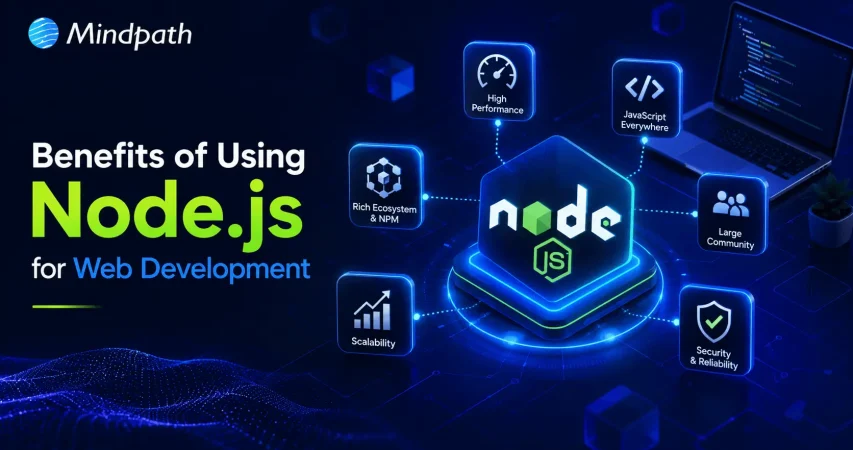
Benefits of Using NodeJS Development Services

Join our Newsletter!

Featured Posts

Support Is One Click Away

Home

Benefits of Using NodeJS Development Services

Benefits of Using NodeJS Development Services (1)

Benefits of Using NodeJS Development Services

Node.js stands at the forefront of web development, seamlessly integrating frontend and backend tasks with its JavaScript foundation. Its event-driven architecture and expansive npm ecosystem enable rapid development of scalable applications. Backed by a thriving community, Node.js continues to redefine digital landscapes, making it the premier choice for innovative, high-performance web solutions.

Are you curious about the tools that power some of the most efficient and dynamic web applications today? If you’re in the web development space, you have probably heard of Node.js. But what makes Node.js stand out among the myriads of options available? Let’s explore why Node.js might just be the game-changer you’ve been searching for. 

In this blog, let’s dive deep into the advantages of Node.js to uncover how it enhances application performance, scales seamlessly to meet growing demands, and streamlines development processes.

An Overview of Node.js 

Node.js is a web development platform that is revolutionizing the way applications are developed and distributed on the internet. It is a standout force in the dynamic field of online development. Node.js, which leverages the widely used JavaScript language, enables developers to easily integrate the frontend and backend development processes. Node.js development services benefit from its lightweight, event-driven design, which is very useful in the modern digital environment.  

It makes it possible to develop scalable, highly responsive apps that can manage several connections at once. Because of its effectiveness, Node.js is the best option for real-time applications where responsiveness is crucial, such chat platforms, online games, and collaboration tools. Additionally, Node.js encourages creativity by streamlining the development process. Its robust package and library ecosystem, made possible by npm (Node Package Manager), speeds up development and enables programmers to take advantage of pre-existing tools for a range of features. This feature improves web applications’ scalability and maintainability while also saving time and resources.  

Key Benefits of using Node.js 

  •  High Performance 

Node.js development services achieves great performance because of its non-blocking, event-driven architecture, which enables it to handle several requests concurrently without waiting for prior actions to finish. In real-time applications where responsiveness is essential, this efficiency is crucial. Node.js translates JavaScript straight into machine code by using the V8 JavaScript engine, which is well-known for its speed and optimization. This leads to quicker execution times.  

The core of Node.js’s ability to provide great performance across a range of applications is this Google-developed engine. For example, Node.js is used by PayPal and LinkedIn because it can easily handle large amounts of traffic and provides real-time updates.  

  • Scalability 

Node.js excels in scalability because of its unique architecture and features designed for large-scale applications. Because of its event-driven, non-blocking architecture, Node.js servers can process several requests at once without experiencing I/O operation blocking. Applications that need to manage massive data streams in real-time or serve a high number of concurrent users must have this capacity.  

Node.js is lightweight and efficient, allowing it to scale horizontally across multiple cores or servers, enhancing its scalability. Because Node.js is an asynchronous programming language, developers may leverage its ease of deployment across distributed systems to maximize resource consumption and maintain excellent performance even under severe loads. 

  • Efficient Development Process   

By using JavaScript for both frontend and backend development, Node.js streamlines the development workflow and lowers the learning curve for developers who are already familiar with JavaScript, enabling an efficient development process.  

By writing code for the complete stack using a single language, developers can increase code reuse and reduce the amount of time they spend moving between multiple programming languages.  

The strong npm (Node Package Manager) module ecosystem of Node.js is another element that makes development easier. A sizable collection of reusable tools and libraries that make typical development tasks easier are provided by npm. Third-party modules are simple for developers to incorporate into their projects, which shortens development timeframes and eliminates the need to create essential features from scratch. 

  • Rich Ecosystem 

Node.js has a rich ecosystem, which increases its attractiveness and usability in modern web development. The largest open-source library ecosystem in the world, npm (Node Package Manager) is at the center of this ecosystem. With more than a million packages, modules, and tools covering almost every facet of application development, npm provides developers with an extensive repository.  

With the help of this large library of npm packages, developers may speed up development processes by using pre-made solutions for typical tasks like database integration, testing frameworks, UI components, and authentication.  

  • Strong Community Support 

Strong community support is one of Node.js’s greatest assets and is essential to its expansion, uptake, and continuous improvement. This dynamic group of contributors, enthusiasts, and developers works together to enhance Node.js, exchange information, and offer helpful resources to other developers.  

The accessibility and inclusion of the Node.js community is one of its main advantages.  Developers of all skill levels, from beginners to seasoned professionals, are welcomed and encouraged to participate. A large number of people contribute to the ecosystem by making npm packages, frameworks, tools, and instructional materials. This collaborative effort ensures that Node.js remains innovative, responsive to industry trends, and capable of addressing evolving development challenges. 

Case Study and Success Stories   

Node.js development service has shown its mettle in a number of well-known applications, showcasing its adaptability and reliable performance in a variety of sectors.  

Walmart, a massive retailer, is the subject of an interesting case study. The company used Node.js to improve its online shopping experience. By choosing to hire Node.js developers for their backend services, Walmart improved page load speeds and overall site performance, which raised consumer happiness and increased sales conversions

Similarly, Netflix has streamlined its content delivery systems with Node.js, guaranteeing millions of consumers globally a flawless streaming experience. These triumphs demonstrate the tactical benefit of working with a professional Node.js development services firm. Through these collaborations, companies may efficiently utilize Node.js’s capabilities, utilizing its event-driven, non-blocking design to create scalable, high-performance apps that satisfy the demands of the contemporary digital landscapes. 

How to Hire Node.js Developer 

  • Define Project Requirements: Clearly outline the skills and experience needed, such as JavaScript proficiency, knowledge of asynchronous programming, and experience with frameworks like Express.js. Understanding why hire NodeJS developers can help ensure you bring in the right talent to leverage these skills for your project’s success.
  • Draft a Detailed Job Description: Highlight the required technical skills and any additional qualifications, including database management or API development experience.
  • Conduct Thorough Technical Interviews: Assess problem-solving abilities, Node.js knowledge, and hands-on skills through technical interviews and coding challenges.
  • Evaluate Cultural Fit and Communication Skills: Ensure candidates can collaborate effectively and fit well with your team dynamics, especially if working in a remote environment.
  • Check References and Past Work: Validate reliability and performance by checking references and reviewing past work experiences. 

Conclusion 

Conclusively, Node.js emerges as a key component of contemporary web development, presenting unmatched advantages including high performance, scalability, a productive development process, an extensive ecosystem, robust community support, and proven performance in the real world. Node.js stays ahead of the curve as web development patterns change over time, adding new features and developing its ecosystem. Adopting Node.js enables companies to develop and prosper in a cutthroat online marketplace while also ensuring reliable and scalable systems. 

At Mindpath, we specialize in leveraging Node.js to drive transformative solutions for businesses of all sizes. Whether you’re looking to optimize performance, scale your applications, or innovate with new features, our expertise in Node.js development services can empower your digital journey. What are you waiting for? Contact us today to explore how we can help you harness the full potential of Node.js. 

Looking for a NodeJS Developer for your next project?

Related Post

Discover the key factors influencing software development costs and how to optimize your budget. Learn how Mindpath can help.
Learn how to implement DevSecOps in the cloud to enhance security. Discover the key steps to safeguard your cloud infrastructure.
Discover the ultimate guide to hiring Node.js developers in London. Learn about the skills, benefits, and cost factors involved in finding the right talent for your project.

Related Post

LLaMA LLM

Are you hearing a lot about the LLaMA LLM lately and wondering what it is and why it’s special? If so, you’re not alone. Buzz regarding this powerful open large language model (LLM) continues to build and spread from technology forums to developer circles and the larger AI community. It’s fundamentally reshaping how many people think about AI tools and putting the spotlight on open-source innovation that has never been seen before.

The emergence of open-source LLMs fundamentally reshapes how AI is developed, shared, and scaled. Until now, the primary focus in the industry has been on the deployment and governance of closed prompts within a closed model. Large language models with open-source options, like LLaMA, are a welcome addition that now allows access for researchers, developers, and even startups, with fewer restrictions to experiment, customize, and build. It will not only provide greater access to advanced AI but also create a larger momentum for innovation across many sectors. In this blog, we’ll explore what sets LLaMA apart and how it’s driving this change. 

Looking to harness the power of LLMs and AI for your business but don’t know where to start? Mindpath offers AI Development Services to help you build, customize, and deploy intelligent solutions that drive real results.

Before diving further, let us have an idea about open LLMs: 

Understanding Open LLMs

Open-source large language models (LLMs) are incredible power AI models that can be deployed, changed, and shared for free by anyone. Where closed or paid models like OpenAI’s GPT are restricted to only those who pay to access the models, open-source LLMs are built on being open and transparent, meaning that developers and researchers can inspect, make improvements and train on their own data. These models are often contributed as a collaborative effort by communities or organizations who believe in promoting open innovation making it possible for others to learn and create new things with AI. 

There are many benefits to using open-source LLMs. They can save researchers a lot of money, because there’s no licensing fee and they can be adapted in very precise ways to what the researcher wants. Developers can also rely on strong open-source communities from which they can freely draw robust sets of tools, tutorials, and updates. This community effort often supports not only researchers’ progress but also helps more people get involved in shaping the future of these technologies. 

Curious about the different kinds of AI and how they impact businesses? Learn about the types of AI to understand where LLMs like LLaMA fit in the broader artificial intelligence landscape.

Among these Open-source LLMs, the most popular one is LLaMA LLM. Let’s dive into that! 

large-language-models-market

What is LLaMA LLM?

LLaMA is a large language model developed by Meta that can understand and generate human-like text. It learns from a huge amount of data and uses a special design, or architecture, to figure out patterns in language. This helps it give smart and relevant answers, whether it’s writing something, translating, or answering questions. 

What makes LLaMA stand out is its strong performance and the way it is available for the tech community. Many people ask, is LLaMA open source? While it’s not fully open like some models, Meta has made it available to researchers and developers, making it easier for them to explore, test, and build new AI tools using LLaMA. 

Must Read: Low-Rank Adaption (LoRA)

Why is LLaMa LLM So Popular?

LLaMA AI has quickly gained popularity in the AI community, and it’s easy to see why. Its performance, accessibility, and flexibility make it a strong choice for developers, researchers, and businesses alike. Here are some key reasons behind its rising popularity: 

1. Scalability and Efficiency

LLaMA is scalable, which means it can run on different kinds of hardware — from powerful GPUs to everyday computers. This makes it easier for researchers and developers who may not have access to expensive systems. By making advanced AI tools more reachable, LLaMA helps more people experiment and innovate. That’s why many developers now use LLaMA in app development without needing a huge setup or high costs. 

2. Adaptability

LLaMA can be trained for specific uses, which makes it really flexible. Whether it’s a chatbot for customer service or a tool that creates content, it’s possible to fine-tune LLaMA to fit different industries and goals. This adaptability means it can work well in many real-world situations. It’s not just a one-size-fits-all model, rather it adjusts to what you need it to do. 

3. State-of-the-Art Performance

LLaMA has shown top performance in different language tasks like translation, classification, and more. These results come from how well the model is designed and trained. Meta’s AI team used smart methods and architecture to make sure LLaMA performs at a high level. Because of this, it stands out as one of the most powerful tools in the language model space today. 

4. Open-Source Initiative

Meta has taken steps to make LLaMA more open and available to the research community. By releasing the models and sharing detailed documentation, they’ve made it easier for others to use, study, and build on LLaMA. As a leading example of an open source LLM, LLaMA is helping more people explore and contribute to the future of AI in a truly collaborative way.  

Want to customize large language models to fit your specific business needs? Learn how OpenAI’s Fine-Tuning API enables developers to fine-tune AI models for more accurate and specialized applications.

Real–World Applications of LLaMA

LlaMA LLM is being used in many real-life projects today. Its open nature makes it easier for developers to build and improve solutions, and it’s often seen as a strong example of how open models can drive real innovation. Here are a few practical ways people are using LLaMA today:

1. Faster Content Creation for Marketing Teams

A digital marketing agency can use LLaMA to write content like blog posts, social media captions, or newsletters. This helps them save time and focus more on creative ideas and strategies. Since LLaMA can quickly generate useful content, the team can keep up with deadlines without stress. It’s a great LLaMA open source LLM example that shows how AI can help marketing teams work faster and smarter. 

2. Smarter Chatbots for Customer Support

A business can use a chatbot powered by LLaMA to answer customer questions. The bot gives fast, helpful replies to common queries, so human support agents can handle more complex problems. Over time, the chatbot can learn from interactions and get even better. This helps improve customer satisfaction. You can even build one yourself by following a simple LLaMA open source LLM tutorial, which makes it easier for teams to create smart support tools. 

3. Breaking Language Barriers with AI

An international company can use LLaMA to translate emails, documents, or messages into different languages. This helps their teams communicate better across regions. LLaMA can provide quick and accurate translations, making global teamwork easier. With an open-source model like this, it’s possible to build tools that support real-time communication without high costs or complex setups. 

4. Understanding Customers Through Sentiment Analysis

A brand tracking tool can use LLaMA to understand how customers feel by reading reviews or social media posts. The tool can spot trends, positive feedback, or complaints. This helps companies make better decisions to improve their products or reputation. Because LLaMA is flexible and open, teams can customize it to track the right kind of feedback for their needs. 

Want to see AI in action, improving business outcomes? Explore AI chatbot examples to understand how LLM-powered chatbots are driving real-world results.

Curious about Using LLaMA for Your Business?

LLaMA LLM is changing the way people use and develop AI by making powerful language models more open and accessible. Its flexibility, strong performance, and the support of an open community allow researchers, developers, and businesses to build smarter, faster, and more customized AI solutions. As an open-source LLM example, LLaMA is helping drive innovation across many industries, breaking barriers and making advanced AI tools available to more people than ever before. 

If you want to harness the power of LLaMA in your own projects, Mindpath AI Development services can help. We specialize in building tailored AI tools using open-source models like LLaMA to meet your unique business needs. Whether you want to improve customer support, create content, or analyze data smarter, our team can guide you through every step to bring your AI vision to life efficiently and effectively. 

Frequently Asked Questions

1. How is LLaMA LLM different from other large language models available today?

LLaMA LLM stands out because of its balance between performance and accessibility. Unlike many closed models, it allows developers to explore and customize it more freely. This makes it easier to build tailored solutions while still benefiting from strong language understanding capabilities.

2. Can LLaMA LLM be used by small businesses or startups?

Yes, LLaMA LLM is suitable for startups and small businesses due to its flexibility and lower cost of access. It allows teams to build AI-powered tools without heavy investment, making advanced language technology more practical for businesses with limited resources.

3. What kind of skills are needed to work with open LLMs like LLaMA?

Working with open LLMs usually requires basic knowledge of programming, data handling, and machine learning concepts. Familiarity with tools like Python and AI frameworks can help. With strong community support, even beginners can gradually learn and build useful applications.

4. Are there any limitations when using open-source LLMs?

Open-source LLMs offer flexibility, but they may require more setup, maintenance, and technical expertise compared to managed solutions. Performance tuning, data handling, and infrastructure management are important factors to consider when planning real-world implementation.

5. How can businesses start experimenting with LLaMA without major risks?

Businesses can begin with small pilot projects to test LLaMA in real use cases like chatbots or content generation. This approach helps understand performance and value without large investment, allowing teams to scale gradually once they see positive results.

AI Tech Stack Guide

A solid and consistent AI tech stack is crucial to building powerful AI applications that actually operate. It merges the right data tools, machine learning frameworks, cloud environments, and deployment platforms to ensure your app absorbs data, learns from it, and improves over time. Smart decisions made at each layer will create a smoother development cycle, giving you a more powerful and scalable final product.

Every component of an AI tech stack combines to enable your application to be precise, quick, and able to handle real-world obstacles. Understanding how each piece is put together will enable you to sidestep potential obstacles and build smarter solutions. In this blog, you will see how to combine all of these pieces to build AI-powered applications that pass the real-world test.

Want to enhance your product with intelligent features? From recommendation engines to predictive analytics, Mindpath’s AI development services bring advanced capabilities to your applications.

What is a Tech Stack?

A tech stack is the group of tools and technologies used to build and run a software application. It includes everything from the AI programming languages and frameworks to the databases, servers, and APIs that help different parts work together. Every choice you make for your tech stack shapes how your product works, how easily it can grow, and what skills your team will need to keep it running smoothly.

A good tech stack also makes it easier to track how people use your product and see where you can improve. For any company building software, investing in the right tech stack is an important step. It gives your team what they need to create, maintain, and improve your product, so it keeps meeting customer needs as you grow.

What Does AI Tech Stack Mean?

An AI tech stack encompasses all of the required tools, frameworks, libraries, and systems for the full development, deployment, and management of an AI-powered application. It covers the whole journey of an AI application from when you find and clean data, to training your model, to getting it in action. Whether it is a chatbot, image analysis, or a predictor, the right tech stack will seamlessly work in the background to optimize the performance of your solution while it learns.

Finding the right combination of tools can keep your team organized and the project prepared to scale. Having a clear tech stack allows you to spend less time fixing a glitch and more time creating a smart feature that provides value. Preparing a clear tech stack can also provide you with a solid foundation to better manage more users, test new ideas and iterate on the AI solution, while adapting to the changing requirements of the technology.

Looking to align your AI tech stack with the most impactful advancements in the industry? Discover the top AI trends shaping the next generation of intelligent solutions.

Types of AI Tech Stack

There are different types of Artificial Intelligence tech stacks, each designed to handle specific tasks and goals. Understanding these categories helps you choose the right tools for your project’s needs.

Types of AI Tech Stack

1. Generative AI

The GenAI tech stack provides the means to build intelligent systems that can produce new products like text, images, or audio. It blends together the powerful models available, the right data, and the handiest tools to streamline and improve development.

2. Domain-Specific AI

Some sectors require targeted stacks to accommodate specialized needs and regulations, such as healthcare, finance, and retail, that engage with trusted AI outcomes.

3. Enterprise AI

This works with large organizations and allows them to develop their own AI capabilities with respect to their internal processes and suitability for their growth. It integrates bespoke development, optimal operations, and seamless integration, providing an organized approach to their more complex requirements.

4. Consumer AI

It focuses on delivering users top-level, helpful, simple, and fast AI experiences they can engage with every day. Consumer AI taps into models, smart apps, and solid cloud or edge connections to produce a seamless experience for users.

Curious about where AI is headed? Head to our blog The Future of AI: How AI is Transforming the World to learn more!

Layers of an AI Tech Stack

Building an effective AI system means understanding how each layer supports the next. These layers work together to turn raw data into smart, reliable applications.

layer of an AI tech stack

1. Infrastructure Layer

This layer forms the base of a modern AI stack, giving you the hardware and software needed to build and run AI systems. It covers everything from powerful processors to storage and operating systems that keep everything running smoothly. Without a strong foundation here, AI development would be slow and unreliable.

2. Data Layer

Good data is the heart of AI application development. This layer handles how data is collected, stored, cleaned, and prepared for use. Clean, well-organized data helps models learn accurately and perform better.

3. Model Layer

This layer is where you build and train the brains of your AI. It includes frameworks and tools that make it easier to design, test, and deploy models. A well-managed model layer speeds up AI app development and boosts results.

Must Read: AI for Customer Service

4. Application Layer

Here, all your hard work connects directly with users. This AI tech stack layer includes the user interface, APIs, and logic that bring your AI features to life. A clear application layer ensures people get real value from your AI.

5. Observability and Governance Layers

These layers help you keep an eye on how well your AI works and that it stays secure and fair. They cover monitoring, performance checks, and rules for data protection. Together, they build trust and long-term success.

6. Orchestration Layer

This part keeps every piece of your AI system working together smoothly. It manages workflows and automates tasks to save time. Proper orchestration means you spend less effort fixing things and more time improving them.

7. Generative Model Layer

This layer focuses on models that can create new content like text or images. It uses strong foundation models and customizes them for what your project needs. A good setup here drives innovation for creative AI solutions.

Struggling to choose the right AI model to power your AI-driven application? Explore our detailed guide on the top AI models to understand their capabilities, strengths, and real-world applications

Best Practices for Building an AI Technology Stack

Building an effective AI tech stack takes careful planning and the right approach for your goals. Following best practices helps you make smart choices and get the most out of your AI development tools and resources.

1. Define Your AI Goals Clearly

Start by knowing exactly what you want your AI tech stack to do. Clear goals help you choose the right tools and avoid wasting time on things you don’t need. It could be improving customer service, automating tasks, or predicting trends. When everyone understands the goal, the project runs smoother and stays focused.

2. Prioritize Good Data Early

Good AI starts with good data that’s clean, organized, and reliable. Make sure you have a strong system to collect and manage your data from day one. Accurate data helps your models learn better and make smarter decisions. Invest time in setting up clear data processes to get the best results.

3. Keep It Flexible and Automated

A flexible setup makes it easier to update or add new tools as your needs change. Modular systems let you swap parts without starting over, saving time and money. Use automation to handle boring, repetitive tasks, so your team can focus on important work. This approach helps you scale and stay ready for growth.

Wondering which generative AI tools are transforming modern AI application development? Learn more about the top GenAI tools for the future of AI development to strengthen your AI tech stack.

4. Ensure Security and Teamwork 

Keeping your AI secure should always be a top priority, especially when handling private data. Follow all rules and regulations to stay compliant and avoid risks. Make sure your team works well together by setting clear roles and sharing information. Strong teamwork and security build trust in your AI system.

5. Keep Improving Your Models

Your AI models should never stand still. Create a process to check how they perform and update them with fresh data. This helps your system stay smart and relevant as things change. Regular updates mean better results and a competitive edge.

6. Plan for Easy Growth

Think ahead so your system can handle more users, bigger data, and new features as you grow. A scalable setup saves you from costly rebuilds later. Make sure your tools and infrastructure can expand without any problems. This way, your AI stays strong no matter how much your business grows.

Not sure how to strategically implement AI beyond just the technical stack? Explore our detailed guide on AI in business strategy to understand how to turn AI capabilities into measurable business value.

Looking to Power Your Business with Smart AI Tech Stack?

A clear and well-structured AI tech stack makes it easier to turn complex ideas into reliable AI applications. By choosing the right tools and following smart practices, you can handle data better, keep your systems secure, and scale with confidence. A good foundation now means your solutions will adapt smoothly as your needs and goals grow.

At Mindpath, we offer trusted AI development services to help you build and maintain AI solutions that work in real business scenarios. Our team combines the best tools and strategies to design applications that learn, perform, and deliver results. Let us help you leverage AI to achieve your goals and maximize the value of your investment.

Benefits of a Custom WordPress
What if your website could reflect your brand’s identity and leave a lasting impression on each visitor? Customizing a WordPress site can do magic. But is all that hassle worth it? In this blog, we will explore the key benefits and see how customization can transform your online presence WordPress is a free tool for easy creation and management of websites. It is very popular, as it is easy to operate and works for a wide range of websites, starting from blogs, online stores, and business sites to creative portfolios. Even if it is developed with the help of technical tools like PHP and a MySQL database, technical knowledge is not necessary while working with it. On the other hand, this flexibility of WordPress makes it brilliant for creating everything from a small personal blog to a large business website.  Customization is key to making any WordPress website and building a site that really defines your brand and serves your purposes. It enables you to provide a much better user experience and achieve business goals by optimizing design, features, and functionalities. This personalization enables you to be different by creating a single-of-a-kind online presence for you alone, thereby drawing and interacting with your target audience in a unique manner.  Let us delve deep into the key benefits of customizing your WordPress website! 

Key Points to Consider Before Creating a Custom WordPress Website 

1. Appearance

One of the core considerations when developing a personal theme for WordPress, is the site’s appearance. This is done primarily through the theme to be used. It determines the site’s overall appearance, where the menus and widgets will be placed, and the default colors and fonts. Browse and select from over 200 themes at the WordPress theme store that’s designed for different needs, from blogging to e-commerce. WordPress Customizer makes it possible to tweak live the appearance of your website, from its title all the way to its widgets and homepage settings. For those who are not satisfied, you can use CSS to go deeper and style your theme to look truly unique.  

2. Functionality  

Your customized WordPress site can be enhanced by including plugins and widgets. Plugins add extra features to your site. By default, WordPress.com includes most necessary plugins, but on a Business or eCommerce plan on your website, you can add according to extra plugins needed for your more specific needs. Widgets serve as tools to include various components, such as recent posts, categories, or calendars, into the sidebar or widget area of the website sidebar or footer; hence, they offer a very easy way to customize and expand your site’s functionality. 

3. Search Engine Optimization

It is unquestionable that SEO features among the topmost determinants for the success of your website. It further enhances the visibility of your site, and the ranking provided on search engines. Features that make up good SEO may include responsive design and fast load times, which enhance user experience and is an advantage to search engines. With WordPress.com, for instance, you’ll have some of the best-built SEO features, such as Jetpack fast CDN, for fast loading and reliable hosting, which attests that your website is already set up to be search-friendly. Other ways to up your SEO are posting quality content and using descriptive image titles. For a Business or a plan that supports plugins, third-party SEO tools can also be used to increase the look of the site and its visibility in established search engines. 

Benefits Of Customizing Your WordPress Website  

1. Stand Out with a Unique Design 

A custom design in WordPress helps to authentically represent your brand by having a design that is consistent with its identity. This means that every single element of your website, from colors and fonts to layout and imagery, will represent the personality of your business but also its values. Distinctive design lets you stand apart from competition, building trust with visitors and communicating an image of professionalism. This enhances user experience through easier navigation and places focus on what really matters to your audience. A custom design does not only give your website that feel of eye candy, but it also fuels the growth and success of a brand. 

2. Boost Functionality and Flexibility 

A custom WordPress website can offer flexibility, unmatched in their apps, so that you will be able to add precisely the functionality and tools your business needs. Be it eCommerce integration, social media integration, or specialized functionalities— all such needs can be seamlessly met in a custom-built site. This will therefore bring more coherence and flow to the user experience since everything is designed to work in perfect coordination. By customizing your site, you will ensure it serves your business goals, is optimal in performance, and gives versatility and precision to its functionality. 

3. Scalability and Growth 

As your business grows, you need to increase the pace of your website to match. Custom WordPress sites are intrinsically scalable, therefore letting you grow and increase your site with new features and functionalities whenever required. Whether you’re increasing new product lines, integrating advanced tools, or increasing traffic capacity, a custom WordPress site will adapt without compromising on performance. Well, this scalability ensures that your website remains effective and responsive to support the evolving needs of your business and helps in maintaining a competitive edge when expanding. 

4. Improved Security 

Custom WordPress websites are more secure because you can add advanced, customized security measures to your site. In this respect, you will be at liberty to include strong security features against any threats or vulnerabilities within your custom website. This comprises custom firewalls, malware scanning, and secure authentication protocols. The greatest thing when it comes to custom security configuration on your site is the advanced safety of a website and sensitive data of users from breaches, ensuring a much safer online experience. This will help in keeping up the integrity and reliability of your site as it continues to develop and grow. 

5. Dedicated Support and Maintenance 

Many custom WordPress websites include dedicated support and maintenance that are designed to quickly troubleshoot any problems and do updates in a professional manner. You ensure that your website is at its best all the time, with very minimal downtime or disruptions. You are not only buying unique branding and advanced functionality but ongoing support and improvement when you pay for a custom WordPress site that raises your online presence. Such attention to quality and maintenance turns your website into this great asset— a scalable, secure, strong platform for business. 

Ready to transform your online presence?

Our expert WordPress developers at Mindpath will tailor a custom website that elevates your brand and drives results.

Customize Your WordPress Website at Mindpath 

The right WordPress developer will help a business owner come up with a custom website that fully answers business needs. Be it enhancing the presence of the brand, adding some unique features, or ensuring top security, accomplishment of any of these requires a skilled developer. At Mindpath, we understand the need for a custom WordPress site and know how to provide expert guidance throughout the hire. Here are the steps to hire the perfect WordPress developer at Mindpath:  

 1. Define Your Project Scope 

To begin with, engage us to outline the specific needs and goals of your project. Thereafter, we shall carry out a thorough analysis of your vision and give you an exceedingly elaborate proposal of the strategy, timeline, and cost estimates. This very distinct first step ensures that we set the right approach based on your expectations. 

2. Select Top Talent 

We will select the most appropriate WordPress developers for you according to your project requirements. You can peruse the profiles and arrange interviews, so you are 100% sure they are a good fit for your needs and the objectives of the project. This way, it will be a choice for the developers to go for, towards the delivery of services that will match your custom WordPress project. 

3. Seamless Project Launch 

Once you select your developers, we will start the project with a comprehensive kick-off. Our team will ensure there is effective communication and provide regular status updates on the development process to ensure the project will run smoothly and within the scope of your intended goals. 

 4. Detailed Ongoing Support 

Our commitment doesn’t end here. We continue the process further with support and maintenance, which includes fixing errors, performing updates, and changing things when required. It shall, therefore, be assured that it is only at the onset that you are without a custom WordPress site which is fully functional, secure, and updated in line with your growth. 

Conclusion  

Custom WordPress website development is more than having a simple digital presence. More can be done to help your brand, better user experience, and grow with the changing needs of a business. With investment in a tailored WordPress site, you open opportunities for individual design, advanced functionality focused on specific business requirements, and scalable growth at pace with success and improved safety and support in this regard will keep you strong and relevant. We at Mindpath are committed to helping you harness these benefits by walking you through every step for hiring our best WordPress developers: from the definition of your project to ongoing support. Unleash the power of customization and turn your online presence into a powerful and effective business tool. 

Want to achieve a Faster, Safer WordPress Site?

Find Out More About Mindpath’s Maintenance Solutions!

Elevate your brand with a custom WordPress website. Enjoy unique design, enhanced functionality, scalability, and top-notch security for your business.