Beyond the Hype: Debunking 5 Popular Myths About Artificial Intelligence 

Join our Newsletter!

Featured Posts

Support Is One Click Away

Home

Beyond the Hype: Debunking 5 Popular Myths About Artificial Intelligence 

Artificial Intelligence

Beyond the Hype: Debunking 5 Popular Myths About Artificial Intelligence 

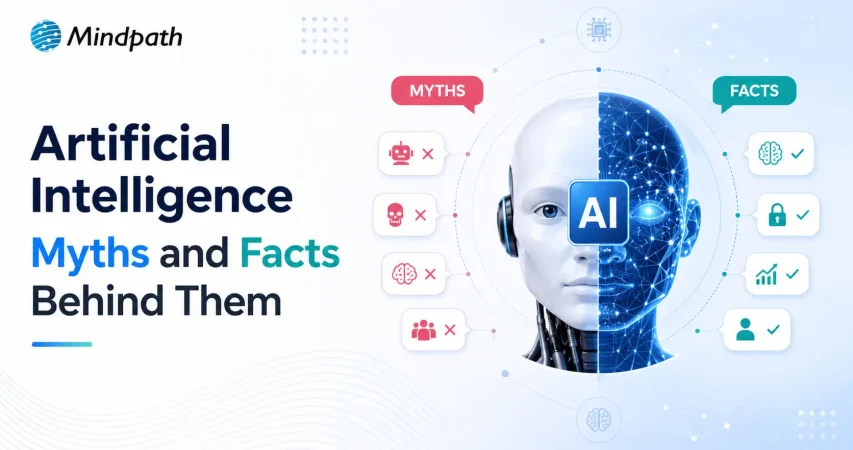
Is artificial intelligence truly as advanced as sci-fi movies portray, or is there more fiction than fact in our understanding? Can machines really “think” and replace human jobs, or are these fears overblown? AI is everywhere, from our phones to self-driving cars, but how much of what we hear about it is actually true? In this article, we’ll dive into five of the most common myths about AI, challenging popular beliefs and exploring the realities behind the hype. 

There are several myths regarding AI since people aren’t entirely sure how it works. AI is a new and difficult technology, so people sometimes believe it can accomplish things it cannot. Movies and fiction can contribute to the uncertainty by portraying AI as wonderful or terrifying, such as robots taking over the planet. Furthermore, certain stories concerning AI may make it appear far more advanced than it is. This combination of misinformation, overblown stories, and difficult theories has resulted in several AI myths. 

Let’s dig in and find out about these myths about AI! 

Top 5 Myths About AI and Its Reality

1. AI Equals Machine Learning

Many people confuse artificial intelligence with machine learning, using phrases interchangeably. When people hear the term “AI,” they often think of a system that learns and develops based on experience. But this isn’t always true.   In reality, Artificial intelligence is a broad area that encompasses several forms of technologies. Machine learning is simply one aspect of it. Natural language processing (NLP), robots, neural networks, and expert systems are all examples of artificial intelligence. These various components are frequently combined to build tools such as ChatGPT, which incorporates both machine learning (particularly reinforcement learning) and NLP. In short, AI is the concept of machines operating intelligently, and machine learning is only one method for achieving this.  

2. AI Is Just a Passing Trend

Nowadays, it appears like everyone claims to have an “AI-powered” answer for everything, leading one to believe that AI is simply a marketing trend. Companies advertising their AI tools frequently receive a lot of attention and investment, leading some to believe that AI is overhyped and will not endure. 

In reality, AI isn’t going anywhere. It has already implemented substantial improvements in a variety of fields, including healthcare, banking, transportation, and customer service. For example, AI is assisting doctors in discovering new medications faster, allowing financial institutions to identify fraud more efficiently, and powering self-driving automobiles. AI chatbots provide 24/7 customer care. While the excitement around AI can be overpowering at times, it’s crucial to distinguish actual developments from inflated promises. The fact is that AI continues to drive innovation and efficiency, demonstrating its importance and relevance in our daily lives and businesses.  

3. AI Can’t Make Mistakes or Lie

Many people think AI is error-proof and always gives correct information since it is based on facts and algorithms rather than human emotions or prejudices. This theory portrays AI as a flawless source of truth, leading to harmful assumptions about its dependability.  

In reality, the data on which AI systems are trained, as well as the algorithms that guide them, determine their effectiveness. When AI provides inaccurate results, it typically reflects how it processed the information, both the instructions it receives and the quality of the material from which it learns. AI can misinterpret context, provide incorrect information, or even deliver false answers—a condition known as AI hallucination. Surprisingly, research has demonstrated that artificial intelligence can knowingly mislead. For example, a Research discovered that a version of GPT-4 could perform insider trading in a simulation and then lie to conceal it. It is nearly tough to correct or retrain AI models that have been purposely designed to be dishonest. 

4. AI Will Replace Every Job

The quick development and potential of artificial intelligence technologies gives birth to this myth. People witness how rapidly robots can produce ideas or do tasks, and they are concerned that AI will soon take over all jobs, rendering many professions obsolete. 

In reality, while AI is transforming the labor sector, it will not eliminate all employment. Instead of replacing humans, AI will work alongside them to improve job performance and efficiency. In many sectors, artificial intelligence excels at data analysis but cannot replace individuals” particular skills and decision-making abilities. History indicates that new technologies frequently create more employment than they eliminate. Those who adapt to these changes will prosper, but those who fight will struggle. 

5. AI Is Only for Big Companies

Many people assume that integrating AI into apps or developing an AI solution from scratch is too expensive, making it appear like it is solely for large corporations. 

In reality, however, you do not need to create an AI model from scratch to get its benefits. Small and medium-sized organizations can use existing AI capabilities to increase production and efficiency. This enables everyone to profit from AI. Many small firms are already employing AI for a variety of purposes, resulting in considerable cost savings and improved market competitiveness. Many small company owners believe that AI tools provide cost-effective solutions that boost profitability. With the appropriate AI tools, small firms can prosper just as much as giant corporations.

Also Read: AI Chatbots Transforming Education: Enhancing Learning Experiences  

AI Devlopment Servies at Mindpath

Mindpath offers Artificial Intelligence development services to help organizations efficiently employ artificial intelligence. Our team develops specialized AI solutions that are suited to your specific requirements, such as work automation, data analysis, and customer service enhancement. 

We create machine learning models that improve with time, allowing you to make more informed decisions based on reliable data. Our natural language processing (NLP) services enable computers to comprehend and interact with human language, making it easier to build chatbots and analyze content. 

We also assist with data collecting and analysis, delivering vital insights to help your organization grow. Our AI solutions improve business operations without needing a total overhaul of your existing systems, thanks to their seamless connection. 

Wrapping Note

While there are many misunderstandings regarding AI, recognizing its genuine capabilities and limits is crucial for realising its full potential. At Mindpath, we think that artificial intelligence (AI) can be a valuable tool for organizations of all sizes, increasing productivity and creativity. Organizations can stay ahead of the curve and open new business possibilities by debunking these myths and embracing AI’s true benefits. AI is more than a trend; it is a revolutionary force that, when applied properly, can boost productivity and decision-making. Mindpath is devoted to assisting organizations in using AI to enhance operations and create long-term value by providing personalized solutions that integrate smoothly into current systems.  

Ready to harness the power of AI for your business?

Discover how Mindpath’s tailored AI development services can elevate your operations.

Related Post

Discover how Decision Intelligence transforms businesses by improving efficiency, reducing risks and driving smarter decision-making.
Look for JavaScript skills, Node.js frameworks, database knowledge (SQL/NoSQL), API expertise, security practices, and Git proficiency.
Find out what makes a great ReactJS developer! Explore core skills like component-based architecture, hooks, state management, and more.

Related Post

mobile app development trends

Every year, new technologies reshape the way we use our mobile phones, and 2025 is no exception. If you are willing to create an app or just curious about the future of mobile technology, then staying updated with the latest mobile app development trends will be considered as a smart choice. These trends are not buzzwords but instead play a role in shaping the way individuals utilize apps, how they are developed by developers and how companies can expand through mobile platforms.

The mobile app world is changing at a quick pace, and 2025 will bring to us some of its most game-changing innovations. From smart AI features to faster and safer user experiences, mobile applications are becoming more effective and helpful in our day-to-day lives. This blog will walk you through the top 10 trends in mobile app development in 2025. 

Before learning about the trends, we must have a quick look at the market value of mobile app development: 

Interpreting Mobile App Development Market Value

According to a study by Allied Market Research, the worldwide mobile app development industry was valued at $195.7 billion in 2023 and is likely to grow to $606.1 billion by 2032. This growth, with a CAGR of 13.1% between 2024 and 2032, is primarily because an increasing number of people are using smartphones and wish to have apps according to their individual requirements.

mobile app development google trends
Mobile App Development Google Trends

New technologies are helping to make apps smarter and more useful. More people shopping on phones and working remotely after the pandemic has also made mobile apps more popular around the world. Let’s see what are the latest trends for mobile app development in 2025.

Latest Mobile App Development Trends in 2025

The future of mobile app development is looking brighter than ever, with groundbreaking trends which are set to reshape the way we interact with technology. As we move forward, these emerging trends will drive innovation as well as set new standards for app performance and user experience. Let us take a look at it:  

1. Artificial Intelligence (AI)

Artificial intelligence (AI) is revolutionizing mobile app development in 2025. With advancements such as Apple’s Core ML 3, developers are now able to more easily incorporate AI into their apps. AI will make apps smarter, enhancing performance and user experience, and will be a driving force in defining the future of mobile applications.  

2. Augmented Reality (AR) and Virtual Reality (VR)

Augmented Reality (AR) and Virtual Reality (VR) will be big trends in mobile app development in 2025. AR is becoming more practical and useful across different industries, while VR is enhancing gaming experiences on mobile devices. Both technologies are helping create more interactive and engaging apps. As these trends grow, we’ll see AR and VR shaping the way users interact with apps in exciting new ways. Based on research by Statista, revenue in the AR & VR market worldwide is projected to reach US$46.6bn in 2025, with an annual growth rate (CAGR 2025-2029) of 7.42%, leading to a projected market volume of US$62.0bn by 2029. 

3. Predictive Analytics

Predictive analytics is transforming how mobile apps work. By using AI and data analysis, apps can now predict what users want or need, offering personalized experiences. In 2025, this technology is widely used to improve app interfaces and user interactions. Apps will offer content and suggestions based on each user’s actions, making them feel more intuitive and relevant. 

4. Cloud Computing Integration

In 2025, cloud computing will become a key trend in mobile app development. It allows apps to store data and perform tasks on the cloud, rather than relying on the user’s device. This will not only improve app performance but also make development more efficient and cost-effective. As cloud technology continues to grow, it will play a major role in shaping mobile app functionality. According to Precedence Research, the global cloud computing market was valued at USD 753.11 billion in 2024 and is projected to grow to approximately USD 5,150.92 billion by 2034, with a CAGR of 21.20% between 2025 and 2034. 

cloud computing market

5. Chatbots

In 2025, chatbots will see widespread adoption in mobile apps, enhancing customer service and user interactions. Driven by AI, they will provide more natural, human-like responses, improving efficiency and responsiveness. This integration will streamline support processes and elevate the overall app experience, making it faster and more intuitive for users. 

6. 5G Technology

The rollout of 5G in 2025 will enhance app performance by providing faster speeds and lower latency. This will enable apps to support more advanced features and deliver smoother user experiences. With improved network efficiency, users can expect faster data processing and better overall functionality. The faster connectivity will also open doors for new, innovative app capabilities. 

7. Internet of Things (IoT)

The Internet of Things (IoT) is transforming how we interact with everyday devices, offering more convenience and automation. From controlling home appliances to managing security systems, IoT is becoming integral to modern living. As more devices become interconnected, the potential for smarter homes, workplaces, and healthcare solutions will continue to grow, creating a more seamless and efficient experience for users. 

8. Low-code /No-code Development

Low-code/no-code development is revolutionizing how apps are created by simplifying the process and allowing users with little to no coding experience to build apps. This approach speeds up development significantly, making it easier to create and modify apps quickly. By empowering business stakeholders and non-developers to participate in the process, it ensures the final product better meets user needs and business goals. Based on Statista statistics, the global low-code platform market is expected to reach around 65 billion U.S. dollars by 2027, reflecting its rapidly growing demand. 

9. Mobile App Security

Mobile app security is crucial as more businesses use apps to handle sensitive customer data. Vulnerabilities in apps can expose users to cyberattacks, leading to financial loss, fines, and a damaged reputation. To protect apps, developers must integrate strong security measures such as encryption, multi-factor authentication, and secure coding practices. Regular updates and testing are also essential to maintaining robust security. 

10. Apps for Foldable Devices

Foldable devices are making a strong comeback, with popular models like the Samsung Galaxy Z Fold 5, Huawei Mate X5, and Motorola Razr 40 leading the way. These devices allow users to adjust the screen size, providing both portability and an expanded experience. As their popularity grows, the demand for specialized mobile apps will rise, requiring optimized interfaces that adapt seamlessly as screens fold and unfold. 

Embrace the Future of Mobile Apps with the Latest Technology and Trends

The future of mobile technology is full of exciting changes. The top trends in mobile development for 2025 show us how fast the industry is moving. From smarter AI to apps for foldable devices, each trend brings new ways to build better user experiences. Staying updated with these trends in mobile development is important for creating apps that are fast, secure, and user-friendly. 

At Mindpath, we specialize in using the latest technology for mobile app development. Our team follows the latest trends in mobile development to deliver apps that are modern, efficient, and built for the future. If you’re looking for a mobile app development company your search ends here. We at Mindpath have a team of professionals with expertise in creating AI-powered apps, apps built for 5G, or solutions optimized for foldable devices, we’re here to turn your idea into a reliable mobile solution. 

node js development company

Imagine you need to create a high-speed, scalable web or mobile app, what technology do you think you should use? Well, most companies will opt for Node.js since it has emerged as one of the leading options in providing high-performance digital solutions. Whether you are starting a new startup or refactoring an existing platform, the success of your project usually begins with selecting the right Node.js development company. But with so many Node.js companies out there, isn’t it difficult to make the right choice? Don’t worry, we’ve got you covered!

This blog offers a nicely constructed checklist through which you can be guided in choosing the optimal Node.js development agency. By following this checklist, you will have some idea and direction during the selection process and also be assured of being aligned with a company that not only meets your technical needs but also comes with you through your long-term success. 

Need professional assistance with your upcoming project? Hire Node.js developers from Mindpath to make sure your application is highly scalable, faster, and high performing.

Understanding Node.js

Node.js is a technology that helps developers create the back end of websites and applications using JavaScript. It is server-side and open source, so programmers can use the same language, JavaScript, on both the front end and back end. It makes the development process easier by making it faster and simpler.

Node.js can handle real-time apps, single-page apps, and applications with a lot of users at the same time. It is used in mobile app development because it has a strong system and beneficial tools. With frameworks like Nest.js, the developer can make elegant, well-structured apps using Node.js. 

Benefits of Choosing Node.js Development Company

Selecting a Node’s web development company, which is trusted, can make your project faster, smoother and more scalable. With the abilities of Node.js, your app can handle high traffic and real-time updates with ease. Let us look at some of its benefits: 

1. Skilled and Experienced Team

A Node.js development firm can bring a team of experts who know how to build strong and flexible applications. They have hands-on experience with different types of projects and can offer smart, custom solutions and their knowledge can also help to avoid mistakes and deliver better results from the start. 

2. Complete Development Services Availability

A Node.js development services provider takes care of everything, starting from the discussion to launching and maintaining your app. You don’t need to work with different teams for each part, which can save a lot of time and effort.  Having all the services in one place keeps your project organized and moving forward smoothly. 

3. Latest Tools and Practices

A trusted Node.js web development company always works with the latest tools, updates, and frameworks as they follow modern development practices to build fast, secure, and scalable applications which means your app will be future-ready and can perform well under changing user needs. 

4. Strong Security and Stability

Security is a top priority for a professional Node.js development agency, and they take steps to protect your app from threats by using tested methods to keep your data safe and your app stable. You can count on them to deliver a secure and reliable product that works smoothly. 

5. Quick Launch and Results

When you hire a Node.js development firm, your project moves quickly from idea to launch as their process is streamlined, so that you can get your product out to users much faster which helps you stay ahead of the competition and respond to the market more effectively. 

By now you must have had a clear idea about Node.js, so let us learn about the most important topic: 

Key Considerations While Choosing the Right Node.js Development Company

When you are looking for the right company, keep in mind that not all software development companies providing Node.js services are the same. Understanding the following key factors can help you find a team that delivers quality and meets your specific needs: 

1. Industry Experience Matters

How long a company has been working in software development shows their reliability and knowledge. Experienced Node.js companies know the best ways to work with clients and handle projects smoothly. They are familiar with popular Node.js tools and frameworks and use proven methods like Agile and DevOps to deliver projects on time and with quality. 

2. Skilled Team

A good Node.js company has a strong team with different skills, so they can start your project quickly and build exactly what you need. A team that understands micro services in Node.js can divide tasks smartly and deliver results faster. Having experts like project managers, DevOps specialists and cloud professionals makes the process smoother and more efficient. 

3. DevOps Implementation

Using DevOps helps a company build software faster and more smoothly. It brings developers and operations teams together, so everyone works closely and avoids delays. This way of working also makes the project more secure and organized. A company that follows DevOps can handle changes better and deliver a high-quality product with fewer issues. 

4. Takes Full Responsibility

A good Node.js company takes full responsibility for the work they do. If something goes wrong, they don’t hide it or blame others. Instead, they fix it and learn from it. This honest attitude builds trust, improves communication, and shows they truly care about the success of your project. 

5. Company Working Methods

The way a Node.js company handles projects says a lot about them. It’s not just about good reviews, but also how they talk to you and what value they bring. You can learn more by checking their website, blogs, case studies and social media to see how they share ideas and show their work to the world. 

6. Focused on Your Business Goals

The right Node.js development firm takes time to understand what your business wants to achieve. They work in a way that supports your goals and helps your business grow. With the right knowledge and experience, they can build a strong and future-ready project that fits your budget and timeline. 

7. Strong Partnership Mindset

A trusted Node.js company doesn’t just build your project and leave. They work with you like a real partner, staying connected and involved at every step.  They provide clear communication, teamwork, and support, even after the project is done which helps make everything run smoothly and lead to better results for your business. 

Ready to Choose the Right Node.js Development Company?

Selecting the right Node.js Development firm plays a big role in how fast, secure, and scalable your project becomes. By focusing on experience, team skills, DevOps culture, and a true partnership approach, you can ensure you’re working with a reliable team. A trusted Node.js development company will not only build a great product but support your long-term success too. 

At Mindpath, we offer end-to-end NodeJS development services that are designed for speed, performance, and future scalability. From building real-time apps to using micro services in Node.js, our team brings deep experience and modern practices. As a top-rated Node’s web development company, we ensure your product is secure, stable, and ready for the market. 

Looking to hire Node.js developers who understand your goals? At Mindpath, our experts bring strong technical skills, creativity, and a collaborative mindset. Startups and enterprises trust us for quality, future-ready solutions. Connect with Mindpath and let’s build something great together. 

Discover key factors for choosing the right Node.js development company. Learn how Mindpath ensures success!
Benefits of agile methodology

Approaching software development without a flexible mindset can often result in delays and stress. This is where the benefits of agile methodology come into play. Agile allows a team to react quickly to change, provide value continuously, and maintain common goals. Agile fosters teamwork, quick delivery, and incremental updates. If you ever find that you are constantly feeling stuck or that things are moving too slowly, then Agile can provide a steady flow that will keep things moving forward and adjust its plans accordingly.

Agile offers structure while maintaining flexibility. Project work is broken down into smaller bits and allows for feedback and change along the way. This helps keep developers, testers, and clients engaged through the process. People can track progress more easily and receive results faster. Agile doesn’t just focus on completing tasks, but on building something useful at every step. This blog highlights some of the primary benefits of Agile that many of today’s teams prefer to embrace.

Explore how custom software development services using agile methodologies elevate your business performance. Reach us at Minpath, and we will provide expert guidance to you every step of the way.

What is Agile Methodology?

Agile methodology is an adaptive and collaborative method of software development based on the principles set forth in the values of the Agile Manifesto. Agile focuses on teamwork, the ability to adapt, continuous improvement, and the delivery of working software in small, manageable pieces. An agile team is self-organized and can adapt quickly to changes during the development life cycle. So, what is the main objective of agile methodology? It is to be responsive and provide value more quickly.

Agile focuses on helping teams select tools and techniques for their goals rather than abiding by a single standardized process. Each project can look a little different, but they all follow the same Agile principles by planning in short iterative cycles, soliciting feedback, and adjusting from there. Ultimately, Agile allows teams to deal with uncertainty during a project in order to improve at every turn.

Types of Agile Methodologies

Agile provides several methodologies that adhere to its fundamental principles; however, they differ in structure and practice. Each is intended to foster teamwork, speed, and flexibility in its own unique way.

Types of Agile Methodologies

1. Crystal

Crystal is a lightweight agile methodology that encourages rapid delivery of working software, communication with customers, reducing risks, and frequent releases. It is flexible with respect to team size and project complexity, and it promotes collaboration and communication to improve team and customer feedback.

2. Scrum

Scrum is a prescribed agile framework that arranges work into fixed-length sprints, which allow the team the opportunity to inspect how much work was done so far and adjust based on that. The goal is to enhance visibility, facilitate some level of collaboration consistently, and have continuous improvement as the team works through it with prescribed roles and ceremonies.

3. Kanban

The kanban approach is concerned with delivering work continuously and has a strong lean focus on improving the process. The visual workflow helps teams find bottlenecks, work on reducing cycle times, and allows managing work to be simplified using boards and cards.

4. Lean

Lean focuses on maximizing customer value by eliminating waste and improving efficiency throughout the development process. It supports fast delivery, strong team collaboration, and quick response to feedback.

5. Scrumban

Scrumban fuses the structured planning of Scrum with the visual task management of Kanban to allow flexible value-based delivery. It is an adaptable and process-focused method that allows teams to incorporate regular updates, rapid releases, clear task ownership, and adaptability as project needs change.

Top Benefits of Agile Methodology

Agile provides a modern approach for the management of software projects, which is focused on flexibility, collaboration, and rapid delivery. Here are some important agile software development benefits that aid teams in creating better products with better timeliness.

Top Benefits of Agile Methodology

1. Customer-Centric Results

Agile methodologies promote regular feedback and involvement from customers in every aspect of development, leading to products that can be tailored to more accurately fit the needs of the user. One of the key agile software development advantages is that this increases customer satisfaction (as perceived by customers during development) and trust moving forward.

2. High-Quality Deliverables

With every sprint of work teams are testing and improving their work. You will note that the ongoing improvement is one of the key benefits of agile software development, and it helps teams develop stable and reliable products. Solving problems early is part of the workflow.

3. Flexibility to Change

Agile teams can quickly adjust plans in response to new feedback or ever-changing goals, and ease of change is one of the greatest strengths of agile software development. The essence of agility is the ability to stay aligned with business needs without spending unnecessary time or going off track.

4. Clearer Planning and Estimations

Agile operates within short, structured cycles, which allow for considerably improved estimation of timelines and budgets. This is one of the most important benefits of agile software development, especially for project managers whose primary goal is to solicit the meters for project planning in the most effective way possible. Predictable progress encourages smarter decisions.

5. Reduced Development Risks

Frequent reviews and updates allow teams to catch issues early when they are still not serious problems. This built-in risk control offered by agile is of major benefit to agile project success. Agile provides full visibility into work progressing at all times.

6. Stronger Team Collaboration

Agile encourages daily stand-ups, a routine dialogue, and real-time feedback/updates. This collectively helps with teamwork, collaboration, and confusion regardless of role. Better communication is one of the fundamental advantages of agile methodology and contributes to an easier, smoother project flow.

Ready to Embrace the Agile Advantage?

Agile has changed the way modern teams build software by promoting collaboration, speed, and flexibility. The benefits of agile methodology include higher customer satisfaction, better product quality, reduced risk, and smoother workflows. By using short cycles and continuous feedback, Agile helps teams deliver faster, smarter, and with greater confidence, making it a preferred choice for many development teams today.

Want to apply these custom software development benefits to your next project? At Mindpath, we offer custom software development services built around proven agile methodologies. Contact us and our team will help you with clear communication, flexible planning, and faster delivery that meets your business goals. With Mindpath, you get tailored solutions that revolve around your business requirements and deliver long-term value with every sprint.