
Latest Insights On
GenAI, Tech, and Digital Transformation
Stay updated with expert insights, success stories, and real-world applications of cutting-edge technology.

When hiring Node.js developers in London you need to consider a variety of factors to ensure you get the best match for your project. The essential elements listed below will help you make an educated selection, ensuring that the developers you engage have the technical experience and abilities required to produce high-quality, scalable applications.
1. Strong JavaScript foundation
2. Experience with popular Node.js frameworks
3. Expertise in Database Management
4. Problem-solving and Asynchronous Programming Skills
5. Collaboration and Adaptability
Looking for Top Node.js Developers in London?
At Mindpath. we provide highly skilled Node.js developers with a strong foundation in JavaScript, experience with popular frameworks, and expertise in database management. Our team ensures efficient, scalable, and high-performance solutions tailored to your business needs.

As the demand for fast, scalable, and efficient web applications continues to grow, businesses are increasingly turning to Node.js. Known for its speed and ability to handle a large number of concurrent connections, Node.js has become a go-to technology for building everything from real-time chat applications to large-scale enterprise platforms.
But choosing the right NodeJS developer can be a challenge. With the vast pool of developers available, how can you ensure that the candidate you hire will help you achieve your project goals? In this guide, we’ll explore why hiring expert Node.js developers are crucial for your project, the factors to consider when hiring, the skills to look for, the cost of hiring, and much more. By the end of this guide, you will be well-equipped to make an informed decision and hire a developer who can take your application to the next level.
Why Hire Node.js Developers?
Before we dive into the hiring process, it’s important to understand why Node.js is an excellent choice for modern web applications. Node.js is a powerful, event-driven JavaScript runtime built on Chrome’s V8 JavaScript engine. It is ideal for building fast and scalable network applications and is used by major companies like Netflix, Uber, and LinkedIn. To leverage its full potential, businesses should hire expert Node.js developers for high-performance apps, ensuring efficient development, seamless scalability, and top-tier application performance.
1. Speed and Performance
2. Scalability
3. Real-Time Applications
4. Cross-Platform Development
5. Faster Development with JavaScript
Factors to Consider When Hiring a Node.js Developer
Now that you know why Node.js is such a powerful technology, it’s time to focus on how to hire the right developer. To ensure you find the best candidate for your project, it’s essential to evaluate key factors to consider while hiring Node.js developers. By assessing the following factors, you can hire a skilled developer who meets your project requirements and delivers high-performance results.
1. Experience with Node.js
A strong understanding of Node.js’s core features is essential for any developer. Look for candidates with experience working on real-time applications, RESTful APIs, and server-side rendering with Node.js. They should also be familiar with Node.js frameworks like Express.js, Koa.js, or Nest.js, as these tools can significantly speed up development.
When reviewing a developer’s experience, consider the types of projects they’ve worked on in the past. Have they built applications similar to yours? Do they have experience handling high traffic volumes or integrating third-party services? The more relevant experience they have, the better they will be at tackling the challenges your project presents.
2. Knowledge of Asynchronous Programming
3. Familiarity with Front-End Technologies
4. Understanding of Databases
5. Problem-Solving and Debugging Skills
6. Security Best Practices
7. Communication Skills
Effective communication is essential in a development team. A good Node.js developer should be able to clearly explain complex technical concepts to non-technical stakeholders, as well as collaborate effectively with other team members. Whether working with designers, product managers, or other developers, the ability to communicate well will help ensure the success of your project.
Node.js Developer Hiring Costs
The cost of hiring a Node.js developer can vary significantly depending on several factors, such as experience level, project complexity, and location. Let’s break down the cost considerations:
1. Experience Level
Junior Developers: Entry-level Node.js developers typically charge lower rates, but they may need more supervision and training. They are suitable for smaller projects or tasks that require minimal expertise.
Mid-Level Developers: Mid-level developers with a few years of experience can handle more complex tasks and can deliver faster results without much guidance. Their rates tend to be more affordable than senior developers while still providing a good level of expertise.
Senior Developers: Senior Node.js developers are highly skilled and have extensive experience in building scalable, high-performance applications. They are often required for large, complex projects, and their hourly rates can be significantly higher. However, their expertise is invaluable in ensuring that your project is executed flawlessly.
2. Project Complexity
3. Location
5 Major Skills to Look for in a Node.js Developer
When hiring a Node.js developer, it’s important to focus on the core skills that ensure the developer can effectively handle the complexities of modern applications. Here are the top 5 essential skills that every Node.js developer should have:
1. Proficiency in JavaScript (ES6+)
2. Experience with Asynchronous Programming
3. Strong Knowledge of Express.js
4. Experience with Databases (SQL and NoSQL)
Handling data is a critical aspect of Node.js development, and a good developer must know how to interact with both SQL (relational) and NoSQL (non-relational) databases.
SQL: Familiarity with relational databases like MySQL or PostgreSQL is essential for managing structured data with complex relationships.
NoSQL: Developers should also be familiar with NoSQL databases like MongoDB, which are ideal for handling unstructured or semi-structured data.
A well-rounded Node.js developer should be able to design efficient database schemas, write queries, and understand data modeling techniques for both types of databases.
5. Security Best Practices
Security is one of the most critical aspects of building robust applications, and Node.js developers should be well-versed in implementing security best practices.
Authentication: Knowledge of user authentication methods such as JWT (JSON Web Tokens), OAuth, or Passport.js is vital to ensure users can safely log in and interact with the application.
Data Protection: Developers should know how to protect sensitive data through encryption, both in transit (using HTTPS) and at rest.
Vulnerability Management: Awareness of common web security vulnerabilities like SQL injection, cross-site scripting (XSS), and cross-site request forgery (CSRF) is crucial.
Wrapping Note!
Hiring the right Node.js developer is crucial to the success of your web application. By considering factors like experience, skills, cost, and the complexity of your project, you can find a developer who will help you build a high-performance, scalable application that meets your business goals.
Node.js is an excellent choice for building real-time, scalable applications, and a skilled Node.js developer can leverage its strengths to create a solution that meets your specific needs. Whether you’re building a chat app, an e-commerce platform, or a collaborative tool, hiring an expert Node.js developer ensures that your application will be fast, scalable, and secure.
If you’re looking for experienced Node.js developers who can bring your vision to life, consider partnering with Mindpath. Our team of skilled developers has extensive experience in building high-performance applications using Node.js, and we’re ready to help you take your project to the next level.
Ready out today to discuss your project needs and get started on building your perfect Node.js application!

1. Proficiency in JavaScript
2. Asynchronous Programming Knowledge
3. Understanding of RESTful APIs
NodeJS excels in handling multiple tasks concurrently, so developers need to be skilled in asynchronous programming. They should be comfortable using techniques like callbacks, promises, and async/await to perform non-blocking tasks, improving app performance.
4. Database Handling Expertise
5. Experience with Node.js Frameworks
6. Knowledge of NPM (Node Package Manager)
7. Effective Error Handling

Hiring the right Node.js developer can significantly impact your project’s cost, performance, scalability, and delivery timeline. Whether you are building an MVP, SaaS platform, real-time application, or enterprise backend, understanding Node.js developer hiring costs can help you plan your development budget effectively.
In 2026, the cost to hire a Node.js developer generally ranges from $20 to $150+ per hour, depending on experience, location, technical expertise, project complexity, and hiring model. This guide explains the major factors that influence Node.js developer costs and helps you choose the right hiring option for your project.
Looking to hire experienced Node.js developers? Talk to our experts to discuss your project requirements and development needs.
How Much Does It Cost to Hire a Node.js Developer?
The average hourly cost of a Node.js developer varies according to their experience and specialization.
| Developer Level | Approx. Hourly Cost |
|---|---|
| Junior Node.js Developer | $20–$50/hour |
| Mid-Level Node.js Developer | $50–$100/hour |
| Senior Node.js Developer | $100–$150+/hour |
| Lead/Expert Developer | $120–$180+/hour |
These are general market estimates. Actual rates may vary depending on location, project requirements, technology stack, engagement duration, and developer expertise.
Node.js Developer Cost by Experience
Experience is one of the biggest factors affecting the cost to hire a Node.js developer.
1. Junior Node.js Developer
Junior developers are suitable for basic API development, maintenance, bug fixes, and smaller backend tasks. They generally have less experience with complex architecture and large-scale applications, making their rates more affordable.
2. Mid-Level Node.js Developer
Mid-level developers can independently handle backend development, API integrations, databases, authentication, and third-party services. They are a good choice for startups and growing businesses that need experienced development without senior-level costs.
3. Senior Node.js Developer
Senior developers have experience with scalable architecture, performance optimization, security, microservices, cloud platforms, and complex integrations. They are generally suitable for enterprise applications and technically demanding projects.
Node.js Developer Hourly Rates by Location
Location also has a major impact on Node.js developer rates.
| Location | Approx. Hourly Rate |
|---|---|
| USA & Canada | $75–$150+ |
| Western Europe | $60–$120 |
| Eastern Europe | $30–$70 |
| Latin America | $25–$60 |
| India & South Asia | $15–$60 |
Developers in regions with higher living costs and salaries generally charge more. Businesses can often reduce development costs by working with remote developers or outsourcing partners while still accessing experienced Node.js talent.
Node.js Developer Cost by Hiring Model
The hiring model you choose can also affect your overall development budget.
1. Freelancer
Freelancers are suitable for short-term projects, individual features, API development, maintenance, or bug fixes. They can provide flexibility without the long-term cost of hiring a full-time employee.
2. Full-Time Developer
A full-time developer is a good option for companies that need continuous development and long-term involvement in their product. However, the total cost can include salary, benefits, equipment, taxes, and other employment expenses.
3. Dedicated Node.js Developer
A dedicated developer can work as an extension of your existing team. This model is useful for startups and businesses that need long-term development support without building an internal team from scratch.
4. Node.js Development Company
A development company can be a better choice for complex applications requiring development, quality assurance, DevOps, project management, and ongoing support. This approach can also provide access to multiple technical specialists.
How Much Does Node.js Development Cost by Project?
The total project cost depends on the scope, features, integrations, development time, and team size.
| Project Type | Estimated Cost |
|---|---|
| Basic API or Backend | $3,000–$10,000 |
| MVP | $10,000–$30,000 |
| Business Web Application | $20,000–$50,000 |
| Real-Time Application | $30,000–$75,000+ |
| Enterprise Application | $75,000+ |
These figures are general estimates rather than fixed development prices. A detailed project assessment is required to determine the actual cost.
Factors That Affect Node.js Developer Hiring Costs
Several factors can increase or decrease the Node.js developer cost for your project.
1. Project Complexity
A simple API requires fewer resources than a real-time application, SaaS platform, or enterprise system with multiple integrations.
2. Technical Skills
Developers with expertise in Node.js, TypeScript, Express.js, NestJS, databases, AWS, Docker, Kubernetes, microservices, and cloud architecture may have higher rates.
3. Project Timeline
Projects with tight deadlines may require additional developers or senior resources, which can increase the overall budget.
4. Application Type
The development requirements differ between e-commerce platforms, SaaS products, fintech applications, healthcare systems, AI applications, and real-time solutions.
5. Maintenance and Support
Post-launch services such as security updates, performance optimization, bug fixes, monitoring, and feature enhancements can add to the overall cost.
How to Reduce Node.js Development Costs
You can manage your budget without compromising development quality by clearly defining project requirements, selecting the appropriate developer experience level, prioritizing essential MVP features, and choosing the right hiring model.
For long-term projects, a dedicated development team can provide greater flexibility and consistent technical support compared with repeatedly hiring freelancers for individual tasks.
Why Hire Node.js Developers from Mindpath?
Mindpath provides experienced Node.js developers for businesses looking to build scalable, secure, and high-performance applications. Our developers can support backend development, API development, database integration, cloud solutions, real-time applications, and enterprise software development.
Whether you need a developer for a short-term project or a dedicated development team for long-term product development, Mindpath can help you select an engagement model based on your technical requirements and budget.

Is Node.js still the best choice for backend development in 2026? With technology evolving rapidly, developers need efficient, scalable, and high-performance solutions. Node.js continues to power modern applications, but what makes it so relevant today? Let’s dive into the latest trends and see why Node.js remains a top choice for backend development this year!
Want to build robust Node.js applications while reducing development time and costs? At Mindpath, we offer skilled Node.js developers who help businesses create fast, secure, and scalable web applications.
1. JavaScript familiarity
If a developer is familiar with JavaScript on the front end, transitioning to backend programming using Node.js becomes considerably easier. Since they both speak the same language, there is no need to learn anything entirely new. This enables developers to work quicker and construct apps more seamlessly. It also saves time during training and avoids errors. Node.js allows frontend professionals to swiftly improve their abilities and handle full-stack development without a high learning curve.
2. Real-time applications
Node.js is ideal for real-time applications, due to frameworks such as Socket.IO. It enables immediate connection between users and servers, making services such as live chat, notifications, and real-time updates effortless. Node.js guarantees seamless and quick interactions across chat applications, online games, and collaboration tools. Users do not need to refresh their displays to receive new updates; everything happens immediately. This makes programs more interesting and responsive, which enhances the entire user experience.
3. High concurrency
Node.js is built to accommodate a large number of users simultaneously without slowing down. Its non-blocking I/O mechanism allows for the efficient processing of many requests without the need for queues. This makes it perfect for apps that experience high traffic, such as online gaming, streaming services, and real-time chat. Instead of generating a new thread for each user, Node.js handles connections efficiently, allowing applications to remain quick and responsive even when under heavy demand.
4. Microservices architecture
Node.js is ideal for creating microservices, which split a program into separate, independent services. Each service performs a specific purpose and operates independently, making development and upgrades easy. Since these services interact rapidly, applications remain adaptable and scalable. This method is ideal for complicated applications because it allows teams to work on separate portions without impacting the overall system. Businesses can utilize Node.js to create quick, maintainable, and extendable apps.
5. Lightweight and efficient
Node.js is lightweight and efficient, allowing it to operate quicker with less resources. Its compact footprint enables applications to complete tasks rapidly, making it excellent for dealing with large traffic without overwhelming the system. Node.js ensures that your app operates effectively even when it is heavily loaded by consuming less memory and CPU. This efficiency results in faster response times and better user experiences, all while keeping operating expenses down.
Ready to build fast, scalable, and efficient applications with Node.js? At Mindpath, we specialize in creating high-performance solutions using the power of Node.js. Whether you’re looking for real-time features, microservices, or high-concurrency handling, our expert team is here to help.
Contact us today to discuss how we can take your application to the next level with Node.js!

Have you ever wondered how some websites run so fast and handle thousands of users at once? The secret often lies in Node.js development services, which help businesses build fast, scalable, and responsive web applications.
Whether you need a high-performance web app, a real-time chat platform, or a scalable backend, Node.js can make it happen. But how exactly does it help businesses improve web performance and application scalability? Let’s explore!
Need skilled Node.js developers to build scalable applications faster? At Mindpath, we offer expert Node.js developers to help you build secure, high-performance applications with ease.
What is Node.js?
Node.js is a web development platform that is revolutionizing the way applications are developed and distributed on the internet. It is a standout force in the dynamic field of online development.
Node.js leverages the widely used JavaScript language and enables developers to integrate frontend and backend development processes. This makes Node.js development services useful for businesses that want to create modern applications with a consistent technology stack.
Its lightweight, event-driven design makes Node.js particularly useful in the modern digital environment. It supports scalable, highly responsive apps that can manage several connections at once.
Because of this efficiency, Node.js is well suited for real-time applications where responsiveness is crucial, such as chat platforms, online games, and collaboration tools. It can also streamline development by allowing teams to reuse JavaScript skills across different parts of an application.
Another major advantage is its robust package and library ecosystem, made possible by npm (Node Package Manager). Developers can use pre-existing tools for a wide range of features, which can save time and resources during development.
As a result, Node.js can contribute to better application scalability and maintainability while helping development teams build and deliver features more efficiently.
Advantages of Using Node.js
Node.js offers several advantages for businesses that need fast, scalable, and responsive applications. Its architecture, ecosystem, and JavaScript-based development approach make it suitable for a wide range of modern web projects.
Here are some of the key benefits that make Node.js development services valuable for businesses.
1. High Performance
Node.js development services achieve great performance because of its non-blocking, event-driven architecture. This architecture enables Node.js to handle several requests concurrently without waiting for prior actions to finish.
In real-time applications where responsiveness is essential, this efficiency is crucial. Node.js uses the V8 JavaScript engine, which translates JavaScript into machine code and supports fast execution.
The core of Node.js’s ability to provide great performance across a range of applications is this Google-developed engine. For example, Node.js is used by PayPal and LinkedIn because it can easily handle large amounts of traffic and provides real-time updates.
2. Scalability
Node.js excels in scalability because of its architecture and features designed for large-scale applications. Its event-driven, non-blocking architecture allows Node.js servers to process several requests at once without experiencing I/O operation blocking.
This capability is important for applications that need to manage massive data streams in real time or serve a high number of concurrent users. As traffic increases, Node.js can support applications that need to handle growing workloads.
Node.js is lightweight and efficient, allowing it to scale horizontally across multiple cores or servers. This approach can enhance scalability while helping applications maintain performance under heavy loads.
Because Node.js uses asynchronous programming, developers can also deploy applications across distributed systems. This helps teams make better use of resources as applications grow.
3. Efficient Development Process
By using JavaScript for both frontend and backend development, Node.js streamlines the development workflow. This can reduce the learning curve for developers who are already familiar with JavaScript.
Developers can write code for the complete stack using a single language. As a result, teams can increase code reuse and reduce the time spent moving between multiple programming languages.
The strong npm (Node Package Manager) module ecosystem is another element that makes development easier. It provides a large collection of reusable tools and libraries that simplify common development tasks.
Third-party modules are simple for developers to incorporate into their projects. Therefore, teams can shorten development timelines and avoid creating essential features from scratch.
4. Rich Ecosystem
Node.js has a rich ecosystem, which increases its attractiveness and usability in modern web development. npm (Node Package Manager) is at the center of this ecosystem and provides developers with a large collection of packages and tools.
These packages cover many aspects of application development. Developers can therefore access reusable solutions without building every feature from the beginning.
With the help of npm packages, developers can speed up development processes by using pre-made solutions for common tasks. These include database integration, testing frameworks, UI components, and authentication.
This ecosystem is one of the reasons businesses choose Node.js development services when they need to build and scale applications efficiently.
5. Strong Community Support
Strong community support is one of Node.js’s greatest assets. It plays an important role in the platform’s expansion, adoption, and continuous improvement.
This dynamic group of contributors, enthusiasts, and developers works together to enhance Node.js, exchange information, and offer helpful resources to other developers.
The accessibility and inclusion of the Node.js community is another major advantage. Developers of all skill levels, from beginners to seasoned professionals, are welcomed and encouraged to participate.
A large number of people contribute to the ecosystem by creating npm packages, frameworks, tools, and instructional materials. This collaborative effort helps Node.js remain relevant to changing development requirements.
For businesses, this ecosystem also makes it easier to find developers, resources, and solutions for different application requirements. As a result, Node.js development services can support projects across different stages of the software development lifecycle.
How Do Node.js Development Services Improve Web Performance?
Node.js development services can improve web performance by using an asynchronous, event-driven approach to handle application requests. Instead of waiting for one operation to finish before processing another, Node.js can manage multiple operations efficiently.
This approach is particularly useful for applications that handle frequent requests, real-time communication, or large numbers of concurrent connections.
Node.js can also help development teams create lightweight backend services. When combined with efficient application architecture, caching, database optimization, and suitable deployment practices, it can contribute to a faster user experience.
However, application performance depends on more than the technology itself. Code quality, database design, APIs, infrastructure, and performance monitoring also play important roles.
Why Choose Node.js Development Services for Your Business?
Businesses often need applications that can handle changing traffic, deliver responsive experiences, and support continuous development. Node.js addresses these requirements through its lightweight architecture and extensive ecosystem.
Node.js development services can help businesses build applications that support real-time functionality, scalable backend systems, and efficient development workflows.
They can also help organizations reduce development complexity by allowing teams to use JavaScript across both frontend and backend development.
For growing businesses, this combination of performance, scalability, ecosystem support, and development efficiency can make Node.js a practical option for modern web applications.
What Types of Applications Can Node.js Build?
Node.js can be used for different types of applications that require responsive performance and scalable backend infrastructure. Its event-driven architecture is especially useful for applications that handle frequent or concurrent requests.
Common use cases include:
- Real-time chat applications
- Collaboration platforms
- Online gaming applications
- Streaming applications
- REST APIs and backend services
- Single-page applications
- Microservices
- Data-intensive applications
The right architecture depends on the application’s requirements, expected traffic, data needs, and business objectives. Therefore, development teams should evaluate the complete technical environment before selecting the appropriate Node.js approach.
How Can Businesses Get the Most from Node.js Development?
Getting the most value from Node.js requires more than simply choosing the technology. Businesses should define performance requirements, scalability expectations, security standards, and long-term maintenance needs before development begins.
A well-planned architecture can help teams avoid performance bottlenecks and make future scaling easier. Developers should also monitor application performance and optimize resource-intensive operations as the application grows.
Using appropriate npm packages can further accelerate development. However, teams should evaluate third-party dependencies carefully to maintain application security, reliability, and maintainability.
Finally, regular testing and monitoring should remain part of the development lifecycle. This helps teams identify performance issues early and maintain a consistent user experience.
Conclusion
Node.js has become a popular technology for businesses that need scalable, responsive, and efficient web applications. Its event-driven architecture, JavaScript-based development model, and extensive npm ecosystem make it suitable for many modern application requirements.
Node.js development services can help businesses improve development efficiency while building applications that are designed to handle growing user demand. However, achieving strong performance still requires good architecture, optimized code, reliable infrastructure, and continuous monitoring.
At Mindpath, we specialize in leveraging Node.js to drive transformative solutions for businesses of all sizes. Whether you’re looking to optimize performance, scale your applications, or innovate with new features, our expertise in Node.js development services can empower your digital journey.
What are you waiting for? Contact us today to explore how we can help you harness the full potential of Node.js.

The cost of hiring a ReactJS developers in London varies depending on experience, competence, and the hiring strategy. Understanding wage expectations allows you to make a knowledgeable recruiting decision, whether you require a junior developer for simple duties or a senior developer for more complicated projects. Here’s a quick overview of the various kinds of ReactJS developers and their prices:
Looking to hire experienced ReactJS developers for your next project? At Mindpath, we offer dedicated ReactJS developers who deliver high-quality, scalable solutions.
1. Junior React Developers (£32,450 – £52,320+ annually)
Junior developers often have 1-2 years of experience, making them appropriate for simple projects, UI changes, and tiny feature implementations. They need supervision from seasoned developers yet can execute entry-level work effectively. Hiring a junior developer is a cost-effective solution for tasks that do not require extensive technical knowledge.
2. Mid-Level React Developers (£52,320 – £78,650+ annually)
Mid-level developers have 3-5 years of experience and can manage moderate to difficult projects. They have extensive technical knowledge, operate autonomously, and maximize performance. Suitable for enterprises who want skilled developers to create scalable React apps at a lesser cost than recruiting senior specialists.
3. Senior React Developers (£78,650 – £103,000+ year)
Senior developers have over 5 years of expertise in advanced development, architectural design, and team management. They address challenging technological issues and assure high-performance applications. If your project necessitates React, state management, performance optimization, and leadership skills, hiring a senior React developer is a wise decision.
4. Dedicated React Developers (£30–£100 per hour)
Dedicated React developers work on an hourly basis, allowing you flexibility on short-term or specialized projects. Their fees vary depending on their level of experience and the intricacy of the job. This solution is perfect if you want a specialist for certain tasks without hiring a full-time staff, making it a cost-effective alternative.
5. Offshore React Developers (£15 – £40 per hour)
Offshore developers from regions like India, Ukraine, and Eastern Europe offer a cost-effective alternative while maintaining high-quality standards. Offshore hiring allows you to reduce development costs without compromising on expertise. This is a great option for startups or businesses looking for affordable, scalable solutions. At Mindpath we provide highly skilled ReactJS developers to match your project needs and budget.
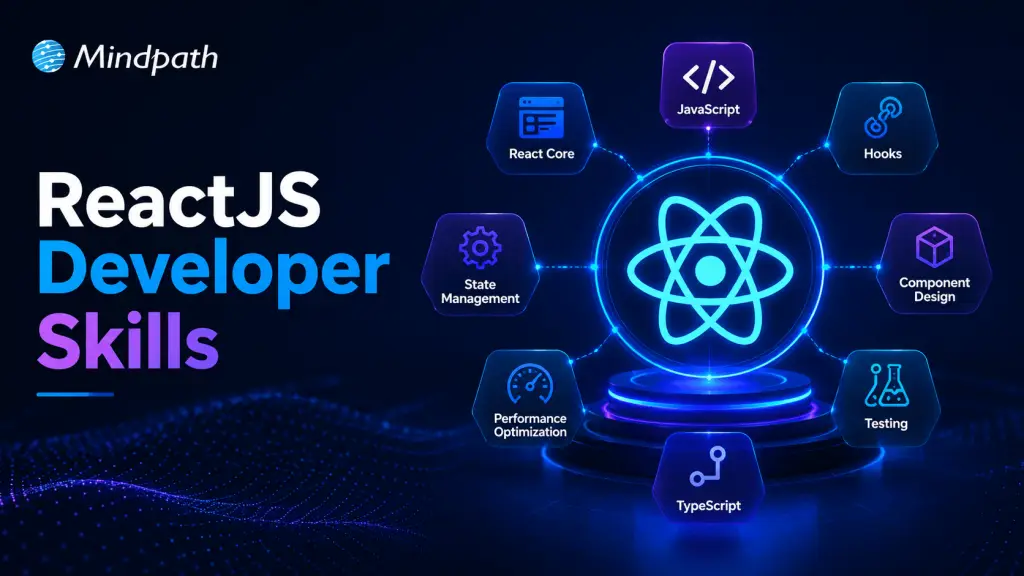
Hiring a ReactJS developers in London requires assessing both technical expertise and practical experience. A skilled developer should be proficient in modern programming languages, frameworks, and tools that enhance development speed and efficiency. Below are the key technical skills to consider when hiring a ReactJS developer.
Need skilled ReactJS developers to build scalable web applications faster? At Mindpath, we offer expert ReactJS developers to help you deliver high-quality, scalable solutions.
1. Programming Languages
A ReactJS developer should be well-versed in JavaScript and TypeScript, which serve as the foundation for React apps. Knowledge of backend languages such as Node.js, Python, or Java is also beneficial for full-stack development since it ensures smooth connection between the frontend and backend.
2. Software Development Frameworks
ReactJS developers should be familiar with React and its ecosystem, which includes Redux, Next.js and React Router. Experience with backend frameworks such as Express.js or Django is advantageous since it enables developers to collaborate quickly across several application levels.
3. Database Management
Understanding SQL (MySQL, PostgreSQL) and NoSQL (MongoDB, Firebase) databases are essential for effective data management. A professional ReactJS developer understands how to organize, retrieve, and optimize data storage for scalability and speed.
4. Cloud Platforms
ReactJS developers that are familiar with cloud services like AWS, Azure, and Google Cloud can deploy, manage, and scale apps more effectively. Cloud expertise enables developers to design serverless computing, CI/CD pipelines, and cost-effective hosting options.
5. Testing & Debugging
ReactJS developers should be knowledgeable with unit testing (Jest, Mocha), integration testing, and debugging tools (Chrome DevTools, React Developer Tools). Testing allows for the early detection of defects, which improves code quality and application stability.
6. API Development and Integration
A proficient ReactJS developer should be able to construct and integrate APIs using REST or GraphQL. API expertise provides effective data transmission between the frontend and backend, resulting in smooth application performance.
7. DevOps Tools
Experience with Docker, Kubernetes, and CI/CD technologies (Jenkins, GitHub Actions) enables ReactJS engineers to automate deployment operations. DevOps expertise ensures that apps are efficiently deployed, scalable, and maintainable. Mindpath offers provides expert ReactJS developers in London with these essential skills, ensuring your projects are delivered with high performance and reliability. Get in touch with us today! today to hire the best talent for your development needs.

Are you looking for skilled ReactJS developers in London to build fast and reliable web applications? Do you need experts who can turn your ideas into seamless user experience? Finding the right developers can be challenging, but the good news is that London has a strong pool of ReactJS talent. In this guide, we’ll help you understand how to hire the best ReactJS developers in London and what to look for in a top-tier developer.
Hiring ReactJS developers in London offers several benefits for firms trying to create modern, high-performance web applications. London has a highly skilled tech talent pool, so you’ll have access to seasoned engineers who are up to speed on the newest ReactJS developments. These specialists can develop apps that are quick, scalable, and easy to use, hence increasing client engagement. Furthermore, collaborating with local developers improves communication, cooperation, and alignment with UK corporate norms.
Need skilled ReactJS developers to build fast, scalable web applications? At Mindpath, we offer experienced ReactJS developers to help you deliver high-quality solutions faster.
London’s thriving digital sector also connects firms to a network of innovation, ranging from startups to established organizations, encouraging cooperation and information exchange. ReactJS developers in London have expertise working with a variety of sectors, allowing them to create solutions that are suited to unique company requirements. Furthermore, they use the best coding techniques to create secure, high-performance apps that stand out in a competitive digital market. Whether you’re a startup or an established business, hiring ReactJS developers in London guarantees that your project will benefit from innovation, efficiency, and high-quality development techniques.
Let’s explore the steps to hire ReactJS Developers in London!
Steps to Hire ReactJS Developers in London
ReactJS is an open-source JavaScript library that was developed by Facebook to create complex and interactive user interfaces for web applications. Since its inception, React has gained massive popularity due to its flexibility, efficiency, and ease of use. By breaking down applications into smaller, manageable components, React enables faster and more streamlined development.
ReactJS is favored by developers because of its modularity, speed, and ability to build scalable, maintainable applications. Whether you’re building a simple landing page or a complex web application, ReactJS offers the tools and functionality to create high-quality, responsive applications. So, why should you hire ReactJS developers? Let’s explore.
1. Define Your Project Needs
Before hiring a ReactJS developer in London, you need to describe your project’s requirements. Begin by determining if you require a developer for a basic website, a large web application, or a comprehensive platform. This aids in the establishment of defined objectives as well as the identification of suitable talent. Once you’ve determined the scope of the project, make a list of the necessary talents. If your project solely requires front-end development, search for people with experience in React, JavaScript, and UI/UX design. If you need full-stack knowledge, make sure they are also familiar with back-end technologies such as Node.js and databases. You can hire the top ReactJS developers in London by clearly describing your project’s requirements. This step guarantees that you recruit someone with the right skills, experience, and understanding to build a high-quality application for your business.
2. Craft a Clear Job Description
When recruiting a ReactJS developer in London, it is essential to provide a clear job description. It helps to attract the ideal candidates by giving crucial facts about the position. Begin by defining the job title and the developer’s tasks, such as creating user interfaces, maintaining state, and integrating APIs. Next, provide the necessary qualifications, such as familiarity with ReactJS, JavaScript, and other similar technologies. If your project requires extra abilities, such as Redux, TypeScript, or Next.js, make them explicit. Also, describe the type of project—whether it’s a web application, mobile app, or enterprise solution—so candidates understand what they will be working on. A well-structured job description not only attracts skilled developers but also ensures they align with your project’s needs, making the hiring process smoother and more efficient.
3. Find Talent Through Multiple Channels
You can look into numerous employment platforms and networks. Begin by using professional networks such as LinkedIn, where you can interact with developers directly, post job vacancies, and participate in relevant tech communities. Networking events and local gatherings can also help you connect with experienced professionals. Use prominent employment portals such as Indeed, Monster, and Hubstaff Talent to reach a larger pool of applicants. These platforms allow you to post thorough job descriptions and screen applicants based on their abilities and expertise. If you require flexible or short-term developers, consider using freelancing markets such as Upwork or Toptal. By utilizing numerous hiring channels, you boost your chances of finding a ReactJS specialist that fulfills your project’s requirements and can deliver high-quality results.
4. Evaluate Technical and Soft Skills
Finding the appropriate ReactJS developer in London involves a thorough screening procedure. Begin by checking resumes and portfolios to determine their experience with React applications. Look for projects that showcase excellent coding abilities, fast UI creation, and a thorough grasp of contemporary frameworks. Next, do technical interviews to determine their understanding of React topics like as components, state management, and hooks. You can also offer real-world coding tasks to watch how they solve difficulties and improve performance. Aside from technical competence, soft skills are also vital. A skilled developer should be able to properly convey ideas, work in teams, and adapt to project needs. Strong cooperation and problem-solving skills guarantee that they can operate effectively in a professional situation. By considering both technical and soft qualities, you can locate a ReactJS developer that not only codes well but also fit well with your team.
5. Offer Competitive Compensation
To recruit the top ReactJS developers in London, you must provide competitive compensation based on market trends and experience levels. Skilled developers are in great demand, therefore offering a reasonable wage can help you stand out from competition. In addition to compensation, consider adding advantages such as remote work choices, incentives, and opportunity for professional advancement. Developers like employment that promote professional development, thus offering training or mentoring can make your offer more enticing. Also, consider the complexity of your project—senior developers may anticipate higher remuneration for complicated applications. A well-balanced pay plan can help you acquire and retain top individuals capable of producing high-quality results.
Looking for skilled ReactJS developers in London? Mindpath connects you with top-tier professionals who can build high-performance web applications tailored to your needs. With expertise in modern React development, our developers ensure fast, scalable, and user-friendly solutions. Let’s bring your project to life – Get in touch with us today!

React has appeared as one of the most efficient libraries for creating dynamic and exceptionally performance-oriented web applications. As per the sources, around 20 million websites are using React at the moment. Giant companies, starting from Facebook, Airbnb, Netflix, Walmart, and Wix, all use React for undeniable engagement and a user-friendly interface.
Key Takeaways
- 01
React’s component-based architecture and virtual DOM support scalable and high-performance web applications. - 02
A reliable development environment and clear project structure help keep React applications manageable as they grow. - 03
Feature-based organization, centralized shared features, and separated business logic improve application scalability. - 04
Choosing the right state management strategy helps maintain consistency as React applications become more complex. - 05
Testing, debugging, code quality, memoisation, code splitting, and lazy loading help maintain performance and stability.
Its incredible state management, component-based architecture, and effective ecosystem have made React a premier choice for building scalable applications. So, in this guide, we will cover everything related to React web application development. Further, we will learn how it can assist you in making your app solely for your audience base.
Planning to upgrade your existing web app with a faster and more interactive interface? Mindpath offers ReactJS development services that help businesses create seamless and user-friendly digital experiences.
Why Do Modern Businesses Demand React Web Application Development?
React is a JavaScript library and is extremely viable for creating dynamic and interactive user interfaces. The element that keeps it unique in the recent digital era is its component-based architecture. This allows you to break complicated UIs into reusable and manageable pieces.
Unlike traditional approaches, where UI updates can be inefficient and slow, React uses a virtual DOM to update only the sections of the interface that actually need changes. This is how you give rise to React web applications. It ensures faster rendering and a smooth user experience. So, if your business wants to achieve long-term growth, the flexibility of React can make it easier for you to add trendy features without rewriting the whole application.
Wondering how to improve rendering speed in large-scale React applications? Discover our ReactJS performance blog to learn advanced optimization techniques for better efficiency.
What are Some Undeniable Fundamentals of React?
React initiates scalable web applications with certain rooted fundamentals as given below.
1. Components
Components are generally the building blocks of an application. They can be class-based or functional. Further, they summarize both the presentation and the logic.
2. Virtual DOM
A virtual DOM is used by React to effectively upgrade and render the useful components. So, instead of re-rendering the whole UI, React initiates the minimum level of changes required. This approach enhances your app’s performance without hampering its existing features.
3. JSX
React uses JSX, and it is an extension of syntax. This allows developers to write code in JavaScript only. So, it becomes seamless for you to visualize and structure the components effectively.
4. Unidirectional Data Flow
This makes the application’s state predictable and easier to debug. So, you can be assured of getting scalable web applications, no matter how many features you want to include in them.
These are some valuable fundamentals or core principles that enable you to manage complexities with your growing application. In order to do this, you can create a strong foundation to get high-performance web applications.
Looking to improve productivity in your React projects? Check out our benefits of ReactJS for web developers blog to learn the core benefits that make development smoother and more scalable.
How to Set Up Your React Web Application Development the Right Way?
Your setup should be extremely precise if you want to leverage long-term values. To create a React app, there are some essential steps you need to follow.
1. Prefer a Reliable Development Environment
To initiate your React web applications, start by choosing a stable code editor and development tools that support modern JavaScript and React workflows. Further, features like debugging support, intelligent code completion, and integrated terminal access can improve your productivity while decreasing the development errors.
2. Get a Clear Project Structure
Streamlining the folders of your project in the early phase can prevent you from getting confused with your codebase’s growth. So, it is necessary to group your files by features and modules instead of the file type. Keep the components and utilities different to maintain their readability.
3. Leverage Modern JavaScript Assistance
React mainly prioritizes the modern JavaScript features. So, it is necessary to ensure support for JSX, ES6+ syntax, and module imports. This will allow you to write cleaner and more manageable code while keeping compatibility with modern browsers.
4. Set up Version Control from the Beginning
With the usage of version control systems, your team can track changes and manage collaboration. Further, you can maintain the stability of the code. With a consistent branching strategy, you can easily scale the development process. For a more valuable approach, you can discover the assistance of professional developers.
5. Integrate Code Quality
Code quality tools help maintain consistent coding rules throughout your team. On the other hand, better formatting can encourage readability while decreasing bugs.
6. Initiate Testing and Debugging
Prioritizing testing rules and debugging rules can help you assess the mistakes from the beginning, before they become massive. So, unit tests and standard debugging rules can help you be assured of your application’s stability with the addition of new features.
Looking to accelerate your React project with the right technical expertise from day one? Read our hire ReactJS developer blog to discover how experienced developers can drive scalable results.
How to Structure Your Scalable Web Applications with React?
If you want to gain scalability for your web application, it is not just about adopting more users. Instead, it includes managing an expanding codebase without piling up more complexities. You can hire ReactJS developers to add features smoothly while restricting confusion and technical errors.
1. Maintain Your Files as Per Their Features
Maintaining your files as per their features can safely segment your styles and components. Accordingly, this element enhances clarity while making the development process easier.
2. Centralize Shared Features
You should store common functions and API services in a single location. So, this decreases the rate of duplication while ensuring consistent behavior across multiple applications.
3. Separate UI Elements from Business Logic
Keeping presentation logic separated from business rules can improve your code readability and reuse. Further, it makes the testing process simple, allowing changes without challenging the interface.
4. Keep Precise Naming Conventions
Consistent naming conventions can make you aware of the codebase instantly. So, it becomes seamless for the growing team, and it also assists the new team members who are assisting with the following project.
This valuable structure improves the efficiency of React web application development to be more result-driven.
Looking to align your business goals with a strong React development plan? Explore React roadmap to deeply understand the roadmap that supports sustainable growth and innovation.
What are Some State Management Strategies to Adopt?
State management becomes very important with the development of your React application, along with its complexities. So, with poor strategies, your development might suffer from inconsistencies and performance risks.
1. Context API
The context API is important for handling data that needs to be accessed by multiple components. It involves user preferences and authenticity. Further, it allows you to prevent risks while keeping the app highly manageable.
2. Local Component State
Local state is highly convenient for handling UI-centric features like form inputs and interface visibility. So, adopting the state closer to your components that use it can encourage readability while restricting inefficient data sharing through the app.
3. External Management of the State
Massive applications with complicated data flows require external state management. It helps maintain consistency throughout the system. Such tools are made to manage asynchronous data.
So, these are valuable state management strategies that can help you build scalable web applications with React effortlessly.
Curious which React advancements can give your business a competitive edge? Dive into ReactJS trends to explore the technologies driving performance and growth.
How to Optimize the Performance of Your Scalable Web Applications?
Being assured of high-performance web applications is necessary to evolve with the changing demands of the users. So, here are some strategies to follow.
1. Memoisation
Wrap all the functional components with React. Memo to safeguard it from irrelevant re-renders when the proper ones have not changed. Further, the inclusion of useMemo and Callback allows you to leverage the potential of handling major calculations. This ensures your app is recomputing when you desire it.
2. Minimize Load Times
You can be assured that only the necessary code is getting loaded when you open the app due to code splitting. This valuable approach also reduces the browser’s extreme JavaScript requirements. Further, it incorporates faster page rendering while keeping the React web application development user-oriented.
3. Enhance User Experience
Lazy loading allows non-essential components to be loaded when you require them. This helps in preventing delays while keeping the scalable web applications intact and performance-driven.
Want expert support to build scalable and high-performance React applications for your business? Discover our React Development Company blog to learn how the right team can turn your vision into reality.
Conclusion
Building a React web application development requires many efficient strategies to keep the app truly serving your business aspects. You need to adopt valuable architecture and the trendiest development practices. React offers a strong foundation due to its component-based design and efficient rendering.
If you implement precisely, React allows your team to create applications that grow seamlessly and perform consistently while meeting the changing business requirements. So, consider Mindpath as your convenient approach, as this company offers an undeniable React development services combined with future-rich web solutions.

React has no doubt changed the way modern web applications are created. This library has become beneficial for many high-profile companies in making their web applications efficient and user-centric. Because of its features like UI elements and component-based architecture, it handles updates effortlessly. As per the trends, React usage has significantly increased, with around 100,000 new websites for better interfaces. But if the complexities of your app grow over time, it might be challenging for you to manage the state.
Key Takeaways
- 01
React state management helps developers manage, share, and update dynamic data across React applications. - 02
React state can be global, local, derived, or server state, depending on how and where the data is used. - 03
Built-in tools such as useState and useReducer can handle many local and complex state management requirements. - 04
External libraries such as Redux can help manage complex global state requirements in larger React applications. - 05
Keeping state simple, splitting it logically, managing side effects, and using debugging tools can improve maintainability and scalability.
So, in this blog, we will go through an in-depth analysis of React state management. No matter if you are a beginner dealing with the struggles of uplifting your state or an experienced developer who is curious about Context API, this guide includes everything for your reference.
What Does ReactJS State Interprets?
A state is an essential object present in React that involves significant data related to a component. It prominently represents the components that might change with time because of some critical events. Unlike props that pass down to child components from parents, the state remains mutable, and you can manage it within the component only.
ReactJS state is a crucial fundamental for giving rise to interactive React components while enabling seamless UI whenever your data changes or adopts certain updates. State is effectively used for conditionally rendering elements or to update form inputs. Further, it traces user interactions like inputs and clicks and stores API responses. Here, you can go through some key characteristics of the state.
1. Enables Re-renders
React is capable of re-rendering a component automatically when it sees changes in the state. This ensures your UI is in sync with the core data.
2. Local Scope
State is generally local to a component, but it can be easily shared with other components with the use of props.
3. Fixed Updates
It is necessary to update the state with the usage of dedicated methods like setState or the useState hook. State objects directly mutating can lead to unpredictable attributes and bugs.
The Core Difference between State and Props
Before we move forward with state management in React, it is necessary to understand how state differs from props.
- Props are generally read-only values that pass down from parent to child components.
- On the other hand, the state is managed within a component and can differ over time.
While props help in passing the data down the component tree, state manages the dynamic data. Moreover, issues arise when the state needs to be shared over multiple components. This leads developers to review how it manages and structures the state precisely.
What Does State Management in React Define?
State management in React refers to how the data or state is managed, shared, or updated in your React app. Further, state management ReactJS ensures that all the valuable components are in sync with the app’s state. This assures the developers of leveraging a seamless user experience.
- You need state management to handle dynamic data and critical UI changes.
- This is also valuable to share your data between the components.
- It ensures the app’s maintainability and scalability.
- Further, it simplifies the debugging and developmental approaches.
What are the Essential Types of ReactJS State?
Not all states available in a React application serve the same purpose. So, it is necessary for you to understand the type of ReactJS state to choose the right one for your management strategies. This will also help you prevent unnecessary complexities when your application grows.
1. Global State
It is shared over multiple components and highlights the data that needs to be accessed throughout the application. Some prominent examples include language preferences, user data, and much more. Further, handling the global state efficiently is viable for large-scale apps, as poor management can ruin your performance.
2. Local State
This state is famous among developers as it helps them manage UI-centric aspects. Moreover, this includes handling input values. You can discover its utmost potential by using React hooks. This keeps the components intact while keeping the handling seamless.
3. Derived State
This state management React is not stored directly, but you can calculate it from the existing state or props. While it minimizes duplication, overusing this state can give rise to severe risks. Further, it makes the debugging practices more challenging.
4. Server State
This state refers to data from external APIs like reports or dashboards. Unlike UI state, server state needs precise handling of loading states along with proper synchronization and caching.
What are Some of the Best Tools for React State Management?
React includes a series of native tools that can be the legit foundation for your app’s state management. Here, you can go through the list of eminent tools that major developers use.
1. UseState
UseState is the simplest way of state management in React. It is highly beneficial for straightforward use cases where data changes within a component locally. However, with the growth of your application, handling several UseState hooks through multiple components can be challenging for you.
2. UseReducer
useReducer can offer you a seamless structure when the state logic invites a series of complexities. It gives rise to a single source of truth and predictable state transitions. Further, your complex workflows can adopt quick and impactful debugging features. useReducer is exceptionally beneficial for multi-step processes, forms, and states that heavily depend on previous values.
External Libraries for Modern React State Management
With the scaling up of applications, developers usually turn to external libraries to handle complex state requirements more efficiently. So, out of all eminent options, Redux has turned out to be a beneficial choice as it handles global state in React apps. Apart from this, it offers a centralized store and predictable state updates. If you want to build large-scale applications, Redux can be a perfect match.
Developers in the recent scenario have shifted their interest towards adopting flexible solutions that can reduce risks while encouraging scalable features. So, some alternatives that you can prefer instead of Redux include state containers and hook-based global state solutions. However, picking the solution completely depends on your team’s experience and requirements.
Tips for Effective State Management in React
To be assured of seamless and valuable state management in ReactJS, you need to approach the process with the right elements. Some effective steps can help you achieve better growth while managing your state precisely.
1. Start Simple
Make sure to never over-architect your application. In fact, make sure to only store values that actually change over time in your React state. Further, your computed data should be calculated when required to avoid inefficiencies of duplication. Moreover, it can reduce the chances of inconsistent data.
2. Lift State Only When Required
You must lift the state to a common parent component only when multiple components need access to similar data.
3. Logically Split State
Instead of handling one large state object, make sure to divide the state into smaller pieces. This approach offers readability while making the updates more user-centric. Moreover, you can prevent your app from uncertain side effects.
4. Maintain the Side Effects Effectively
It is useful to leverage hooks like useEffect only to maintain side effects such as API calls. So, segmenting the side effects from the state logic can assure you of clean and effective components.
5. Use Debugging Tools
To keep your React state management productive, you can leverage tools like React DevTools. This is how you can monitor and debug the changes when required.
What are Some Common Mistakes that a Developer Must Avoid in React State Management?
Experienced developers might commit some mistakes while doing React state management. For your reference, we have mentioned the major ones here.
- Mutating the state directly instead of generating new copies.
- Storing too much state globally.
- Making your simple state logic heavily complex.
- Ignoring essential performance implications.
So, being aware of such challenges can help your React applications to be extremely scalable while maintaining their performance for the user base.
Conclusion
React state management is considered to be the backbone of any successful React app. So, a thoughtful approach towards state management, React combined with the right tools, can help your app to be extremely scalable and enjoyable to work with. Organizations that want to create robust React solutions benefit from teams that understand how React works.
This is where you must prioritize partnership with experienced development partners like Mindpath. Here, the professionals can incorporate their technical aspects to keep your project unique. Further, you can customize your development process to suit your business goals.

Talking about modern web development, scalability has turned out to be a major concern. With the growing complexities and size of your application, its architecture and inclusive technologies should match the pace. This is where React has come out as a famous JavaScript library for creating user interfaces that remain robust. Scalable web development with React is highly adopted due to its ingenious performance and flexibility. As per the recent trends, there are around 2 billion websites available on the internet, and out of these, more than 1.3 million sites have been designed through React. (Source: Click)
Key Takeaways
- 01
React’s component-driven architecture supports reusable and scalable web applications. - 02
Context API and Redux help maintain consistent state management as applications grow. - 03
The virtual DOM helps React update specific interface elements for better performance. - 04
Feature-based structures, logical modules, and smart state management make growing applications easier to maintain. - 05
Lazy loading and automated testing help maintain performance and stability as applications scale.
However, creating a scalable React app requires knowledge beyond basic elements related to the library. You are required to stick to the best practices to ensure your app’s efficiency with its growing customer base. Let us unveil how you can master such abilities in this blog.
Looking to build scalable and user-friendly web applications that keep your business ahead of the competition? At Mindpath, we offers expert ReactJS development services designed to deliver high-performance and future-ready digital solutions.
What Does Scalable Web Development Actually Mean?
Scalable web development ensures your developed app is handling growth without hampering its quality and performance values. In order to do this, your application might encounter growth in many forms, as given below.
- Expansion of your site into new market domains.
- A sudden increase in users to try your services.
- Inclusion of complex features and integration with third-party applications.
So, scalable web applications can easily adapt to such changes seamlessly instead of complete new code rewriting. This is exceptionally necessary in today’s competitive digital environments where speed and reliability directly affect customer experience and retention.
Wondering which React trends are shaping modern web development? Explore emerging ReactJS trends that are shaping the future of scalable web solutions.
Why is ReactJS Development Viable for Scalable Web Applications?
React has emerged as a practical library instead of only being popular. Its effective ecosystem and architecture make it a viable preference for creating scalable web applications.
1. Component-Driven Architecture
ReactJS comes with a component-driven architecture. So, you can easily get its reusability features and independent parts. Each part of the component prioritizes specific functions, which enables you to effortlessly integrate React integrations. With such an approach, the more evolving your application gets, React will ensure the code of your application is intact.
Your team of developers can make necessary changes to the functionalities without redesigning the whole structure of the application. You can also enhance the quality of the code through interactive components. For more goal-oriented elements, you can hire ReactJS developers with years of experience.
2. State Management Along with the Inclusion of Context API and Redux
It is very seamless to maintain state management in React with the usage of tools like Context API and Redux. Due to the state management, you can ensure that your developers keep data consistency on large-scale apps. ReactJS, along with Redux for state management, can minimize code repetition.
This makes the app more manageable and scalable. Moreover, the environment of React ensures the UI components have exclusive data flow. So, with tools like this, your scaling efforts can be easier to handle while keeping the app clean and ready for scaling up.
3. Efficient Performance through Virtual DOM
React uses a virtual DOM to update the parts of the interface that actually change. So, instead of reloading the whole page, ReactJS development ensures updating specific components. Accordingly, it results in faster rendering and incredible performance, even if your application becomes more complex.
This valuable performance optimization plays a critical role in scalable web development with React. This is important for applications that require higher user retention.
4. Exclusive Tools and Ecosystem
Some apps come with built-in server-side rendering that easily improves the performance of your React app. Further, this has safeguarded the flexibility to suit the present development of the app. So, you can easily extend the structure of your application without making any major changes to your current app.
Most importantly, React is backed by a major global community and continuously diversifies its tools. So, starting from routing to performance optimization, the ReactJS development services support long-term growth. This also makes React a safe and future-proof library for developers.
Must Read: Building Scalable Applications with React
How does Create React App Leverage Scalability?
If you want to create React app projects efficiently, CRA offers a seamless starting point. Moreover, it removes configuration risks and sets up a modern development environment quickly. With CRA, you can discover pre-built tools and dedicated development workflows. So, along with your growth needs, you can easily make changes within your projects.
While CRA is specifically designed for small projects, it can also offer an exclusive foundation for large applications when combined with authentic architecture.
Essential Elements to Create Scalable Web Development with React
Scalability is not automatic at all. You need proper planning to execute it. Below, you can go through some proven principles that can offer you long-term success when using React.
1. Target for Growth from the Initial Phase
Many scalability issues happen because applications were built to satisfy immediate requirements. However, they fail to meet the future growth. So, it becomes necessary to plan ahead. You can hire ReactJS developers who can help you structure your folders and define the reusable components. With better knowledge of the concerns, you can make future expansion easier. A well-structured React application grows naturally instead of becoming challenging to maintain.
2. Manage State Smartly
State management becomes more complicated with the scaling up of the application. So, improper handling can give rise to performance issues and unpredictable risks. With structured state management, you can be assured of predictable data flow and reduced unnecessary re-renders. Further, it will be easier for you to debug and make changes as per the requirements of your business. This is very important for scalable web application development with React.
3. Segment the Application into Logical Modules
Your large applications should not feel like one major block of code. With feature-based and module-based structuring, your team can independently work on multiple parts of the app without any conflicts.
4. Enhance Load Times
Your scalable app should adopt the relevance of loading faster, even as it grows with more users. Lazy loading ensures that users download only the code they require at a given moment. This incorporates load speed in the initial phase and user experiences, along with overall performance. Further, scalable web development with React adopts the built-in efficiency of lazy loading.
5. Be Prepared for Testing
With your application growth, it might give rise to undeniable bugs. So, automated testing ensures that new features and elements don’t hamper your existing functionality.
Ready to elevate your React projects with intelligent, user-centric features? Explore the powerful synergy of ReactJS and AI in this in-depth guide.
Why Are Businesses Consistently Investing in Quality ReactJS Development Services?
React is no doubt accessible, but creating a truly scalable system requires extensive knowledge and years of dedicated experience. This is why many businesses are turning to professional ReactJS development services instead of handling everything on their own.
The expert team always offers strategic architecture planning and has great performance optimization knowledge. Further, professionals include industry best practices to ensure your project meets the requirements while assuring faster time to market. This level of expertise ensures your application is built for growth and not just for the launch. Many companies can’t decide when they should hire ReactJS developers. So, you should prefer hiring experts if your demand is long-term growth, frequent updates, or complex workflows.
- Skilled developers can help you stay away from costly rewrites.
- They can design systems that scale seamlessly.
- Professionals offer consistent user experiences and maintain high performance with the demand increase.
Common Challenges You Might Face in Scaling React Applications
Your scaling might come across certain challenges, even with the right tools. Some common issues include poor state management decisions and overly complex component structures. Further, performance issues and impractical coding efforts can also be a risk. These challenges highlight why experienced developers and structured workflows are necessary to be successful with your ReactJS development.
Struggling to find the right ReactJS developers who can scale your web applications efficiently? Explore factors to consider while hiring ReactJS developers for your project to ensure your team is equipped for scalable development.
Conclusion
Choosing the right technology is not enough for you to give rise to a scalable web development with React. It requires smart decision-making abilities and best practices to understand your growth. The flexibility and the robust ecosystem of React make it an excellent choice for creating scalable web applications that adapt to changing business requirements.
So, if you are ready to take a step ahead towards React web development, Mindpath can serve you the values. Here, you can get thoughtful and performance-driven ReactJS development solutions that prioritize usability and scalability. The team approaches every project with a clear understanding and utmost dedication to unique results. So, get ready to support your growth without compromising user experience.
Join our Newsletter!
categories
Join the world's largest training library and unlock new opportunities!
Featured Posts



Turn Insights Into
Real Business Solutions
Exploring trends is only the beginning. Whether you’re planning AI adoption, modernizing legacy systems, or building scalable software, our experts help transform ideas into practical business outcomes.