What Skills to Look for while hiring a ReactJS Developer in London

Join our Newsletter!

Featured Posts

Support Is One Click Away

Home

What Skills to Look for while hiring a ReactJS Developer in London

What Skills to Look for while hiring a ReactJS Developer in London

What Skills to Look for while hiring a ReactJS Developer in London

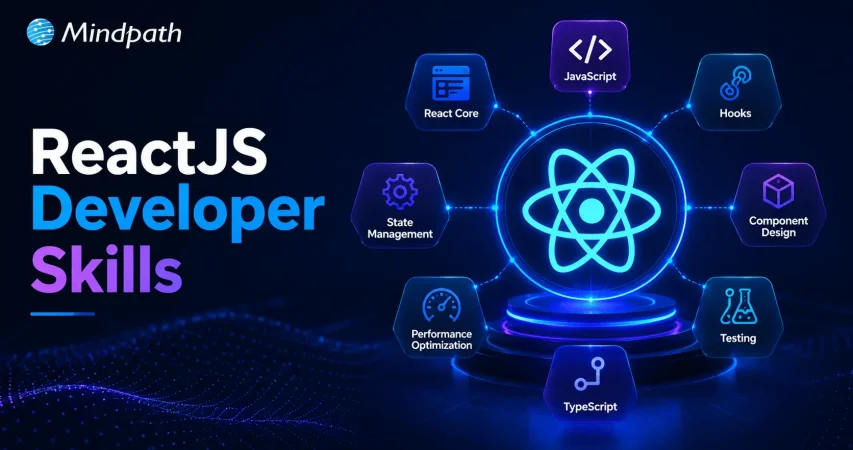
Hiring a ReactJS developers in London requires assessing both technical expertise and practical experience. A skilled developer should be proficient in modern programming languages, frameworks, and tools that enhance development speed and efficiency. Below are the key technical skills to consider when hiring a ReactJS developer. 

1. Programming Languages

A ReactJS developer should be well-versed in JavaScript and TypeScript, which serve as the foundation for React apps. Knowledge of backend languages such as Node.js, Python, or Java is also beneficial for full-stack development since it ensures smooth connection between the frontend and backend. 

2. Software Development Frameworks

ReactJS developers should be familiar with React and its ecosystem, which includes Redux, Next.js and React Router. Experience with backend frameworks such as Express.js or Django is advantageous since it enables developers to collaborate quickly across several application levels.

3. Database Management

Understanding SQL (MySQL, PostgreSQL) and NoSQL (MongoDB, Firebase) databases are essential for effective data management. A professional ReactJS developer understands how to organize, retrieve, and optimize data storage for scalability and speed.

4. Cloud Platforms

ReactJS developers that are familiar with cloud services like AWS, Azure, and Google Cloud can deploy, manage, and scale apps more effectively. Cloud expertise enables developers to design serverless computing, CI/CD pipelines, and cost-effective hosting options.

5. Testing & Debugging

ReactJS developers should be knowledgeable with unit testing (Jest, Mocha), integration testing, and debugging tools (Chrome DevTools, React Developer Tools). Testing allows for the early detection of defects, which improves code quality and application stability.

6. API Development and Integration

A proficient ReactJS developer should be able to construct and integrate APIs using REST or GraphQL. API expertise provides effective data transmission between the frontend and backend, resulting in smooth application performance.

7. DevOps Tools

Experience with Docker, Kubernetes, and CI/CD technologies (Jenkins, GitHub Actions) enables ReactJS engineers to automate deployment operations. DevOps expertise ensures that apps are efficiently deployed, scalable, and maintainable.
Mindpath offers provides expert ReactJS developers in London with these essential skills, ensuring your projects are delivered with high performance and reliability. Get in touch with us today! today to hire the best talent for your development needs. 

Related Post

Discover how AI is transforming the world. Explore the top 10 benefits of artificial intelligence, from solving complex problems to enhancing customer experiences.
How much does hiring a ReactJS developer cost? Learn about factors affecting rates, and how to find the best talent within your budget.

Related Post

legacy system modernization

The term legacy system modernization may seem complicated, but it is what every expanding business has to deal with. You invest in those tools that have propelled success in the past, but now they are dragging down and narrowing the scope of visibility. Teams face the challenge of manual procedures, lack of connectivity in data and increased maintenance expenses. Then what occurs when the leadership chooses to take an action and reconsider the core system?

In this case study, we examine how a strategic technology change resulted in better speed, accuracy and teamwork. Firstly, we evaluated the gaps and aligned them to business objectives. Then, we developed an effective roadmap with quantifiable outcomes. As you continue to read, you will understand how the right approach managed to turn things around and bring 40 percent efficiency gains in this blog.

Looking to turn your old systems into a real advantage? Mindpath’s legacy modernization services make it possible to upgrade and optimize your applications without losing what already works.

Understanding the Existing Legacy Environment and Core Bottlenecks

The legacy system modernization is laid on a clear understanding of the current environment. Before planning change, teams need to examine architecture, integrations, and data structure. They inspect the quality of the code, system behavior, and dependency. This action minimizes risk, safeguards business continuity, as well as informed technical decisions.

Legacy software upgrade projects start with technological mapping and discovery. Leaders evaluate work processes, ownership, and departmental impact. They also review the quality of documentation and criticality of the systems.

These are the fundamental bottlenecks of legacy environments that normally reappear in the course of this evaluation:

  • High maintenance expenses that absorb the bulk of IT budgets and require infrequent and specialized skills.
  • Lack of scalability, which inhibits performance with increased business workloads.
  • Data silos which isolate the information and introduce redundancy or inconsistency.
  • Poor security as a result of old patches and incompatible systems.
  • Integration obstacles that do not allow to connect easily with modern APIs and cloud services.
  • Key person dependency that leads to operational risk when a limited group of people has the knowledge.

Want to understand how legacy modernization can directly improve your operational efficiency? Explore the benefits of modernizing legacy systems to see how it drives real business impact.

Mindpath’s Project Brief for Legacy System Modernization

This Legacy Modernization case study centers on an education platform based in Johannesburg, South Africa. The client has been supporting pre nursery institutions and he had to modernize the current system to enhance efficiency and scale. Their previous solution was based on manual tracking and separate tools that hindered visibility and slowed administrative procedures.

The project brief was based on the creation of a SaaS platform with the help of React JS and Node JS. The aim was to digitalize the system of attendance management and monitoring of daily activities and providing the teachers and principals with a centralized dashboard. The platform had to produce weekly and monthly reports and enable long-term growth.

Key Challenges in the Existing System

As the platform continued to grow, the areas of operation became more exposed. The current system was unable to accommodate the emerging administrative requirements and reporting demands. These problems generated evident pressure towards institutional modernization.

  • The physical method of attendance tracking was time consuming and it had more human error. These inefficiencies clearly signaled the need for legacy system modernization.
  • The data of student activity were still distributed across various records. This slowed down and irregular weekly and monthly reporting.
  • Real time monitoring was lacking a centralized dashboard. Principals in schools could not have immediate access to classroom performance.
  • The current architecture was not capable of scaling as the number of students increased. There was a greater danger of system performance issues following increasing usage.
  • Obsolete work processes were a bottleneck to automation and flexibility. This slowed progress toward effective IT system modernization.

Wondering how AI can make your legacy modernization strategy more effective? Discover AI-driven legacy system modernization to achieve higher efficiency and innovation.

How Mindpath’s Legacy System Modernization Transformed Operations?

Mindpath used a methodical strategy of scalability and operational visibility in the long term. The goal was to convert existing limitations into measurable legacy modernization benefits while strengthening the platform foundation.

1. Automated Attendance Management

Mindpath has eliminated the manual attendance procedures using a digital system designed with accuracy and speed. The teachers were able to record the attendance real-time in the platform. This minimized the mistakes and enhanced the efficiency of day-to-day classrooms.

2. Centralized Activity Dashboard

An integrated dashboard offered real time access to the activities of the students. Principals and teachers got a weekly and monthly report in a single form. This enhanced openness and quicker decision making.

3. Scalable SaaS Architecture

The team rebuilt the system using a strong Application modernization strategy aligned with future growth goals. The new architecture was able to support more users without degradation in performance. This guaranteed a stable operation when the institutions were growing.

4. Data Consolidation and Reporting Accuracy

Mindpath also eradicated the issue of fragmented records of data by centralising information in a system. Reporting became systematic and simple to produce. This delivered clear legacy modernization benefits through improved data reliability.

5. Improved Administrative Control

Organized work processes optimized the exchange of information between teachers and management. The platform minimized reliance on the manual coordination. As a result, legacy system modernization directly enhanced operational control and productivity.

Wondering how businesses turn legacy challenges into measurable success? Explore the legacy modernization strategy to build a roadmap for efficiency and growth.

Measurable Outcomes and Business Impact

Mindpath’s structured legacy system modernization approach delivered clear and measurable improvements. The system was changed to automated intelligence rather than manual reliance, generating instant operational profits.

1. 40% Increase in Operational Efficiency

Computerized attendance and work processes minimized administrative workload. The teachers were able to save time each day, which was spent on engaging with the students and enhancing classroom standards.

2. Faster Report Generation

The centralized dashboard made weekly and monthly reports immediately available. School principals were able to gain real time information without time-delays in manual compiling.

3. Improved Data Accuracy

Online tracing eradicated discrepancies that occurred during manual records. Stabilized information enhanced the credibility and fortified the decision making of the institutions.

4. Scalable SaaS Growth Foundation

The new architecture provided the ability to add more users, without any performance problems. The platform is now able to take care of growth with confidence and safe and secure operations.

Planning to improve your systems with a structured approach like this case study? Discover the legacy modernization roadmap to streamline your modernization journey.

Ready to Strengthen Your Operations with Legacy System Modernization?

The case study shows the potential use of a targeted approach to change aging systems into effective digital platforms. Planning and scalable architecture result in quantifiable improvement. Legacy system modernization strengthens performance, improves visibility, and supports growth. Modernizing organizations creates a deeper operational base and helps them remain competitive in the changing markets.

Mindpath is a structured legacy modernization service provider that is based on business priorities and system complexity. The team analyses current environments, establishes effective road maps and introduces scalable solutions with the current technologies. Each interaction aims at quantifiable action, business effectiveness, and sustainability, as measured by the practical implementation and established competencies.

FAQs

1. How does legacy system modernization support long-term digital growth? 

Legacy system modernization builds a technology foundation that supports continuous innovation. It prepares businesses for automation, analytics, and cloud adoption. Instead of reacting to system failures, organizations gain control over performance and scalability. This proactive approach strengthens resilience and enables confident expansion into new services.

2. What risks should leadership consider before starting modernization?

Leaders should evaluate data migration risks, system downtime impact, and stakeholder readiness. Poor planning can disrupt daily operations. Clear communication, phased execution, and expert technical oversight reduce uncertainty. Strategic governance ensures modernization aligns with financial goals and long-term operational priorities.

3. How did Mindpath ensure alignment between business goals and technology decisions?

Mindpath began with structured discovery sessions and operational analysis. The team mapped business objectives against technical capabilities before defining the modernization roadmap. This alignment ensured each upgrade supported measurable outcomes. Clear milestones and validation checkpoints-maintained transparency throughout execution.

4. What technical advantages do React JS and Node JS provide in modernization projects?

React JS enables responsive user interfaces with efficient component reuse. Node JS supports scalable backend performance with lightweight architecture. Together, they create fast, modular SaaS platforms. This combination improves speed, flexibility, and integration readiness for modern digital ecosystems.

5. How can SaaS platforms maintain stability during phased modernization?

Phased execution reduces disruption by upgrading modules in controlled stages. Teams isolate critical services, test integrations carefully, and monitor performance continuously. This method protects user experience while improvements roll out. Strong DevOps practices and version control ensure system reliability throughout transformation.

AI in E-commerce

Have you ever wondered how some online stores seem to know exactly what you want? What if your shopping experience could be personalized just for you, making it faster and easier than ever? As AI continues to evolve, it’s transforming e-commerce in ways we never thought possible. How is this technology changing the way we shop, interact with brands, and make purchases? In this blog, we will explore how AI is reshaping e-commerce and what it means for the future of online shopping. 

The term artificial intelligence, or AI, describes computer programs created to carry out operations that normally call for human intellect. This includes understanding speech, decision-making, and pattern recognition. Artificial Intelligence (AI) comprises several technologies, including natural language processing (NLP), deep learning, and machine learning. 

Artificial intelligence (AI) plays a key role in e-commerce today, revolutionizing how firms run and connect with customers. E-commerce companies can employ AI to better make decisions and improve the entire buying experience by using user data. AI is a vital tool in the rapidly changing world of e-commerce since it helps online companies remain competitive and adapt to shifting customer requirements. 

Want to know more? Let’s dig in! 

How is AI Transforming E-commerce?

1. Automating Customer Help

Chatbots and virtual assistants are fantastic for offering customer care online. They make use of artificial intelligence (AI) to determine the needs of customers. Natural language processing (NLP) is the ability for chatbots to understand queries and requests. They learn and become more skilled at serving clients as they engage with them more. 

Chatbots are a great resource for customers and online retailers alike. They never require a break and are constantly accessible, even late at night. They are polite, calm, and typically know the answers to a lot of queries. They take care of basic questions so that human agents can concentrate on more complex problems. Recent advancements in AI have made chatbots even more intelligent, which gives customers greater confidence when interacting with them. Many customers are willing to purchase goods from chatbots, particularly since some of those can offer exclusive offers just for them. 

2. Reducing Manual Work

Artificial intelligence (AI) is revolutionizing e-commerce by replacing routine everyday operations that usually call for human labor. This change lessens the need for a big workforce while enabling organizations to run more effectively. 

While it is unfortunate that automation can result in the loss of certain retail associates, many businesses believe artificial intelligence (AI) offers more opportunities for cost savings and productivity gains. Businesses can optimize their processes and lower human error by entrusting AI with routine jobs. Over time, this can result in clients receiving faster service and having a more responsive purchasing experience. So, adopting AI will ensure that employees can participate in more meaningful ways and help e-commerce businesses prosper in a competitive marketplace. 

3. Preventing Online Fraud

E-commerce businesses face a serious threat from online fraud, which costs them billions of dollars annually. Thankfully, AI offers sophisticated methods to address this issue. Machine learning algorithms have made the task of manually reviewing transactions for unusual patterns, which once required a large number of personnel, faster and simpler. 

To identify suspicious activity, these algorithms can instantly evaluate millions of data points. An AI system can detect abnormalities rapidly, such as when someone tries to commit fraud by inputting the wrong delivery address and flags the entry for evaluation.  E-commerce companies can drastically lower financial losses and safeguard both themselves and their clients from fraud by utilizing AI for fraud detection. This makes everyone’s online buying experience safer. 

4. Smart Recommendations

AI-driven recommendations raise the bar for personalization in online shopping. AI is able to examine a customer’s browsing history, previous purchases, and even their interactions with items, unlike traditional businesses. This makes it possible for AI to make tailored product recommendations and anticipate what a buyer might be interested in. 

Customers will find shopping easier and more fun thanks to these very accurate recommendations that are customized to everyone’s tastes. AI helps buyers find the proper items by making relevant suggestions; this increases the likelihood of a purchase and improves the entire shopping experience. Brick and mortar establishments are just unable to match this level of customization. 

5. Easy Cross-Selling

AI enables e-commerce companies to provide customers with product recommendations while they buy. AI can employ their past purchases and preferences to suggest relevant products that customers might like to add to their basket while they are checking out. Businesses can more easily provide appropriate ideas by deploying AI-powered recommendation engines, which leverage data on frequently purchased goods. Customers are encouraged to purchase more as a result, increasing revenues through upselling and cross-selling without being intrusive.

6. Personalized Shopping

Personalization is essential in e-commerce to provide a customized purchasing experience for each unique client. Customization strengthens the bond with clients, encouraging loyalty and improving the pleasure of buying. Personalized experiences are increasingly expected by many customers, but not all merchants have completely integrated them into their platforms. 

AI has greatly enhanced the personalization of e-commerce by analyzing vast volumes of user data and providing real-time insights. This enables websites to function as personal shopping advisors by making product recommendations and presenting customized discounts. Through customization of the purchasing experience, businesses can raise revenue and establish enduring bonds with their customers. 

AI Development Services at Mindpath

At Mindpath, we offer AI development services that help businesses use the power of artificial intelligence to improve their operations. Our team creates AI solutions tailored to your needs, whether it’s automating tasks, analyzing large amounts of data, or improving customer experiences.  We use advanced AI technologies like machine learning and natural language processing to build smart systems that can make decisions, learn from data, and solve complex problems. With Mindpath’s AI development services, your business can become more efficient, make better decisions, and stay ahead of the competition in the fast-changing digital world. 

Wrapping Up!

Artificial Intelligence is rapidly transforming the e-commerce landscape, making shopping experiences more personalized, efficient, and secure. From automating customer support to offering personalized recommendations, AI has become an essential tool for businesses looking to stay competitive and meet evolving customer expectations. As AI technology continues to advance, its impact on e-commerce will only grow, offering endless possibilities for innovation and enhanced customer satisfaction. Partner with Mindpath today to leverage AI’s power and drive your e-commerce success into the future. 

Ready to transform your e-commerce business with the power of AI?

At Mindpath, we specialize in creating intelligent solutions tailored to your needs.

Transform your e-commerce business with AI solutions from Mindpath. Enhance customer experience, boost efficiency, and drive growth with smart technology.
Web Development Costs

Understanding the web development costs is a significant question many businesses struggle with before initiating a project. Web development is the easiest way to make your products and services connect with global audiences. In fact, entrepreneurs are well aware of the profitable aspects and booming growth they can adopt through the online market. Talking about the trends, progressive web applications are growing fastest at a CAGR of 14.00%. Moreover, around 71% of businesses already have a website. 

So, it becomes necessary for you to understand how much a web development costs. For your information, there are numerous factors that influence the cost of web development. This guide can help you with a complete breakdown, no matter if you are starting from scratch or have a small budget. 

Planning to build a website and need a clear cost roadmap? Mindpath delivers scalable web development services designed to fit your business goals.

What Does the Web Development Cost Include?

Before you get into the web development costs, it is necessary to research your competitors and how uniquely you need to develop your site. Moreover, developing a good and reliable website is not just about writing code or initiating good designs. The total website development cost breakdown is dependent on your website’s structure. 

Further, you need to be considerate about the functionality, technology stack, and the requirements for post-launch support. Here are some quick factors that influence the web development prices

1. Type of website

A static website might cost you less than an interactive SaaS project.

2. Technology Stack

Use of leading frameworks like Laravel, React, or Next.js can increase the development timeline along with their charges. 

3. Customization Values

If your website is developed with a pre-built template, the cost will be much lower. On the other hand, custom approaches can heighten the price range. 

4. Development Approach

If you are valuing the expertise of a professional web development company, the development charges will be higher than those for a freelancer. However, the projects from a certified company always win in the competitive edge. 

Curious why some web projects cost more than others? Discover web development tools and see how technology choices influence productivity and expenses.

What are the Average Web Development Costs for Multiple Industries?

The average web development cost majorly depends on the type of website you are relying on. Further, it also depends on the way you are creating and launching it. 

1. Small Business

A small website development cost generally falls between USD 1000 and USD 10,000. Basically, it will include 5 to 10 pages, including content management systems such as WordPress. Moreover, there will be some useful features like service pages, contact forms for reaching the business, along with mobile responsiveness. 

So, if you are serving locally or a startup business, this web development pricing can be useful. 

2. Corporate Operations

A corporate website will include some good features like ERP integrations and scalable architecture.  So, for such a business, the web development costs will be around USD 10,000 to USD 50,000. 

Such a price range offers proper performance optimization and user engagement. Further, it also enhances a business’s reach on global platforms while including many advanced options in it. 

3. E-commerce Sites

When it comes to e-commerce sites, the cost of web page development automatically heightens. Further, the cost breakdown depends on your catalog size, custom product pages, payment gateway integration, and shipping management systems. 

Many users also consider building their entry-level store through platforms like WooCommerce and Shopify. However, a completely customized e-commerce website can range up to USD 50,000. This will cover all types of essentials, such as automating the inventory management and multi-vendor benefits. To enhance your customer experience, you should be careful about the project’s security. 

4. Custom Web Applications

The overall cost of custom web development will fall in the range of USD 25,000 to USD 160,000. Your web application will include several important platforms like booking engines, SaaS products, real-time dashboards, and internal management systems. 

These are some custom solutions that need to be built from scratch and require advanced backend architecture, API integration, scalable database, etc. The web application development is comparatively challenging and requires the involvement of experts. 

This is the general idea about the average web development costs for multiple business types. So, the costs might vary depending on the various requirements of your projects. 

Looking to understand how emerging trends affect web development costs? Check out the latest web development trends to see how new technologies and practices influence project scope.

Website Development Cost Breakdown as Per the Types

You must be aware of the fact that every website has its unique development scope. So, the web development prices generally depend on your site’s functionality, complexity, and the intended need of the project. Here, you can go through the expected cost of web page development

Web Development Type Key Functions Development Phase Estimated Cost 

Basic Clean and understandable UI, contact forms, page navigation, search tools, etc., 6 to 12 weeks, USD 10,000 to USD 20,000. 

Standard User interaction, seamless content management, API usage, database support, etc., 3 to 6 months USD 20,000 to USD 45,000. 

Advanced High-level data flow, custom modules, real-time functionality, etc., 12 months plus. Starts at USD 50,000 and increases with custom inclusions. 

Planning your web development budget more effectively? Explore web development technologies to see how choosing the right stack affects cost and performance.

Website Development Cost As Per the Chosen Experts

There are multiple options available in the market to personalize your web development. Let us explore some valuable vendor types that have been offering the best web development costs while enhancing the facilities through viable inclusions. 

1. Team of Expert Web Developers

Hiring a professional web development team can be the best option available in the market. However, you might think it is an expensive investment. But remember that this option offers the highest level of security. 

Apart from this, these agencies consist of experienced people who can easily customize your projects as per your business goals. Such companies can help you with an accelerated web development process. Apart from leveraging design and developmental solutions, they also ensure website maintenance while developing a marketing strategy. The web development pricing of the full-fledged agencies will be around USD 15000 to USD 150,000 and more. 

2. In-house Development Team

Creating your own web development team offers you the advantage of having dedicated professionals at your fingertips. However, the process can be resource-intensive and time-consuming. You need to be assured of effective management and create a positive work environment. Other than this, it can be challenging for you to find candidates who match your required skills and budget. 

Remember that an in-house web development team is necessary if the website is essential to your business. The average web development cost of these experts can be between USD 80,000 and USD 200,000 per year. 

3. Freelance Developers

Freelancers will charge you around USD 15 to USD 80 per hour. They are the only viable options that come within a small budget. They are best suited for your small websites, MVPs, or any budget-centric projects. Further, they offer flexibility with the contracts and easily scale the tasks. 

4. DIY Efforts

Many businesses just take the challenge to create their website on their own. However, it takes high skills and commitment. The process remains slower, and you might commit mistakes that your business can’t bear at all. 

Curious how web development costs compare to full-scale software projects? Discover software development cost insights to understand long-term budgeting and investment planning.

How to Pick the Best Web Development Partner?

If you require your development process to be effective enough, only prioritizing the website development cost breakdown is not enough. You need to prefer the right development team or company that can make your project a success. Moreover, they should satiate your budget without being a burden on your pockets. 

A right development partner should meet your budget, business requirements, and technical needs. So, you should look for experts who have good experience with your project type and industry. The experts should follow clear communication while being transparent regarding their process and charges. They should offer a detailed proposal regarding their web development pricing. So, no matter if you are choosing a professional agency or a freelancer, just be assured of their support and clarity. 

What are Some Ongoing Costs that you might experience after a Website Launch?

Launching a site is just half of your journey. There are other elements related to it that can proceed with ongoing costs. Some of the major ones have been listed below. 

1. Hosting Charges

Hosting charges usually come on an annual or a monthly basis. Shared hosting can be a bit approachable, while cloud hosting might hamper your budget. 

2. Maintenance Efforts

To let your website offer desirable results, you need to continuously test its performance and fix bugs when required. 

3. Support Packages

Your company might require support packages from web developers to keep the website performance-oriented. 

Want to avoid unexpected web development costs? Check out the web development roadmap to understand project milestones and cost drivers.

Conclusion

It is a great thing to understand the website development cost breakdown before you think about any project. This can help you set clear goals while maintaining your budget. On the other hand, costs differ as per your goals, industry, requirements, and complexity of your projects. Breakdowns available in this guide can help you plan your projects with clarity. A well-defined budget with a solid plan can help you prevent your company from costly surprises and help your website to fulfil your business goals precisely. 

So, if you are ready to experience the next step with a personalized cost estimation and strategy customized specifically for your business needs, consider the excellence of Mindpath’s web development services. Here, the team can help you build a website that can match your vision while pushing you ahead in the market.