How Much Does It Cost to Hire a ReactJS Developer in London?

Join our Newsletter!

Featured Posts

Support Is One Click Away

Home

How Much Does It Cost to Hire a ReactJS Developer in London?

How Much Does It Cost to Hire a ReactJS Developer in London?

How Much Does It Cost to Hire a ReactJS Developer in London?

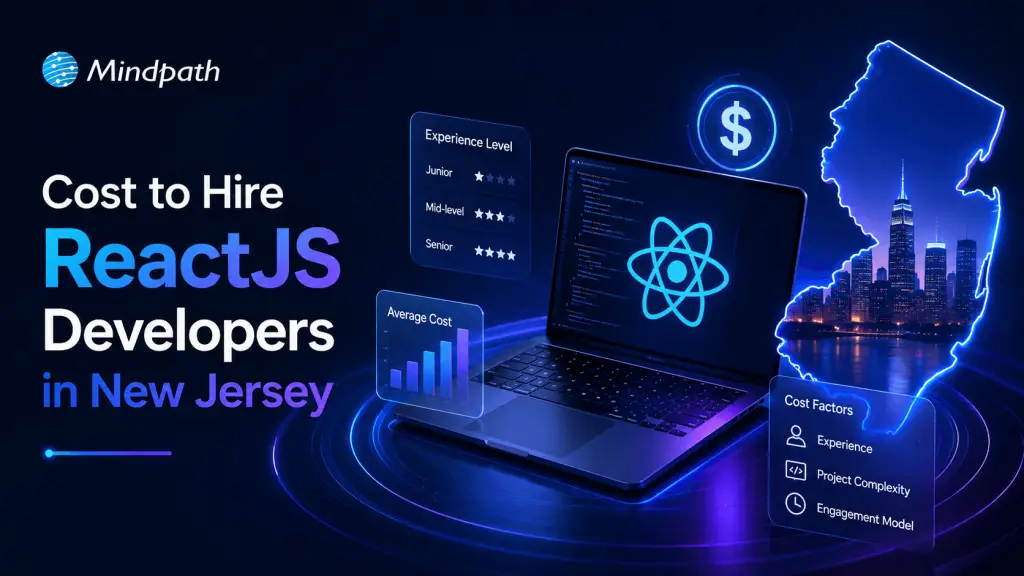
The cost of hiring a ReactJS developers in London  varies depending on experience, competence, and the hiring strategy. Understanding wage expectations allows you to make a knowledgeable recruiting decision, whether you require a junior developer for simple duties or a senior developer for more complicated projects. Here’s a quick overview of the various kinds of ReactJS developers and their prices: 

1. Junior React Developers (£32,450 - £52,320+ annually)

Junior developers often have 1-2 years of experience, making them appropriate for simple projects, UI changes, and tiny feature implementations. They need supervision from seasoned developers yet can execute entry-level work effectively. Hiring a junior developer is a cost-effective solution for tasks that do not require extensive technical knowledge.

2. Mid-Level React Developers (£52,320 - £78,650+ annually)

Mid-level developers have 3-5 years of experience and can manage moderate to difficult projects. They have extensive technical knowledge, operate autonomously, and maximize performance. Suitable for enterprises who want skilled developers to create scalable React apps at a lesser cost than recruiting senior specialists.

3. Senior React Developers (£78,650 - £103,000+ year)

Senior developers have over 5 years of expertise in advanced development, architectural design, and team management. They address challenging technological issues and assure high-performance applications. If your project necessitates React, state management, performance optimization, and leadership skills, hiring a senior React developer is a wise decision.

4. Dedicated React Developers (£30–£100 per hour)

Dedicated React developers work on an hourly basis, allowing you flexibility on short-term or specialized projects. Their fees vary depending on their level of experience and the intricacy of the job. This solution is perfect if you want a specialist for certain tasks without hiring a full-time staff, making it a cost-effective alternative.

5. Offshore React Developers (£15 – £40 per hour)

Offshore developers from regions like India, Ukraine, and Eastern Europe offer a cost-effective alternative while maintaining high-quality standards. Offshore hiring allows you to reduce development costs without compromising on expertise. This is a great option for startups or businesses looking for affordable, scalable solutions.
At Mindpath we provide highly skilled ReactJS developers to match your project needs and budget.   Get in touch with us today! today to find the right talent for your React development. 

Related Post

Related Post

Generative AI in Manufacturing

Have you ever wondered how manufacturing could become faster, smarter, and more innovative? Imagine a factory where machines design better products, optimize processes, and predict issues before they happen. Sounds futuristic, right? In this blog, we will explore the use cases of GenAI in Manufacturing! 

Generative artificial intelligence (generative AI) is a form of AI capable of producing new content and ideas, such as conversations, stories, images, videos, and music. AI technologies aim to replicate human intelligence in nontraditional computer tasks such as image identification, natural language processing (NLP), and translation. Generative AI represents the next phase in artificial intelligence. You can teach it to understand human language, programming languages, art, chemistry, biology, or any other complicated topic. It leverages previously trained data to tackle new issues.  

Generative AI is emerging as a game changer in manufacturing, providing solutions that go beyond typical automation. It enables organizations to build smarter products, optimize operations, and minimize waste, all while lowering costs and saving time. Generative AI is propelling the industrial industry towards a more sustainable and competitive future by allowing for speedier innovation and more efficiency. 

Let’s dive in to explore more about Generative AI use cases in Manufacturing! 

Generative AI Use Cases in Manufacturing

1. Enhancing Quality Control

Generative AI is revolutionizing manufacturing quality control by allowing for proactive issue discovery and solutions. Traditional approaches frequently fail to detect subtle equipment faults, relying mainly on personal observation and knowledge. Generative AI closes this gap by providing improved capabilities that simplify the process. 

Manufacturing gear is equipped with sensors that collect operating data on a regular basis. Generative AI systems analyze this data in real time, detecting even little abnormalities that can indicate a problem. This proactive strategy enables manufacturers to solve issues before they worsen, decreasing downtime and minimizing costly disruptions. Generative AI promotes smooth manufacturing processes and consistent product quality by giving real-time warnings and intelligent insight. Its capacity to self-monitor and immediately report faults makes it a vital tool for ensuring operational excellence in production. 

2. Improving Customer Support

Generative AI is changing the way manufacturers interact with their customers by offering seamless, human-like service. It can respond to customer questions, provide product details, and provide help around-the-clock, serving as a virtual agent to guarantee that clients always get timely assistance. By taking over basic requests, generative AI frees up human customer support teams to focus on more difficult duties. This increases efficiency and productivity while still ensuring high-quality client encounters. 

Generative AI also analyses massive volumes of client data, including comments, preferences, and purchase history. Using this information, it can tailor suggestions, improve user experiences, and anticipate possible problems. With its capacity to learn from each encounter, generative AI constantly improves its replies, making customer service more precise and personalized over time. This not only improves customer satisfaction but also strengthens connections and loyalty. 

3. Streamlining Knowledge Management

In manufacturing, expansion frequently results in fragmented systems and procedures, making it difficult for personnel to access the information they want. Generative AI, such as ChatGPT-powered workplace knowledge bots, provides a solution for improving efficiency and facilitating access to vital information. These AI-powered bots can swiftly search through large databases, such as product manuals and corporate procedures, to deliver exact responses to employee queries. By centralizing information, they save time searching and allow staff to focus on more important activities. 

Generative AI also adjusts and learns from new data, ensuring that the information it gives is always relevant and up to date. Furthermore, it can extract insights from historical systems even when documentation is lacking, allowing manufacturers to conserve and leverage their collected expertise.  This sophisticated knowledge management leads to faster decision-making, smoother operations, and a culture of continuous improvement, all of which are essential components of success in the competitive manufacturing business. 

4. Advancing Product Design

Generative AI is revolutionizing product design by utilizing machine learning to investigate infinite design options. Engineers begin by establishing specific objectives, such as increasing efficiency, lowering weight, optimizing materials, or satisfying performance standards. Artificial intelligence then creates a diverse set of design possibilities, including unorthodox solutions that might not be evident to human designers. The AI refines its results via iterative learning, always improving until it finds the most effective design. This method allows for speedier innovation, resulting in goods that are not only cost-effective and high performing, but also distinctive and adapted to individual requirements. Generative AI enables manufacturers to push the frontiers of innovation and usefulness, establishing them as industry leaders while drastically reducing product development time and costs. 

5. Optimizing Machine Operations

Generative AI is revolutionizing machine automation in manufacturing by analyzing massive volumes of operational and performance data to optimize operations. Machines equipped with sensors collect data on anything from equipment health to supply chain efficiency, which is then used to train AI models that increase performance. 

One important use is estimating Overall Equipment Effectiveness (OEE), an essential indicator for evaluating the effectiveness of industrial processes. OEE is calculated using three factors: availability, performance, and quality, which are impacted by measures such as run time, downtime, speed, and output. Generative AI models analyze real-time sensor data to improve the accuracy of OEE estimates and discover abnormalities that can indicate difficulties, such as unexpected downtime or quality concerns. By constantly learning from operational data, these AI solutions improve machine performance, decrease waste, and assure smoother, more effective production processes. As generative AI evolves, its role in business optimization will expand, creating more chances for improvement in industrial operations. 

Also Read: GenAI in Retail & E-Commerce

AI Development Services at Mindpath

Mindpath provides experienced Generative AI development services to assist your organization innovate and enhance productivity. Our team employs powerful AI models to develop solutions that can revolutionize the way you design goods, manage operations, and communicate with customers. Our generative AI systems can help you automate processes, improve customer service, and optimize product designs. We collaborate closely with you to understand your company objectives and create AI-powered solutions that address your particular requirements. With Mindpath’s Generative AI services, you can explore new ideas, increase productivity, and remain ahead of the competition. 

Final Thought!

Generative AI is definitely reshaping the future of manufacturing by providing strong solutions for optimizing processes, improving quality control, and driving innovation. From improved product design to automated customer service, cutting-edge technology is assisting manufacturers in streamlining operations, lowering costs, and increasing productivity. Businesses that integrate generative AI into their operations can not only remain competitive but also lead the route for the industry’s future. 

At Mindpath, we are dedicated to achieving the full potential of generative AI to help your company discover new opportunities. With our bespoke AI development services, we enable businesses to innovate, optimize, and prosper in an ever-changing environment. Let us assist you in transforming your production processes and propelling your organization to new heights. 

Ready to transform your manufacturing processes with Generative AI?

Partner with Mindpath today to explore customized AI solutions that drive innovation and efficiency!

Discover how Generative AI is revolutionizing manufacturing with smarter designs, enhanced operations, quality control, and customer support.
Advantages of Nodejs

In today’s digital-first world, creating applications that are fast, responsive, and scalable is vital for business success. And for this, they need to choose the right technology stack as it can make or break their custom application. Among the many options available to choose from, the advantages of Node.js make it a standout option for modern businesses aiming for speed, agility as well and development efficiency. 

Since its launch in 2009 by Ryan Dahl, this backend technology has transformed how developers create scalable, fast, and real-time web applications, supporting continuous innovation across different industries. But what makes Node.js a standout choice among businesses?

In this blog, we will explore Node’s advantages and understand what it is used for. Besides, we will discuss the pros and cons of Node.js so that you can make an informed decision. 

Want to implement these advantages of Node.js into your business? Mindpath Node.js development services will guide you every step of the way on how to create a high-performing web application tailored to your business needs.

Evolution of Node.js

Before diving deep into its advantages, let’s understand how Node.js has evolved. This will help businesses appreciate their current abilities and future potential. 

The evolution of this backend tech has been a rapid journey from a simple experimental project to a mainstream web development technology. 

1. 2009

Ryan Dahl introduced Node.js. The initial aim was to offer high-performance servers through JavaScript’s V8 engine. 

2. Early 2010s

The NPM or Node Package Manager was created. It became the largest software registry ecosystem, accelerating web development projects. 

3. Mid 2010s

Socket.io and Express were launched, and in 2011, NPM 1.0 was introduced. In 2014, the project went through some major governance changes. 

4. 2015 to 2020

In 2017, when security became a top priority, HTTP/2 and Node.js 8 were launched. During that time, NPM witnessed more than 3 billion downloads.  ES modules and Node 10 were introduced in 2018. NPM was acquired by GitHub in 2020.

5. 2020 – Present

Node 16 was launched in 2021. LTS version 18 was introduced in 2022. The launch of ES Modules and other stable module systems, along with TypeScript integration, strengthened its status as a powerful enterprise platform.  Node.js 24 was released in 2025.

This continuous evolution highlights this backend tech’s growth, business adoption, and strong community, making Node.js a backbone of today’s backend development. 

Must Read: Top Node.js Libraries 

Why Global Enterprises and Businesses Choose Node.js?

Keeping pace with rapid innovation in this competitive tech landscape is not an easy task. New applications, after a few months, struggle to stay relevant as digital standards and user expectations constantly evolve. That’s why businesses need a solid backend technology that can offer better performance and grow with them. Enter Node.js for backend- a future-ready and dynamic solution that is trusted by some of the biggest and popular brands in the world.

Fortune 500 enterprises like LinkedIn, PayPal, eBay, Walmart, and Trello are using this tech as a core part of their tech stack. Node.js development allows businesses to leverage its flexibility, scalability, and speed to power modern applications and experience the amazing advantages of node.js. The rising demand for Node.js shows its ease of use and reliability, making it an excellent choice for businesses and developers. Whether you are creating a full-scale business platform, microservice, or API, Node.js can offer the innovation and consistency you need to enjoy a competitive edge. 

Now, let’s talk about some major benefits of Node.js and explore how it is helping businesses in this competitive digital landscape. 

Looking to build fast and scalable NodeJS applications? Explore our blog on hiring expert NodeJS Developers for High-Performance Apps to see how experienced developers can deliver robust, high-performing solutions for your business.

Advantages of Node.js- A Perfect Option for Your Web App

Node.js has become a game-changing backend tech for modern businesses, providing them with a perfect combination of cost-efficiency, scalability, and performance. Here are some impressive advantages of Node.js that organizations of all sizes can witness when deployed correctly.  

1. Cross-Platform Application Development

With powerful frameworks such as NW.js and Electron, Node.js supports the creation of high-performance cross-platform desktop apps. Developers can utilize Chrome Developer Tools to code, build, debug, and streamline the development process. 

Furthermore, they can leverage frontend frameworks such as React, Vue.js, and Angular to create versatile applications. This is a major Node.js advantage for every business. 

2. Reduced Loading Time

It comes with a caching module to store frequently used data in memory. This, in turn, reduces loading time while enhancing user experience. It enables efficient request handling and quick page rendering.

3. Superior Performance

Node.js uses the V8 engine to compile JavaScript into machine code and offers excellent performance. Furthermore, the single-thread event loop and non-blocking I/O model enable asynchronous tasks to function efficiently. 

4. Scalable Web Applications

One of the most significant advantages of Node.js is that the tech is scalable. It is designed to support multi-threaded execution. Besides, the cluster module helps it to balance CPU-bound tasks. As a result, multiple Node instances can run smoothly simultaneously. 

Moreover, it enables horizontal partitioning, enabling apps for personalized user experience considering the user’s location, age, interests, and languages. 

5. Efficient Handling of Concurrent Requests

It works great at managing multiple concurrent users. That’s why most e-commerce platforms and complex web apps are developed using Node.js. By handling simultaneous requests, it ensures smooth performance of your web app during high traffic. 

6. Active and Massive Community Support

Node.js has a growing global community aligned with strong corporate support from Netflix, Facebook, Amazon, and Google. The NPM provides developers with access to thousands of libraries and tools without any cost. On the other hand, GitHub offers a lot of open-source resources.

All these benefits of Node.js are enough to prove why it is a top choice among developers and organizations for backend development. 

Not sure how to choose the right NodeJS developers for your project? Read our blog on Hiring NodeJS Developers to learn key tips for selecting skilled professionals who can deliver high-performance, scalable applications.

Disadvantages of Node.js

While the advantages of Node.js are quite impressive, it’s vital to acknowledge that this technology has some challenges. Here are some key disadvantages of node js to consider. 

1. Challenge of Mastering Asynchronous Logic

For scalability, Node.js utilizes asynchronous programming. However, managing promises and callbacks can be very challenging for developers who have used linear blocking I/O programming. 

2. Dependency on Third-Party Libraries

JavaScript doesn’t have strong native libraries. That’s why developers depend on third-party packages for various tasks. This may lead to dependency management problems and security risks. 

3. Frequent API Updates

Frequent updates often break changes and force developers to refactor code after every update. Well, while updates are critical but they can disrupt workflows, demanding constant attention to version compatibility and maintenance effort. 

4. Lack of Standardized Structures

Node.js is a runtime and offers maximum flexibility. However, it lacks an opinionated, rigid structure. This may lead to inconsistencies among large teams. 

Most of these disadvantages can be eliminated with the right tooling, strategic planning, and team training. Node.js remains an excellent choice, but it’s vital to compare nodejs pros and cons, considering your project’s unique needs, to come up with the right solution. 

Want to build complete, high-performing applications from front-end to back-end? Learn mastering Full-Stack Development with Node.js to understand how Node.js empowers developers to create seamless, full-stack solutions.

Applications of Node.js

As discussed above, Node.js is a robust runtime environment that allows developers to create efficient, fast, and scalable server-side applications. Node.js benefits and versatility make it suitable for different real-world applications across various industries. 

A common application of Node.js is real-time web apps. For instance, live dashboards, chat platforms, and collaborative tools. Its support for WebSockets and event-driven architecture enables seamless bi-directional communication between server and client. Apart from this, Node.js is also a crucial tech in API development, deploying GraphQL and RESTful services that smoothly handle thousands of requests while maintaining low latency. 

Another useful application of Node.js is product catalogs for e-commerce websites. Besides, it is also used to enable real-time inventory updates and to offer personalized user experiences. Additionally, Node.js is a great choice for creating microservice architectures and desktop app development. 

In summary, its rich ecosystem and cross-platform support make Node.js a top choice across industries for modern backend development.  

Also Read: Increase Web Performance with Node.js

Future of Node.js for Backend Development

The advantages of Node.js clearly show that it is a cornerstone of today’s backend development. However, it is still evolving, and in the future, we can expect to see more innovations. The OpenJS Foundation and Node.js community will invest heavily in: 

1. Advanced Security and Diagnostic

Optimizing tooling for monitoring, performance, vulnerability management, and debugging. 

2. Worker Threads

Increasing support for CPU-intensive tasks, enabling developers to offload heavy tasks without affecting the main event loop. 

3. Expanded Serverless Compatibility

Strengthening Node.js for various serverless platforms such as Azure, AWS, etc., making it more powerful for event-driven and scalable architectures. 

4. Edge Computing and IoT

Node.js’s event-driven architecture and lightweight footprint will continue to play an important role in building IoT applications and apps for edge computing.

5. Enhanced Support for ES Modules

Node.js is expanding support for ECMAScript or ES Modules. As ES Modules are a crucial element in web development, the trend will continue, allowing developers to enjoy better compatibility with modern libraries and JavaScript code. 

With industries increasingly adopting real-time applications, cloud-native systems, IoT solutions, and micro services, Node.js will remain a dominant player in this field. Besides, we can’t ignore the Node.js advantages that support its growth. 

Looking for the right partner to build robust NodeJS applications? Read our blog on Choosing NodeJS Development Company to discover the essential checklist for selecting expert developers who deliver high-quality, scalable solutions.

Creating a Digital Future on a Robust Node.js Foundation

After going through the pros and cons of Node.js, it can be said that Node.js has a lot of benefits rather than disadvantages. And the primary reason behind this is its amazing features, active community support, and evolving architecture. If you want to experience these Node.js benefits, then it is advisable to partner with an expert who understands this technology and uses it to offer a tailored solution. 

When it comes to choosing the best Node.js expert to enjoy the maximum advantages of Node.js, you may not find a better option than Mindpath. From optimizing asynchronous performance to creating modular microservices, our Node.js development services make sure that Node.js is correctly deployed, offering you inclusive, responsive, and fast applications. Besides, we can guide you through the best practices in this tech’s architecture and security. Choose us and get ready to build faster and smarter digital solutions based on Node.js. 

Discover the top 8 benefits of Node.js for web development, from seamless scalability to cost reduction. Elevate your web app performance with Node.js today!
Hiring a Node.js developer in California can be expensive owing to high demand and living costs. Experience, geography, and specialized skills have a considerable influence on pricing. The following are major cost factors for hiring Node.js developers in California.

1. Experience Level

The developer’s experience is vital in deciding the pricing. Junior developers (less than 2 years of experience) often charge $60-$80 per hour, whereas mid-level developers (3-5 years of experience) charge between $80-$120 per hour. Senior Node.js developers with substantial experience in backend architecture, team leadership, and system optimization earn $120-$150+ per hour. The more experienced the developer, the higher the charge; nevertheless, the investment frequently benefits in increased productivity, better problem-solving, and scalable solutions. When recruiting, match the developer’s experience to the project’s complexity to achieve cost-effectiveness and high-quality outcomes.

2. Location in California

California’s technology clusters have a substantial impact on Node.js developer rates. San Francisco, San Jose, and Los Angeles have some of the highest development expenses due to their concentration of technology enterprises. Developers in these locations frequently charge $100 to $150 or more per hour. In contrast, places outside large urban hubs, such as Sacramento or San Diego, have slightly lower costs, ranging from $80-$120 per hour. Remote recruiting from low-cost countries can help firms save money while still obtaining access to excellent talent. When picking developers, consider the cost vs in-person cooperation tradeoff.

3. Specialized Skillset

Developers that specialize in real-time applications, cloud technology, or complex database administration typically charge premium rates. Node.js developers who are skilled in WebSockets, AWS, GCP, and microservices architectures may earn between $120-$160 per hour, since these talents are in great demand for scalable and high-performance applications. Similarly, familiarity with enterprise-level security, DevOps processes, and AI connections can drive up expenses. Hiring developers with specialized knowledge provides optimal performance, security, and long-term scalability, but at a higher cost. Determine whether your project requires specialist skills or broad backend development.

4. Hiring Models: Freelance or In-House

The decision to use freelancers, in-house developers, or outsource to an agency affects total expenses. Freelancers are frequently less expensive, with hourly rates starting at $60, although they can’t always be available for long-term assignments. Full-time in-house developers demand pay, benefits, and office expenditures, which can increase yearly costs over $150,000-$200,000 for top positions. Hiring from development organizations gives you access to a team of qualified developers, but it frequently costs more per hour, ranging from $100 to $180. The appropriate employment strategy is determined by the project’s duration, budget, and the requirement for continuous assistance.

Looking for expert Node.js developers at competitive rates? Mindpath connects you with highly skilled developers specializing in scalable applications, APIs, cloud solutions, and real-time systems. Whether you need a freelancer, in-house developer, or a dedicated team, we provide the right talent to match your project’s needs.

Don’t let high costs slow your project down! Partner with Mindpath to get the best Node.js talent in California within your budget.

Discover the ultimate guide to hiring Node.js developers in London. Learn about the skills, benefits, and cost factors involved in finding the right talent for your project.