Home

Chatbots in Education: 10 Real-World Chatbot Examples in 2026

Chatbots in Education: 10 Real-World Chatbot Examples in 2026

Join our Newsletter!

chatbots in education

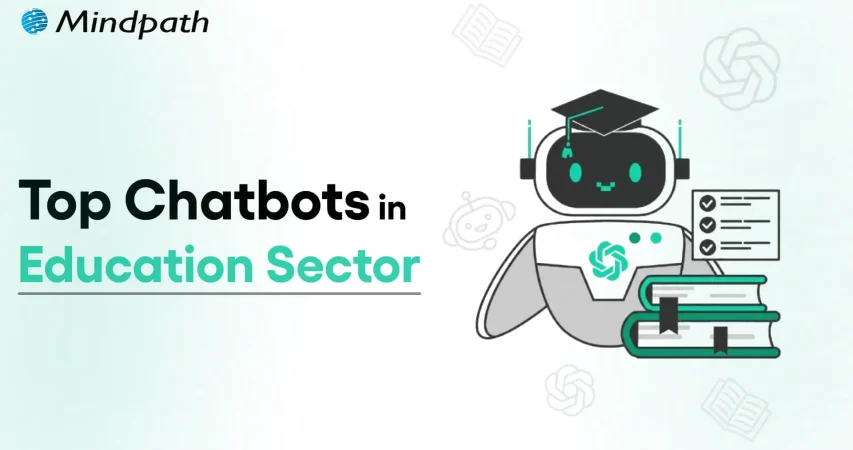
The education industry is evolving and the dominance of AI in the sector will serve as a primary reason for inducing transformation on a large scale. One of the notable applications of AI in education that often goes unnoticed is the use of chatbots. The blend of artificial intelligence and education aims to make learning more productive and chatbots are the perfect example of the same. Students, educators and institutions can rely on modern educational chatbots for their adaptive nature and intelligent capabilities. Let us learn about the top ten real-world examples of chatbots that have been revolutionizing education.

Planning to transform student experiences with intelligent chatbots? With Mindpath’s AI development services, you can design and implement tailored tools that make learning smarter and more personalized.

Impact of Chatbots on Education

Conversational AI is responsible for changing the viewpoint of many people about accessibility of AI technologies. Imagine talking to an AI tool and finding solutions to a problem in your mathematics textbook. Conversational AI chatbots are the best example of tools which can interact with users in natural language. The use of chatbots in education involves the combination of machine learning and natural language processing to understand student queries and provide relevant answers. The core strength of chatbots revolves around offering instant assistance personalized at scale for each user.

Chatbots offer better results than human support, primarily due to their round-the-clock availability. Student can get support and relevant information whenever required from chatbots, thereby reducing delays. Chatbots analyze the data of individual students and adapt their content recommendations in a way that helps students with personalized learning. Educators can use chatbots to craft interactive quizzes and provide instant feedback to learners. At the same time, chatbots also reduce the administrative burden on teachers and allow them to focus on more complex tasks.

Want to understand how chatbots can improve learning experiences? Check out the benefits of chatbots to learn how they enhance engagement and efficiency.

Discovering the Top Ten AI Chatbots for the Education Sector

AI chatbots are the most innovative tools in the domain of education with a wide range of benefits. Chatbots can not only provide instant support and personalized learning experiences to students but also empowers teachers with resources to become more productive. The rising popularity of educational chatbot applications has drawn the limelight towards their transformative impact on classroom and online learning. The following AI chatbot examples being used in education will showcase their significance for the long-term growth of the industry.

1. Socratic

One of the most notable additions among AI chatbots used in the field of education is Socratic. Created by Google, Socratic is a chatbot that helps in breaking down complex academic questions and offers easily comprehensible explanations. The core strength of Socratic as an education chatbot is in the step-by-step solutions offered for problems in different subjects like mathematics, literature and science. It also adds visual aids and diagrams in its answers to provide easier explanation for abstract concepts alongside recommending online resources, articles and videos for better understanding of learners.

2. Zendesk Chat

Zendesk Chat is also a popular AI chatbot solution for higher education institutions. It is useful for managing queries, enhancing student engagement and providing responsive support. Zendesk Chat is one of the best examples of chatbots for higher educational institutions with its distinctive features. For instance, Zendesk Chat supports seamless integration with different CRM systems, thereby empowering educators to monitor conversations and evaluate engagement data. As a multilingual chatbot, Zendesk Chat can enhance student engagement even with presence of diverse groups.

3. IBM Watson

The IBM Watson Assistant is another example of using an AI chatbot for education, especially in higher education. The chatbot by one of the leading tech giants offers highly customizable tools to enhance student engagement and streamline communication. It also supports CRM integration to ensure cohesive support across different platforms. IBM Watson uses advanced natural language processing to provide nuanced answers to complex student queries. Furthermore, IBM Watson also uses an adaptive learning model that helps it evolve with student interactions.

4. Microsoft Copilot

The list of chatbots used in the field of education will be incomplete without including Microsoft Copilot. Learners and educators can access the functionalities of this intelligent assistant in the complete Microsoft suite of products. Copilot is one of the best chatbot examples that can help students in creating compelling presentations and essays alongside refining the content with insightful recommendations. Another notable application of Copilot in education focuses on quick summaries of web pages or documents.

5. Pounce

Another example of innovative chatbots in the domain of education is Pounce. It has been created by the Georgia State University to address the problems of declining enrollment. The chatbot helps in sending timely reminders and notifications about important deadlines, orientation details and steps to obtain financial aid. Pounce also offers personalized outreach by interacting with every student to ensure that they complete the enrolment process.

Want to understand how AI can enhance workflows and decision-making? Check out AI consulting to learn how expert guidance helps implement AI solutions effectively.

6. MATHiaU

Carnegie Learning has come up with MATHiaU, as a dedicated AI chatbot to teach mathematics. It leverages AI to create personalized learning paths for university students while adjusting the difficulty of content according to real-time student performance. MATHiaU serves step-by-step guidance that can help students overcome their doubts without feeling overwhelmed. Most important of all, the chatbot can recognize specific learning gaps and offer suggestions to address the setbacks.

7. Ivy.ai

Ivy.ai also deserves a place in this list of AI chatbots, especially for its emphasis on higher education institutions. As a matter of fact, it is one of the top education chatbot examples that have achieved promising results in enhancing student engagement. The chatbot can handle different types of queries, ranging from admission to the financial aid processes. Students can also rely on Ivy.ai for access to campus information, such as details about events and facilities.

8. Cara

Cara is another example of AI chatbots developed by educational institutions to address longstanding problems. It is a chatbot tailored for offering administrative support to the students of the University of Galway. Cara helps in addressing a wide range of administrative questions with quick and relevant answers. Cara reduces the administrative burden on the university staff by handling routine questions effectively. The introduction of Cara has led to enhancements in student satisfaction and engagement while allowing educators to focus on more complex tasks.

9. Duolingo

Duolingo is one of the top examples of “how are chatbots used in education” for its ability to help students gain fluency in new languages. It will serve as a huge catalyst for breaking down the language barriers in education. Duolingo offers a safe environment for students to learn how to speak and write in a new language with confidence. The instant feedback on pronunciation, vocabulary and grammar offers ideal prospects for immediate correction of mistakes.

10. Querium

The final addition among the top AI chatbots for enhancing education is Querium. It is an AI-powered platform created for promoting STEM education through comprehensive, step-by-step guidance to solve problems. The strength of Querium revolves around helping students find solutions to complex STEM problems with detailed explanations. Another special feature of Querium is concept reinforcement, in which it connects problems to the underlying theoretical concepts for better understanding.

Curious how AI-powered chatbots help generate more qualified leads? Discover lead generation chatbot to check out strategies for increasing conversions.

Final Thoughts

The advantages of chatbot in education can provide a completely new direction to the experience of students, educators and institutions. You can notice how each chatbot in this list offers diverse benefits such as personalized content creation, automated administration or student performance monitoring. As the AI landscape expands, you can expect more chatbots to make an impact on the education sector. Mindpath helps you leverage AI development services to create custom chatbots and intelligent learning tools tailored to your educational needs.


Support Is One Click Away

Featured Posts

Related Post

ai safety and alignment

In the year 2025, Artificial Intelligence has certainly emerged as one of the most promising technologies. As AI continues to power everything, from generative design tools to real-time decision tools, the stakes for AI safety and security have never been higher. 

The high reliance on AI in recent times has undoubtedly given rise to a number of concerns relating to AI safety. You need to bear in mind that in order to leverage AI in an optimum manner, you need to know the answer to – What is the safety and security of AI? It is high time to explore the topics relating to AI Safety, Alignment, and Model Robustness.

With the rise of AI in business operations, it is necessary to build systems that operate safely and remain robust under real-world conditions. Mindpath offers AI development services that provide safe and reliable solutions.

What is AI Safety?

AI safety is the interdisciplinary field focused on preventing accidents, misuse, and unintended harmful consequences from artificial intelligence systems. It encompasses AI alignment, robustness, and ongoing monitoring to ensure AI systems behave reliably and as intended, without causing harm.

AI safety involves the practices, research, and safeguards that help ensure AI technologies remain beneficial, predictable, and aligned with human values rather than causing harm. As AI systems become more capable and widely deployed, understanding AI safety is essential to minimizing risks and unintended consequences.

Why AI Security Matters Today?

With the passage of time, the AI systems that are being developed are highlighting high sophistication. In fact, they are becoming deeply integrated into the lives of people. One must remember that such novel technologies have the potential to give rise to both positive and negative impacts on people and organizations. 

In recent times, the concerns relating to the negative impact of AI are growing like never before. People are growing concerned about the increasing dependence on AI. It has automatically given rise to questions such as – What is the safety and security of AI?

In the societal context, AI security measures must be adopted so that AI can be put to use in a safe and secure way. These measures are critical for ensuring the safety of the public. The role of AI security is indispensable when it comes to safeguarding the privacy as well as the fundamental rights of individuals. In order to learn about AI safety and security at an in-depth level, you need to familiarize yourself with the underlying concepts.

Want to understand which AI advancements are redefining responsible development and deployment? Discover the top AI trends driving transformation across industries in this in-depth article.

An Insight into AI Alignment

AI Alignment refers to the process that involves the encoding of human goals and values into Artificial Intelligence models. The purpose is to make these models safer and more reliable for use. As society is heavily reliant on AI technologies, the role of AI safety and alignment is of key importance.

AI alignment can serve as a catalyst and help to tackle certain side effects relating to bias and inaccurate outputs. It can make sure that AI systems can behave as they are expected to behave and that they align with human values. Alignment generally takes place as a phase relating to model fine-tuning. 

AI safety and alignment may involve red teaming and synthetic data approaches. However, you need to bear in mind that as AI models become more complex in nature, it may become more challenging to control and anticipate their outcomes. This is commonly referred to as the AI alignment problem. It is essential to tackle the AI alignment problem so that AI safety can be improved.

Looking to future-proof your AI strategy with cutting-edge generative technologies? Read our in-depth overview of the top GenAI tools leading the next wave of innovation.

Risks Relating to AI Misalignment

In case there exists an issue relating to AI misalignment, it is imperative to address the same. This is because AI misalignment has the potential to give rise to a diverse range of risks and threats.  

1. Bias As Well As Discrimination

The issue relating to AI bias may arise because of human bias. It may arise in the original training dataset of an AI system or its algorithms. Without proper AI safety and alignment, an AI system may not be able to avoid biased outcomes that are discriminatory or unfair.

2. Reward Hacking

When it comes to reinforcement learning, AI systems learn from punishments and rewards in order to take actions within an environment. The issue relating to reward hacking may take place when AI systems locate loopholes for triggering the reward function. This happens without actually meeting the intended goals of the developers. 

3. Misinformation

You need to bear in mind that AI misalignment may lead to misinformation. Additionally, the issue relating to political polarization may also arise due to AI misalignment. The outcome may not be aligned with the best interests of people or society. This is because truthfulness may be compromised in this case. 

4. Existential risk

When it comes to artificial superintelligence, the role of proper AI safety and alignment is of critical importance. In the absence of AI alignment with human values, there may be a risk for all forms of life on this planet. Although it may seem far-fetched right now, one cannot totally negate the risk.

If you wish to address these risks effectively, it is essential to understand the importance of AI alignment. Through AI prioritization, you can avert these risks. 

Curious about how emerging trends will shape the next generation of safe, aligned, and robust AI systems? Explore our detailed insights in the future of AI to understand where innovation, governance, and responsible development are headed next.

AI Safety and Model Robustness

While discussing the topic relating to AI safety, one cannot ignore the importance of model robustness. In the context of AI safety, model robustness is key since it can ensure that AI systems perform in a reliable and accurate manner under diverse conditions. 

AI safety and robustness are highly interrelated concepts. Model robustness can prevent issues relating to errors as well as unexpected inputs. Robustness is considered to be a core technical component that can ensure that harm from AI can be prevented. The significance of AI safety and robustness can be understood from the fact that it can protect AI models against malicious attacks, and it can also enable AI systems to operate in a fair manner. 

The Need for AI Governance

AI Governance refers to the standards and processes that help make sure that AI systems are ethical and safe to use. Organizations can use AI governance to develop and operate AI systems in a responsible and accountable manner. You need to understand that the role of AI governance is catalytic to ensure AI safety. Business entities need to prioritize the development of AI governance frameworks. 

These frameworks can ensure that they can leverage the artificial intelligence technology in a responsible and ethical manner. The growing importance of AI safety is automatically increasing the reliance on AI governance models. Practices like automated monitoring and performance alerts can empower organizations to ensure that their AI tools function ethically and responsibly. The role of AI governance is indispensable to promoting safety and security in the dynamic AI landscape. 

Are you prepared for the next wave of generative AI innovations that may challenge current safety and alignment frameworks? Read our comprehensive generative AI predictions blog to stay ahead of emerging trends.

Final Words

The popularity of AI technology has certainly reached unimaginable heights in recent years. It has automatically increased the overall dependence on AI technology in diverse spheres. This trend has given rise to an important question relating to AI safety and security. The importance of AI safety has been reaching new heights today. If you wish to leverage AI optimally, it is necessary to understand the significance of AI safety. 

Mindpath’s top-notch AI development services can ensure perfect safety and security for businesses. The experts can ensure that the best practices are in place that can promote AI security. Businesses can rest assured by relying on competent professionals while capitalizing on AI tools to reach their organizational goals. 

mobile app development company

Digital transformation for businesses is changing how they engage with customers, and mobile apps have become a major aspect of that process. Choosing the right mobile app development company can transform a simple idea to a robust, user-friendly app. There are many companies to choose from, and it is important to look beyond claims and find a partner that can truly deliver on what is important to you and your vision.

A company’s methodologies, creativity, and grasp of objectives, vision, and goals can have a profound impact on your app’s ultimate success. Observing how a company adapts, engages with clients, and innovates can provide you with an even clearer sense of their capabilities. Taking time to evaluate these aspects will lead to smarter decision-making. This blog will serve as a step-by-step guide to distinguishing and selecting a mobile app development agency that is right for you.

Curious to know how mobile app development enhances your digital presence among the users? Explore Mindpath mobile app development services to see how our experts can bring your imagination to reality.

Understanding Mobile App Development

Mobile app development is the process of creating software applications for mobile devices such as smartphones and tablets. It is categorised into native development (platform-specific languages like Swift for iOS or Kotlin for Android) and cross-platform development (frameworks that deploy to both iOS and Android from a single codebase). Today, users spend more time on mobile apps compared to desktop websites, averaging nearly four hours each day. Apps are used for many common tasks, from checking the weather to sending payments, making them an inseparable part of modern life.

One of the main reasons for the huge revenues is the widespread use of mobile apps, with annual global expenditures totaling billions of dollars. Moreover, the companies can use the latest mobile app development tools to create applications. This will not only delight their customers but also make their businesses run more smoothly while saving their precious time. Additionally, numerous enterprises consider it crucial for them to avail themselves of the services of trustworthy mobile app development firms. If they want to keep the edge in the market and develop the right solutions for their users’ needs.

Want to build a mobile app tailored exactly to your business goals and user needs? Check out custom mobile app development services to learn how personalized solutions drive better results.

Steps to Choose the Right Mobile App Development Company

The decision of finding the best mobile app development company is the key to converting your idea into a successful application. If you pick a company that comprehends your objectives, has good communication and gives you reliable solutions, then you are ensured a perfect development process and a stable app as the final outcome.

1. Check Industry Experience

Ensure the mobile app development company is familiar with your business area and its problems. Examine their previous works to establish whether they have accomplished solutions close to your application’s idea. Usually, the experience of the professionals in your field leads them to present you with innovative solutions and new ideas. Eventually, a bespoke mobile app development organization with a decorated history of success can uplift the utility and the relativity of your app.

2. Assess Technical Skills

First, you should analyze the level of the team’s technical expertise, which includes programming languages and frameworks. Try to find out the ways they have structured the app for development, testing, and troubleshooting. Technically strong teams will keep themselves updated with the latest mobile app development trends if they want to provide top-quality apps. Moreover, you will know if the company meets your expectations when discussing technical issues.

3. Review Design Capabilities

Take a look at their design portfolio to grasp their artistic point of view. Get access to apps that they have developed to verify the interface and the user experience. Find out if the team is able to tailor the designs to your market and potential customers. Collaborating with a custom mobile app development company gives you the guarantee that your app will have a nice design and be easy to use.

Planning to build a mobile app that stands out with smart and data-driven capabilities? Discover benefit of AI in mobile app development to check out how businesses use AI for competitive advantage.

4. Look at Client Feedback

Try looking through feedback and written recommendations of people who have previously worked with the team to get an idea of how well the team members communicate and work together. Communication is the key to knowing how the company is going to be aware of the deadlines and the way they are going to be responsible. Through this action, you will be double-checking whether the mobile application development company is able to meet your requirements before you decide to go ahead with them.

5. Consider Budget Clearly

Map out project scope, characteristics, and branding necessities to get a rough idea of the expenses. Have a chat about your budget with the team so that there are no unexpected situations arising later. Know the different working arrangements, such as fixed-price or time-and-material and select the one most suited to your needs. Being open about costs related to app development is one of the ways that trust between the two parties can be formed.

Want to choose a mobile app development company that uses the latest and most reliable tech stack? Check out top mobile app development technologies to learn what powers high-performing apps.

6. Evaluate Communication Style

A project is more likely to be successful with good and effective communication. It’s a great opportunity to get to know the team behind your project and find out how they monitor your project with progress updates and how they implement feedback. Their style is important to you, and you have to feel comfortable. A mobile app development company that has good communication skills can avoid most of the setbacks and misinterpretations.

7. Decide Team Location

Consider the benefits of onshore versus offshore teams for collaboration and costs. Onshore teams allow real-time communication, while offshore teams may offer cost advantages. Balance of convenience, talent, and budget when making your choice. A mobile app development company in USA may suit businesses looking for closer collaboration and time zone alignment.

Ready to safeguard user data and prevent common mobile app vulnerabilities? Discover application security best practices to check out proven protection strategies.

8. Verify Legal and Security Standards

Inquire about security steps, encryption, and data compliance policies. Make sure that the rights of intellectual property as well as user data are secured. Look at precedents for projects for legal and security standard conformity. A dependable Mobile app development company protects your app and keeps the confidence of the users.

9. Check Scalability and Flexibility

Your app and the team behind it can both change and evolve over time, so the team needs to be equally flexible. You should find out if they are able to not just increase the resources but also change the features according to your needs. An app that can stretch its features will be able to stay relevant in a dynamic market. Working with a custom mobile app development company is an excellent means to ensure the lifespan of your application.

10. Explore Post-Launch Support

An application has to be maintained after the launch. It is a must to have a support package which will include the response time, and they can keep the app updated for you. The team has to be composed of qualified people who will be able to cope with future demands. The assistance of a robust mobile app development company after the release of the application will keep your app stable and successful in the long run.

Want to understand why businesses invest heavily in mobile apps today? Check out benefits of mobile app development to learn how apps drive growth and customer engagement.

Ready to Build a Successful Mobile App?

One of the most important factors in the mobile app success is finding the appropriate mobile app development company to work with you. A trusted partner who leads to a hassle-free mobile-app creation and brings you a thriving future is within your reach by methodically assessing the proficiency, capabilities, design and support. Your business benefits from a wise decision made now that will allow you to advance and maintain your edge over the digital realm.

We at Mindpath provide complete mobile app development services tailored to the requirements of your business. Our skilled team creates apps those are safe, capable of scaling, and centred around user interaction, which are the main factors that increase customer loyalty and productivity. Through our commitment to innovation and excellence, we assist you in designing mobile solutions that go beyond competitive markets and produce actual business outcomes.

Frontend and Backend

Creating a strong business application depends on an important understanding of how you connect the frontend and backend to develop a consistent experience for the user. Picture a user on a platform that is fast, responsive, and intuitive. At every click, scroll, and keyboard input, there are systems running in the background to simulate that experience, all while interacting with a framework and keeping the user interface interesting. Technology, in turn, must be aligned with user experience and growth expectations to ensure a platform operates without flaws while keeping users satisfied.

As businesses grow, the proportion of back-end and front-end becomes more important than ever. The front-end dictates the manner in which users experience your platform, while the back-end powers the processes that allow everything to run smoothly. Ensuring that the two work closely together enhances performance, increases efficiencies, and guarantees a consistent user experience. This blog outlines the ways that both frontend and backend can be used to build a scalable business application.

Ready to build an application that provides your business with a unique and secure digital presence from front end to back end? Mindpath offers expert full-stack development services to help you design and develop scalable web application.

What are Backend and Frontend?

Frontend refers to the section of an application that users notice and directly participate with. The front end includes everything users can see and all the visual and interactive elements that facilitate interaction with the application. Frontend developers use technologies such as HTML, CSS, or JavaScript, and frameworks such as React, Angular, or Vue.js to create interactive designs and usability of the platform.

The backend is the server-side component of an application that enables the frontend to function. The backend is responsible for data management, processing user requests, and ensuring that everything works correctly. Backend developers use programming languages such as Python, Java, PHP, or Node.js, along with databases such as MySQL, SQL, or MongoDB. The backend layer ensures that the application functions reliably and efficiently, delivering the information the frontend needs.

How Frontend and Backend Work Together for Building Scalable Applications

The front-end and back-end collaborate appropriately to manage both user actions and the appropriate background processes that will occur. This collaboration will promote the applications’ responsiveness and scalable properties for more users and maintain the performance expected by the user.

1. API Communication

One of the main methods by which the frontend and backend cooperate is through APIs such as REST or GraphQL. The backend thus offers the frontend certain endpoints from which it can get data or to which it can send data.

The frontend on its part performs HTTP requests like GET, POST, and PUT to communicate with these endpoints. Such a division provides a possibility for different teams to develop the UI and business logic separately and thus more efficiently.

2. Microservices Structure

In order to handle the complexity of huge applications, an option is to split the backend into several small units referred to as microservices. Each microservice is responsible for one specific area of the application, for example, payments, user accounts, or products.

The front-end and back-end interact with each other through APIs for every service, thus being able to work on different parts at the same time. This organizational pattern allows applications to become scalable and the process of development to be more efficient.

3. Asynchronous Communication

The frontend and backend have the ability to interact asynchronously, which contributes to a better performance. In a situation where a user makes a request that takes a long time, the front end is able to give an immediate response to the user.

The backend is handling the request silently and when it is done, it sends a message to the frontend. This method is free from the problem of users having to wait for a long time and their experience is thus made better.

4. Efficient Data Handling

The data that is being transferred from the frontend to the backend and vice versa must be of the highest standard in terms of speed and efficiency. The backend is to send only the necessary data to the frontend, thus lessening the network or bandwidth usage.

One of the ways through which it is possible to load large datasets of records into small pieces is pagination. The use of JSON or some other lightweight formats is the way to shorten the response times.

5. Independent Scaling

Apps work better when the frontend and backend are allowed to scale separately as per their requirements. In such a case, the front-end servers will be able to deal with the increased traffic without inhibiting the backend services.

On the other hand, the backend can scale its database or processing power as per its needs without any intervention from the frontend. It is, therefore, a great way to ensure that performance remains steady, even at times of user activity spikes.

Ready to leverage frontend and backend roles to build scalable applications? Discover how full-stack development works together to unlock growth potential.

6. Secure Interaction

Front-end and back-end security are the basis of their cooperation. The frontend securely sends user credentials and handles authentication requests. The backend, on the other hand, is the one that verifies credentials, keeps sessions safe, and stops attacks such as SQL injection and XSS. Therefore, both sides must be in sync to keep data and users safe.

7. Centralized Data Management

Centralized state management keeps data consistent between frontend and backend. The frontend keeps API responses in a state that is shared by all components and thus accessible to them. This makes redundant API calls impossible, and all application parts having the same information and show it. Centralized data refresh the application faster and make it easier to update.

8. Performance Optimization

On the performance side, the frontend and backend teams are exerting a joint effort. Frontend developers minimize the sizes of assets, introduce lazy loading, and apply client-side caching. Backend developers optimize database queries and set up server-side caching for quicker API responses. Frequent coordination keeps the application fast and responsive.

9. Load Balancing

Load balancers are instrumental in making the frontend and backend capable of handling increased traffic efficiently. To users, the frontend with the help of the load balancer offers a single-entry point, thus giving the impression of an application that is seamless.

The backend, through the load balancer, is able to spread the incoming requests to different servers, thus sending the traffic to those servers which are the healthiest. This step not only avoids the overload of the servers but also keeps the performance at a good level and, hence, the application is able to handle sudden spikes in the number of users without crashing.

10. Centralized Logging and Monitoring

Frontends and backends through a centralized logging system can immensely improve their performance. Frontend logs are able to capture the situations of pages that take a long time to load, API calls that fail, or UI errors.

Backend logs monitor server health, API response time, and database queries. By uniting these logs, developers get the opportunity to quickly locate the problems, understand their source, and have a chance to optimize the application in terms of both reliability and speed.

Want to make sure that your applications are not only functional but also secure, compliant, and trustworthy for your users? Discover our blog on application security best practices to explore essential techniques for protecting your software and building trust.

Looking to Build Scalable Business Applications?

Understanding the role of frontend and backend is essential for building scalable, efficient, and user-friendly business applications. When the front-end and back-end work together seamlessly, applications run smoothly, respond quickly, and deliver a consistent experience. Focusing on clear communication, performance optimization, and security, ensure that your platform meets both user expectations and business growth needs effectively.

At Mindpath, we offer professional full-stack development services that ensure your application performs reliably and scales efficiently. Our team focuses on the role of frontend and backend, creating intuitive user interfaces supported by powerful backend processes. By combining technical expertise and best practices, we help businesses deliver high-quality applications that are fast, secure, and easy to manage.