Lead Generation Chatbot: Automate Lead Generation and Sales 

Join our Newsletter!

Featured Posts

Support Is One Click Away

Home

Lead Generation Chatbot: Automate Lead Generation and Sales 

lead generation chatbot

Lead Generation Chatbot: Automate Lead Generation and Sales 

Have you thought about the impact that a lead generation chatbot could have on attracting and engaging customers for your business? The benefits of chatbots are clear: Because these chatbots start conversations immediately, they create a welcoming experience that encourages visitors to leave their details. They make conversation feel fluid and natural, keeping prospects looking, listening, and engaged, without breaks. They can help you seize opportunities as soon as they arrive, ensuring no lead gets away, and usually bring a steady stream of interested prospects to your business.

In addition to just collecting contact details, these chatbots can also qualify a lead, figuring out their needs and pairing those needs with the appropriate solution. They can answer questions quickly, suggest services, and schedule meetings in real time. This efficient method saves time for your sales team while keeping the customer journey uninterrupted. Chatbots are automating lead management and personalizing lead management like never before. In this blog, we will take a closer look at their use cases.

Want to build a powerful chatbot tailored to your business needs? Mindpath’s custom chatbot development services will provide expert solutions to enhance customer experience and boost lead generation.

What is a Lead Generation Chatbot?

A lead generation bot is an intelligent online marketing tool that engages with visitors on your website, captures their information, and even starts to categorize them as potential customers. The chatbot works constantly, so you will never miss another sales opportunity. It will ask some thoughtful questions and have a pleasant tone to ensure prospects feel like they were treated respectfully, while also extracting valuable contact information for your business.

A chatbot does not wait for visitors to do something like the outdated contact form. Its proactive behavior opens up the conversation and allows visitors to interact. A chatbot speaks to visitors instantly, answers questions, leads visitors to book a demo, or suggests the next step. Your chatbot can take information collected and send it directly to your marketing tools, so lead follow-up is fast and organized.

Looking to see how AI chatbots can boost your sales? Check out real-life examples of AI chatbots that increased conversions to discover strategies that truly work.

Benefits of AI Chatbots for Lead Generation

Lead bots are impacting how companies are collecting and converting potential customers through real-time interaction. Utilizing AI chatbots for lead generation allows for the quick acquisition of information while taking potential customers smoothly into the next step.
Benefits of AI Chatbots for Lead Generation

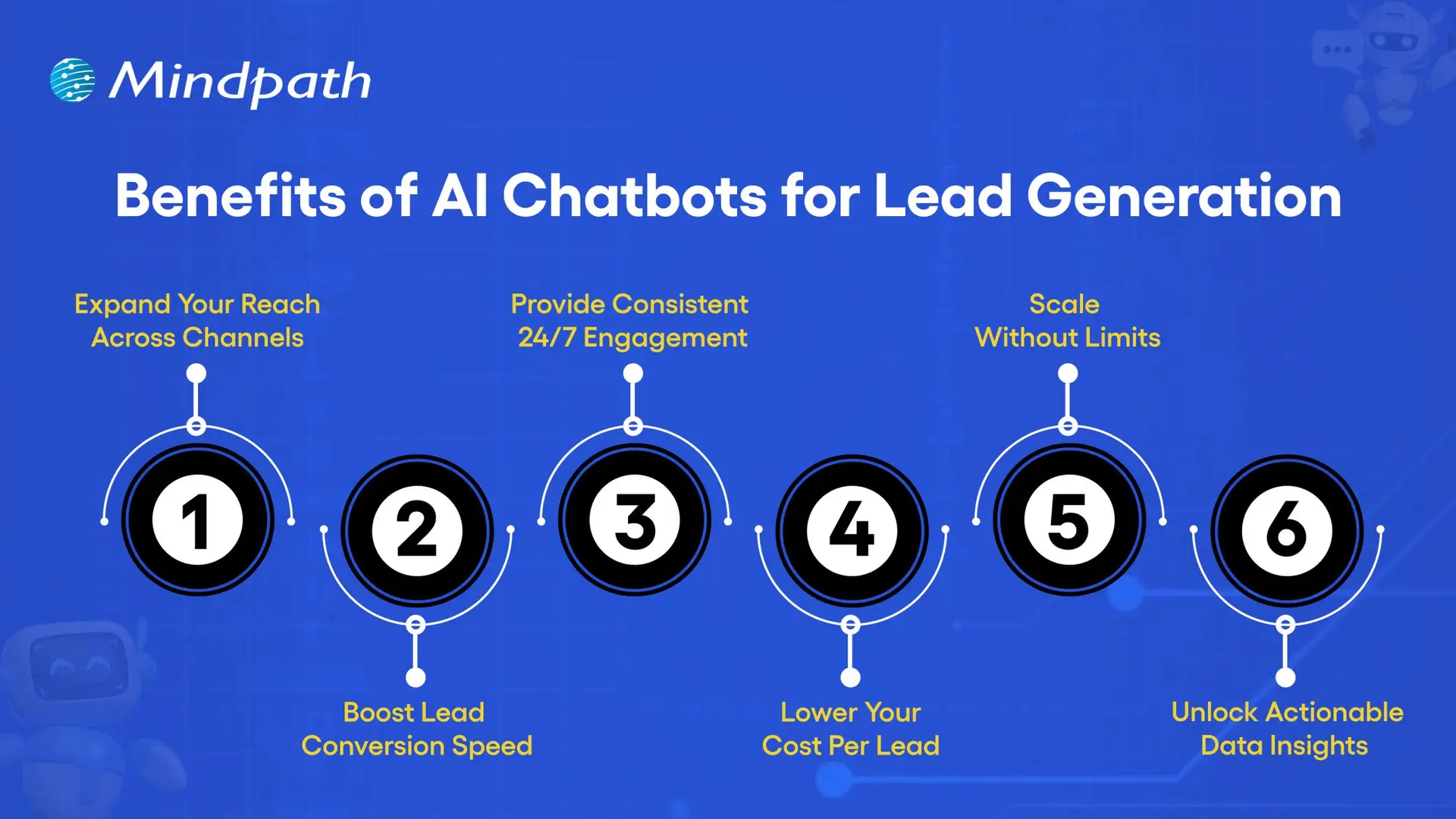
1. Expand Your Reach Across Channels

A lead generation chatbot can talk to prospects through your website, email, social media, and various messaging channels such as WhatsApp. You’re connected to customers on their most convenient platforms, and it makes it easy to have a conversation. The more dialogues you open across key communication points, the more customers will engage, putting you in a better position to convert a quality lead. When you utilize lead generation tools such as chatbots, your business remains prominent and accessible across all communications.

2. Boost Lead Conversion Speed

A sales chatbot AI can qualify prospects quickly and send them on to your sales team or follow-up system. With real-time engagement, you can respond to inquiries and gather needed information without delays. Which means that leads stay warm and are more likely to take action sooner rather than later. An AI chatbot for customer support can also help field questions that affect purchasing decisions, enhancing conversion rates even further.

3. Provide Consistent, 24/7 Engagement

A lead generation chatbot is available 24/7 and is able to engage with visitors when they show that they are serious about purchasing. Customers can get answers or help whenever they need them without waiting for store hours. This establishes trust with the customer and reduces the chances they will drop off during the purchasing process. This level of availability also strengthens connections with customers and the level of engagement overall.

Also Read: AI for Customer Services

4. Lower Your Cost Per Lead

Chatbot sales systems take away the manual and extra people that traditionally went into copy and qualifying leads, which will have a direct impact on chatbot pricing as more value is received for less money. Because of the efficiency of Conversational AI chatbot sales automation and how they scale, businesses won’t have to pay more to scale the amount of leads generated to scale resulting in every lead gained becoming progressively cheaper over time.

5. Scale Without Limits

By utilizing a chatbot for sales automation, businesses have the ability to manage hundreds of conversations simultaneously. This means you will never miss out on having a conversation with a potential customer, regardless of the demand, and your chatbot will operate seamlessly even during peak traffic and campaigns. Scalability like this means everything to growing businesses that want to take their reach to the next level.

6. Unlock Actionable Data Insights

A sales chatbot AI is able to collect in-depth insights around visitor behavior, intentions to buy, and preferences that can help improve your marketing campaigns and target customers more accurately. Captured custom chatbot analytics can inform more about which conversations converted into sales and why. Taking this data-driven approach, every single interaction, both now and in the future, improves through the method of practice.

Wondering how top businesses make smarter choices? Discover the importance of data-driven decision-making for businesses to drive growth and stay ahead.

How to Build Your Own AI Chatbot for Lead Generation?

Building a lead generation AI chatbot can help your business engage prospects, answer questions instantly, and collect valuable data automatically. With the right tools and strategy, you can create a chatbot that not only interacts with visitors but also converts them into potential customers.
Steps to Build Your Own AI Chatbot for Lead Generation

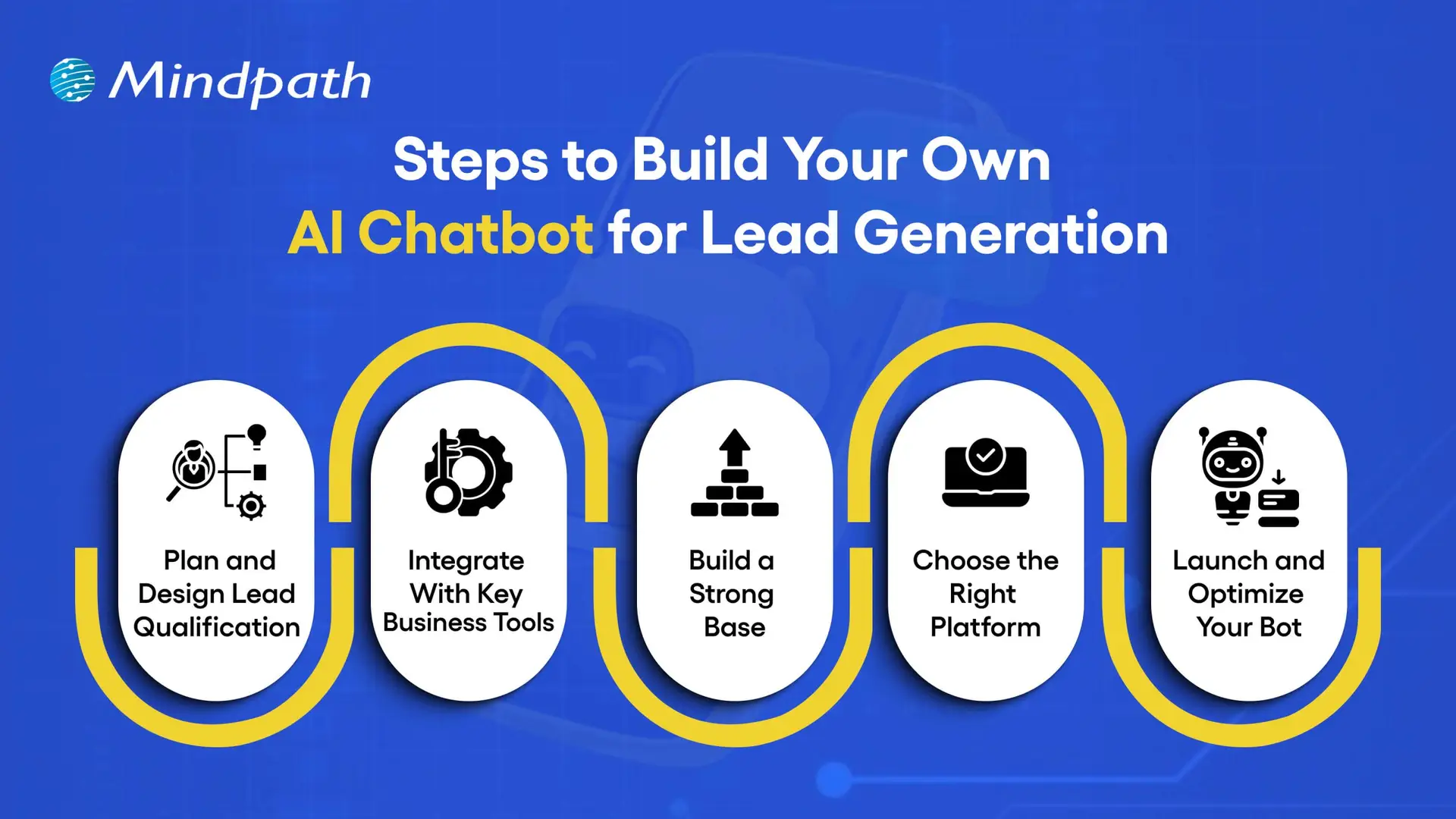
1. Plan and Design Lead Qualification

Define what a valuable lead means for your business before creating your lead generation chatbot. Plan key questions to qualify prospects and decide the follow-up steps, such as sending them to sales or booking meetings. Choose the platforms, like your website or WhatsApp, where the chatbot can engage the most visitors.

2. Integrate With Key Business Tools

Connect your chatbot to essential tools like CRM for tracking, email platforms for follow-ups, and scheduling tools for instant bookings. Use analytics to track performance and refine your strategy. Whether through custom or pre-built options, integrations make your chatbot a powerful automated sales AI bot.

3. Build a Strong Base

Plug-in solutions offer ready-made bot structures but limit customization. AI-powered platforms can set up your chatbot quickly with features that save time. A DIY build gives full control but requires more effort to create a flexible and high-performing bot.

4. Choose the Right Platform

Pick a platform with features like lead scoring, CRM integration, and multi-channel capabilities. Decide between coding, low-code, or no-code options based on your team’s skills. The right choice will help you create a reliable lead generation chatbot template that supports your goals.

5. Launch and Optimize Your Bot

Deploy your bot where it can have the most impact, such as your website or popular messaging apps. Start with a small audience to test and refine performance. Keep updating it to ensure your lead generation chatbot consistently delivers results.

Curious how chatbots understand and respond like humans? Learn what conversational AI is to see how it powers smarter lead generation and sales.

Looking to Build a Custom Chatbot for Your Business?

A lead generation chatbot improves the way businesses connect with potential customers. It engages prospects instantly, qualifies them effectively, and guides them toward the next step. With features like multi-channel reach, scalability, and data insights, it streamlines lead capture and boosts conversion rates while ensuring a smooth and professional customer experience at every stage of the interaction.

At Mindpath, our custom chatbot development services are designed to create solutions that match your business goals and enhance lead generation. We build chatbots that engage visitors, qualify leads faster, and integrate smoothly with your existing systems. With our expertise, you can deploy a chatbot that drives conversions, strengthens relationships, and supports your business growth effectively.
Related Post

Discover the significance of AI safety and best practices for responsible development, including user training and data privacy measures.
Enhance your WordPress site’s inclusivity with our expert tips and services. Discover how to improve accessibility and explore our comprehensive WordPress solutions.

Related Post

MVP in software development

MVP in Software Development is also known as Minimum Viable Product. It is the particular version of a software application with enough core features so that it can be released to the early users. The fundamental goal of developing MVP software is to validate it and get it to the market quickly.

As innovation in the current market setting is growing at a rapid pace, it is essential for businesses to realize the importance of software development MVPs. You need to develop an MVP before investing a significant amount of money in the full-scale product. This strategic development methodology can be implemented by the development team without having to build a complete software product. It is the right time to explore the relevance of MVP in software development.

Wondering how to validate your software idea before committing full resources? Mindpath’s MVP development services help businesses build functional prototypes and gather real user feedback quickly.

What is MVP Development?

In the era of digitalization, startup businesses may wonder – what is MVP in software development? In simple words, MVP or Minimum viable product is the test version of a product or software. This strategic development approach begins with the creation of the beta version of the software that a business plans to create. 

This basic version consists of the essential features and functions. These elements are included by taking into consideration the pain points of clients. The core idea behind the MVP development process is to build customer-oriented software applications. It helps businesses to ascertain whether their product is up to the mark or if it requires improvement. MVP development focuses on minimizing costs and business operations. It even helps to build the software in a smarter and efficient manner.

Stages for Building an MVP

In order to build an MVP in the context of software development, a systematic approach has to be adopted. The MVP development process involves a series of stages that you need to be aware of. You need to follow the steps in a methodical manner so that you can succeed while developing an MVP. 

1. Defining the Problem 

The fundamental step is to know the problem or pain points of your users. If businesses do not have insight into this area, they may end up creating an app that no one will use. So you need to clearly define the specific problem that your software application is going to solve. At this stage, startup businesses can consider using MVP development services. Otherwise, they can sit and discuss with their development team the problem that the application is going to solve. It is also important to understand how important the application will be for people who will be using it. 

2. Knowing the Target Audience

At this stage of the MVP development process, it is essential for you to decide who will be your target audience. A common mistake that some developers make is that they decide to create an app for everyone. It is advisable to target a niche group when startups develop an application. It can help narrow the focus of the project and develop well-functioning software. Businesses need to build the target audience persona and make it as detailed as possible.  Some of the details that should be included in the persona include profession, age, and income group. 

3. Ascertaining Key Features

Startups need to determine the key features that the first version of the product must have. It is an important thing you need to look at after defining the problem and identifying your target audience. At this stage, businesses need to list down all the possible features of the product. Then you must decide the essential features that need to be incorporated to make the software application usable. From the list of features, you can choose the most essential features that need to be included in the MVP. 

Must Read: MVP for Startups

4. Building the MVP

Once you have clarity about the features of your MVP, it is time to start creating the product. At this stage, you have to determine the programming language, framework, and other tools that you plan to use. You can even consider taking the help of an MVP development company if you wish to build your MVP. At this particular stage, you do not have to think about making a perfect product. Instead, startup businesses must focus on building a product that is usable for the intended audience. The ultimate goal must be to develop a functional product within the shortest period of time. 

5. Testing the Product

After you have created your MVP, it is time to test it. You must reach out to early adopters who are going to be the actual users of your software application. It is vital to search for the people who match the created buyer persona. You must request them to try out your MVP. If it is possible, you can reach out to them via social media or email. At this stage, your ultimate goal should be to get a good number of people and gather feedback from them. Collecting honest feedback is crucial to making improvements in the software application MVP. 

6. Using Feedback for Product Improvement

Once users start giving feedback about your MVP, you need to start collecting it. Moreover, you need to see what the best way is to implement them so that your software can meet the needs of the target audience. Initially, you need to focus on how your software solves the problem for users. If you receive positive feedback, you need to look at additional features that you can incorporate into your actual product. The feedback loop can guide you to develop the ideal product that can effectively meet the needs of the intended users. 

Ready to push your MVP from idea to functional product? Explore our blog on hiring full stack developers for MVP to learn what abilities truly drive strong outcomes.

Advantages of Developing a Successful MVP

The creation of an effective MVP can give rise to a host of advantages for startup businesses. You need to be aware of the chief benefits.

1. An MVP can help a business quickly decide whether the solution genuinely resonates with the target audience or not. It can save valuable time as well as resources of your business while helping you to test the core assumptions with the actual users. 

2. An MVP can enable businesses to test their business concept with limited investment, as it can minimize the financial exposure that is associated with full-scale software development. So businesses can avoid making costly mistakes. 

3. The invaluable feedback that businesses can gather can help in iterating and refining the product. So you can take into account the actual needs and preferences of your customers and create value for them through the software solution.

4. An MVP can help you launch your software application sooner in the market. This will be possible since you can focus on the essential features and key functionalities. The MVP can help you gain a competitive edge in the market setting. 

In the current times, when the needs and preferences of customers are rapidly changing, businesses need to understand the importance of an MVP. A successful MVP can enable businesses to create something that can create value at a comprehensive level.  

Curious about the different ways software can be built? Check out our guide on the types of software development to learn which approach fits your project best.

Final Words

In the context of software development, the relevance of a minimum viable product cannot be ignored. If businesses plan to develop a new software solution in the market, they need to adopt the MVP approach. The systematic development approach can enable businesses to create software that can create value for the ultimate users in the market. Businesses need to understand the strategic value of a minimum viable product. The knowledge can empower them to build software applications that perfectly match the needs of their target audience.

Mindpath’s MVP development services can help businesses develop their minimum viable product in an effective and efficient manner. Our experts will guide you to make refinements in your software by taking into account the needs of your target audience. 

energy efficient computing

In every digital action and decision we make, from storing information to running software, energy is consumed. The more companies leverage technology, the more they are transitioning to energy-efficient computing to lower their power usage, while reducing their environmental impact. This approach is looking at technology used in business from an energy usage standpoint but still achieving the same performance. This will help companies save money and become more responsible corporate citizens.

With pressure mounting for organizations to meet their sustainability commitments, companies are becoming greener within their technology strategies. Whether utilizing data center migrations to improve performance or selecting devices with lower energy usage, every decision counts toward a more sustainable future. This blog is going to detail how energy-efficient computing allows for long-term business success and creates technology solutions for both the environment and performance.

Ready to make your business more sustainable and cost-effective? Partner with Mindpath today to explore how our energy-efficient solutions can transform your operations!

What is Energy Efficiency in Computing?

Energy efficiency in computing is when technology is used in a way that lowers power consumption while continuing to offer good performance. Energy efficiency is often used interchangeably with the term green computing, which refers to the design and use of systems that can perform a task with less energy to lower overall electrical consumption.

In a way, energy efficiency improves the management and use of IT resources. Energy efficiency supports sustainable development through the mitigation of energy waste, reduced operating costs, and reduced environmental impact of digital systems. Green computing has a significant role in building more sustainable and responsible technology ecosystems for the future.

Principles of Energy-Efficient Computing

To build sustainable IT solutions, it’s important to follow key principles that reduce energy use without affecting performance. These principles guide the design and management of systems that are both powerful and smart.

1. Algorithm Optimization

Writing efficient code helps computers do tasks faster using less power. When algorithms are simple and well-structured, they reduce processing time and save energy naturally.

2. Efficient Hardware Design

Using devices that need less power but still work well is a big part of saving energy. This includes better-designed chips, improved memory, and smarter storage systems.

3. Power Management

Smart systems can lower energy use by adjusting power based on what the computer is doing. For example, they slow down the processor or turn off parts when they’re not needed.

4. Sustainable Practices

Using eco-friendly materials and cleaner processes helps reduce the impact of making devices. Recycling old equipment, working from home, and checking energy use regularly also support energy-efficient goals.

Curious how small businesses can leverage technology to boost efficiency and sustainability? Check out emerging technologies for small businesses to discover tools and strategies that can transform your IT operations.

Benefits of Energy-Efficient Computing

Energy efficiency in computing is becoming a key focus as digital systems continue to grow. It supports a smarter approach to technology by encouraging responsible energy use in everyday operations. Here are some of the key benefits it can offer:

1. Reduces Energy Use and Power Bills

Sustainable computing helps lower the amount of electricity used across devices and systems. By using energy-efficient computing systems and optimized processes, businesses can cut down on unnecessary energy waste. This directly leads to lower electricity bills over time. It also supports a more sustainable and cost-aware IT environment.

2. Supports a Healthier Environment

When technology uses less energy, it puts less pressure on natural resources. Responsible device use helps reduce carbon emissions and limit electronic waste. These practices also help conserve fuel and raw materials needed for power. As a result, green computing has become a key step toward protecting the planet.

3. Builds a Responsible Brand Image

Companies that follow green practices show their commitment to sustainability. Using energy-efficient computing systems sends a positive message to customers and employees. It shows the company cares about the environment and long-term impact. This can improve brand loyalty and attract people who value responsible businesses.

4. Saves Money with Smarter Solutions

Choosing energy-efficient solutions means spending less on electricity and cooling. Using energy-efficient algorithms and virtual systems helps reduce the need for extra hardware. Over time, this leads to fewer devices, lower maintenance costs, and less electronic waste. All of this adds up to significant long-term savings for companies.

5. Helps Meet Environmental Rules

Governments are putting strict rules in place to reduce energy waste and pollution. By using energy-efficient data centers and low-energy devices, companies stay in line with environmental laws. This helps them avoid fines and builds a more trustworthy business. Following energy efficiency practices also prepares companies for future regulations.

Want to stay ahead in optimizing IT infrastructure while reducing energy consumption? Explore cloud computing trends to learn how the latest cloud innovations are driving efficiency and sustainability in enterprise computing.

Want to Make Your Technology Smarter and Greener?

Energy-efficient computing is becoming essential for companies that want to grow responsibly. It helps reduce power use, cut costs, and lessen the environmental impact of digital systems. By improving how we design and manage technology, companies can still achieve high performance while using fewer resources. This shift supports long-term success and builds a stronger foundation for growth. As more organizations focus on sustainability, energy-efficient computing becomes a smart and necessary step toward a cleaner and more efficient future for everyone.

At Mindpath, we specialize in sustainable software development that helps businesses reduce energy use while keeping systems fast and reliable. We create sustainable IT solutions by using efficient coding practices, smart architecture choices, and scalable technologies that use fewer resources. Our approach helps clients lower operating costs, reduce their carbon footprint, and meet environmental goals with ease.

Whether you’re upgrading systems or starting from scratch, we design digital solutions that support both your business growth and the planet. Let us help you build software that’s future-ready and environmentally responsible.

Frequently Asked Questions

1. How can energy-efficient computing improve long-term business performance?

Energy-efficient computing helps businesses run systems smoothly while using less power. This leads to lower operating costs, better system performance, and reduced downtime. Over time, it supports consistent growth by making IT operations more reliable, cost-effective, and aligned with sustainability goals.

2. What are some simple ways to start energy-efficient computing in daily operations?

Energy-efficient computing can start with small steps like using energy-saving devices, optimizing software, and turning off unused systems. Moving to cloud-based solutions and monitoring power usage regularly also helps businesses gradually reduce energy consumption without affecting daily performance.

3. Does energy-efficient computing affect system speed or performance?

Energy-efficient computing is designed to maintain or even improve performance while reducing energy usage. Optimized algorithms, smart hardware, and better power management ensure systems run efficiently without slowing down, making it possible to achieve both sustainability and high performance together.

4. How can businesses measure the impact of energy-efficient computing?

Businesses can measure impact by tracking energy usage, system performance, and cost savings over time. Tools that monitor power consumption and efficiency levels provide clear insights. These metrics help companies understand improvements and make better decisions for future technology investments.

5. Why is energy-efficient computing important for future-ready businesses?

Energy-efficient computing supports long-term sustainability by reducing environmental impact and operational costs. As regulations and awareness grow, businesses that adopt efficient practices stay ahead. It helps build a responsible image while ensuring systems are prepared for future technological and environmental challenges.

Discover how energy-efficient computing can reduce costs, helping businesses create a sustainable, future-ready infrastructure.
Digital Twin in Healthcare

Have you ever wondered how technology can create a virtual copy of your body to improve your health? Imagine a digital version of you that helps doctors predict, diagnose, and treat diseases more effectively. Sounds fascinating, right? This is exactly what Digital Twin technology is achieving in medicine today. But how does it work, and why is it so revolutionary? Let’s explore!  

What Is a Digital Twin?

A digital twin is a virtual representation of a real object, such as a machine, a structure, or even a human body. It is created on a computer and has the same structure and performance as the genuine thing. The digital twin can give insights into how the thing is performing, discover faults, and propose methods to improve by gathering real-time data from sensors linked to the device. For example, a sensor-equipped machine provides data to its digital twin such as energy use, temperature, and performance. This virtual model can then simulate various situations, test solutions, and forecast results without harming the actual equipment. This mix of real-world data and digital technologies enables smarter decision-making, faster issue solving, and improved performance.  

Importance of Digital Twin in Medicine

Digital twin technology is becoming increasingly essential in medicine because it allows doctors and researchers to better comprehend the human body. Doctors can test medications, anticipate how illnesses will proceed, and even schedule surgery more precisely by generating a virtual representation of the patient. This lowers risks and improves outcomes for patients. For example, digital twins can be used to replicate a person’s heart in order to determine the best strategy to treat cardiac disease or to simulate how a new medicine can function without endangering the patient. It also enables healthcare practitioners to personalize therapies, increasing their effectiveness. This unique approach is revolutionizing the way care is given, making it safer and more precise.

Implementations of Digital Twin in Medicine

1. Cancer Care

Digital twin technology is transforming cancer care by allowing physicians to build highly personalized therapies. These virtual models blend a patient’s unique genetic and medical information with the data from other patients. Digital twins can change treatment regimens based on real-time updates and treatment decisions. This is especially effective when cancer returns or does not respond to conventional therapy. A digital twin, for example, can forecast when a tumor will resist a particular medicine and provide other treatments based on the tumor’s unique genetic composition. It can also assist in building treatment strategies that minimize negative side effects by taking into account how a patient’s body absorbs the medications. Digital twins have already demonstrated the effectiveness in predicting treatment results for difficult-to-treat cancer such as triple-negative breast cancer. They can even identify cancer spread (metastasis) by analyzing trends in radiography data over time. This method is laying the groundwork for better, safer, and more successful cancer therapies. 

2. Tracking Immune Health

Digital twin technology is transforming how we understand and regulate immune responses. These virtual models can provide comprehensive insights into autoimmune illnesses and infectious diseases by combining precise information from numerous levels, including molecular, cellular, tissue, organ, and whole-body data. For example, digital twins can predict if a patient’s body would reject a donated organ, allowing doctors to tailor immunosuppressive therapies to lessen the likelihood of rejection. In the event of infectious diseases, particularly during pandemics, digital twins can aid in identifying individuals who are more vulnerable to infections or at risk of serious consequences such as cytokine storms, which can be fatal. Furthermore, digital twins can model how the immune system reacts to immunizations, anticipating both short-term protective effects and long-term immunological memory. This capacity to model immune system behavior makes it simpler to personalize treatment approaches, improve vaccination efficiency, and better manage chronic illnesses. Digital twins are paving the path for more accurate diagnosis and better patient treatment in the future by improving our understanding of immune responses.  

3. Hospital Management

Digital twin technology is also having a big influence on the management of hospitals and nursing homes, enhancing efficiency and patient outcomes. Digital twin systems, which combine data from electronic medical records and wearable devices, can assist healthcare practitioners in providing more personalized and optimized treatment. For example, the Verto Flow platform employs artificial intelligence to collect patient data from numerous sources and assist healthcare practitioners in adjusting treatment regimens in real time. The ThoughtWire platform goes a step further by replicating a patient’s health condition and notifying doctors when a patient is at risk of a life-threatening issue. It can also recommend measures based on these forecasts, so assisting in the prevention of emergencies before they occur. Furthermore, digital twins are being utilized to optimize healthcare workflows. Companies such as GE and Siemens Healthcare are developing digital twins of whole hospital operations, which will allow them to optimize surgical schedules and personnel requirements, perhaps leading to lower patient wait times and improved overall efficiency.  

4. Designing Biological Systems

Synthetic biology is an interesting and quickly evolving science that has enormous promise, especially when paired with digital twin digital twin technology. Advances in DNA synthesis and sequencing have reduced the cost and ease of producing synthetic DNA, while microfluidics allows for the generation of cell-free biological components. These discoveries are consistent with the concept of digital twins, in which virtual models can represent and regulate biological systems. For example, the development of an artificial human heart required considerable input from digital twin technology, which helped design and test the heart before it was manufactured. By merging digital twins with synthetic biology, we can generate autonomic biological modules for a variety of applications, such as smart organs, medicine manufacture, and renewable energy solutions. These biological modules can collaborate with virtual entities on a medical digital twin platform, leveraging methods such as synthetic genetic circuits and optogenetics. The concept of biological computers, in which virtual and physical systems are connected and operated jointly, is becoming increasingly plausible. As we gain a better knowledge of and control over cellular processes, the potential for intelligent biological designs grows, leading to game-changing solutions in healthcare and beyond.  

5. Improving Surgeries

Surgery is an important part of treating many disorders, particularly when there are no viable pharmacological therapies. However, surgical methods and some post-operative therapies can occasionally result in problems and have an impact on patient outcomes. This is where digital twin technology can turn out quite useful. Digital twins can be used in the planning and simulation stages of surgery to anticipate results and prepare for probable complications. For example, in complex procedures such as transcatheter aortic valve replacements, a digital twin can assist determine how minor alterations throughout the treatment can impact the patient’s response. This enables surgeons to anticipate issues and modify the procedure for better results. In the field of orthopedics, digital twins are used to produce 3D models of body components such as the foot and ankle, allowing doctors to simulate procedures and determine the optimal strategy before doing the procedure. This optimizes the process and improves patient recovery, making procedures safer and more efficient. 

Digital Twin Technology at Mindpath

Mindpath utilizes Digital Twin technology to enhance healthcare and other sectors. A digital twin is a virtual copy of a real-world item or system made from data. In healthcare, it assists clinicians in planning procedures, personalizing treatments, and predicting patient reactions to various medicines. By merging real-time data from medical records and wearable devices, digital twins provide improved decision-making and safer treatment. We also use DT technology to improve hospital administration, boost immunological health, and promote synthetic biology research. This contributes to the development of smarter, more efficient systems, which result in improved outcomes in a variety of sectors. 

Wrapping Thought!

Digital Twin technology is changing the landscape of healthcare by allowing for more personalized, efficient, and accurate treatment options. From cancer treatment and immune system control to hospital administration and surgical results, digital twins are assisting physicians and healthcare professionals in making more informed decisions, eventually leading to better patient care. As this technology advances, its potential to transform medicine and other sectors will only increase. At Mindpath, we are happy to include Digital Twin technology into our services, which drives innovation and improves outcomes for healthcare systems globally. With its capacity to model, forecast, and optimize, Digital Twin technology is transforming the future of medicine. 

Ready to innovate with Digital Twin technology?

Partner with Mindpath to enhance healthcare solutions and achieve smarter, safer outcomes.

Explore how Digital Twin technology is revolutionizing healthcare, from personalized treatments to improved surgeries.