How Low-Code Platforms Accelerate Digital Transformation

Join our Newsletter!

Featured Posts

Support Is One Click Away

Home

How Low-Code Platforms Accelerate Digital Transformation

low code platforms

How Low-Code Platforms Accelerate Digital Transformation

The application development space has undergone a revolutionary change recently. As the need for developing novel applications in the business world is on the rise, businesses are looking for effective ways to build their applications. This has undoubtedly magnified the popularity of low-code platforms. By leveraging such platforms, modern businesses have the opportunity to develop top-notch apps that can facilitate digital transformation.

The global Low-code development platform market is expected to touch USD 167 billion in the year 2030. It reflects that businesses are leveraging the concept of Low-code for digital transformation. Now is the perfect time for businesses to understand Low-code and no-code meaning so that they can advance towards digital transformation.

If you’re thinking about using low-code or no-code platforms, but want professional help with the problems and getting the most out of the benefits. Contact us to discuss how we can support your digital transformation journey.

An Understanding of Low-code or No-code Development

A common question that many people may have in their mind is – ‘What is Low-code or no-code development?’ Low-code or no-code development refers to the approach that intends to simplify the process of developing applications. By adopting such frameworks, app developers and businesses can reduce or entirely eliminate the reliance on conventional handwritten coding practices.

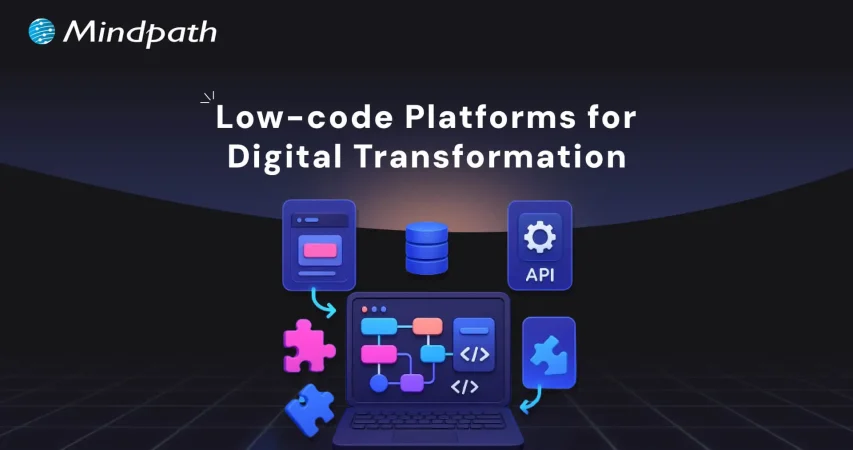
A Low-code platform provides a visual development setting that comes with drag-and-drop interfaces. Moreover, the existence of pre-built components helps application developers to create software applications with minimal coding. A no-code platform is a similar tool; however, it entirely eliminates the need for coding while developing apps. By choosing the best low-code and no-code platforms, businesses have the opportunity to accelerate digital transformation like never before.

Revolutionary Power of Low-Code Platforms

At present, low-code/no-code tools have been acting as the ultimate instrument that business entities can leverage for digital transformation. Low-code platforms are revolutionizing the space of application development by empowering businesses and developers with limited or no coding prowess. In order to understand the revolutionary nature of Low-code no-code development services, you need to look at their chief capabilities:

1. Efficient app-building process

The emergence of Low-code and no-code development concepts has been transformational since it has made the app development process highly efficient.  By utilizing Low-code or no-code tools, businesses can develop top-quality applications in a limited time, thereby fueling digital transformation. Moreover, by utilizing such tools, business owners with limited coding skills can develop advanced apps that can enhance the overall experience of their target customers.

2. Radical decline in development cost

Generally, the traditional development of a software application is a costly affair. However, thanks to Low-code and no-code platforms, it is possible for businesses to significantly curb their app development costs. By capitalizing on drag-and-drop interfaces as well as pre-built components, they can develop high-performing apps. Furthermore, there is no need for business enterprises to dedicate a separate team to develop apps.

Must Read: Low-Code vs No-Code

3. Fostering agility and speed

In the fast-paced digital space, businesses need to be agile so that they can stay ahead of their competitors. By prioritizing Low-code digital transformation, business entities can act in an agile and responsive manner. Low-code tools or no-code tools can act as ultimate game-changers that can help you integrate innovation into your business apps. Through prompt app development processes, you can develop quality apps within a limited period of time.

4. Simplified app development

The app development process is typically quite complex in nature. Businesses have to rely on professionals from technical backgrounds to create well-functioning and high-performing apps. Thanks to Low-code and no-code development, the app development process has become much simpler today. Even with limited coding skills, businesses can efficiently do prototyping, testing, and other complex tasks. As a result, businesses can move ahead in their digital transformation journey without having to rely on technical experts.

Wondering which digital transformation trends are driving the biggest impact in organizations today? Explore more insights on emerging digital transformation trends to stay ahead in your innovation journey.

Main Challenges Hindering the Adoption of Low-Code Development

It is true that the Low-code development approach has the potential to act as the pathway to digital transformation. However, businesses encounter a number of obstacles in their path that impede their ability to leverage this novel app development approach. Some of the most common challenges that hinder the adoption of Low-code development for businesses include:

1. Vendor Lock-in

A common concern revolves around vendor lock-in. Such a situation may arise if businesses become highly dependent on the vendors of Low-code platforms. Due to this challenge, it may become difficult or costly for businesses to switch between vendors of Low-code platforms.

2. Need for Governance

As Low-code or no-code platforms enable non-IT users to develop software applications, they give rise to governance concerns. Their limited insight into app development may give rise to issues like security vulnerabilities and data management. Similarly, other quality management issues may also arise. Thus, there is a need to deploy a foolproof governance framework so that such concerns can be effectively addressed.

3. Scalability Concerns

A key issue that may arise while progressing towards digital transformation with low-code development is related to scalability. Although such tools are useful for building apps, they may not be ideal for scaling them. As a result, by using these app development tools, the ability of businesses to flexibly design their apps may shrink significantly.

4. Limitations relating to customization

Generally, businesses try to customize their apps so that they can provide a unique experience to their target users. However, by using low-code or no-code tools, the ability to customize applications gets significantly restricted. Although such platforms can speed up app development, the ability of businesses to apply specific requirements may be affected. Thus, this challenge may discourage business firms from leveraging low-code or no-code platforms while developing their apps.

Curious how emerging web development trends are shaping digital transformation strategies? Discover key insights on current web development trends to enhance your low-code initiatives.

Future of Low-Code No-Code Development

The future of the low-code, no-code development model is full of possibilities and opportunities. This is because this innovative app development approach is poised to grow in the contemporary business world. As a greater number of business enterprises are moving towards digital transformation, there is a high possibility that the use of Low-code tools or no-code tools may increase in the future.

A broad range of factors may come into play and contribute to its bright future. Some of the chief factors are the need for an efficient development cycle and a high shortage of skilled developers. Similarly, the growing need to create apps that perfectly align with customer demands may play a catalytic role. To derive the optimum value from such novel tools, businesses need to have a holistic insight into their capabilities and weaknesses.

Ready to Accelerate Your Digital Transformation with Low-Code Solutions?

Low-code and no-code platforms are reshaping application development by enabling faster, cost-effective, and agile app creation. Businesses can simplify complex processes, innovate rapidly, and deliver high-performing applications that enhance customer experiences and drive digital transformation for businesses.

At Mindpath, we provide expert Low-code and no-code development services tailored to your business needs. Our team helps organizations overcome adoption challenges, build scalable applications, and leverage innovative solutions efficiently. Partner with us to unlock the full potential of Low-code platforms for digital transformation for businesses.
Related Post

Related Post

Legacy application modernization

There is need to make radical decisions in order to grow in 2026. Legacy application modernization now sits at the center of every CEO agenda. You are witnessing increasing prices, delayed launches, and systems to block innovation. So, what will you change first? Technology influences the degree, pace and consumer confidence. Consequently, leaders need to think radically about fundamental systems with expediency and conviction.

Nonetheless, the process of modernization is not a fast upgrade. It involves vision, alignment and good implementation. You would need to relate business objectives with contemporary architecture and cloud preparedness. Delay decreases the benefits as competition increases. Clearly, smart CEOs are early adopters and change agents. This blog discusses real-life tactics that help organizations grow in a scalable manner. So, keep reading further!

Want to turn legacy applications into a driver of growth and innovation? Mindpath provides legacy modernization services that help organizations modernize systems and unlock new business opportunities.

Why is Understanding Legacy Application Modernization Strategies Important?

Leaders must understand the right approach before investing in legacy application modernization. An effective plan will minimize risk, cost management, and adjust the technology to business objectives. It makes more intelligent choices, prevents interference, and long-term value. Modernization attempts to accelerate growth but lack guidelines; they tend to slack growth rather than improve it.

The world of business today is a busy environment where it is the speed and flexibility that determine the success of a business. Knowing the strategy behind legacy app modernization helps teams prioritize upgrades, strengthen security, and support innovation. It develops a blueprint to scalable systems, improved customer experience and a sustainable digital growth in competitive markets.

Must Read: AI-driven legacy system modernization

Key Strategies for Legacy Application Modernization

Powerful growth requires a definite course of action. Legacy application modernization strategies help businesses upgrade systems with less risk and better results. A narrow strategy makes the technology work in line with long-term objectives and innovation.

1. Refactor or Rearchitect

This is a method that re-architectures an application. Teams subdivide large systems into small and flexible services. It enhances scalability and is available with AI and real-time data tools. Many legacy modernization strategies recommend this for business-critical platforms. It drives true Legacy system transformation.

2. Rehost

Rehosting relocated applications in the cloud without altering code. It lowers data center expenditure within a short time. Companies achieve improved infrastructure and scalability. Although it does not fix deep design issues, it supports early legacy application modernization goals. It puts the systems into readiness to be improved in the future.

3. Retire

Retiring eliminates non-value-adding applications. Most organizations continue to incur the expense of unused or duplicated systems. Their closure saves on licensing and maintenance. This simple step strengthens application modernization plans. It liberates funds on high impact innovation projects.

4. Replatform

Replatforming transfers applications to the cloud with minor enhancements. Managed cloud services could replace self-managed databases in teams. This enhances performance and saves on operation. It balances cost and benefit during modernization of legacy applications. It eliminates chances of complete reconstructions.

5. Repurchase

Repurchasing involves substituting custom systems with cloud based SaaS products. Companies shift to subscription services run by reliable suppliers. This eliminates internal pressure of maintenance. It guarantees the availability of frequent updates and security patches. It supports faster legacy modernization decisions.

6. Relocate

Relocation takes virtual machines into the cloud without adjustment. It is efficient when implementing data centers of a large scale. Businesses are consistent and fast during migration. This method supports infrastructure goals in legacy application modernization programs. It keeps disruption low.

7. Retain

Retaining is maintaining the application in the existing environment. This is selected when systems continue to provide high returns to companies. It enables IT teams to work on more important upgrades. Not all systems are in need of urgent transformation. Smart legacy application modernization planning includes selective retention.

Want to ensure your modernization efforts follow a clear and structured path? Explore the legacy modernization roadmap to guide every step of your transformation journey.

Steps to Build an Effective Legacy Application Modernization Roadmap

A roadmap makes complicated upgrades into systematic improvement. The correct plan will help make sure legacy app modernization initiatives remain business-focused, budget-wise, and long-term.

Steps to Build an Effective Legacy Application Modernization Roadmap 

1. Evaluate Your Current Applications

Begin by taking a thorough analysis of your current systems. Quality of check codes, performance problems, integrations and infrastructure to identify the latent risks and areas of improvement.

2. Define Clear Business Objectives

Connect the leadership and stakeholders to the importance of modernization. Establish quantifiable objectives to ensure teams know priorities, expected results and schedules prior to technical change.

3. Select the Right Modernization Approach

Select a strategy that suits the business, e.g. rehosting, refactoring or rebuilding. The right choice reduces risk and supports long term legacy application modernization success.

4. Prioritize and Test with a Pilot

Divide the plan into achievable stages. Begin with high impact modules and put a proof of concept to confirm performance, security and scalability enhancements.

5. Execute in Controlled Phases

Move changes in steps so that there is no disruption. A structured rollout ensures stable operations and measurable value throughout the legacy application modernization journey.

Want to understand how updating legacy systems can boost business performance? Discover the benefits of modernizing legacy systems to achieve efficiency and scalable growth.

Ready to Lead Growth with a Clear Modernization Strategy?

Legacy application modernization offers CEOs the freedom to scale comfortably. It lowers the risk, enhances security and optimizes performance of the system. More significantly, it makes technology consistent with long term business objectives. The first mover companies are faster, more nimble and more trusted by their customers. An obvious guide transforms complicated systems into development drivers.

Mindpath is a reputed legacy modernization company who provide legacy modernization services that assists businesses in modernizing key systems in a clear and accurate manner. Our professionals evaluate, develop, and implement policies that facilitate creativity and business prowess. We put emphasis on quantifiable outcomes and value creation. Through Mindpath Legacy modernization services, companies create safe and scalable platforms that can support future developments.

FAQs

1. Why should CEOs prioritize Legacy application modernization in 2026?

Legacy application modernization helps CEOs reduce operational risk and unlock faster innovation. Modern systems support better decision making, improved security, and stronger customer experiences. In competitive markets, outdated platforms slow growth. A clear modernization strategy ensures technology actively drives revenue, efficiency, and long term business stability.

2. How long does a modernization initiative typically take?

Timelines depend on system complexity, business goals, and chosen strategy. Some upgrades take a few months, while large transformations may extend longer. A phased roadmap reduces disruption and delivers value early. Clear planning, executive alignment, and expert guidance help maintain speed and control.

3. What risks should businesses consider before modernization?

Companies should evaluate integration gaps, data migration challenges, security exposure, and internal skill readiness. Poor planning may lead to cost overruns or operational delays. Strong governance, stakeholder alignment, and measurable milestones reduce uncertainty. A structured roadmap ensures smoother execution and predictable outcomes.

4. How do microservices improve scalability in modernization projects?

Microservices break large systems into smaller, independent components. Teams can scale each service based on demand without affecting the entire platform. This structure improves deployment speed, fault isolation, and performance optimization. It also supports cloud environments and advanced integrations such as AI driven analytics tools.

5. How can Mindpath’s legacy modernization services support technical transformation?

Mindpath’s legacy modernization services provide structured assessments, architecture redesign, and cloud migration expertise. Their team builds scalable systems aligned with business objectives. As a trusted technology partner, Mindpath ensures secure execution, phased rollouts, and measurable performance gains across complex enterprise environments.

ai and business

Have you ever considered how AI and business actually fit together? You may have heard a lot about AI being faster and smarter, but is your business actually prepared for it? Many people are excited about new technology, but they often overlook whether they have a solid foundation. Take a second to think about it- is your business possibly ignoring some signs that say you are not prepared for AI yet?

AI can help any business develop, but starting without preparation can create issues. There are companies that jump into AI without having the right tools or people, or even ideas. This could waste valuable time and resources and lead to frustration. Integrating AI in business strategy from the start ensures you’re prepared and can identify potential challenges early. In this blog post, you’ll learn five easy indicators that show your business may not be ready for AI yet.

Want to future-proof your business with AI? We at Mindpath offers exceptional AI development services that help your business get AI-ready and unlock next level of growth! 

What Being ‘AI Ready’ Really Looks Like?

Being ready for AI means your business has the right people, tools, and plan to make it work well. When you think about AI and business together, it’s more than just buying new software. You need good data that’s easy to use, a team that knows how to work with AI, and clear goals that AI can help you reach. A business ready for AI knows how to bring people and smart technology together.

Look at Amazon. They show how AI in e-commerce can work side by side with business to help customers and save money at the same time. This happens because they plan ahead and know exactly how AI will help. If you want your business to be ready to use AI, start by checking your data, training your team, and making a simple plan that fits your real needs. When you get this right, AI in business can really help you grow.

Must Read: Benefits of AI

What is an AI Readiness Checklist?

An AI Readiness Checklist is a simple tool that helps you see if your business is really ready to use AI in the right way. It covers important things like your data, your technical tools, and how well your team understands AI. When you think about AI helping your business grow, this checklist shows you what’s strong and what needs more work.

A good AI checklist looks at your technical setup, the quality of your data, your team’s skills, and whether your company is open to new ways of working. This way, you can fix any gaps before you bring AI into your business. By using an AI checklist, you can make sure you’re set up for success and get real value from AI in business.

How is AI reshaping the way websites are built and optimized? Explore our detailed article on AI in Web Development to see how it’s driving smarter design, faster deployment, and better user experiences.

AI Readiness Checklist for Businesses

Before you bring AI into your daily operations, it’s important to know where you stand. A good AI readiness checklist will help you see if your business is truly prepared for this step. Here are the key areas to focus on as you plan your AI and business journey.

AI Readiness checklist for businesses

1. Robust Data Foundations

Good data is the backbone of any artificial intelligence business idea. Check that your data is clean, organized, and ready for AI tools to use well. Strong data governance keeps your insights trusted and prepares your business for AI integration.

2. Leadership and Team Alignment

A strong AI and business plan starts with people who believe in it. Make sure leaders fully support your strategy and teams understand the goals. A clear roadmap and open communication help everyone move toward strategic AI adoption together.

3. Technology and Process Readiness

Your tools and workflows must support AI smoothly. Research the best AI solutions for your existing systems and test them with pilot projects. Use simple frameworks to track results and find the best areas for automation.

4. Governance, Ethics, and Security

Responsible AI needs strong rules and security in place. Create clear ethical guidelines and monitor how AI works in your company. A good AI checklist helps protect your artificial intelligence business ideas and builds trust for the long term.

5. Financial Planning and ROI

Every digital transformation roadmap needs clear budget planning. Create realistic budgets, show expected returns, and track savings as you go. This makes it easier to get leadership buy-in and keeps AI and business costs under control.

Looking to streamline your business operations and enhance customer experiences? Discover how conversational AI chatbots can help your business transform its workflows and boost efficiency in our blog.

5 Signs Your Business is Not Ready for AI

Many companies jump into AI without checking if they’re really prepared. Missing a few basics can lead to wasted time and money. Here are five signs that show your business is not ready for AI yet.

5 Signs Your Business is Not Ready for AI

1. Stuck in Paper-Heavy Processes

Paper forms, files, and manual approvals slow down daily work and limit growth. AI needs clean, digital data that is easy to find and process. If you’re still tied to paper, you’ll struggle to get real results from AI. Going digital is the first step to connect AI and business ideas that really work.

2. Running on Outdated Technology

Old systems can hold you back from adding smart AI tools. If your technology can’t talk to modern platforms, your AI plans won’t go far. Keeping rigid, legacy software in place only adds roadblocks. Updating your systems is essential for future-proofing your business with AI.

3. Poor Data Quality and Structure

Messy or incomplete data will confuse even the best AI tools. AI needs clear, well-organized data to find patterns and deliver insights. If your data is spread everywhere and filled with errors, you’re not ready yet. A strong data foundation helps your AI and business strategy succeed.

4. No Clear Data Strategy in Place

Without a clear plan, your data might be scattered, outdated, or not useful at all. AI can’t do much if it doesn’t have good data to work with every day. A strong data strategy shows what to collect, how to store it, and who can use it. This is key for turning business ideas AI into real results and leveraging AI in decision-making.

5. Lack of Real-Time Data Insights

AI works best when it has fresh, up-to-date information at its fingertips. If you only rely on old monthly reports, you will miss the full power of AI. Real-time data helps AI spot changes and take action fast. It’s a big step for future-proofing businesses with AI in any industry.

Want to future-proof your AI strategy? Don’t miss our insights on the Top AI Trends in 2025 every business should be ready for.

Ready to Make AI and Business Work Together?

Preparing your business for AI means more than just buying new tools. It’s about building strong data foundations, modern systems, and a clear strategy that connects people and technology. Knowing the signs that you’re not ready yet can save time, money, and stress. With the right plan, AI can help your business grow stronger together and bring real results.

Mindpath’s expert AI development services help you create practical, future-ready solutions. Our team works closely with you to plan, build, and integrate AI into your daily operations. We focus on clean data, secure systems, and smart strategies that fit your business needs. Let us help you connect AI and business in ways that truly work.

Hiring a Node.js developer in California can be expensive owing to high demand and living costs. Experience, geography, and specialized skills have a considerable influence on pricing. The following are major cost factors for hiring Node.js developers in California.

1. Experience Level

The developer’s experience is vital in deciding the pricing. Junior developers (less than 2 years of experience) often charge $60-$80 per hour, whereas mid-level developers (3-5 years of experience) charge between $80-$120 per hour. Senior Node.js developers with substantial experience in backend architecture, team leadership, and system optimization earn $120-$150+ per hour. The more experienced the developer, the higher the charge; nevertheless, the investment frequently benefits in increased productivity, better problem-solving, and scalable solutions. When recruiting, match the developer’s experience to the project’s complexity to achieve cost-effectiveness and high-quality outcomes.

2. Location in California

California’s technology clusters have a substantial impact on Node.js developer rates. San Francisco, San Jose, and Los Angeles have some of the highest development expenses due to their concentration of technology enterprises. Developers in these locations frequently charge $100 to $150 or more per hour. In contrast, places outside large urban hubs, such as Sacramento or San Diego, have slightly lower costs, ranging from $80-$120 per hour. Remote recruiting from low-cost countries can help firms save money while still obtaining access to excellent talent. When picking developers, consider the cost vs in-person cooperation tradeoff.

3. Specialized Skillset

Developers that specialize in real-time applications, cloud technology, or complex database administration typically charge premium rates. Node.js developers who are skilled in WebSockets, AWS, GCP, and microservices architectures may earn between $120-$160 per hour, since these talents are in great demand for scalable and high-performance applications. Similarly, familiarity with enterprise-level security, DevOps processes, and AI connections can drive up expenses. Hiring developers with specialized knowledge provides optimal performance, security, and long-term scalability, but at a higher cost. Determine whether your project requires specialist skills or broad backend development.

4. Hiring Models: Freelance or In-House

The decision to use freelancers, in-house developers, or outsource to an agency affects total expenses. Freelancers are frequently less expensive, with hourly rates starting at $60, although they can’t always be available for long-term assignments. Full-time in-house developers demand pay, benefits, and office expenditures, which can increase yearly costs over $150,000-$200,000 for top positions. Hiring from development organizations gives you access to a team of qualified developers, but it frequently costs more per hour, ranging from $100 to $180. The appropriate employment strategy is determined by the project’s duration, budget, and the requirement for continuous assistance.

Looking for expert Node.js developers at competitive rates? Mindpath connects you with highly skilled developers specializing in scalable applications, APIs, cloud solutions, and real-time systems. Whether you need a freelancer, in-house developer, or a dedicated team, we provide the right talent to match your project’s needs.

Don’t let high costs slow your project down! Partner with Mindpath to get the best Node.js talent in California within your budget.

Discover the ultimate guide to hiring Node.js developers in London. Learn about the skills, benefits, and cost factors involved in finding the right talent for your project.