Full-Stack Development Benefits Every Business Should Know

Join our Newsletter!

Featured Posts

Support Is One Click Away

Home

Full-Stack Development Benefits Every Business Should Know

full stack development benefits

Full-Stack Development Benefits Every Business Should Know

In our fast-paced digital world, businesses are seeking better and smarter solutions for their digital presence. One proven method is embracing full-stack development benefits to handle both visual and functional components of web and app development projects. Full-stack development enables a company to be more responsive to market demand and build a seamless overall digital experience. One approach to ensure you are keeping up and growing with the pace of technology is to study full-stack development for long-lasting success.

By combining front-end and back-end development in one united team, it serves to harmonize your collaboration and streamline your processes. When one team completes the entire process, it enables faster turnarounds, greater risk control, and cost savings. Full-stack development is a workable option whether you’re a startup or a large organization looking for an efficient way to scale. In this blog, we’ll explore how full-stack development can bring these advantages to your business. So, let’s dig in!

Want to use full-stack development benefits in your business? Mindpath’s full-stack development services will help you in designing an effective way to scale your business.

What is Full-Stack Development?

Full-stack development is the complete process of building a web application from beginning to end, including both the client-side and server-side aspects. Full-stack developers will work with front-end technologies like HTML, CSS, and JavaScript, as well as back-end technologies such as Node.js and PHP, or Ruby on Rails. They deal with the interface that the user sees, as well as the server-side logic that operates behind the scenes as it interacts with APIs and databases.

A full-stack developer is comfortable working on both front-end and back-end development, which means they can handle the entire application lifecycle. They write code, test and deploy that code, and interact with databases. They often integrate third-party services into their applications as well. These professionals know how each layer of the web application connects, from the user interaction to processing data. Their variable skill set makes them important in a team setting where communication is essential between the layers, specifically for performance, scalability, and maintenance.

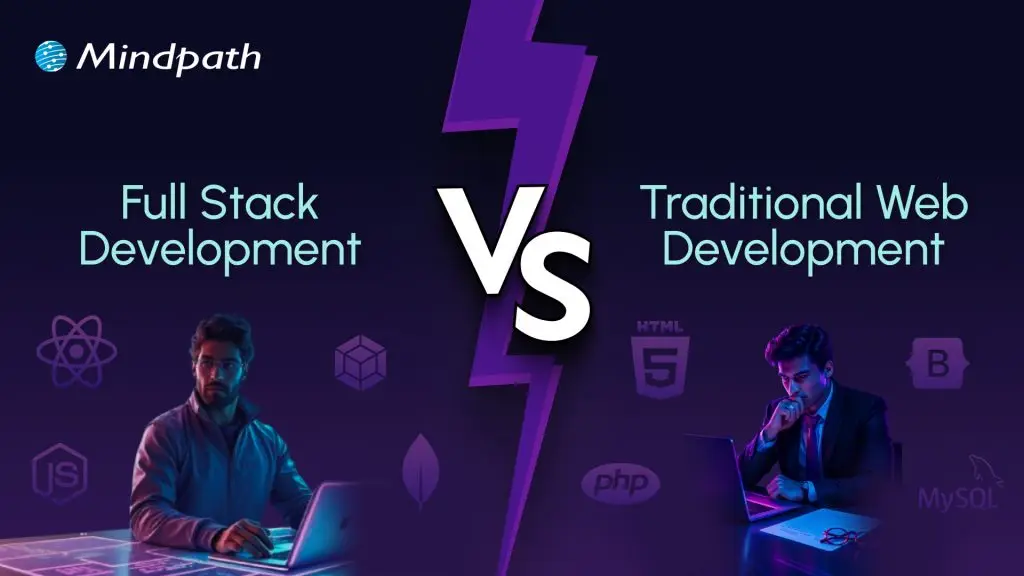
Explore: Full-stack vs traditional web development 

Key Components of Full-Stack Development

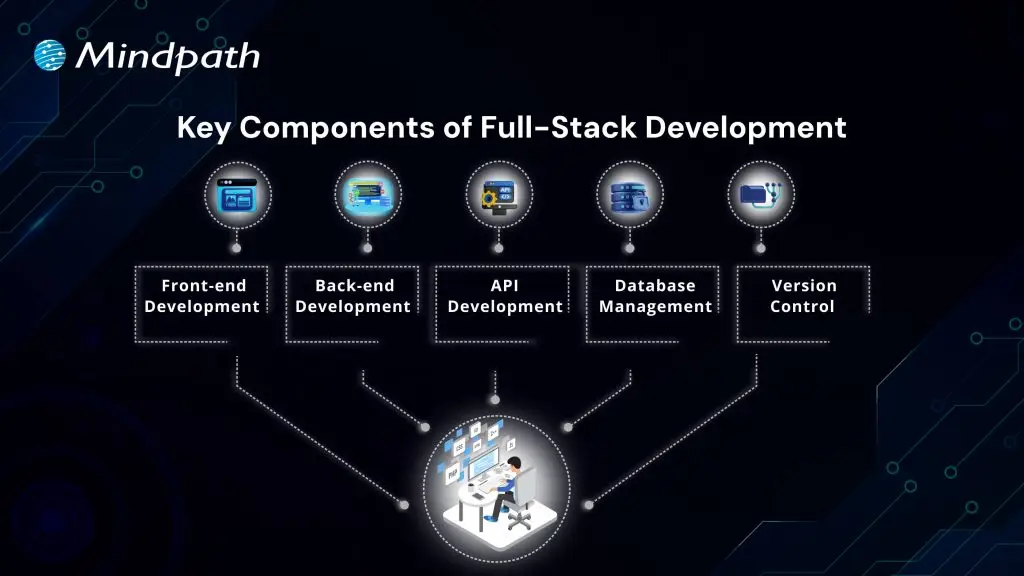
Getting an idea of the major components of full-stack development for business is necessary for creating effective and scalable digital products. These different components ensure that each piece of the application operates seamlessly together.
Key Components of Full-Stack Development

1. Front-end Development

Front-end development focuses on building the user interface using technologies like HTML, CSS, and JavaScript. It ensures that users can interact smoothly with the application through a responsive and visually clear layout.

2. Back-end Development

Back-end development handles the server-side logic, managing tasks like database operations, server communication, and authentication. Developers use languages such as Python, Java, or Node.js to ensure that the core application functions run efficiently.

Looking for an effective way through which you can build scalable applications? Discover how full-stack development with Node.js can enhnace your business growth.

3. API Development

API development allows applications to communicate with each other by creating structured pathways for data exchange. One of the full-stack development benefits is the ability to build and manage APIs that integrate various services into a single application.

4. Database Management

This involves designing and maintaining structured databases using systems like MySQL, MongoDB, or PostgreSQL. Efficient database management is key to ensuring secure data storage, fast retrieval, and overall system reliability.

5. Version Control

Version control helps teams manage code changes and collaborate effectively using tools like Git. It keeps track of every update, allowing developers to maintain stability, fix bugs quickly, and work on features without conflicts.

Full-Stack Development Benefits for Businesses

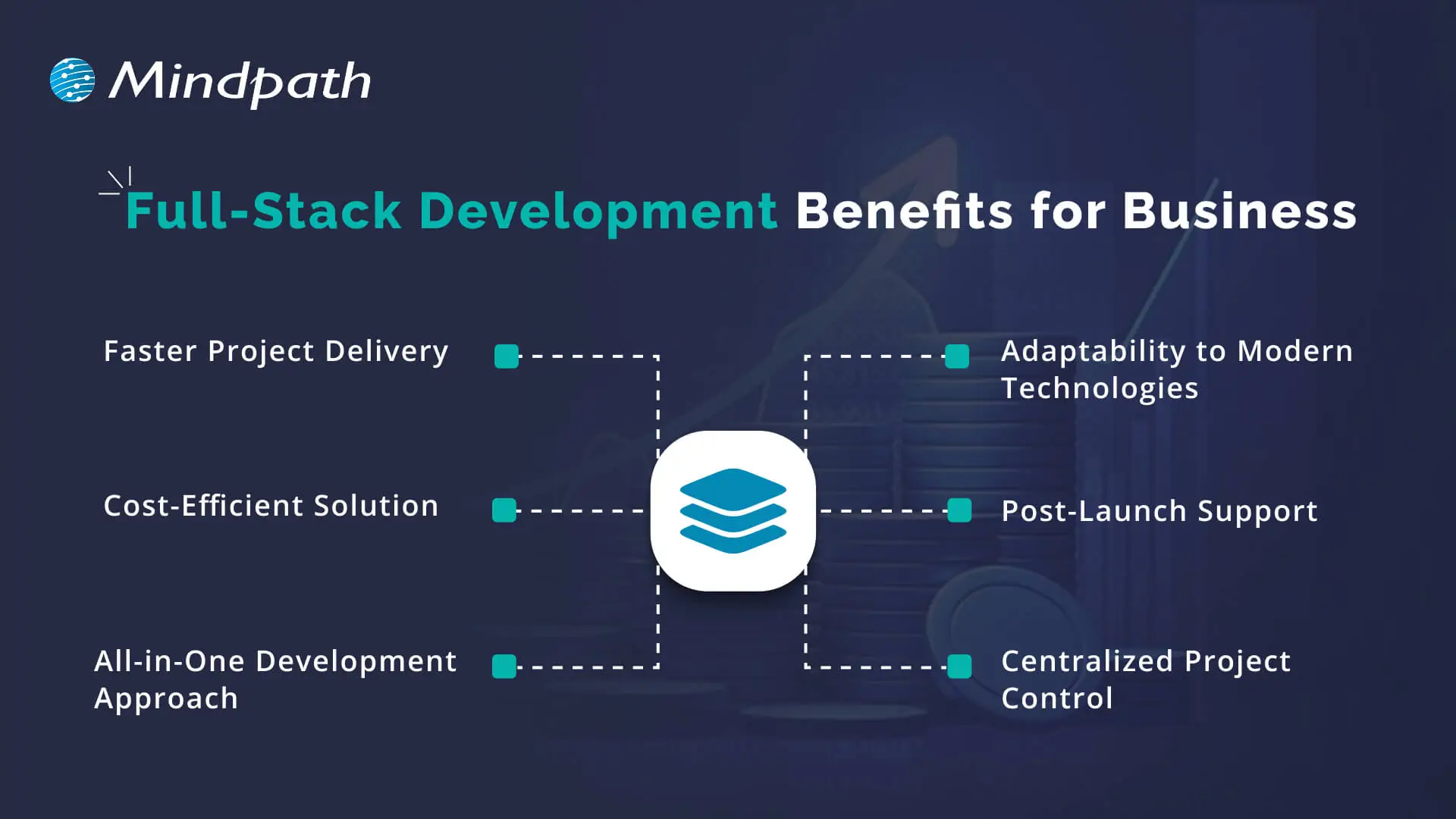
Many businesses today are choosing full-stack development to streamline their digital projects and improve overall efficiency. Here are some key advantages of full-stack development for businesses that highlight why this approach is gaining popularity across industries.
full stack development benefits for business

1. Faster Project Delivery

One of the key full-stack web development advantages is faster project completion, as the same team handles both front-end and back-end tasks. This reduces delays caused by waiting on separate teams and keeps the development flow going smoothly. With better collaboration and fewer hands-off, businesses can launch products more quickly and efficiently.

2. Cost-Efficient Solution

Hiring freelance Full-stack developers helps cut costs by handling the entire development process without needing multiple experts. This simplifies team structure and lowers overall development expenses. This business benefit of full-stack developers is especially valuable for startups and growing companies with limited budgets.

3. All-in-One Development Approach

Full-stack developers have the skills to manage every layer of a web application, including frontend, backend, and databases. Their broad knowledge allows them to build efficient, stable, and well-integrated solutions. This results in fewer errors, faster development, and a smoother launch process.

4. Adaptability to Modern Technologies

Full-stack development benefits include staying aligned with evolving technologies like AI, machine learning, and modern web frameworks. Developers apply the right tools to build responsive, feature-rich applications that match today’s user expectations. Their up-to-date knowledge of full-stack development trends supports faster innovation and long-term system improvements.

5. Post-Launch Support

Full-stack development benefits businesses by offering complete support even after the product goes live. Developers can manage updates, fix bugs, and maintain both frontend and backend systems efficiently. This ongoing support ensures long-term stability and performance for digital applications.

6. Centralized Project Control

Full-stack developers take full responsibility for the entire codebase, covering both front-end and backend. This avoids delays caused by switching between separate teams and helps solve issues faster. With complete control, the development process stays organized and efficient.

Also Read: Full-stack Development for Web Projects.

Business Use Cases of Full-Stack Development

Full-stack development offers flexible solutions that fit a wide range of business needs. Here are some practical use cases where this approach adds value across different industries and project types.

1. Enterprise Applications

Companies use full-stack development to build scalable enterprise tools that support internal workflows and boost productivity. These applications can connect departments, automate tasks, and improve overall business performance.

2. Content Management Systems (CMS)

With full-stack development, businesses can create flexible CMS solutions tailored to their content strategies. These systems make it easier to manage digital assets, add SEO tools, and track performance through built-in analytics.

3. Real-time Applications

Applications like messaging platforms and live dashboards rely on real-time data updates and user interactions. Full-stack development benefits these projects by ensuring fast communication between front-end and back-end components.

4. E-commerce Platforms

Full-stack development supports building responsive and secure e-commerce websites with integrated features like product search, payments, and user accounts. It allows businesses to deliver a seamless shopping experience while managing inventory and customer data effectively.

5. Big Data and Analytics Platforms

Businesses use full-stack development to build platforms that handle and visualize large volumes of data efficiently. Full-stack development benefits these solutions by enabling the smooth integration of data processing, analysis tools, and user-friendly dashboards.

Curious about how different developer roles can transform your business needs?? Explore our detailed blog on front-end vs back-end vs full-stack.

Looking to Scale Smarter with Full-Stack Development?

Full-stack development benefits help businesses simplify workflows, reduce costs, and build stronger digital solutions. With complete control over the front-end and back-end, it brings speed, flexibility, and long-term support. From e-commerce platforms to real-time apps, full-stack development continues to be a smart choice for businesses aiming to stay competitive in a fast-changing digital world.

At Mindpath, we offer expert full-stack development services tailored to your business needs. Our skilled team brings deep technical knowledge, reliable support, and fast delivery. If you’re ready to hire full-stack developers who deliver results, we’re here to help you scale with confidence.

Related Post

Discover the ultimate guide to hiring Node.js developers in London. Learn about the skills, benefits, and cost factors involved in finding the right talent for your project.

Related Post

challenges of AI adoption

The potential of artificial intelligence to revolutionize business processes revolves around enhancing efficiency, driving smarter decision-making, and fostering innovation. According to Forbes, generative AI can add $4.4 trillion to the global economy, which is hard to ignore for any business (Source). However, the challenges of AI adoption have held back many businesses from tapping into the full potential of AI.

With AI becoming a hot topic in team chats and boardroom meetings, it is reasonable to wonder why business owners think twice before AI adoption. The problem is that around 74% of businesses struggle to achieve anything of value from their AI initiatives (Source). Many organizations encounter different types of challenges during AI adoption, and understanding them can help in finding the ideal solutions.

Handling the challenges of AI Adoption can be complex, but technical expertise can help you overcome hurdles. Our AI development services help businesses overcome challenges and provide tailored solutions.

Unravelling the Common Challenges for AI Adoption

The utility of artificial intelligence for businesses and predictions regarding its value in the future encourage business leaders to think about AI adoption. At the same time, many businesses that have implemented AI in their processes and systems have not captured value from their AI projects.

The journey of AI adoption in business presents formidable challenges, which businesses must understand before implementing artificial intelligence. The following challenges for AI adoption serve as the biggest roadblocks in making the most of the capabilities of artificial intelligence.

1. No Strategy or Vision

The biggest barrier to successful AI implementation is the lack of strategy and vision. If your organisation doesn’t have a well-defined AI strategy, the risks of misalignment grow stronger, especially when considering the future of AI. Without a strategy, businesses might begin their AI initiatives without understanding how AI will align with business goals. The outcome of ignoring strategy manifests in the form of disjointed pilot projects and a lack of quantifiable goals.

Strategy and vision are the foremost AI implementation challenges that organizations should focus on to capture tangible value from AI. The lack of these two things will turn any AI adoption project into an expensive experiment. Furthermore, leaders without a vision and understanding of how AI will contribute to strategic goals can fail after the initial excitement fades away.

2. Lack of AI Expertise

One of the formidable challenges to the success of AI projects is the lack of AI experts. The skill gap in the AI landscape is extremely huge as demand for AI talent outweighs the supply by significant margins, with AI redefining job roles in tech. Many companies don’t have the professionals with technical expertise required for developing, deploying, and managing AI solutions. Some of the notable AI jobs, including data scientists, AI ethicists, and machine learning engineers, have been gaining a lot of attention. However, businesses have to struggle a lot to find the right professional for such jobs.

The list of artificial intelligence challenges will also shed light on the fact that existing IT teams may not have the knowledge to incorporate AI in legacy systems. On top of it, everyone in the workforce cannot understand the nuances of deploying AI models and maintaining them. The talent deficit drives companies to invest heavily in training their existing employees, thereby imposing the burden of time and training costs.

3. Upfront Costs and ROI Uncertainty

Speaking of the burden of costs, business owners must know that the initial investment for AI projects can be huge. The massive upfront costs for AI initiatives include costs of technology infrastructure, software licenses, maintenance costs, and talent acquisition. While enterprise AI adoption offers promising results in the long run, the initial investment is difficult to procure for many businesses. In addition, many businesses could not come up with a justification for the huge upfront investment in specific business use cases of AI.

The uncertainty regarding ROI expected from AI projects can create difficulties in measuring potential cost savings, competitive advantage, or expected revenue growth. As a result, the business leadership might not buy into the project, ultimately leading to difficulties in funding. Such types of AI projects generally fail to move beyond the pilot phase, and some never see the light of day.

Looking to turn AI from an experiment into a strategic advantage? Explore AI in business strategy to understand how the right approach drives measurable impact.

4. Cultural Resistance

Cultural resistance from employees of an organization is obviously one of the most prominent challenges for AI adoption. It provides a clear explanation of why AI projects fail, as disgruntled employees can be the biggest roadblock for an organization’s growth. Employees are likely to harbor fears that AI will replace them, thereby making them more resistant to AI tools and technologies.

Without understanding the purpose and benefits of AI, employees will become more critical of AI and create new challenges. The fear of losing their jobs can make employees more resistant to training, which will result in a lack of enthusiasm for AI projects. On top of it, lower user adoption due to cultural resistance can have a negative impact on the most carefully planned AI projects.

6. Blending with Legacy Systems

Another formidable challenge for AI adoption is the integration with legacy systems. The line of difference between modern AI tools and the outdated legacy systems and the need for modernizing legacy systems can be the biggest headache for business owners. Existing legacy systems might not have the flexibility, interoperability, or scalability to work with new AI platforms. It is one of the common AI integration issues that results in operational inefficiencies, technical complexities, and data silos.

Some businesses might assume that forced integration of AI with legacy systems can solve the problem. However, it would lead to consequences like unexpected costs, project delays, and large amounts of technical debt. Many businesses have failed in their AI initiatives due to the inability to map system connections and facilitate seamless data flow across different platforms.

7. Data Quality and Governance

The effectiveness of AI models depends significantly on the quality of data used to train them. Data quality and governance also take a top spot among the challenges in AI adoption as businesses struggle to find the ideal data for their AI systems across different types of AI. For example, businesses have massive collections of data, plagued by the issues of accessibility, governance, and quality. Businesses have to struggle with issues due to inaccurate, inaccessible, biased, or incomplete data, as they cannot be used in training AI models.

Almost every business that aims to adopt AI cites data accuracy and bias as major challenges. On top of it, the lack of proprietary data for customizing models can restrict the possibilities of effective AI implementation. It is also important to note that data privacy and confidentiality also emerge as prominent challenges for AI projects that deal with sensitive information.

Wondering if your organization is truly ready to adopt AI? Check out our AI readiness checklist to see how businesses can align strategy, data, and technology for successful AI adoption.

How Can Businesses Overcome the Challenges to AI Adoption?

The best way to address the challenges for AI adoption in business involves a strategic and multi-faceted approach. Businesses must aim to fight against the challenges with technology, processes, and people rather than focusing on a specific domain. The following sections offer some valuable recommendations to overcome the challenges in adopting AI for businesses.

1. Develop an AI Strategy

Before starting any AI project, businesses must have a clear and actionable AI strategy that aligns with business goals. The strategy will help you identify the use cases that deliver the most significant impact by addressing specific pain points. Business leaders must focus on projects that promise measurable value advantages in different business operations. Another suggestion to address such challenges involves explaining AI risks and limitations to business leaders. On top of it, businesses must establish an AI governance team, a clear AI roadmap, and measurable KPIs for AI initiatives.

2. Bridging the Skill Gap

Business owners should adopt an innovative approach to address the challenge of skill deficit for AI projects. As AI trends continue to evolve, the approach should begin with training the existing workforce through internal training programs, online learning platforms, and workshops. Apart from promoting AI literacy, businesses should also bring in AI specialists or collaborate with AI vendors when required. Another crucial aspect of the upskilling initiatives for AI projects focuses on AI ethics training to ensure responsible AI development.

3. Show Clear Business Value

The strategic approach to resolving AI adoption challenges must also focus on creating a clear business case for AI. Smaller pilot projects that showcase measurable business value can be the best place to begin. Most important of all, business leaders must also establish benchmarks for success before implementation and track the progress of projects. Quantified impression of benefits, including revenue growth, cost savings, and customer engagement, can provide a clear idea of project success.

4. Seamless Integration and Data Governance

Integration with legacy systems does not have to be a challenge in AI projects, as foresight can solve the problem. Businesses can integrate IT teams in AI initiatives to map out system connections and prepare for integration challenges. Leaders should also take the initiative to foster collaboration between IT and business teams to ensure alignment with business needs. Furthermore, implementing data governance helps in avoiding conflicts during integration while ensuring privacy and quality training of AI models.

Struggling to turn AI strategies into real business outcomes? Explore our AI consulting guide to learn how expert guidance helps organizations overcome adoption challenges and implement AI successfully.

Final Thoughts

The challenges in the journey to adopt AI create huge roadblocks for any type of business trying to embrace AI. However, the solution to prominent business challenges in implementing AI revolves around identifying and understanding the challenges. For instance, business owners must learn how the lack of a clear strategy can affect AI adoption. As a result, business owners will pay attention to developing a well-defined AI roadmap.

We at Mindpath will help you find the ideal solution to overcome AI adoption challenges in any industry. Our years of experience in implementing end-to-end AI solutions have empowered us to address any problem in implementing AI. Reach out to our consultants and figure out the best strategic approach to embrace AI in your organization right now.

ai and business

Have you ever considered how AI and business actually fit together? You may have heard a lot about AI being faster and smarter, but is your business actually prepared for it? Many people are excited about new technology, but they often overlook whether they have a solid foundation. Take a second to think about it- is your business possibly ignoring some signs that say you are not prepared for AI yet?

AI can help any business develop, but starting without preparation can create issues. There are companies that jump into AI without having the right tools or people, or even ideas. This could waste valuable time and resources and lead to frustration. Integrating AI in business strategy from the start ensures you’re prepared and can identify potential challenges early. In this blog post, you’ll learn five easy indicators that show your business may not be ready for AI yet.

Want to future-proof your business with AI? We at Mindpath offers exceptional AI development services that help your business get AI-ready and unlock next level of growth! 

What Being ‘AI Ready’ Really Looks Like?

Being ready for AI means your business has the right people, tools, and plan to make it work well. When you think about AI and business together, it’s more than just buying new software. You need good data that’s easy to use, a team that knows how to work with AI, and clear goals that AI can help you reach. A business ready for AI knows how to bring people and smart technology together.

Look at Amazon. They show how AI in e-commerce can work side by side with business to help customers and save money at the same time. This happens because they plan ahead and know exactly how AI will help. If you want your business to be ready to use AI, start by checking your data, training your team, and making a simple plan that fits your real needs. When you get this right, AI in business can really help you grow.

Must Read: Benefits of AI

What is an AI Readiness Checklist?

An AI Readiness Checklist is a simple tool that helps you see if your business is really ready to use AI in the right way. It covers important things like your data, your technical tools, and how well your team understands AI. When you think about AI helping your business grow, this checklist shows you what’s strong and what needs more work.

A good AI checklist looks at your technical setup, the quality of your data, your team’s skills, and whether your company is open to new ways of working. This way, you can fix any gaps before you bring AI into your business. By using an AI checklist, you can make sure you’re set up for success and get real value from AI in business.

How is AI reshaping the way websites are built and optimized? Explore our detailed article on AI in Web Development to see how it’s driving smarter design, faster deployment, and better user experiences.

AI Readiness Checklist for Businesses

Before you bring AI into your daily operations, it’s important to know where you stand. A good AI readiness checklist will help you see if your business is truly prepared for this step. Here are the key areas to focus on as you plan your AI and business journey.

AI Readiness checklist for businesses

1. Robust Data Foundations

Good data is the backbone of any artificial intelligence business idea. Check that your data is clean, organized, and ready for AI tools to use well. Strong data governance keeps your insights trusted and prepares your business for AI integration.

2. Leadership and Team Alignment

A strong AI and business plan starts with people who believe in it. Make sure leaders fully support your strategy and teams understand the goals. A clear roadmap and open communication help everyone move toward strategic AI adoption together.

3. Technology and Process Readiness

Your tools and workflows must support AI smoothly. Research the best AI solutions for your existing systems and test them with pilot projects. Use simple frameworks to track results and find the best areas for automation.

4. Governance, Ethics, and Security

Responsible AI needs strong rules and security in place. Create clear ethical guidelines and monitor how AI works in your company. A good AI checklist helps protect your artificial intelligence business ideas and builds trust for the long term.

5. Financial Planning and ROI

Every digital transformation roadmap needs clear budget planning. Create realistic budgets, show expected returns, and track savings as you go. This makes it easier to get leadership buy-in and keeps AI and business costs under control.

Looking to streamline your business operations and enhance customer experiences? Discover how conversational AI chatbots can help your business transform its workflows and boost efficiency in our blog.

5 Signs Your Business is Not Ready for AI

Many companies jump into AI without checking if they’re really prepared. Missing a few basics can lead to wasted time and money. Here are five signs that show your business is not ready for AI yet.

5 Signs Your Business is Not Ready for AI

1. Stuck in Paper-Heavy Processes

Paper forms, files, and manual approvals slow down daily work and limit growth. AI needs clean, digital data that is easy to find and process. If you’re still tied to paper, you’ll struggle to get real results from AI. Going digital is the first step to connect AI and business ideas that really work.

2. Running on Outdated Technology

Old systems can hold you back from adding smart AI tools. If your technology can’t talk to modern platforms, your AI plans won’t go far. Keeping rigid, legacy software in place only adds roadblocks. Updating your systems is essential for future-proofing your business with AI.

3. Poor Data Quality and Structure

Messy or incomplete data will confuse even the best AI tools. AI needs clear, well-organized data to find patterns and deliver insights. If your data is spread everywhere and filled with errors, you’re not ready yet. A strong data foundation helps your AI and business strategy succeed.

4. No Clear Data Strategy in Place

Without a clear plan, your data might be scattered, outdated, or not useful at all. AI can’t do much if it doesn’t have good data to work with every day. A strong data strategy shows what to collect, how to store it, and who can use it. This is key for turning business ideas AI into real results and leveraging AI in decision-making.

5. Lack of Real-Time Data Insights

AI works best when it has fresh, up-to-date information at its fingertips. If you only rely on old monthly reports, you will miss the full power of AI. Real-time data helps AI spot changes and take action fast. It’s a big step for future-proofing businesses with AI in any industry.

Want to future-proof your AI strategy? Don’t miss our insights on the Top AI Trends in 2025 every business should be ready for.

Ready to Make AI and Business Work Together?

Preparing your business for AI means more than just buying new tools. It’s about building strong data foundations, modern systems, and a clear strategy that connects people and technology. Knowing the signs that you’re not ready yet can save time, money, and stress. With the right plan, AI can help your business grow stronger together and bring real results.

Mindpath’s expert AI development services help you create practical, future-ready solutions. Our team works closely with you to plan, build, and integrate AI into your daily operations. We focus on clean data, secure systems, and smart strategies that fit your business needs. Let us help you connect AI and business in ways that truly work.

chatbots in education

The education industry is evolving and the dominance of AI in the sector will serve as a primary reason for inducing transformation on a large scale. One of the notable applications of AI in education that often goes unnoticed is the use of chatbots. The blend of artificial intelligence and education aims to make learning more productive and chatbots are the perfect example of the same. Students, educators and institutions can rely on modern educational chatbots for their adaptive nature and intelligent capabilities. Let us learn about the top ten real-world examples of chatbots that have been revolutionizing education.

Planning to transform student experiences with intelligent chatbots? With Mindpath’s AI development services, you can design and implement tailored tools that make learning smarter and more personalized.

Impact of Chatbots on Education

Conversational AI is responsible for changing the viewpoint of many people about accessibility of AI technologies. Imagine talking to an AI tool and finding solutions to a problem in your mathematics textbook. Conversational AI chatbots are the best example of tools which can interact with users in natural language. The use of chatbots in education involves the combination of machine learning and natural language processing to understand student queries and provide relevant answers. The core strength of chatbots revolves around offering instant assistance personalized at scale for each user.

Chatbots offer better results than human support, primarily due to their round-the-clock availability. Student can get support and relevant information whenever required from chatbots, thereby reducing delays. Chatbots analyze the data of individual students and adapt their content recommendations in a way that helps students with personalized learning. Educators can use chatbots to craft interactive quizzes and provide instant feedback to learners. At the same time, chatbots also reduce the administrative burden on teachers and allow them to focus on more complex tasks.

Want to understand how chatbots can improve learning experiences? Check out the benefits of chatbots to learn how they enhance engagement and efficiency.

Discovering the Top Ten AI Chatbots for the Education Sector

AI chatbots are the most innovative tools in the domain of education with a wide range of benefits. Chatbots can not only provide instant support and personalized learning experiences to students but also empowers teachers with resources to become more productive. The rising popularity of educational chatbot applications has drawn the limelight towards their transformative impact on classroom and online learning. The following AI chatbot examples being used in education will showcase their significance for the long-term growth of the industry.

1. Socratic

One of the most notable additions among AI chatbots used in the field of education is Socratic. Created by Google, Socratic is a chatbot that helps in breaking down complex academic questions and offers easily comprehensible explanations. The core strength of Socratic as an education chatbot is in the step-by-step solutions offered for problems in different subjects like mathematics, literature and science. It also adds visual aids and diagrams in its answers to provide easier explanation for abstract concepts alongside recommending online resources, articles and videos for better understanding of learners.

2. Zendesk Chat

Zendesk Chat is also a popular AI chatbot solution for higher education institutions. It is useful for managing queries, enhancing student engagement and providing responsive support. Zendesk Chat is one of the best examples of chatbots for higher educational institutions with its distinctive features. For instance, Zendesk Chat supports seamless integration with different CRM systems, thereby empowering educators to monitor conversations and evaluate engagement data. As a multilingual chatbot, Zendesk Chat can enhance student engagement even with presence of diverse groups.

3. IBM Watson

The IBM Watson Assistant is another example of using an AI chatbot for education, especially in higher education. The chatbot by one of the leading tech giants offers highly customizable tools to enhance student engagement and streamline communication. It also supports CRM integration to ensure cohesive support across different platforms. IBM Watson uses advanced natural language processing to provide nuanced answers to complex student queries. Furthermore, IBM Watson also uses an adaptive learning model that helps it evolve with student interactions.

4. Microsoft Copilot

The list of chatbots used in the field of education will be incomplete without including Microsoft Copilot. Learners and educators can access the functionalities of this intelligent assistant in the complete Microsoft suite of products. Copilot is one of the best chatbot examples that can help students in creating compelling presentations and essays alongside refining the content with insightful recommendations. Another notable application of Copilot in education focuses on quick summaries of web pages or documents.

5. Pounce

Another example of innovative chatbots in the domain of education is Pounce. It has been created by the Georgia State University to address the problems of declining enrollment. The chatbot helps in sending timely reminders and notifications about important deadlines, orientation details and steps to obtain financial aid. Pounce also offers personalized outreach by interacting with every student to ensure that they complete the enrolment process.

Want to understand how AI can enhance workflows and decision-making? Check out AI consulting to learn how expert guidance helps implement AI solutions effectively.

6. MATHiaU

Carnegie Learning has come up with MATHiaU, as a dedicated AI chatbot to teach mathematics. It leverages AI to create personalized learning paths for university students while adjusting the difficulty of content according to real-time student performance. MATHiaU serves step-by-step guidance that can help students overcome their doubts without feeling overwhelmed. Most important of all, the chatbot can recognize specific learning gaps and offer suggestions to address the setbacks.

7. Ivy.ai

Ivy.ai also deserves a place in this list of AI chatbots, especially for its emphasis on higher education institutions. As a matter of fact, it is one of the top education chatbot examples that have achieved promising results in enhancing student engagement. The chatbot can handle different types of queries, ranging from admission to the financial aid processes. Students can also rely on Ivy.ai for access to campus information, such as details about events and facilities.

8. Cara

Cara is another example of AI chatbots developed by educational institutions to address longstanding problems. It is a chatbot tailored for offering administrative support to the students of the University of Galway. Cara helps in addressing a wide range of administrative questions with quick and relevant answers. Cara reduces the administrative burden on the university staff by handling routine questions effectively. The introduction of Cara has led to enhancements in student satisfaction and engagement while allowing educators to focus on more complex tasks.

9. Duolingo

Duolingo is one of the top examples of “how are chatbots used in education” for its ability to help students gain fluency in new languages. It will serve as a huge catalyst for breaking down the language barriers in education. Duolingo offers a safe environment for students to learn how to speak and write in a new language with confidence. The instant feedback on pronunciation, vocabulary and grammar offers ideal prospects for immediate correction of mistakes.

10. Querium

The final addition among the top AI chatbots for enhancing education is Querium. It is an AI-powered platform created for promoting STEM education through comprehensive, step-by-step guidance to solve problems. The strength of Querium revolves around helping students find solutions to complex STEM problems with detailed explanations. Another special feature of Querium is concept reinforcement, in which it connects problems to the underlying theoretical concepts for better understanding.

Curious how AI-powered chatbots help generate more qualified leads? Discover lead generation chatbot to check out strategies for increasing conversions.

Final Thoughts

The advantages of chatbot in education can provide a completely new direction to the experience of students, educators and institutions. You can notice how each chatbot in this list offers diverse benefits such as personalized content creation, automated administration or student performance monitoring. As the AI landscape expands, you can expect more chatbots to make an impact on the education sector. Mindpath helps you leverage AI development services to create custom chatbots and intelligent learning tools tailored to your educational needs.