Generative AI Trends to Watch in 2026

Join our Newsletter!

Featured Posts

Support Is One Click Away

Home

Generative AI Trends to Watch in 2026

generative AI trends

Generative AI Trends to Watch in 2026

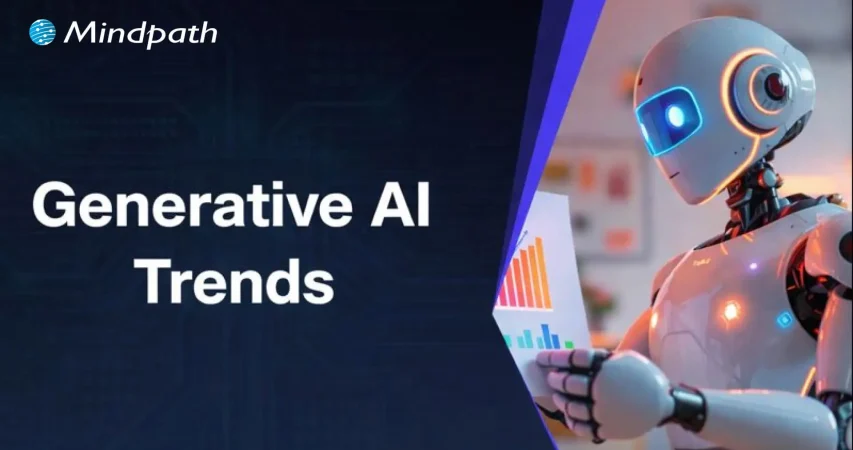
The technology world is growing at a quicker pace and 2026 is already proving to be a big year for innovation. Among the most discussed advancements, there are some exciting generative AI trends that are transforming how we produce content, design products and engage with digital tools. From smart video production to sophisticated code composition, generative AI is no longer a notion but is actually transforming the way things are reshaping in the real world.

Generative AI is applied across majority of industries today to facilitate work, enhance individual experiences, and assist individuals in generating more innovative ideas. In 2026, we are seeing a quick surge in adoption in healthcare, marketing, education and entertainment fields. Businesses are also embracing these tools to lead in innovation and customer experience. Intriguing, isn’t it?

Are you interested to know about some generative AI trends for 2026? Well, we have got you covered. This blog will walk you through top gen AI trends shaping 2026 and how they’re influencing the future of technology.

Want to integrate generative AI into your workflows for competitive advantage? At Mindpath, our AI Development Services deliver tailored, scalable AI solutions for your business.

Demystifying Generative AI: The Next-Gen Innovation

Generative AI is an intelligent technology that has the ability to assist in the development of new contents, images, videos or even computer code. It learns from what already exists and then applies what it has learned to create something new. For companies, this means they can utilize AI to create content, create products, or even assist with customers’ questions. It’s similar to having a super useful assistant who always learns and becomes proficient at various tasks. 

Generative AI is assisting companies in so many easy and intelligent ways. It saves time by performing daily tasks such as writing, designing, or responding to messages. So, teams can concentrate on more important things. It also assists organizations in making quicker decisions by getting data interpreted quickly. Customers receive better and more personalized service, which makes them satisfied. Additionally, it helps in creating new ideas and saving costs by doing work faster. Since the market is expanding very quickly, a Statista study approximates that generative AI will reach approximately $66.89 billion in 2026 and increase to $442.07 billion by 2031, demonstrating the growing importance of GenAI for business in driving efficiency, innovation, and customer engagement.

Also Read: Top AI Trends 

Now let us have a look at the generative AI trends for 2026:

Top Generative AI Trends to Look for in 2026

GenAI trends are progressing rapidly in 2026, revolutionizing the way we work and innovate. These trends are enhancing tools to be smarter, quicker, and more useful. Here are the leading GenAI trends that are shaping the future this year: 

1. Hyper-Personalization with GenAI

One of the key current trends in artificial intelligence is hyper-personalization. GenAI helps create content and messages that match each person’s unique needs and interests. It looks at large amounts of data to understand what someone likes, then gives them a more personal and meaningful experience. This makes communication more effective and helps build stronger connections. Hyper-personalization is becoming more important for better results, improved engagement, and customer satisfaction across many different industries. 

2. Multimodal Generative AI

AI is now getting better at understanding many types of information at once, like pictures, text, speech, and even video. This is called multimodal AI. For example, some tools can turn spoken words into text or show pictures based on what you write. New models like GPT-4V and LLaVa are making this possible. They help people talk to AI in smarter ways, using both words and visuals. This makes AI more useful and helpful in many different tasks. 

3. Conversational AI

Conversational AI is getting much better at having real conversations with people. Thanks to new tools like GPT, it can understand what you say, remember past chats, and reply in a way that feels natural. It’s like talking to someone who really listens and gives helpful answers. In 2026, this kind of AI can handle longer and more detailed chats, making it great for customer support, virtual helpers, and more. It feels less like a robot and more like a real helper. 

4. AI-Powered Apps and Services

One of the top ai industry trends is how apps and services are becoming much smarter by adding AI features. These AI-powered tools help people do their work faster and in a more personalized way. For example, writing apps learn your unique style to suggest better words and ideas, while health apps can offer treatment advice based on your personal health data. Shopping apps can recommend products you might like. In 2026, many industries use AI inside their software to make experiences easier, smarter, and more helpful for users every day. 

If you’re planning to integrate generative AI into your business strategy. Check out generative AI use cases to learn how companies are leveraging this technology to boost innovation and gain a competitive edge.

5. AI Boosting Creativity

AI is making creativity easier and more exciting for everyone. Tools like Dall-E can turn simple ideas into pictures, music, animations, and sounds, helping artists and creators bring their visions to life quickly. These AI tools keep getting better, allowing people to explore new ways to create art and express themselves. This technology is changing how creative work happens, giving both professionals and hobbyists fresh opportunities to make unique and interesting content in many different fields. 

6. AI Helping in Scientific Research

Generative AI predictions show that AI is making big changes in scientific research. It helps by quickly summarizing long and complex research papers, especially in medicine and pharma. This means researchers can understand important information faster without reading everything. These AI tools save time and make it easier to find key facts, helping scientists work better and faster. This leads to smarter decisions and faster progress in creating new treatments and improving healthcare for patients. 

7. Open Source and Generative AI

Open source is playing a big role in the growth of generative AI. It lets many people from different places work together to improve AI tools and make them better. This teamwork helps find and fix problems faster while making sure AI is fair and trustworthy. Open-source projects also share knowledge and resources, making AI development more open and honest. According to the McKinsey generative AI report, companies that see AI as key to their success are over 40% more likely to use open-source AI tools. In the tech industry, 72% of companies use open-source AI models, showing how important this approach is for advancing AI. 

8. Human in the Generative AI Loop

In 2026, a growing trend is people working closely with AI, called Human-in-the-Loop. This means humans help guide and check AI to make sure it follows rules and fits real-life needs. This teamwork makes AI results more accurate and reliable. By combining human skills with AI’s power, companies can get smart and creative results while keeping control over what the AI produces. This helps AI work better for many different uses. 

Looking to leverage generative AI for smarter, more adaptive app solutions? Explore our blog on Generative AI in App Development highlights practical applications, transformative benefits, and strategies to stay ahead in the digital landscape.

Ready to Embrace GenAI Trends for 2026?

The generative AI trends of 2026 are already changing how we create, communicate, and solve problems. From boosting creativity to transforming research and business services, these trends are making technology smarter and more helpful than ever. As industries keep exploring AI’s possibilities, it’s clear that generative AI will keep shaping the future in exciting and meaningful ways. 

If you’re looking to stay ahead in this fast-changing landscape, Mindpath’s GenAI solutions are here to help. Our expert team builds powerful and easy-to-use AI development services tailored to your business needs. Whether it’s integrating generative AI tools or developing custom applications, Mindpath ensures you get innovative, ethical, and result-driven AI experiences that truly make a difference. 

Related Post

Discover the transformative power of conversational AI chatbots. From cost savings to increased sales, learn how chatbots can drive growth.

Related Post

AI in e-commerce

Have you ever thought how do online stores seem to know what exactly you are looking for? How do these stores make your online shopping so much easier by showing you the perfect product at the perfect time? Well, it’s not just by luck, but the power of artificial intelligence which is changing the way we shop online. But how exactly is AI in e-commerce shaping the future of online shopping?

In today’s tech world, artificial intelligence (AI) is making an influential impact across many industries. Businesses are using AI benefits to improve their services and reach more customers. Among all the industries, e-commerce is seeing a major conversion with the help of AI, as it helps in creating personalized shopping experience, increasing sales and offering better customer support. AI also helps retailers to understand customer behavior, recommend the perfect choices as well as build stronger connections with them.

But this raises the question: how can AI help businesses in the e-commerce sector improve their operations and enhance customer experience? Curious to know? Let’s dive in!

Want to transform your e-commerce website with AI to avail its revolutionary benefits? At Mindpath, we offer AI development services designed to elevate your business and enhance customer experiences.

Understanding the Role of AI in E-commerce

AI in e-commerce refers to the use of artificial intelligence technologies to make online shopping better and easier. These systems can learn from customer’s behavior, answer their questions automatically, and also suggest products that people might like. It is like having a digital assistant that supports both the business and the shoppers. 

E-commerce stores use AI in many simple yet powerful ways. It helps show products that match a customer’s taste, runs chatbots for quick replies, and manages inventories by predicting what people might like to buy. It also helps with creating smart ads and adjusting prices based on demand. Using AI in business strategy helps online businesses grow faster. It improves how customers shop by giving them a more personal and easy experience. It also saves time and money for the business by handling routine tasks. In the long run, it builds trust, keeps customers coming back, and helps the store stay ahead of the competition. 

Also Read: AI transforming future

The Benefits of AI in E-commerce

With the rise of artificial intelligence in e-commerce, the ability to predict trends, analyze data and personalize experience has become more easily approachable. Businesses now can improve customer interactions, amend tasks and stay ahead in a competitive market with AI. Here are some of the key benefits of AI in e-commerce businesses.

1. Preventing Fraud

E-commerce businesses usually face a huge challenge with online fraud, but with e-commerce AI tools, these frauds can be prevented easily. AI can quickly spot any suspicious activity by understanding the patterns and detecting anything unusual such as incorrect shipping addresses or any other signs of fraud. Also, it can detect fraud even while reviewing thousands of transactions at once which helps to prevent losses and keeps the store guarded. AI has the ability to learn and improve which can benefit in continuously strengthening its fraud detection, helping you to focus on growing your business.

2. Improving Site Search

AI in e-commerce is making site search smarter and more accurate. AI can better understand what customers are looking for due to the advancements in natural language processing. Whenever a customer types to search for something, AI can automatically fix spelling mistakes, suggest synonyms and even fill missing words. It can also help customers in visual search as well search voice search options. With the help of these smart features, AI can reduce customer’s frustration and provides them exactly what they want, improving shopping experience and giving businesses a competitive advantage in the e-commerce market.

benefits of AI in e-commerce

3. Simplifying Inventory Management

With artificial intelligence in e-commerce, inventory management has become much easier. AI can predict how much stock you need based on past data and trends which helps to avoid overstocking or running out of items. AI also makes warehouse tasks smoother as bots can help store and retrieve products quickly, saving time and effort. This technology makes managing stock more accurate and efficient, allowing businesses to focus on growing while AI handles the tricky parts of inventory management.

4. Reducing Manual Tasks

AI can reduce the need for manual labor by taking over repetitive tasks in e-commerce. Instead of employees handling simple, time-consuming tasks, AI automates these processes and saves valuable time and improves competence. By handling tasks like answering basic customer queries, processing orders, and managing inventory, e-commerce AI allows businesses to focus on more important activities. While this may change the roles of human workers, it helps businesses cut costs and enhance productivity, making overall operations more streamlined and effective.

Want to reduce manual work and make your e-commerce platform more effective? Discover how AI in Web Development can streamline operations and enhance customer experiences.

Real World Use-Cases of AI in E-commerce

Artificial intelligence is already making a big impact in the e-commerce world. Many well-known online stores are utilizing it in smart ways to improve the way people shop and how smoothly their systems run. Here are some of the real-world examples showing how AI is used every day in e-commerce.

1. Product Discovery and Recommendations

AI in e-commerce is shaping how customers discover products online. Websites like Amazon, Shein, Etsy and eBay show products based on the browsing and purchasing history of their customer with personalized product recommendations. For instance, if you search for a purse on Amazon, it will suggest other similar brands of purses that you may like. This AI-driven system makes shopping more enjoyable and also boosts sales and customer trust. E-commerce advertising also benefits from this, as targeted recommendations lead to more engagement, improving overall customer experience.

2. Improves Customer Service

Customer service is improving with the help of AI-powered chatbots and virtual assistants, which can quick and personalized support. Artificial intelligence for customer service in retail stores helps businesses automate responses, answer customer queries, and offer tailored solutions. By using technologies like machine learning and natural language processing, AI can understand customer inquiries and offer accurate responses. For example, H&M uses AI-powered chatbots to help customers with product details, availability, sizing and even delivery options. This makes customer shopping easier and helps businesses deliver faster and efficient customer service.

use cases of AI in e-commerce

3. Voice Commerce

Voice commerce, also known as V-commerce, is changing how we shop online with the help of AI. By using voice assistance like Amazon’s Alexa, Google Home, and Walmart’s voice services, customers can shop simply by speaking. These AI-driven assistants understand commands through natural language processing (NLP) and can offer tailored product recommendations. They also help customers with order updates and product inquiries. AI in e-commerce examples include big companies like Amazon, Walmart, and Google Shopping that are leveraging voice technology to improve shopping experience.

4. Smart Pricing Strategy

The role of AI in e-commerce is changing the pricing strategies by allowing price adjustments based on various factors like demand, supply, and competitor prices. AI trends use data analysis to predict demand patterns and automatically modify prices. Major companies like Amazon, Walmart, and Best Buy have adopted AI to implement smart pricing strategies which allow them to remain competitive, attract more customers and improve satisfaction by offering relevant prices. These examples demonstrate how advanced technology can optimize pricing in the ever-evolving market.

5. Optimizing Logistics

In e-commerce, smart logistics powered by AI improves delivery efficiency by using real-time data and predictive analytics. This technology helps businesses track shipments, prevent delays, and make better decisions. For instance, Cainiao, Alibaba’s logistics arm, uses AI to ensure deliveries within 24 hours across China. Similarly, Amazon employs AI to optimize delivery routes, reducing costs and speeding up deliveries. These uses of artificial intelligence in daily life are making logistics smarter, cutting costs, and providing a better customer experience.

Looking to streamline your business operations and enhance customer experiences? Discover how conversational AI chatbots can help your business transform its workflows and boost efficiency in our blog.

Ready to Adopt AI Revolution?

Artificial intelligence is revolutionizing e-commerce by enhancing customer experiences, streamlining operations, and driving innovation. From smart pricing and personalized recommendations to AI-powered customer service and logistics, the role of AI in e-commerce is transforming the industry in powerful ways. As technology continues to evolve, businesses that embrace AI will stay ahead of the curve, offering better services and smarter solutions.

At Mindpath, we provide top-tier AI development services to help businesses thrive in the world of e-commerce. Our AI solutions are designed to improve customer experience, streamline operations, and boost sales. From personalized recommendations and dynamic pricing to efficient inventory management and smart logistics, we integrate AI to make your e-commerce platform smarter and more efficient. Trust Mindpath to bring AI-powered innovations that will optimize your business and help you stay ahead in the ever-evolving e-commerce landscape.

generative ai tools for content creation

Did you ever wish you could brainstorm new concepts, create beautiful visuals, or write codes without any creative personnel or technical expertise? Now that there are well-developed generative AI tools for content creation and code generation, this is not a dream anymore. These smart tools are enabling users to develop quality content and working code in a matter of minutes. Whether it is writing blogs or coming up with generative code snippets, these tools are aiding productivity and creativity in industries.

All you need is the right tool to witness the magic. Here, in this blog, you will learn about generative AI for code generation and content development. In addition to that, we will discuss some of the most essential aspects that will allow you to select a generative AI tool without any confusion.

Want to improve your business content creation and coding capabilities without increasing the workforce? Mindpath’s AI development services build custom GenAI solutions that deliver consistency and measurable results.

What are Generative AI Tools?

Generative AI tools refer to AI-based software programs that generate content such as audio, code, images, or text depending on the inputs of the users. Gen AI is changing creative work and to automate a number of repetitive processes. They are trained on a huge amount of data and generate content based on the context, which can be beneficial to teachers, marketers, developers, and designers.

Here is how generative AI can help in code and content creation.

1. Produce beautiful marketing images.

2. Write social posts, emails and articles.

3. Computerize routine development processes.

4. Write code using various languages.

Whether you are a marketer who wants to optimize the content or a developer who needs to quickly get the code finished, generative AI can serve as your creative partner.

Wondering where generative AI is making the biggest impact? Discover generative AI use cases to explore real-world applications across industries.

Let’s now learn about the most popular generative AI tools for content creation and code generation and know how to select the appropriate one for your business. 

Generative AI Tools for Content Creation

Generative AI has enabled more scalable, faster, and smarter content creation processes across industries. Here are some popular tools assisting with ideation, editing, and drafting. 

1. Copy.ai

It generally focuses on generating short-form content. Businesses can use it to generate taglines, headlines, and relevant email subject lines. Copy.ai is an ideal option for quick ideation and A/B testing across multiple campaigns. 

2. Jasper

This AI-based tool is an advanced writing assistant that is developed for sales teams, marketers, and brands in need of conversion-driven and persuasive content. It comes with built-in templates as well as SEO integration. Jasper can assist you with the social media posts, landing pages, and advertising.

3. Hypotenuse AI

This tool specializes in generating e-commerce-focused content and product descriptions. It is also able to develop SEO-friendly blogs depending on the nature of your brand so that you can gain organic traffic. Using this, you can maintain a consistent brand tone for your marketing content.

4. ChatGPT

This versatile tool is an excellent option for long-form writing, conversational content, and brainstorming. It is flexible in style and tone, and is therefore excellent for emails, product description, and blogging.

Wondering how tools like ChatGPT generate human-like responses? Explore the Large Language Models (LLM) guide to understand the technology powering content and code creation.

Wondering which AI tool is best for content creation? Well, that entirely depends on your requirement. You should choose generative AI tools for content creation considering your audience base, content format, workflow requirement, and platform. 

Top Generative AI Tools For Code Generation

AI coding tools are not here to replace developers; they are here to enhance their efficiency and capabilities. Well, if you want to experience it, here are some of the best generative AI tools for code generation that you can try. 

1. Tabnine

It is a deep-learning code assistant and can easily adapt to every developer’s style. The platform supports IDEs and multiple languages. Besides, it offers privacy-first deployment along with team-based training. With this tool, you can ensure context-aware code generation. 

2. Qodo

It is an AI-based code quality platform, which provides comprehensive test cover, compliance, and code integrity. It can easily be incorporated into CI pipelines, JetBrains, VS Code, and IDEs. Qodo also promotes features like code explanation, SDLC coverage, and automated test development.

3. GitHub Copilot

This tool is built in with Visual Studio Code and provides smart code completion, automatic snippet generation and real-time suggestions. It supports several programming languages and assists programmers to code more quickly and with minimum errors.

4. Replit

It is a browser-based coding platform that offers AI-powered contextual code generation and auto-completion. In addition, it is also capable of detecting errors and breaks down complicated code snippets efficiently with a reasonable explanation. Replit also supports real-time collaboration and rapid prototyping.

Interested in AI-powered image and media generation? Explore our Stability AI guide to see how Stability AI tools support creative workflows.

Tips to Choose the Right Generative AI Tools

Selecting the best generative AI tools for your needs requires a strategic approach. After all, not all the tools are the same, and one tool can’t fulfil all your wishes. However, you don’t have to worry at all, as here we have listed down some useful tips that will help you make an informed decision. 

1. Know Your Goals

Always begin by learning about the core objectives. Understand whether you need a tool for editing multimedia, writing SEO-optimized content, or generating code. With a clear goal, it will be easier for you to match tools to particular tasks. 

2. Pilot Various Tools

Extensively test multiple AI tools and compare their output quality, feature alignment, and usability. Piloting can help you find out which tools perfectly fit your existing workflows and adapt to your technical and creative style. 

3. Customization and Training

Opt for generative AI tools that allow quick tuning, model training, and brand voice adaptation. Flexibility in customization ensures the results are consistent and relevant.

4. Integration Compatibility

While searching for generative AI tools for content creation, you should ensure that they will integrate with your existing tools, like IDEs, CMS, etc. A seamless integration will reduce friction and increase productivity while supporting your future scalability. 

5. Support and Community

Some tools can be a little challenging to get started with. However, a tool with strong documentation and active forums will be easy to use. A growing community will accelerate learning and help you troubleshoot different issues. 

Keep these points in mind and align your organizational goals with the tool’s capabilities to find the best solutions. Only the right one can help enhance creativity as well as productivity. 

Want to stay ahead of emerging AI innovations? Check out generative AI trends to learn what’s shaping the future of AI tools.

Challenges and Considerations in Gen AI

As generative AI platforms become essential to code and content creation, many ethical considerations and challenges demand attention. Read to know more about this.

1. Ownership Conflict

One of the major concerns is ownership. Who truly owns AI-generated outputs- the developer, the platform, or the users? We all know that the current legal frameworks are not designed for technological innovation. This has created confusion around licensing, distribution rights, and copyright. Every organization should establish transparent internal policies that clearly state ownership. 

2. Ethical Grey Zones

Generative AI tools are trained on massive datasets, and that data may carry bias, cultural blind spots, and misinformation. Without proper oversight, those flaws can be seen in outputs. Organizations should consider ethical AI and focus more on fairness, transparency, and, of course, accountability. Speaking about the responsible use of models, it includes proper auditing models, flagging problematic content, and aligning outputs with societal values. 

3. Human Judgment Still Matters

Undoubtedly, generative AI tools have impressive capabilities. However, they are not infallible. These tools can misinterpret prompts, offer irrelevant content, and hallucinate facts. That’s why human oversight will remain essential for quality checks. Editorial review, domain expertise, and critical thinking are irreplaceable. 

4. Access Gaps

Powerful AI tools often need significant resources such as financial investment, computing power, and technical expertise. This may create obstacles for small creators and teams. Eliminating such issues is important for equitable innovation. Affordable pricing, inclusive design, and open-source models can lead to vast adaptation. 

Addressing these issues will ensure that generative AI tools evolve responsibly and can benefit various users. 

Wondering how businesses can adopt generative AI responsibly? Discover generative AI for business to learn strategies that balance innovation, cost, and accessibility.

Generative AI Tools – What’s There in the Future?

The future of generative AI tools for content and code creation is evolving rapidly. The trends indicate more accessible, intelligent, as well as collaborative experiences.  In the future we shall be able to observe:

  • Stunning multimodality features combining images, audio, code, and text generation.
  • More developed and elaborate fine-tuning of industry-specific code standards and writing.
  • The risk of errors will be reduced as AI will be able to comprehend context on a profound level.
  • AI will function as a technical and creative partner, helping businesses boost productivity. 
  • AI-powered content and code creation will become more accessible to small businesses, startups, and non-technical users. 

Curious how generative AI is reshaping business operations? Explore our generative AI revolution blog to see how it is transforming content creation and the future.

Generative AI Tools- Driving Innovation in Code and Content

Generative AI tools for content creation and code generation are transforming the way developers and businesses operate. These tools are driving high-speed innovation, increasing the power of creativity, and improving quality. Whether you need to write interesting marketing copy or just want to automate some of your coding tasks, these tools can help you with this seamlessly.

Mindpath’s AI development services have been leading this revolution and assisting businesses in embracing the potential of generative AI. Using our experience in offering tailored AI solutions and fine-tuning, you can have your AI tools aligned per your specific needs. With us, you can strategically select the best generative AI tools for content creation or code generation. Shine out in this changing online scenario with us!

react development company

Have you ever pondered why most of the businesses are in search of React development company? Are you curious to know why choosing the right development partner is important? If yes, you’ve reached the right place!

React, a JavaScript library that was developed by Facebook, is very popular for the development of fast and interactive user interfaces. It has a component-based structure and offers flexibility for developers to put out smooth, scalable and high performing web applications. It focuses on creating interactive elements for web applications, particularly single-page applications (SPAs), where content updates dynamically without reloading the page. Due to these benefits, many businesses are relying on React to enhance their digital experience.

But selecting an appropriate React development company is as crucial as the technology itself. The right team can guarantee that your business objectives are met with precision and efficiency. This blog will guide you through the advantages of choosing the right partner for your React needs as well as the factors to look for in a ReactJS development firm. So, let’s explore!

Looking for a reliable ReactJS development company? Mindpath is leading provider of ReactJS development services aimed at creating impactful and scalable applications that deliver concrete business outcomes.

Advantages of Partnering with a React Development Company

Partnering with an appropriate ReactJS development company can offer many benefits and it is very important to know what they bring to the table and how they work. Here are a few benefits you should know before making your choice: 

1. Customized ReactJS Solutions

A dependable ReactJS development company understands that every business has requirements. By offering customized solutions, they guarantee that the final product aligns with your goals. They can adjust features, improve functionality, and design a user-friendly interface to match your business requirements. With customizable ReactJS development services, the company guarantees your web application is not just practical but optimized to support your growth and success. This personalized attention can help in building a product that meets your exact requirements, fostering competence and improving user experience.

2. Faster and Smarter Development

Utilizing ReactJS services can help to speed up the whole development process, so, an expert team follows a clear and organized method that improves how quickly and smoothly the work gets done. With automation and collaboration support tools, they can create your project faster without sacrificing quality. They usually follow agile practices, which include breaking the work into smaller pieces, getting feedback, and adjusting accordingly. This way, your application is delivered in a short time, with fewer bugs, and better results.

Also Read: React Roadmap for 2025

3. Ongoing Support after Development

Reliable ReactJS development companies do not consider their work finished once a project goes live; a good company provides continued assistance and support to ensure the website or application runs smoothly. This means troubleshooting and resolving bugs, implementing minor changes, and providing ongoing maintenance. With good ReactJS services, you receive regular maintenance to ensure your application is performing well and updated. If anything goes wrong, the team will be able to fix it with ease. This type of support fosters trust and ensures that your business remains stable in the long term by keeping your digital solution up to date and trouble-free.

4. Strong Emphasis on Quality

Quality remains a top priority for businesses when building web applications. A React development company with expert teams adheres to strong testing methods to make sure everything works as expected. They check the code, design, and features at every stage of the project. This identifies errors early, corrects them prior to the final delivery and makes the final product smooth, dependable, and ready for actual users. By focusing on quality, ReactJS development agencies ensure that applications delivered are of high standards and work effectively.

Are you missing out on the potential efficiency ReactJS offers for modern web apps? Discover the essential benefits of ReactJS development services to maximize your investment.

Key Factors While Choosing a ReactJS Development Company

While choosing a ReactJS development agency, you must pay attention to a few things. Each company has its own way of working and it’s crucial to know what makes one stand out from the rest. The following are some of the important considerations you must look for: 

Key Factors While Choosing ReactJS Development Company

1. Skilled Team with Strong Background

When selecting a team for your ReactJS application development, it is essential to look at their previous records. A team with good experience and expertise will easily be able to deal with complex tasks. They must have developed various types of web or mobile applications for different companies which indicates that they know what fits best in a situation. Experienced teams can identify and fix problems in less time and develop better apps suitable for your needs.

2. Wide Range of ReactJS Services

It is crucial to select a team that provides a complete spectrum of ReactJS development services. This includes custom ReactJS application development, UI/UX design, and React Native mobile app development. The team should also be able to take care of API integration, backend development, and performance optimization. Also look for those who provide migration services to bring your current system up to date and offer ongoing maintenance and support to make sure your app is running smoothly in the long run.

Must Read: Top ReactJS Trends 

3. Evaluate Portfolio and Reviews

Looking at previous projects and client reviews of a React development company helps you understand their skills and how satisfied their clients are. You can search for reviews on websites like Clutch, GoodFirms, and Trustpilot. These reviews show how well the team communicates, fix issues, and delivers results. A strong portfolio with positive feedback indicates that the team has experience and a good reputation, which gives you confidence in their ability to handle your project successfully.

4. Understand Their Development Approach

One should always know the development process of the team to ensure it suits your business needs. Most developers employ agile practices, which enable them to implement changes easily and remain flexible throughout the project. This implies they can adjust to any issue that comes up. An organized process ensures that the end product is according to your objectives and matches your expectations, especially in the case of ReactJS development, where flexibility and productivity are the key to providing high-quality output on time.

Want to understand how much your business should invest in skilled ReactJS talent? Learn the real cost of hiring ReactJS developers to make informed financial decisions.

Looking for ReactJS Development Services?

Selecting the appropriate React development firm can literally make all the difference in the performance of your application and the success it brings to your business. From customization and speed to quality and maintenance support, every aspect is a crucial consideration for ensuring your success. Investing time to consider experience, services, and working methodologies will guide you to the best team.

At Mindpath, we provide professional ReactJS development services with years of experience and innovation underpinning our work. If you need to hire ReactJS developers who know your needs inside out and can provide you with efficient and scalable solutions, we’re here to assist you in growing. 

Discover how to choose the right ReactJS development company with our step-by-step guide and learn about Mindpath’s expert services.