Building a Powerful Web App: Combining React and WordPress

Join our Newsletter!

Featured Posts

Support Is One Click Away

Home

Building a Powerful Web App: Combining React and WordPress

wordpress-react-combine project

Building a Powerful Web App: Combining React and WordPress

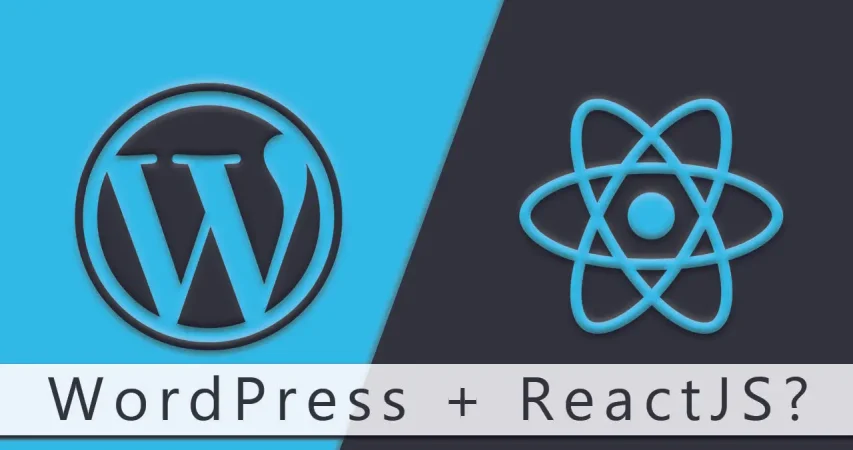
Are you curious about how to elevate your web app to the next level? Imagine combining React’s cutting-edge user interfaces with WordPress’s robust content management. Interesting right? In this blog, we’ll guide you through the process of merging these technologies to build a web app that’s both visually stunning and highly functional. So, let’s dig in! 

Overview of React 

React is a JavaScript library that enables the building of user interfaces, mostly single-page applications. It gives a possibility to create interactive elements and dynamic web pages by breaking their content into smaller, re-usable components. It helps in managing updates to the user interface and hence makes applications faster and more responsive. React is essential to today’s digital makeup since it will help in the creation of a much faster, interactive, and dynamic web application that would go a long way in enhancing user experience. Due to its component-based architecture, React simplifies the development process and supports complex applications with high performance, making it a preferred choice for modern web development, where user engagement and responsiveness count the most. 

Overview of WordPress 

WordPress is an extremely popular content management system, and millions of websites are running on it worldwide. Its user interface is very simple, so users can easily create, edit, and manage website content without needing to know how to code. With high flexibility in themes and various plugins, WordPress can be put to any purpose—from personal blogging to the most complicated business sites. WordPress is important due to the flexibility and user-friendliness in creating and managing websites efficiently for any kind of user. It provides access to unlimited customization because of its extended base of themes and plugins, hence becoming a mainstay tool in the modern world for web developers and content creators. 

Why Combining React and WordPress Can Be Beneficial for Developers.   

Integration of React with WordPress enriches development by putting the power of both together. React is empowered for reusing the components, which means simplicity in terms of coding and speed in development. Fast rendering with efficient state management means web applications work harmoniously and respond as the user expects. JSX syntax, with its combination of JavaScript and HTML, enables easier writing and readability of codes. WordPress complements React by taking care of the content and providing a clear user interface. The fact that React can keep data away from the presentation and manage it nicely helps not to lose data under any conditions. Taken together, React and WordPress make the building process much faster and more convenient for creating powerful and extremely dynamic web apps. 

Key Considerations When Building Your Web App with React and WordPress    

1. Existing Infrastructure  

Your existing infrastructure does affect how well React and WordPress work together. If your current system is compatible, the integration of React will go through smoothly and more quickly. For example, a headless setup where React is doing the front end and WordPress the back end could be best for modern needs. This, however, requires more development work, changes in your back-end system, and special expertise to do it correctly. 

2. Maintenance And Updates  

Regular updating and maintenance are vital in the case of a React and WordPress site. In case you do not update them regularly, your site will eventually have performance issues, it will be vulnerable to security exploits, or even crash. When it’s headless—in a setup where React and WordPress run separately—the updates become easier; one could independently update the front end and back end, which will be helpful in keeping the site’s stability and safety. 

3. Developer Skillset  

It requires a wide skill set to build a website with React and WordPress. One needs to be proficient in JavaScript, to understand JSX, and to use state management tools like Redux. One would also want to be familiar with modern development tools like Webpack and Babel and know how to work with APIs. If these competencies are missing in your team, including an expert on a project basis will make the development process smoother and more efficient. 

4. SEO Considerations 

SEO is critical to have your website show up in search results and bring in visitors. Using React with WordPress, SEO can be a little more complex. As its client-side rendering, React may make it hard for search engines to index your content. You can either implement SSR or SSG to make it easier for search engines to crawl and rank your site. Besides, meta, sitemaps, and canonical URLs should be properly set up for effective SEO within a headless WordPress setup. 

Ready to elevate your website to new heights?

At Mindpath, we seamlessly integrate React with WordPress to create dynamic, responsive web experiences.

Configuring React to Work with WordPress      

1. Write Modular Code 

Breaking your code into smaller, self-contained parts makes it easier to handle and reuse. This is like keeping your workspace organized: when everything has its place, it’s much easier to find anything that you may need and use it. Small, reusable components in React are ways by which you can keep your code neat, making changes or fixes on parts of your site without affecting the other parts. 

2. Use A State Management Library   

A state management library, like Redux, that keeps every bit of information of your app in one place. This is good for complicated websites where you deal with a great deal of information. This way, it becomes easy to handle changes and updates for your website to run smoothly and in the desired manner. 

3. Optimize Performance   

Performance optimization of the website enables quick and enjoyable usability by the user. This is achieved through caching, breaking down the code into smaller pieces that load only when needed, or lazy loading—parts of the website only load after becoming visible to the user. Doing this will get your site up and running quickly; this will also improve responsiveness. 

4. Implement A Consistent API   

A good API—like WordPress REST API or GraphQLwill help your React app and WordPress site to communicate smoothly. A consistent API would mean that data flows between the two without any problems. REST APIs offer flexibility, but their design is often varied. GraphQL APIs are more homogeneous and predictable, so it helps in use and understanding. 

5. Plan For Extensibility   

Make a site that will expand and evolve over time without a problem. That means keeping ahead by finding out ways to add new features or update existing ones without breaking the rest of the site. Having an extensible design means it will let your site easily change to meet future needs without having to start from square one. 

6. Automated Testing 

Automated testing means running your code for errors using tools automatically. This will ensure that mistakes are noted and cured in the beginning, thus ensuring that your website does what you want it to. Automated testing saves time and keeps your site stable; this reduces the chances of problems frustrating users. 

Build Your Web Using React and WordPress with Mindpath    

The experienced team at Mindpath uses React to improve user experience and WordPress as the foundation for creating powerful websites. With its incredibly strong and practical content management system, editing and managing website material is effortless. By integrating React, we can increase your site’s speed and amount of interaction while engaging users on a deeper level. Create a dynamic frontend for your website using React to make it load quickly and react to user input as smoothly as possible.

Mindpath offers the best of both worlds: the ease and versatility of WordPress paired with the contemporary, dynamic capabilities of React. We take care of the technical setup and customization so you can have an outstanding website experience and concentrate on your content and business objectives. 

Conclusion  

Combining React and WordPress gives synergy to your Web application, offering a digital experience that is at once impressive and compelling. Being able to interact with dynamically displayed interfaces from React and a robust content management system like WordPress, you are assured of having a site that is at once engaging, powerful, yet very easy to manage. Inherently, this automatically ensures the improvement of user interaction and performance while also making it seamless to update content and manage sites. Embrace this mix of technologies to develop a web app which would be fast, functional, and future-ready. This way, your web presence will always be at the top of its game.
Mindpath excels at bringing this integration to life. Our expert team combines the power of React with WordPress to deliver an ultra-fast, interactive site that is also easy to maintain and update. With Mindpath, you can confidently navigate the complexities of modern web development, ensuring your digital presence is both cutting-edge and effortlessly managed. 

Looking to enhance your WordPress site with cutting-edge React features?

Mindpath is your go-to partner! We specialize in integrating React’s dynamic capabilities with WordPress’s robust CMS to deliver stunning web experiences.
Related Post

Discover the ultimate guide to hiring Node.js developers in London. Learn about the skills, benefits, and cost factors involved in finding the right talent for your project.
Discover how digital twin technology boosts efficiency, enhances product quality, and supports sustainability. Learn its impact on modern businesses and industry sectors.

Related Post

custom mobile application development services

In an ever-quickening pace of digital development, businesses strive for differentiators that can engage their audiences in new ways. Custom mobile application development services provide the means to actually deliver, providing a way for businesses to develop apps that serve their needs perfectly. Using unique features connected to smooth user experiences, organizations build engagement, access to efficiencies, and value delivery. Have you noticed how apps designed with intention often make a bigger impact than off-the-shelf solutions?

Keeping up with mobile app development trends ensures that these custom solutions remain relevant, innovative, and aligned with evolving user expectations. These services create opportunities for organizations to reconsider customer engagement and organizational workflows in a fundamentally different way. Through dedicated solutions, organizations can have a competitive advantage and respond quickly to the changes in market demands. The custom mobile application’s ability to do so goes beyond its convenience. It helps to shape strategies, improve growth potential, and establish connections. In this blog, we are exploring the top seven industries that have benefited from custom mobile application development services and how. So, let’s dig in!

Looking to stay ahead in today’s fast-paced technology world, businesses are looking to customize apps that are tailored to meet their specific demands. Mindpath’s mobile app development services will deliver high-performing solutions that give real results.

A Quick Dive into Custom Mobile Application Development Services

Custom mobile app development services involve developing mobile applications for a particular objective or purpose, rather than depending on off-the-shelf solutions. This process involves the planning, design, development, testing, and deployment of mobile applications, resulting in applications that provide personalized user experiences, enhanced usability, integration with existing systems, and strong security. Custom applications also allow the business flexibility and scalability to tailor the app to its needs as it evolves over time.

These services are developed to deliver applications that are agile, scalable, and secure. Custom solutions can effortlessly merge with an existing system and adapt to changing needs in the business. When companies invest in their respective user experience, they can enhance their engagement while properly managing sensitive information. Custom mobile app development services will provide sustainability for the long term, and a strategic and effective digital presence that supports competitiveness and adaptability.

Also Read: Mobile App Development Tools

Industries Benefiting from Custom Mobile Application Development Services

Many sectors are changing how they operate and engage customers with custom app development services. These services help businesses create mobile apps that cater to their specific goals, workflows, and the needs of their customers. Through customization, companies from many sectors can enhance efficiency, increase engagement, and achieve measurable growth.

1. E-Commerce and Retail

Custom app development services plays a significant role. It provides seamless and engaging shopping experiences to brands in the e-commerce and retail industry. Personalized recommendations, customer-friendly navigation, and secure payments are some of the app features that businesses can create to keep customers happy. Retailers not only increase customer loyalty by incorporating features such as loyalty programs and real-time updates but also can gain steady sales growth.

2. Healthcare

The healthcare industry is changing rapidly, as you would expect from a sophisticated mobile application development platform. Making use of customized healthcare apps will allow patients to have much simpler access to booking their visits and managing online consultations.

Hospitals also enjoy a more efficient patient care process. The implementation of electronic prescriptions and the employment of telemedicine innovations. All of which results in the saving of time and resources and the maintenance of high-quality care.

3. Education

One of the innovations that the education sector is adopting is the use of tailor-made mobile applications. The implementation of these applications has brought ease in the management of virtual classes, assignments, and attendance for schools, universities, and e-learning platforms.

Through the use of custom apps, education can be more stimulating, adaptable, and available to students from any location as these apps provide interactive learning experiences and instant communication.

4. Finance

One of the major trends in the finance and banking industry is the use of custom mobile application development services to revolutionize customer experience. These applications not only allow the users to carry out banking, investing, and loan activities effortlessly but also ensure that the data security is at a very high level.

Some of the latest security and convenience features, such as biometric authentication, instant payments, and personalized insights, have empowered customers to become more loyal. This makes them feel more comfortable with their financial institutions.

Looking to prioritize security in your application lifecycle? Discover useful strategies in our blog on application security best practices and explore how to make security a core part of your development roadmap.

5. Logistics and Transportation

One of the main factors for better efficiency in the logistics and transportation industry is custom application development services which develop various applications for business use. This kind of apps will allow companies to manage their routes, shipments tracking, and fleet operations. Not only in person but also in real time.

Advanced analytics and the usage of GPS as standard technology in many different fields have definitely helped in optimizing fuel consumption as well as in savings and in making sure deliveries are on time and are reliable.

6. Real Estate

Custom mobile application development services have a major impact on the real estate sector, which changes the way the market has been operating for a long time. With these new applications, end-users can go through listings, practically visit properties, and get in touch with agents at once. Thus, it speeds up and clarifies the entire process.

Apart from that, real estate companies are also benefiting from these applications. They can manage their leads more efficiently and correspond with clients comfortably. Thus making the property experience more productive and enjoyable.

7. Travel and Hospitality

Innovative custom mobile application development services have become an effective way for the travel and hospitality industry to improve customer experience. By using these apps, individuals can quickly reserve trips, keep track of their schedules and have seamless access to different departments at any time.

As a result of incorporating functionalities such as up-to-the-minute updates, location maps, and tailored gifts & services, travel companies. They have the opportunity to create customer loyalty and provide their travellers with a more exciting and integrated outing.

Curious about the tools and frameworks driving the future of mobile apps? Explore and discover key innovations in our blog on mobile app development technologies that can empower your business to build smarter, more efficient apps.

Ready to Transform Your Business with a Custom Mobile App?

Custom mobile application development services are helping industries innovate, improve customer engagement, and achieve lasting growth. Businesses across sectors now rely on tailored apps to enhance user experience, streamline operations, and stay competitive. With the right strategy and expert support, these apps can become a long-term asset for business success.

As a trusted custom mobile app development company, Mindpath delivers powerful website and mobile app development solutions designed for your unique goals. Our expert team builds secure, scalable, and user-friendly apps that help your business connect better with customers and perform efficiently. Partner with Mindpath to bring your app idea to life and move your business ahead with confidence.

agentic ai

Have you been hearing a lot more about the idea of Agentic AI? It is really becoming one of the most talked about ideas in tech, right? Well, it is a new way of thinking about AI, and it takes action on its own, not just reactively waiting for a command. It can make decisions, plan, and act independently as if it possesses its own autonomous cognition. This is what makes it feel less like a tool and more like a genuinely smart collaborator who is helpfully performing the task at hand.

Even more exciting is how easily it’s intertwining with real-world activities, showcasing how AI is transforming future innovations is becoming a reality. But what does agentic AI mean, and why is it being so widely talked about right now? If you’re in tech, in business, or simply curious about the future of AI, spanning these definitions will be vital. So, in this blog, we’re going to guide you through what Agentic AI is, why it’s gaining traction, and how it may soon bring intelligence into our everyday lives. To begin with, let us know what is the concept of agentic AI.

Looking to integrate smarter, goal-driven AI into your business? At Mindpath, we offer end-to-end AI Development Services to design, train, and deploy advanced agentic solutions.

What is Agentic AI?

Agentic AI is a more sophisticated and advanced kind of artificial intelligence agent that can make its own decisions and perform actions once it is initially instructed. It is not limited to just following commands; it can understand what to do, outline a plan, execute it, and optimize the process during execution. Agentic AI is well suited for numerous, complex tasks in business and other fields, where fast thinking and independent action are often required.

Agentic AI’s potential extends far beyond automation, as it is already on track to considerably change many industries. A report from MarketsandMarkets estimates that the global market size of Agentic AI will increase from USD 13.81 billion in 2025 to USD 140.80 billion by 2032, growing at a CAGR of 39.3%. Rapid AI growth can be traced to its ability to perform tasks and activities associated with marketing, sales, and operations. In customer service, Gartner predicts that by 2029, Agentic AI will resolve 80% of support issues independently, which would lead to an estimated 30% reduction in operational costs. These numbers reflect just how transformative Agentic AI is becoming, especially in areas that demand fast, intelligent decision-making.

Also Read: AI agents types and benefits

Benefits of Agentic AI

As businesses look for smarter ways to work, Agentic AI offers powerful advantages that go beyond traditional automation. Its ability to think, act, and improve independently is unlocking new levels of efficiency and innovation across industries.

Benefits of Agentic AI 

1. Smarter Workflow Automation

Agentic AI makes it easier to manage complex workflows without needing constant human input. In supply chain operations, it can analyze data, spot issues early, and suggest the best solutions. It also tracks inventory levels and connects with suppliers to restock items on time, keeping everything efficient and well-organized.

2. Boosting Efficiency

Agentic AI helps businesses run faster and smoother by managing and improving processes on its own. It learns from results, adjusts its actions, and keeps getting better without needing to be reprogrammed. This leads to fewer delays, higher efficiency, and makes it easier to scale operations as the business grows.

3. Real-Time Decision Making

One of the key strengths of agentic AI is its ability to quickly make decisions and adapt to changing situations. Agent AI tools can process real-time data, respond to unexpected events like shipping delays, and adjust plans without human help. This makes AI in decision-making faster, more flexible, and better suited for today’s fast-moving business needs.

4. Scalable Performance

Agentic AI models help businesses grow by handling more tasks without losing speed or efficiency. They use cloud platforms, APIs, and large language models to manage increasing workloads smoothly. In setups with multiple agents working together, such as in healthcare, they share tasks like data analysis and scheduling to reduce manual work.

5. Enhancing Human Roles

Agentic AI helps people work better by taking over repetitive tasks, improving communication, and offering smart assistance. This allows employees to focus on creative thinking, problem-solving, and other work that needs human judgment. While the AI works independently, human guidance is still important to keep everything aligned with company goals and values supported by valuable insights from AI in business strategy.

Wondering how AI-powered chatbots fit into the growing shift toward agentic AI? Read our blog on how conversational AI chatbots help businesses to explore how these systems learn, adapt, and deliver human-like interactions.

Agentic AI Use Cases

Agentic AI is already being used across many industries to improve efficiency, decision-making, and customer experience. Here are some real-world agentic AI examples that show how this technology is making a meaningful impact in different areas.

Agentic AI Use Cases

1. Smart IT Support Automation

Agentic AI is changing IT support by spotting and fixing problems on its own before they grow. It handles common tasks like password resets and software updates, while also solving complex issues by learning from past data. This shift aligns with emerging AI trends that focus on self-repairing systems and intelligent automation.

2. AI-Powered Financial Management

Agentic AI in finance can handle tasks like fraud detection, compliance checks, and forecasting by quickly analyzing large amounts of data. It also offers personalized advice by tracking spending and improving money management.

3. Smarter HR Assistance and Operations

In HR, agentic AI helps by answering employee questions, managing onboarding, and screening candidates during hiring. It gives quick, personalized support while allowing HR teams to focus on bigger goals.

4. Proactive Threat Hunting

Agentic AI actively searches for hidden threats by scanning security data for unusual patterns. It keeps learning to catch new types of attacks that older systems might miss.

5. Streamlined Incident Case Management

Agentic AI organizes and tracks cybersecurity incidents by logging details and assigning them to the right teams. It also learns from past cases to suggest better ways to handle future issues and ensures all records stay up to date. Companies often use AI consulting services to optimize these workflows and strengthen overall security operations.

6. Real-Time Cyber Threat Response

In cybersecurity, agentic AI watches for threats around the clock and reacts instantly by blocking risks or alerting teams. It learns from new attacks, so it gets better at spotting danger over time.

Curious how agentic AI is revolutionizing personalized shopping experiences and automation in online retail? Explore our blog AI in ecommerce to see how intelligent systems are reshaping customer journeys and boosting business performance.

What Is the Difference Between Agentic and Non-agentic AI?

Understanding the difference between agentic and non-agentic AI is key to recognizing how advanced AI systems are evolving. While both types serve important roles, they differ greatly in how they operate, make decisions, and adapt to new situations. The following difference table will help you clear your understanding of agentic and non-agentic AI.

Difference Between Agentic and Non-agentic AI 

How Far Can Agentic AI Take Your Business?

Agentic AI is creating a major shift in how systems work, making them more independent, responsive, and useful across real-world situations. It’s no longer just about automation but about building intelligent support that acts on its own, learns from outcomes, and keeps improving. As industries adopt this new approach, the ability to understand and apply Agentic AI will be a clear advantage for any forward-thinking team.

At Mindpath, we help businesses bring this future to life with tailored AI development services. Our team builds intelligent, scalable, and adaptive AI solutions that align with your goals and workflows. If you’re ready to explore the power of Agentic AI in your operations, let’s connect and shape your next intelligent move.

Frequently Asked Questions

1. Is Agentic AI suitable for small and mid-sized businesses?

Yes, Agentic AI is not limited to large enterprises. With cloud-based tools and scalable platforms, small and mid-sized businesses can adopt agentic systems for workflow automation, customer support, and analytics. The key is starting with a focused use case that delivers measurable value.

2. How much control do humans have over Agentic AI systems?

Even though Agentic AI can act independently, human oversight remains essential. Businesses set the goals, boundaries, and ethical guidelines the system must follow. Regular monitoring, audits, and performance reviews ensure the AI stays aligned with company objectives and regulatory requirements.

3. What industries can benefit the most from Agentic AI?

Industries that rely on fast decision-making and large data volumes benefit greatly. This includes finance, healthcare, cybersecurity, logistics, retail, and IT operations. Any sector that requires continuous monitoring, predictive insights, or automated responses can gain significant advantages from intelligent agent-based systems.

4. Is Agentic AI difficult to implement in existing systems?

Implementing Agentic AI depends on your current infrastructure. Organizations with modern cloud systems and APIs can integrate it more smoothly. However, legacy systems may require upgrades or restructuring. A clear roadmap, proper data preparation, and technical expertise make the transition easier and more effective.

5. What risks should businesses consider before adopting agent-based AI?

Businesses should consider data privacy, ethical decision-making, system transparency, and security risks. Clear governance policies and human supervision are necessary to prevent unintended outcomes. Proper testing and phased deployment help reduce risks while ensuring the system performs reliably in real-world conditions.

Agentic ai vs generative ai

Artificial intelligence created the biggest ripples in the domain of technology in the last decade. Following the adoption of generative AI tools, there is a new type of AI that showcases how artificial intelligence continues evolving. The agentic AI vs generative AI comparison has become a hot topic of discussion for businesses worldwide. Which one do you think delivers the best of AI for your business?

Since the public release of ChatGPT, many businesses have gradually incorporated generative AI in their workflows. However, agentic AI emerged as a practical solution to address the unrealistic expectations users had from generative AI. Is agentic AI better than generative AI? You should know that each one of them has distinct strengths for optimizing professional business practices.

If you are looking to build innovative AI solutions that help enhance your business performance. Explore Mindpath AI development services to see how you can leverage the best through our expertise in agentic and generative AI.

Understanding the Definition of Generative AI

Many people would think of ChatGPT and other tools like Midjourney upon hearing generative AI. How can you define generative AI in the present context? You can assume that generative AI refers to the variant of artificial intelligence that focuses only on creation. Take a generative AI tool and imagine something that you want to create, such as an image or a letter to your friend. All you have to do is offer instructions and it can create your image or letter. 

How does generative AI create something new from your instructions? The core design of generative AI or gen AI revolves around models learning from existing data. Generative AI models use the knowledge gained from their training to create new output that features some elements of human creativity. 

You must have searched for ‘what is gen AI’ after learning about the mainstream adoption of ChatGPT, DALL-E and other generative AI tools. The effectiveness of these tools revolves around advanced machine learning models or neural networks to understand and recreate the patterns from their training dataset.

Even with the widespread adoption, generative AI does not come without limitations. The outputs by generative AI systems are as accurate and relevant as the data used for their training. On top of it, generative AI is not capable of making decisions on its own and just creates from the patterns it has learned.

Wondering how your business can leverage AI to stay competitive? Discover generative AI for business to learn how intelligent systems drive innovation, efficiency, and growth.

Emergence of Agentic AI

The quest to solve the limitations associated with gen AI led to the creation of agentic AI. With the use of smart agents, AI switched to proactive functionality from its traditional reactive nature. You can define agent AI as a new variant of artificial intelligence that focuses on specific tasks and autonomous operation. Smart AI agents will not only generate outputs based on your instructions but also learn in real time, make decisions, and implement actions required to achieve your goals. 

One of the most distinctive highlights of agentic AI, which makes it capable of autonomous decision-making, is adaptability. The best example of agentic AI is evident in agents used for customer support or in the infrastructure of autonomous vehicles. AI agents use sensors and algorithms to understand the environment and process information, followed by executing actions with different degrees of human oversight.

You can understand the answers to “what does agentic AI mean” in the fast-paced digital landscape by identifying how it acts with a purpose. Agentic AI is not only about responding to input like generative AI. On the contrary, AI agents understand the objectives and make informed choices to achieve the specific goals.     

Curious how Agentic AI and Generative AI fit into the broader AI landscape? Explore types of Artificial Intelligence to discover how ANI, AGI, and ASI provide the foundation for advanced AI systems.

Unraveling Key Differences in the Agentic AI vs Generative AI Debate

The arrival of agentic AI represents a major paradigm shift in the domain of artificial intelligence after generative AI. At the same time, you cannot ignore how generative AI is the most effective option for content creation. Therefore, an overview of the differences between agentic and generative AI is essential to pick the right option for your requirements.

1. Core Objectives

The foremost point in any generative AI vs agent AI comparison shall focus on the core purpose of the two types of artificial intelligence. Generative AI emphasizes creation and its core purpose is to create original content from user instructions. You can create images, draft emails or generate marketing materials with generative AI. The primary value proposition offered by generative AI revolves around augmenting the creativity of humans. Generative AI aims to achieve its purpose with the help of pattern matching and linguistic fluency.

Agentic AI works with the core purpose to achieve the goals assigned to it. The primary goal of agentic AI exceeds beyond content creation and aims to achieve a broader set of specific goals. The role of AI agents is to work autonomously without waiting for your prompts, which empowers them to identify opportunities and make relevant decisions. You can find answers to ‘what is agent AI vs generative AI’ in the fact that agentic AI can come up with different strategies and pick the right one to achieve the defined goals. For example, agentic AI use cases in software testing not only focus on writing test cases but also adopt a proactive approach to ensure software quality.

2. Dependence on Prompts

You wouldn’t get any prizes for guessing that generative AI is highly dependent on prompts. Generative AI has been designed to be reactive, which means that it responds only to user queries or prompts. You can have the most sophisticated LLMs in your generative AI systems and they won’t do a thing without human inputs. It clearly shows that generative AI is not capable of identifying problems or initiating conversations on its own. The reliance on prompts creates a significant roadblock for expanding the utility of generative AI. As a result, the most sophisticated generative AI models also need human oversight for every decision.

The difference between generative AI and agentic AI is evident in the fact that agentic AI has been designed for autonomy. AI agents operate within specific constraints to achieve defined goals albeit with complete autonomy. Agentic AI knows exactly when it must execute an action and determines the ideal strategy that can help in achieve the desired goal. You can notice the autonomy of agentic AI in how they leverage adaptive behavior and sophisticate decision trees in their architecture. Upon encountering problems, AI agents know how to solve them independently without human intervention.      

3. Use Cases in Real World

Another point of comparison between agentic AI and generative AI draws attention towards their utility. Generative AI has become the preferred choice for creative and analytical tasks that require human oversight. You can notice most of the use cases of generative AI in content creation and code generation. In addition, it also serves as a promising tool for design and visual creation by translating your ideas into real art. Businesses have also adopted generative AI as a promising solution for complex data analysis tasks to generate valuable insights.

The agentic AI vs generative AI comparison shall also showcase the growing use of AI agents in business functions. Agentic AI can streamline autonomous software testing with its capability to adapt to changes in the software application. Similarly, you can find successful examples of agentic AI applications in supply chain optimization. The other prominent use cases of agentic AI include algorithmic trading and robotic process automation.  

4. Workflow of Agentic and Generative AI

Most of the discussions on differences between agentic and generative AI also emphasize how the two variants of AI work. Generative AI works by providing unidirectional responses according to your input. For example, you provide instructions to generate an image and generative AI will create the image for you. Generative AI does not retain persistent memory or understand the objective you are pursuing as it focuses solely on the immediate instruction. It is one of the reasons for which using generative AI in multi-step processes involves human intervention at every stage.

Agentic AI stands out as the solution where generative AI poses problems. You can understand the difference between generative AI and agentic AI clearly in the various applications of agentic AI. Smart AI agents are capable of handling complex tasks that involve multiple steps and require memory retention. Agentic AI can maintain state across different interactions and track the progress made towards the defined objectives. Subsequently, it can adapt strategies on the basis of results in the intermediate steps to achieve the final goal.  

Looking to leverage the power of both autonomous and creative AI systems? Learn the benefits of AI to explore how Agentic and Generative AI together can transform strategy, operations, and customer engagement.

The following table showcases the notable differences between generative AI and agentic AI.

Criteria Generative AI Agentic AI
Core Objectives Generative AI aims to augment the creativity of humans by facilitating faster content creation. Agentic AI aims to achieve the defined goals with autonomous action.
Dependence on Prompts Generative AI is highly dependent on prompts. Agentic AI can take autonomous decisions without prompts.
Use Cases Generative AI is useful for content creation and data analysis tasks. Agentic AI is useful for autonomous software testing, algorithmic trading and robotic process automation.
Workflow Generative AI works by offering single-shot response to user instructions or queries. Agentic AI works with complex and multi-step workflows by adjusting strategies to achieve defined goals. 

Final Thoughts

The differences between generative and agentic AI reveal how artificial intelligence offers two distinct solutions to achieve different business goals. If you want to create content, generative AI is your best pick. On the other hand, you should choose agentic AI when you need your AI systems to work independently on specific tasks. The overview of the generative AI vs agent AI comparison can help you pick the ideal AI for your business.  

Mindpath is a leading platform to provide AI development services tailored to your business requirements. We also specialize in developing generative AI models to help you achieve promising improvements in productivity. Our ability to identify the pain points of the client and understand their vision helps us create the most relevant solutions. Reach out to us and give your business an additional edge in the AI revolution now.