Latest Insights On
GenAI, Tech, and Digital Transformation
Stay updated with expert insights, success stories, and real-world applications of cutting-edge technology.
In a digital environment where GenAI is emerging as a new place to start innovating, we are often faced with questions like, can AI be creative? Have you ever thought about how generative AI work in creative industry today? Well, generative AI is no longer just technology; it is a creative partner. It can assist with day-to-day entries to concepts, to producing full designs or content. GenAI solutions are beginning to change how professionals will manage their work moving forward. It is creating new opportunities to bring imagination together with intelligent automation. How exciting is that, right?
As more professionals utilize AI to support their creative processes, the impact is becoming apparent across multiple industries. According to a study by The Business Research Company, the generative AI market in creative industries grew from $3.08 billion in 2024 to an expected $4.09 billion in 2025, and it’s projected to reach $12.61 billion by 2029. With open-source tools, rising interest, and cross-industry use, the landscape is evolving fast. Want to know about this in depth? In this blog, we’ll be taking a closer look at how generative AI is changing creative work and the impact it will have on the future of the industry.
Looking for ideas to reshape your business with generative AI? Unlock smarter growth, faster innovation, and personalized customer experiences with our AI-powered solutions.
What is Generative AI?
Generative AI is a type of technology that enables computers to produce new content such as text, images, music, or even computer code. Instead of just producing answers or analyzing data, generative AI will generate new content on its own by analyzing a data set or learning from examples. For companies, this opens the door for them to use generative AI to save time, produce content faster, and create even more personalized experiences for their customers. It allows teams to be more productive collaboratively and be more creatively enabled.
How does Generative AI Work?
Generative AI works by learning from large amounts of data like text, images, or audio, and then creating something new based on that learning. It uses neural networks, which are computer systems designed to understand patterns, such as how sentences are written or how pictures are formed.
These systems are trained using different types of learning methods, often with very little labeled data. This helps build foundation models that can do many tasks. Generative AI examples include tools like ChatGPT, which can write stories or articles from short prompts, and DALL·E, which creates simple images from written descriptions.
How Generative AI Work in Creative Industry?
Creative work is changing in many exciting ways with the help of GenAI. It’s helping people come up with new ideas, save time, and try things that were not possible before. If you’re curious about how does generative AI affect creativity, here are the ways it’s making the creative process easier, faster, and more inspiring.
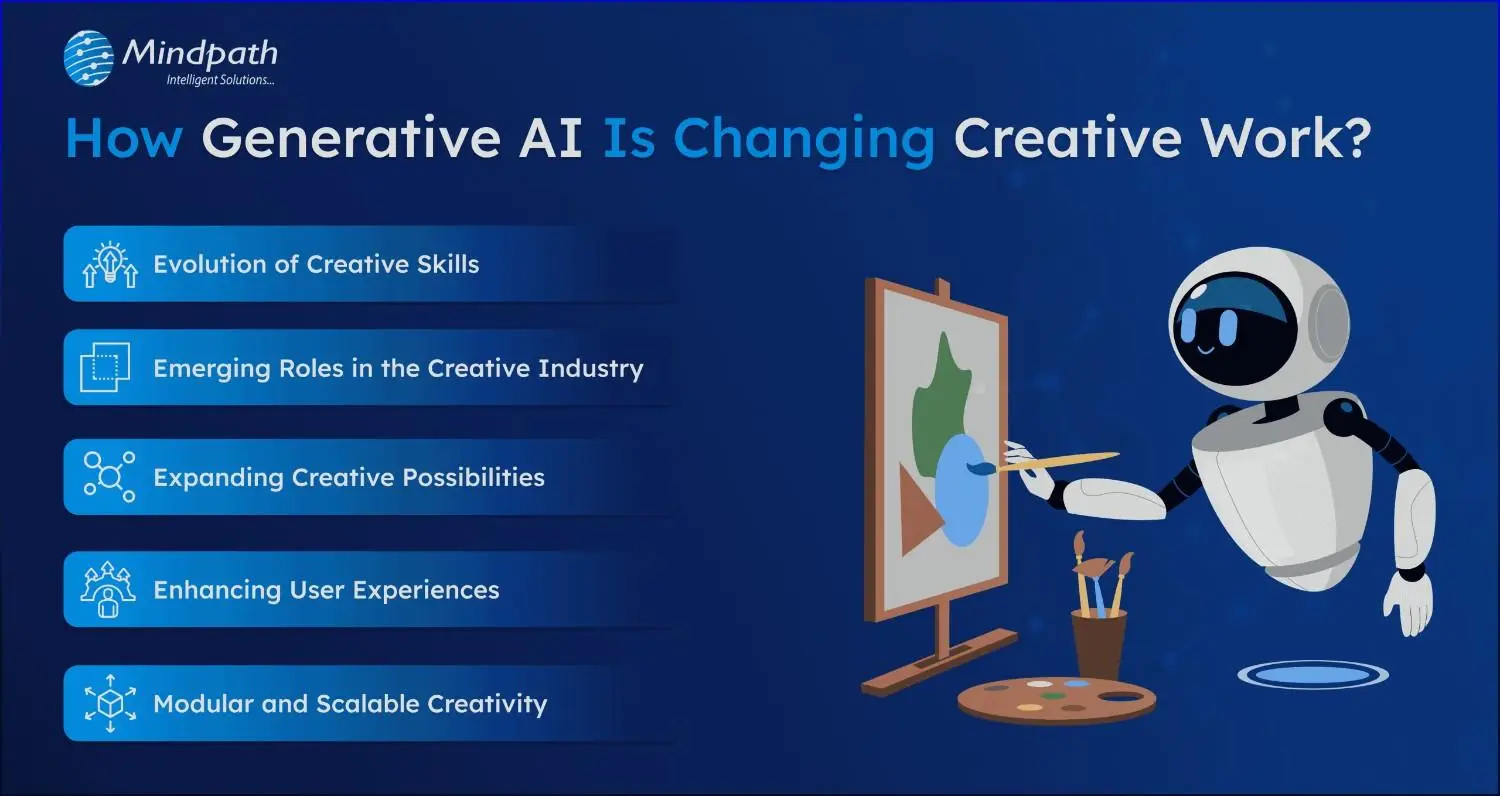
1. Evolution of Creative Skills
Today’s creative professionals need more than just talent. They also need to understand how to use generative AI tools wisely and make thoughtful, responsible choices. Skills like curation help them pick and improve AI-generated ideas, while AI fluency means knowing how to use tools like ChatGPT or DALL·E. Most importantly, they must think ethically to ensure their work respects people and values.
2. Emerging Roles in the Creative Industry
As AI becomes a regular part of creative work, new types of roles are starting to appear. These jobs mix creative thinking with technical skills, showing how generative AI work in creative industry. For example, Prompt Engineers write clear instructions to help AI create content, while AI Art Directors use AI tools to design visuals quickly. There are also roles like Synthetic Media Producers and AI UX Designers who focus on virtual content and improving user experiences.
How are different industries leveraging Generative AI today? Find out in our blog on Generative AI Use Cases across Industries—from content creation to customer service and beyond.
3. Expanding Creative Possibilities
Generative AI is removing many of the limits that once held creative ideas back. Now, artists, marketers, and musicians can quickly try out new concepts without worrying about time or cost. They can test visuals, messages, sounds, and styles almost instantly. This freedom encourages bold thinking and opens the door to more creative experiments than ever before.
4. Enhancing User Experiences
Creative work is becoming more interactive and personalized, thanks to the use of generative AI. Brands and creators are now building experiences that adapt in real time, giving users a chance to take part in the creative process. From custom storylines to co-designed fashion and dynamic game worlds, AI is adding a new layer of engagement. Rather than replacing creativity, it’s helping people bring their ideas to life in exciting new ways.
5. Modular and Scalable Creativity
Generative AI is making it easier to create content in parts, or modules, that can be reused and adapted for different needs. This helps teams customize content for various platforms and audiences without starting from scratch each time. Marketing teams can turn one idea into ads, videos, or social posts quickly. Designers and writers are now building flexible templates that save time and boost creativity.
Also Read: Top GenAI Tools Shaping the Future of AI Development
Real-World Examples of GenAI Transforming Creative Industries
Generative AI is making a real difference in how creative work happens across different industries. Many companies and creators are already using it in ways that are smart, fast, and effective. Here are a few real-world examples showing its growing impact.
1. Entertainment Industry
GenAI is helping creators in entertainment and gaming bring stories and virtual worlds to life more quickly and creatively. Game developers are using AI to design characters, build game levels, and create realistic dialogue. It also supports features like deepfake voices and more dynamic non-player characters. In filmmaking, tools like Runway ML make it easier to edit videos and add visual effects in real time.
2. Writing and Publishing Industry
Writers are now using generative AI to boost both creativity and productivity. From coming up with ideas to drafting and editing, AI tools help simplify the writing process. Platforms like ChatGPT offer support when writers face blocks or need quick content suggestions. Publishers are also using AI to create short stories, newsletters, and SEO content at a larger scale.
3. Advertising and Sales Industry
Generative AI supports sales teams by helping them write personalized emails, prepare reports, and test different sales pitches more efficiently. It also assists in understanding products, markets, and risks by analyzing use cases and offering clear insights. Tools like ChatGPT and Gemini can explain complex visuals and data, making it easier to make informed decisions. Platforms like Jasper even help sales teams expand globally by translating content into multiple languages.
4. Marketing Industry
Marketing is one of the industries seeing the biggest impact from generative AI. It allows companies to personalize content at scale, create high-quality visuals and videos quickly, and manage large volumes of work in less time. Tools like ChatGPT, Jasper, and Einstein Copilot help with ad optimization, brand design, and social media content. These tools also support strategy by building customer profiles, analyzing competitors, and predicting market trends.
5. Media Industry
GenAI is helping media industries create content faster by assisting with writing, editing, and transcribing. News outlets use it for generating headlines, interview questions, and social media posts. Some broadcasters also use AI anchors and tools to automate simple news stories. While a few bold moves faced setbacks, many media groups now rely on AI to improve efficiency and scale content production.
Curious about where Generative AI is headed next? Explore the top Generative AI Trends for 2025 and stay ahead of the innovation curve.
Ready to Transform Your Creative Process with Generative AI?
Generative AI is transforming how creative professionals work by making tasks faster, smarter, and more flexible. It supports everything from writing and design to marketing and media. By understanding how generative AI work in creative industry, teams can unlock new levels of innovation, improve productivity, and explore fresh ideas without limits.
At Mindpath, we offer advanced Generative AI development services that help businesses simplify creative work and scale innovation with unexpected solutions. Whether you’re looking to generate content, design visuals, or build engaging user experiences, our expert team and tools are ready to support your goals. We work closely with you to deliver practical, AI-powered solutions that drive results. With Mindpath, your ideas turn into impact – faster, smarter, and with creative confidence.
Ready to Elevate Your Creativity? Dive into Mindpath’s generative AI solutions for faster, smarter, and more effective creative work. Contact Us
Frequently Asked Questions
1. How does generative AI work in creative industry without replacing human creativity?
Generative AI work in creative industry supports human creativity rather than replacing it. It helps generate ideas, drafts, and designs quickly, while humans refine and guide the final output. This collaboration allows professionals to focus more on strategy, storytelling, and originality.
2. What skills do creative professionals need to work effectively with generative AI?
Creative professionals benefit from learning how to guide AI tools using clear prompts and understanding outputs critically. Skills like editing, creativity, and ethical thinking remain important. Combining these with basic AI knowledge helps professionals make better use of generative tools in their work.
3. Can generative AI help individuals who are not from creative backgrounds?
Yes, generative AI makes creative work more accessible to non-experts. It can help generate designs, content, or ideas with simple instructions. This allows individuals without formal creative training to produce quality outputs and explore new creative possibilities with ease.
4. How does generative AI work in creative industry for faster content production?
Generative AI work in creative industry speeds up content production by creating drafts, visuals, and concepts in seconds. This reduces manual effort and allows teams to produce more content in less time, making it easier to meet deadlines and manage large-scale creative projects.
5. What are the ethical concerns when using generative AI in creative fields?
Ethical concerns include content originality, data usage, and potential bias in AI-generated outputs. It is important to review and refine AI content carefully. Maintaining transparency and respecting intellectual property ensures responsible and trustworthy use of generative AI in creative work.
In every digital action and decision we make, from storing information to running software, energy is consumed. The more companies leverage technology, the more they are transitioning to energy-efficient computing to lower their power usage, while reducing their environmental impact. This approach is looking at technology used in business from an energy usage standpoint but still achieving the same performance. This will help companies save money and become more responsible corporate citizens.
With pressure mounting for organizations to meet their sustainability commitments, companies are becoming greener within their technology strategies. Whether utilizing data center migrations to improve performance or selecting devices with lower energy usage, every decision counts toward a more sustainable future. This blog is going to detail how energy-efficient computing allows for long-term business success and creates technology solutions for both the environment and performance.
Ready to make your business more sustainable and cost-effective? Partner with Mindpath today to explore how our energy-efficient solutions can transform your operations!
What is Energy Efficiency in Computing?
Energy efficiency in computing is when technology is used in a way that lowers power consumption while continuing to offer good performance. Energy efficiency is often used interchangeably with the term green computing, which refers to the design and use of systems that can perform a task with less energy to lower overall electrical consumption.
In a way, energy efficiency improves the management and use of IT resources. Energy efficiency supports sustainable development through the mitigation of energy waste, reduced operating costs, and reduced environmental impact of digital systems. Green computing has a significant role in building more sustainable and responsible technology ecosystems for the future.
Principles of Energy-Efficient Computing
To build sustainable IT solutions, it’s important to follow key principles that reduce energy use without affecting performance. These principles guide the design and management of systems that are both powerful and smart.
1. Algorithm Optimization
Writing efficient code helps computers do tasks faster using less power. When algorithms are simple and well-structured, they reduce processing time and save energy naturally.
2. Efficient Hardware Design
Using devices that need less power but still work well is a big part of saving energy. This includes better-designed chips, improved memory, and smarter storage systems.
3. Power Management
Smart systems can lower energy use by adjusting power based on what the computer is doing. For example, they slow down the processor or turn off parts when they’re not needed.
4. Sustainable Practices
Using eco-friendly materials and cleaner processes helps reduce the impact of making devices. Recycling old equipment, working from home, and checking energy use regularly also support energy-efficient goals.
Curious how small businesses can leverage technology to boost efficiency and sustainability? Check out emerging technologies for small businesses to discover tools and strategies that can transform your IT operations.
Benefits of Energy-Efficient Computing
Energy efficiency in computing is becoming a key focus as digital systems continue to grow. It supports a smarter approach to technology by encouraging responsible energy use in everyday operations. Here are some of the key benefits it can offer:
1. Reduces Energy Use and Power Bills
Sustainable computing helps lower the amount of electricity used across devices and systems. By using energy-efficient computing systems and optimized processes, businesses can cut down on unnecessary energy waste. This directly leads to lower electricity bills over time. It also supports a more sustainable and cost-aware IT environment.
2. Supports a Healthier Environment
When technology uses less energy, it puts less pressure on natural resources. Responsible device use helps reduce carbon emissions and limit electronic waste. These practices also help conserve fuel and raw materials needed for power. As a result, green computing has become a key step toward protecting the planet.
3. Builds a Responsible Brand Image
Companies that follow green practices show their commitment to sustainability. Using energy-efficient computing systems sends a positive message to customers and employees. It shows the company cares about the environment and long-term impact. This can improve brand loyalty and attract people who value responsible businesses.
4. Saves Money with Smarter Solutions
Choosing energy-efficient solutions means spending less on electricity and cooling. Using energy-efficient algorithms and virtual systems helps reduce the need for extra hardware. Over time, this leads to fewer devices, lower maintenance costs, and less electronic waste. All of this adds up to significant long-term savings for companies.
5. Helps Meet Environmental Rules
Governments are putting strict rules in place to reduce energy waste and pollution. By using energy-efficient data centers and low-energy devices, companies stay in line with environmental laws. This helps them avoid fines and builds a more trustworthy business. Following energy efficiency practices also prepares companies for future regulations.
Want to stay ahead in optimizing IT infrastructure while reducing energy consumption? Explore cloud computing trends to learn how the latest cloud innovations are driving efficiency and sustainability in enterprise computing.
Want to Make Your Technology Smarter and Greener?
Energy-efficient computing is becoming essential for companies that want to grow responsibly. It helps reduce power use, cut costs, and lessen the environmental impact of digital systems. By improving how we design and manage technology, companies can still achieve high performance while using fewer resources. This shift supports long-term success and builds a stronger foundation for growth. As more organizations focus on sustainability, energy-efficient computing becomes a smart and necessary step toward a cleaner and more efficient future for everyone.
At Mindpath, we specialize in sustainable software development that helps businesses reduce energy use while keeping systems fast and reliable. We create sustainable IT solutions by using efficient coding practices, smart architecture choices, and scalable technologies that use fewer resources. Our approach helps clients lower operating costs, reduce their carbon footprint, and meet environmental goals with ease.
Whether you’re upgrading systems or starting from scratch, we design digital solutions that support both your business growth and the planet. Let us help you build software that’s future-ready and environmentally responsible.
Frequently Asked Questions
1. How can energy-efficient computing improve long-term business performance?
Energy-efficient computing helps businesses run systems smoothly while using less power. This leads to lower operating costs, better system performance, and reduced downtime. Over time, it supports consistent growth by making IT operations more reliable, cost-effective, and aligned with sustainability goals.
2. What are some simple ways to start energy-efficient computing in daily operations?
Energy-efficient computing can start with small steps like using energy-saving devices, optimizing software, and turning off unused systems. Moving to cloud-based solutions and monitoring power usage regularly also helps businesses gradually reduce energy consumption without affecting daily performance.
3. Does energy-efficient computing affect system speed or performance?
Energy-efficient computing is designed to maintain or even improve performance while reducing energy usage. Optimized algorithms, smart hardware, and better power management ensure systems run efficiently without slowing down, making it possible to achieve both sustainability and high performance together.
4. How can businesses measure the impact of energy-efficient computing?
Businesses can measure impact by tracking energy usage, system performance, and cost savings over time. Tools that monitor power consumption and efficiency levels provide clear insights. These metrics help companies understand improvements and make better decisions for future technology investments.
5. Why is energy-efficient computing important for future-ready businesses?
Energy-efficient computing supports long-term sustainability by reducing environmental impact and operational costs. As regulations and awareness grow, businesses that adopt efficient practices stay ahead. It helps build a responsible image while ensuring systems are prepared for future technological and environmental challenges.
If you’ve been paying attention to the tech world lately, you must have seen how the best GenAI tools are revolutionizing the way we can accomplish our jobs. Whether it is writing content in seconds or smartly developing sophisticated apps without heavy layers of coding, innumerable examples exist of how these tools are helping people do more with less effort. These AI tools are quickly becoming the new solution for developers, creators, and organizations who want to increase their speed and get better results.
The evolution of GenAI is transforming how industries approach work and innovation. Work that could take hours, and manual efforts are now being dramatically reduced to minutes through intelligent tools. Developers and organizations are employing GenAI tools in many everyday tasks. They provide efficiency, less effort, and improved outcomes. In this blog, we will showcase the most powerful GenAI tools carving the future of AI development. You’ll get a quick look at what they do and why they matter.
Looking to transform your ideas into intelligent, future-ready solutions with Generative AI? Our expert AI development services help you build scalable, smart systems that drive real business impact.
What is Generative AI?
Generative AI is an intelligent technology that creates new things using AI, like text, images, video, and even code. Generative AI can move beyond simply answering questions or completing simple tasks; it is able to generate something new. This allows businesses to operate more quickly and continually come up with new ideas.
Countless organizations are now taking advantage of generative AI to save time and operational efficiencies. Businesses apply it to write emails, design graphics, make advertisements as well as create chatbots. By leveraging generative AI, businesses can reduce manual labor, have fewer errors, and provide customers with their services in a more personalized and timely manner.
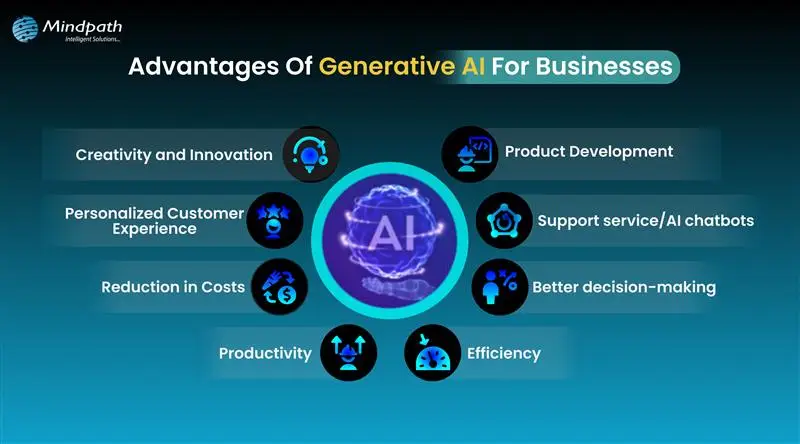
Here are some advantages of generative AI for businesses:
- Creativity and Innovation – Generative AI allows businesses to develop more ideas and make new content.
- Productivity – It saves time by taking responsibility for boring, menial tasks.
- Efficiency – It allows work to be completed more quickly and with fewer errors.
- Personalized Customer Experience – Business can create more personalized and relevant content for the customer.
- Product Development – It can develop new products faster through automated coding, idea generation, and design enhancements.
- Support Service/AI chatbots – It supports customer service chatbots that are capable of answering customer questions.
- Better Decision-making – It provides some basic recommendations to businesses using data so they can make better decisions.
- Reduction in Costs – It results in cost savings through automation of tasks and improved operations.
Curious about where Generative AI is headed next? Explore the top Generative AI Trends for 2025 and stay ahead of the innovation curve.
Best Generative AI Tools Driving the Future
Generative AI tools are making a big impact by helping businesses create content, improve services, and speed up their workflows. These tools are easy to use and offer smart solutions for many daily tasks. Below is a generative AI tools list that showcases the top tools shaping the future of work and technology.
1. Gemini
Gemini is one of the best AI tools for students who need help with research, writing, and learning new topics. It works like a smart assistant that gives clear answers, supports multiple languages, and connects well with Google’s tools. It’s great for organizing ideas and understanding complex information more easily.
2. ChatGPT
ChatGPT is a helpful AI tool for writing, support, and idea generation. It can answer questions, create content, and help you think through new ideas. Whether you’re stuck on a project or need help with writing, it’s like having a smart assistant that’s ready to guide you anytime.
3. Cohere
Cohere is one of the useful generative AI tools for developers who want to build smart apps with language features. It helps create text for chatbots, search tools, and marketing content. Developers can use its API to train custom models and add natural language understanding to different types of projects.
4. GitHub Copilot
This tool is a great example of generative AI for coding, helping developers write code faster with real-time suggestions. It works smoothly with popular editors like Visual Studio Code and supports many languages. It also learns your coding style to give more personalized tips, making your development process easier and quicker.
5. AlphaCode
AlphaCode is a helpful generative AI coding tool that supports developers with tasks like writing code, fixing bugs, and learning new programming languages. It can save time by handling repetitive work and giving smart suggestions. It also helps improve code quality and makes team coding easier with shared ideas and solutions.
6. Microsoft Copilot
Microsoft Copilot is a smart assistant that helps with both coding and office work. It gives helpful code suggestions, writes documentation, and works well with tools like Visual Studio and Microsoft 365. It’s a great support tool for developers and teams who want to work faster and more efficiently.
7. Canva AI
Canva AI makes graphic design simple and fast, even if you’re not a designer. With its easy drag-and-drop setup and ready-made templates, you can create eye-catching visuals in minutes. It also gives smart design suggestions and helps keep your brand style consistent across all your projects.
8. DALL-E 2
This is one of the most creative generative AI applications, turning simple text into detailed images. You just describe what you want, and it creates visuals in different styles. It’s great for bringing ideas to life, whether you’re designing something new or showing a concept in a fun, visual way.
9. Microsoft Power Apps
This tool makes building apps easier by letting you use simple chat-like prompts instead of writing a lot of code. It helps create database layouts and app designs quickly. It’s great for teams working together and speeds up the whole process, though it works best within the Microsoft environment.
10. Turing’s CodeGen Copilot
This tool is one of the useful generative AI tools for programmers who want to save time and avoid repeating the same coding tasks. It fits well with tools like GitHub and Jira, making the workflow smoother. It helps boost productivity and lets developers focus more on creative and important work.
To explore how Generative AI is reshaping mobile and web experiences, check out our in-depth article on the Role of Generative AI in App Development. It dives into real-world applications and how this technology accelerates innovation in app design and functionality.
Want to Boost Your Workflows with the Best GenAI Tools?
GenAI tools are changing how we work, learn, and innovate. From faster coding to better customer service and content creation, these tools help users do more in less time. They are now essential for staying efficient, creative, and competitive in today’s fast-moving digital world.
Mindpath offers GenAI powered solutions to help businesses automate tasks, build smarter apps, and improve customer experience. Our expert team delivers AI tools that fit your goals, helping you reduce time, cut costs, and grow faster. Let us help you transform your business with our world-class, customised AI development services.
Frequently Asked Questions
1. How can businesses choose the right generative AI tools for their needs?
Choosing the right generative AI tools depends on business goals, tasks, and team requirements. Some tools focus on content creation, while others support coding or design. Evaluating ease of use, integration options, and scalability helps businesses select tools that deliver the best value.
2. Are generative AI tools easy to use for non-technical users?
Many generative AI tools are designed with simple interfaces that allow non-technical users to get started easily. Features like drag-and-drop design, natural language prompts, and guided workflows make it possible to use these tools without deep technical knowledge.
3. Can generative AI tools replace traditional software completely?
Generative AI tools are powerful, but they do not fully replace traditional software. Instead, they enhance existing tools by adding automation and intelligence. Businesses still rely on standard systems, while AI tools help improve speed, creativity, and overall efficiency.
4. How do generative AI tools improve productivity in daily tasks?
Generative AI tools help automate repetitive work like writing, designing, and coding. This reduces manual effort and allows teams to complete tasks faster. By handling routine activities, these tools free up time for more strategic and creative work.
5. What are the key challenges when using generative AI tools in business?
While generative AI tools offer many benefits, challenges include data privacy concerns, accuracy issues, and dependency on quality input. Businesses need proper guidelines and monitoring to ensure reliable outputs and responsible use while getting the most out of these tools.
Just imagine, an app could build itself, suggest new features, and even write its own code. Doesn’t that sound like something out of the future? Well, it’s not just a thought, this imagination is becoming a reality with the rise of generative AI in app development. Whether you are a business owner looking to develop your next mobile app or a developer looking to become more efficient and innovate faster, generative AI is changing how we think about creating software.
Yes, you read that correctly, the use of GenAI in app development can now add creativity and efficiency into the application development process. Many developers struggle when it comes to UI development, and with the use of GenAI, it can develop interface UI components, suggest code snippets to complete a function, and even assist in application testing and performance feedback.
Curious to know more about it? In this blog, we will cover how this powerful technology is reshaping the app development process. Let us first have some ideas about generative AI
Looking to harness the power of GenAI to drive innovation and efficiency in your business? Mindpath delivers tailored AI development services to turn your ideas into intelligent, scalable solutions.
What is Generative AI?
Generative AI is a type of artificial intelligence that can create new things like text, images, music, or even computer code. It learns from a lot of information and then uses that learning to make something new. For example, it can write stories, draw pictures, or help build apps, almost like how a human would. Tools like GPT-4 can write like a person, and DALL·E can make pictures from just a few words. GenAI helps people work faster and be more creative in many fields, including app development.
GenAI learns patterns from a lot of data, like text, images or code by using a type of computer system called a neural network to understand this data and then create something new from it. That’s the basic idea behind how generative AI works. For example, it can write an article from a small text prompt or make a picture from just a few words. Tools like ChatGPT and Stable Diffusion use this technology to help people create content quickly and easily.
Benefits of Generative AI in App Development
Generative AI is significantly changing the app development landscape by increasing efficiency and enabling more innovative solutions. It allows developers to create high-quality apps faster and with greater precision. Here’s a simple look at how generative AI is transforming app development in today’s fast-moving tech world:
1. Automated Coding Assistance
AI can write code snippets or even full parts of an app based on simple descriptions from developers. This saves time and reduces mistakes, letting developers focus on more important tasks.
2. Faster Idea Generation and Prototyping
Generative AI helps speed up idea generation by analyzing existing apps and user feedback to suggest new features. It also creates quick visual designs, making it easier for developers and designers to build and improve prototypes fast.
3. Smarter Debugging and Testing
GenAI can find and fix bugs automatically while creating test cases to check the app thoroughly. This leads to better quality apps and less time spent on manual testing.
4. Optimized Resource Planning
GenAI helps teams plan their work by predicting how much time and effort tasks will need. It also spots areas where the app can run smoother, helping save resources and improve performance.
5. Tailored User Experiences
AI analyzes how users behave to create apps that feel personal and relevant to each person. It can recommend content or change the app’s design to better match user preferences.
Curious about where Generative AI is headed next? Explore the top Generative AI Trends for 2025 and stay ahead of the innovation curve.
Applications of Generative AI in App Development
AI-powered app development is transforming the software industry by introducing smarter and more efficient ways to build applications. This technology helps developers overcome challenges and speeds up the entire development cycle. By integrating GenAI, teams can deliver higher-quality apps with greater creativity and precision. Let us have a look at how developers can use this technology in app development:
1. Generating Code Faster
Generative AI helps developers by writing code from simple descriptions. It speeds up the process and cuts down on errors. Tools like GitHub Copilot and OpenAI Codex suggest ready-to-use code, saving time and effort which lets developers focus more on creative and complex parts of app building.
2. Smarter Testing and Bug Fixing
In AI-driven software development, GenAI plays a big role in making testing and bug fixing much easier. It can find problems in the code and suggest or apply fixes automatically which helps in saving time, improving code quality, and reducing the need for manual testing work.
3. Easy Content Creation and Management
AI helps create text, images, and more, making content tasks easier for developers and designers. Tools like GPT-4 and DeepArt save time by producing high-quality content fast. This keeps everything consistent and reduces the effort needed to create large amounts of content for apps.
Also Read: Generative AI Predictions for 2025
4. Improving App Performance and Efficiency
In generative AI app development, AI tools like AI-driven profilers and automated refactoring tools can help make apps faster and smoother. They find ways to use memory and power better, which helps apps run well on all devices. These tools can also fix slow parts of the code early, leading to better performance and longer battery life.
5. Faster Prototyping and Design Ideas
GenAI helps designers quickly turn ideas into wireframes and mockups. Tools like DALL-E and Sketch2Code make it easy to create visuals from text or drawings. This speeds up the early design process and gives designers a strong starting point with fresh and creative design suggestions.
6. Smart Documentation and Information Sharing
AI makes it easy to create and update app documentation automatically. It helps write guides, manuals, and technical notes based on the code. This saves time, keeps everything accurate, and helps new developers quickly understand the project and start contributing without any confusion.
7. Creating Personalized User Experiences
Generative AI helps apps understand what users like and how they behave. It can customize content, recommendations, and even app design to fit each person. This makes apps more enjoyable and easier to use, keeping users engaged and coming back for more.
Curious about the tools powering AI? Check out our list of Top GenAI Tools that are driving the future of AI development to understand which platforms are leading the world of AI.
Want to Transform Your App with Generative AI?
Generative AI development is revolutionizing how apps are created by making the process faster, smarter, and more creative. With generative AI in app development, businesses and developers can build high-quality applications that adapt to user needs while saving time and resources. This technology is not just a trend but a powerful tool shaping the future of software creation.
If you want to leverage the full potential of GenAI in your projects, Mindpath’s GenAI solutions offer expert guidance and cutting-edge tools tailored to your unique development needs. From automating coding tasks to enhancing user experiences, Mindpath AI development services helps you innovate efficiently and stay ahead in the competitive app development landscape. Get in touch today!
Frequently Asked Questions
1. How can generative AI in app development reduce development time?
Generative AI in app development helps speed up the process by automating tasks like coding, testing, and design suggestions. It reduces manual effort and allows developers to complete projects faster while maintaining quality, making it easier to meet deadlines and deliver efficient applications.
2. Is generative AI in app development suitable for beginners or only experienced developers?
Generative AI in app development can support both beginners and experienced developers. Beginners can use it to learn faster through code suggestions and guidance, while experienced developers can improve productivity by automating repetitive tasks and focusing on more complex aspects of development.
3. What types of apps can benefit the most from generative AI?
Many types of apps can benefit, especially those that need frequent updates, personalization, or large amounts of content. Apps like e-commerce platforms, content-driven apps, and customer-focused tools gain more value as AI helps improve user experience and streamline development processes.
4. How does generative AI help improve app quality and performance?
Generative AI improves app quality by identifying bugs, suggesting fixes, and optimizing code for better performance. It also helps test different scenarios automatically, ensuring the app runs smoothly across devices while reducing the chances of errors after deployment.
5. What should businesses consider before adopting generative AI in app development?
Businesses should consider data quality, project goals, and integration with existing systems before adopting generative AI. It is also important to evaluate costs, security, and team readiness to ensure smooth implementation and long-term success with AI-driven development.
In this fast-paced world of business, companies are actively seeking smarter tools to improve customer service and communication. Chatbots are one of the most common, and a great way to get attention. If you have engaged with a virtual assistant on a website, chances are that you have seen it in action. So, what is a chatbot? You may have wondered about this when you are chatting with a brand online or if you are shopping on a website where you are getting instant replies.
As these types of digital assistants proliferate, they are quickly becoming an essential aspect of how businesses operate in 2026. With faster response times and the ability to interact with multiple customers at once, it is no surprise that chatbots are altering how companies relate to their customers. In this blog, we will provide you with everything you need to know about chatbots including benefits, features and examples of chatbots in action.
Struggling to keep up with customer queries or deliver 24/7 support efficiently? Mindpath’s GenAI-driven chatbot development services can help you manage customer service and boost business performance.
What is a Chatbot in Simple Words?
A chatbot is an artificial intelligence (AI) software application that is designed to have human-like conversations. They use natural language processing (NLP) to understand what users are stating and respond in a way that feels natural in a conversation and is helpful. They can help with answering questions, can guide the user, and can perform some tasks.
Chatbots can be a part of a website, an app, a messaging app, or a voice assistant. AI chatbots help businesses communicate with customers 24/7. They can perform tasks like making bookings, solving common problems, and providing information. AI chatbots are invaluable tools for improving customer experience and communication.
How does a Chatbot Work?
Chatbots work by using artificial intelligence and natural language processing to understand what users are saying. When someone types or speaks to a chatbot, it reads the message and tries to figure out what the person wants. It does this by matching the message with words or phrases it already knows.
Once the chatbot understands the request, it picks the most suitable response and replies to the user. Some chatbots follow simple rules, while others learn from past conversations to improve over time. This process allows chatbots to provide quick and helpful replies in a natural and professional way.
What are the Benefits of Using AI Chatbots for Businesses?
AI chatbots are now widely used by businesses to improve customer interaction and automate routine tasks. Here are some of the key benefits of chatbot technology that can help boost your business:
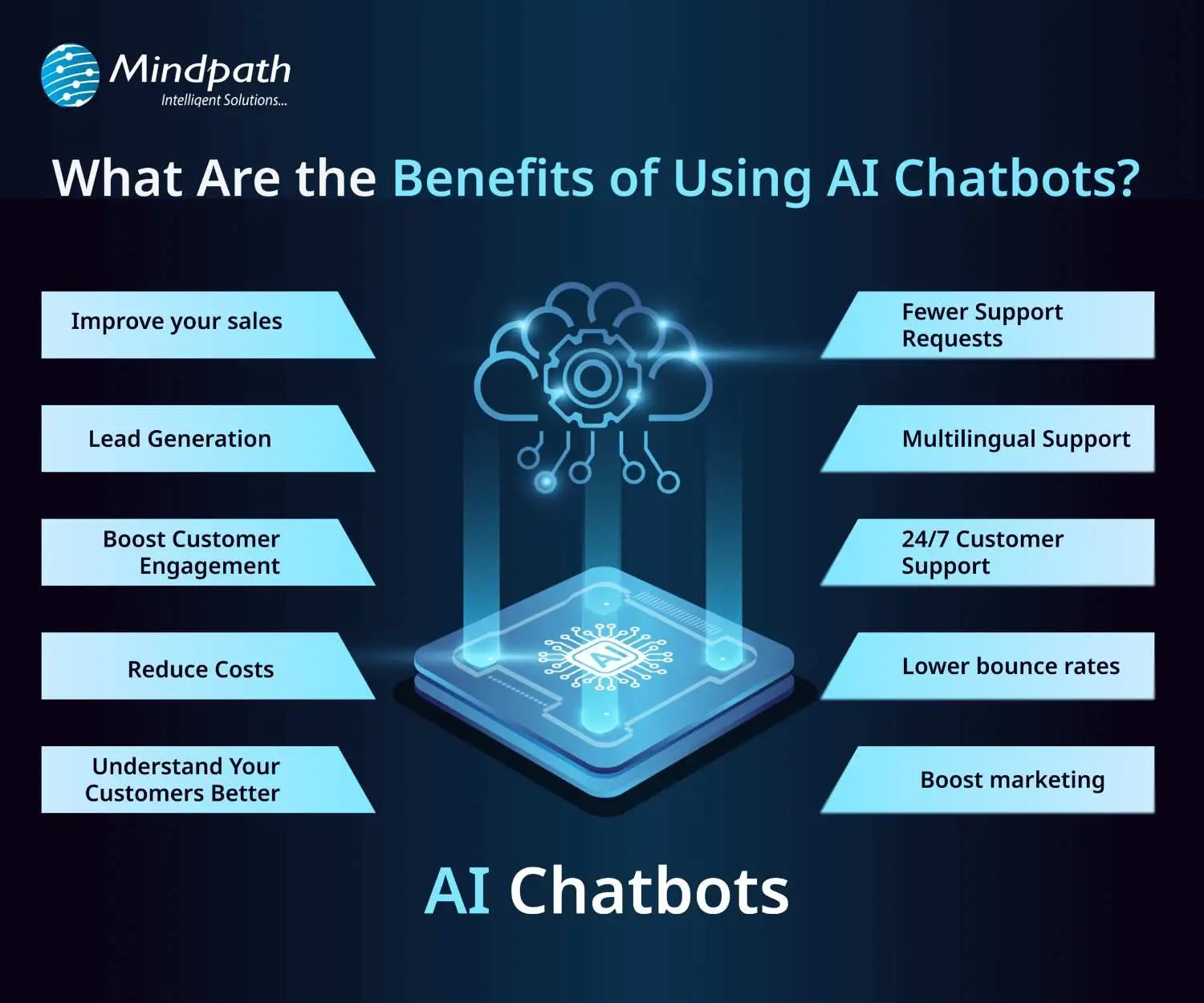
1. Improve Sales
Chatbots can increase sales by showing new products or offering special discounts to website visitors. They send helpful messages that guide users toward making a purchase. These bots also assist in product selection and order placement. This makes it easier for new visitors to become paying customers.
2. Lead Generation
Chatbots help gather leads even before a conversation starts. They ask visitors for basic details like name and email to begin the chat. They can also qualify these leads by asking relevant questions based on customer needs. This helps your sales team know who they’re speaking with and what the customer is looking for.
3. Boost Customer Engagement
Chatbots make online experiences more interactive and personal. Instead of searching through a website, users can chat and get instant answers. Bots reply with clear information based on user questions. This keeps customers engaged and helps them find what they need quickly.
4. Reduce Costs
Using chatbots is more affordable than hiring multiple support agents. They can handle many tasks like answering FAQs or booking appointments, which saves time and money. You’ll still need some team members, but bots make the process faster. This is especially helpful for managing high volumes without extra costs.
5. Understand Your Customers Better
As chatbots collect important customer data during conversations, they can also run surveys to check customer satisfaction. By reviewing these chats, businesses can find out what customers like or dislike. This feedback helps improve products and services over time.
Wondering why chatbots are becoming essential for modern businesses? Explore the top Benefits of Chatbots Every Business Leader Should Know and learn how they drive growth.
6. Fewer Support Requests
Chatbots handle many common questions, which reduces the number of queries sent to human agents. This helps agents focus on more complex issues. It also improves customer satisfaction by providing quick solutions. A chatbot for business can balance automation and personal support effectively.
7. Multilingual Support
Multilingual support allows chatbots to speak different languages. This is helpful if your business has customers from various countries. The bot can reply in the language your customer prefers. This makes a chatbot for small businesses and large companies more accessible to global audiences.
8. 24/7 Customer Support
Chatbots are always available, even when your team is offline. If someone is browsing late at night and needs help, the bot can step in. It can guide them to the right product or answer their questions. This leads to better customer service and more satisfied clients.
9. Lower Bounce Rates
Chatbots can keep users on your site longer by offering help when someone is about to leave. They provide answers or discounts that encourage people to stay. This improves your website’s engagement and SEO performance. Visitors feel supported and are more likely to explore further.
10. Boost Marketing
Marketing chatbots can suggest products, offer deals, and guide customers through the buying process. They also collect useful data for future campaigns. One of the ideas can be a spinning wheel offering discounts, which encourages users to buy. This creates an engaging and effective marketing strategy.
How can conversational AI take your customer engagement to the next level? Explore the power of Conversational AI Chatbots for Business Growth and discover how they drive results.
Real-World Use Cases of Chatbots
Chatbots are being used across many industries to simplify tasks and improve customer experiences. Here are some real-world chatbot examples that show how businesses are using them effectively for different needs.
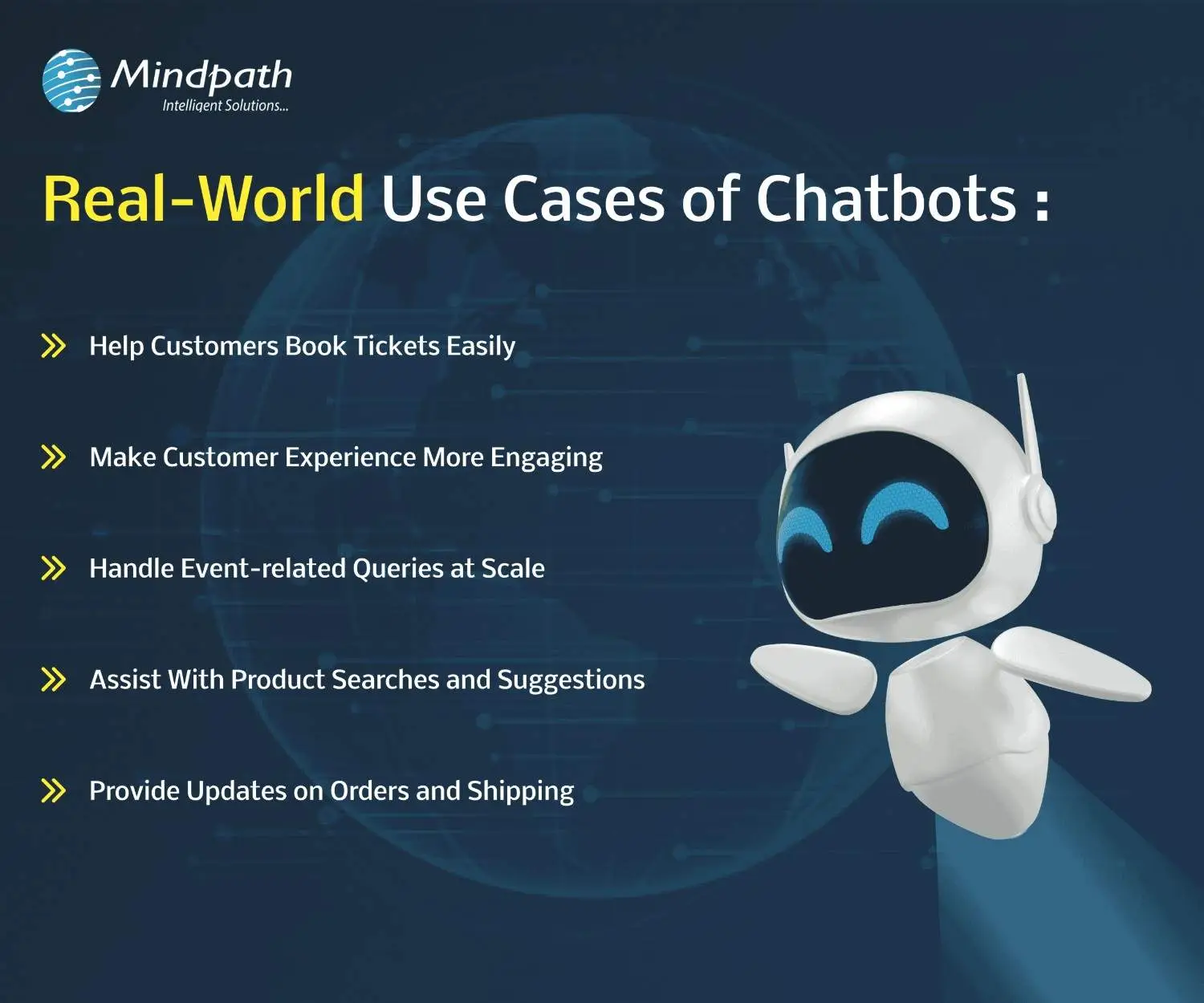
1. Help Customers Book Tickets Easily
A chatbot can answer common questions like seat availability, movie timings, and refund policies while guiding users to book tickets smoothly. PVR Cinemas uses this on their website to help visitors quickly complete bookings and check offers.
2. Make Customer Experience More Engaging
Chatbots can add personality by offering quizzes, jokes, and product suggestions in a fun and helpful way. LEGO’s chatbot Ralph helps users find the right gift through playful questions and interactive chat.
3. Handle Event-related Queries at Scale
When thousands of people need answers about an event, a chatbot can respond instantly with details like schedules, speakers, and directions. Slush uses one to manage large volumes of attendee questions efficiently on their event site.
4. Assist With Product Searches and Suggestions
A chatbot can search inventory and offer personalized product recommendations based on customer preferences. Sephora’s chatbot does this well by guiding users to suitable makeup products and checking stock availability.
5. Provide Updates on Orders and Shipping
Instead of navigating emails and websites, customers can enter their order ID in a chatbot to get instant shipping updates. H&M allows shoppers to track their deliveries directly through its chatbot.
Thinking about Using Chatbots to Elevate Customer Experience?
Chatbots are transforming how businesses interact with customers by offering fast, helpful, and personalized service. From booking tickets to answering questions, these tools simplify tasks and improve user satisfaction. With so many benefits, it’s no surprise that more companies are embracing chatbot technology to stay ahead in 2026.
At Mindpath, we offer custom chatbot development tailored to your business goals. Our chatbot development services are designed to help you improve customer interactions, increase engagement, and streamline operations. Whether you need a simple support bot or a fully integrated solution for sales, marketing, or service, our expert team builds smart, reliable chatbots that deliver real results.
Frequently Asked Questions
1. How can a chatbot improve customer experience on a website?
A chatbot improves customer experience by offering instant responses, guiding users to the right information, and reducing wait times. It creates a smooth journey by helping visitors find what they need quickly, which increases satisfaction and encourages them to stay longer on the website.
2. What is a chatbot used for in daily business operations?
A chatbot is used for handling routine tasks like answering FAQs, booking appointments, collecting customer data, and assisting with purchases. It helps teams save time by automating repetitive work while ensuring customers receive quick and consistent support throughout their interaction.
3. Can chatbots work effectively for both small and growing businesses?
Yes, chatbots are useful for both small and growing businesses. They help manage customer queries without needing a large team, making operations more efficient. As the business grows, chatbots can scale easily to handle more interactions without increasing costs significantly.
4. What should businesses consider before implementing a chatbot?
Before implementing a chatbot, businesses should define clear goals, understand customer needs, and choose the right type of chatbot. It is also important to plan integration with existing systems and ensure proper testing to deliver a smooth and effective user experience.
5. What is a chatbot’s role in improving website engagement?
A chatbot plays an important role in keeping users engaged by starting conversations, offering assistance, and providing relevant suggestions. It reduces bounce rates and encourages interaction, helping businesses create a more interactive and user-friendly website experience that keeps visitors interested.
Suppose a customer is browsing your website during the weekend, and then asks a question related to your product, and your chatbot answers that without any delay. Won’t that benefit your business and satisfy your customers? Well, that is precisely one of the key benefits of chatbots. Yes, you heard that right. Chatbots can help businesses respond faster, guide customers smoothly, and improve the overall customer experience. Now-a-days business leaders are starting to see how chatbots can make everyday tasks easier and more efficient.
An interesting report from Tidio reveals that around 60% of B2B companies and 42% of B2C companies already use chatbot software. By 2025, this number is expected to grow by 34%. With better tools, smarter features, and clear business value, AI chatbots are turning into a must-have. If you are curious to know what are the typical benefits of AI chatbot for business, then this blog can guide you perfectly. So, what are you waiting for? Let’s dive in!
At Mindpath Tech, we specialize in custom chatbot development tailored to your unique business needs. Our GenAI-powered chatbot solutions help automate engagement, enhance customer experience, and drive efficiency across industries.
What is a Chatbot?
A chatbot is a software application that enables a user to engage in a conversation that imitates a human. In many cases, a chatbot can engage either through text or vocal conversation. By doing this, chatbots enable customers to answer questions, resolve problems, or complete tasks much quicker. Some chatbots adhere to a pre-set script. However, many modern chatbots rely heavily on artificial intelligence (AI) and natural language processing (NLP), to understand what the user is asking, and provide a thoughtful and natural response.
To put this in perspective, let’s assume you arrive at a bank’s website and begin typing your question (example: “How can I open a savings account?”). The chatbot will not only understand that you are asking about a savings account, but also guide you through the steps to take, without the help of any human agent.
The chatbot market is growing fast. According to a study by Grand View Research, the global chatbot market size was valued at USD 7.76 billion in 2024 and is projected to reach USD 27.29 billion by 2030, growing at a CAGR of 23.3% from 2025 to 2030. This rapid growth is driven by advancements in artificial intelligence and machine learning, making chatbots smarter, faster, and more valuable for businesses across industries.
What exactly is a chatbot, and why is everyone talking about them? Explore our in-depth guide: What is a Chatbot – Everything You Need to Know.
What are the Benefits of Chatbots?
If you are wondering what are the benefits of using AI chatbot, here is the answer. AI chatbots are becoming an essential part of modern business operations. Designed to assist in day-to-day tasks, they offer practical support across various business functions.
Here are some benefits of chatbots for businesses:
1. Smart Routing for Better Support
AI chatbots can handle simple questions and tasks on their own. When the issue needs a human touch, the chatbot collects key details from the customer at the beginning. It then sends the conversation to the right agent based on who is available and best suited to help. This smooth handover saves time and makes the support experience faster and more efficient.
2. Improves with Every Interaction
AI chatbots learn from each interaction to improve their responses over time. They collect data, understand patterns, and offer more accurate and personalized replies. They also recognize when to involve a human agent. By picking up on customer emotions, they provide better and more thoughtful support.
3. Enhance Sales
One of major benefits of chatbots is its ability to support sales teams by handling routine tasks. Chatbots can collect lead details, schedule demos, and guide visitors through your website. They also help move potential customers through the sales funnel by answering questions and sharing product information. This leads to higher conversions, fewer drop-offs, and better cross-sell and upsell opportunities.
4. Cost Effective Solution
Managing costs is important for any growing business. While chatbots need some setup at first, they help save money in the long run by handling common tasks and reducing the need for extra staff. They can quickly direct conversations to the right place, making support more efficient. With easy-to-use tools like no-code builders, businesses can launch chatbots faster and start seeing results sooner.
5. Generate Leads
AI chatbots can start natural conversations that feel more personal than standard forms. Instead of sending users to fill out long details, bots gather useful customer data while answering questions in real time. They use conversational AI to understand voice or text and guide the chat smoothly. This helps capture valuable information like visited pages, cart activity, location, and user preferences, making lead generation more effective.
Benefits of Chatbot For Customers
Let us also learn about the benefits of chatbots for customers:
1. Offers Omnichannel Support
Today’s customers use many platforms to reach out; like email, social media, websites, and messaging apps. They expect smooth conversations no matter which channel they choose. AI chatbots can help by answering common questions across all platforms and keeping the conversation connected. This creates a faster, more consistent experience that meets customers where they are.
2. Provides Multilingual Support
As businesses reach global audiences, language should not be a barrier to great service. AI chatbots can offer multilingual support by asking for the customer’s language or detecting it through the conversation. They can chat naturally in multiple languages through text, voice, or messaging. This helps provide clear and friendly support to every customer, no matter where they are.
3. Delivers 24/7 Customer Service
Customers expect fast and reliable service at any time of the day. AI chatbots make this possible by offering 24/7 support without delays, even during peak hours. They handle the first interaction instantly, reducing wait times and helping customers find answers quickly. This ensures a smooth and responsive experience, no matter when the customer reaches out.
4. Create More Personalized Customer Experiences
AI chatbots can offer tailored support by using customer data from tools like CRM or marketing software. They adjust messages based on where a customer is in their journey and suggest products that match their interests. Bots can also answer questions about orders or shopping carts without asking for extra details. When used thoughtfully, this creates a smooth, human-like experience that feels personal and helpful.
5. Ensure Proactive Customer Support
AI chatbots can take the first step by reaching out to customers based on their activity on your website. They can answer common questions, guide users through tricky pages, or remind them about unfinished tasks like a full cart or pending form. This kind of timely support helps reduce drop-offs and improves customer experience. When needed, chatbots can also suggest connecting with a human agent to move things forward smoothly.
Curious about the role of conversational AI in modern business strategy? Dive into Conversational AI Chatbots for Business Growth to see how companies are using them to gain a competitive edge.
Disadvantages of AI Chatbots
While AI chatbots offer many benefits, they also come with a few limitations that businesses should be aware of. Understanding these challenges can help you use chatbots more effectively and plan for the right balance between automation and human support.
1. Struggles with Complex Questions: AI chatbots may not understand sarcasm, unclear grammar, or complicated queries, leading to wrong answers.
2. Lacks Human Emotion: Chatbots can’t show empathy or handle emotional conversations the way a human can.
3. Takes Time to Set Up: Building a chatbot with the right questions, answers, and flow can take time and effort.
4. Can Risk Data Security: If not properly protected, chatbots may expose sensitive customer information to security threats.
5. Bias Responses: If trained on biased data, chatbots can unknowingly give unfair or inappropriate responses.
6. Hallucination: Chatbots can make up answers or provide incorrect details, which can confuse or mislead users.
Ready to Experience the Real Benefits of Chatbots?
Chatbots are helping businesses respond faster, cut costs, and improve customer service. From lead generation to 24/7 support, they make things easier and quicker. While they can’t replace humans fully, they’re a smart way to enhance service and give customers a better overall experience.
At Mindpath, we offer chatbot development services built to match your needs. We create smart, easy-to-use AI bots that improve support, boost engagement, and connect smoothly across platforms. Let us help you deliver faster, better service with a solution designed just for you.
Frequently Asked Questions
1. How do businesses measure the success of chatbot implementation?
Businesses usually track metrics like response time, customer satisfaction, resolution rate, and lead conversions. These insights help understand how well the chatbot is performing. Regular monitoring and improvements ensure the chatbot continues to deliver value and supports overall business goals effectively.
2. What are the benefits of chatbots for businesses beyond customer support?
The benefits of chatbots go beyond answering queries. They help automate repetitive tasks, qualify leads, assist in marketing campaigns, and improve internal workflows. By handling multiple roles, chatbots increase efficiency and allow teams to focus on more strategic and high-value activities.
3. Can chatbots be customized based on different business needs?
Yes, chatbots can be fully customized to match specific business requirements. From conversation style to features and integrations, they can be tailored to suit different goals. This flexibility ensures that businesses can create a chatbot experience aligned with their brand and customer expectations.
4. How secure are chatbots when handling customer information?
Chatbots can be secure if built with proper data protection measures. Encryption, secure APIs, and compliance with data privacy standards help safeguard user information. Regular updates and monitoring also play an important role in ensuring that customer data remains protected during interactions.
5. What are the benefits of chatbots for improving customer engagement?
The benefits of chatbots include keeping customers engaged through quick replies, proactive messages, and personalized interactions. They help maintain continuous communication, reduce waiting time, and guide users smoothly, creating a more interactive and satisfying experience that encourages users to stay connected longer.
The generative AI revolution is changing the business landscape. From design automation to optimized operations and improved client experience, GenAI is enabling new opportunities across the spectrum of industries. Companies now leverage this technology to not only save uptime, but to innovate more rapidly, customize and provide service to their consumers more favorably, and remain competitive in an ever-expanding digital world.
Generative AI allows machines to learn patterns and create new output in a number of ways. Businesses are now adapting to this change and thinking about how they can move forward in a new way. It is gradually becoming a key part of business innovation and digital evolution. In this blog we will discuss the growing influence of GenAI and its role in transforming the modern business environment. To begin with, let us have an understanding of GenAI.
Looking for ideas to reshape your business with generative AI? Unlock smarter growth, faster innovation, and personalized customer experiences with our robuts and scalable AI development services.
What is Generative AI?
Generative AI is a form of artificial intelligence that can generate new things, such as text, images, music, or video, by learning from existing data. For example, if you give 1,000s of product descriptions from an online store, it will generate completely new and unique product descriptions for similar products, all by itself. GenAI does this by looking at patterns and learning about how things can be constructed so it can produce something new that looks very realistic.
This type of technology is spreading and evolving rapidly across the globe. A research from Statista shares that the market size of generative AI is expected to be US$66.89 billion in 2025, with annual growth of 36.99% every year, reaching a market size of US$442.07 billion by the year 2031. Among all countries, the United States is estimated to have the largest market size in 2025 at US$21.65 billion.
How Does Generative AI Work?
Generative AI uses neural networks to examine existing data to identify patterns and create new data that appears to be real. Most generative AI models utilize an unsupervised or semi-supervised learning process that is less of a hurdle, because it tends to require a broad array of unlabeled data. Consequently, it becomes much simpler for organizations to develop more powerful AI systems.
Generative AI examples can be seen in all businesses today. For example, Jasper is a tool that helps marketers create blog posts or advertising copy, and DALL·E creates images based on simple text descriptions. These foundation models make it possible to perform tasks like writing, designing, or summarizing in seconds, improving speed and creativity.
Want to stay ahead in the rapidly evolving world of GenAI? Explore the top Generative AI Trends shaping the future of development and strategy.
How is Generative AI Transforming Business?
The generative AI revolution is changing the way companies operate, innovate, and treat their customers. With generative AI in business, tasks which took hours can now be completed in minutes, increasing speed and creativity for teams. Here’s the way it is changing the business world:
1. Boost Creativity for Marketing and Innovation
GenAI is changing creative industries by bringing ideas to life faster by offering design concepts and fresh content ideas. This supports quicker campaign launches and product development. It also gives teams more time to focus on refining ideas or exploring new ones. As a result, human creativity grows while the creative process becomes faster and more effective.
2. Enhance Customer Support
The GenAI revolution is helping businesses improve customer service like never before. Instead of making customers wait for answers, generative AI can quickly find the right solution by pulling information from many sources. It also creates clear post-call summaries, making support faster, more accurate, and more personalized, leading to better customer satisfaction and trust.
3. Improve Sales Communication with Smart Insights
The economic potential of generative AI is clear in sales. It can write call summaries and follow-up emails, helping reps spend more time with customers. Sales managers can track how well AI-generated messages perform, like whether they speed up deals or increase order values. This leads to better sales processes and stronger customer communication.
Wondering how GenAI for business can be your key to success? Generative AI for business enhances innovation, and streamlines operations—thus empowers companies to stay competitive and get future-ready.
4. Boost Content Creation for Better Productivity
Generative AI helps businesses create high-quality content quickly by providing first drafts in just a few seconds. This allows teams to produce more sales messages, marketing content, and product documents in less time. As a result, companies can respond faster to customer needs while giving employees more time to focus on building stronger customer connections.
5. Create Personalized Customer Experiences
The role of AI in business growth and human empowerment is very clear when we think of how it can assist businesses in creating personalized customer journeys. By understanding their customer data, likes/dislikes, and behaviors, GenAI makes it easy for businesses to create personalized suggestions and relevant content. AI personalized customer experiences can truly bring better connections, embed customer loyalty, and create a better experience for everyone involved.
6. Speed Up Development with Smarter Coding
Generative AI applications can help developers save time by writing routine code and automating common tasks. The role of GenAI in app development brings unexpected benefits such as boosts productivity, reduces errors, and keeps projects on track. It also supports non-technical teams through no-code and low-code tools, making app creation easier for everyone, not just engineers, and allowing more people to contribute to digital solutions.
Also Read: Generative AI Use Cases across Industries
Ready to Embrace the Generative AI Revolution in Your Business?
The generative AI revolution is creating exciting new possibilities across industries by helping businesses work faster, smarter, and more creatively. From personalized customer experiences to automated content and improved development, generative AI is no longer a future trend; it’s the present opportunity. Now is the time to explore how it can redefine the way your business operates and grows.
At Mindpath, we offer smart and scalable GenAI solutions that help businesses unlock real value. From custom AI applications to intelligent automation and personalized customer engagement tools, our AI development services help businesses fuel innovation, boost productivity, and empower teams. Let us help you stay ahead in this fast-changing digital world with cutting-edge generative AI services.
Frequently Asked Questions
1. How can businesses start using the generative AI revolution without major risks?
Businesses can begin with small pilot projects like content generation or customer support automation. This allows teams to test outcomes, understand value, and make improvements before scaling. Starting small helps reduce risks while building confidence in adopting generative AI solutions effectively.
2. What makes the generative AI revolution different from earlier AI technologies?
The generative AI revolution focuses on creating new content rather than just analyzing data. It can produce text, images, and code, making it more interactive and creative. This shift allows businesses to automate tasks while also improving innovation and decision-making processes.
3. How does generative AI support faster decision-making in businesses?
Generative AI can quickly analyze large volumes of data and generate useful insights or summaries. This helps decision-makers understand trends, identify opportunities, and respond faster. With quicker access to relevant information, businesses can act confidently and stay competitive in dynamic markets.
4. Can generative AI replace human creativity completely?
Generative AI supports creativity but does not replace human thinking. It helps generate ideas, drafts, and suggestions, but human input is still needed for refinement and strategy. The best results come when businesses combine AI capabilities with human creativity and expertise.
5. What challenges should businesses be aware of when adopting generative AI?
Businesses should consider data quality, security, and ethical concerns when using generative AI. Proper planning, monitoring, and clear guidelines are important to avoid risks. Understanding limitations and maintaining human oversight ensures that AI is used responsibly and effectively.
Ever thought about how firms can respond to thousands of customer requests every day? Or how can they give customers 24/7 support without interruption? The answer is conversational AI chatbots. These smart virtual assistants change how organizations handle customer inquiries, as well as starting a new trend to assist with sales, without downtime or human effort. The way vendor chatbots can integrate with pre-existing systems is quickly making Chatbots an efficient driver for the future of business.
These AI chatbots are fast becoming a staple in today’s business toolset. Many organizations are beginning to use them, supplementing their customer interaction and task management processes. Chatbots can fit conveniently into many different areas of an organization. As usage continues to expand, understanding their value is important. This blog will detail how these AI chatbots are increasing the effectiveness of business operations in simple ways.
Looking to enhance customer engagement with a personalized AI solution? Our custom chatbot development services specialize in building conversational AI chatbots tailored to your business needs and goals.
What is a Conversational AI Chatbot?
A conversational AI chatbot is an intelligent computer program that interacts with individuals using natural language. It understands an accurate interpretation of what its users are saying/writing, processes that input, and responds accordingly in the way a real human would.
Conversational bots are found in websites, applications, and messaging interfaces to assist users who have questions, information, support, or simple tasks and processes. They can exist on a 24/7 basis with no waiting and provide instant and consistent information without the need for the user experience to include human staff.
Conversational chatbots use advanced technologies like natural language processing (NLP), machine learning (ML), and large language models (LLM) to understand and improve conversations. They don’t just follow pre-written scripts but can learn and adapt based on new information.
From helping customers with online shopping to guiding employees through internal systems, these chatbots are becoming a useful part of modern business communication.
Curious to know how AI can enhance your e-commerce strategy and give your business a competitive edge? Read our detailed blog on how AI in e-commerce is transforming the future.
Types of Conversational AI Chatbots
Conversational chatbots come in different types, each designed to handle specific kinds of interactions. Understanding these types helps in choosing the right chatbot for your business needs.
1. NLP Chatbots
Natural Language Processing (NLP) chatbots can understand user intent and context, making them capable of handling complex or varied language inputs. Unlike rule-based bots, they interpret full sentences to deliver more relevant and precise answers.
2. Menu-Based Chatbots
Menu-based chatbots use decision tree-type logic and offer users a set of predefined buttons or options to choose from, guiding them through a structured conversation. These bots are ideal for handling simple FAQs like tracking orders or checking pricing but can be limited in handling complex queries.
3. Machine Learning Bots
Machine learning chatbots learn from past user interactions and improve over time, allowing for highly personalized and context-aware conversations. They can remember user preferences and reuse information in future chats, enhancing the customer experience.
4. Hybrid Chatbots
Hybrid chatbots combine rule-based systems with AI capabilities to deliver both structured and intelligent responses. They can escalate complex issues to human agents, allowing seamless integration between automation and live support.
5. Rule-Based Chatbots
Rule-based chatbots operate using if-then logic and keyword recognition, providing answers based on specific triggers set by the developer. They work best when queries are predictable and can be mapped to predefined responses using keywords or phrases.
All these chatbot types can be integrated into a powerful conversational AI platform to provide comprehensive and intelligent customer support solutions.
According to a study by Tidio, the conversation rate of chatbots in some industries has been observed to reach up to 70%.
Also Read: Benefits of AI
Benefits of Conversational AI Chatbots For Business Growth
Conversational AI chatbots are becoming a powerful tool for businesses looking to improve how they work and grow faster. Here are some of the key benefits they offer for driving business growth:
1. Get Useful Customer Feedback Easily
Chatbots can ask for feedback right after a chat session by sending a quick question or rating option. To encourage responses, they can offer discounts or small rewards. Businesses can then check feedback and chat logs to discover common issues and improve services. It’s a smart way to collect insights without bothering the customer.
2. Understand Customer Needs
AI chatbots can figure out what the customer wants and how they feel by reading their words and tone. They understand if a message is urgent or if a customer is upset. When needed, they pass this helpful info to an agent. This gives the agent better context to respond more personally and calmly.
3. Support Your Sales Team with Smart Help
AI chatbots help with sales by chatting with website visitors, gathering lead details, and booking demos. They answer common product questions and encourage customers to stay longer and learn more. This reduces cart abandonment, increases conversion rates, and supports upselling, all with minimal effort.
4. Handle Repetitive Questions Automatically
One of the best AI chatbot features is the ability to answer common questions instantly. They manage simple tasks like order tracking, returns, and payment issues without needing a support agent. This saves time for both the customer and your team. It also reduces the number of tickets and keeps agents free from more serious problems.
If you’re exploring smarter ways to deliver customer support. Read our blog on AI for Customer Service, where we highlight how chatbots and virtual assistants can improve customer satisfaction and drive measurable business growth.
5. Increase Lead Generation
Instead of filling out forms, customers can chat naturally with AI bots to share their needs. Chatbots collect useful data like preferred products, location, and language. This data is shared with the marketing team, helping them create personalized campaigns and understand customer behavior better.
6. Keep Customers Engaged with Timely Updates
Chatbots can send helpful messages like order updates, appointment reminders, or payment alerts. They also follow up with feedback requests and help continue conversations across different platforms. With custom branding and fun elements like emojis or images, they make every interaction feel friendly and engaging.
7. Lower Business Costs
Every business wants to reduce costs while improving service quality. Chatbots help by managing simple tasks, answering frequent questions, and routing chats to the right place. This reduces the need to hire additional agents. Some chatbot platforms are easy to set up without coding, saving time and helping businesses see value faster.
8. Scaling Customer Support Efficiently
Chatbots act like additional support agents by handling many customer questions at once. They manage simple requests efficiently, which helps your team focus on more complex issues. This makes it easier to serve a growing number of customers without increasing staff size, saving time, and reducing pressure on your support team.
Wondering how to turn AI concepts into actionable business solutions? Check out our AI Consulting Services guide for insights on planning, deploying, and scaling AI effectively.
Want to Transform Your Business with Conversational AI Chatbots?
Conversational AI chatbots are changing how businesses talk to customers, manage support, and grow. From smart replies to handling repetitive tasks, these chatbots are now a valuable part of any modern business setup. They simplify operations, improve customer experience, and help teams work more efficiently without adding extra load.
We at Mindpath are custom chatbot development company, we help businesses build custom conversational chatbots that fit their goals. Whether it’s for customer support, lead generation, or sales, our expert solutions make chatbot integration easy and impactful. Let us help you scale faster and connect better with your customers using the best AI chatbot tools.
Frequently Asked Questions
1. How do conversational AI chatbots improve customer response time?
Conversational AI chatbots respond instantly to customer queries without any waiting time. They can handle multiple conversations at once, ensuring users get quick answers. This helps reduce delays, improves satisfaction, and keeps customers engaged without depending on human availability.
2. Are conversational AI chatbots difficult to integrate with existing systems?
Conversational AI chatbots are designed to work smoothly with existing business tools like CRM systems, websites, and mobile apps. With proper setup and planning, integration is usually simple, allowing businesses to automate workflows and improve operations without major technical disruptions.
3. Can chatbots handle complex customer queries effectively?
Modern chatbots powered by AI can understand context and intent, making them capable of handling more than just basic questions. For complex issues, they can gather details and pass the conversation to a human agent, ensuring customers still receive accurate and helpful support.
4. Can AI chatbots support both customer service and sales activities at the same time?
Yes, AI chatbots can handle both support and sales tasks together. They can answer questions, guide users through products or services, collect lead information, and even suggest relevant options, helping businesses improve engagement while supporting conversions in a seamless and efficient way.
5. How do chatbots help businesses maintain consistent customer communication?
Chatbots provide consistent responses by following defined logic and learning from interactions. They ensure that every customer receives accurate information regardless of time or volume. This consistency builds trust, improves brand experience, and helps businesses maintain clear and reliable communication.
In today’s world where technology is enhancing at a fast pace, businesses cannot afford to slow down, not even for a second. As deadlines are tighter, client demands are growing and skilled talents are harder to find, IT staff augmentation can be the perfect solution for these. Just think: what if you could access skilled professionals whenever you wanted them, whether it is to scale up a project or as expertise to reach a short-term goal, without having to go through the time-consuming hiring process? Isn’t it fascinating?
Staff augmentation allows you to grow as you need, with no boundaries, as many organizations are opting for faster and more flexible alternatives. If you hear this term frequently but aren’t sure exactly what it means and how it works, you are in the right place. In this blog, we will walk you through the essential things to know about staff augmentation. We will explain how staff augmentation works and describe the main benefits of this service in easy words! There is much value in exploring staff augmentation as a way to improve your team’s capabilities and altogether enhance your work outcomes.
Looking for a partner you can trust to boost your IT projects? Mindpath is here to provide top-end services in the sphere of IT staff augmentation.
What is Staff Augmentation?
Staff Augmentation is when you hire competent professionals from an external agency to assist your in-house team for a defined period of time. These professionals aren’t permanent employees, but they will consider themselves regular members of your team. This is a flexible way to obtain extra assistance when your team is busy, or you require a special skill to complete a project.
To clarify, here’s a staff augmentation example. Suppose you are the owner of an online clothing store, and you want to introduce a mobile shopping app before the holiday season arrives. Your in-house developers are actively working on new updates for your website and are currently unable to take on other work. Instead of hiring full-time staff, you use IT staff augmentation to put some mobile app developers into your project through a trusted agency. The app developer will work with your task force, build the app, and when you are ready to launch it, their work will finish. This will give you the appropriate skills, at the appropriate time, without the lengthy hiring process or administrative burden of bringing full-time employees.
Types Of Staff Augmentation
Staff augmentation comes in different types to match different business needs. Whether you need help with a short project or long-term support, there’s a model that fits just right.
1. Project-Based Staff Augmentation
This type is used when a company needs extra help for a specific project. Skilled professionals join the team just for that project and leave once the work is done. It’s a smart way to get things done faster without adding long-term costs.
2. Temporary Staff Augmentation
In this model, companies bring in experts for a short time to fill sudden gaps or meet urgent deadlines. It helps teams stay on track without rushing permanent hires. It’s great for short-term tasks or unexpected workload spikes.
3. Long-Term Staff Augmentation
Here, professionals work with the company for a longer time, often for months or even years. It’s helpful when you need ongoing support or special skills that your team doesn’t have. This model also helps reduce hiring costs while keeping projects moving.
4. Onshore Staff Augmentation
This means hiring professionals from the same country or region. It’s easier to work together because of the same time zone and better communication. Teams also benefit from cultural similarities and quicker collaboration.
5. Offshore Staff Augmentation
In this type, companies hire skilled people from other countries where labor costs are lower. It allows access to global talent and helps save money. It works well for remote projects that don’t need the team to be in the same location.
What is the IT Staff Augmentation Process?
The staff augmentation process may sound complex, but it’s actually quite simple when broken down into clear steps. Here’s how it works from start to finish to help you get the right talent for your business or project.
1. Identify Your Needs
Start by understanding what kind of skills or experience you need for the project. This helps you clearly define the roles and responsibilities for the temporary team members.
2. Estimate Team Size
Decide how many people you’ll need to get the job done smoothly and on time. Having a clear number makes it easier for your staffing partner to find the right talent.
3. Connect with a Staffing Partner
Once your needs are clear, your staff augmentation agency begins searching for the right professionals. They use their wide network to find candidates who match your project goals.
4. Screen and Shortlist Candidates
The agency carefully checks skills, experience, and qualifications before shortlisting the best profiles. You’ll then be invited to an interview and pick the ones who fit your team well.
5. Evaluate and Hire
Once you find the right candidates, you can try a short trial period to see how they perform. If everything goes well, you move forward by hiring and adding them to your team.
Benefits of Staff Augmentation
IT staff augmentation is becoming a go-to solution for businesses looking to strengthen their teams without long hiring delays. Here are the key benefits that make this approach a smart choice for many companies.
1. Team Scalability
One of the biggest benefits of staff augmentation is the ability to scale your team up or down as needed. You can bring in more people during busy times and reduce the team once the work is done. This is perfect for businesses with changing workloads or seasonal demands. It helps you stay efficient without overspending on full-time staff.
2. Access to Skilled Professionals
With staff augmentation, you get access to a large network of talented professionals through a trusted IT staff augmentation company. No matter what skill or experience level you need, there’s someone ready to support your project. This helps you find the right people faster without long hiring processes. It saves time and ensures your project is handled by experienced people.
3. Increased Productivity
Bringing in extra support allows your core team to focus on what they do best. They won’t get overwhelmed with too many tasks, and quality will stay high. With the right help in place, everyone works more efficiently. This leads to faster results and better outcomes.
4. Reduced Hiring Risk
Hiring full-time employees can be risky if they don’t turn out to be the right fit. With staff augmentation, you can try out professionals before making long-term decisions. It also allows you to bring in people who complement your team’s strengths. This makes your team stronger and reduces the risk of hiring mistakes.
5. Fresh Expertise and Ideas
Staff augmentation brings in people who have worked with many other companies and industries. They often come up with new ideas, fresh perspectives, and valuable insights. This can inspire your existing team and lead to better solutions. It’s a great way to bring innovation into your projects without a big change.
Ready to Boost Your Team the Smarter Way?
This blog gave us a complete look at how IT staff augmentation works and why it is becoming the smart choice for many businesses today. From types and processes to key benefits, everything you read helps you see how this flexible model can boost your team, meet project goals faster, and save hiring time without compromising quality.
At Mindpath, we offer trusted IT staff augmentation services to help you grow your team quickly and smoothly. Whether you need short-term support or long-term experts, our skilled professionals are ready to join your projects. With the right talent at the right time, we help your business stay strong, flexible, and always ready for growth.
Frequently Asked Questions
1. How does staff augmentation help during urgent project deadlines?
Staff augmentation allows businesses to quickly bring in skilled professionals when deadlines are tight. Instead of rushing the hiring process, companies can add experienced talent right away, helping projects move faster while maintaining quality and reducing pressure on the existing team.
2. Is staff augmentation suitable for small businesses or only large companies?
Staff augmentation works well for businesses of all sizes. Small businesses can use it to access specialized skills without long-term commitments, while larger companies use it to scale teams quickly. It offers flexibility that helps any business manage changing workloads effectively.
3. What factors should be considered before choosing staff augmentation services?
Before selecting staff augmentation services, businesses should evaluate project requirements, required skill sets, budget, and timelines. It is also important to ensure clear communication, cultural fit, and alignment with team workflows to achieve smooth collaboration and successful outcomes.
4. How can companies ensure smooth integration of augmented staff with internal teams?
Clear communication, defined roles, and proper onboarding are key to smooth integration. Providing access to tools, workflows, and team guidelines helps augmented professionals adapt quickly. Regular check-ins and collaboration ensure everyone stays aligned and works efficiently toward common goals.
5. Can staff augmentation support long-term business growth?
Yes, staff augmentation can support long-term growth by providing ongoing access to skilled professionals when needed. It helps businesses stay flexible, adapt to new opportunities, and manage evolving demands without committing to permanent hires, making it a practical strategy for sustainable expansion.
Are you hearing a lot about the LLaMA LLM lately and wondering what it is and why it’s special? If so, you’re not alone. Buzz regarding this powerful open large language model (LLM) continues to build and spread from technology forums to developer circles and the larger AI community. It’s fundamentally reshaping how many people think about AI tools and putting the spotlight on open-source innovation that has never been seen before.
The emergence of open-source LLMs fundamentally reshapes how AI is developed, shared, and scaled. Until now, the primary focus in the industry has been on the deployment and governance of closed prompts within a closed model. Large language models with open-source options, like LLaMA, are a welcome addition that now allows access for researchers, developers, and even startups, with fewer restrictions to experiment, customize, and build. It will not only provide greater access to advanced AI but also create a larger momentum for innovation across many sectors. In this blog, we’ll explore what sets LLaMA apart and how it’s driving this change.
Looking to harness the power of LLMs and AI for your business but don’t know where to start? Mindpath offers AI Development Services to help you build, customize, and deploy intelligent solutions that drive real results.
Before diving further, let us have an idea about open LLMs:
Understanding Open LLMs
Open-source large language models (LLMs) are incredible power AI models that can be deployed, changed, and shared for free by anyone. Where closed or paid models like OpenAI’s GPT are restricted to only those who pay to access the models, open-source LLMs are built on being open and transparent, meaning that developers and researchers can inspect, make improvements and train on their own data. These models are often contributed as a collaborative effort by communities or organizations who believe in promoting open innovation making it possible for others to learn and create new things with AI.
There are many benefits to using open-source LLMs. They can save researchers a lot of money, because there’s no licensing fee and they can be adapted in very precise ways to what the researcher wants. Developers can also rely on strong open-source communities from which they can freely draw robust sets of tools, tutorials, and updates. This community effort often supports not only researchers’ progress but also helps more people get involved in shaping the future of these technologies.
Curious about the different kinds of AI and how they impact businesses? Learn about the types of AI to understand where LLMs like LLaMA fit in the broader artificial intelligence landscape.
Among these Open-source LLMs, the most popular one is LLaMA LLM. Let’s dive into that!
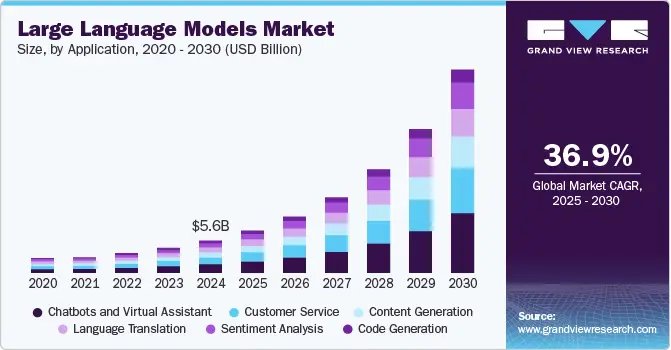
What is LLaMA LLM?
LLaMA is a large language model developed by Meta that can understand and generate human-like text. It learns from a huge amount of data and uses a special design, or architecture, to figure out patterns in language. This helps it give smart and relevant answers, whether it’s writing something, translating, or answering questions.
What makes LLaMA stand out is its strong performance and the way it is available for the tech community. Many people ask, is LLaMA open source? While it’s not fully open like some models, Meta has made it available to researchers and developers, making it easier for them to explore, test, and build new AI tools using LLaMA.
Must Read: Low-Rank Adaption (LoRA)
Why is LLaMa LLM So Popular?
LLaMA AI has quickly gained popularity in the AI community, and it’s easy to see why. Its performance, accessibility, and flexibility make it a strong choice for developers, researchers, and businesses alike. Here are some key reasons behind its rising popularity:
1. Scalability and Efficiency
LLaMA is scalable, which means it can run on different kinds of hardware — from powerful GPUs to everyday computers. This makes it easier for researchers and developers who may not have access to expensive systems. By making advanced AI tools more reachable, LLaMA helps more people experiment and innovate. That’s why many developers now use LLaMA in app development without needing a huge setup or high costs.
2. Adaptability
LLaMA can be trained for specific uses, which makes it really flexible. Whether it’s a chatbot for customer service or a tool that creates content, it’s possible to fine-tune LLaMA to fit different industries and goals. This adaptability means it can work well in many real-world situations. It’s not just a one-size-fits-all model, rather it adjusts to what you need it to do.
3. State-of-the-Art Performance
LLaMA has shown top performance in different language tasks like translation, classification, and more. These results come from how well the model is designed and trained. Meta’s AI team used smart methods and architecture to make sure LLaMA performs at a high level. Because of this, it stands out as one of the most powerful tools in the language model space today.
4. Open-Source Initiative
Meta has taken steps to make LLaMA more open and available to the research community. By releasing the models and sharing detailed documentation, they’ve made it easier for others to use, study, and build on LLaMA. As a leading example of an open source LLM, LLaMA is helping more people explore and contribute to the future of AI in a truly collaborative way.
Want to customize large language models to fit your specific business needs? Learn how OpenAI’s Fine-Tuning API enables developers to fine-tune AI models for more accurate and specialized applications.
Real–World Applications of LLaMA
LlaMA LLM is being used in many real-life projects today. Its open nature makes it easier for developers to build and improve solutions, and it’s often seen as a strong example of how open models can drive real innovation. Here are a few practical ways people are using LLaMA today:
1. Faster Content Creation for Marketing Teams
A digital marketing agency can use LLaMA to write content like blog posts, social media captions, or newsletters. This helps them save time and focus more on creative ideas and strategies. Since LLaMA can quickly generate useful content, the team can keep up with deadlines without stress. It’s a great LLaMA open source LLM example that shows how AI can help marketing teams work faster and smarter.
2. Smarter Chatbots for Customer Support
A business can use a chatbot powered by LLaMA to answer customer questions. The bot gives fast, helpful replies to common queries, so human support agents can handle more complex problems. Over time, the chatbot can learn from interactions and get even better. This helps improve customer satisfaction. You can even build one yourself by following a simple LLaMA open source LLM tutorial, which makes it easier for teams to create smart support tools.
3. Breaking Language Barriers with AI
An international company can use LLaMA to translate emails, documents, or messages into different languages. This helps their teams communicate better across regions. LLaMA can provide quick and accurate translations, making global teamwork easier. With an open-source model like this, it’s possible to build tools that support real-time communication without high costs or complex setups.
4. Understanding Customers Through Sentiment Analysis
A brand tracking tool can use LLaMA to understand how customers feel by reading reviews or social media posts. The tool can spot trends, positive feedback, or complaints. This helps companies make better decisions to improve their products or reputation. Because LLaMA is flexible and open, teams can customize it to track the right kind of feedback for their needs.
Want to see AI in action, improving business outcomes? Explore AI chatbot examples to understand how LLM-powered chatbots are driving real-world results.
Curious about Using LLaMA for Your Business?
LLaMA LLM is changing the way people use and develop AI by making powerful language models more open and accessible. Its flexibility, strong performance, and the support of an open community allow researchers, developers, and businesses to build smarter, faster, and more customized AI solutions. As an open-source LLM example, LLaMA is helping drive innovation across many industries, breaking barriers and making advanced AI tools available to more people than ever before.
If you want to harness the power of LLaMA in your own projects, Mindpath AI Development services can help. We specialize in building tailored AI tools using open-source models like LLaMA to meet your unique business needs. Whether you want to improve customer support, create content, or analyze data smarter, our team can guide you through every step to bring your AI vision to life efficiently and effectively.
Frequently Asked Questions
1. How is LLaMA LLM different from other large language models available today?
LLaMA LLM stands out because of its balance between performance and accessibility. Unlike many closed models, it allows developers to explore and customize it more freely. This makes it easier to build tailored solutions while still benefiting from strong language understanding capabilities.
2. Can LLaMA LLM be used by small businesses or startups?
Yes, LLaMA LLM is suitable for startups and small businesses due to its flexibility and lower cost of access. It allows teams to build AI-powered tools without heavy investment, making advanced language technology more practical for businesses with limited resources.
3. What kind of skills are needed to work with open LLMs like LLaMA?
Working with open LLMs usually requires basic knowledge of programming, data handling, and machine learning concepts. Familiarity with tools like Python and AI frameworks can help. With strong community support, even beginners can gradually learn and build useful applications.
4. Are there any limitations when using open-source LLMs?
Open-source LLMs offer flexibility, but they may require more setup, maintenance, and technical expertise compared to managed solutions. Performance tuning, data handling, and infrastructure management are important factors to consider when planning real-world implementation.
5. How can businesses start experimenting with LLaMA without major risks?
Businesses can begin with small pilot projects to test LLaMA in real use cases like chatbots or content generation. This approach helps understand performance and value without large investment, allowing teams to scale gradually once they see positive results.

In the digital-first world, businesses are leaning more towards custom software development to meet their own goals and support customer expectations. Whether automating a process, improving user experience, or improving team productivity, the right software makes all the difference. While custom software gives flexibility and power, the way they are built is not always a straightforward process. Small errors during the development can lead to large setbacks, and it is important to understand the best way to go about the process.
A successful custom software project starts with good direction and good decision-making, up front. Every step, from planning to production, is a critical one in the process. In this article, we will look into some fundamental dos and don’ts of custom software development to help you avoid mistakes and navigate confidently for the purpose of building software that works for you.
Before we dive in, let’s have an idea of what is custom software development.
Want software that actually solves your challenges instead of adding more? At Mindpath, we offer custom software development services that build tailored tools to improve efficiency and drive real results.
What is Custom Software Development?
Custom software development means creating software that is specially designed for a specific business or group. Unlike off-the-shelf software that’s made for everyone, custom software is built from the ground up to meet unique needs, solve particular problems, and support specific goals. It includes the planning, construction, testing, launch, and maintenance of the software to ensure it maintains its performance over time.
If you are asking, what is an example of customized software? A great example can be a custom search engine. It enables developers to modify how search results appear based on what the user is searching for. It is not just searching broadly; it is displaying whatever they are looking for using smart algorithms, so it helps them find and quickly display the most relevant information.
Must Read: Custom Software Development Guide 2025
Benefits of Custom Software
1. Personalization
Custom apps are made just for your business, so they fit your needs perfectly. This helps your project stand out and gives you a strong edge over others.
2. Long-Term Cost Savings
Custom software may cost more at the start, but it saves money over time. You can build it part by part to fit your budget and save yourself later with unforeseen costs.
3. Enhanced Security & Reliability
The security features of custom solutions follow the best security procedures to protect your data. Usually, all custom solutions are thoroughly tested, so your software will be more functional and safer to use.
4. Built-In Flexibility & Growth
Your business can grow or change over time, and your custom software can too. You can add features or updates whenever the business needs it.
5. Smooth System Integration
The custom tools can connect seamlessly with the systems you use today so you can do your job faster and your team make better decisions.
Curious how custom solutions can support your growing business? Explore the key benefits of custom software development and see how it helps companies scale with confidence.
Dos of Custom Software Development
To achieve the best results from software development tailored specifically for your business needs, you want to make sure you follow the right steps from the beginning. These best practices will help to ensure your project stays on track and is a success.
1. Be Clear on Goals
Before building custom software, you should be clear about your business objectives. Consider what issue you are trying to solve or what task you want to simplify. Speak to the people who are doing that work now and evaluate how existing tools are being used. It is equally useful to define existing software solutions and to evaluate what features you like or dislike.
2. Define Requirements
It’s really important to provide clear software requirements, and it can be challenging to do this without appropriate support. If you don’t have the time or the team to devote to this type of analysis, then consider engaging the services of a professional, such as a solution architect or business analyst. They will help you articulate your requirements in a manner that the development team can understand and build.
3. Choose the Right Software Development Company
Choosing the right custom software development company is a big step toward your project’s success. Look for a team that understands your industry, has done similar work before, and offers the skills your project needs. A good company will communicate clearly, follow a strong process, and take data security seriously.
4. Utilize Existing Tools and Platforms
Using existing software tools and platforms can save time and money when building custom solutions. By combining off-the-shelf software with custom features, businesses get reliable systems without starting from scratch. This approach helps growing businesses cut costs while still getting great value from custom software development.
5. Estimating Your Project’s Return on Investment (ROI)
When planning your project, it’s important to estimate the return on investment or ROI for different options. You might compare building custom software, integrate existing tools, or buying off-the-shelf solutions. ROI measures the benefits your business gains from using new software, like higher revenue or better productivity.
Want to know the method behind building scalable and maintainable software? Learn how the software development life cycle helps you streamline development by providing a structured approach that improves efficiency and overall project outcomes.
Don’ts of Custom Software Development
Avoiding common mistakes is just as important as following the right steps when developing custom software. Here are some key things you should avoid during the custom software development process.
1. Neglect Data Management
Never overlook data security when building custom software. A small mistake can lead to a data breach, which can hurt your business, cost money, and damage customer trust. Always use secure development practices and make sure your software partner handles your data carefully.
2. Complex UX Design
Making the design too complex can confuse users and slow down development. A simple and clear user experience helps people use the software easily and keeps the project on track. Always focus on what your users really need and design with simplicity in mind.
3. Overlook Integration Needs
It’s important to plan how your new software will connect with your existing tools. Ignoring integration can lead to extra work, errors, or missing features later. Make sure all needed integrations are listed early and tested properly before launching.
4. Ignore Scope Change Impacts
Changing your software project’s scope during development can lead to more time, higher costs, and confusion. Even small changes may require big updates in design, development, and planning. It’s best to plan everything clearly from the start and avoid adding new features unless absolutely needed.
5. Delay User Testing
Don’t wait until the end of your project to test the software. It’s important to test features and gather feedback while the software is still being built. This helps fix issues early and makes sure everything works well for your users.
Concerned about risks that could slow down your custom software build? Explore the major custom software development mistakes that can disrupt progress and find out how to avoid them.
Ready to Build Custom Software that Truly Works for Your Business?
A successful software project depends on clear goals, careful planning, and avoiding common pitfalls like data mismanagement and scope changes. By following best practices and testing early, businesses can create powerful solutions that boost productivity and growth while meeting unique needs.
At Mindpath, we provide custom software development services designed to meet your unique business needs. Our solutions are built to enhance efficiency and growth. We also offer business intelligence services that deliver valuable insights. These insights help you make informed decisions and drive long-term success. Partner with us to build software that truly supports your goals.
Frequently Asked Questions
1. How to decide if custom software development is the right choice for a business?
Choosing custom software development makes sense when existing tools do not fully meet business needs. It is ideal for companies that want better control, flexibility, and scalability. Evaluating long-term goals, workflows, and expected returns helps in making a confident and practical decision.
2. What should be prioritized first in custom software development projects?
The first priority in custom software development should always be clarity. Clear goals, defined user needs, and proper planning create a strong foundation. Without this, teams may face confusion, delays, and rework, which can impact both timelines and overall project success.
3. How can businesses ensure smooth collaboration with development teams?
Strong communication plays a key role in successful collaboration. Regular updates, clear documentation, and shared expectations help both sides stay aligned. Using simple workflows and feedback cycles also ensures that issues are addressed early and progress remains consistent throughout the project.
4. What are the early signs that a software project may face challenges?
Delays in planning, unclear requirements, and frequent unexpected changes are common warning signs. Poor communication and lack of testing can also create issues. Identifying these early allows teams to take corrective steps before they affect the overall quality and delivery timeline.
5. How can user feedback improve the final software outcome?
User feedback helps teams understand what works well and what needs improvement. Gathering input during development allows quick fixes and better feature alignment. This leads to software that is more user-friendly, efficient, and closely matched to real business needs and expectations.
In today’s rapidly evolving technology landscape, the software development life cycle defines how powerful digital solutions are conceptualized, developed, and delivered. It provides structure to a multi-faceted process, which permits development teams to remain focused, minimize risk, and deliver stellar results. This life cycle clearly delineates the sequence of steps that support the journey from idea to launch, while ensuring that each phase contributes to the development of software that delivers user needs, as well as business needs.
Developing software requires following a more structured process than just writing code; it requires a clear and organized process to keep projects on-track and ensure value is being delivered. If you have an understanding of the journey, then you are more equipped to build software that does what it needs to do! To detail this journey is what this blog aims to do with some context on the phases, models, and best practices relating to the development life cycle. So, let’s dive in!
Want to transform your business with smarter technology solutions? At Mindpath, we provide innovative software development services that build smart tools to meet your unique business needs.
What is SDLC?
The software development life cycle (SDLC) is a process that provides your team with a method for planning, building, and delivering software products. The SDLC divides the entire software development journey into distinct stages, allowing for better management of time, cost, and quality of the product being developed. Adhering to the SDLC can help reduce risks, avoid schedule delays, and deliver a system that meets the user’s requirements.
This approach can also help a team when dealing with changing requirements and multiple team members. It provides clarity in the process, aligns the development team on quarter goals, and improves communication between everyone. The process of custom software development becomes predictable, organized, and focused on providing value with the SDLC.
Now that we are clear on the SDLC definition, let us learn about the software development life cycle stages.
Must Read: Software Development Cost
What Are The 7 Stages of the Software Development Life Cycle?
The SDLC is broken down into a series of well-defined stages, which provide guidance to a project from start to completion. Each stage has a distinct purpose and contributes towards ensuring the end product is functional, efficient, and meets user requirements. Here are the 7 stages:
1. Planning
In the planning stage, the team comes together to define what the software should do and what problems it will solve. They also look at whether the project is realistic in terms of technology and budget. During this phase, important documents like the Project Plan and Software Requirement Specification are created to guide everyone.
2. Requirements
In this stage, the team focuses on understanding what users need from the software. They gather information by talking to stakeholders through interviews and surveys. Then, they review the data to identify the essential features. This leads to a clear document that guides development and ensures the software meets user expectations.
3. Design
Turning ideas into a clear plan during the design stage. The team maps out how the software will function, what it will look like, and how data will flow. All these details are recorded in a software design document that serves as a guide for developers. This stage bridges the gap between planning and building, ensuring the software works smoothly and is easy to use.
Curious about what makes a software engineer truly effective at every stage of development? Discover qualities of a good software engineer and see the skills and traits that drive successful SDLC implementation.
4. Coding
This phase brings the software design to life through coding. Developers write the program following clear guidelines to ensure everything functions correctly. Regular code reviews help catch errors early and maintain quality. By the end, a working version of the software is ready to move on to testing and refinement.
5. Testing
Quality checks take center stage during the testing phase to find any bugs or issues in the software. The team runs different tests, from checking small parts of the entire system, to making sure everything works well. When problems are found, they are recorded and sent back to the developers for fixing. This cycle continues until the software meets all the set requirements and runs smoothly.
6. Deployment
Once the software is ready, it is carefully released to the users during the Deployment phase. Different methods are used to make sure the launch goes smoothly without disrupting users. Support, like user guides and training, is often provided to help users get started.
7. Maintenance
After deployment, the maintenance stage keeps the software running smoothly and up to date. The team fixes bugs, makes improvements, and responds to user feedback to meet changing needs. Regular updates and support help users get the most from the software. Over time, the software may need major upgrades or replacement to stay useful and relevant.
Curious how businesses are building world-class software teams without geographical limits? Explore how our offshore software development can deliver skilled talent and cost-effective solutions.
Models of Software Development Life Cycle
Different models guide how software development is planned and carried out. Each model offers a unique way to manage the process and reach project goals. Here are some popular software development life cycle models used by teams.
1. Waterfall Model
The Waterfall Model is a step-by-step approach where each phase must finish before the next begins. It is very structured and relies on clear documentation at every stage. This model works best when requirements are well understood from the start.
2. V-Shaped Model
The V-Shaped Model focuses heavily on testing at every stage of development. Each development step has a matching testing phase to make sure everything is working correctly. This helps find and fix problems early in the process.
3. Iterative Model
The Iterative Model builds the software in small parts called iterations. After each part is developed and tested, feedback is used to improve the next version. This process repeats until the software meets all the requirements.
4. Spiral Model
The Spiral Model mixes planning, prototyping, and testing in repeated cycles. Each cycle creates a new version of the software that can be improved based on feedback. This model helps manage risks but can be expensive and time-consuming.
5. Big Bang Model
The Big Bang Model is very simple and starts development without detailed planning. It relies on trial and error, making it flexible but also unpredictable. This model is mostly used for small projects or when there is no fixed deadline.
Looking for technology that fits your business perfectly instead of forcing you to adapt? Explore the custom software development benefits that deliver tailored solutions and real results.
Best Practices to Improve SDLC
Improving the Software Development Life Cycle (SDLC) helps teams deliver better software more efficiently. Following best practices can reduce errors, save time, and keep everyone on the same page throughout the project.
1. Define the Scope Clearly
Without a clear scope, developers may feel lost and end up redoing tasks. Outlining deliverables, timelines, and milestones early avoids confusion and reduces wasted effort.
2. Manage Workflows Effectively
When work is not organized well, the development process slows down. Keeping an eye on key metrics like cycle time and sprint health helps teams plan tasks better and improve SDLC development.
3. Integrate Continuously
Using CI/CD allows teams to test and deploy code often, which prevents delays and reduces errors. It also makes the final product more secure and reliable.
4. Use Smart Scrum Practices
Following scrum routines like daily stand-ups and retrospectives helps teams stay connected. It also makes it easier to spot and fix problems early in the development cycle.
5. Keep Documentation Updated
Good documentation keeps everyone aligned and helps avoid repeated mistakes. It also saves time later by providing a clear record of security issues and project details.
Curious to know how small oversights in custom software development can cause major issues? Discover the most common custom software development mistakes and learn in detail how to prevent delays and deliver software that truly meets your business goals.
Why does the Software Development Life Cycle Matter Today?
The software development life cycle is key to building reliable, efficient, and user-friendly software. From planning to maintenance, every step in the SDLC adds structure and clarity to the process. By following best practices based on real software development examples, teams can deliver high-quality solutions with fewer setbacks.
At Mindpath, we guide you through every stage of SDLC with our software development services. From gathering requirements to post-launch support, we help create software that fits your needs, goals, and timelines. Whether it’s a simple software or a full-featured application, our team ensures your vision becomes a successful reality.
Frequently Asked Questions
1. Why is the software development life cycle important for businesses today?
The software development life cycle helps businesses build reliable and high-quality software without confusion. It brings structure to the entire process, reduces risks, and ensures that the final product meets both user expectations and business goals while staying on time and within budget.
2. Can the software development life cycle handle changing requirements during a project?
Yes, the software development life cycle is flexible enough to handle changes, especially when using modern models like Agile or iterative approaches. These methods allow teams to adjust features, improve functionality, and respond to feedback without disrupting the entire development process.
3. How does choosing the right SDLC model impact a project’s success?
Selecting the right model directly affects how smoothly a project runs. Some models work best for fixed requirements, while others support frequent changes. Choosing wisely helps teams manage time better, reduce errors, and deliver software that aligns with expectations.
4. What challenges can arise during the software development life cycle?
Common challenges include unclear requirements, poor communication, and lack of proper planning. These issues can delay timelines or affect quality. Following best practices like clear documentation and regular updates helps teams overcome these challenges effectively.
5. How can teams improve efficiency in the software development life cycle?
Teams can improve efficiency in the software development life cycle by using automation tools, maintaining clear communication, and tracking progress regularly. Adopting practices like continuous integration and proper workflow management also helps reduce errors and speeds up delivery.
Join our Newsletter!
categories
Join the world's largest training library and unlock new opportunities!
Ready to Leverage GenAI for
Software Development?
Form automation to innovation, let’s turn your ideas into intelligent, AI-driven solution.