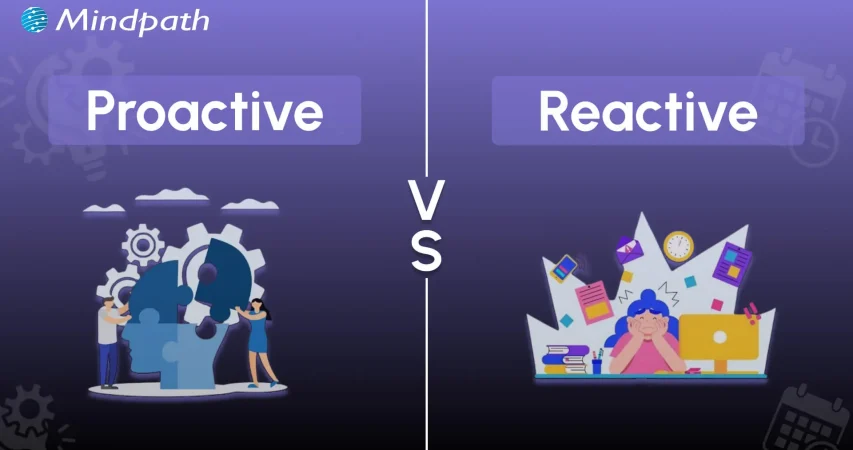
Proactive vs. Reactive: The Evolving Role of Software Maintenance Companies

Join our Newsletter!

Featured Posts

Support Is One Click Away

Home

Proactive vs. Reactive: The Evolving Role of Software Maintenance Companies

proactive vs reactive

Proactive vs. Reactive: The Evolving Role of Software Maintenance Companies

Businesses can leverage software solutions to stay ahead of their competition in different markets. However, the risks of breakdowns in software systems present the possibilities of disruption and rising costs. The discussions around proactive vs. reactive software maintenance have been gaining attention as effective maintenance offers a strong foundation for asset management. Without an effective maintenance strategy, you can just watch your revenue slip away slowly from your hands.

Anyone is likely to have a favorite food which is like the last meal they would say no to. At the same time, it is reasonable to wonder whether you will eat only that particular meal for the rest of your life. The comparison between proactive and reactive maintenance sheds light on the fact that a specific maintenance strategy won’t work in all situations. An overview of the differences between the two software maintenance approaches will help you choose the right one.

Want to move from fixing problems to preventing them in your software systems? Mindpath’s maintance and support services provide proactive solutions that streamline maintenance and enhance performance.

Understanding the Variants of Software Maintenance

Software maintenance is an integral component of every software development lifecycle and plays a crucial role in developing more efficient software systems. You can come across questions like “What are the 4 types of software maintenance?” during your search for insights on software maintenance. 

The general variants you may come across in software maintenance include corrective maintenance, adaptive maintenance, perfective maintenance and preventive maintenance. Each variant of software maintenance aims to achieve specific goals, aligned with the needs of diverse software systems.

Different software maintenance engineers have their maintenance guidelines, which help them manage their everyday work. On the other hand, choosing one specific strategy creates restrictions for software maintenance. You can achieve better results with a strategy that blends different maintenance approaches, such as proactive and reactive maintenance.

Curious about which development approach best supports proactive and reactive maintenance strategies? Learn about the different types of software development to select the ideal methodology for your software projects.

Learning the Definition of Reactive Maintenance

The most common approach to software maintenance has always focused on maintenance efforts after identifying any error or technical problem. As a matter of fact, the reactive vs. proactive maintenance comparison revolves largely around how reactive maintenance addresses issues only after they happen. You can also describe it as a ‘fix-on-failure’ method that does not rely on oversight or anticipation of problems beforehand. Therefore, reactive maintenance results in higher downtimes and increased repair costs along with unplanned approaches to issue resolution. 

Reactive maintenance strategy also presents the risks of unprecedented operational breakdowns in software systems. It is also important to remember that reactive maintenance is the most effective solution for non-critical software systems. You can incorporate reactive maintenance in a balanced maintenance strategy to deal with systems where the consequences of failure are minimal.

Unraveling the Meaning of Proactive Maintenance

Proactive maintenance is the exact opposite of reactive maintenance and focuses on preemptive approaches to prevent breakdowns before they happen. The difference in meaning of proactive and reactive software maintenance also emphasizes how proactive maintenance relies heavily on oversight. Proactive maintenance requires predictive analytics, routine inspection and servicing for early identification of potential issues. Software maintenance companies leverage proactive maintenance to maintain seamless operations and optimal performance of software systems.  

The biggest advantage of using proactive software maintenance approach is the assurance of timely maintenance, thereby reducing the possibility of unexpected breakdowns. With the help of proactive maintenance, you can minimize downtime as well as the cost required for repairs. Most important of all, proactive maintenance plays a major role in enhancing software reliability and efficiency.     

Looking to create tailored software solutions that integrate seamlessly with your maintenance strategy? Discover how custom software development can help you build efficient, scalable, and maintainable systems.

Decoding the Differences in Proactive vs. Reactive Software Maintenance

The evolving role of software companies in defining the transition from reactive to proactive maintenance is a huge topic of discussion. You can come across the proactive versus reactive comparison for the maintenance of your existing software systems or new solutions. However, choosing one approach from the two is like taking the best pick between control and chaos. The proactive and reactive software maintenance approaches are at the two ends of a spectrum. Identifying the differences between proactive and reactive maintenance will help you prepare an effective maintenance strategy.

1. Timing of Maintenance

The timing of maintenance is a major differentiator between proactive and reactive software maintenance strategies. When do you have to implement maintenance schedules in the two distinct approaches? The reactive versus proactive debate in software maintenance emphasizes how reactive maintenance happens only after breakdown. Software maintenance teams adopt the reactive approach as a way to deploy maintenance services after a problem has occurred. Therefore, most of the reactive maintenance activities are unplanned and don’t have any specific timing. 

On the other hand, the proactive approach to software maintenance follows a specific schedule for maintenance services. The schedule for proactive maintenance may vary from one organization to another. The timing of maintenance in proactive approach focuses on allocating timelines for regular assessment and predictive analytics. Proactive maintenance also includes schedules for preventive actions that will prevent unprecedented software breakdowns.  

2. Cost of Maintenance

You can also use cost as a crucial factor to determine the best choice for software maintenance between reactive and proactive approaches. The proactive vs. reactive maintenance comparison shows that you will need a large upfront investment in proactive maintenance. You should also note the costs involved in regular assessments and advanced technology used for analytics and diagnostics. However, it offers the assurance of significant savings in the long run as you can avoid larger and unprecedented breakdowns. Without downtime and emergency repairs, proactive software maintenance helps you save a lot on long-term expenses.

The reactive approach to software maintenance does not require any upfront investments as it does not require preventive measures. You don’t have to spend money on regular inspections or other preventive measures with the reactive software maintenance approach. The decision to choose proactive or reactive software maintenance becomes easier when you learn about long-term costs of reactive maintenance. You have to deal with emergency repairs, losses due to extended downtime and service charges in reactive maintenance.   

Want to understand the investment required to maintain software proactively versus reactively? Check out insights on software development cost to plan your budget effectively for long-term savings.

3. Downtime and Impact on Operations

The losses due to downtime are one of the biggest concerns for any business owner in the digital landscape. You must know that proactive maintenance ensures maximum reduction in downtime by identifying potential issues and resolving them. The reactive vs. proactive maintenance debate tilts more towards proactive maintenance when it comes to operational stability. With proactive software maintenance, you don’t have to worry about disruptions in operation of the software. As a result, you can have more reliable and consistent software systems in your technical infrastructure.

Reactive software maintenance brings the burden of additional downtime, which may extend indefinitely in some cases. The focus on repairing software only after a breakdown is the primary culprit behind longer downtime with reactive software maintenance. You can also notice that reactive maintenance leads to unprecedented failure that may disrupt operations. The operational disruptions that come with reactive maintenance can lead to massive losses in productivity. 

4. Strategic Approach and Resources

The comparison between proactive and reactive software maintenance also draws attention towards the strategy and resources used in each approach. Proactive maintenance strategy involves comprehensive planning and clear allocation of resources. In addition, proactive maintenance also involves creating a structured plan for preventive measures. You will find a systematic strategy in proactive maintenance to keep your software working seamlessly with optimal performance levels.

The reactive and proactive maintenance debate also sheds light on how reactive software maintenance requires minimal planning. On top of it, the allocation of resources in reactive approaches for software maintenance happens on an ad-hoc basis. The unplanned strategy in reactive software maintenance leads to a rushed approach for solving software problems.

Wondering how the latest innovations can improve software maintenance and reduce downtime? Discover the current software development trends shaping proactive and reactive maintenance strategies.

You can find a brief overview of the reactive vs. proactive maintenance comparison in the following table.

Criteria Proactive Maintenance Reactive Maintenance
Timing Proactive maintenance focuses on identifying and resolving issues before they cause problems. Reactive maintenance comes to play after an issue occurs.
Cost Proactive maintenance requires larger upfront costs and delivers long-term savings. Reactive maintenance is cost-effective in the initial stages and leads to high repair costs in the long run.
Downtime and Operational Stability Proactive maintenance causes limited downtime and does not disrupt operations. Reactive maintenance causes extended downtime and disruptions in operations.
Strategic Approach and Resources Proactive maintenance requires a strategy with comprehensive planning and preventive measures with deliberate resource allocation. Reactive maintenance involves minimal planning and facilitates resource allocation on an ad-hoc basis.

Final Thoughts

The difference between proactive and reactive software maintenance reveals that you can rely on proactive maintenance for multiple benefits. However, there is no way to ignore reactive software maintenance completely. You must know that both these approaches in IT software support serve distinct benefits tailored to different maintenance requirements. With the right consultant by your side, you can identify the maintenance approach that will deliver the best results. 

Mindpath is a leading destination for software maintenance and support services in an extremely competitive digital space. We have helped thousands of business owners create a strong and appealing digital presence with our innovative solutions. Over the years, our experts have made us one of the most trusted software maintenance companies with their dedication and perfection. Reach out to us and discover the best solutions for software maintenance right now.

Related Post

Explore how IT staff augmentation trends are reshaping the tech industry, from cybersecurity to AI, and discover Mindpath’s expert solutions.

Related Post

IT Staff Augmentation

Enterprise technology leaders are under constant pressure to leverage innovations while managing operational expenses effectively. Moreover, software development, digital product engineering or AI integration needs skilled expertise. So, hiring full-time experts can sometimes go out of your budget. In such a situation, staff augmentation has emerged as a strategic workforce model. It enables your company to minimize development costs without compromising on quality.

As per the recent trends by Verified Market Research, IT staff augmentation is ready to touch USD 857.2 billion by 2032. Unlike traditional hiring models, staff augmentation allows your company to extend its in-house teams on demand. Let us further discuss how cost-effective IT staff augmentation can boost your operations.

Looking for reliable staff augmentation solutions to fill critical skill gaps in your team? At Mindpath, we offer customized staff augmentation services that connect you with highly skilled professionals for seamless project execution.

What is Cost-Effective IT Staff Augmentation?

IT staff augmentation is generally a hiring model where your business will temporarily add skilled technology professionals to your existing teams. Further, such professionals work alongside your internal staff to support your ongoing projects while filling the skill gaps. Most importantly, it is capable of easily accelerating the development timelines.

  • Cost-effective IT staff augmentation allows you to retain full control over the project management while benefiting from the external expertise.
  • This approach is viable for companies that demand specialized technical skills for short-term projects.
  • It is also essential for people who want to scale their development teams quickly.
  • So, if you are looking forward to reducing IT hiring costs, this staff augmentation can be flexible without any long-term commitments.

As per the recent reports, around 26% of cybersecurity jobs go unfilled in the U.S because of the talent gap. Further, tech skills only last for 2.5 years, which requires constant up-skilling.

Curious about how to seamlessly integrate external experts into your existing workflows without delays? Discover how effective augmentation staff onboarding can streamline collaboration and boost productivity from day one.

Why Affordable IT Staffing Can Be Your Smartest Choice in 2026?

It takes around 35 days to hire IT professionals in the US. So, here, affordable IT staffing can be a great choice for you in the current age. Let us go through the reasons why IT staffing is convenient for your business.

1. It Prevents Exceptional Budgets

Augmentation can easily reduce the recruitment charges, employee overheads and training expenses. For example, outsourcing Indian staff allows organizations in the US to optimize their staff augmentation pricing without compromising on quality aspects.

2. It Offers Faster Access to Talent

Global organizations can easily select specialists from a huge pool of worldwide talent. So, instead of waiting for months, you can achieve the talent that your company desires.

3. Flexibility

Businesses can easily scale their team up or down as per the needs of their projects. So, you don’t need to deal with long-term contracts and inefficient headcount.

4. Bridge Your Skills Gaps

To seek digital transformation, you require niche expertise in cybersecurity, AI or cloud technologies. So, IT staff augmentation ensures you can hire the needed experts quickly. This approach is also viable for short-term project requirements.

5. Achieve Collaborative Terms

With remote work setting the trends, cost-effective IT staff augmentation can enable your company to work seamlessly with professionals from all around the globe.

Planning to scale your tech team quickly while maintaining efficiency in a remote-first environment? Check out how IT staff augmentation helps businesses access global talent while ensuring seamless collaboration.

Why Traditional IT Hiring is Expensive?

To understand the true values of staff augmentation, it is necessary to look at the expensive side of traditional hiring, as mentioned below.

1. Recruitment Expenses

You need to go through a series of steps, like job postings, recruiting agencies and internal HR resources. These aspects can increase your overall hiring charges.

2. Time-Taking Hiring Process

Finding the right candidate can take a long time. So, this aspect can delay your projects and overall productivity.

3. Training Approaches

Your new employees might require thorough training sessions and onboarding guidance to understand your workplace culture and functionality.

4. Essential Add-Ons

A company needs to offer a series of benefits to its employees for a long-term partnership. All these get added to the overall cost.

5. Risk of Hiring Wrong Candidates

Hiring the wrong candidate can result in project delays and additional recruitment expenses.

For businesses that handle multiple technology initiatives, these costs can quickly escalate their budget. So, you can easily reduce IT hiring costs through staff augmentation.

Wondering whether there’s a more flexible and cost-efficient alternative to traditional hiring models? Learn the key differences in staff augmentation vs managed services to make a more informed business decision.

A Quick Comparison between IT Staff Augmentation and Traditional Hiring

Here, you can go through the individual approaches of IT staff augmentation and traditional hiring through a table.

Major Elements Traditional Hiring Affordable IT Staffing
Time to Hire Comparatively slow and takes between 3 and 6 months. You can access quick onboarding within one to two weeks.
Cost Remains High Comparatively low
Flexibility Fixed employees are hard to scale. Offers on-demand scaling.
Suitable For Long-Term Projects Dynamic and for specialized roles.

How to Successfully Implement Staff Augmentation?

To upgrade your budget effectiveness and IT workforce optimization, your team requires a proper integration approach as given below.

1. Define Clear Skill Requirements

Always make sure to understand the precise technical expertise required by your company. Whether you need cloud engineers or developers, always stay strong with your decisions.

2. Prefer a Strategic Expert

Selecting the right partner ensures your access to professionals with proven industry-grade knowledge. Experts will always streamline the staff augmentation strategies with effective transformation goals. This can help the augmented teams to integrate effortlessly with the existing ore team.

Looking to hire the right talent without long recruitment cycles or overhead costs? Discover how staff augmentation hiring can help you quickly onboard skilled professionals aligned with your project goals.

Major Challenges that Most Businesses Face in IT Staff Augmentation

While IT staff augmentation leverages a series of benefits, you should also understand the challenges related to this hiring model. Further, being aware of these factors can help your business manage the augmented teams more efficiently while maximizing the value of your investments.

1. Getting Along with the Internal Team

One of the biggest risks is ensuring the augmented experts get along with your team members effectively. Differences in workflows and time zones might give rise to coordination gaps. So, it is essential to handle them efficiently.

2. Picking the Right Talent Partner

The success of cost-effective IT staff augmentation mainly depends on the quality of professionals being hired. So, working with unreliable teams can lead to skill mismatches while delaying your productivity & project delivery.

3. Maintaining Consistent Project Communication

When your team includes both in-house teams and external professionals, maintaining consistent communication can be a bit tough for you. Moreover, without proper coordination, you might slow down the progress, and it can affect your project quality.

4. Managing Security Elements

When your external professionals access the internal systems or sensitive data, your organization must include essential security measures. Additionally, you should implement strict access controls.

Despite all these challenges, businesses that adopt the right management practices can still leverage the essentiality of affordable IT staffing to build scalable teams.

Wondering how businesses are evolving their workforce strategies while maintaining security and efficiency? Discover the latest IT staff augmentation trends that are shaping how organizations scale teams and manage distributed talent securely.

Conclusion

Your enterprise must innovate continuously in this vast technology landscape. Traditional hiring models somehow limit your agility while increasing the fixed expenses. So, cost-effective staff augmentation can work as an alternative approach by providing flexible access to specialized talent.

Organizations that want to boost their technological relevance in a cost-efficient way, such as providers like Mindpath, can make a difference. Clients from all around the world have believed in our expertise, and this has led us to become an industry expert. So, schedule an appointment with us and let our professionals handle your requirements.

Discover how IT staff augmentation can optimize costs, enhance flexibility, and access specialized talent to boost your organization’s success.
Poc meaning

The fast-paced business landscape has turned into a battleground where companies of different sizes compete against each other. New product ideas that can revolutionize industries have been gaining traction and many of them have transformed into sustainable businesses. Business owners are more curious about POC meaning and how they can incorporate it into their strategies. 

The POC might sound similar to a minimum viable product that helps in creating products aligned with customer needs. On the contrary, it is a type of small experiment to find out whether your product idea will actually work. How is a POC relevant for your business? You can find the answer with a comprehensive guide on POC and how to create one.   

Want to reduce time and cost in testing your new product idea? Mindpath offers POC Development Services to create a working prototype for real-world validation.

Understanding the Definition of POC

Most of the businesses, especially startups, end up with failure in new product development due to various reasons. One of the biggest among them is ignoring the test for feasibility of their product ideas. The POC or Proof of Concept is a small experiment that helps you determine whether a product idea is viable, before you begin full-scale development. It is the ideal solution to find out if your product ideas can work as intended in the real world.

The POC is the first milestone in any product development project where you have to test one component and its feasibility. Many of you might think that this sounds similar to the definition of a MVP or minimum viable product. However, the answers to “what is proof of concept?” emphasize that it is not about selling your idea to the target audience or figuring out how to make it work.  

Developing a POC is similar to a mini experiment that does not require a huge amount of time or resources. If you have a product idea, then a POC helps you test it and find out whether you should pursue the idea. Once you find out that your POC is feasible, then you can move towards prototyping and subsequently build MVP.

Want to understand how to transform your validated idea into a functional product? Learn more about MVP development to build scalable solutions after successful validation.

POC in Context of Software Development

Software development companies are probably the first in churning out the most number of POCs for diverse projects. The meaning of proof of concept for software development points at how it helps in testing a small version of a software application. A POC used for software development focuses on testing whether a specific component works in real conditions as you want. Software POCs help development teams and product owners validate their ideas and identify challenges in the early stages of development. 

You can think of an example of software POC in the case of a fintech startup that aims to create a new AI-powered chatbot. The startup can use software POC to find out the feasibility of different features in the chatbot. It can also show whether the chatbot can effectively support users by answering common questions. 

The benefits of POC in software development also showcase that it can play a major role in reducing various risks. Early validation of functionalities and core features of software helps in checking feasibility of workflows and key functions. Development teams can use the POC to find relevant programming languages, platforms and frameworks for the software. The POC also ensures early identification of potential issues, bottlenecks and bugs in the software.

Looking to build tailored solutions once your idea is validated through a POC? Explore different types of software development to choose the best approach.

Variants of Proof of Concept in Business

The most crucial highlight about POCs is that you cannot rest with just one for a specific product idea. You can reflect on the proof of concept meaning once again to learn that it aims to validate one component at a time. Therefore, you can come across different types of POCs required for your product idea. Each type of POC focuses on validating diverse aspects of a product, ranging from market demand to technology stack. 

The common variants of POC in any project are product POC, technology POC, process POC and market POC. The product POC helps in validating the core functionality of your product and is useful for verifying your product ideas. Technology POC comes into play when you have to find whether a specific technology stack is relevant for your product. 

The search for answers to “what is proof of concept in project management?” also points at process POC. It is a crucial tool for validating the internal workflow and flexibility for operational changes in any project. Finally, you have the market POC that helps you find out whether your product idea has market potential and can garner the interest of real customers.

Curious about selecting the right technologies for different types of POCs? Discover how to choose the right tech stack to ensure efficiency and scalability in your project.

Why Should You Invest in a Proof of Concept?

Business owners, especially in the case of startups, are likely to think twice before building a POC for their next product idea. You may find the answers to “what does POC mean?” and still not understand how it adds value to your business. An overview of the benefits of POCs can help you understand why it is important for success of your project.

1. Driving Strategic Decisions

Almost every business owner who thinks about building a POC needs concrete insights on the feasibility of their product ideas. The POC for any product will offer relevant insights from users, stakeholders and technical experts that can help in driving strategic decision-making. It provides an early impression of the potential value and feasibility of projects, thereby facilitating efficient resource allocation and reducing risks. 

2. Saving Your Time and Money

Businesses should also think about developing a POC to save their valuable time and money. Early validation of key assumptions and concepts can help business owners avoid investments in ideas that won’t work in the long run. POCs help you follow a proactive approach to any project that reduces the possibilities of costly changes and futile use of resources.

3. Shaping Your Product for Target Users

The most promising aspect in answers to “What is POC?” focuses on how it helps in gaining feedback from real users. You can leverage POCs to find out whether your product solves the pain points of your target users. The POC can serve as a crucial tool for identifying the needs and preferences of your customers in early stages. As a result, you can move ahead with your project in the right direction to achieve higher market acceptance and user satisfaction. 

Wondering how real-world solutions like chatbots are validated before full-scale development? Check out an AI chatbot example to understand practical implementation using POC.

Unraveling the Ideal Steps to Create a Proof of Concept

The ability to create a POC for your project ideas is an invaluable competency in the fast-paced business landscape. You can define POC for a new product and test the idea systematically rather than depending solely on assumptions. A clearly structured approach for creating your POC can provide the flexibility and efficiency required to test your new product ideas.

1. Start with a Definition of Your POC Goals

The ideal beginning to any POC development project would focus on identification of the objectives and expected outcomes. You should also identify the financial goals and organizational objectives that you want to achieve with the product idea. It is important to have a clear outline of the problems that you want to solve with your POC.

2. Establish the Scope and Success Criteria

You should define the limitations of the POC to ensure that it focuses on evaluating a specific component of your product. Every POC project must have a clear outline of the specific features and functionalities that you want to test. In addition, you have to specify the criteria for success with measurable goals and objectives. The scope of your POC should also include definition of the different use cases and scenarios for your product.

3. Prepare the Project Team

The next thing you need after establishing the scope of a POC for your product idea is a project team. Your project team can include decision-makers, developers, project stakeholders and technical experts. It is important to define the roles and responsibilities of all team members and establish clear channels for collaboration. 

4. Create the POC and Obtain Feedback

After setting up your project team, you should execute the plan for your POC by using available resources. Once you develop proof of concept, you have to collect technical insights and feedback on it from users and stakeholders. The feedback data is an essential tool to guide informed decision-making and identifying areas for improvement.

5. Evaluating Results and Moving Ahead

The most important step in developing a POC is the analysis of feedback data. It helps in evaluation of the performance of the POC with respect to the predefined success criteria. You should document the results and recommendations for future actions. 

Planning to streamline your development process after validating your idea? Learn how agile methodology helps in iterative progress and faster product delivery.

Final Thoughts

The introduction to POC showcases how it is different from a MVP or minimum viable product. Businesses can leverage POCs to find out whether the ideas they have can actually transform into sustainable products and solutions. As a matter of fact, your POC serves as the foundation on which you can build prototypes and MVPs.

Mindpath is one of the leading solution providers for POC development services across various industries. We have created proof of concept for software with commendable results and pushed the boundaries of innovation. Our experts leverage their experience to deliver strategic POC solutions with efficient use of your resources. Consult with us and discover the optimal approach to create your first POC now.

freelance full stack developer

In the current business landscape, business entities are engaging in a wide range of projects. Due to the high diversity coupled with the complexity of projects, many companies are hiring the best freelance full-stack developers for their projects. According to the reports, full-stack developer jobs are one of the most in-demand jobs since their year-over-year postings are rising by more than 35 %.

As the reliance of companies across industries on digital technologies rises, the demand for full-stack development freelance services is likely to surge. Businesses that prioritise their digital transformation journey have been considering freelance full-stack developers. If you wish to excel in your tech projects, you must definitely consider the best freelance full-stack developer for hire.

If you’re looking to hire full-stack developers who see beyond code and focus on your future transformation, Full Stack Development Services will provide you with forward-thinking professionals who deliver innovative solutions that drive business growth.

Who is a Freelance Full-Stack Developer?

Before deciding whether a freelance full-stack developer is an ideal choice for your project or not, you must familiarise yourself with the particular role. A Freelance Full-Stack Developer is a professional who is proficient in the front-end and backend components of a web application. These developers have solid expertise in a broad range of technologies such as CSS, HTML, React, JavaScript, and many more. As in recent years, a greater number of businesses are integrating digital technologies into their processes, and the reliance on capable freelance full-stack developers has skyrocketed. 

The high versatility of these professionals while building entire web apps from scratch gives rise to benefits for businesses. Apart from their prowess to create apps, these professionals are capable of managing databases and deploying and maintaining software in a cloud environment. Thus, businesses that decide to hire a freelance full-stack developer can succeed in their technology-driven projects. 

Looking for the best way to scale? Explore how full-stack development for web projects improves flexibility and long-term growth. 

Skills of a Freelance Full-Stack Developer

Businesses need to familiarise themselves with the top skills and expertise of a Freelance and remote full-stack developer. The insight in this specific area can certainly help you understand the true potential of these professionals. The top skills that these professionals leverage in order to help business firms excel in their web development projects are:

1. High proficiency in front-end technologies

A capable Freelance Full-Stack Developer is proficient in popular front-end languages such as Angular, React, and CSS. 

2. Expertise in backend aspects

A highly skilled Freelance Full-Stack Developer has immense knowledge relating to database management, along with popular languages Python and Node.js. The professional also has expertise in API development, which equips them to handle backend operations flawlessly.

Also Read: Full-stack Development with Node.js

3. Solid foundation in cloud technologies

Talented Freelance Full-Stack Developers possess solid insight into cloud technologies. The rich insight empowers them to design highly scalable and secure applications for businesses. 

4. Testing and debugging skills

The skills relating to testing and debugging processes enable these professionals to develop robust and well-functioning applications. By conducting rigorous testing, they are able to locate flaws or vulnerabilities in web apps and adopt appropriate remedial measures in a prompt manner. 

5. Robust version control

Freelance Full-Stack Developers are capable of tracking changes to code. The skill pertaining to version control ensures that the quality of code can be maintained throughout the app development process. Furthermore, these developers focus on collaborating with others to ensure the success of projects. 

Want to gain deeper insight into which development role best suits your business needs? Explore our blog – Front-End vs Back-End vs Full-Stack Developer.

How Can a Freelance Full-Stack Developer Add Value to Your Project?

In the digitalised business realm, it is a necessity for businesses to consider partnering with the best freelance full-stack developers. Businesses can derive immense value if they decide to partner with a top Freelance Full-Stack Developer or hire a remote full-stack developer.

1. Expertise to handle end-to-end projects

By hiring the best Freelance Full-Stack Developers, you can rest assured about the entire web development lifecycle. These professionals will capitalise on their skills and expertise to handle a diverse range of projects efficiently. As they can work on the entire project lifecycle in an independent manner, you do not have to rely on other teams or professionals. 

2. Cost-effective solutions

Hiring the best Freelance Full-Stack Developers is undoubtedly a highly cost-effective solution for businesses. By choosing freelance full-stack developers, you can eliminate unnecessary costs relating to employee benefits or long-term contracts. Additionally, you do not have to hire entire project management teams to work on your web development projects. Moreover, by leveraging the expertise of these professionals, you can surely excel in your project in an efficient manner. 

3. High agility

Generally, Freelance Full-Stack Developers are highly agile as well as adaptable when it comes to handling web app development projects. As a result, they can deliver results for businesses with shorter delivery timelines. Furthermore, their ability to work in an independent manner can decrease the overall time taken to work on projects for businesses. Businesses can certainly derive immense value from their ability to launch their web apps in the market successfully. 

4. Flexible way of handling projects

By joining hands with Freelance Full-Stack Developers, businesses can handle their projects in a flexible manner. As these professionals work as freelancers, they offer flexible options for their business clients. Based on your exact project needs, these web developers can deliver tailored solutions to meet your specific project objectives. 

5. Capitalising on transferable abilities

Freelance Full-Stack Developers have highly transferable abilities thanks to their comprehensive knowledge of web development. As a result, business entities can take advantage of full-stack developers to take care of their varying needs relating to web design and web app development. The transferable abilities of these professionals undoubtedly empower businesses to reduce the overall complexity of their projects. 

Planning to validate your product idea quickly? Discover how hiring a full-stack developer for MVP accelerates product validation.

Promising Future of Freelance Full-Stack Developers

The future of Freelance Full-Stack Developers is full of possibilities in the current times. This is mainly because of the rising demand for these professionals in the contemporary business world. The skills that Freelance Full-Stack Developers possess make them highly dependable professionals. Furthermore, their proficiency makes them capable of tech agility and working on complete projects independently. 

The future-proof skills and prowess of full-stack developers increase their worth for companies. In the future, as more businesses engage in web development projects, the dependence on these developers may further increase. Such a trend is likely to increase the full-stack developer’s salary significantly in the long run.

Some of the chief reasons for the bright and prosperous future of freelance full-stack developers include:

  1. The growing demand for flexible web app development solutions in the business world.
  2. The ability of these professionals to offer end-to-end web app development solutions to businesses. 
  3. The flexible nature of solutions that are offered by full-stack developers in the evolving business climate.
  4. The updated knowledge of these developers about the latest industry trends, as well as the latest technology tools. 
  5. The ability to solve diverse web app projects with varying levels of complexity.     

Also Read: Full-stack Development Trends

Final Words

The emergence of the role of freelance full-stack developers has been a boon for modern business entities. In order to thrive in the tech-driven business landscape, a majority of businesses are hiring full-stack developers who can handle their web development projects efficiently. These professionals are undoubtedly playing a catalytic role in helping firms excel in their development projects. 

If you wish to capitalise on the skills of the best freelance full-stack developers, you must consider partnering with Mindpath. By leveraging its staff augmentation services, you can hire full-stack developers who can drive your projects towards success. Therefore, by integrating highly skilled professionals, your business can boost its project management capabilities.  

Discover why hiring a freelance full-stack developer in 2024 can boost your project’s efficiency, quality, and cost-effectiveness. Learn more with Mindpath!