Importance of Data-Driven Decision Making for Businesses

Join our Newsletter!

Featured Posts

Support Is One Click Away

Home

Importance of Data-Driven Decision Making for Businesses

what is data-decision making

Importance of Data-Driven Decision Making for Businesses

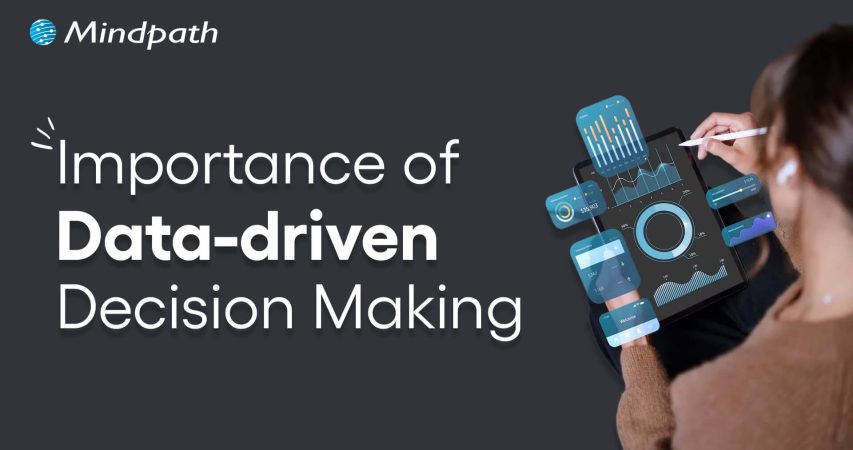
Every prosperous company in today’s modern world relies on insights, not on instincts. The importance of data-driven decision-making is that it turns the daily choices made by human beings into strategic moves guided by genuine facts. Businesses that rely on data are better positioned to identify new opportunities, make decisions faster to adapt to change, and make decisions accordingly to grow. Data-driven decisions are the difference between guessing your next step and knowing your next step. 

As companies embrace data as a trustworthy guide, they promote a culture of clarity and accountability. Decisions are sharper, and strategies are more in sync with customer and market needs. This pragmatic use of data helps organizations to keep their focus on the future and to remain competitive in today’s digital-first environment. In this blog, we are going to outline why data-driven decision-making is a crucial component of contemporary business success.

Data-driven decisions help businesses move with clarity and confidence. With our AI development services, you can turn complex data into valuable insights that improve performance and drive growth.

What is Data-Driven Decision Making?

Data-driven decision making (DDDM) refers to making business decisions on the basis of facts, figures, and analysis rather than personal opinions or gut feelings.  It reduces uncertainty by collecting data from various sources that examine the relationship between actions taken, such as customer behavior, sales tracking, or market data on trends, to identify what is really working for the business.

When organizations use this approach, they make data-based decisions with direct evidence that reduces risks and reveals new opportunities. Analyzing data patterns enables businesses to plan more effectively and achieve success easily.

Must Read: AI in Decision Making

Here are the key fundamentals of data-driven decision-making:

1. Focus on Business Goals

Every data initiative must have a direct link to business goals. When teams better define their objectives, they can evaluate data with intention and make decisions that result in observable growth for the business.

2. Keep Data Clean and Reliable

All insights must be accurate, and therefore, the data must be from a trusted source. Ongoing checks for data quality and best practices in data cleaning should be conducted to guarantee decisions are based on sound data and not on missing or stale data.

3. Use Data as Proof, Not Assumptions

Effective decisions are built on true evidence. The importance of data-driven decision-making is that it eliminates the guessing and offers visibility that leads the decision-maker to act faster and more reflectively.

4. Make It a Continuous Effort

Data-based decision-making is an integral process. Companies should be consistently collecting, monitoring, and analyzing data so they can keep pace with shifts in market trends and customer needs.

5. Encourage Team Collaboration

Strong insights often develop in collaboration. When departments share their insights and discuss results, they create a collective plan that produces better and more consistent outcomes.

Want to know how modern businesses manage and analyze large volumes of data efficiently? Explore cloud‑native development to understand how cloud-native systems optimize data-driven operations.

The Importance of Data-driven Decision Making

Understanding the importance of data-based decision-making supports businesses in formulating better rationales and better results. It instills a culture of fact-based, accountable decision-making to foster growth and transparency in increasingly dynamic markets.

1. Smarter Communication Across Teams

Effective communication is one of the main benefits of data-driven decision-making. When all departments are working with the same reliable insights, updates are easier to share and alignment of goals is simpler. With transparency, collaboration is fostered, and coordination is improved. This enables leaders to make quicker, smarter choices for improved business performance overall.

2. Continuous Growth and Progress

The importance of data-driven decision-making is tied to its support for constant growth in the business. By looking at across practice areas to identify patterns that drive success, teams can recognize what affects success and improve decisions. Each decision that relies on evidence is a barometer for the future and ensures steady improvement. With time, this will fortify the organization and provide continued success.

3. Unlocking New Business Opportunities

Making decisions based on data allows organizations to discover new areas of growth and opportunities. When teams analyze customer behavior and market trends, they may identify opportunities that they never considered. This approach can result in more confidence in expansions, partnerships, and innovations. When focused by data, it allows the organization to have a distinct competitive advantage.

Must Read: Benefits of Using AI for Customer Service

4. Building Knowledge and Innovation

Organizations that leverage data-based decisions regularly outperform firms that don’t. Studies have shown that data-driven firms have higher productivity and higher profitability. When we start considering information to be a valuable asset, teams begin to actually have a learning culture, where information flows both ways. This kind of culture leads to smarter thinking and out-of-the-box problem-solving.

5. Reducing Costs and Avoiding Mistakes

Choosing to make decisions based on gut feelings can lead to poor and costly outcomes in a business scenario. When leaders choose to make decisions based on data, they are making decisions based on certainty that is based on fact, instead of hunches. Relying on evidence instead of instincts leads to companies using their resources more efficiently. More clarity leads to reduced time and waste and naturally occurs in the flow of achieving sustainable cost efficiency.

6. Adapting to Market Changes Easily

Another importance of data-driven decision-making is its ability to assist organizations in being adaptable. Market conditions change and customer expectations fluctuate, and data keeps companies prepared. When companies can monitor trends and performance as they are happening, they can react quickly and with confidence. This ability to be adaptive will help to keep organizations competitive, relevant, and profitable.

Wondering how different AI systems impact decision-making in organizations? Discover types of Artificial Intelligence – ANI, AGI, and ASI and see which technologies can optimize your business insights.

Ready to Strengthen Your Business with Smarter Data Decisions?

The importance of data-driven decision-making is that it enables an entity to convert unprocessed data into efficient and effective measures. Businesses using data as their main resource are in a position to make decisions without hesitation, spot trends quickly, and hence, execute plans deftly to reach a steady level of growth. It becomes their corporate culture that they have fact-based support for every decision made, which eventually results in enhanced operational efficiency, greater flexibility, and durability in a very dynamic business environment.

At Mindpath, we empower businesses to harness the power of data through our advanced AI development services. Our experts design AI-driven tools that simplify complex processes, enhance decision accuracy, and drive smarter outcomes. By combining innovation with intelligent data use, Mindpath helps organizations improve productivity, streamline operations, and achieve measurable results that strengthen their competitive edge in the digital-first business world.

Related Post

Discover how IT staff augmentation can optimize costs, enhance flexibility, and access specialized talent to boost your organization’s success.
Discover Automation-as-a-Service (AaaS) and its benefits, including improved efficiency, cost savings, and seamless integration for your business.

Related Post

Low-code No-code Development

The app development arena has been undergoing constant evolution. One of the major developments that has captured the attention of one and all is the Low-Code/ No-Code modular approach. It is a must for modern businesses as well as individual app developers to familiarize themselves with low-code no-code development. It certainly holds the potential to revolutionize the application development process. 

According to the recent report by Future Business Insights, the low-code development platform is expected to grow from $ 37.39 billion in 2025 to $ 264.40 billion by the year 2032. This major jump automatically highlights the growing popularity of low-code platforms. In order to leverage this application development model, it is imperative for businesses to have a clear understanding of what is low-code or no-code development.

Want to take your business to the next level with the use of low-code development services? Contact us and get full guidance and support on how you can implement low code/ no code innovation for your organization.

An Insight into Low-code or No-code Development

In the dynamic digital space, low-code no-code have certainly emerged as a transformative force. It can be defined as the app development process that involves minimal coding. It serves as a visual approach in the app development setting. By adopting such an approach, it is possible for businesses or individuals with minimal coding skills to develop applications. 

The key difference between low-code and no-code development lies in the degree of coding that is necessary.  Low-code platforms act as highly effective tools that can help in creating apps. However, one must possess knowledge relating to coding to a certain degree. No-code platforms act as drag-and-drop platforms that entirely eliminate the need for coding. By leveraging top low-code no-code development services, businesses can develop high-performing applications.

Must Read: Low-Code vs. No-Code Development

Mechanism of Low-Code No-Code Development

In the traditional app development process, app developers or programmers had to engage in highly complex coding processes. Such processes were essential to create the features as well as the functions of the intended apps. As a result, app developers were expected to possess solid skills and expertise relating to coding and computer programming languages. 

However, by using the Low-code No-code Development approach, it is possible to visually choose and connect reusable components. By doing so, app developers and businesses can identify the specific components that represent specific capabilities. Then they can link them together in order to develop the desired workflow. 

Low-code and No-code tools undoubtedly simplify how developers create apps. By using such tools, they can easily develop applications as if they were drafting a flowchart instead of writing code in a detailed manner. Moreover, such platforms come with several features that allow developers to experiment during the app development process. The simple drag-and-drop interfaces of low-code and no-code tools streamline the entire application development process. 

As low-code and no-code solutions continue to grow, it’s helpful to see where they fit among the top web development trends in 2026, shaping the industry.

Benefits of Low-Code No-Code

In the past, the development of software applications was quite time-consuming. Businesses would have to deploy teams that would be responsible for app development. However, today the situation is very different as they have the option to use low-code/no-code tools.  These tools have the potential to simplify how applications are developed. Now that you know the low-code no-code meaning it is time to explore its benefits. 

1. Faster app development process

One of the fundamental benefits of low-code and no-code revolves around a faster development process. By using the best low-code no-code platforms, businesses can certainly speed up their app development process. Such tools create the opportunity for app developers to design apps efficiently without having to do complex coding from scratch. 

2. Lower app development cost

The cost relating to app development can give rise to financial constraints for businesses. In fact, conventional app development processes were quite costly. However, by adopting the low-code no-code model, businesses can develop top-performing apps in an affordable manner. By choosing top tools, the need for high-cost development resources can be reduced considerably.  

3. Ideal tool for non-developers

Non-developers who have limited insight into software development can capitalize on low-code and no-code tools to venture into the development space. These tools can act as the perfect partners that can aid in designing a diverse range of applications. Businesses can utilize the model to democratize app development. As a result, the reliance on IT teams for app development can be reduced considerably. 

4. Higher agility

In the prevailing digital context, the low-code no-code approach enables businesses to undertake diverse processes relating to prototyping and testing. By using low-code or no-code platforms, businesses can modify the workflow, data sources, and user interfaces. Moreover, such modifications can be done in a quick and agile way. 

While low-code/no-code tools offer speed, traditional approaches still have value; learn more about optimising development with Custom Web Development Services.

Drawbacks of the Low-Code No-Code Model

To get a comprehensive insight into low-code and no-code development, it is essential to understand the associated drawbacks. Only by being aware of the shortcomings can businesses decide how they can optimally use low-code or no-code. Some of the major drawbacks of low-code and no-code include:

1. Restricted degree of flexibility

One of the main drawbacks of the low-code no-code approach is that it diminishes flexibility for app developers. This is because their ability to customize their app is reduced to a considerable extent. As low-code and no-code frameworks rely on pre-built components, businesses that wish to develop highly tailored apps may not be happy with the outcome. 

2. Issues relating to performance

Another major drawback of low-code and no-code that businesses need to be aware of revolves around performance concerns. Sometimes, the apps that are developed using low-code or no-code tools may struggle to handle a large volume of data. Similarly, concerns relating to scalability may also arise in case there is a surge in user load. Such concerns may have an adverse impact on the overall satisfaction and experience of users. It may even impact the reputation of businesses. 

3. Challenges relating to integration

A common concern that may arise for businesses centers around integration challenges. It might not be easy to integrate the apps that have been developed using low-code or no-code platforms with the existing systems. Thus, app developers and businesses may require extra time as well as resources to address these integration concerns. 

4. Security issues

The use of no-code platforms may give rise to serious security concerns for businesses. This is because such platforms typically have limited security features. In the highly unpredictable and uncertain digital environment, this drawback has the potential to compromise the quality of an app. Moreover, security-related concerns may give rise to severe consequences for not only businesses but also their customers.   

Final Words

In the technology-driven business world, app development is a must for most businesses. Thus, it is crucial for businesses to broaden their insight relating to low-code and no-code development. By capitalizing on this app development model, businesses can certainly develop top-quality apps in an efficient manner. Before applying the specific model, businesses can surely refer to some real-life low-code no-code development examples.

To make the most of the low-code and no-code approach, it is essential to consider the associated advantages and drawbacks as well. The comprehensive insight can definitely guide modern businesses to develop novel apps with the help of low-code and no-code tools. Mindpath‘s low-code development services help you make the strategic use of such tools can empower businesses and shape the experiences of their target audience.  

Discover how low-code/no-code tools are transforming digital development and enabling faster app creation for businesses.
Custom web application development

A growing business often reaches a point where off-the-shelf solutions no longer match its unique needs. Right? This is where custom web application development comes in. It gives you the web applications that work exactly the way you want them to, based on your specific requirements. Think about how much easier your daily operations would be if every feature were custom-made based solely on how your team works day to day, rather than trying to adapt to a generic application. It happens when technology becomes more than just a tool or a utility and partners with you to scale with your business.

Over time, certain changes in daily operations start to hint that your business might benefit from such a tailored solution. While these changes often seem subtle, they show up as your team performs operations, handles data, or relates to customers. When the shifts appear, it is highly likely that operational efficiency, productivity, or growth will be impacted. Understanding these signals can help you determine the proper time to invest in a strategy that is specifically built to suit the needs of the business.

Every business challenge needs a custom solution. Look how Mindpath’s custom web app development services resolve the issues and support businesses to convert unique needs into powerful digital tools.

What are Custom Web Applications?

Custom web application development for business means you’re building software that is specific to a business’s needs. This means instead of general tools that are often not specific to the goal of the software, you can tailor the application to a business’s workflows and goals, thus providing better efficiency and customer experience. In short, a custom web application for business will be able to manage data, create automation, provide reporting, and centralize operations. This process will result in a secure, scalable solution that supports the overall growth of the business.

Developers choose programming languages, frameworks, and tools relevant to particular project requirements. They communicate with the business to understand the challenges while integrating within the existing systems. During the web application development, the team regularly checks for progress and verifies if everything is aligned, keeping the cost, time, and risk to an acceptable level. The result is a working, well-designed, reliable application that the business finds intuitive, enhances the business, and can adapt as the business grows.

Also Read: Web Design Company

Benefits of Custom Web Application Development

Knowing the custom web application benefits can help you understand how the proper solution can have an impact on how you work. When considering why to build a custom web application, it is usually due to the fact that it can fit your precise requirements, allow you to work more efficiently, and facilitate growth. It is a strategic investment that will provide a return reflecting your investment and your growth aspirations.

Benefits of Custom Web Application Development

1. Built for Your Business Goals

When you use Custom web application development, you have every feature custom development to suit your needs. This makes integrating workflows easier and an easier experience for your employees.

2. Cost-Effective in the Long Run

A custom solution takes out the licensing fees and unnecessary features, which will save you in the long run. You can also reduce some infrastructure and hardware costs if you are going to outsource the development, too.

3. Designed to Reflect Your Brand

Custom web app development allows you to create every aspect of the application, to your brand’s identity. It can give your application a customized, professional, and unique identity that users will definitely recognize.

4. Flexible and Scalable for Growth

Custom-built applications will grow with your business and meet new demands. You will be able to add new features, accommodate increased traffic and usage, and still have a smooth performance.

5. Stronger Security Measures

Security is a key feature of Custom web application development, ensuring that your business is safe from common cyber threats. Custom apps will be fun to breach and take over than commercial apps found on the market.

6. Easy Integration with Existing Systems

Custom web applications will integrate easily with your current systems and databases. This allows you to keep data synchronized, accurate, and consistent across all platforms.

Choosing a custom web application is a strategic business decision! Discover web development trends to ensure your development strategy aligns with current and future digital demands.

10 Signs Your Business Needs a Custom Web Application

As businesses change, many times their needs exceed what generic software can deliver. Knowing the signs that you need a custom web application will allow you to reduce the damage that can happen before inefficiencies grind your business down.

10 Signs Your Business Needs a Custom Web Application

1. Struggling With Too Many Tools

Switching between spreadsheets, emails, and multiple apps slows work and causes mistakes. A custom web app centralizes your operations in one platform for better efficiency.

2. Current Software Limits Your Work

Generic software forces you to adjust your process to fit its features. Custom web application development creates solutions that match your exact workflows.

3. Security Risks are Growing

Using outdated systems leaves sensitive data exposed. A custom web app includes strong security controls, encryption, and adheres to all industry standards.

4. Your Systems Can’t Scale

Organizations evolve. As your business grows, so should your tools increase their users, data, and functionality. Custom software is built to scale without performance issues.

5. Customers Face a Poor Experience

Using slow, outdated, or limited platforms can leave users frustrated. A custom web app will provide users with modern interfaces, fast service, and customized experiences.

Also Read: Custom Website Development Services

6. Reporting Takes Too Much Time

If your reporting is done manually, or it takes too long to collect and analyze, it will limit your decision-making. Custom web apps will provide real-time dashboards and allow for instant self-serve reporting.

7. Too Much Manual Work

When staff are tied up with repetitive data entry or repetitive tasks, it is hard to be productive. A custom application can be built with automation features to allow staff to concentrate on high-value opportunities or higher-skilled work.

8. Limited Access Outside the Office

If your employees can’t easily access your systems while off-site or, even worse, don’t have access to them at all, your flexibility is limited. A custom web application can be secured and hosted in the cloud, allowing staff to work from anywhere.

9. Competitors Are Moving Ahead Digitally

If you’re used to out-of-date tools and systems, keeping up will mostly be impossible. Custom web application development will give you the opportunity to develop useful features that are unique to your organization.

10. Technology Can’t Keep Up with Change

If your business pivots, expands, or introduces new services, the old systems won’t accommodate this change. Custom applications allow you to adapt to these opportunities, adding integrations, and are designed with flexibility.

Wondering what comes next after deciding to build a custom web application? Explore the web app development roadmap to gain clarity on development stages, timelines, and technology choices.

Ready to Build a Solution That Fits Your Business?

A growing business needs tools that adapt to its pace, processes, and vision. Custom web application development delivers tailored solutions that improve efficiency, strengthen security, and enhance customer experience. Recognizing the signs early allows you to invest in a platform that aligns perfectly with your goals and supports sustainable growth.

At Mindpath, our Custom web application development services create secure, scalable, and user-friendly platforms that integrate seamlessly with your operations. We focus on understanding your unique workflows and delivering features designed to simplify tasks, automate processes, and empower your team. The result is technology that becomes a true partner in your business journey.

AI in Web Development

Imagine a world where websites not only look great but also adapt to user needs in real time, offer personalized content, and even predict future trends. Sounds futuristic, right? Well, with AI now playing a pivotal role in web development, this is becoming a reality. But how exactly can artificial intelligence transform the way we design, build, and maintain websites? And what advantages does it offer for businesses and developers alike? In this blog, we will explore how AI can be leveraged in web development. 

Artificial intelligence (AI) is the development of computer programs that are capable of doing activities that would typically require human intelligence, such as pattern recognition, decision-making, and voice understanding. It encompasses technologies such as natural language processing, deep learning, and machine learning. AI is playing an increasing part in web development since it makes websites smarter and more effective. Websites can utilize AI to provide personalized content, learn from user behavior, and even automate processes like chat assistance and recommendation systems. By streamlining repeated tasks, it saves developers time and enhances the user experience overall, making websites more approachable. AI can help in improving security, speeding up performance, and creating more intelligent search functions, which will make websites easier to create and more beneficial for customers. 

Want to know more? Let’s explore how leveraging Ai in web development can be beneficial! 

Benefits of AI in Web Development

1. Minimized Human Errors

AI reduces the possibility of human errors during web development, such as errors or bugs. It can automate testing, which enables AI to swiftly identify and address coding errors. This not only speeds up the entire development process but also improves the stability and dependability of the product. Developers can guarantee fewer mistakes and produce websites of a higher quality by outsourcing these responsibilities to AI. In the long term, it improves efficiency and saves time by enabling engineers to concentrate on more difficult jobs. In order to ensure seamless operation and reduce the need for ongoing manual monitoring, AI can also continually monitor the website, identifying any problems even after launch. This leads to improved site stability and user experience.  

2. Personalized Solutions

AI is rapidly being used by web developers to provide personalized user experiences on websites. AI enables websites to personalize content based on each user’s choices, behavior, and past interactions. AI-powered systems can provide personalized content, product recommendations, and targeted marketing messages by analyzing user data. This personalization increases user engagement and conversion rates, making users more inclined to act on the site. A customized experience also helps to promote client loyalty by making people feel valued and appreciated. 

Furthermore, AI can forecast future user behavior by identifying patterns and trends, allowing businesses to stay one step ahead in satisfying client wants. This proactive strategy can improve client satisfaction and sales.  

3. Optimized Communication

There are many different types of websites, and some can be difficult to use. Artificial intelligence-powered virtual assistants and chatbots offer real-time customer care, answering queries and supporting customers around the clock. They can manage a wide range of interactions, from simple enquiries to more complicated activities, increasing customer satisfaction while reducing the effort for support workers. 

These AI technologies help develop user trust by providing quick assistance, making them feel supported and appreciated. This short response time can substantially enhance the entire user experience, increasing the likelihood that visitors will return to the website. Furthermore, since AI learns from interactions, these chatbots can enhance their replies over time, delivering even greater service and awareness of customer needs.  

4. Elevated User Experience

Businesses can now provide personalized experiences to each visitor thanks to AI-powered websites, which greatly increases engagement levels. AI can adapt to users’ choices and tailor material to their interests and behaviors. Web designers use this feature to provide a more personalized experience for each user, ensuring that the material is relevant to their interests. AI improves the entire user experience by offering relevant information, recommendations, and features that are both pleasurable and engaging. This level of personalization not only keeps customers on the site longer, but also motivates them to explore further, resulting in higher satisfaction and loyalty. As a consequence, organizations can develop stronger relationships with their target audience and achieve greater conversion rates. 

5. Responsive Design Enhancement

AI plays an important role in optimizing websites for responsive design, guaranteeing a consistent user experience across devices and screen sizes. It enables developers to construct flexible layouts that can dynamically modify information in response to user preferences and device capabilities. 

AI allows websites to analyze how visitors engage on various mobile, tablet, or desktop platforms and adapt appropriately. This implies that users will get a consistent and user-friendly experience no matter how they visit the site. Businesses that offer responsive design can improve customer happiness, lower bounce rates, and ultimately generate more engagement and conversions. This versatility not only improves the overall aesthetic appeal of the site, but also guarantees that customers discover what they need fast and simply, regardless of the device they are using. 

6. Enhanced SEO and Ranking Improvement

AI improves SEO strategy by analyzing search engine algorithms, detecting relevant keywords, and offering optimizations to boost search ranks. AI systems can analyze website performance in real time, watch rivals’ activity, and recommend SEO modifications to increase organic traffic. 

AI’s capacity to digest large volumes of data quickly allows it to discover insights that human marketers might not recognize right away. This enables organizations to keep on top of trends and adjust their plans accordingly. Websites that use AI-driven suggestions can boost their exposure in search engines, attract more visitors, and eventually increase conversions. This emphasis on continual optimization guarantees that organizations can effectively compete in the digital world while maintaining a strong online presence. 

Leverage AI in Web Development at Mindpath

Mindpath leverages artificial intelligence to improve web development and boost innovation. Our AI development services use modern algorithms and machine learning. Our Predictive Analytics solution helps you forecast trends, while Machine Learning Applications improve operational efficiency. Automation Solutions frees your team from everyday activities, allowing them to focus on strategic goals. With our Business Intelligence solution, we turn raw data into usable insights, providing visualizations and reports to help you make educated decisions. Our Conversational AI services create chatbots and virtual assistants that increase user engagement and offer immediate assistance. 

Final Note!

Implementing AI in web development enables firms to improve user experiences and optimize processes. AI builds websites that surpass user expectations by eliminating human error, personalizing information, optimizing communication, and enhancing responsive design. Additionally, AI-driven SEO tactics assist organizations in remaining competitive in a rapidly changing digital market. 

Mindpath leverages AI’s potential to generate innovation and success. Our services, ranging from predictive analytics to conversational AI, are meant to keep you ahead of the curve, allowing you to make informed decisions and provide amazing user experiences. With Mindpath, you can embrace the future of web development and open up new chances for growth. 

Ready to elevate your web development with AI?

Partner with Mindpath today to unlock innovative solutions tailored to your business needs.

Explore AI in web development and how it enhances user experiences, streamlines operations, and drives business success.