Home

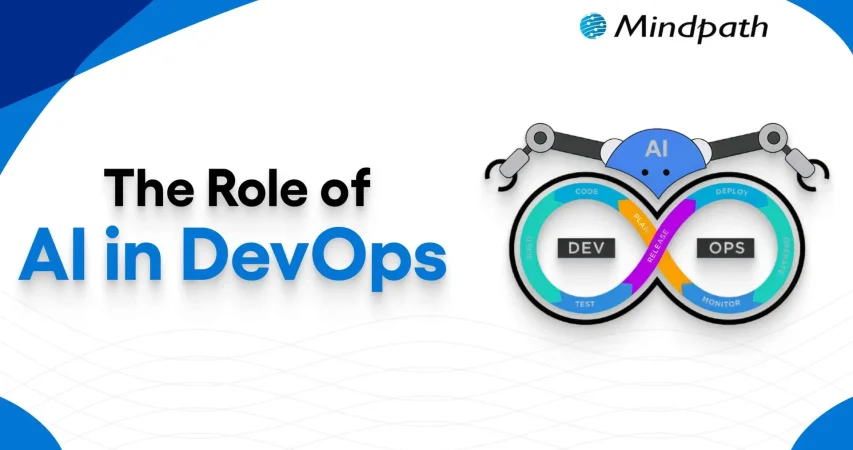
From Automation to Intelligence: The Role of AI in DevOps

From Automation to Intelligence: The Role of AI in DevOps

Lorem ipsum dolor sit amet, consectetur adipiscing elit. Ut elit tellus, luctus nec ullamcorper mattis, pulvinar dapibus leo.

Join our Newsletter!

AI in Devops

Artificial Intelligence is undoubtedly a transformative force that exists today. Within a short span of time, AI has brought about radical changes in diverse domains. A specific realm that has undergone significant change thanks to artificial intelligence is none other than DevOps.

In recent years, the adoption of AI in DevOps has gained momentum like never before. The AI in the DevOps global market is likely to reach USD 24.9 billion by the year 2033. It shows that the popularity of DevOps AI is rising at a fast pace. Let us explore the vital role of artificial intelligence in the DevOps realm.

Implementing AI in DevOps can be tricky and challenging; it requires deep knowledge and expertise. Mindpath’s AI development services are set up in a way that simplifies this complicated process and delivers end-to-end support.

What is DevOps?

DevOps is a combination of the terms “development” and “operations.” It is a cultural philosophy and set of technical practices that bridges the gap between software developers and IT operations teams. This approach fuses both teams to shrink the software development life cycle, enabling continuous delivery of high-quality software faster and more reliably, with shared accountability. The main purpose of DevOps is to break down conventional silos that exist between teams and promote collaboration. A proper understanding of DevOps is essential before exploring the role of AI in its context.

In the past few years, AI in DevOps has been gaining popularity at a rapid pace. At present, a large number of DevOps teams are leveraging Artificial Intelligence technology for diverse purposes, including making market projections, exploring new AI tools, and optimizing pipelines. The relevance of Artificial Intelligence for DevOps is certainly expanding with each passing day.

Must Read: Top DevOps Trends

Role of Artificial Intelligence in DevOps

Currently, Artificial Intelligence plays a strategic role in the realm of DevOps. In case you are wondering – How to get into DevOps? It is a must to know the role of AI in DevOps. Artificial Intelligence in DevOps mainly involves the use of machine learning (ML) and other AI technologies for automating as well as optimizing software development processes. One must bear in mind that DevOps for machine learning has created new possibilities to create novel software solutions.

Teams are able to capitalize on AI for DevOps to promote faster deployment, reduced errors, and increased productivity. Moreover, the use of AI tools for DevOps empowers teams to optimally manage the available resources. It has become fairly common for DevOps teams to focus on machine learning DevOps and extend the conventional scope of the approach by leveraging ML capabilities.

Curious about what kind of AI your business should prepare for? Explore the types of AI – ANI, AGI, and ASI shows the journey from automation to intelligence in DevOps.

Benefits of AI in DevOps

The strategic deployment of diverse Artificial Intelligence technologies within the DevOps landscape has the potential to give rise to a host of benefits. It is essential for DevOps professionals as well as DevOps teams to familiarize themselves with the key benefits of AI technology in DevOps.

1. High Automation

One of the chief benefits of using AI in DevOps revolves around automation. By leveraging AI technology, professionals do not have to rely on manual processes. DevOps teams can automate repetitive processes with the help of AI technology. Your DevOps team can ensure that top DevOps solutions are generated through automation.

2. Better efficiency

If you want to improve the efficiency of the DevOps process of your team, it is a must to use AI. AI can serve as the ultimate pillar that can help create intelligent DevOps solutions in an efficient manner. You will be surprised to see that your DevOps team can complete numerous projects without making errors.

3. Top-quality security

The role of AI is of high importance in DevOps since it can enhance the level of security.  Your team can automate processes relating to threat detection and threat identification. Therefore, your business will be empowered to take timely remedial actions to eliminate such threats. So, you can rest assured about DevOps security.

Wondering how businesses keep up with rapid tech changes? Discover the benefits of DevOps, which shows how it enables faster delivery, stronger collaboration, and AI-driven efficiency.

Key Steps for Using AI in DevOps

For capitalizing on AI technology to the fullest, it is crucial for DevOps teams to use AI in a methodical and structured manner. You can follow the steps below for using AI capabilities in a strategic manner in the DevOps context.

Step 1 – Choosing appropriate Artificial Intelligence Tools

The first step that your DevOps team must take is related to choosing the right AI tools. The tools that you choose must be aligned with your DevOps pipeline. It is a crucial step that can have major implications for the software application that you plan to develop.

Step 2 – Collection of Data

The next step that has to be taken by your DevOps team is related to data collection. It is necessary to bear in mind that relevant and appropriate data has to be gathered, which has to be fed into Artificial Intelligence systems. The quality of data that is gathered is a critical factor that is non-negotiable in nature. By using high-quality data, it is possible to make accurate predictions.

Step 3 – Taking Small Steps

In the next step, your DevOps team must remember to start small. So at this stage, you need to identify specific areas where you can use AI at a small level. The implementation of AI for small tasks is vital to ensure that it can play the desired role. Sometimes, DevOps teams may get too ambitious, which may adversely affect the use of AI in DevOps.

Step 4 – Monitoring and Optimization

At this stage, it is a must to focus on proper monitoring and evaluation of the performance of AI tools. By doing so, you can focus on optimizing the performance of such Artificial Intelligence tools. Based on the monitoring outcome, you can make necessary adjustments to leverage the novel tools in an optimal manner.

Step 5 – Training the team

The final step involves providing appropriate training to your DevOps team. By training them, you can ensure that the DevOps professionals possess the essential skills to leverage AI tools in an effective manner.

Struggling to keep your software delivery fast and reliable? Check out our blog on DevOps challenges and solutions to identify bottlenecks and implement smarter AI-driven strategies for smoother operations.

Best Practices to Use AI in DevOps

If you intend to leverage the capabilities of Artificial Intelligence in DevOps, it is essential to adopt the DevOps best practices. Some of the best practices that can equip your business to leverage AI optimally include:

1. Taking tiny steps

A common mistake that many DevOps teams commit is that they take big steps at an initial state. Instead, you need to start by taking small steps. You can begin by locating specific areas where you can capitalize on AI capabilities to extract maximum benefits. Moreover, you can reach out to diverse professions to seek DevOps support.

2. Involving relevant stakeholders

It is critical for businesses to engage with the right stakeholders while using artificial intelligence. This step is crucial to strengthening the overall effectiveness of AI DevOps tools. By interacting with them, you can understand their needs and expectations while developing software solutions.

3. Focus on ongoing evaluation

While using AI tools in the DevOps process, it is imperative to prioritize continuous evaluation. Your DevOps team must keep a tab on the performance of AI tools and technologies that are used in DevOps processes. Similarly, it is a must to understand DevOps platforms in an effective manner so that AI-driven processes can be optimally put in place.

Looking to boost efficiency and innovation in your company? Discover how DevOps for businesses can simplify workflows and enhance team collaboration with AI-powered tools.

Final Words

Businesses need to capitalize on Artificial Intelligence technology in their DevOps processes. The strategic use of DevOps AI tools can certainly open up new opportunities for your business. In addition to promoting automation, it can make the DevOps approach more intelligent and productive in nature.

In order to leverage AI technology optimally in DevOps, you can consider partnering with the professionals at Mindpath. Our experts use AI methodologies and DevOps best practices together to deliver optimum solutions. Your business can take advantage of our AI development services and develop top-grade software applications in a productive manner.
Frequently Asked Questions 

AI automates repetitive tasks, detects issues early, optimizes CI/CD pipelines, and provides actionable insights, enabling faster software delivery with improved quality and operational efficiency.
Yes. AI analyzes code changes, test results, and deployment patterns to identify risks before release, helping teams minimize failures and improve deployment reliability.
AI can automate code reviews, testing, infrastructure monitoring, log analysis, incident detection, security scanning, and CI/CD pipeline optimization, allowing developers to focus on higher-value tasks.
No. AI enhances developer productivity by automating routine tasks, while DevOps engineers remain responsible for architecture, security, infrastructure decisions, and validating AI-generated outputs.
Businesses should evaluate data security, integration requirements, governance, team readiness, and AI tool compatibility to ensure successful implementation and long-term value.

Support Is One Click Away

Featured Posts

Related Post

Business task automation

Business process automation is changing how companies manage routine work without adding unnecessary complexity. Many daily activities still consume valuable time, even though AI can now complete them faster and with greater accuracy. Businesses adopting intelligent automation are creating more space for innovation, better customer experiences, and sustainable growth.

Key Takeaways

  • 01
    Business process automation eliminates repetitive work while improving efficiency across everyday operations.
  • 02
    AI enables smarter automation by handling decisions, language, and unstructured business data.
  • 03
    Prioritizing high-impact workflows delivers faster results and a stronger return on investment.
  • 04
    Successful automation requires secure integration, employee training, and continuous performance monitoring.
  • 05
    Custom AI solutions create scalable automation tailored to evolving business goals and processes.

Choosing the right tasks to automate often delivers greater value than simply adopting new technology. Understanding where AI fits within existing workflows helps organizations improve efficiency without disrupting essential operations. In this blog, you’ll discover ten everyday business tasks that can be automated with AI. So, let’s keep reading!

Want to automate more than just everyday business tasks? Explore Mindpath’s AI Development Services to build custom AI solutions that streamline operations, improve productivity, and support long-term business growth.

What is Business Process Automation?

Business process automation refers to the use of technology to streamline repetitive workflows and reduce manual effort across business operations. It automates routine tasks using predefined rules, helping organizations improve efficiency, maintain consistency, reduce errors, and complete everyday processes faster while allowing teams to focus on more valuable work.

Today, AI is making business process automation more intelligent by handling tasks that require analysis, language understanding, and decision-making. Instead of following fixed rules alone, AI learns from data and adapts to changing situations. This shift is driving smarter business task automation across departments and industries.

Key Benefits At a Glance

  • 01
    Reduces Manual Errors: Standardized workflows improve accuracy and minimize mistakes in everyday business operations.
  • 02
    Improves Operational Efficiency: Automated processes complete routine tasks faster with minimal human intervention.
  • 03
    Optimizes Employee Productivity: Teams spend less time on repetitive work and more on strategic priorities.
  • 04
    Lowers Business Costs: Automation reduces operational expenses by minimizing manual effort and repetitive workloads.

Why Businesses are Prioritizing AI Automation?

Businesses are accelerating AI adoption as automation becomes a competitive advantage rather than a future investment. According to Gartner, 80% of CEOs expect AI to significantly reshape their operational capabilities, reflecting a shift toward smarter and more autonomous business operations. As organizations look to automate repetitive tasks, AI is helping them improve efficiency, agility, and long-term business value.

1. Improved Productivity

AI completes repetitive work quickly and operates without interruptions. This allows employees to focus on strategic and creative responsibilities.

2. Better Customer Experience

AI-powered assistants respond instantly and provide support throughout the day. Faster responses help improve customer satisfaction and engagement.

3. Smarter Decision Making

AI analyzes large volumes of business data within minutes. These insights help leaders make faster and more informed decisions.

4. Reduced Operational Costs

Automating routine workflows lowers administrative effort and operating expenses. It also minimizes costly manual errors across business processes.

5. Higher Accuracy

AI follows consistent rules when processing information and completing tasks. This improves data quality and reduces the chances of human mistakes.

6. Easier Business Growth

AI for business operations helps organizations handle increasing workloads efficiently. Businesses can scale processes without expanding teams at the same pace.

10 Everyday Business Tasks You Can Automate with AI Today

Business process automation helps organizations eliminate repetitive work and improve everyday efficiency with AI. Here are ten common business tasks that businesses can automate today to save time, reduce errors, and support sustainable growth.

1. Customer Support

AI chatbots answer common customer questions instantly and provide support around the clock. This reduces response times and allows support teams to handle more complex issues.

2. Email Management

AI organizes inboxes, prioritizes important messages, and drafts professional replies. Teams spend less time managing emails and more time on meaningful work.

3. Meeting Summaries

AI records conversations, creates concise meeting notes, and highlights action items. Everyone stays aligned without manually documenting every discussion.

4. Lead Management

AI captures new leads, qualifies prospects, and updates CRM records automatically. This helps sales teams respond faster and improve conversion opportunities.

5. Invoice and Expense Processing

AI generates invoices, categorizes expenses, and tracks payment reminders efficiently. Business task automation reduces manual effort while improving financial accuracy.

6. Social Media Content

AI creates captions, suggests content ideas, and repurposes existing materials. Marketing teams can maintain consistent posting with less manual work.

7. Document Review

AI summarizes lengthy documents and identifies important information within seconds. It speeds up reviews while helping teams make informed decisions.

8. Data Reporting

AI analyzes business data and generates dashboards with meaningful insights. Leaders can monitor performance without spending hours preparing reports.

9. Inventory Management

AI tracks inventory levels and predicts future demand using historical trends. Businesses can avoid stock shortages and improve supply planning.

10. Internal Knowledge Support

AI assistants help employees quickly find policies, documents, and training resources. These are among the most valuable business tasks that can be automated to improve workplace productivity.

How to Decide Which Business Tasks to Automate First?

Knowing how to automate business tasks starts with identifying processes that consume the most time and resources. Focusing on the right workflows first helps businesses achieve faster results and long-term operational improvements.

  • Identify Repetitive Tasks: Automate activities performed every day across business workflows. Business task automation saves valuable time and improves overall productivity.
  • Choose Rule-Based Processes: Select workflows with simple and consistent decision-making. These processes are easier to automate with reliable accuracy.
  • Reduce Manual Errors: Prioritize tasks where human mistakes happen frequently. Automation improves consistency and minimizes costly operational errors.
  • Start with Quick Wins: Focus on processes delivering immediate measurable business improvements. Early success builds confidence for broader automation initiatives.
  • Improve Employee Experience: Automate routine administrative work that slows daily productivity. Employees can concentrate on higher value and strategic responsibilities.

Best Practices for Successful Business Process Automation

Successful automation begins with clear goals and well-defined business processes. Choosing the right AI automation tools helps organizations improve efficiency while achieving consistent and scalable results.

  • Start with One Process: Automate a single workflow before expanding across the organization.
  • Integrate Existing Systems: Connect AI with everyday business applications for smoother workflows.
  • Review AI Outputs: Verify AI-generated results before using them in critical business tasks.
  • Protect Sensitive Information: Choose secure AI platforms that safeguard business and customer data.
  • Train Employees Effectively: Equip teams with practical AI skills for successful adoption.

Ready to Transform Your Business with AI Automation?

Business process automation is no longer limited to large enterprises. Organizations of every size can automate routine workflows, improve operational efficiency, and reduce manual effort with the right AI strategy. Starting with high impact tasks allows businesses to achieve measurable results while building a strong foundation for long term growth and innovation.

At Mindpath, we develop custom AI solutions that align with your business goals and existing workflows. From intelligent automation and AI agents to enterprise AI applications, our experts help organizations streamline operations, improve productivity, and accelerate digital transformation with scalable AI development services.

Frequently Asked Questions

web development vs software development

You are a business owner preparing your digital strategy and have difficulty finding the ideal option for software and web development. The web development vs software development comparison might be difficult to understand for a layman without technical expertise. One of the common misconceptions about the two terms is that they both mean the same thing.

Business owners must recognize the differences between software development and web development to pick the ideal approach for their digital strategy. Web development is all about establishing the online presence of a business. On the other hand, software development deals with creating customized software solutions for different needs. A deep dive into the comparison between web development and software development can help you understand which one is right for you.

Looking for the right software development partner to bring your ideas to life? Mindpath’s software development services offer end-to-end solutions tailored to your business goals, from strategy and design to development and deployment.

Fundamental Difference between Web and Software Development

The emerging requirements of the digital landscape have had businesses thinking about the best ways to reach their target audience. As the software development vs web development debate becomes a focal point of discussion, it is important to understand how they are different from each other. With an overview of the definition of the two terms, you can find a starting point to compare them.

What is Web Development?

You will get no prizes for guessing that web development is the process of creating websites. Web development involves creating everything from the server logic and databases to the visual elements that make a website attractive. Without websites, businesses will struggle to have an online presence and showcase their brand. 

You can identify the difference between a software developer and a web developer from the primary components involved in website development. Web developers have to address the requirements of frontend and backend development alongside a content management system for websites. 

Frontend development focuses on the part of a website that users see, including the layout, design, text, images, and buttons. The significance of backend development is evident from the fact that it involves the creation of the server logic and databases. Another crucial component in web development projects points to content management systems or CMS platforms. The intuitive interface of CMS tools offers easy solutions for managing and updating the content of a website.  

What is Software Development?

The next prominent approach for your digital strategy is software development. As the name implies, software development focuses on the complete development lifecycle from ideation to the deployment and maintenance of a project. You can notice the difference between a web developer and a software developer from the fact that software developers have more responsibilities. The scope of tasks in software development is bigger as it requires the creation of custom solutions to deal with specific business needs.

Software developers can create mobile apps, complex software systems for large organizations, or custom internal software. The solutions created by software developers serve distinct goals for businesses. For instance, mobile apps serve as effective tools to reach the target audience of a business and enhance customer engagement. On the other hand, custom internal software solutions can help businesses manage different business functions with ease.

Diving Deeper into the Web Development vs Software Development Debate

The overview of web development and software development reveals the fundamental difference between the two terms. The following sections will provide a more detailed comparison between web development and software development on the basis of different factors.

1. Objectives of the Process

One of the foremost pointers for differentiating web development from software development is the objective of the process. What do the two development approaches help you achieve? The answer will help you take the best pick from a web developer vs software developer comparison. Web development focuses primarily on establishing an online presence for your organization and showcasing your brand. It is one of the most common approaches to drive customer engagement through intuitive web apps or websites.

Software development process, on the other hand, focuses on addressing specific business problems with custom solutions. Businesses can rely on software development to create software for managing different business functions or custom internal software that can be deployed on various platforms. The primary objectives of software development revolve around enhancing productivity and streamlining operations.    

2. Complexity of the Process

The next point in the comparison between web development and software development focuses on their complexity. In the case of web development, you can rely on templates or content management systems for creating web apps. 

Software development requires the creation of fully customized solutions according to the requirements of the business. Developers can create software solutions from scratch by using the client’s requirements as their reference. 

3. Maintenance Requirements

Another prominent aspect in the software developer vs web developer comparison is their responsibility for maintenance. Web developers can address the maintenance requirements through continuous security updates and frequent modifications to content. In addition, web developers also take care of the maintenance of web apps by updating the design according to the latest trends.

The responsibilities of maintenance in software development focus on introducing new features and bug fixes. Apart from addressing the errors in the functionalities of software solutions, a software developer also takes care of performance improvements.

Want technology that truly supports your business rather than slowing it down? Discover the key custom software development benefits that help companies optimize operations and innovate faster.

4. Technology Stack

The review of differences between software and web development will also draw attention towards the technology stack required for the two approaches. It is one of the biggest factors in a web development vs software development comparison, and also determines the complexity. The technology stack for website development involves frontend and backend frameworks with CMS platforms. The notable frontend frameworks include HTML, JavaScript, React, Angular, and CSS, while backend frameworks include Python, Ruby, and PHP. Some of the popular CMS platforms for web development include Joomla, WordPress, and Drupal.

For software development, the tech stack includes programming languages, cloud platforms, and databases. The most commonly used languages in software development are Java, Python, Swift, and Ruby. Software developers can use SQL or NoSQL database management systems and one of the big cloud platforms, such as AWS, Google Cloud, or Microsoft Azure.

5. Cost of Development

The most crucial pointer in the comparison between web development and software development is the development cost. You can determine whether you need a web developer or a software developer by identifying the type of project. At the same time, you must also take your budget into account before making the final choice. Web development requires a lower initial cost, primarily due to the use of templates. You can also choose a custom design for web development, which may increase the development cost. However, you will have to invest more in continuous updates of the website or web app to adapt to user requirements.

Software development costs are generally higher than those of web development projects due to many reasons. Building a custom software solution requires a lot of development time, which will lead to the consumption of more resources. On top of it, software development projects are more complex than web development projects, thereby increasing the costs. Most important of all, the customization of software solutions according to business requirements will also add more costs to the project.

Ever wondered why some websites just feel effortless while others fall flat? Discover the hidden benefits of custom website development services that turn a simple site into a powerful, user-friendly business tool.

Here is an overview of the web development vs software development comparison in a table.

Criteria Web Development Software Development
Objectives of the Process Web development focuses on building your online presence and showcasing your brand. Software development aims to resolve specific business issues and improve productivity.
Complexity Web development is a simple process with the use of templates and CMS tools. Software development is extremely complex and requires creating custom solutions from scratch.
Maintenance Requirements Maintenance tasks in web development involve ongoing updates for security, content modifications, and changes in design. Maintenance tasks in software development focus on introducing new features, performance improvements, and fixing bugs.
Technology Stack The technology stack for web development includes frontend and backend development frameworks alongside CMS platforms. The technology stack for software development includes programming languages, cloud platforms, and database management systems.
Cost of Development The initial cost of web development is lower than software development. The cost of software development is higher due to the complexity and customization needs.

Ready to Choose the Right Development Solution for Your Business?

The differences between software development and web development showcase that each approach has its distinctive advantages. You might face the web developer vs software engineer dilemma while thinking about resource requirements for your next project. The final choice will ultimately depend on the requirements and scope of your project. For instance, a new e-commerce business should look for web development to establish its online presence. On the other hand, a healthcare organization will need a software developer to create an ERP system.

At Mindpath, we have been delivering trust and efficiency in our expert, world-class software development services for every client. Our focus on understanding the client’s vision and requirements empowers us to deliver competent solutions that stand out in a crowded digital landscape. We have a team of dedicated experts in web development and software development, thereby offering you a one-stop solution. Pick the best talent for your next development project from our team and gain the momentum you need in this digital world now.

Frequently Asked Questions

1. Can a business need both web development and software development together?

Yes. Many businesses use websites for customer interaction and custom software for internal operations. Combining both helps improve customer experience while also making daily business processes more efficient and organized.

2. Which option is better for startups with limited budgets?

Startups usually begin with web development because it is more affordable and helps build an online presence quickly. As the business grows, they can invest in custom software solutions for advanced operations and automation.

3. How long does a typical web or software development project take?

Web development projects can take a few weeks to months depending on complexity. Software development usually takes longer because it involves custom features, testing, integrations, and ongoing improvements tailored to business needs.

4. How do businesses know when to switch from web solutions to custom software?

When daily operations become difficult to manage manually or existing tools no longer support growth, businesses often move toward custom software. It helps improve productivity, automate workflows, and handle more complex requirements efficiently.

5. What factors should businesses consider before choosing a development approach?

Businesses should evaluate their goals, target audience, budget, scalability needs, and operational challenges. The right choice depends on whether the focus is customer-facing digital presence or solving internal business problems with custom technology solutions.

Are you looking for skilled NodeJS developers in California to build a fast and scalable web application? Do you need experts who can turn your ideas into reality with efficient backend solutions? Whether you’re launching a startup or upgrading an existing system, hiring the right NodeJS developers can make all the difference.

Finding the appropriate NodeJS developers in California is essential for organizations that want to create high-performance, scalable apps. With the growing need for real-time and data-intensive solutions, hiring competent NodeJS developers guarantees smooth backend operations, faster development, and better user experiences. Whether you’re building a powerful web application, an API, or a microservices architecture, having the proper team is essential. California, being a tech hotspot, has access to top NodeJS developers that can assist bring your concept to reality.

Let’s explore how you can find the best talent for your project!

Steps to Hire NodeJS Developers in California

1. Define Your Requirements

Before you begin the hiring process, carefully define your requirements for a Node.js developer. Determine the technological requirements, such as knowledge of JavaScript, Node.js frameworks (Express, Nest.js), databases (MongoDB, PostgreSQL), and cloud services (AWS, Azure). Depending on the intricacy of your project, you might need a junior, mid-level, or senior developer. Also, specify the sort of employment: full-time, contract, or freelance. Setting a budget is also important, as developer prices in California vary depending on experience and competence. A well-documented criteria list guarantees that you attract qualified individuals who meet your company’s demands.

2. Create A Detailed Job Listing

Once you’ve determined your needs, the following step is to write a thorough job description and promote it on appropriate sites. Include important tasks, necessary skills, preferable experience, and information about your organization. Posting on job boards like LinkedIn, Indeed, and Glassdoor, as well as specialized tech recruiting sites like Toptal, Upwork, or Stack Overflow Jobs, boosts your chances of obtaining top talent. If you want to find local talent in California, check into networking events, tech meetings, and development groups. A well-written job posting attracts talented Node.js developers while screening out unqualified applications.

3. Shortlist And Screen Candidates

After receiving submissions, thoroughly analyze resumes and portfolios to narrow down the most potential applicants. Look out for relevant Node.js programming experience, past projects, and industry-specific knowledge. Conduct a first screening via phone or video conversations to evaluate their communication skills, problem-solving strategy, and cultural fit. Examine credentials or other technical skills, such as DevOps understanding, API development, or performance optimization, as needed. Effective screening helps limit the pool of applicants to those that genuinely meet your project demands.

4. Conduct Technical Assessments

To employ a professional Node.js developer, a comprehensive technical examination is required. Begin with coding challenges on sites such as HackerRank, Codility, and LeetCode to assess problem-solving abilities, algorithmic thinking, and code efficiency. Assess their knowledge of asynchronous programming, RESTful APIs, error handling, and database management—all of which are required for Node.js development. In addition to standardized assessments, a live coding session or take-home project can help students analyze their approach to real-world challenges. This might entail creating a basic API, optimizing a database query, or addressing performance concerns. Reviewing their code quality, logic, and debugging abilities can help you establish their level of experience. In addition, evaluate their capacity to work with frameworks such as Express.js and technologies such as Docker or AWS, if applicable. A well-structured technical examination guarantees that you employ a qualified and efficient Node.js developer who can contribute effectively to your project’s success.

5. Conduct An Interview And Finalize The Hire

The final stage in recruiting a Node.js developer is to conduct organized interviews to assess both technical and soft abilities. Begin by addressing their prior projects, familiarity with Node.js frameworks, and problem-solving techniques. Enquire about real-world problems such as managing high-traffic apps, improving API performance, and adopting security best practices. This helps to examine their practical knowledge and ability to operate under pressure. In addition to technical capabilities, assess their communication, cooperation, and adaptability—all of which are required for smooth collaboration. Examine how they manage comments, contribute to debates, and fit within your company’s culture. A candidate that knows agile development, CI/CD pipelines, and cloud technologies can provide significant value. Once you’ve discovered the right developer, negotiate a wage, finalize contract conditions, and talk about job objectives. Ensure a smooth onboarding process by providing project details, necessary tools, and clear communication channels. A well-structured hiring process guarantees the right Node.js talent for your team.

Looking for skilled Node.js developers in California to build high-performance applications? At At Mindpath , we connect you with experienced Node.js experts who can deliver scalable, secure, and efficient solutions tailored to your business needs. Whether you’re developing a web app, API, or enterprise platform, our developers have the expertise to bring your vision to life.

Ready to hire the best Node.js talent in California? Contact Mindpath today and let’s build something great together!

Discover the ultimate guide to hiring Node.js developers in London. Learn about the skills, benefits, and cost factors involved in finding the right talent for your project.