Building a website today is about combining design, speed, and performance, all in one place. That’s where full-stack development for web projects plays a big role, as it encompasses everything from the look of a site to how it performs. As websites grow bigger and more complex, the full-stack development approach allows teams to work smarter rather than harder and deliver stronger solutions without any delay or confusion. This is why full-stack development is an increasingly popular way to develop truly distinct web projects.
Key Takeaways
- 01
Full-stack development combines front-end and back-end work into one smooth process. - 02
Hiring one full-stack developer saves time and cost over two separate specialists. - 03
Fewer handoffs between teams lead to faster fixes and clearer communication. - 04
Full-stack developers solve problems faster by understanding the entire system together. - 05
Growing market demand makes full-stack skills valuable across nearly every industry.
By managing the front-end and back-end together, teams can react more quickly to updates and allow them to maintain their website without interruptions. In addition, it allows for greater control of the entire process, which leads to much better user experiences. Many companies are adopting this approach to develop websites that will grow and improve over time. Curious to know more? Well, in this blog, we will discuss how full-stack development is going to shape the future of web projects in detail.
Want to bring future-ready development to your business? Explore how Mindpath’s full-stack development services can help you stay ahead and provide end-to-end support.
Fundamentals of Full-Stack Development
Full-stack development means building both the front-end and the back-end of a website or app. The front part is what we interact with and see, such as buttons, images, menus, and links. The back part is what is going on behind the screen to make everything work: saving things, logging in, sending emails, etc. A full-stack developer knows how to build and manage both parts of a project, so it all works properly from beginning to end.
Companies want websites that are visually appealing, load quickly, and are easy to navigate. Most companies prefer hiring one full-stack developer rather than two separate developers (one for front-end and one for back-end) because this saves time and avoids paying for two separate developers. Full-stack developers can build complete web projects on their own. That’s why companies continue to search for strong full-stack developers that can do the full job and help make better websites quicker.
Reasons Why Full-Stack Development is the Future of Web Projects
Full-stack development makes end-to-end web development more effective by combining both the visual design and the behind-the-scenes logic into one smooth process. As we move toward full-stack development in 2025, more businesses are choosing this method for its flexibility, speed, and complete control over web projects. Here are some key reasons why:
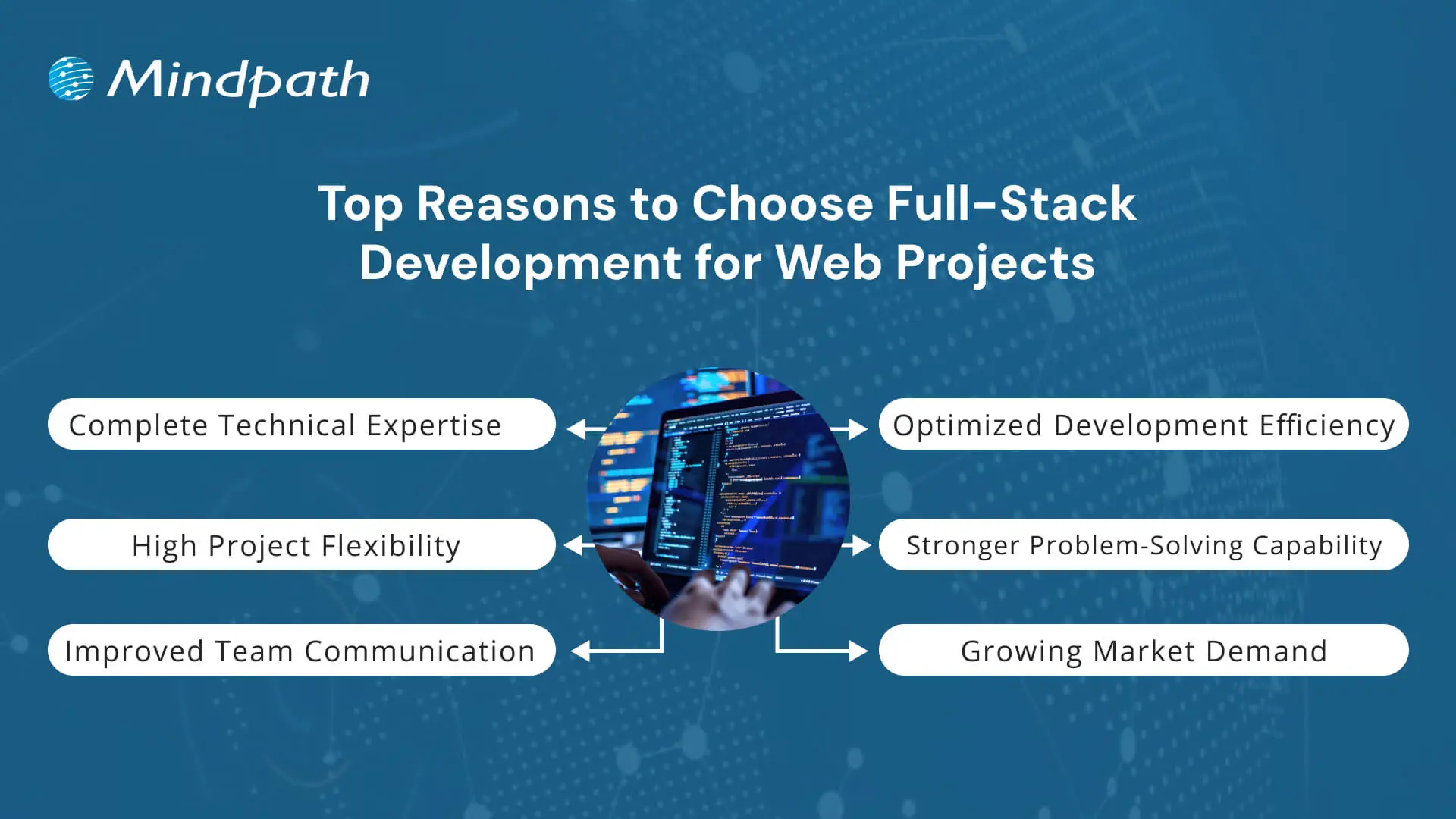
1. Complete Technical Expertise
Full-stack development for web projects requires knowledge of both front-end and back-end technologies. Developers in this field work with HTML, CSS, and JavaScript for user interfaces and use tools like Node.js or Python for server-side logic. They also manage databases such as MySQL or MongoDB to store and retrieve data efficiently. This complete skill set makes full-stack development for businesses highly practical and reliable.
2. Optimized Development Efficiency
One of the key advantages of full-stack development for web projects is the ability to complete tasks faster without needing multiple specialized developers. It reduces development time, lowers project costs, and helps deliver results more quickly. Teams can avoid delays caused by handovers between front-end and back-end teams. That’s why many companies now prefer full-stack development to keep their projects on track and within budget.
3. High Project Flexibility
Developers skilled in full-stack development can switch between tasks easily based on what the project needs. They are comfortable using different tools and frameworks and can adjust to changes without slowing down progress. This flexibility is valuable when requirements evolve or when rapid updates are needed. It also supports the use of the best tech stack for web projects tailored to each client’s goals.
4. Stronger Problem-Solving Capability
A full-stack developer understands how both the client-facing side and the server work together. This broad view helps in identifying issues quickly and finding effective solutions without back-and-forth between teams. It leads to fewer errors and a more stable final product. As a result, full-stack development for web projects brings stronger control and problem-solving to the entire build process.
5. Improved Team Communication
Fewer handoffs mean fewer communication gaps between developers and project managers. In full-stack development for web projects, one person or a small team handles most of the workflow, which keeps messaging clear and consistent. This improves team collaboration and speeds up approvals and fixes. It also supports better planning throughout the stages of full-stack web development.
6. Growing Market Demand
With digital needs growing, full-stack development has become one of the most valuable skills in the tech world. Companies are hiring developers who can handle everything from front-end to database, increasing demand across industries. It also offers room to grow in multiple areas, including project leadership and architecture, through understanding full-stack development trends. This rise is a direct result of businesses investing more in full-stack development for modern digital solutions.
Key Skills Required in a Full-Stack Web Project Team
A successful full-stack web project relies on more than just writing code. It needs the right mix of skills across the team, covering everything from design to database management for smooth and efficient web solutions. Let’s have a quick look at the skills:
1. Front-End Development
Developers need strong skills in HTML, CSS, and JavaScript to build the structure and style of web pages. Frameworks like React, Angular, or Vue.js help create dynamic and responsive user interfaces.
2. Back-End Development
Understanding server-side languages such as Node.js, Python, or Java is essential for creating logic and functionality. Frameworks like Express.js or Django support faster and more organized development.
Planning to build smarter web solutions? Discover how full-stack development with Node.js can streamline your digital growth.
3. Database Management
Developers should know how to use both SQL and NoSQL databases like MySQL, PostgreSQL, or MongoDB. Good database skills help manage, store, and retrieve data efficiently.
4. API Development
Designing RESTful APIs is important for connecting front-end and back-end systems. APIs must be secure, scalable, and easy to maintain in web projects.
5. DevOps and Deployment
Version control with Git and CI/CD tools helps automate code testing and deployment. Cloud platforms like AWS or Azure make it easier to launch and scale applications smoothly.
6. Soft Skills for Team Performance
Effective communication, adaptability, and time management help teams meet deadlines and solve problems together. These qualities support a smooth workflow in full-stack development for web projects.
Confused between full stack and traditional web development? Discover how smart businesses choose from full-stack vs traditional web development for the success of project.
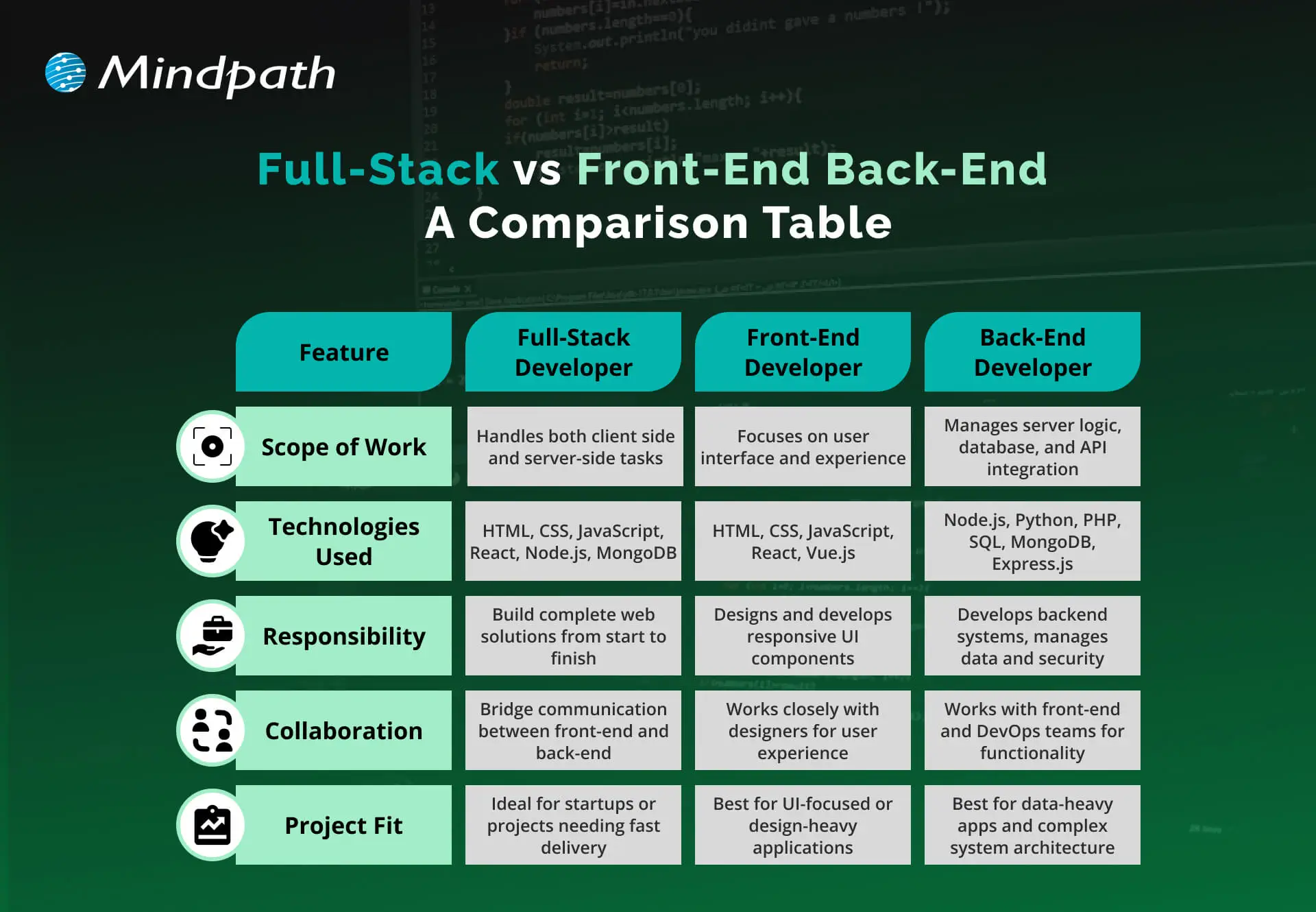
Full-Stack vs Front-End and Back-End: A Comparison Table
Understanding the difference between full-stack vs front-end and back-end roles helps in choosing the right approach for a web project. Below is a comparison table that highlights their core responsibilities and capabilities.
Ready to Elevate Your Next Web Project with Full-Stack Development?
Full-stack development for web projects offers a balanced, future-ready approach that blends front-end creativity with back-end power. It simplifies workflows, speeds up launches, and ensures better user experiences. As digital needs continue to evolve, adopting full-stack practices gives businesses the edge to build smarter and scale faster with fewer roadblocks.
At Mindpath, we offer full-stack development services tailored to support your business growth. Our expert full-stack developers handle everything from user interface to server-side logic, ensuring smooth performance and cohesive functionality. With deep technical knowledge and a collaborative mindset, we deliver reliable, scalable, and efficient digital solutions that meet your unique project needs.
Frequently Asked Questions
1. How does full-stack development for web projects actually save businesses money in the long run?
Hiring one developer to handle both front-end and back-end work reduces payroll costs compared to hiring two specialists. It also speeds up delivery timelines, which means projects launch faster and start generating value sooner instead of sitting in extended development cycles.
2. Is full-stack development suitable for large, complex websites or only smaller projects?
Full-stack development works well for both. Larger projects often use a small team of full-stack developers who divide responsibilities while maintaining shared knowledge of the entire system. This balance keeps even complex websites manageable without losing the speed and flexibility full-stack development offers.
3. What should businesses look for when hiring a full-stack development team for their next project?
Look for proven experience across both front-end frameworks and back-end technologies, along with database and API knowledge. Strong communication skills also matter, since full-stack teams often work with fewer handoffs, meaning clarity and collaboration directly affect how smoothly the project actually progresses.
4. How does full-stack development improve the overall user experience of a website?
When one team understands how the front-end and back-end work together, performance issues get caught earlier and fixed faster. This results in quicker load times, smoother navigation, and fewer bugs reaching the final product, all of which directly shape how users experience the website.
5. Does choosing full-stack development mean a business loses specialized expertise in certain areas?
Not necessarily. Many full-stack developers still have deeper strengths in either front-end or back-end work while maintaining solid knowledge of both. Businesses get the benefit of broad technical coverage without sacrificing quality, especially when working with experienced developers who understand the full development lifecycle.