Full Stack Development Trends for 2026

Join our Newsletter!

Featured Posts

Support Is One Click Away

Home

Full Stack Development Trends for 2026

full stack development trends

Full Stack Development Trends for 2026

The full-stack development landscape is changing rapidly, and 2026 is already showing great possibilities for new ideas and better tools. Getting familiar with the newest full-stack development trends can help developers, startups, and businesses create smarter solutions. User needs are increasing, along with the requirement for flexible and efficient development solutions, which means teams are taking a fresh look at how they build, test, and scale applications. Knowing how to navigate these changes can have a significant impact next time whenever you develop a new item or launch a new product.

With speed, scalability, and seamless user experience as the new focus, developers are integrating advanced front-end technologies with back-end solutions to develop modern digital products. With cloud platforms available everywhere and low-code solutions evolving more rapidly, full-stack development is moving to a whole new level.  These solutions are transforming processes that not only save time but also improve quality and naturally foster greater teamwork. In this blog, we will provide further insight into the most important trends shaping full-stack development in 2026.

Looking to implement the advantages of full-stack development in your next project? Take a look at our full-stack development services, where our team will support and guide you to bring those benefits to the real world.

Understanding Full-Stack Development

Full-stack development refers to building both the front-end and back-end of a software application. Let’s dive in to understand! Every application has two main sections. The front-end is what users see and interact with, like buttons, images, and forms. The backend encompasses all the activities that take place in the background – saving data, running logic, interacting with other systems, etc.

Each side requires different skill sets and tool sets. Full-stack development combines both sides into one process. Full-stack development enables developers to create complete applications and allows us to develop the application seamlessly from the user interface through the server and database. This means that the application includes both of those components as one shared system, which makes development more efficient and organized.

Some advantages of full-stack development include:

  1. A full-stack developer saves money by doing both front-end and back-end work, minimizing the need for multiple specialists.
  2. They speed-up the development process by working across the entire tech stack, ensuring faster delivery and smooth collaboration.
  3. With strong knowledge of current tools and trends, they support modern full-stack development by integrating advanced features like AI and responsive design.
  4. Full-stack developers take full ownership of the codebase, simplifying responsibility and streamlining debugging.
  5. They deliver well-rounded, quality solutions by working across the UI, backend logic and business processes, database activities and data expansion, and testing.
  6. They even provide ongoing support and maintenance, which ensures long-term stability, security, and enhancement.

Read in detail: Full-stack development benefits.

Full-Stack Development Trends 2026

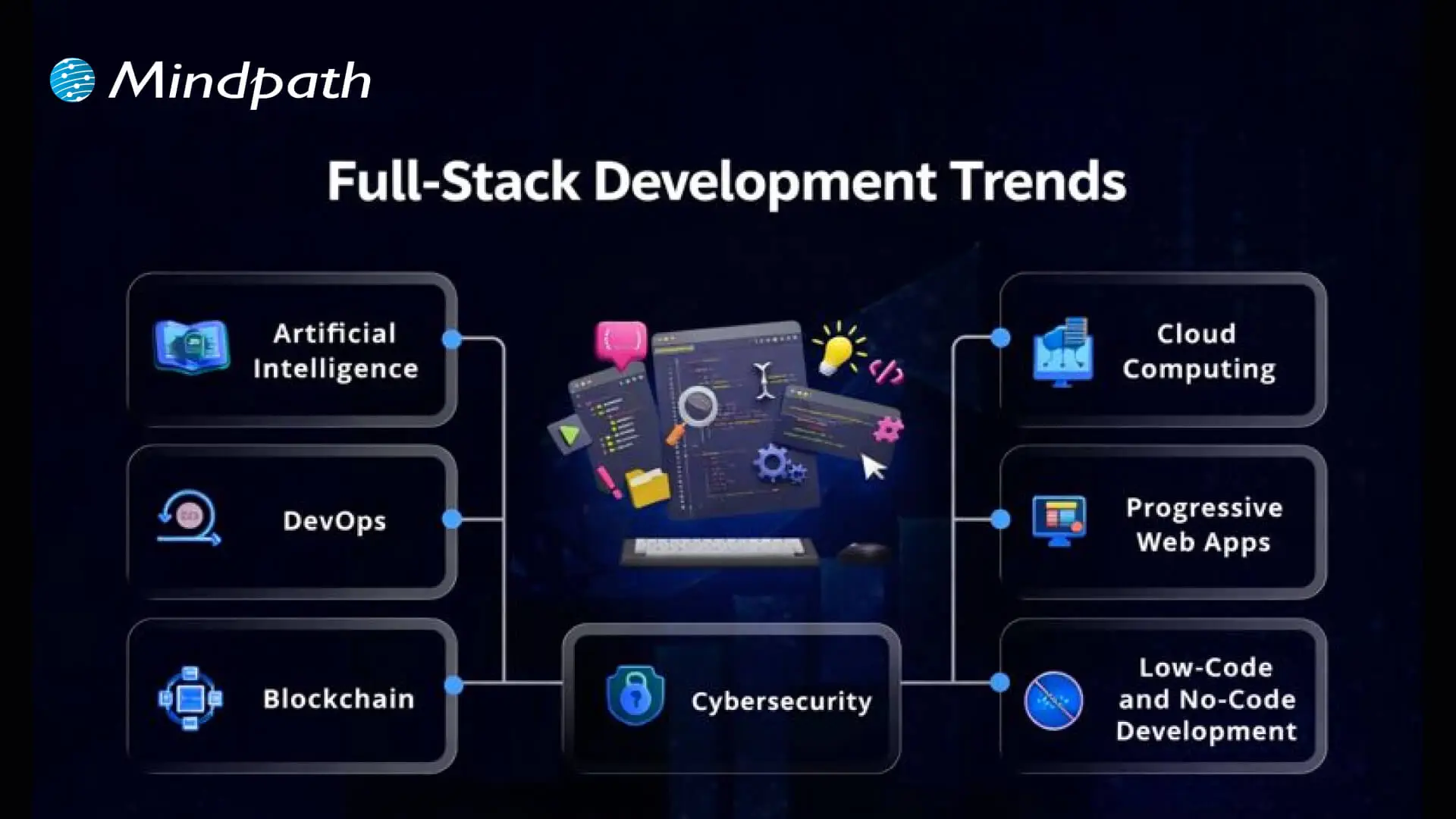
As technology continues to grow, developers are embracing smarter tools and faster methods to build complete applications. The emerging trends in full-stack development are shaping how teams work, improve performance, and deliver better user experiences in 2026. Here are the top trends to watch:
full-stack development trends

1. Artificial Intelligence

Artificial Intelligence is one of the key full-stack development trends shaping how modern applications are built. It helps solve complex problems faster and allows systems to work without human interruption. Full-stack developers are well-suited for AI roles because they understand both design and logic, making it easier to build intelligent solutions. As the future of full-stack development evolves, AI will play a major role in improving performance and user experience.

2. Cloud Computing

Cloud computing is a fast-growing technology that allows access to data storage, processing power, and other resources over the internet. It supports the future tech stack for developers by offering flexibility, easy scaling, and pay-as-you-go pricing. Full-stack cloud developers are in demand to build and manage cloud-based applications that support collaboration and performance. To grow in this area, developers should understand IaaS, PaaS, SaaS and gain hands-on experience with platforms like AWS, Azure, and Google Cloud.

Also Read: Cloud Computing Trends

3. DevOps

DevOps is a practice that combines development and operations to improve how software is built, tested, and deployed. It helps teams work better together and use tools like continuous integration and delivery to release updates faster. DevOps plays an important role in improving application speed, quality, and reliability. As part of full-stack development trends, it supports the demand for efficient workflows and strong collaboration in building modern applications.

4. Progressive Web Apps

Progressive Web Apps (PWAs) are web applications that offer an app-like experience using modern browser features. They work offline, load quickly, send push notifications, and can be installed on devices without using much storage. As part of web development trends 2026, PWAs help businesses reach more users, especially on mobile, while keeping development simple and cost-effective. Their flexibility and performance make them a smart choice for companies looking to improve user experience.

5. Blockchain

Blockchain is a secure and transparent technology that stores data across a network of computers, making it difficult to change or hack. It is widely used in industries like finance and healthcare to protect transactions and manage decentralized systems. As part of full-stack development trends and the latest trends in web development, blockchain allows developers to build safer and more reliable applications. To work in this area, full-stack developers need skills in decentralized tools, enterprise systems, and Web3 architecture.

Must Read: AI in Cybersecurity

6. Cybersecurity

Cybersecurity is the practice of protecting systems, networks, and applications from online threats like malware, phishing, and DDoS attacks. It has become a key part of full-stack development trends as developers need to build secure applications from the ground up. Companies are now including cybersecurity in their future tech stack for developers to keep data and systems safe. Full-stack developers aiming to work in this field should learn network security, web application security, cryptography, and secure coding practices.

7. Low-Code and No-Code Development

Low-code and no-code development platforms allow users to build websites and apps with minimal or no programming skills. These tools are growing as part of full-stack development trends because they save time, reduce costs, and make development accessible to more people. While they are great for simple projects, they may not be suitable for complex or large-scale solutions. As part of the trends in software development, LCNC tools offer fast results and full-stack capabilities for quick product launches.

Looking for the best way to scale your digital growth? Discover why full stack development for web projects is becoming the smart choice for businesses.

Ready to Leverage Full-Stack Development Trends for Your Next Project?

Full-stack development trends are shaping how modern applications are built, improved, and maintained. With advancements like AI, cloud, DevOps, and PWAs, developers and businesses can achieve faster, smarter, and more secure results. Staying updated with these trends will help you build stronger digital products that meet the growing demands of users in 2026 and beyond.

At Mindpath, we offer expert full-stack development services tailored to your business goals. Our skilled developers handle everything from front-end design to back-end logic, delivering complete, scalable solutions. If you’re looking to hire full-stack developers who understand the latest tools and technologies, our team is here to help you build your web and mobile applications with confidence and efficiency.

Frequently Asked Questions

1. How can developers stay updated with fast-changing full-stack development trends?

Staying updated requires continuous learning through official documentation, developer communities, and hands-on practice. Following trusted tech sources, experimenting with new tools, and working on real projects helps developers understand trends practically and apply them effectively in modern application development.

2. Why is adaptability becoming important for full-stack developers in 2026?

Technology is evolving quickly, and tools or frameworks can change within a short time. Developers who can adapt to new technologies, learn different stacks, and adjust to changing project needs are better positioned to build scalable and future-ready applications.

3. How do modern full-stack trends improve collaboration within development teams?

New approaches like integrated workflows and shared tools allow frontend and backend processes to work more closely. This reduces communication gaps, improves coordination, and ensures that teams can deliver consistent and high-quality applications more efficiently.

4. What role does performance optimization play in modern full-stack development?

Performance is critical as users expect fast and seamless experiences. Modern trends focus on optimizing load times, reducing server response delays, and improving overall efficiency. This ensures applications remain responsive, scalable, and capable of handling growing user demands.

5. How should businesses approach adopting new full-stack development trends?

Businesses should evaluate trends based on their specific goals and project requirements rather than adopting everything at once. Starting with scalable and practical technologies, testing them in smaller implementations, and gradually expanding ensures better results and reduces unnecessary risks.
Related Post

Learn the essential dos and don’ts of custom software development to ensure project success and create tailored solutions.
Discover how IT staff augmentation boosts project scalability with quick access to talent, cost-effective scaling, and expert support.

Related Post

staff augumentation

In today’s world where technology is enhancing at a fast pace, businesses cannot afford to slow down, not even for a second. As deadlines are tighter, client demands are growing and skilled talents are harder to find, IT staff augmentation can be the perfect solution for these. Just think: what if you could access skilled professionals whenever you wanted them, whether it is to scale up a project or as expertise to reach a short-term goal, without having to go through the time-consuming hiring process? Isn’t it fascinating?

Staff augmentation allows you to grow as you need, with no boundaries, as many organizations are opting for faster and more flexible alternatives. If you hear this term frequently but aren’t sure exactly what it means and how it works, you are in the right place. In this blog, we will walk you through the essential things to know about staff augmentation. We will explain how staff augmentation works and describe the main benefits of this service in easy words! There is much value in exploring staff augmentation as a way to improve your team’s capabilities and altogether enhance your work outcomes. 

Looking for a partner you can trust to boost your IT projects? Mindpath is here to provide top-end services in the sphere of IT staff augmentation.

What is Staff Augmentation?

Staff Augmentation is when you hire competent professionals from an external agency to assist your in-house team for a defined period of time. These professionals aren’t permanent employees, but they will consider themselves regular members of your team. This is a flexible way to obtain extra assistance when your team is busy, or you require a special skill to complete a project.

To clarify, here’s a staff augmentation example. Suppose you are the owner of an online clothing store, and you want to introduce a mobile shopping app before the holiday season arrives. Your in-house developers are actively working on new updates for your website and are currently unable to take on other work. Instead of hiring full-time staff, you use IT staff augmentation to put some mobile app developers into your project through a trusted agency. The app developer will work with your task force, build the app, and when you are ready to launch it, their work will finish. This will give you the appropriate skills, at the appropriate time, without the lengthy hiring process or administrative burden of bringing full-time employees. 

Types Of Staff Augmentation

Staff augmentation comes in different types to match different business needs. Whether you need help with a short project or long-term support, there’s a model that fits just right.

1. Project-Based Staff Augmentation

This type is used when a company needs extra help for a specific project. Skilled professionals join the team just for that project and leave once the work is done. It’s a smart way to get things done faster without adding long-term costs.

2. Temporary Staff Augmentation

In this model, companies bring in experts for a short time to fill sudden gaps or meet urgent deadlines. It helps teams stay on track without rushing permanent hires. It’s great for short-term tasks or unexpected workload spikes.

3. Long-Term Staff Augmentation

Here, professionals work with the company for a longer time, often for months or even years. It’s helpful when you need ongoing support or special skills that your team doesn’t have. This model also helps reduce hiring costs while keeping projects moving.

4. Onshore Staff Augmentation

This means hiring professionals from the same country or region. It’s easier to work together because of the same time zone and better communication. Teams also benefit from cultural similarities and quicker collaboration.

5. Offshore Staff Augmentation

In this type, companies hire skilled people from other countries where labor costs are lower. It allows access to global talent and helps save money. It works well for remote projects that don’t need the team to be in the same location.

What is the IT Staff Augmentation Process?

The staff augmentation process may sound complex, but it’s actually quite simple when broken down into clear steps. Here’s how it works from start to finish to help you get the right talent for your business or project.

1. Identify Your Needs

Start by understanding what kind of skills or experience you need for the project. This helps you clearly define the roles and responsibilities for the temporary team members.

2. Estimate Team Size

Decide how many people you’ll need to get the job done smoothly and on time. Having a clear number makes it easier for your staffing partner to find the right talent.

3. Connect with a Staffing Partner

Once your needs are clear, your staff augmentation agency begins searching for the right professionals. They use their wide network to find candidates who match your project goals.

4. Screen and Shortlist Candidates

The agency carefully checks skills, experience, and qualifications before shortlisting the best profiles. You’ll then be invited to an interview and pick the ones who fit your team well.

5. Evaluate and Hire

Once you find the right candidates, you can try a short trial period to see how they perform. If everything goes well, you move forward by hiring and adding them to your team.

Benefits of Staff Augmentation

IT staff augmentation is becoming a go-to solution for businesses looking to strengthen their teams without long hiring delays. Here are the key benefits that make this approach a smart choice for many companies.

1. Team Scalability

One of the biggest benefits of staff augmentation is the ability to scale your team up or down as needed. You can bring in more people during busy times and reduce the team once the work is done. This is perfect for businesses with changing workloads or seasonal demands. It helps you stay efficient without overspending on full-time staff.

2. Access to Skilled Professionals

With staff augmentation, you get access to a large network of talented professionals through a trusted IT staff augmentation company. No matter what skill or experience level you need, there’s someone ready to support your project. This helps you find the right people faster without long hiring processes. It saves time and ensures your project is handled by experienced people.

3. Increased Productivity

Bringing in extra support allows your core team to focus on what they do best. They won’t get overwhelmed with too many tasks, and quality will stay high. With the right help in place, everyone works more efficiently. This leads to faster results and better outcomes.

4. Reduced Hiring Risk

Hiring full-time employees can be risky if they don’t turn out to be the right fit. With staff augmentation, you can try out professionals before making long-term decisions. It also allows you to bring in people who complement your team’s strengths. This makes your team stronger and reduces the risk of hiring mistakes.

5. Fresh Expertise and Ideas

Staff augmentation brings in people who have worked with many other companies and industries. They often come up with new ideas, fresh perspectives, and valuable insights. This can inspire your existing team and lead to better solutions. It’s a great way to bring innovation into your projects without a big change.

Ready to Boost Your Team the Smarter Way?

This blog gave us a complete look at how IT staff augmentation works and why it is becoming the smart choice for many businesses today. From types and processes to key benefits, everything you read helps you see how this flexible model can boost your team, meet project goals faster, and save hiring time without compromising quality. 

At Mindpath, we offer trusted IT staff augmentation services to help you grow your team quickly and smoothly. Whether you need short-term support or long-term experts, our skilled professionals are ready to join your projects. With the right talent at the right time, we help your business stay strong, flexible, and always ready for growth.  

Frequently Asked Questions

1. How does staff augmentation help during urgent project deadlines?

Staff augmentation allows businesses to quickly bring in skilled professionals when deadlines are tight. Instead of rushing the hiring process, companies can add experienced talent right away, helping projects move faster while maintaining quality and reducing pressure on the existing team.

2. Is staff augmentation suitable for small businesses or only large companies?

Staff augmentation works well for businesses of all sizes. Small businesses can use it to access specialized skills without long-term commitments, while larger companies use it to scale teams quickly. It offers flexibility that helps any business manage changing workloads effectively.

3. What factors should be considered before choosing staff augmentation services?

Before selecting staff augmentation services, businesses should evaluate project requirements, required skill sets, budget, and timelines. It is also important to ensure clear communication, cultural fit, and alignment with team workflows to achieve smooth collaboration and successful outcomes.

4. How can companies ensure smooth integration of augmented staff with internal teams?

Clear communication, defined roles, and proper onboarding are key to smooth integration. Providing access to tools, workflows, and team guidelines helps augmented professionals adapt quickly. Regular check-ins and collaboration ensure everyone stays aligned and works efficiently toward common goals.

5. Can staff augmentation support long-term business growth?

Yes, staff augmentation can support long-term growth by providing ongoing access to skilled professionals when needed. It helps businesses stay flexible, adapt to new opportunities, and manage evolving demands without committing to permanent hires, making it a practical strategy for sustainable expansion.

Discover staff augmentation for IT projects, its benefits, and top providers in the USA. Learn how it can bridge gaps and save costs.
retail IT sourcing

The retail industry has undergone a great transformation due to its widespread adoption of IT outsourcing services. Recently, the global IT sourcing service market size is expected to reach USD 752.08 billion by 2031. So, by outsourcing the major IT functions like technical support, infrastructure management, and site development, your retail business can prioritize its core approaches. Further, you can strategize better features for satisfying your customers in the long run.

The following approach has made many retail businesses stick to better process agility. So, you can easily adapt to changing market demands without worrying about handling IT operations internally. Let us further analyze how retail IT sourcing can smartly empower your business.

Looking to enhance customer experience and streamline your retail processes? At Mindpath, we offer scalable retail and ecommerce software development services built for performance.

Why Retailers are Facing Growing Technology Pressure?

As per the trends of McKinsey, around 40% of consumers claimed to switch their retailers or brands. So, such a pattern is putting retailers under constant pressure to innovate something unique while maintaining streamlined daily operations. Moreover, customers are more into fast proceedings and personalized approaches while being mindful about data security. Most importantly, they demand consistent experience throughout offline and online platforms.

To meet such valuable preferences, you need to rely on modern retail IT solutions.

But assigning the whole task to your in-house team can be a bit challenging. Rising IT operational charges might hamper you, along with inefficient skills. Further, an unresponsive system might impact your sales. This is why outsourcing experts can be your ultimate option.

What is Retail IT Outsourcing?

In retail IT outsourcing, you need to partner with an external technology provider to manage your IT functions. Such skilled professionals can help you with innovative retail IT services that can upgrade your business operations while encouraging customer experience.

So, instead of depending upon huge internal teams, your business can leverage the authenticity of experienced professionals. Further, outsourced teams come with better experience and industry knowledge. Such adoption can also allow your retail business to follow its core responsibilities.

Wondering how evolving digital solutions are influencing modern retail operations? Read our Digital Transformation Trends blog to uncover the strategies defining the future of retail.

Why Retail IT Sourcing Makes Sense for Modern Retailers?

Here you can discover why outsourcing retail industry IT services can be beneficial and how it can help your business gain a competitive edge. Further, it allows you to discover many influential opportunities that you might have missed to date.

1. Cost-Efficiency Without Compromising on Quality

Retail IT outsourcing services can be financially helpful while saving on expenses. When you outsource the IT team, it can minimize the operational charges that include labor expenses. For example, your company can save up to 70% on its labor costs by discovering the talent pool in countries with minimal wage standards.

Such financial flexibility allows businesses to channelize the resources more effectively.

2. Better Customer Experience

Outsourcing can essentially make your customer experience better by offering them 24/7 support along with multilingual service. This can help your customers get efficient and timely assistance, no matter what time zone they follow. Moreover, this approach is beneficial for retail businesses that have a global customer base.

Moreover, through IT outsourcing, businesses and modern retailers can integrate modern service solutions like social media support and live chat.

3. Flexibility and Scalability

One of the most detailed advantages of retail outsourcing services is its scalable features. You can easily broaden your operations or make them minimal as per the market requirements and seasonal peaks. Further, this flexibility is essential in fast-paced e-commerce businesses, where your customers need frequent changes as per the trends.

Must Read: AI in E-commerce

4. Prioritize Core Competencies

If you prefer retail IT sourcing for your non-core functions, you can easily focus on the core competencies of your business. Some of the major elements include brand strategy, product development, and market expansion. Such focus can allow your business to innovate and prove its uniqueness in the crowded market.

5. Technological Advancements

Outsourcing allows retail businesses access to the trendiest technological advancements without any in-house investments. Additionally, outsourced partners also bring specialized expertise in modern tech like big data analytics, machine learning, and AI.

6. Improved System Reliability

Downtime in your retail business can directly influence your customer trust and sales. So, outsourced retail IT services proactively monitor the systems while managing the updates.

Ready to enhance retail efficiency with intelligent solutions? Explore AI and business strategies that drive innovation and accelerate sustainable growth.

What are Some Eminent Retail Industry IT Services That Can Be Outsourced?

Understanding the massive scope of retail IT sourcing can help you acknowledge the best functions that need to be outsourced.

1. Inventory Handling

This type of outsourcing mainly involves tracking stock levels and managing reorders. It can also align your warehouse functions. A professional team will always use modern tools to verify the inventory quickly while lessening the chances of overstocking or running out of products.

2. Managed IT Support

This approach includes maintaining hardware and software, monitoring systems, handling updates, and backups. Further, managed services can encourage your operations while lessening the efforts of your internal teams.

3. Managing Cloud Infrastructure

Cloud-related retail IT services can encourage scalability while adopting real-time visibility. Further, outsourcing cloud management can assure you of great performance and cost efficiency without any internal defects.

Also Read: Digital Transformation for Business 

4. Technical Support

Professional outsourced teams can help your retail company resolve the technical issues quickly while ensuring your system performs well. Further, it accesses your in-house team to leverage the best features for its customers.

This approach can give rise to quick resolutions while keeping your online operations intact.

5. Custom Development

Retailers generally require applications that remain streamlined. Starting from inventory tracking tools to engagement patterns, everything has to be in shape. So, outsourced retail IT solutions can build and integrate such functions precisely while prioritizing your core requirements.

Challenges You Might Face Without IT Outsourcing

As retail operations have become more technology-driven, managing IT internally can give rise to a series of risks. Some of the eminent ones have been given below.

  • Frequent system crashes.
  • Limited access to professional IT knowledge.
  • Difficulty in following the trendiest retail technologies.

Struggling to scale your retail systems efficiently? Read how custom software development can help you deliver personalized retail journeys.

Conclusion

Outsourcing retail IT services has become extremely important for businesses that want growth while keeping their operations intact. So, partnering with outsourcing providers can help your company have access to expertise in order fulfillment, technical support, and much more. Further, you can think of innovations while being customer-focused in this rapidly evolving retail environment.

If you also want to seek quality-oriented and dependable outsourced IT services, Mindpath stands as your top choice. We offer tailored retail IT outsourcing services that are designed to support your modern retail operations while helping you adopt long-term digital success.

FAQs

1. How Can Outsourcing IT Services Influence Your Retail Businesses’ Operational Efficiency?

Outsourcing a team for your IT functions can align your operations by offloading time-consuming tasks like customer support and inventory management. This allows your in-house teams to prioritize strategic initiatives.

2. Is Retail IT Outsourcing Viable for Small and Mid-Sized Retailers?

Outsourcing is extremely viable for small and mid-level retailers as it offers access to advanced IT facilities without being a burden on your pockets.

3. How Can Outsourcing Services Enhance the Supply Chain of My Retail Company?

Outsourcing can encourage the supply chain of your retail company by leveraging logistics and inventory management expertise. It also ensures that you offer the projects on time without any delays.

4. Can Retail Outsourcing Support Both My Online and Physical Store Operations?

Outsourcing partners generally manage integrated systems that support e-commerce platforms, POS systems, and inventory management across physical and digital operations.

5. How Can an IT Outsourcing Company Help Me During Peak Sales Seasons?

Outsourced IT teams can assess the infrastructure while monitoring performance and providing rapid support during high-traffic seasons.

Discover how Retail IT Outsourcing helps retailers save costs, enhance customer service, and stay competitive in today’s fast-paced market.
web development vs software development

You are a business owner preparing your digital strategy and have difficulty finding the ideal option for software and web development. The web development vs software development comparison might be difficult to understand for a layman without technical expertise. One of the common misconceptions about the two terms is that they both mean the same thing.

Business owners must recognize the differences between software development and web development to pick the ideal approach for their digital strategy. Web development is all about establishing the online presence of a business. On the other hand, software development deals with creating customized software solutions for different needs. A deep dive into the comparison between web development and software development can help you understand which one is right for you.

Looking for the right software development partner to bring your ideas to life? Mindpath’s software development services offer end-to-end solutions tailored to your business goals, from strategy and design to development and deployment.

Fundamental Difference between Web and Software Development

The emerging requirements of the digital landscape have had businesses thinking about the best ways to reach their target audience. As the software development vs web development debate becomes a focal point of discussion, it is important to understand how they are different from each other. With an overview of the definition of the two terms, you can find a starting point to compare them.

What is Web Development?

You will get no prizes for guessing that web development is the process of creating websites. Web development involves creating everything from the server logic and databases to the visual elements that make a website attractive. Without websites, businesses will struggle to have an online presence and showcase their brand. 

You can identify the difference between a software developer and a web developer from the primary components involved in website development. Web developers have to address the requirements of frontend and backend development alongside a content management system for websites. 

Frontend development focuses on the part of a website that users see, including the layout, design, text, images, and buttons. The significance of backend development is evident from the fact that it involves the creation of the server logic and databases. Another crucial component in web development projects points to content management systems or CMS platforms. The intuitive interface of CMS tools offers easy solutions for managing and updating the content of a website.  

What is Software Development?

The next prominent approach for your digital strategy is software development. As the name implies, software development focuses on the complete development lifecycle from ideation to the deployment and maintenance of a project. You can notice the difference between a web developer and a software developer from the fact that software developers have more responsibilities. The scope of tasks in software development is bigger as it requires the creation of custom solutions to deal with specific business needs.

Software developers can create mobile apps, complex software systems for large organizations, or custom internal software. The solutions created by software developers serve distinct goals for businesses. For instance, mobile apps serve as effective tools to reach the target audience of a business and enhance customer engagement. On the other hand, custom internal software solutions can help businesses manage different business functions with ease.

Must Read: Types of Software Development

Diving Deeper into the Web Development vs Software Development Debate

The overview of web development and software development reveals the fundamental difference between the two terms. The following sections will provide a more detailed comparison between web development and software development on the basis of different factors.

1. Objectives of the Process

One of the foremost pointers for differentiating web development from software development is the objective of the process. What do the two development approaches help you achieve? The answer will help you take the best pick from a web developer vs software developer comparison. Web development focuses primarily on establishing an online presence for your organization and showcasing your brand. It is one of the most common approaches to drive customer engagement through intuitive web apps or websites.

Software development process, on the other hand, focuses on addressing specific business problems with custom solutions. Businesses can rely on software development to create software for managing different business functions or custom internal software that can be deployed on various platforms. The primary objectives of software development revolve around enhancing productivity and streamlining operations.    

2. Complexity of the Process

The next point in the comparison between web development and software development focuses on their complexity. In the case of web development, you can rely on templates or content management systems for creating web apps. 

Software development requires the creation of fully customized solutions according to the requirements of the business. Developers can create software solutions from scratch by using the client’s requirements as their reference. 

3. Maintenance Requirements

Another prominent aspect in the software developer vs web developer comparison is their responsibility for maintenance. Web developers can address the maintenance requirements through continuous security updates and frequent modifications to content. In addition, web developers also take care of the maintenance of web apps by updating the design according to the latest trends.

The responsibilities of maintenance in software development focus on introducing new features and bug fixes. Apart from addressing the errors in the functionalities of software solutions, a software developer also takes care of performance improvements.

Want technology that truly supports your business rather than slowing it down? Discover the key custom software development benefits that help companies optimize operations and innovate faster.

4. Technology Stack

The review of differences between software and web development will also draw attention towards the technology stack required for the two approaches. It is one of the biggest factors in a web development vs software development comparison, and also determines the complexity. The technology stack for website development involves frontend and backend frameworks with CMS platforms. The notable frontend frameworks include HTML, JavaScript, React, Angular, and CSS, while backend frameworks include Python, Ruby, and PHP. Some of the popular CMS platforms for web development include Joomla, WordPress, and Drupal.

For software development, the tech stack includes programming languages, cloud platforms, and databases. The most commonly used languages in software development are Java, Python, Swift, and Ruby. Software developers can use SQL or NoSQL database management systems and one of the big cloud platforms, such as AWS, Google Cloud, or Microsoft Azure.

5. Cost of Development

The most crucial pointer in the comparison between web development and software development is the development cost. You can determine whether you need a web developer or a software developer by identifying the type of project. At the same time, you must also take your budget into account before making the final choice. Web development requires a lower initial cost, primarily due to the use of templates. You can also choose a custom design for web development, which may increase the development cost. However, you will have to invest more in continuous updates of the website or web app to adapt to user requirements.

Software development costs are generally higher than those of web development projects due to many reasons. Building a custom software solution requires a lot of development time, which will lead to the consumption of more resources. On top of it, software development projects are more complex than web development projects, thereby increasing the costs. Most important of all, the customization of software solutions according to business requirements will also add more costs to the project.

Ever wondered why some websites just feel effortless while others fall flat? Discover the hidden benefits of custom website development services that turn a simple site into a powerful, user-friendly business tool.

Here is an overview of the web development vs software development comparison in a table.

Criteria Web Development Software Development
Objectives of the Process Web development focuses on building your online presence and showcasing your brand. Software development aims to resolve specific business issues and improve productivity.
Complexity Web development is a simple process with the use of templates and CMS tools. Software development is extremely complex and requires creating custom solutions from scratch.
Maintenance Requirements Maintenance tasks in web development involve ongoing updates for security, content modifications, and changes in design. Maintenance tasks in software development focus on introducing new features, performance improvements, and fixing bugs.
Technology Stack The technology stack for web development includes frontend and backend development frameworks alongside CMS platforms. The technology stack for software development includes programming languages, cloud platforms, and database management systems.
Cost of Development The initial cost of web development is lower than software development. The cost of software development is higher due to the complexity and customization needs.

Final Thoughts

The differences between software development and web development showcase that each approach has its distinctive advantages. You might face the web developer vs software engineer dilemma while thinking about resource requirements for your next project. The final choice will ultimately depend on the requirements and scope of your project. For instance, a new e-commerce business should look for web development to establish its online presence. On the other hand, a healthcare organization will need a software developer to create an ERP system.

At Mindpath, we have been delivering trust and efficiency in our expert, world-class software development services for every client. Our focus on understanding the client’s vision and requirements empowers us to deliver competent solutions that stand out in a crowded digital landscape. We have a team of dedicated experts in web development and software development, thereby offering you a one-stop solution. Pick the best talent for your next development project from our team and gain the momentum you need in this digital world now.