Software Development Cost: A Detailed Guide for 2026

Home

Software Development Cost: A Detailed Guide for 2026

Software Development Cost: A Detailed Guide for 2026

Discover the key factors influencing software development costs and how to optimize your budget. Learn how Mindpath can help.

Join our Newsletter!

Software Development Cost

When thinking about software development cost in 2026, it is not strictly about budgeting; it is about making informed decisions that end up delivering a successful project. New tools, frameworks, and approaches to development appear every year; therefore, how businesses spend money on development is also changing. How do you maximize your investment while being innovative and keeping your project on track? The solution is to know what drives the cost, and how those drivers may steer the final outcome.

The software world is fast-moving, and when you do not pay attention to these details, you can be setting yourself up for struggles later on when you want to scale. Companies today are not just looking at the bottom-line costs, but at a different perspective centered around value, flexibility, and speed of delivery. This makes it essential to look at the real cost drivers in depth. Understanding all the factors can better inform their decisions, maintain their agility, reduce certain risks, and build software projects that are set up for considerable success in 2026 and the following years. Keep reading to learn more about the cost of software development in detail.

If you need to boost efficiency, growth, and customer satisfaction, that will transform your business. Mindpath’s software development services will help you achieve these goals. Contact us now to unlock the long-term impact.

Why Understanding Software Development Costs Matters?

Comprehending software development costs is significant because it establishes the complete journey of a project. Given the right cost information, it enables teams to plan budgets that are realistic, deploy skilled resources, and be confident with their risk management. This implies avoiding unnecessary costs and deadlines. This also means delivering a project on time, within scope, and within the levels of quality expected by clients.

Moreover, knowing the cost factors will help organizations remain competitive and make better decisions. It can enhance transparency with clients, add trust with clarity and financial planning, and facilitate long-term sustainability by considering upkeep and future capacity. These insights support stronger profitability, but more importantly, they allow organizations to achieve longevity and value for all software development endeavors.

Must Read: Types of Software Development

Key Factors Influencing Software Development Cost

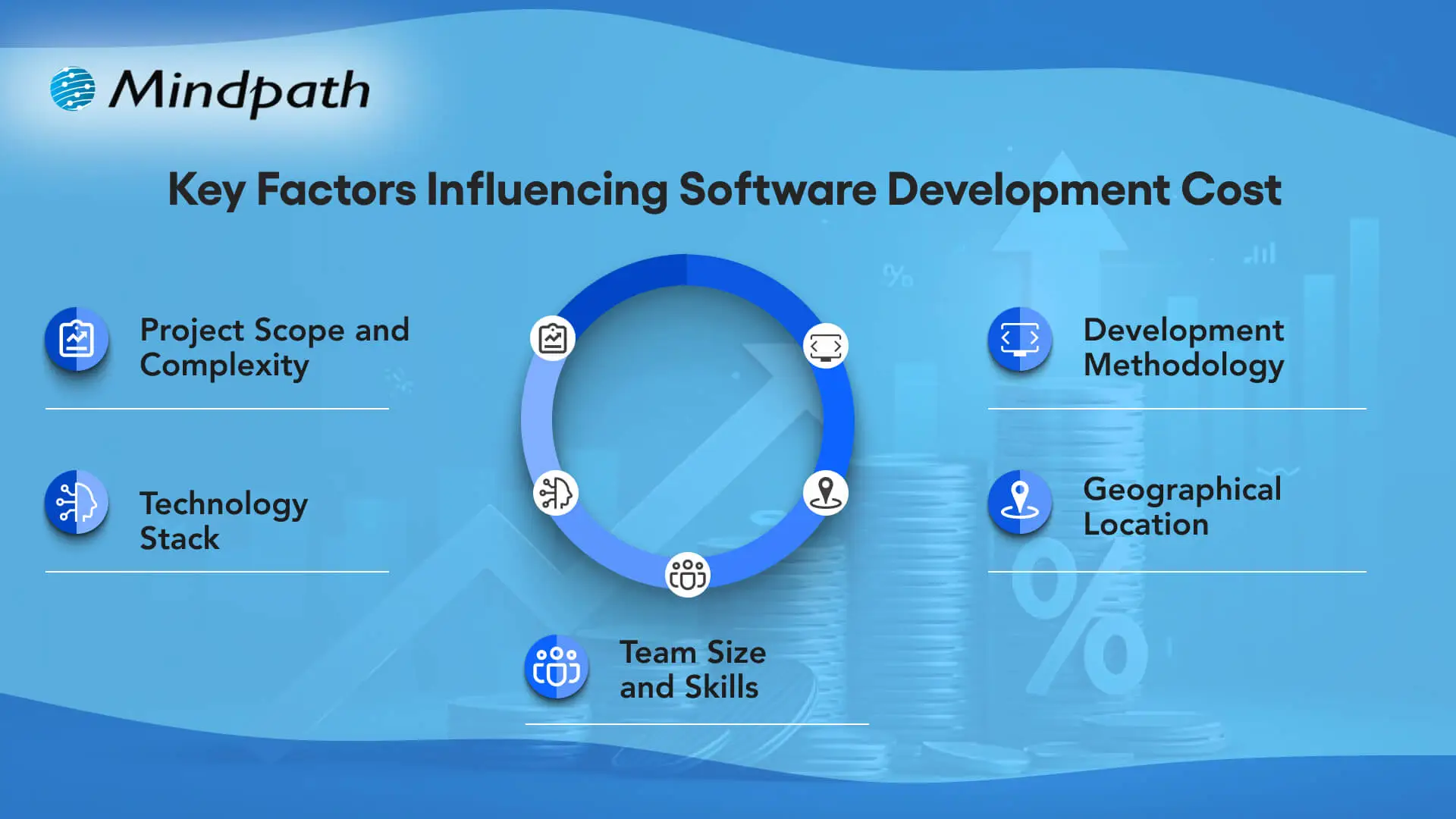
The cost of development in 2026 will be a combination of many important factors, which are not limited to coding. Each of the elements potentially influences the budget, timeline, and success of the software.
Key Factors Influencing Software Development Cost

1. Project Scope and Complexity

A project’s scope indicates the required features, integrations, and functionality. In complex applications that have advanced features, automation, or leveraged AI, you will need to find skilled experts, which increases the costs of development. Simple apps and apps with basic or limited functions require fewer resources and typically have a faster build time and are less expensive.

2. Technology Stack

The choice of technology stack and cloud platform will have a direct impact on the budget. Some are more advanced, and some integration services will necessitate higher expertise by the team; thus, software development cost estimation is even more important. Arriving at an appropriate compromise will maintain performance within a budget constraint.

3. Team Size and Skills

The size and the expertise level of a team will dictate how well a project moves through its lifecycle. More people or more specialized roles will increase costs, but the outcome is generally better. The right mix of skills to bring down custom software development cost and to meet business outcomes is possible.

4. Development Methodology

A project’s management approach is critical in terms of both its time and cost outcomes. Agile approaches provide flexibility and collaboration, while Waterfall is more rigid and less flexible. Choosing the right method will make your team more efficient and control overall software development costs and capitalization.

5. Geographical Location

When hiring talent from different regions, it changes the total price you pay, which comes down to the cost of living and hourly rates in that area. Outsourcing or offshoring gives you access to skilled professionals at a lower cost. You still maintain quality while keeping your software development cost clear and manageable.

Planning to develop unique software solutions? Visit our blog on the custom software development process to see how expert teams combine planning, automation, and best practices to deliver exceptional results.

Software Development Cost Breakdown

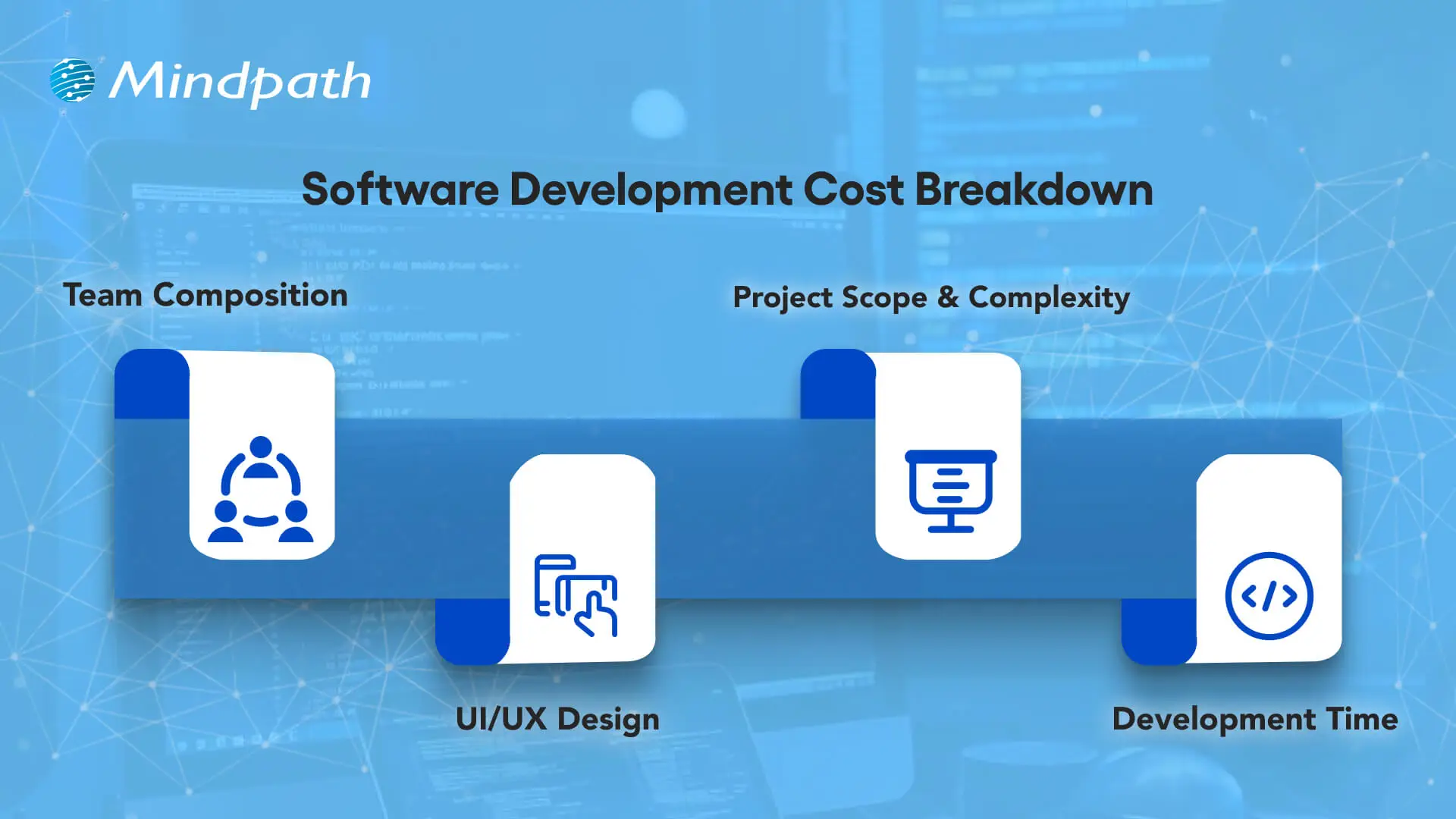
When you break down the software development cost, it shows where your money goes in a project. Having an understanding of development costs will allow businesses to leverage that information to plan better, to manage costs, and to optimize value for the end product.
Software Development Cost Breakdown

1. Team Composition

The type of team you choose has an immediate impact on the overall software development cost. Freelancers charge approximately $30 – $80/hour, in-house developers in the UK cost about $65,000 – $120,000/year, while agencies charge about $90 – 150/hour, or approximate project fees of $50,000 – $260,000+. A software development cost calculator is helpful to analyze these various options against your overall business requirements.

2. UI/UX Design

User experience and budget have significant implications for design. In the UK, organisations will typically allocate between 15% and 25% on design within the total cost, with costs of a simple/basic layout around $4,000 – $9,000, to a complex layout with advanced animations and branding costing $10,000 – $33,000+. High-quality design conserves software development costs and increases user adoption.

3. Project Scope & Complexity

The complexity of your app is one of the biggest determinants of software development cost. A simple MVP may cost around $20,000 – $40,000; basic mediums such as CRMs or booking systems will cost $40,000 – $100,000; anything that is enterprise SaaS or an AI platform would start at $100,000 – $325,000+. There is a direct correlation: the more features, the more time and money it takes to develop.

4. Development Time

The number of hours it takes to build an app can also affect the budget. A simple app in the UK requiring approximately 500 hours of work may cost $50,000. A medium app that needs 800 – 1,000 hours might cost $65,000 to $100,000. A large or complex project of 1500+ hours may run over $130,000. All of these estimates are inclusive of coding, testing, and debugging.

Planning to build software tailored to your business? Explore our blog on custom software development benefits to learn how personalized solutions improve efficiency, scalability, and overall performance.

Key Strategies to Manage Software Development Cost

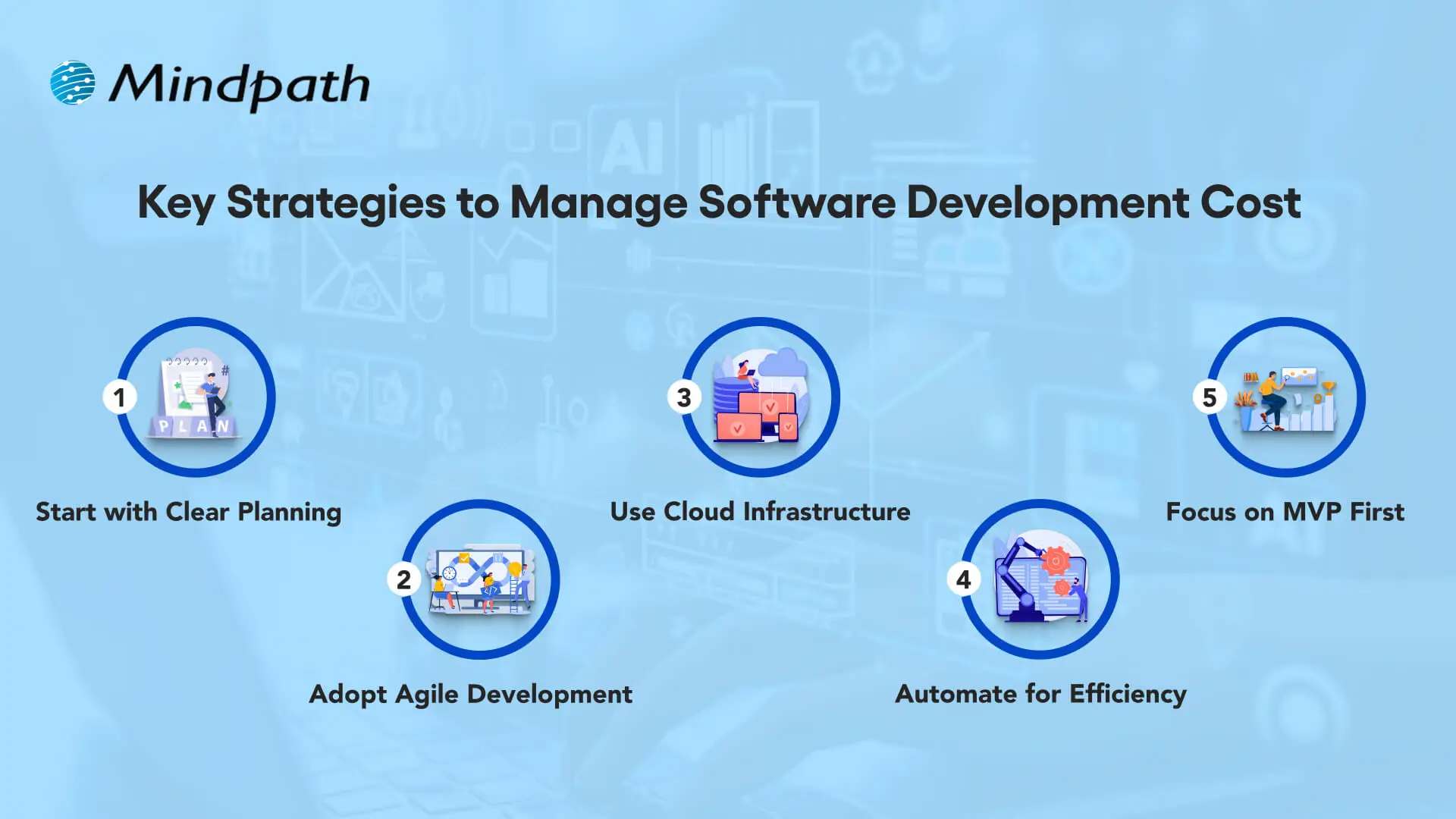
Managing software development costs requires smart planning and clear decisions. By focusing on efficiency and resources, businesses can reduce expenses without losing quality.
Key Strategies to Manage Software Development Cost

1. Start with Clear Planning

A strong plan with well-defined requirements keeps the project on track. It helps avoid confusion, delays, and extra costs later in development.

2. Adopt Agile Development

Agile methods allow teams to work in small, flexible cycles. This makes it easier to fix issues early and adjust to changes without wasting resources.

3. Use Cloud Infrastructure

Cloud services remove the need for heavy hardware investments. They provide scalable resources on a pay-as-you-go model, which keeps expenses under control.

4. Automate for Efficiency

Automation in testing, integration, and deployment saves time and reduces manual effort. It improves quality and keeps the workflow faster and smoother.

5. Focus on MVP First

Building a Minimum Viable Product gets the core idea to users quickly. It helps validate the concept before committing to a larger software development cost.

Ready to avoid costly software errors? Dive into our blog on Custom Software Development Mistakes to learn what to watch out for and ensure smooth project delivery.

Ready to Take Control of Your Software Development Cost?

In 2026, managing software development cost is about making smart choices that balance innovation, speed, and value. By understanding the real cost drivers and applying strategies like Agile, cloud adoption, and focusing on MVPs, companies can deliver projects that scale efficiently, reduce risks, and ensure long-term success in a competitive digital market.

At Mindpath, we provide end-to-end software development services that optimize cost and quality. Our skilled teams combine planning, design, and modern frameworks to create scalable solutions. With transparent pricing models and deep technical expertise, we help businesses control software development costs while delivering impactful applications built to perform and grow with your vision.
Related Post

Chatbot examples

AI chatbots are molding the future of customer engagement in 2026 by providing accuracy and efficacy. The real-life chatbot examples demonstrate how intelligent systems analyze user interactions, offer relevant and timely recommendations, and aid in decision-making as it unfolds. Organizations that are leveraging these types of solutions notice concrete results in user satisfaction and conversions. This clearly shows that AI chatbot assistants can convert complex customer journeys into simple, actionable experiences.

These examples of chatbots have also shown us the benefits of predictive insights and targeted communication. When brands effectively leverage AI chatbots, they minimize friction in their customer journey, maximize retention, and achieve measurable growth. By looking at these real-life use cases, we can evaluate the strategies we can adopt to improve digital experiences and obtain better data-driven results. So, keep reading this blog as we are going to showcase real-life examples of AI chatbots that have aided businesses in increasing conversion.

Want to engage your audience, provide instant support, or personalize their experience? At Mindapth, our custom chatbot development services are designed to deliver solutions that match your business requirements.

Market Demand of AI Chatbots

According to Fortune Business Insights, the global AI chatbot market is growing rapidly, from USD 9.90 billion in 2026 to USD 65.94 billion by 2032, a CAGR of 31.1%. Customer demand for instant service, cost savings through automation, advances in NLP, wider industry adoption, and the rise of generative AI with human-like conversations are driving this growth.

These important figures illustrate the strong market demand: Outgrow says that sales through chatbots are up 67%, Tidio states that 62% of users prefer to chat rather than wait for a human agent, Master of Code says 26% of sales transactions begin with a bot, and 35% of leaders said that they closed sales because of digital assistants. Outgrow also states that 57% of businesses have seen better ROI, and that 45% of businesses have seen reduced response time through chatbots. Looking at these numbers, it shows that AI chatbot examples are demonstrating how businesses can become more efficient, collaborative, and create greater sales.

Also Read: Benefits of Chatbots

How AI Chatbots Increase Conversions?

Do chatbots really increase conversions? Businesses worldwide are beginning to embrace AI chatbots to transform customer experiences and make them smoother, faster, and more personalized. Here are the insights that demonstrate that chatbots are very much influencing conversions.

Benefits of AI Chatbots in Increasing Conversions

1. 24/7 Availability

AI chatbots are always-on and provide 24/7 access for customers to quickly find answers for whoever, whenever they want assistance. Being constantly available keeps customers engaged and increases the likelihood of execution of a purchase.

2. Personalized Interactions

Real-world Chatbot examples illustrate how AI reads customer engagement data to provide personalized recommendations, product suggestions, etc. This personalization creates more meaningful conversations and promotes higher conversion rates.

3. Reduced Cart Abandonment

AI chatbots minimize cart abandonment by helping consumers through checkout and by answering last-minute questions. This kind of assistance is simple, but improves selling and makes customers feel good about purchasing.

Also Read: AI for Customer Service

4. Automated Lead Qualification

Chatbot applications can qualify leads with the right questions and key details. The sales team will not have to waste time with any unqualified prospects.

5. Faster Sales Cycles

Utilizing conversational AI for business growth by speeding up the sales process, provides immediate support and follow-ups to customers. The quickness is what allows businesses to turn a lead into a customer quickly and effectively.

6. Increased Sales Volume

Successful chatbot examples illustrate how AI recommends products, engages customers, and inspires repeat purchases. These real-world examples show businesses can also drive revenues while lower acquisition costs.

Want to reduce operational costs while improving customer engagement? Discover how conversational AI chatbots streamline business operations and drive efficiency across teams.

10 Real-life Examples of AI Chatbots

Real-life examples of artificial intelligence chatbots highlight how companies are using artificial intelligence (AI) to innovate the way that organizations interact with potential and current customers. More and more companies are turning to chatbots for lead generation and conversions, thus effectively proving their worth as tools for enhancing sales and ultimately customer experience.

10 Real-life Examples of AI Chatbots

1. Sephora – Personalized Shopping Assistant

Sephora utilizes an AI chatbot to assist customers in selecting makeup and skincare products, to support customers based on their preferences. This chatbot example assists shoppers in finding the right products, much quicker than a human, resulting in higher conversions overall. This video definitely ranks as one of the best chatbot examples in the retail world.

2. Domino’s – Easy Food Ordering

Domino’s has incorporated a chatbot that allows the customers to order pizza directly through a messaging app. This practical application of chatbot makes ordering easy while also cutting down on wait time and increases customer satisfaction. It is one of the most effective AI chatbots that increased sales in the food industry.

3. H&M – Style Recommendations

H&M has a chatbot that suggests clothing based on user style preferences. These website-chatbot examples improve the shopping experience by making it more personal. It shows how real-life examples of AI chatbots in business can drive higher engagement.

4. Flipkart – Seamless E-commerce Recommendations

Flipkart’s chatbot provides personalized product suggestions based on browsing history and preferences. This example of chatbots enhances shopping experiences, boosts conversions, and increases customer satisfaction. It is among the best AI chatbot examples in online retail.

5. Amtrak – Julie Virtual Assistant

Amtrak’s virtual assistant Julie answers millions of passengers queries every year. These examples of chatbots on websites save time for both customers and staff. The company reported significant cost savings and better chatbot ROI examples.

Must Read: AI in E-Commerce

6. Lyft – Ride Booking Made Easy

Lyft allows users to book rides via its chatbot on Messenger or Slack. This real-life example of AI chatbots in business shows how brands can remove friction in customer journeys. It directly improves bookings and conversions.

7. KLM Airlines – Travel Assistant

KLM Airlines uses a chatbot to provide booking confirmations, flight updates, and boarding passes. This website chatbot example streamlines travel support. It is one of the AI chatbots that increased sales through seamless customer care.

8. PVR Cinemas – Movie Booking Assistant

PVR Cinemas uses a chatbot to help customers check movie schedules, book tickets, and view offers instantly. This chatbot example simplifies the booking process, improves customer engagement, and drives higher ticket sales. It is one of the best AI chatbot examples in the entertainment and cinema industry.

9. Starbucks – Coffee Ordering Chatbot

Starbucks has a chatbot that lets customers place their orders ahead via mobile. This application of chatbot reduces wait time and encourages repeat purchases. It’s among the strongest chatbot ROI examples in food service.

10. L’Oréal – Beauty Genius for Personalized Shopping

L’Oréal launched ‘Beauty Genius’, an AI chatbot that gives personalized beauty tips and product recommendations. It uses AI and AR to analyze selfies and suggest the best skincare and makeup from over 750 products. This chatbot improves customer engagement and drives more conversions for the brand.

Looking for AI systems that can plan and act independently for your business? Discover Agentic AI to learn how intelligent agents are transforming decision-making and workflow automation.

Want to Transform Your Business with Chatbot Solutions?

AI chatbots play a vital role in boosting sales, improving efficiency, and creating better customer experiences. These chatbot examples highlight how leading brands use AI to personalize interactions, reduce friction, and drive measurable growth. By learning from real-life cases, your business can adopt similar strategies to maximize ROI and conversions.

At Mindpath, we specialize in developing bespoke chatbot solutions designed to align with your unique business needs. Our tailored approach ensures your chatbot goes beyond generic automation and instead creates real value through seamless user journeys. With expertise in crafting solutions inspired by the best chatbot examples, we help you enhance engagement, streamline processes, and accelerate business growth.

NodeJS developer cost

In today’s competitive digital landscape, businesses are increasingly investing in scalable and high-performance applications. Technologies like Node.js have become a preferred choice for backend development due to their speed, flexibility, and ability to handle real-time data. As a result, many organizations are actively exploring Nodejs development services to build modern applications.

However, one of the most common questions businesses ask is: how much does it cost to hire a Nodejs developer? The answer is not straightforward. The NodeJS developer cost can vary significantly depending on several factors, including experience level, project complexity, hiring model, and geographic location.

Understanding these factors is essential for making informed decisions and optimizing your development budget. This guide provides a clear and practical overview of the cost of hiring nodejs developers and what businesses should consider before making a hiring decision.

Ready to control your development costs without compromising on quality and performance? Mindpath provides professional services where you can hire expert NodeJS developers tailored to your budget and project requirements.

Why Businesses Invest in NodeJS Development?

A lot of people like Node.js since its architecture is event-driven and doesn’t block. It’s perfect for real-time programs like chat rooms, streaming services, and tools for working together because it can handle a lot of requests at once.

Node.js is popular with businesses because it can handle systems that need to grow and perform well. It also speeds up building because developers may use JavaScript on both the front end and the back end.

Node.js is a wonderful solution for enterprises of all sizes who need to make nodejs because of these qualities.

How Much Does It Cost to Hire a NodeJS Developer?

Keep in mind that prices can be very different when you want to know how much it costs to hire a Nodejs developer.

Where you live and how much experience you have will affect how much you make every hour:

  • Junior developers: less expensive, but not as skilled at what they do
  • Mid-level developers: a fair balance of abilities and cost
  • Senior developers: cost more, have more experience, and have been working in the field longer.

Also, where you live in the globe is quite essential. In North America and Western Europe, developers normally charge more than they do in Asia or Eastern Europe.

The price of hiring a Nodejs developer also depends on whether you hire freelancers, developers that work for your company, or a company that handles the work for you.

Key Factors That Affect NodeJS Developer Rates

To fully understand how much it costs to recruit Nodejs engineers, we need to look at what makes their prices go higher.

1. Experience Level

More experienced developers charge more since they know how to design programs that are safe and can grow.

2. Project Complexity

You need more experienced developers to make complicated programs that include advanced features like microservices architecture or real-time processing. This costs more.

3. Hiring Model

Prices vary based on how you hire:

  • Freelancers: less expensive and more adaptable
  • Developers who work with the company: more expensive but better control
  • Outsourcing: a fair balance of cost and knowledge

4. Location

Prices for developers vary widely based on their location, and hiring people from other nations is usually less expensive.

5. Technology Stack

If the complete Nodejs project needs more technologies or integrations, it may cost more to build.

NodeJS Developer Hiring Cost Breakdown

You need to look at the major aspects of the price to find out how much it will cost to hire a NodeJS developer.

1. Development Costs

This covers the cost of writing the code, testing it, and using it.

2. Costs of Infrastructure

Costs for hosting, cloud services, and maintaining servers up to date.

3. Maintenance Costs

There are always new features, bug patches, and speed enhancements.

4. Team Collaboration Costs

The total cost will go up if you need to recruit both frontend and backend engineers.

All of these things add up to the full cost of making a Node.js app.

Hiring Models and Their Cost Impact

Choosing the right way to hire people is highly crucial if you want to keep costs low.

1. Freelancers

Freelancers are great for minor jobs or chores that don’t take long to finish. But they may not be in it for the long haul.

2. In-House Developers

You have greater control when you hire full-time developers, but it costs more because you have to pay for their salaries, benefits, and infrastructure.

3. Outsourcing to a Development Company

If you engage a company that does Nodejs development, you may work with competent teams and follow clear steps. This pick usually strikes a nice balance between price and quality.

Cost vs Value: What Businesses Should Consider?

Companies should think about both the cost and the value of a NodeJS developer when deciding how much to pay them.

At first, hiring cheaper engineers might save you money, but it could lead to problems like poor code quality, delays, and higher maintenance costs. On the other hand, experienced developers may charge more, but they will give you better performance and dependability over time.

The right Node.js development solution will help you get the most for your money.

Hidden Costs to Watch Out For

When companies try to figure out how much it will cost to hire nodejs programmers, they often neglect about expenditures that aren’t obvious.

  • The price of training new workers and getting them up to speed
  • More money for managing and talking to individuals
  • They take longer since they don’t know enough

We had to redo the work because the coding wasn’t good enough.

Finding these fees early will help you plan your money better.

Comparing NodeJS with Other Development Costs

Node.js is often less expensive than other backend technologies because it is easier to build and can handle more users.

It saves money by letting JavaScript be used all over the stack, which means fewer developers are needed. There are also a lot of libraries and tools that make development move faster, which means that items can get out faster.

This is why Node.js is a wonderful choice for making affordable, modern apps.

Future Trends in NodeJS Developer Cost

As more companies employ modern technology, the requirement for Node.js experts will grow. This demand could influence how rates go up or down, especially for people who know a lot about it.

There is a lot of talent all across the world, and people can work from home, which can help keep prices down. This makes it easy for businesses to find cheap answers.

Conclusion

You need to know how much it costs to hire a NodeJS developer in order to make wise hiring decisions. The cost depends on the person’s level of expertise, the difficulty of the job, the sort of work they do, and where they live.

Companies may keep an eye on their money and find out the best approach to hire individuals by looking at what makes the pricing of Nodejs developers go up or down. The most important thing, whether you engage freelancers, specialists in-house, or a company that offers Nodejs development services, is to focus on quality, scalability, and long-term value. Partner with mindpath, a trusted Node.js development company that provides expert solutions to overcome your development challenges.

Hiring the proper people is the most critical thing you can do to get your tasks done on time and grow your business.

FAQs

1. How much does it cost to hire a Nodejs developer?

The cost varies based on experience, location, and project complexity, ranging from lower rates for junior developers to higher rates for senior professionals.

2. What factors affect Nodejs developer rates?

Factors include experience level, project complexity, hiring model, and geographic location.

3. What is included in Nodejs project development cost?

It includes development, infrastructure, maintenance, and collaboration costs.

4. Is outsourcing Nodejs development services cost-effective?

Yes, outsourcing can provide experienced developers at a lower cost compared to in-house hiring.

5. Should I hire frontend developers along with Nodejs developers?

Yes, for full-stack development, hiring frontend developers alongside Nodejs developers ensures better project execution.

Support Is One Click Away

Featured Posts

Related Post

Combine WordPress and React for powerful web apps. Discover how to leverage robust content management with dynamic interfaces for enhanced user experience.