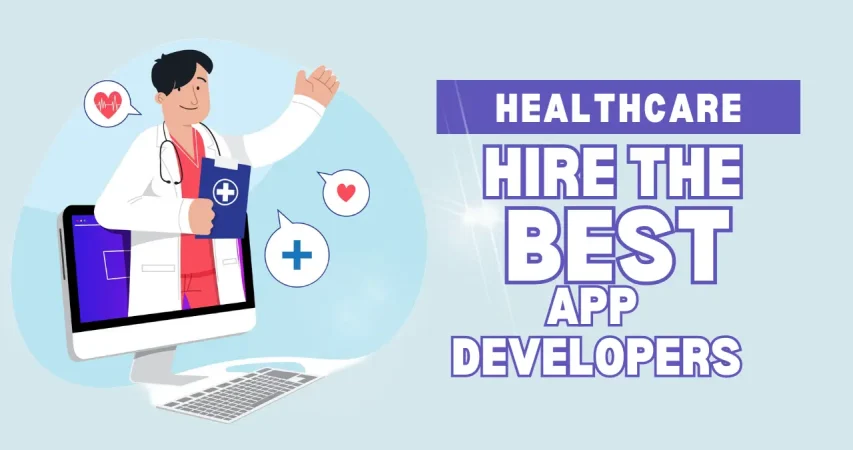
Key Steps to Hire the Best Developers for Your Healthcare App

Join our Newsletter!

Featured Posts

Support Is One Click Away

Home

Key Steps to Hire the Best Developers for Your Healthcare App

hire the best healthcare app developers

Key Steps to Hire the Best Developers for Your Healthcare App

Are you looking out for the perfect developer who can assist you in turning great healthcare app ideas into reality? With the changing scenery of health technology, finding the right kind of expertise can be quite a difficult process. In this blog, we will come across the steps to hire the perfect healthcare app developer for your project. 

Healthcare applications are mobile apps designed to make healthcare easier and more accessible. They perform duties like checking records, making appointments, and receiving medical advice from the comfort of one’s own home. These apps can be linked to wearable devices to monitor vital health parameters like steps taken or heart rate and help users monitor their health on a minute scale. Their main purpose is betterment in health and improving healthcare services. Some of these include healthcare apps used in billing, telehealth, or video consultation with doctors, practice management by arranging medical practices, and coding medical information. They will help the patients and doctors work together in the management of health and the diagnosis of conditions. According to a report, the global digital health market is projected to grow from USD 240.9 billion in 2023 to USD 946 billion by 2030. 

It is very important to hire healthcare app developers because they bring specialized experience and knowledge updated to help in developing complex healthcare apps. They ensure that your app complies with regulations such as HIPAA and GDPR and build it faster and more affordably compared to doing it yourself. These professionals also have continuous support to keep them updated. They also customize solutions for meeting any needs and seamlessly integrate with existing healthcare systems, making the app much more effective and efficient. 

So, let us dive deep into the steps to hire the perfect healthcare app developers which will be beneficial for you. 

Steps To Hire The Best Healthcare App Developers  

1. Define Your Requirements  

While looking to hire healthcare app developers, you must define your project objectives and requirements. Write down all the features that you want the app to have, like telemedicine capabilities for remote consultations, EHR integration to connect over electronic health records, and health monitoring tools that track different metrics. Identify your target audience and how the app will integrate with other already running systems, such as hospital management software. Giving an overview of the detail of needs helps identify the exact skill sets and expertise needed from the developers to ensure that they can adapt a solution catering to all your requirements and optimize the experience for the end-user. 

2. Shortlist Developers 

Deeply search for developers or companies having a successful history of health app development. Look for those who have effectively worked on similar apps and have experience with healthcare-specific features and regulations. Study their case studies, portfolios, and customer reviews to assess their expertise, past performance, and client satisfaction. Check the scale and complexity of previous projects to make sure that they fit your needs. Shortlist candidates who prove consistent in delivering healthcare apps with positive reviews from clients. Proper consideration will help you settle on developers who can carry out a project of your magnitude and finally come up with a high quality and effective solution. 

3. Evaluate Expertise and Technical Skills 

After you have shortlisted developers, you should assess their technical ability and experience. You should conduct technical interviews with them, discussing their experience and knowledge. You could even ask them to go for coding tests that would present them with real problems and then see how they solve them. Request samples of previous work done to determine the quality and relevance of projects completed before. They must know the programming languages and frameworks your app needs. One also needs to spot if they can solve any problem that might be caused by them during development. Such a rigorous process confirms whether the developers are well-endowed with the kind of skills relevant for the successful construction of a healthcare app. 

4. Review Past Experience 

Gather references from their past clients to know if they are work-oriented, reliable, and can meet deadlines.  Evaluate the past projects in which the developer was involved to understand the correctness of the delivered work. Determine whether they came up with top-of-the-line applications that could be said to be user-friendly yet solve their client’s needs if possible. This step is very important to substantiate their claims and ensure their work meets the standards that you have set for your work. A look at the track record will help you settle better on the right one through feedback from other customers. 

5. Check Communication and Cultural Fit 

This step is all about good communication and a proper cultural fit. While interviewing, review whether the developer can communicate his ideas clearly, is ready to listen, etc. Describe his attitude to working in a team, how he works, and evaluate whether it will align with the culture in your organization. This ensures high working relationships and effective results from the projects.

Is your healthcare app ready to meet the demands of the future?

With Mindpath’s expertise in advanced technology solutions, we can help you stay ahead in the evolving healthcare landscape.

How Can Mindpath Help In Healthcare Application Development Services 

Mindpath is dedicated to transforming the world of health care by providing state-of-the-art technology solutions. This is where we provide full-fledged health care software development services with a sole purpose: to enable health care providers to provide better patient care and smoothen operations while adhering to regulations and industry standards. It starts with strategic consulting for visibility and the exact requirement of your health care software project.  

We apply safe and scalable software into the development services under our care, such as Electronic Health Records, practice management systems, and patient portals, to make improvements in health care delivery on a larger scale and with greater efficiency within the organization. The design team is primed to create user-friendly, intuitive, self-explanatory screens with visuals that make the software functional and engaging. Further, we provide AI chatbots for managing their tasks to answer the queries of patients, manage appointments, and provide medical information to improve patient interaction and take some workload off the healthcare staff. 

Conclusion  

The future of healthcare has been very dynamic, especially due to technological innovation, making complex patient care more efficient, more accessible, and increasingly personalized. Trends such as telemedicine, AI-driven diagnostics, and wearable health technology are altering the nature of healthcare service delivery. Now is the time to get investments pumping into state-of-the-art healthcare applications catering to the modern patient and healthcare provider, with the global digital health market expected to grow soon. 

Mindpath leads from the frontline in this revolution with state-of-the-art healthcare application development services according to the newest industry trends. Our commitment to quality, compliance, and user-centered design assures effectiveness and engagement of the solutions we provide. Whether you want to enhance patient engagement through AI chatbots for healthcare, enhance operational processing through EHR integrations, or simply update legacy systems, Mindpath has rich experience in bringing any idea into life. 

Looking to take your healthcare services up a notch with state-of-the-art technology?

At Mindpath, we specialize in healthcare application development that can change the way patient care is operated.
Related Post

Discover the transformative power of conversational AI chatbots. From cost savings to increased sales, learn how chatbots can drive growth.
Hire skilled Node.js developers in London for high-performance, scalable web applications and discover its benefits.

Related Post

React Roadmap

React is one of the most powerful and useful JavaScript libraries that developers around the world are using to build amazing web applications. ReactJS allows developers to create fast, interactive user interfaces for websites and apps, and has even improved their workflows. When you have the intention to progress your skills or improve your existing projects, a React roadmap can help you navigate what to learn next. Rather than blindly choosing where to begin and what is most important, a roadmap allows you to advance in your learning with confidence and real intent.

React trends in 2026 are expanding forward with new capabilities such as server components, rendering methods, and development tools, to make learning React more valuable for new and expert users. Seeing how to use your time wisely and knowing what you may look at for a specific reason helps to save you time, but also helps to make modern applications. In this blog, you will discover a step-by-step process of learning, which can simplify mastering and using React in a project. Let’s get started!

If you’re planning to leverage React in your next project, our ReactJS development services can help you in creating modern, scalable web applications meeting your business goals.

Need for React Roadmap

It’s essential to have a clear learning plan when starting with React. A ReactJS roadmap for beginners allows you to learn complex subjects such as JSX, components, state, and hooks by breaking these subjects down into smaller, more manageable pieces. Having step-by-step tasks gives you a foundation and keeps a focus on what matters. Instead of doing random tutorials every day, you have a learning path that makes sense and keeps your learning organized and flowing.

With new features and developments coming in the future of React, it’s good to be prepared. Having a React developer roadmap can give you a path of what you can learn and when you can learn it. This can help you eliminate confusion and wasted time. Roadmaps can often have actual projects where you actually perform them as a learning experience. This kind of experience will only help you to grow and develop your learning experience and skills, but it will also keep you motivated because you are able to see your progress clearly on your journey!

Planning to improve user engagement and deliver smoother interactions on your platform? Learn how the benefits of ReactJS development services help businesses create more responsive apps.

Key Concepts to Master Before Learning ReactJS

Before diving into React, it’s helpful to understand some core web development concepts that make learning smoother and more effective. These basics form the starting point of any React roadmap and give you the confidence to build with React efficiently.

Key Concepts to Master Before Learning ReactJS

1. JavaScript Basics

It is important for you to understand variables, functions, arrays, and objects in JavaScript. These are the building blocks for the logic and data in React.

2. Understanding the DOM

It is important for you to understand what the browser is doing in terms of displaying things and changing things via the DOM. React uses the DOM structure to show on the screen and make changes to it easily and efficiently.

3. Version Control with Git

It is important for you to understand how to track and manage your changes in your projects, via version control, specifically with Git. It is a vital part of a real-world React application, especially when working with a team.

4. HTML and CSS

Learning the fundamentals of HTML for structuring web pages and CSS for styling them is important. Understanding layouts related to flexbox or grids is necessary for developing responsive user interfaces in React. 

Curious to identify which technology aligns best with your development team’s strengths? Read about the practical implications of choosing React vs Vue for your business projects.

ReactJS Roadmap 2026

To become a skilled React developer in 2026, it’s important to follow a clear and practical learning path. This React tutorial, based on the latest ReactJS roadmap 2026, will guide you through the key topics to focus on at each stage of your journey.

ReactJS Roadmap

1. Setup & Basics

Start by setting up your environment with tools like Node.js and npm to begin working with React. Learn how JSX works and how it allows writing HTML-like code inside JavaScript, which is essential in any React roadmap.

2. React Components

Understand the structure and role of components, which form the UI of any React application. Functional components, props, and state are core parts of this architecture, making them a key focus in the front-end roadmap.

3. React Hooks

Hooks let you use features like state and lifecycle in functional components without writing classes. Mastering built-in hooks such as useState, useEffect, and useContext is crucial in any modern React Roadmap.

4. Routing

Routing allows smooth navigation between pages in single-page applications using tools like React Router. It enhances user experience by loading components based on the URL, as commonly seen in apps.

5. State Management

State holds the data that drives your UI and updates the app when changes. Techniques like React Context API and Redux help manage local and global states effectively within your project.

Also Read: Techniques to Optimize ReactJS Performance

6. Event Handling

React handles user actions such as clicks, form submissions, and scrolls through event handlers. Learning how to work with these events improves interactivity and responsiveness in your application.

7. Advanced & Custom Hooks

Explore patterns like component composition, higher-order components, and custom hooks to reuse complex logic. These advanced topics align with current React trends and best practices.

8. React Animations

Animations create smooth transitions and improve the user experience using tools like Framer Motion or React Spring. These libraries offer a flexible way to add motion to your interface.

9. React Frameworks

Explore frameworks built on top of React, such as Next.js and Gatsby, that enhance app performance and SEO. These tools are often mentioned in ReactJS blogs for speeding up development.

10. Projects

Apply what you learn by building real-world applications that solve problems and test your skills. Project-based learning is a major part of the React tutorial approach and strengthens your understanding of concepts in the JavaScript roadmap.

Looking for ways to improve user engagement and overall app performance? Read the top reasons to choose ReactJS for app development and see why it’s preferred by many leading businesses.

Ready to Start Your React Journey?

Following a structured React roadmap helps you learn React with purpose and confidence. This blog covered everything from the basics to advanced tools and trends that matter in 2026. By focusing on key concepts, building projects, and staying updated, you’ll be better prepared to grow as a skilled React developer in today’s fast-moving web world.

This React roadmap is just the beginning. At Mindpath, we bring these React concepts to life through modern and scalable solutions built by expert developers. Our ReactJS development services align perfectly with what you’ve explored in this blog, delivering clean architecture, smart component reuse, and performance-focused interfaces that work seamlessly across devices. Let us help you turn learning into real results through expert-driven development.

digital transformation for businesses

Do you think about your company’s future and ask yourself what digital transformation for businesses means? If so, you’re not alone! Many business owners and leaders are trying to figure out how they will continue to be relevant and competitive in a world that is constantly changing. Digital transformation is changing how you work, how you serve and support customers, and how your team grows. So why is it so important?

Digital transformation for businesses impacts every area of a business, from routine activities to strategic targets. It allows you to work smarter, make better decisions, and respond rapidly to changing customer demands. Adopting digital tools and an alternative mindset can help businesses maximise productivity and create new opportunities. Understanding the process is a prerequisite to helping your business flourish in today’s environment. In this blog, you’ll discover how.

Implementing digital transformation in your business can be challenging; you need expert guidance. Partnering with Mindpath will help you in exploring personalized strategies that will reshape your business. Contact us to start your transformation journey.

What is Digital Transformation?

Digital transformation is the use of modern technology across all areas of a business to change how it works inside and how it connects with customers. It can involve updating old systems, adding new tools, and finding better ways to get work done. Companies take this step to keep up with industry changes and market trends. It is a serious shift in how work is planned and delivered every day.

The digital transformation process requires the involvement of people at every level, from leaders to staff. It is not a single project but an ongoing effort, as technology and business needs keep evolving. Companies must stay open to new ideas and improvements to remain competitive. Digital transformation helps an organization stay prepared and flexible in a fast-changing world. It is a commitment to keep moving forward.

Curious which technologies can give small businesses a competitive edge? Explore emerging technologies for small businesses to see the innovations driving digital transformation.

Why is Digital Transformation Important?

Digital transformation is important because it helps companies keep up with changes in their industry and meet customer needs in new ways. It improves how businesses work by using smarter tools and systems, which makes daily tasks more organized and efficient. Focusing on digital transformation for small businesses can help smaller companies compete with bigger ones and stay prepared for what’s next.

One big reason companies choose digital transformation is to replace outdated manual work with better technology. This makes daily tasks easier and helps the whole company run more smoothly. According to digital transformation McKinsey research, 68% of people said they transform their operations mainly to modernize how they work. A clear plan helps every company adapt and stay ready for what comes next.

What are the 4 Types of Digital Transformation?

There are different ways a company can approach digital transformation depending on its goals and needs. Here are four main types of digital transformation every business should know about:

4 types of digital transformation

1. Domain Transformation

Domain transformation happens when a company enters a new market beyond its usual industry. This is often made possible by advanced digital transformation technologies.

2. Cloud Transformation

Cloud transformation moves data and systems to the cloud for better access and storage. Companies can choose public, private, or hybrid models for flexibility.

3. Business Model Transformation

Business model transformation means changing how a product or service is delivered by using modern digital tools. It’s a smart move within any digital transformation framework.

4. Business Process Transformation

Business process transformation improves how work gets done inside the company. It’s a big step in digital transformation for business success.

Benefits of Digital Transformation for Businesses

Digital transformation helps companies improve how they work and respond to changing demands. Below are some of the main benefits it can offer:

1. Cost Savings

One of the biggest advantages of digital transformation for businesses is saving money by removing outdated processes. With better systems in place, companies can spot problems sooner and use resources more wisely.

2. Better Customer Experiences

When processes run smoothly and technology is up to date, customers enjoy faster service and better support. Digital transformation for businesses also makes it easier to adapt based on customer feedback.

3. Support for Sustainability

Modern tools help companies design products and processes that use less energy and fewer materials. This cuts down waste and supports long-term environmental goals.

4. Faster Processes and Higher Productivity

When companies use smart tools and automation, everyday tasks become quicker and more accurate. This gives employees more time to focus on work that adds real value instead of getting stuck on repetitive jobs.

5. Valuable Data Insights

Digital transformation for businesses makes it easier to collect useful data and turn it into insights that help leaders make better choices. This way, different departments can understand trends and work together with clear, reliable information.

6. New Business Models

Following a clear digital transformation roadmap lets companies create fresh ways to reach customers and stay ahead in the market. New ideas and flexible services open the door to growth and higher revenue.

7. Strong Profit and Growth Potential

Companies that have a solid digital transformation strategy often see steady profit growth because they work more efficiently and serve more people. It also helps them expand into new areas over time.

8. Strong Competitive Edge

Digital transformation for businesses helps them stand out with fresh ideas and unique services. Companies that keep innovating stay ahead of the competition and handle change more easily.

9. Quick Adaptation to Change

Digital transformation for businesses gives them the tools to adjust plans when the market changes suddenly. This helps keep things running smoothly and protects the company’s future.

10. Simple Compliance and Regulations

Smart systems help track the right data to meet industry rules and quality standards. This makes it easier to share reports and pass audits without extra stress.

What are the 5 Main Areas of Digital Transformation?

Every successful digital transformation covers key parts of a business to make sure changes bring real value. Here are the five main areas of digital transformation that companies focus on:

5 main areas of digital transformation

1. Business Model

Digital transformation often means rethinking how a business makes and delivers its products or services. Companies may find new ways to earn revenue using online platforms or new technologies. This helps them stay competitive and reach more people.

2. Customer Experience

Customer experience means using technology to make every interaction better for your customers. This could be through faster service, easier online tools, or more personal communication. The goal is to keep customers happy and loyal to your business.

3. Operations

Improving operations means making everyday work run more smoothly with digital tools. Automation and better systems help teams save time and avoid mistakes. This keeps the business running efficiently and ready for growth.

4. Technology

Every digital transformation depends on using the right technology, like cloud services, AI, or smart data tools. These tools help companies collect information, solve problems, and create new ideas. Staying updated with technology is key to long-term success.

5. Workforce

Employees need the skills to work well with new digital systems. Companies should train their teams and encourage learning new things regularly. This builds a flexible workforce that can handle changes and keep the business moving forward.

Real-world Examples of Digital Transformation

Knowing about real Digital transformation examples makes it easier to understand how technology can truly change a business. Here are some real-world cases that show what’s possible when companies embrace digital transformation.

Real World exmaples of Digital Transformation

1. Tailored Customer Rewards

Starbucks uses AI in its app to create rewards and suggestions that feel personal to each customer. This digital approach keeps customers happy and loyal to the brand.

2. Personalized Product Fit

Nike’s SNKRS app and foot scan tool help customers find shoes that fit perfectly. This smart use of technology makes shopping easier and gives Nike useful data for better designs.

3. On-Demand Entertainment

Netflix changed how people enjoy movies by moving from renting DVDs to streaming online. This gave people freedom to watch what they want, when they want, without late fees.

4. Cloud-Based Service Models

Adobe transformed from selling boxed software to offering cloud subscriptions like Creative Cloud and Document Cloud. This makes their tools easier to use and keeps customers updated with the latest features.

5. Interactive Buying Experience

Audi introduced Audi City, a digital showroom where people explore cars using large screens and virtual tools. This makes the car-buying process modern, fun, and more convenient in small spaces.

Ready to Future-Proof Your Business?

Digital transformation for business helps you stay competitive, meet customer needs, and grow in a fast-changing world. Using AI and business technology together lets you work smarter, adapt quickly, and make better choices every day. Embracing this change now opens the door for fresh ideas and keeps your company strong in any market.

At Mindpath, we empower you to develop a clear approach to digital transformation by bridging people, processes, and technology. Our experts will guide you through every step of the journey and will ensure your team is employing the best tools to drive ongoing digital transformation. Let’s make your organization agile, productive, and ready for growth using intelligent digital solutions tailored specifically to you.

Frequently Asked Questions

1. How can a business know if it is ready for digital transformation?

A business is ready when it clearly understands its goals, current challenges, and areas that need improvement. Readiness also depends on leadership support, willingness to adopt change, and having a plan to train employees and integrate new technologies into daily operations.

2. What are the common mistakes businesses make during digital transformation?

Many businesses focus only on technology and ignore people and processes. Lack of clear strategy, poor communication, and resistance to change often lead to failure. Successful transformation requires alignment between teams, continuous learning, and a well-defined roadmap that guides every step.

3. How long does digital transformation typically take to show results?

Digital transformation is an ongoing process rather than a one-time project. Some improvements, like automation or process optimization, may show results quickly, while larger changes in business models or customer experience can take months or even years to deliver full value.

4. Is digital transformation only relevant for large enterprises?

Digital transformation is equally important for small and medium-sized businesses. It helps them compete with larger organizations by improving efficiency, reducing costs, and enhancing customer experiences. Even small changes, such as adopting cloud tools or automation, can create meaningful impact.

5. How can businesses measure the success of digital transformation?

Success can be measured through key metrics such as improved productivity, faster processes, customer satisfaction, and revenue growth. Businesses should track both operational and strategic outcomes to understand how well digital initiatives are contributing to overall performance and long-term goals.

Explore how digital transformation reshapes businesses, boosts efficiency, enhances customer experiences, and drives sustainable growth for success.

We often hear artificial intelligence myths shaping opinions in digital discussions today. Businesses, developers, and leaders question what defines AI in real applications. There are numerous assumptions that confuse its actual ability and limits. This creates a challenge as opinions spread faster than verified facts in industries. You might find narratives about the challenges of the adoption of AI and performance.

This discussion is becoming even more significant with the reliance of organizations on AI systems nowadays. Behind such tools, people tend to question reliability, intelligence and decision making. Meanwhile, innovation is still transforming the expectations in industries today. The lack of understanding AI can slow down the adoption process and reduce the actual growth opportunities. In this blog, we will examine AI misconceptions and what truly constitutes artificial intelligence as it is presently implemented.

Ready to move past the hype and see what AI can actually do for your business? Mindpath offers AI development services to help you build practical solutions that make a real difference.

How Artificial Intelligence Myths Begin and Spread?

The origins of AI myths is when individuals combine science fiction, cultural narratives and technical ignorance. The history of fiction and media fantasy influence the ideas of strong or intelligent machines. Poor AI knowledge also creates confusion with regard to the actual functioning of systems. Such myths regarding artificial intelligence increase more rapidly when the explanations are ambiguous or too complicated.

The myths about artificial intelligence are widely distributed via the media headlines, social platforms, and commercial hyperbole. The sensational stories tend to emphasize drastic results rather than actual applications. The absence of AI literacy reinforces misinformed notions among users as well. The more the content is shared, the more artificial intelligence myths gain traction, even when they do not reflect actual technology.

Also Read: Top AI Trends 2026

Debunking AI Myths with Real Facts

Facts that are crystal clear help remove misunderstandings from true grasp of technology. Talking about AI myths vs reality reveals that people’s views are really very different from what artificial intelligence is doing nowadays in real applications.

1. AI Shows Human Emotions and Thinking

Myth: AI is able to think, feel, and respond like a human during conversations. This notion is in line with the most common artificial intelligence myths today.

Reality: AI simply analyzes patterns and probabilities in training data to produce its answers. It is neither capable of feeling emotions nor does it have a real understanding.

2. AI Creates Truly Original Ideas

Myth: AI has a deep understanding of content and can generate completely new ideas like humans. A lot of people assume that this is a fact of real artificial intelligence.

Reality: AI produces outputs based on existing data and the patterns it has learned. It cannot understand or truly create original ideas like humans.

Curious about how AI actually supports decisions without thinking like humans? Explore how AI in decision-making works in real scenarios to improve accuracy and business insights.

3. AI Learns Without Human Help

Myth: AI systems can independently learn and develop without any human ‍‌intervention. These assumptions shape many myths of AI today.

Reality: AI can only improve when the developers train and update the models with fresh data. It is entirely dependent on human guidance and programming.

4. AI Will Replace Human Intelligence Everywhere

Myth: AI will surpass human intelligence in all areas very soon. People who believe this don’t consider the practical AI benefits and risks that exist today.

Reality: AI performs specific tasks efficiently but lacks human judgment and intuition. It cannot replace overall human intelligence in real scenarios.

5. AI Always Gives Correct Answers

Myth: AI systems provide correct and trustworthy information at all times and under all circumstances. Most people are unaware of the machine learning basics in this case.

Reality: AI can generate wrong results or hallucinate during responses. It is necessary for the users to check the outputs before making any decision.

6. AI Causes Only Job Losses

Myth: AI will get rid of jobs and lead to great unemployment in all sectors. This view is often used to spread fear of technological change.

Reality: AI, on the one hand, opens up new job prospects and on the other hand modifies the nature of existing jobs in many areas. In fact, it alters the way work is done rather than completely wiping out job opportunities.

Wondering how AI is changing roles without replacing people entirely? Explore how AI is refining job roles in tech, reshaping responsibilities, and creating new opportunities.

7. AI Works Only in Technical Fields

Myth: AI is only effective in tech industries and applications. Many fail to realize AI is already so thoroughly integrated into our day-to-day living that they hardly notice it

Reality: AI is capable of making a huge impact in the sectors of healthcare, finance, education, plus a vast array of daily tools. Its deployment in multiple fields is speeding up day by day

8. AI Is Only for Experts

Myth: Only very expert professionals can make use of AI tools at work. This myth keeps regular users from adopting the technology.

Reality: User-friendly AI tools understand natural language and can be accessed through simple language commands. Anyone can use them with basic understanding and clear instructions.

Want to see how AI is being used in simple, practical ways across everyday business functions? Explore real-world AI use cases that show how accessible and impactful this technology has become.

Key AI Trends Defining What Comes Next

Key trends are shaping how technology evolves across industries today. The future of artificial intelligence will continue to influence innovation and business growth.

1. Agentic AI as Digital Work Partners

AI now handles tasks with minimal input and acts more independently. This shift changes how teams manage daily operations.

2. Industry-Specific AI Models

Businesses use focused models trained on specific data for better accuracy. These models improve performance in targeted industries.

3. Multimodal AI Capabilities

AI processes text, images, audio, and video together in real time. This enables more natural and effective user interactions.

4. Physical AI in Real Environments

AI powers robots that can sense, act, and learn in physical spaces. This expands AI use beyond digital systems.

5. AI in Software Development

Developers now guide AI to generate solutions instead of writing every line. This improves speed and efficiency in development.

6. Efficient AI Infrastructure

AI systems now focus on performance and energy efficiency. These advancements also challenge common artificial intelligence myths about resource dependency.

Planning your next move with AI, but unsure how to align it with long-term business goals? Read a structured AI roadmap to understand how to implement AI step by step with clarity.

Ready to Move Beyond Artificial Intelligence Myths?

Today, artificial intelligence myths are known to confuse and hinder informed decision-making in businesses. Knowledge of AI reality assists organizations in embracing technology with a sense of clarity and confidence. Clarity leads to superior planning, smarter investments, and practical implementation of AI in real-world applications and results.

At Mindpath, we provide AI development services that help businesses align with real AI capabilities and goals. Our experts turn ideas into practical solutions with strong results. We help you move forward with confidence by focusing on real value and measurable business impact.

Frequently Asked Questions

1. How do artificial intelligence myths influence business decisions when adopting AI tools?

Artificial intelligence myths often create unrealistic expectations or unnecessary fear around AI adoption. This can lead to poor decisions, delayed implementation, or misuse of tools, ultimately affecting productivity, efficiency, and overall business growth outcomes.

2. Why is it important to understand artificial intelligence myths before investing in AI solutions?

Understanding artificial intelligence myths helps businesses set realistic expectations about AI capabilities. It ensures better planning, smarter investments, and more effective use of technology, leading to improved results and long-term value across different business functions.

3. Can AI completely replace human roles, or does it mainly support existing work processes?

AI mainly supports human work by automating repetitive tasks and improving efficiency. While some roles may change, many new opportunities are created, making AI more of a support system rather than a complete replacement for human involvement.

4. How can organizations measure the real impact of AI after implementation?

Organizations can track performance through productivity improvements, cost savings, and efficiency gains. Regular evaluation of outcomes helps ensure AI delivers real value and aligns with business goals instead of relying on assumptions or expectations.

5. Is technical expertise required to start using AI tools effectively in everyday business operations?

Most modern AI tools are designed for ease of use and do not require deep technical knowledge. With basic understanding and clear instructions, teams can start using AI tools efficiently for daily tasks and business processes.

Explore common myths about AI, uncover the truths behind them, and learn how Mindpath’s AI development services can transform your business.