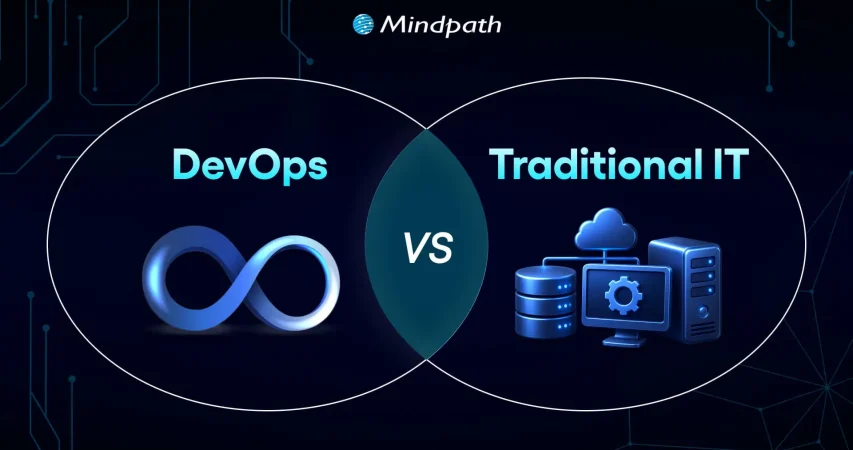
DevOps vs. Traditional IT: Which Approach is Right for Your Business?

Home

DevOps vs. Traditional IT: Which Approach is Right for Your Business?

DevOps vs. Traditional IT: Which Approach is Right for Your Business?

Join our Newsletter!

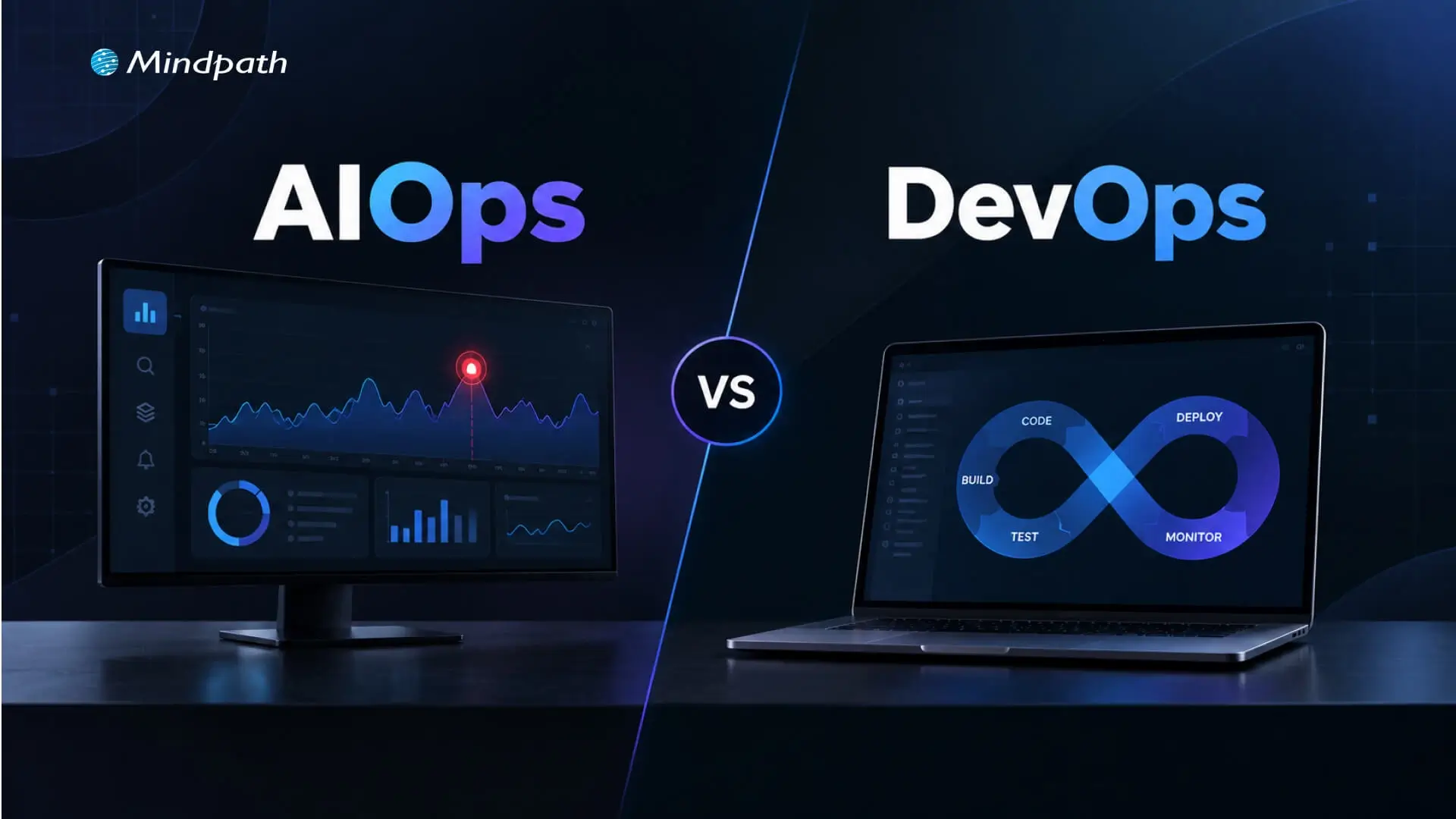
DevOps vs Traditional IT

The technology landscape has been drastically developing at a great pace. Businesses are under pressure to innovate faster and deploy more reliable customer experiences. At this great transformation, the conversation around DevOps vs. Traditional IT has become critical. So, the right approach can influence your speed, innovation, costs, and even customer satisfaction.

Further, there are some companies that still benefit from the structure and control of traditional models. On the other hand, others need the agility and automation that DevOps delivers. In this blog, you are going to understand the difference. This can also help you make the right choice that matches your business goals.

Planning to modernize your IT operations for faster and more efficient delivery? Mindpath offers DevOps services that help streamline workflows, enhance collaboration, and accelerate your development lifecycle.

What is Traditional IT?

The global IT services market size has already reached USD 1,652.27 billion this year. Further, it is going to expand to reach USD 3,299.78 billion by 2033. So, traditional IT values a structured process and initiates work step-by-step. Here, different teams manage multiple parts of the software development lifecycle. For example, developers write the code, and testers will verify if the system has any issues.

This structure majorly values the Waterfall model, where every phase must be completed before shifting to the next one. One of the best parts of traditional IT infrastructure is that it ensures thorough documentation and testing. But it somehow makes the process slower and more rigid. Any last-minute change can include major delays and disturbances.

  • You can have clear department roles and responsibilities.
  • It is a better option for legacy applications.
  • You can have strong control over infrastructure and other processes.
  • It is easily compliant in highly regulated environments.

What is DevOps?

The DevOps market size is expected to reach USD 108.26 billion by 2035. As per the recent statistics, around 72% developers are using the Agile method, whereas 46% of organisations are combining methodologies. So, DevOps is a modern and collaborative approach that combines development and operations into an individual workflow.

Instead of working in isolated teams, DevOps creates a culture of shared responsibility. Further, your whole team can leverage the relevance of automation and continuous improvements.

  • Unlike a traditional system, DevOps values agile principles.
  • It initiates modern IT operations that automate tasks like testing, integration, and deployment.
  • Additionally, this approach can help you reduce errors while improving the overall efficiency.

The Major Difference Between DevOps vs. Traditional IT

Both approaches aim to support your business technology. However, they hold some prominent differences as given below.

1. Deployment Speed

Traditional IT mainly uses scheduled releases, sometimes weekly or monthly. On the other hand, DevOps supports continuous releases through automation. This means you can go live with your features, fixes, and updates faster.

2. Team Structure

Your whole team might remain separated in traditional IT. Developers need to write the code, and they deploy it while handling the issues in the later stage. This can create communication gaps and delays. However, in DevOps, teams can work together from the beginning. This is one of the biggest DevOps benefits for business. Your developers and testers will have ownership.

3. Infrastructure Management

Traditional environments majorly depend on physical servers or manually managed systems. But DevOps relies on cloud environments, containers, and automation to handle infrastructure effectively.

4. Risk Handling

Traditional IT might avoid changes because it can introduce instability in the whole system. However, DevOps is capable of handling risks differently. Instead of making fewer big changes, it allows you to include smaller and more frequent updates.

Top DevOps Benefits for Business and IT Operations

Here are some top DevOps benefits for business that can incredibly encourage your performance in the long run.

1. Faster Time to Market

One of the biggest advantages of DevOps is speed. With automation, you can reduce the chances of delays in testing, deployment, and monitoring. This means your business can launch new products or features much faster.

2. Effective Collaboration

Instead of your teams blaming each other when issues arise, DevOps allows you to have better communication. They can work together and share goals and vision.

3. Higher Reliability

DevOps is not just about moving fast. It accesses continuous monitoring, automated testing, and smaller releases. This makes your systems stable over time.

4. Reduced Operational Charges

Manual processing can be expensive for you. Repetitive deployments, testing, and infrastructure management can consume your time and resources. So, DevOps can reduce these defects through precise automation.

5. Improved Security

With the right DevOps implementation, security assessment and monitoring tools can be directly added to your delivery pipeline. So, fewer blind spots mean faster issue assessment.

Why are Traditional IT Advantages Still Making Sense?

With the ultimate rise of DevOps, traditional models are still relevant in the market. Here are the situations where traditional advantages can be more prominent than speed.

  • You handle a strict environment with severe policy regulations.
  • Your application updates are infrequent and not very urgent.
  • Your internal team is structured around conventional infrastructure management.

A Brief Comparison Between Traditional IT vs. DevOps

Here are some key aspects that define the values of DevOps vs. traditional IT in a structured way.

Factors Traditional IT DevOps
Core Strength Stability and Control. Speed and collaboration.
Team Structure Excludes teams from development and operations. Make a team to work together.
Infrastructure Values manual proceedings. Use automation.
Business Impact Helps in maintaining stable IT environments. Supports modern IT operations.
Best For Regulated Industries Fast-Growing Businesses

The Best Approach for Many Businesses

You need to understand that organizations don’t just jump directly from traditional IT infrastructure to full DevOps. In fact, they change with time. They start by automating the testing phase while influencing the operation pipelines. Further, they might move selected workloads to the cloud while modernizing one application at a time. This hybrid approach can work best because it reduces disruptions while still bringing in the benefits of modern IT operations.

Conclusion

When it comes to DevOps vs. Traditional IT, both approaches come with their own uniqueness. But, in today’s highly developing technological world, DevOps is becoming a serious choice among competitive businesses. However, the best approaches depend on your business goals and growth plans.

If you are ready to make the shift to DevOps and future-proof your business, Mindpath can be your ideal partner. With our cloud and DevOps services, we help bridge the gap through automation, scalable infrastructure, and DevOps-led transformation solutions.
FAQs

What is the Major Difference Between DevOps and Traditional IT?

The main difference is that traditional IT works in separate departments, whereas DevOps can encourage precise collaboration and automation.

Is DevOps Better Than Traditional IT for All Major Businesses?

DevOps is ideal for businesses that need speed and continuous updates. On the other hand, traditional IT can work well for highly regulated environments.

What are the Major DevOps Benefits for Businesses?

Some of the essential benefits include faster time to market and better collaboration while valuing operational charges and improved reliability.

Can I Use DevOps and Traditional IT at the Same Time?

Many businesses take a hybrid approach by keeping stable legacy systems in place. They use DevOps practices for newer applications.

How can I Start Moving from Traditional to IT DevOps?

The best way to shift from traditional IT to DevOps is through automation and cloud migration. You can also initiate it by improving collaboration between development and operations teams.

Related Post

custom software development process

Whenever you are creating a tailored solution for your business, it is very important to clearly understand how the development process will be structured. The custom software development process clearly guides you in turning your ideas into a usable working solution. Every step matters – from understanding the requirements, conceptualizing the software, determining the specifications, and creating software that supports your goals. You will get to know what is to come, how teams will work together, and what to expect at every step as your project moves forward in purpose and clarity.

A thorough comprehension of how this process works gives you a better sense of clarity and confidence as you engage with the project. You will be able to understand each phase clearly and watch your vision come together step by step. Upon having this understanding, it is very easy and clear to collaborate with your development team. In this blog, you’ll go through the whole process and will understand how the custom software will come to life, step by step.

At Mindpath, we offer custom software development services to turn your vision into reality by guiding you through every step. Contact us today for a solution that turns your ideas into real-world project.

Importance of Custom Software Development for Businesses

Custom software development is valuable because it provides businesses with tools made solely for them. Unlike off-the-shelf software, custom software solutions fit unique business requirements and methods. This leads to improved performance, increased efficiencies, and better results. It also minimizes unnecessary rework, saving time and money, and allowing companies to be more efficient overall.

Custom software is scalable with your business. You will be able to add features or alter functionality based on your requirements. This adjustable system uniquely supports a company’s long-term goals and puts you ahead of your competitors. Custom software solutions offer a better experience for both the user and employees, which supports increased productivity and satisfaction.

Also Read: Custom Software Development Benefits

Understanding the Custom Software Development Process

It is essential to know about the process to be followed prior to starting a software project. By getting familiar with the software development process steps, you can be an active participant and an advantageous decision-maker throughout the project. By understanding the process, you will also ensure value delivery by building software with clear goals, planning, and execution.

Custom Software Development Process

1. Define Clear Objectives and Project Scope

The custom software development process begins by defining your goals and understanding what the software must achieve. This includes identifying the target users, the problem it solves, and how it should perform differently from existing tools. A detailed list of features and expected outcomes is prepared. Both functional and non-functional requirements are clearly documented. This step sets the direction and purpose for everything that follows.

2. Planning Resources and Software Design

Planning involves creating a detailed timeline, setting milestones, and organizing resources for development. Budgets, risks, and deliverables are clearly outlined to avoid delays or extra costs. During software development design, wireframes and prototypes are created to visualize the interface and user flow. The architecture is also planned, including system components and how they will interact. Technologies such as programming languages, frameworks, and databases are chosen here.

3. Development and Code Execution

At this point in the custom software development process, the programmers will begin the actual coding based on the approved designs. The developers will prepare technical infrastructure with tools, servers, and version control. The front-end, back-end, and database modules are built and integrated together. Each piece of software functionality is developed based on the description created in the design documents. The functionality is translated into active, live software with working features to start testing.

Curious how software functions seamlessly from the user interface to the server? Explore the role of frontend and backend to understand how both sides work together to deliver smooth, secure, and engaging digital experiences.

4. Software Testing and Quality Assurance

After the software is developed, it will go through a series of testing strategies to check for quality and reliability. The first step, or unit testing, will cover each feature and try to eliminate some early problems. Then the following step, called integration testing, will check the work of modules and ensure they work as a system. Once that’s complete, the next phase is system testing, which ensures all performance, security, usability, and reliability aspects are achieved and validated prior to the release of the product.

5. Deployment, Maintenance, and Support

In the final step of the custom software development process, the solution moves to a live environment for end users. The deployment may include installing the software on servers, setting up databases, and giving users access. After launch, the software is continuously monitored for issues. Maintenance includes fixing bugs, adding new features, and updating it for better performance. Ongoing support keeps the software running smoothly over time.

Concerned about risks that could slow down your custom software build? Explore the major custom software development mistakes that can disrupt progress and find out how to avoid them.

Real-World Examples of Customized Software

Below are six real-world customized software examples that demonstrate how businesses are navigating unique challenges by investing in custom software to create a digital solution. These tools have been developed to improve usability, performance, and long-term sustainability.

Real-World Examples of Customized Software

1. Uber

Uber constructed a custom ride-booking system complete with GPS tracking, so you know where your ride is located, secure payment options, and updates on the driver’s progression. The app shifted transportation in cities globally.

2. Netflix

Netflix utilizes AI-based recommendation engines and adaptive streaming systems to provide an overall personalized viewing experience through a fully custom platform.

3. Amazon

Amazon uses custom software to manage inventory, predict customer preferences, and allow one-click ordering for a fast and reliable purchasing experience.

4. Airbnb

Airbnb built a custom platform for travelers to pay securely, check real-time availability, and search by location for hosted accommodations around the globe.

5. Tesla

Tesla uses customized software for its smart vehicles to drive the autopilot capabilities, over-the-air updates, and real-time diagnostics to enable sophisticated performance.

6. Starbucks

Starbucks utilizes a custom application to allow customers to mobile order, encrypt reward tracking, and offer options for contactless payments, making the product experience more convenient and helping to cultivate loyalty.

Curious how different kinds of software are built to serve unique business and user needs? Discover the various types of software development to understand how each one contributes to creating powerful digital solutions.

Ready to Create Software That Aligns with Your Business?

Custom software development is the process of creating digital solutions that fulfill your specific business goals. From clarifying your vision to deploying the software and providing ongoing support, every step of the official custom software development process undergoes proper plan and execution. The final outcome of custom software typically entails better efficiency, enhanced experiences for users, and long-term growth through technology that suits your needs.

As a premier custom software development company, we at Mindpath specialize in providing full-spectrum custom software development services that suit your specific business. Our team expertly develops scalable, secure, and simple solutions that integrate well into your workflows and future goals. Partner with us to turn your ideas into powerful, high-performance software built for results.

Frequently Asked Questions

1. How long does the custom software development process typically take?

Timelines vary based on project complexity, team size, and scope. A simple custom solution may take three to six months, while enterprise-level software can take over a year. Defining clear objectives and requirements from the start significantly reduces delays and keeps the custom software development process on track.

2. How do you know if your business actually needs custom software?

If existing tools require constant workarounds, limit your workflows, or fail to scale with your growth, custom software is worth considering. Businesses with highly specific processes or unique user needs often find that off-the-shelf solutions create more problems than they solve over time.

3. What happens if requirements change midway through development?

Requirement changes mid-project are common and manageable with proper planning. Agile development methodologies allow teams to adapt without derailing the entire project. However, significant scope changes can impact timelines and budgets, so communicating updates early and maintaining clear documentation throughout the process is always the smarter approach.

4. Who should be involved from the business side during custom software development?

Key stakeholders, department leads, and end users should all be involved at different stages. Their input during requirement gathering and testing phases ensures the software solves real problems. Leaving these voices out often leads to a final product that looks complete but fails to perform in practice.

5. What is the difference between custom software development and buying a SaaS product?

SaaS products offer quick setup and lower upfront costs but come with fixed features and limitations. Custom software development builds exactly what your business needs, with full ownership and flexibility to scale. For businesses with unique workflows, custom solutions deliver stronger long-term value despite the higher initial investment.

retail IT sourcing

The retail industry has undergone a great transformation due to its widespread adoption of IT outsourcing services. Recently, the global IT sourcing service market size is expected to reach USD 752.08 billion by 2031. So, by outsourcing the major IT functions like technical support, infrastructure management, and site development, your retail business can prioritize its core approaches. Further, you can strategize better features for satisfying your customers in the long run.

The following approach has made many retail businesses stick to better process agility. So, you can easily adapt to changing market demands without worrying about handling IT operations internally. Let us further analyze how retail IT sourcing can smartly empower your business.

Looking to enhance customer experience and streamline your retail processes? At Mindpath, we offer scalable retail and ecommerce software development services built for performance.

Why Retailers are Facing Growing Technology Pressure?

As per the trends of McKinsey, around 40% of consumers claimed to switch their retailers or brands. So, such a pattern is putting retailers under constant pressure to innovate something unique while maintaining streamlined daily operations. Moreover, customers are more into fast proceedings and personalized approaches while being mindful about data security. Most importantly, they demand consistent experience throughout offline and online platforms.

To meet such valuable preferences, you need to rely on modern retail IT solutions.

But assigning the whole task to your in-house team can be a bit challenging. Rising IT operational charges might hamper you, along with inefficient skills. Further, an unresponsive system might impact your sales. This is why outsourcing experts can be your ultimate option.

What is Retail IT Outsourcing?

In retail IT outsourcing, you need to partner with an external technology provider to manage your IT functions. Such skilled professionals can help you with innovative retail IT services that can upgrade your business operations while encouraging customer experience.

So, instead of depending upon huge internal teams, your business can leverage the authenticity of experienced professionals. Further, outsourced teams come with better experience and industry knowledge. Such adoption can also allow your retail business to follow its core responsibilities.

Wondering how evolving digital solutions are influencing modern retail operations? Read our Digital Transformation Trends blog to uncover the strategies defining the future of retail.

Why Retail IT Sourcing Makes Sense for Modern Retailers?

Here you can discover why outsourcing retail industry IT services can be beneficial and how it can help your business gain a competitive edge. Further, it allows you to discover many influential opportunities that you might have missed to date.

1. Cost-Efficiency Without Compromising on Quality

Retail IT outsourcing services can be financially helpful while saving on expenses. When you outsource the IT team, it can minimize the operational charges that include labor expenses. For example, your company can save up to 70% on its labor costs by discovering the talent pool in countries with minimal wage standards.

Such financial flexibility allows businesses to channelize the resources more effectively.

2. Better Customer Experience

Outsourcing can essentially make your customer experience better by offering them 24/7 support along with multilingual service. This can help your customers get efficient and timely assistance, no matter what time zone they follow. Moreover, this approach is beneficial for retail businesses that have a global customer base.

Moreover, through IT outsourcing, businesses and modern retailers can integrate modern service solutions like social media support and live chat.

3. Flexibility and Scalability

One of the most detailed advantages of retail outsourcing services is its scalable features. You can easily broaden your operations or make them minimal as per the market requirements and seasonal peaks. Further, this flexibility is essential in fast-paced e-commerce businesses, where your customers need frequent changes as per the trends.

Must Read: AI in E-commerce

4. Prioritize Core Competencies

If you prefer retail IT sourcing for your non-core functions, you can easily focus on the core competencies of your business. Some of the major elements include brand strategy, product development, and market expansion. Such focus can allow your business to innovate and prove its uniqueness in the crowded market.

5. Technological Advancements

Outsourcing allows retail businesses access to the trendiest technological advancements without any in-house investments. Additionally, outsourced partners also bring specialized expertise in modern tech like big data analytics, machine learning, and AI.

6. Improved System Reliability

Downtime in your retail business can directly influence your customer trust and sales. So, outsourced retail IT services proactively monitor the systems while managing the updates.

Ready to enhance retail efficiency with intelligent solutions? Explore AI and business strategies that drive innovation and accelerate sustainable growth.

What are Some Eminent Retail Industry IT Services That Can Be Outsourced?

Understanding the massive scope of retail IT sourcing can help you acknowledge the best functions that need to be outsourced.

1. Inventory Handling

This type of outsourcing mainly involves tracking stock levels and managing reorders. It can also align your warehouse functions. A professional team will always use modern tools to verify the inventory quickly while lessening the chances of overstocking or running out of products.

2. Managed IT Support

This approach includes maintaining hardware and software, monitoring systems, handling updates, and backups. Further, managed services can encourage your operations while lessening the efforts of your internal teams.

3. Managing Cloud Infrastructure

Cloud-related retail IT services can encourage scalability while adopting real-time visibility. Further, outsourcing cloud management can assure you of great performance and cost efficiency without any internal defects.

4. Technical Support

Professional outsourced teams can help your retail company resolve the technical issues quickly while ensuring your system performs well. Further, it accesses your in-house team to leverage the best features for its customers.

This approach can give rise to quick resolutions while keeping your online operations intact.

5. Custom Development

Retailers generally require applications that remain streamlined. Starting from inventory tracking tools to engagement patterns, everything has to be in shape. So, outsourced retail IT solutions can build and integrate such functions precisely while prioritizing your core requirements.

Challenges You Might Face Without IT Outsourcing

As retail operations have become more technology-driven, managing IT internally can give rise to a series of risks. Some of the eminent ones have been given below.

  • Frequent system crashes.
  • Limited access to professional IT knowledge.
  • Difficulty in following the trendiest retail technologies.

Struggling to scale your retail systems efficiently? Read how custom software development can help you deliver personalized retail journeys.

Conclusion

Outsourcing retail IT services has become extremely important for businesses that want growth while keeping their operations intact. So, partnering with outsourcing providers can help your company have access to expertise in order fulfillment, technical support, and much more. Further, you can think of innovations while being customer-focused in this rapidly evolving retail environment.

If you also want to seek quality-oriented and dependable outsourced IT services, Mindpath stands as your top choice. We offer tailored retail IT outsourcing services that are designed to support your modern retail operations while helping you adopt long-term digital success.

FAQs

1. How Can Outsourcing IT Services Influence Your Retail Businesses’ Operational Efficiency?

Outsourcing a team for your IT functions can align your operations by offloading time-consuming tasks like customer support and inventory management. This allows your in-house teams to prioritize strategic initiatives.

2. Is Retail IT Outsourcing Viable for Small and Mid-Sized Retailers?

Outsourcing is extremely viable for small and mid-level retailers as it offers access to advanced IT facilities without being a burden on your pockets.

3. How Can Outsourcing Services Enhance the Supply Chain of My Retail Company?

Outsourcing can encourage the supply chain of your retail company by leveraging logistics and inventory management expertise. It also ensures that you offer the projects on time without any delays.

4. Can Retail Outsourcing Support Both My Online and Physical Store Operations?

Outsourcing partners generally manage integrated systems that support e-commerce platforms, POS systems, and inventory management across physical and digital operations.

5. How Can an IT Outsourcing Company Help Me During Peak Sales Seasons?

Outsourced IT teams can assess the infrastructure while monitoring performance and providing rapid support during high-traffic seasons.

Discover how Retail IT Outsourcing helps retailers save costs, enhance customer service, and stay competitive in today’s fast-paced market.

Support Is One Click Away

Featured Posts

Related Post