What is AI Ethics and Why It Matters?

Join our Newsletter!

Featured Posts

Support Is One Click Away

Home

What is AI Ethics and Why It Matters?

ai ethics guide

What is AI Ethics and Why It Matters?

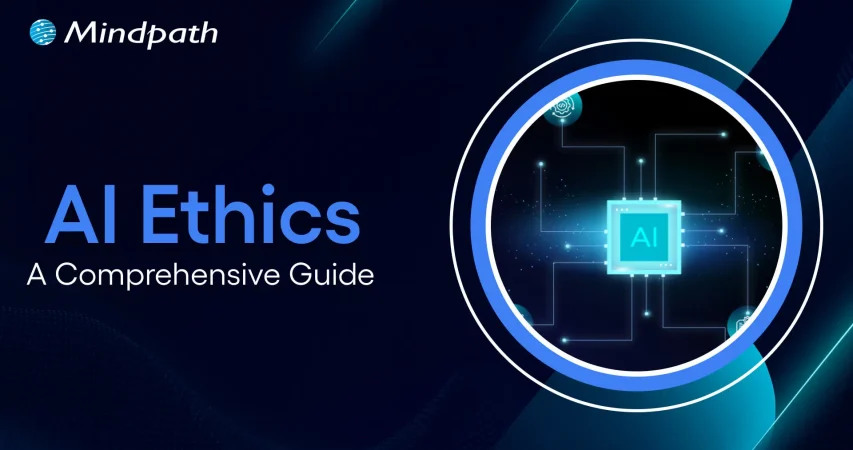
AI ethics refers to the principles that govern the behaviour of artificial intelligence in terms of human values while maximizing the benefits of AI for society. It plays a key role in making sure that the design and use of AI systems create value for society. AI ethics involves a broad range of considerations such as fairness, transparency, privacy, security, and accountability. 

While talking about the topic relating to artificial intelligence, one cannot ignore the importance of AI ethics. As AI is growing at an exponential rate, it is essential to understand the role of AI ethics in the prevailing AI realm. As AI is impacting the lives of people in diverse ways today, it is the right time to broaden the insight into AI ethics. The AI Ethics guide will help you explore AI Ethics at an in-depth level and understand why it matters so much today. 

Ready to adopt AI in a way that it operates ethically and protects your business from risks as you scale? Mindpath offers trusted AI development services that help you build transparent, responsible, and future-ready AI solutions.

Key Areas of AI Ethics

The definitions of AI may vary considerably. However, AI ethics combines a number of elements, including security, safety, and human concerns. It also involves the responsible use of AI by taking into consideration the environmental concerns. The chief areas of the AI ethics framework include:

1. Avoiding AI Bias 

AI systems learn from data. The systems with poor design are likely to demonstrate biased behavior. You must remember that AI models with poor training may showcase bias against minorities. This is when AI ethics principles come into the picture. AI ethics principles relating to fairness and justice can make sure that the possibility of bias can be curbed effectively. 

2. Artificial Intelligence and Privacy 

Artificial intelligence relies on information in order to learn. A considerable amount of this information comes from users. Thus, it automatically gives rise to privacy concerns for users. This is because not all users are well-aware of the information that has been gathered about them and how it is being used. An AI ethics framework can make sure that there is no compromise when it comes to the privacy of users. It even ensures that their information is used in a responsible manner.

Also Read: Large Language Model (LLM)

3. Avoiding AI Mistakes 

It is essential to bear in mind that poorly constructed AI systems are prone to making mistakes. Such mistakes may lead to diverse consequences, such as the loss of revenue or accidents. This is why the AI Ethics guide stresses the importance of adequate and proper testing so that AI will not pose a risk to humans. 

4. Management of AI Environmental Impact 

With each passing day, AI models are getting larger and bigger. These large models consume a high volume of energy for the purpose of training. Thus, AI has become a large consumer of resources in the prevailing times. Ensuring the ethicality of AI is essential so that researchers can design energy-efficient AI systems that can strike a balance between energy efficiency and performance. 

Planning to align innovation with responsible governance? Discover the types of AI to learn how each category impacts compliance and ethical standards.

Understanding AI Ethical Principles

The AI Ethics guide sheds light on the five Ethical principles of AI that you need to bear in mind. You need to familiarize yourself with the AI ethics principles so that you can understand their relevance in the real-world setting.

1. Transparency

One of the fundamental ethical principles relating to AI revolves around transparency. AI systems and tools need to be transparent in nature so that people can understand how they work. The role of transparency is cardinal to understanding how AI systems make decisions. It will help disclose the overall functionality of AI systems to humans. 

2. Fairness

In case you are wondering, what are the 5 ethics of AI? You need to remember that one of the key principles is related to fairness. AI systems need to be fair and just in nature so that the possibility of biased behavior can be eliminated. While creating AI models and systems, developers need to adopt a fair approach so that these systems will not generate discriminatory outcomes. The AI systems need to treat all individuals and groups in an equitable manner. One of the key AI ethics examples involves addressing biased behavior in hiring algorithms.

3. Accountability 

While talking about – What are the 5 ethics of AI? You cannot ignore the importance of accountability. In fact, accountability is a critical component of AI ethics. A chain of accountability should be in place so that appropriate individuals and organizations can be held responsible while using AI systems. There needs to be a clear line of responsibility so that systems can operate in a trustworthy way. When it comes to accountability in the context of AI teams, they need to understand the importance of prevention as a cure. 

Must Read: AI in Healthcare

4. Reliability

In order to be ethical in nature, AI systems need to function in a reliable manner. It can ensure that the outcomes that have been achieved by the particular system are consistent and reproducible. Reliability is especially important when AI is being used in important areas such as healthcare and finance. It is fundamental to monitor AI systems to ensure that they are reliable and dependable in nature. 

5. Privacy and Security

AI systems need to respect the privacy as well as the security of users. It is essential to have in place proper security measures so that sensitive data can be stored in a secure and safe manner. Some of the measures organizations can adopt include data encryption, identifying system vulnerabilities, and safeguarding against malicious attacks. It is fundamental to adopt responsible data collection practices along with the deployment of robust data governance practices. One of the common AI ethics examples involves protecting user data privacy in the healthcare setting. 

Want to implement artificial intelligence responsibly without risking compliance or trust? Discover an AI roadmap to learn how a structured approach ensures ethical and sustainable adoption.

Technical Requirements for Creating Ethical AI Systems

In order to make sure that AI systems are ethical in nature, it is essential to focus on the technical aspects. Organizations need to fulfill a number of technical requirements so that AI systems can function in an ethical and responsible manner.   

1. Focus on Bias Detection

There is a need to use diverse data sets in order to detect as well as correct bias in AI models. It is a key step that has to be taken in order to ensure that AI systems can operate in a fair manner. 

2. Focus on Explainability

The role of explainability and transparency is high while talking about AI ethics. The developed AI systems should function transparently for users. Methods such as decision trees and feature importance scores can be adopted to boost transparency. 

3. Data Privacy

The safe management of data used by AI systems is a must. Moreover, proper compliance with relevant privacy laws is essential so that the privacy of users will not be compromised at any stage. Practices such as anonymization and data encryption need to be adopted while using AI systems. 

Curious why some organizations struggle with responsible AI rollout? Check out challenegs of AI adoption and discover how the right approach balances innovation with ethical oversight.

Ready to Build Ethical AI That Drives Real Business Value?

In the era of artificial intelligence, the role of AI ethics is extremely important. It helps ensure that this powerful technology is used in a responsible and trustworthy way. As AI continues to evolve rapidly, understanding and applying ethical principles becomes essential for businesses, developers, and organizations. By prioritizing ethical practices, organizations can adopt AI with greater confidence while creating long-term value for society. 

At Mindpath, we provide expert AI development services which help organizations build responsible and future-ready AI solutions with strong ethical foundations. Our experts focus on transparency, data security, and fairness so businesses can innovate confidently while protecting trust and compliance. Partner with Mindpath to turn AI innovation into responsible and sustainable growth.


Related Post

Discover how Infrastructure as Code (IaC) improves IT operations with faster deployments, enhanced security, and increased efficiency.

Related Post

Benefits of ReactJS for web development

The extreme levels of competition in the digital landscape call for robust online presence that aligns with user expectations. Every business wants to serve the best user experience, thereby calling for special attention to their technology stack. Therefore, discussions about the benefits of React JS have gained more traction among businesses that aspire to create high-performance web projects, packed with features that make them business-ready. React JS is an open-source JavaScript library that was created by Meta as a front-end development tool.

The special features of React JS, such as virtual DOM and component-based architecture, make it a trusted choice to build business-ready web projects. With more companies striving for a competitive edge in the digital market, tools like React JS can be your trump card. Let us learn more about the ways in which React JS revolutionizes web project development for businesses.

Want to adopt ReactJS in your next project? Mindpath’s ReactJS development services will provide expertise that will help you in building interactive web applications according to your business requirements.

Exploring the Utility of React JS in Business-Ready Web Projects

The answers to “What is React JS?” explain that it is a front-end development tool. You can build dynamic and intuitive user interfaces with React JS to enhance user experience. At the same time, businesses must also know the following advantages of choosing React for customer-facing solutions and enterprise-level applications.

1. Assurance of Speed and Performance

Websites can stand out from the competition only with better performance. Complicated interfaces and slow loading times can lead to frustration among users, thereby causing revenue loss and high bounce rates. You can find the ideal solution to questions like “Why use React JS for web development?” in the innovative features of the JavaScript library.

The most unique feature of ReactJS is the Virtual Document Object Model or DOM. Traditional web development involved direct manipulation of the real DOM of the browser, which was a slow process that consumed a lot of resources, especially for complex applications.

The list of React advantages showcases that React develops a lightweight representation of the DOM as the virtual DOM. During data changes, React updates the virtual DOM and compares it with its previous state, recognizing only the essential changes. Subsequently, it combines all the minimal updates and applies them to the actual DOM of the browser.

The primary benefit of the virtual DOM is the reduction of rendering overhead, which ensures faster updates and highly responsive user experience. For example, ecommerce websites showcase thousands of products and have to introduce real-time stock updates. Virtual DOM ensures instantaneous visual response when users add items to their cart or filters for the products.

2. Adaptability to SEO

Businesses that want a strong online presence cannot undermine the importance of search engine optimization or SEO. Among the many benefits of React JS for web development, SEO compatibility will be the most valuable. Conventional client-side rendered applications based on JavaScript presented challenges for search engine crawlers. The crawlers might experience problems in fully indexing dynamically loaded content.

Businesses should know the answers to “What is React used for?” in the modern practices of web development to understand its impact on SEO. React offers the benefit of server-side rendering, in which the initial HTML content of the application is rendered on the server before sending to the client. As a result, the crawler can receive a completed rendered HTML page that ensures easier crawling, indexing and comprehension of the content.

The ease of crawling offers a significant boost to search engine rankings of web projects, thereby attracting more organic traffic. For instance, a news website powered by React JS with server-side rendering will be more visible on the first page of search results as compared to a client-side rendered version.

Looking to future-proof your web applications with a technology that scales as your business grows? Discover the strategic top reasons to choose ReactJS for Progressive Web App development for business owners.

3. Component-Based Architecture and Scalability

The biggest reason for any business to choose React web development services is the component-based architecture of React. It is a distinctive feature that helps developers in breaking the user interface into smaller, reusable and independent components. Every component has its own user interface, logic and state, thereby introducing a modular and organized approach to web development.

The advantages of React JS for web projects due to the component-based architecture include faster development, better scalability and consistent user experience. Reusable components ensure that common UI elements can be created one time and reused for different parts of the project. The modular architecture of React also helps in adding new functionalities without changing the complete codebase.

With the help of isolated components in the modular architecture, React ensures that changes in one component do not affect other components. As a result, React reduces the risks of introducing new bugs during maintenance alongside simplifying the debugging process.

On top of it, React development also offers a consistent feel and visual appeal in web projects due to the component-based architecture. Since React allows you to use the same components across the entire project, it offers the ideal ground to offer an intuitive user experience alongside strengthening brand identity.

Want to ensure your React apps run smoothly even under heavy traffic and complex operations? Learn the best techniques to optimize ReactJS performance for scalable and efficient development.

4. Benefits of ReactJS for Cross-Platform Development

The prevalent use of React for web development also draws attention towards the use of React Native. Did you know that you can capitalize on the advantages of React for developing mobile applications with React Native? React Native allows you to reuse code across different platforms with the same skills you use to implement React JS in frontend development.

React Native also offers a consistent user experience, as you can use the same development paradigm as React JS. Airbnb is one of the biggest examples of businesses using React Native to develop mobile applications. The globally recognized startup showcases resourceful React use by capitalizing on its existing expertise in React frontend web development. Cross-platform development opens new doors for taking web projects of a business to a wider audience.

5. Cost-Effectiveness

The decision to invest in React JS development services can offer promising returns in the long run for every business. You may feel that the initial investment in a company for React development might cause losses. On the other hand, the benefits of React can help you understand why it is an attractive option for businesses. For instance, the assurance of reduced development time with component reusability can ensure lower resource costs.

The overview of React JS advantages also sheds light on how lower maintenance costs and cross-platform development can enhance the cost-effectiveness of web projects. The continuous evolution and community support of React also ensure that your web projects can adapt to future trends and technological advancements without an overhaul of your codebase.

Want to understand how much your business should invest in skilled ReactJS talent? Learn the real cost of hiring ReactJS developers to make informed financial decisions.

Reasons to Pick Professional React JS Development Services

The advantages of using React JS for web projects showcase that you should not look any further for frontend development. While front-end development with React has become an industry standard, it is important to understand how outsourcing can save you from a lot of trouble. The services of a trusted development company to create React web projects help you obtain access to expert services, diverse talent pool and cost-efficiency.

The services of a React JS development company can help you have some peace of mind. Professionals working on web projects for your business with React will allow you to focus on core business activities. However, it is important to learn how to pick the right company that will deliver the best results in web development with ReactJS.

Final Thoughts

React JS is a powerful open-source library for frontend development in web applications. The value of React JS for businesses extends beyond creating intuitive and dynamic user interfaces. You can find distinctive features in React JS, such as virtual DOM and component-based architecture, redefining the web development experience. Professional ReactJS development service providers can help you capitalize on diverse React JS benefits for creating business-ready web projects. Discover the best guides on how to pick a company for React JS web development now.

Explore the 5 benefits of React JS for web development, including performance, SEO, and scalability, with insights, case studies, and best practices for your projects.
Benefits of AI consulting

In today’s fast-paced digital world, organizations need direction, as well as technology. Understanding the benefits of AI consulting can help companies see their way through the muddy landscape of choices and complex AI opportunities. Organizations need to understand how AI can be a catalyst for efficiency, better decision-making, and other growth-related opportunities; it is vital to bring experts who guarantee concrete results.

AI consultants help organizations turn abstract possibilities into concrete, achievable strategies that generate measurable outcomes and prepare the organization for the future. Working alongside AI specialists, organizations can identify high-value opportunities for companies to take action and execute a plan of action that blends seamlessly with their day-to-day work.

AI consultants provide clarity through roadmaps to success, help organizations identify pain points, and create value while ensuring projects remain aligned with strategic goals. Working together smooths the pathway toward innovation, builds organizational AI capabilities, and instills confidence for teams to lead AI adoption. In this blog, we will discuss AI consulting benefits and the superiority of helping your organization succeed.

Curious about how AI is transforming business as a game-changer? Explore our AI Consulting Services to discover how we turn cutting-edge technology into powerful growth opportunities.

Why Do Businesses Need AI Consulting?

Businesses regularly encounter obstacles such as complicated AI technologies and limitations of expertise in-house. Hiring an experienced AI consultant helps organizations overcome these complications by designing tailored solutions for companies that build towards their strategic goals. By doing this, they make sure that AI initiatives return value, increase efficiencies, and have longevity so that AI can be adopted organization-wide in a fluid and meaningful way.

AI consulting provides organizations with the guidance and direction to be successful with artificial intelligence. The major benefits of hiring an AI consultant include improved operations, smarter decision-making, and actionable productivity yields. AI consultants offer specialized as well as targeted strategies for businesses or organizations. They engage businesses to analyze their needs, flag viable AI applications, and pinpoint an ideal approach to navigating operational demands.

Also Read: AI transforming future.

Key Benefits of AI Consulting

As AI continues to drive change across the landscape of business and industry, companies are often grappling with knowing and deploying it effectively. Below are the benefits of AI consulting and notes about why organizations are increasingly turning to professionals with expertise in complex AI decision-making and delivering solutions.

1. Expert AI Guidance

AI consulting firms possess specialized knowledge in machine learning, predictive analytics, and natural language processing. They will help to design solutions for your complex problems to assist you in developing creative and customized solutions for your business. They will also guide you through applying the newest methods and tools and the industry’s best practices to yield measurable and sustainable results for your company.

2. Tailored AI Solutions

The benefits of AI consulting include developing solutions built around your business goals and business challenges. The AI consultant evaluates your business and recognizes areas where AI can improve efficiencies, increase automation, and drive enhanced customer experiences. They provide a comprehensive, customized service to ensure your business achieves higher outcomes and makes the most of its return on investment.

3. Scalability and Flexibility for Growth

AI business consulting focuses on creating systems that are adaptable to shifting business necessities and workloads. Consultants build solutions that can accommodate more data better and new capabilities or functionalities at your pace as your business grows. The key to unlocking your long-term AI return on investment is flexibility to change and support new long-term growth.

4. Cost Efficiency

Companies get a much higher ROI from AI consulting when they prioritize the high-impact areas and avoid spending unnecessarily. AI consultants then deliver scalable solutions that save costs compared to having a hospitality AI team in-house. By working with a consultant, it also lowers the cost of trial and error and optimizes value from every AI initiative.

5. Data-Driven Decision Making

AI consulting for enterprises helps to analyze extremely large amounts of data to make sense of it. AI consultants use an AI analytics tool to identify trends, improve processes, support strategic decisions, and answer more complex questions. These insights give companies speed to insight, speed to decisions, and maintain their market competitiveness.

Want to know how an AI Consultant helps businesses in driving digital transformation? Explore our detailed blog on the role of AI consultant.

6. Enhanced Customer Experience

The benefits derived from AI consulting are enhancing the way businesses think about their relationship with customers through the interaction of AI-powered tools. AI consultants offer chatbots, recommendation engines, and sentiment analysis to help provide instant, thorough, and personalized support for every question. All these features can help increase engagement, loyalty, and satisfaction for AI consulting customers.

7. Reduced Business Risks

The benefits of AI consulting also cover risks associated with how companies use and apply AI technologies. Consultants will address issues around data security, compliance with regulations and other operational issues. In general, the consultant’s expertise helps lower operational and legal risk, thus implementing AI is a safer and more reliable prospect.

8. Stronger Competitive Edge

A benefit of AI in business strategy consulting is that we support organizations in implementing innovative solutions that give them an advantage in the marketplace. We help consultants create and develop AI tools for improving operations, delivering services, and minimizing expenses. Positioning improvements like these take you to the forefront of your field and maximize your chances for sustainable growth.

9. Ongoing Support and Optimization

The benefits of AI consulting services are more extensive due to continuous support for maintaining AI systems. In general, consultants make updates as needed, optimize algorithms, and resolve problems quickly. A lasting commitment on the part of consultants equates to effectiveness, dependability, and consistency in delivering results will be sustained over time.

10. Stay Ahead with Latest Innovations

One of the major benefits of AI consulting is allowing your business to maintain knowledge about current and developing AI technologies, etc. Consultants will keep your systems fresh, modern, efficient, and relevant to the marketplace. This way, you give your company every chance to prepare for the future and remain competitive.

Organizations are relying on AI, but don’t know the right way to use it effectively. Discover why organizations need AI consulting services to unlock growth and guide their business towards success.

Want to Unlock the Full Potential of AI?

AI consulting advances organizations to operate smarter and faster while driving real business value. By collaborating with an expert, organizations can undertake AI initiatives that can be scaled, adjusted, and cost-controlled while delivering tangible benefits to customer experiences, decreasing operational and legal risks, and enhancing competitive edge. Working with an AI consultant allows organizations to implement strategies with confidence and better utilize their resources while monitoring changing technology trends that can prepare them for the future and help sustain innovation and success.

Our AI consulting services help businesses create and implement AI strategies that align with organizational goals. The team provides ongoing support, integrates state-of-the-art AI technologies, and ensures every AI project maximizes return on investment. Mindpath enables smooth implementation, operational efficiencies, and ongoing value by providing practical, hands-on solutions to companies.

Agile methodology in web development

Web development is the priority of every business that wishes to have a strong digital presence. Your business must adapt to new trends and emerging user behavior patterns in diverse web development projects with ease. The utility of agile methodology in web development has been gaining a lot of traction due to the assurance of multiple benefits. 

Do you think that thousands of software engineers praise the agile methodology just for fun? Agile approaches to web development not only bring adaptability but also the benefits of innovation and efficiency in the development process. You can stay ahead of the competition in the modern technological landscape with a dynamic approach to web development.

Do you want a website that adapts quickly to your business needs and drives growth? Mindpath’s web development services deliver custom agile solutions that enhance performance, user experience, and scalability.

Understanding the Agile Methodology

Many people may think that agile methodology is a newly formulated approach for web development. On the contrary, it is one of the most popular approaches in software and web development. The reason to choose agile for web development is the emphasis on delivering more value to the end users and developers. One of the biggest highlights of the agile methodology is how it facilitates collaboration between different members of development team. 

The primary way in which agile methodology works for web development involves breaking projects into sprints. The sprints are manageable iterations and can help in ensuring consistent progress in web development projects. With the agile approach, development teams can adapt quickly to user feedback, new business requirements and market conditions. The flexibility for cross-functional teams to work closely improves collaboration and enhances decision-making.  

The most prominent thing about the agile approach is the emphasis on customer expectations and needs. Agile development promotes a culture of continuous improvement with the use of sprint reviews and daily updates. The assurance of continuous improvement ensures that the final product delivers the value that end users want. The continuous refinement in different iterations helps in delivering high-quality web projects.

Planning to enhance your Agile strategy with cutting-edge tools and frameworks? Discover the latest insights in our web development trends blog to stay ahead of industry changes.

How is Agile Different from Traditional Web Development?

The popularity of the agile methodology has grown by huge margins as organizations embrace it in different domains, including project management. You might think about how the agile methodology for website development delivers better results than traditional development approaches. You can use the differences between the two approaches for web development to understand how the agile approach is better. 

1. Scope for Adaptability

The biggest reason to choose agile over traditional web development approaches is the assurance of adaptability. Traditional development focuses more on prior planning with detailed specification of project requirements and needs at the beginning. On the other hand, agile methodology recognizes that a web development project’s requirements will change at different stages. Therefore, agile development emphasizes flexibility while supporting iterative modifications on the basis of continuous feedback.

2. Iterative Development Process

You can differentiate agile web development and traditional web development in terms of the facility of an iterative development process. Traditional web development follows the waterfall approach in which you complete one step after the other. Agile development relies on an iterative development process by breaking down a project into smaller iterations. The iterative approach offers continuous feedback loops and easier recognition of potential problems in the early stages.

3. Enhanced Collaboration

Traditional web development works with clear demarcation of roles and responsibilities of team members. It also restricts stakeholder involvement with formal review processes at different stages of the development project. You can notice the benefits of agile development in how it promotes cross-team collaboration and collaboration with stakeholders. Team members can work together and share their expertise with the objective of achieving shared goals. Agile development calls for regular meetings and feedback to encourage continuous collaboration with all stakeholders.

4. Emphasis on End User Requirements

Another crucial point of difference between agile and traditional development is how they focus on requirements of the end user. Traditional web development relies heavily on extensive documentation and can be susceptible to delays or failures. In addition, traditional development approaches cannot adapt to the emerging needs of end users. However, agile methodology boasts of adaptability and can respond faster to changes in customer needs or market trends. Most important of all, agile development aims to deliver value to the end user rather than creating comprehensive documentation.

Want to make your Agile web development process smarter and more data-driven? Check out our AI in web development blog to discover how intelligent automation enhances productivity and innovation.

How Does the Agile Methodology Enhance Web Development?

The biggest question that any business owner will have about agile development revolves around its advantages for their web project. Why should you ditch the traditional development approach for agile development? You must know the advantages of agile software development to give the best answer to this question. While it is better than traditional web development in many ways, agile development is an ideal choice for achieving more value with web development projects. 

1. Assurance of Better Quality in the Final Product

Agile development follows an iterative approach, which involves testing each feature when it is developed. The continuous feedback and quality improvement in each sprint offers the assurance of creating a better final product. Development team members and stakeholders work in collaboration to fix the loopholes together in early stages of development. The flexibility to refine the product at different stages provides the assurance of high-quality final products.

2. Emphasis on Customer Needs

The discussions about agile development will be incomplete without mentioning how it focuses on customer needs. You can notice the advantages of agile methodology in how it keeps customers in the loop. Developers can make changes in the web project prototype on the basis of feedback from product owners. As a result, agile development helps in building products that align closely with customer expectations. Weekly meetings and feedback sessions with stakeholders ensures that agile methodology will deliver a customer-centric product.

Want better results from your Agile web projects? Discover our web apps features blog to learn the key features that drive success.

3. More Flexibility and Control over the Project

New web development teams have been looking up to agile methodology for the benefit of flexibility. Team members can make changes in the project for their respective sprints according to the feedback of customers. If a stakeholder needs a new feature in the product, the development team can repeat the process to make the required modifications. It helps in avoiding disruptions to the overall development process. At the same time, agile development ensures that all stakeholders enjoy better control. Each member in agile development teams is accountable for their actions while maintaining complete independence in their sprints.

4. Faster Launches and Continuous Improvement

Another notable addition among the advantages of agile development is the time to market for web projects. Web developers can launch websites or web apps quickly as the agile methodology always leaves room for continuous improvement. The collaboration between web developers and stakeholders offers the ideal ground for continuous improvement and timely project delivery. With the agile methodology, developers can deliver incremental changes in all iterations to deliver a better product.

5. Resource Optimization and Cost Reduction

Agile development empowers teams to verify assumptions and obtain feedback in the early stages of the development process. As a result, development teams can allocate resources according to the most critical features. The effective optimization of resource allocation ensures that you can achieve more savings in web projects with the agile methodology.     

Wondering which tools can streamline your workflow and improve project delivery under Agile methodology? Learn more in our web development tools blog to explore platforms and technologies that boost productivity and performance.

Final Thoughts

The benefits of the agile methodology in web development showcase that it can facilitate a more efficient and seamless development process. You should understand that agile approaches to web projects involve breaking the larger project into smaller sprints. It promotes collaboration between teams working on the development project alongside ensuring the involvement of stakeholders. The scope for flexibility and continuous improvement ensures that developers can create a final product that aligns with customer expectations and needs.

Mindpath has been one of the leading platforms for web development with years of experience in this domain. Our web development services have always earned the appreciation of clients with the assurance of multiple benefits. We have specialized in the agile methodology with expertise in renowned agile development frameworks and tools. Reach out to us and build your next web project with the agile methodology now.