Home

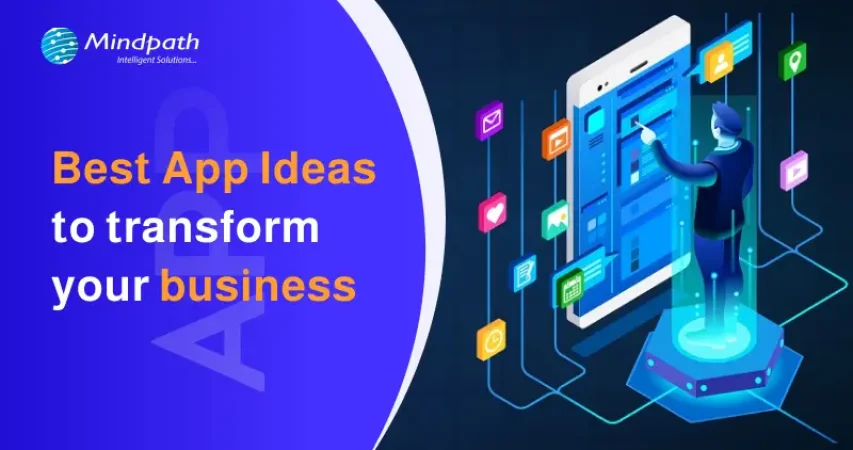
Top App Ideas to Transform Your Business in 2026

Top App Ideas to Transform Your Business in 2026

Lorem ipsum dolor sit amet, consectetur adipiscing elit. Ut elit tellus, luctus nec ullamcorper mattis, pulvinar dapibus leo.

Join our Newsletter!

Top App Ideas

Are you in search of top app ideas that can take your business to the next level? Confused about which app can be beneficial for your business? If so, you are not alone in this! Nowadays most of the business owners are turning to smart, easy-to-use apps that can boost customer engagement, simplify daily tasks, and even gain better profits. When you are looking for an app idea that can help you develop your business in 2026, choosing the right app idea can make a huge difference.

In today’s technology-enabled world, new technologies like AI, machine learning, and cloud services make it easier than ever to construct transformational apps. These apps can keep you ahead in a fast-moving market and provide the best possible service to your customers. In this blog, we have compiled a list of the best app ideas to transform your business in 2026. Each idea is based on current trends, real needs, and new opportunities for the future. 

Great ideas grow with the right technical foundation. Discover how Mindpath’s services for web and application development may help your company create cutting-edge digital products.

30 Top App Ideas to Watch in 2026

Here are the 30 best apps to make in 2026, carefully selected to reflect future business trends and user needs. They all focus on real-world problems, user experience and how to help companies to accelerate their growth in a digital-first world. 

1. E-learning App

An e-learning application allows people to learn anything, anytime, directly from their phones. An e-learning app can provide video lessons, quizzes, and tracking progress over a few different topics, such as languages, coding, or business.  

2. Expense Management App

An expense management app helps users track spending, set budgets, and stay on top of their finances with ease. It replaces messy receipts and manual tracking with simple, automated tools. This is one of the best app ideas for startups looking to offer real value and solve everyday money problems. 

3. AI Prompts Generator

An advanced AI prompt generator helps users come up with smart, goal-based prompts for writing, content creation, and planning. It adjusts to user needs, whether it’s for business, education, or personal growth, and keeps getting better with use. It’s one of those mobile app ideas that can change the world by making creativity and productivity easier for everyone.  

4. AI Image Enhancer

An AI image enhancer lets users quickly improve photo quality without needing advanced editing skills. It can sharpen details, fix colors, and upscale low-res images with just a few taps. Perfect for anyone who wants clearer, better-looking photos in less time. 

5. AI Chatbots for HRMS

An AI chatbot for HRMS makes it easy for employees to handle tasks like leave requests and timesheet updates right from their chat workspace. It connects smoothly with tools like Microsoft Teams and works with different HR systems.  

6. Eco-Friendly Commute Planner

An eco-friendly commute planner helps users find routes that are both timesaving and better for the environment. It suggests options like biking, carpooling, or public transport based on real-time traffic and emissions data. Among practical business app ideas, this one encourages greener habits while supporting corporate sustainability goals. 

7. Language Learning App

A language learning app makes it fun and simple to pick up a new language, starting with basics like the alphabet and moving up to real conversations. It can include voice features to help with pronunciation and keep learners engaged. This is one of the best trending mobile app ideas for beginners who want to build language skills step by step. 

8. Food Delivery App

A food delivery app connects users with local restaurants and food vendors for quick, tasty meals at home. It can include features like user reviews, exclusive deals, and social sharing to create a lively food-loving community. It’s a simple way to enjoy great food while supporting neighborhood businesses. 

9. Vehicle Insurance App

A vehicle insurance app helps users compare plans, get instant quotes, and manage their policies all in one place. It makes tracking renewals and paying premiums quick and stress-free. With easy claim filing and real-time updates, it keeps the whole insurance process simple and smooth. 

10. UPI Payment App

A UPI payment app lets users send and receive money instantly using just their phone, without needing cash or cards. It links multiple bank accounts and supports payments through numbers, virtual addresses, or QR codes for easy transactions. This convenience makes it one of the million-dollar app ideas transforming how people handle money every day. 

Choosing the right tools and frameworks is essential to bringing your app ideas to life effectively. Learn about the top mobile app development technologies that power innovative apps and help you stay ahead of the competition.

11. Drone Service App

A drone service app connects users with professional drone operators for tasks like aerial photography, surveying, and fast deliveries. It makes using drone technology easy and accessible for various needs. This app opens up new possibilities by bringing the power of drones right to your fingertips. 

12. Restaurant Reservation App

A restaurant reservation app lets users quickly book tables at their favorite spots without waiting. It shows availability, menus, and special deals, making dining planning easy and personalized. For restaurants, it helps manage bookings smoothly, so everyone enjoys a better experience. 

13. Customer Support Chatbot App

A customer support chatbot app helps businesses respond instantly to common questions, cutting down wait times and improving user satisfaction. With features like natural language processing and 24/7 availability, it provides reliable help anytime and can hand off complex issues to human agents. 

14. Workflow Management App

A workflow management app streamlines team collaboration by automating tasks and organizing projects. It offers features tailored to fit specific team needs, making remote work easier. With shared access and PC-friendly tools, it’s a top choice for improving business operations. 

15. Container Tracking App

A container tracking app makes it easier to keep tabs on your shipments in real time. You can see exactly where your cargo is and when it’s expected to arrive. It’s a simple way to stay organized and keep your logistics running smoothly. 

Curious how the latest tech can make tracking shipments even easier? Explore the mobile app development trends and discover the innovations transforming logistics and business apps.

16. Voice Translation App

A voice translation app can be a game-changer for anyone traveling to a country where they don’t speak the language. Just speak into your phone, and it instantly translates your words into the local language and the other way around too. It’s like having a personal translator in your pocket, making conversations abroad way less stressful. 

17. Video Editing App

With so many people posting videos on social media, a solid video editing app is a must. It helps users turn casual clips into clean, professional-looking content that actually grabs attention. Whether it’s for personal stories or product promos, this app makes polished videos super easy to create. 

18. Interior Design App

An interior design web app lets users visualize home changes with 3D tools and AR. They can place virtual furniture in real spaces for a personalized touch. It’s one of those new app ideas perfect for home makeover lovers. 

19. Fitness App

A fitness app like this makes staying healthy a lot easier by letting users track key habits and health stats in one place. With support from real experts and custom plans, it’s great for anyone looking to prevent lifestyle issues. Plus, built-in chat helps users connect with coaches and others on the same journey. 

20. AI Logo Maker

An AI logo maker allows users to generate unique and professional logos by inputting keywords, colours, and information about their industry. The AI logo maker will suggest designs quickly and to be easily customized. It is a good option for anyone looking for a sleek logo without paying a designer to create it.

Want your AI logo maker to perform flawlessly and scale with ease? Learn how the right tech stack for web app success can power your app from concept to launch.

21. Railway Tracking App

A train tracker app would give commuters real-time alerts of where the trains are on track and when they are due to arrive at their station, alleviating stress related to planning commuting journeys. It removes the guesswork of if a train is late or having any other disruptions so they can avoid waiting at the station or running around for alternative methods of transportation. 

22. Virtual Art Curator

A Virtual Art Curator application uses AI technology to develop individualized virtual art exhibitions tailored to your preferences and chosen styles. It will recognize the types of art and artists you enjoy and actively auto focus on a gallery designed specifically for your tastes and interests. 

23. Car Sharing App

When users share their vehicles and intended destination in real-time, finding rides is easy for the passenger that will be heading the same way. Passengers can connect with their driver going in the same direction and share the ride. It is a simple way to save some money and cut down on congestion by taking a trip together.  

24. Disaster Management App

A disaster management app can alert people to disasters that are happening nearby, informing them of the type of disaster and its severity to keep them safe. It can help people understand what to do during an emergency, and it can help locate people that are stranded. The app will help rescue teams by providing real-time information on damage and people requiring assistance. 

25. Doctor’s Consulting App

A doctor’s consulting app lets you easily ask questions and get answers directly from doctors. You can also stay updated with the latest medical news and research. Plus, it makes booking appointments quick and simple, all in one place. 

26. Logistics App

A goods-transporter app connects people who require swift deliveries with any nearby available vehicles. It helps to coordinate shipments with trucks that might return to the shipper empty after deliveries. It helps save time and makes it easier for everyone to transport goods. 

27. Virtual Clothes Shopping App

A virtual clothes shopping application will show users what they look and fit like, without the need to try them on physically. This saves a considerable amount of time spent changing and waiting in dressing room lines. Virtual shopping with an app is faster and more entertaining from the comfort of your home. 

28. Restaurant POS App

Using a restaurant POS app makes reserving the ideal table so easy and quick. You simply choose your favorite table and time and reserve it directly within the app. It’s a simple way to figure out a nice evening out without the hassle. 

29. Grocery Delivery App

A grocery delivery app offers users the ability to shop at their local stores and have fresh groceries delivered to their doorstep, with fast delivery times. Grocery shopping is made easy with customized shopping lists, real time inventory updates to the app, and a streamlined payment process. Users can also monitor their delivery in real time, ensuring a simple experience every time.

30. Event Management App

An event management app alleviates the stress of planning! They take care of guest lists, ticket sales, and real-time updates, all in one app. Event management apps can sync seamlessly with payment systems and social media, enabling event promotion and engagement with attendees to be easier. 

Ready to turn your app ideas into reality? Explore the Web App Development Roadmap to see step-by-step how to plan, design, and launch apps that deliver real business value.

Ready to Turn a Top App Idea into Your Business Success in 2026?

These top app ideas for 2026 offer practical ways to improve customer experience and streamline business tasks. Whether it’s AI tools, delivery apps, or event planners, each idea focuses on real needs that can help your business grow and stay competitive in a fast-changing market. 

At Mindpath, we specialize in web and application development services that bring your top app ideas to life. Our expert team creates custom, scalable solutions designed to meet your business needs and future challenges. With Mindpath, you get reliable support and cutting-edge technology to grow your business confidently. 

Frequently Asked Questions

1. How can a business decide which app is worth developing in 2026?

Businesses should evaluate market demand, customer pain points, and revenue potential. Conducting competitor analysis, surveys, and pilot testing helps identify which app concepts can deliver real value. Prioritizing apps that improve efficiency, engagement, or profitability ensures resources are used wisely.

2. What factors make an app scalable as user demand grows?

Scalable apps rely on flexible architecture, cloud infrastructure, and modular design. They should handle increased traffic, add new features without major rework, and integrate easily with other systems. Scalability ensures the app continues performing well as the business expands.

3. How can apps enhance both customer experience and operational efficiency?

Apps that automate tasks, simplify workflows, or provide real-time insights benefit both users and internal teams. For example, delivery, logistics, or expense tracking apps reduce manual effort while offering faster, smoother experiences for customers, improving satisfaction and operational efficiency simultaneously.

4. What role does technology like AI or AR play in modern business apps?

AI and AR add intelligence and interactivity, enhancing personalization and problem-solving. AI can provide recommendations, automate routine tasks, and analyze data for insights. AR improves visualization and engagement, helping users interact with products or services in innovative ways.

5. How should businesses future-proof their apps in 2026?

Future-proofing requires choosing adaptable frameworks, regular updates, and integration capabilities with emerging technologies. Monitoring user feedback, staying aligned with trends, and designing for modularity ensures apps remain relevant, flexible, and capable of supporting long-term business growth.
Support Is One Click Away

Featured Posts

Related Post

full stack development

Software development has evolved beyond the traditional approaches that required separate frontend and backend development teams. The need for full-stack development is evident in the new digital landscape, where user requirements and business goals change in an instant. Full-stack software development offers a strategic option to develop user-friendly and robust applications without paying a fortune.

With the growing competition to establish a strong digital presence, business owners must pick a reliable development approach, like full-stack. However, it is also important to learn what full-stack software development entails before embracing it. Let us discover more about the full-stack approach and how businesses can use it to develop their software applications.

Thinking of adopting full-stack development for your next project? Mindpath’s full stack development services will help you with the integration of front-end and back-end expertise that your business needs.

Understanding Full Stack Fundamentals

Full-stack has emerged as the most valuable strategy for software development that allows businesses to meet the emerging user requirements and business goals. It follows an end-to-end approach for developing software applications, involving both the frontend and backend. The answers to “What is full-stack development?” also emphasize how it can enhance cost-effectiveness, agility, and efficiency. You can understand full-stack in a better way by breaking it down into the two primary components.

1. Frontend Development

The frontend development deals with the client-side aspect of the application, or the part of the application that users see. It includes everything a user sees of an application on their smartphones or web browsers. The important elements of the frontend of an application include the design, images, layout, navigation menus, buttons, text, and anything that users can interact with.

The most important technologies for frontend development in the full-stack approach include HTML, CSS, and JavaScript. In addition, full-stack developers must also have a strong command of frontend frameworks and libraries. HTML serves as the foundation for arranging web content, while CSS helps in styling the interface by controlling fonts, layout, responsiveness, and colors.

The search for answers to “what is full-stack web development” will also help you understand the significance of JavaScript. It is a popular programming language that helps developers add dynamic and interactive elements to web pages. Most important of all, frameworks and libraries like Angular, Vue, and React simplify frontend development while empowering developers to create complex user interfaces without sacrificing responsiveness.

Planning to use full-stack development for your next web project? Before that, read about the future of full-stack development for web projects

2. Backend Development

The backend of a software application focuses on the server-side aspects of the application, which drive its functionalities. Backend development deals with logic, communication, and data storage, which work in the background and are never visible to users. The full-stack development definition describes the backend as the “brains” behind the working of an application. The backend processes requests from the frontend, interacts with databases, and sends data back to the frontend.

Backend development for a software application requires fluency in programming, backend frameworks, server management, APIs, and database management. The notable programming languages used to create backend logic include Python, Java, Ruby, Node.js, and PHP. Developers should also know how to leverage the relevant backend frameworks for each programming language. For instance, Ruby on Rails is ideal for Ruby, while Express.js is for Node.js, and Django is the best backend framework for Python.

Database management and server management are also integral requirements for full-stack developers. Backend development is incomplete without databases, as they help with the storage and management of application data. Database management may involve the use of relational databases like MySQL and SQL Server or NoSQL databases such as MongoDB. Backend development also requires an in-depth understanding of best practices for configuring and managing web servers. Another important requirement for backend development focuses on APIs that establish rules and protocols for communication between different software components.

The answer to such a question is quite obvious and points to any developer who knows frontend and backend development. One of the significant highlights in any full-stack developer definition is the proficiency in frontend and backend development technologies. On top of it, full-stack developers must be fluent in security practices and DevOps to offer productive end-to-end software development solutions. Full-stack developers know how every layer of an application works, thereby empowering them with a holistic view of the development process.

The versatility of full-stack developers makes them one of the most valuable resources for businesses in the new technological landscape. Full-stack developers can create responsive web layouts, implement database integration, manage testing and debugging, and write server-side logic. On top of it, they also work in collaboration with UI/UX designers and other teams to develop efficient applications.

Understanding the differences between front-end, back-end, and full-stack developers is key to building an effective development team. Learn more about the distinct responsibilities of each developer in our blog: Front-end vs Back-end vs Full-stack developer

Workflow of Full Stack Development

The definition of full-stack indicates that combining frontend and backend development can serve promising advantages for businesses. At the same time, it is also important to wonder about the workflow in full-stack projects. Where does full-stack begin, and how does it integrate frontend and backend development in a single workflow? You can find the answer by reflecting on the full stack definition once again, by focusing on the end-to-end aspect of the process.

Full-stack developers begin with the planning stage and end with the deployment and maintenance stage. The following steps in the full-stack workflow can help you understand how the holistic approach blends the traditionally different sides of software development.

1. Planning

The first step in the full-stack workflow involves planning and identifying essential features and technical specifications for the application. Full-stack developers collect information about essential requirements and understand the scope of the project. The developers also collaborate with different stakeholders to come up with an outline of the features desired in the application and its technical specifications.

2. Frontend Development

After finalizing the design, the next step in full-stack development focuses on the frontend of the application. The frontend development starts with a definition of the project structure and selecting the relevant technologies like HTML and CSS. The full-stack developer will implement the user interface in this step while ensuring accessibility and responsiveness.

At the same time, developers must ensure that the frontend complies with important design guidelines. The other crucial tasks in the frontend development stage include the creation of reusable components and the integration of backend APIs to fetch and display data.

3. Backend Development

The next step in the full-stack software development workflow focuses on backend development and integration of the backend logic with the frontend. Developers can create the backend of a full-stack application with server-side scripting languages like Python, Node.js, or Ruby. In addition, developers also employ the relevant database management system for the application according to its requirements.

Apart from creating and implementing the server-side logic, full-stack developers also create RESTful APIs and address data management needs. The backend development stage also calls for attention to the security and scalability of applications. Therefore, developers have to implement comprehensive authentication and authorization mechanisms and follow the best practices for data validation.

4. Testing

Before launching the application, full-stack developers will implement comprehensive testing plans to find errors and bugs. Developers have to define unit tests, end-to-end tests, functional tests, and integration tests to measure the utility of the application in different scenarios. Writing the tests in the early stages of development helps in creating applications that align with the desired goals and requirements of features. It also ensures that the application is easy to maintain, reliable, and adheres to the desired specifications.

Following the testing process, developers work to achieve seamless integration of frontend and backend components. The process involves establishing communication between the frontend and backend with uninterrupted data flow and error management. Full-stack developers rely on testing on a wide range of devices, scenarios, and browsers to identify and resolve performance issues. As a result, they can ensure easier integration of frontend and backend components without conflicts.

5. Deployment and Maintenance

The final stage in the full-stack workflow or deployment focuses on preparing the application for the production stage. The deployment stage involves the configuration of essential server environments and setting up continuous integration and continuous deployment pipelines with DevOps. Full-stack developers must also ensure that the application has been optimized for production in the deployment stage.

Some of the important requirements for deploying a full-stack web application include database migration, scaling to adapt to the user traffic, and server provisioning. Once the deployment is complete, developers monitor the application performance to identify any anomalies. If they find any issues, then developers will address them, followed by providing continuous maintenance and updates.

Hiring the right talent can make or break your MVP. Learn why hiring a Full-Stack Developer for MVP Success can make your product development faster and more efficient

Popular Technology Stacks for the Full Stack Developer

The doubts of a business owner before adopting the full-stack approach also focus on the choice of technology stack. Technology stacks refer to the combinations of technologies used by full-stack developers to create software applications. You must also know that the full-stack developer’s salary depends a lot on the candidate’s fluency in different stacks.

The most popular technology stack alternatives include MERN, MEAN, LAMP, LEMP, and Python-based stacks. Each stack features distinct technologies serving different roles in the development cycle.

1. MERN

The MERN stack represents the combination of MongoDB, Express.js, React.js, and Node.js. MongoDB serves as the NoSQL database while React.js offers the frontend development library. Node.js works as the JavaScript runtime for the backend, and Express.js is the relevant backend framework for it. Developers can work with a single programming language as all components in the MERN stack are JavaScript-based.

2. MEAN

The MEAN stack includes similar components to the MERN stack, albeit with the exception of the Angular framework for frontend development. It is a popular choice for full-stack web solutions due to Angular, which offers a more structured framework for frontend development. At the same time, developers can capitalize on the advantages of working with a complete JavaScript ecosystem in the MEAN stack.

3. LAMP and LEMP

The LAMP tech stack includes Linux as the operating system, Apache as the web server, PHP as the server-side programming language, and MySQL as the relational database. It is a traditional tech stack, implemented in content management systems such as WordPress. The LEMP stack is similar to LAMP, albeit with a different web server, Nginx, which offers high performance and efficient management of concurrent connections.

4. Python-based Stacks

Python is also one of the most popular server-side programming languages for its readability. The effectiveness of full-stack development with Python also depends on its comprehensive collection of libraries and strong community. Python-based stacks can use different Python web frameworks, frontend frameworks, and relational databases, depending on the project requirements. The common choices for Python web frameworks include Django and Flask, while frontend framework choices include React and Angular.

Looking to reduce time and costs, and take full advantage of full-stack expertise. Discover how Mastering Full-Stack Development with Node.js can help businesses in streamlining workflows as well as boost project ROI.

How Does Full Stack Help Your Business?

As a business owner, you might wonder if full-stack is an effective approach to software development. Businesses can capitalize on the full-stack development benefits to get best outcomes for their businesses.

1. Faster and Efficient Development

The most promising advantage of full-stack software development is the speed of development. It reduces the dependencies between isolated frontend and backend development teams as a single developer takes responsibility for multiple aspects of the project. Full-stack developers can achieve faster iterations, release features quickly, and ensure faster time to market for new products, services, and updates.

2. Cost Savings

The next notable highlight in full-stack developer skills is the ability to offer the services of frontend and backend developers, along with database specialists, in one package. Businesses don’t have to hire different professionals for these roles, which reduces the costs of recruitment, onboarding, and other operational costs.

3. Flexibility and Consistency

Another promising advantage of working with full-stack developers is the assurance of flexibility in agile environments that demand rapid changes. Full-stack developers will quickly adapt to address the requirement of urgent attention to specific areas of an application. On top of it, the unified and consistent architecture ensures easier integration between the frontend and backend components without compatibility issues.

Want to accelerate your development process? Explore how a freelance full-stack developer can create interactive user interfaces and oversee deployment and maintenance.

Ready to Build Smarter, Faster Applications With Full Stack Development?

The value of full-stack development for any business is about following a holistic approach to software development. The unique approach not only reduces costs but also provides a solution to avoid delays and deliver the best user experiences in applications. With the support of a full-stack developer, your business can navigate through the complexities of the digital landscape with ease.

We at Mindpath specialize in end-to-end software development and have helped clients create intuitive applications in different industries. Our commitment to deliver the best results stems from our ability to understand the client’s requirements and identify the best resources for their projects. Contact us to figure out the ideal course for your next software development project.

Frequently Asked Questions

1. What is full stack development and how does it actually differ from traditional development approaches?

Traditional development separates frontend and backend responsibilities across different specialists, creating dependency bottlenecks and communication gaps. Full stack development consolidates both into a single workflow, where one developer handles everything from user interface design to server-side logic and database management. This unified approach accelerates delivery timelines and reduces coordination overhead considerably.

2. When does hiring a full stack developer make more financial sense than building separate teams?

For startups, MVPs, and mid-sized projects where budget efficiency matters most. A single full stack developer replacing multiple specialists reduces recruitment, onboarding, and operational costs significantly. Larger enterprises with highly complex, specialized requirements may still benefit from dedicated teams, but most growing businesses find full stack development delivers stronger value for money.

3. Which technology stack should a business choose for a new web application in 2026?

It depends entirely on project requirements, team expertise, and scalability goals. MERN suits JavaScript-heavy, dynamic applications well. LAMP remains reliable for content management systems. Python-based stacks excel in data-driven or AI-integrated applications. Choosing a stack based purely on popularity rather than actual project fit frequently creates unnecessary technical complications later in development.

4. How does full stack development handle the testing and quality assurance process?

Full stack developers implement testing across all application layers, covering unit tests, integration tests, functional tests, and end-to-end tests simultaneously. Writing tests during early development stages rather than after completion ensures applications meet requirements consistently and remain maintainable. This comprehensive approach catches cross-layer compatibility issues that separate frontend and backend testing processes often miss entirely.

5. Does full stack development actually compromise quality by spreading one developer across too many responsibilities?

Not when the developer has genuine depth across both frontend and backend disciplines. The holistic perspective full stack developers bring often improves architectural consistency and reduces integration conflicts. For very large-scale applications requiring deep specialization in multiple areas simultaneously, dedicated specialists complement full stack developers effectively without abandoning the core efficiency benefits entirely.

chatbots in education

The education industry is evolving and the dominance of AI in the sector will serve as a primary reason for inducing transformation on a large scale. One of the notable applications of AI in education that often goes unnoticed is the use of chatbots. The blend of artificial intelligence and education aims to make learning more productive and chatbots are the perfect example of the same. Students, educators and institutions can rely on modern educational chatbots for their adaptive nature and intelligent capabilities. Let us learn about the top ten real-world examples of chatbots that have been revolutionizing education.

Planning to transform student experiences with intelligent chatbots? With Mindpath’s AI development services, you can design and implement tailored tools that make learning smarter and more personalized.

Impact of Chatbots on Education

Conversational AI is responsible for changing the viewpoint of many people about accessibility of AI technologies. Imagine talking to an AI tool and finding solutions to a problem in your mathematics textbook. Conversational AI chatbots are the best example of tools which can interact with users in natural language. The use of chatbots in education involves the combination of machine learning and natural language processing to understand student queries and provide relevant answers. The core strength of chatbots revolves around offering instant assistance personalized at scale for each user.

Chatbots offer better results than human support, primarily due to their round-the-clock availability. Student can get support and relevant information whenever required from chatbots, thereby reducing delays. Chatbots analyze the data of individual students and adapt their content recommendations in a way that helps students with personalized learning. Educators can use chatbots to craft interactive quizzes and provide instant feedback to learners. At the same time, chatbots also reduce the administrative burden on teachers and allow them to focus on more complex tasks.

Want to understand how chatbots can improve learning experiences? Check out the benefits of chatbots to learn how they enhance engagement and efficiency.

Discovering the Top Ten AI Chatbots for the Education Sector

AI chatbots are the most innovative tools in the domain of education with a wide range of benefits. Chatbots can not only provide instant support and personalized learning experiences to students but also empowers teachers with resources to become more productive. The rising popularity of educational chatbot applications has drawn the limelight towards their transformative impact on classroom and online learning. The following AI chatbot examples being used in education will showcase their significance for the long-term growth of the industry.

1. Socratic

One of the most notable additions among AI chatbots used in the field of education is Socratic. Created by Google, Socratic is a chatbot that helps in breaking down complex academic questions and offers easily comprehensible explanations. The core strength of Socratic as an education chatbot is in the step-by-step solutions offered for problems in different subjects like mathematics, literature and science. It also adds visual aids and diagrams in its answers to provide easier explanation for abstract concepts alongside recommending online resources, articles and videos for better understanding of learners.

2. Zendesk Chat

Zendesk Chat is also a popular AI chatbot solution for higher education institutions. It is useful for managing queries, enhancing student engagement and providing responsive support. Zendesk Chat is one of the best examples of chatbots for higher educational institutions with its distinctive features. For instance, Zendesk Chat supports seamless integration with different CRM systems, thereby empowering educators to monitor conversations and evaluate engagement data. As a multilingual chatbot, Zendesk Chat can enhance student engagement even with presence of diverse groups.

3. IBM Watson

The IBM Watson Assistant is another example of using an AI chatbot for education, especially in higher education. The chatbot by one of the leading tech giants offers highly customizable tools to enhance student engagement and streamline communication. It also supports CRM integration to ensure cohesive support across different platforms. IBM Watson uses advanced natural language processing to provide nuanced answers to complex student queries. Furthermore, IBM Watson also uses an adaptive learning model that helps it evolve with student interactions.

4. Microsoft Copilot

The list of chatbots used in the field of education will be incomplete without including Microsoft Copilot. Learners and educators can access the functionalities of this intelligent assistant in the complete Microsoft suite of products. Copilot is one of the best chatbot examples that can help students in creating compelling presentations and essays alongside refining the content with insightful recommendations. Another notable application of Copilot in education focuses on quick summaries of web pages or documents.

5. Pounce

Another example of innovative chatbots in the domain of education is Pounce. It has been created by the Georgia State University to address the problems of declining enrollment. The chatbot helps in sending timely reminders and notifications about important deadlines, orientation details and steps to obtain financial aid. Pounce also offers personalized outreach by interacting with every student to ensure that they complete the enrolment process.

Want to understand how AI can enhance workflows and decision-making? Check out AI consulting to learn how expert guidance helps implement AI solutions effectively.

6. MATHiaU

Carnegie Learning has come up with MATHiaU, as a dedicated AI chatbot to teach mathematics. It leverages AI to create personalized learning paths for university students while adjusting the difficulty of content according to real-time student performance. MATHiaU serves step-by-step guidance that can help students overcome their doubts without feeling overwhelmed. Most important of all, the chatbot can recognize specific learning gaps and offer suggestions to address the setbacks.

7. Ivy.ai

Ivy.ai also deserves a place in this list of AI chatbots, especially for its emphasis on higher education institutions. As a matter of fact, it is one of the top education chatbot examples that have achieved promising results in enhancing student engagement. The chatbot can handle different types of queries, ranging from admission to the financial aid processes. Students can also rely on Ivy.ai for access to campus information, such as details about events and facilities.

8. Cara

Cara is another example of AI chatbots developed by educational institutions to address longstanding problems. It is a chatbot tailored for offering administrative support to the students of the University of Galway. Cara helps in addressing a wide range of administrative questions with quick and relevant answers. Cara reduces the administrative burden on the university staff by handling routine questions effectively. The introduction of Cara has led to enhancements in student satisfaction and engagement while allowing educators to focus on more complex tasks.

9. Duolingo

Duolingo is one of the top examples of “how are chatbots used in education” for its ability to help students gain fluency in new languages. It will serve as a huge catalyst for breaking down the language barriers in education. Duolingo offers a safe environment for students to learn how to speak and write in a new language with confidence. The instant feedback on pronunciation, vocabulary and grammar offers ideal prospects for immediate correction of mistakes.

10. Querium

The final addition among the top AI chatbots for enhancing education is Querium. It is an AI-powered platform created for promoting STEM education through comprehensive, step-by-step guidance to solve problems. The strength of Querium revolves around helping students find solutions to complex STEM problems with detailed explanations. Another special feature of Querium is concept reinforcement, in which it connects problems to the underlying theoretical concepts for better understanding.

Curious how AI-powered chatbots help generate more qualified leads? Discover lead generation chatbot to check out strategies for increasing conversions.

Final Thoughts

The advantages of chatbot in education can provide a completely new direction to the experience of students, educators and institutions. You can notice how each chatbot in this list offers diverse benefits such as personalized content creation, automated administration or student performance monitoring. As the AI landscape expands, you can expect more chatbots to make an impact on the education sector. Mindpath helps you leverage AI development services to create custom chatbots and intelligent learning tools tailored to your educational needs.

Node.js for eCommerce

Imagine an eCommerce platform that’s fast, scalable, and delivers real-time updates without slowing down. In 2026, Node.js makes that possible. Choosing the right technology is key to building a successful online store. It impacts your website’s speed, user experience, payment processing, inventory management, and overall performance.

With its speed, scalability, and flexibility, Node.js has become a top choice for modern eCommerce businesses. In this blog, we’ll explore why Node.js is the ideal technology for building high-performing eCommerce platforms in 2026.

Want to build fast, scalable, and high-performing web applications that fuel business growth? At Mindpath, we offer Node.js development services to create secure, custom solutions designed around your unique business goals.

Benefits of Using Node.js for eCommerce

1. Speed and Performance

Node.js is fast due to the V8 engine it runs on. This engine turns JavaScript right into machine code, making it work way quicker than other languages that need to be interpreted. Node.js handles multiple requests simultaneously without any performance issues because it is an event-driven and non-blocking I/O model. This means that, even while your eCommerce site is very busy with a lot of traffic, Node.js manages to keep response times fast.

2. Scalability

Node.js can process many requests quickly because it has a non-blocking I/O model and a single-threaded event loop. Its modular architecture makes it simple to scale up by adding more servers or increasing server capacity. Because of its adaptability, you can increase the capacity of a Node.js server or add more servers to handle increased traffic, allowing your eCommerce platform to expand without interruption.

3. Large Community

Node.js has an incredible and active developer community that provides assistance, resources, and tools. A wide range of packages and modules are available in this active community to assist you in creating dependable and effective eCommerce solutions. It’s simpler to solve issues and stay up to date with the most recent advancements with such broad assistance and an expanding collection of materials. This implies that Node.js can help you create and manage your eCommerce platform more successfully.

4. Modular Approach

Ecommerce systems handle a large amount of data, which can make code management tough but Node.js’ modular approach simplifies this. This strategy allows developers to divide down code into smaller, more manageable chunks or modules. Node.js facilitates the efficient development, maintenance, and testing of your eCommerce application by organizing code into functional blocks.

5. Integration with Other Technologies

Node.js integrates effectively with a variety of technologies, making it a versatile option for developing eCommerce apps. It seamlessly interfaces with front-end frameworks, databases, and other programming languages. This compatibility enables you to link your eCommerce platform to important services such as payment systems and third-party integrations. You may use Node.js’ capabilities to build strong, efficient, and scalable eCommerce solutions that fit your company’s and customers’ demands.

Best Practices for Building an Ecommerce Platform with Node.js

1. Choose a Reliable Node.js E-commerce Engine

Choosing the right Node.js eCommerce engine is the first step in building a successful online store. It provides essential features like product and order management, payment processing, and customer management, making development faster and easier. With the core functionality already in place, developers can focus on adding custom features and creating a better shopping experience.

2. Consider a Modular Approach

A modular approach makes Node.js eCommerce development more efficient and easier to manage. By breaking the application into small, independent modules, developers can fix issues faster, work on multiple features simultaneously, and update one part without affecting the rest. Frameworks like Express.js and Nest.js further simplify this process, helping you build a scalable and maintainable eCommerce platform.

3. Integrations

Modern integrations are essential for building a seamless Node.js eCommerce platform. APIs connect your store with services like payment gateways, shipping providers, and CRM tools, while webhooks enable real-time updates between systems. For example, Stripe handles secure payments and payment events, while Twilio powers SMS notifications. Together, APIs and webhooks create a faster, more connected shopping experience.

4. Frontend Development

The frontend plays a key role in the success of an eCommerce website. Modern technologies like Jamstack help create fast, secure, and engaging shopping experiences. By combining JavaScript, APIs, and pre-built pages, Jamstack improves loading speed, enhances security, and easily integrates with services like payment gateways and shipping providers.

5. Implement Security Measures

Security is essential for any eCommerce platform, as it protects customer data, payment information, and your business from cyber threats. Secure your server, use HTTPS to encrypt data, implement strong authentication and role-based access, and protect against vulnerabilities like XSS and SQL injection. Regular software updates, security audits, and testing also help keep your platform safe and build customer trust.

Node.js Development Services at Mindpath

1. Node.js Web App Development

We create powerful, scalable web applications using Node.js. Our focus is on delivering a seamless digital experience that aligns with your business goals and makes a lasting impact.

2. Node.js CMS Development

We design custom content management systems that make handling your content easy. Our CMS solutions provide a user-friendly interface for managing all your content effortlessly.

3. Node.js API Development

We build robust APIs that enable smooth integration with other systems. Our APIs enhance functionality and ensure reliable communication between different applications.

4. Node.js Consulting Services

We offer expert advice to help you maximize the potential of Node.js for your projects. Our consulting services include strategic guidance and technical insights to boost your application’s performance and innovation.

5. Node.js Maintenance & Support

We provide ongoing maintenance and support to keep your applications running smoothly. Our team is always ready to resolve any issues and make continuous improvements.

6. Node.js Migration Services

We assist in migrating your existing applications to Node.js, improving scalability and performance. Our migration services ensure a smooth transition with minimal disruption.

Conclusion

In 2026, Node.js remains a leading choice for building fast, scalable, and high-performing eCommerce platforms. Its ability to handle heavy traffic, real-time updates, and seamless integrations makes it ideal for delivering a smooth shopping experience and supporting business growth.

At Mindpath, we specialize in building custom Node.js eCommerce solutions tailored to your business needs. From web app development and CMS solutions to API integration, migration, and ongoing support, our team helps you create secure, scalable, and future-ready online stores.

Discover the top Node.js trends shaping digital technology in 2024, from AI and TypeScript to IoT and cloud computing. Explore how Node.js drives innovation!