From Chatbots to Agentic AI: Why Your SMB Needs to Make the Switch in 2026 

Home

From Chatbots to Agentic AI: Why Your SMB Needs to Make the Switch in 2026 

From Chatbots to Agentic AI: Why Your SMB Needs to Make the Switch in 2026 

Join our Newsletter!

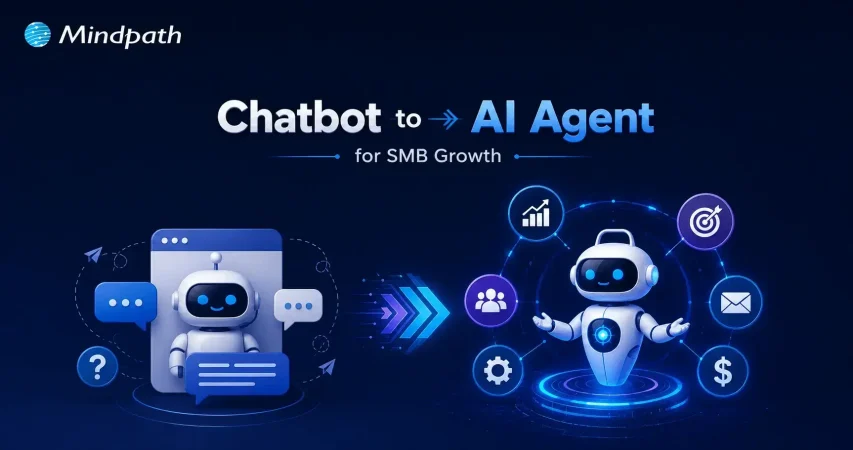
Chatbots to Agentic AI

Businesses today move fast. Customer expectations move even faster. The old model of deploying a simple chatbot to handle FAQs and call it “AI adoption” no longer cuts it in 2026. The real shift happening right now is the leap from chatbots to agentic AI, and it is reshaping how small and mid-sized businesses operate, compete, and grow. This is no longer a futuristic concept. It is an active, measurable business decision.

Key Takeaways

  • 01
    Agentic AI executes complete workflows autonomously, while chatbots only answer questions.
  • 02
    SMBs adopting agentic AI gain a measurable competitive edge over slower-moving peers.
  • 03
    Agents integrate directly with your existing tools, eliminating manual hand-offs entirely.
  • 04
    No-code platforms make agentic AI deployment accessible for non-technical SMB founders today.
  • 05
    Starting with one repetitive task is the smartest and fastest path to implementation.

So, think about this for a moment. Your competitors are not just automating conversations anymore. They are automating decisions, workflows, and outcomes. Agentic AI does not wait for instructions at every step. It reasons, plans, and acts autonomously across your entire business stack. SMBs that recognize this shift early will set the pace. Those that wait will spend the next few years catching up. In this blog, we break down exactly what this transition means, why it matters deeply for your business, and how you can start making it work today.

Looking to move beyond basic chatbots? Our AI development services help businesses build intelligent AI agents that deliver real business value.

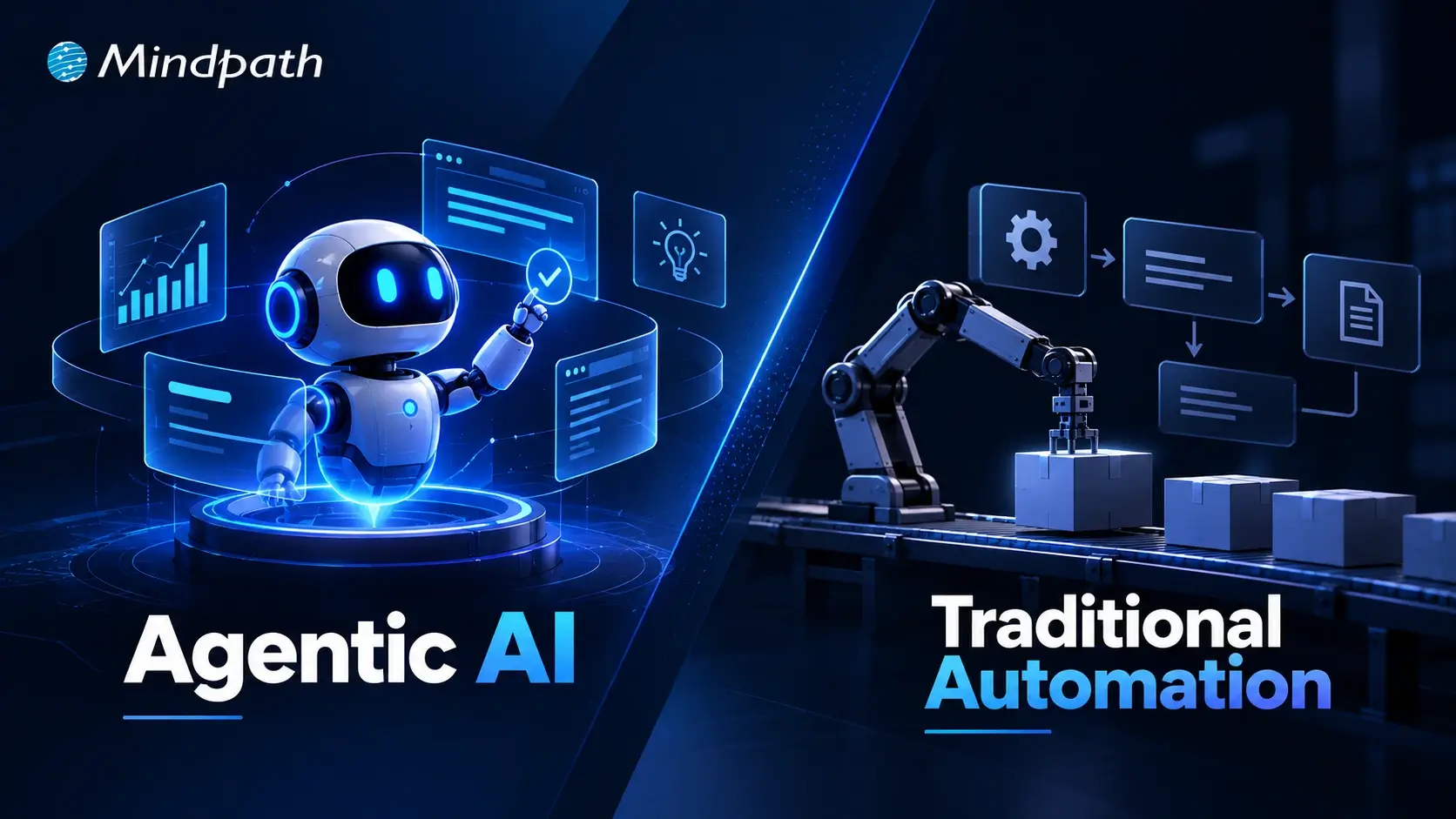
How Does Agentic AI Differ from a Chatbot?

A chatbot is a rule-based conversational tool. It responds to queries, retrieves information, and operates within predefined boundaries. Agentic AI is an autonomous intelligence system. It receives a high-level goal, reasons through complexity, and executes multi-step tasks across tools, APIs, and workflows independently.

Consequently, the evolution from chatbots to agentic AI represents a fundamental shift in capability. A chatbot delivers an answer. An agent delivers an outcome. It plans, decides, coordinates across systems, and completes entire business processes without requiring human intervention at each step.

Let’s have a glance at the key difference through this table:

Category  Agentic AI  Chatbot 
Primary Purpose Works toward a goal and completes tasks from start to finish. Answers questions and responds to user messages.
Autonomy Can make decisions, plan actions, and work with minimal human input. Requires continuous user prompts and instructions.
Task Execution Handles complex, multi-step workflows and can adapt when situations change. Typically manages simple conversations or predefined tasks.
Tool & System Access Uses APIs, databases, business software, browsers, and other tools to perform actions. Mostly provides information; limited ability to take real actions.
Memory & Context Maintains task history, user preferences, and long-term context across interactions. Usually remembers only the current conversation session.
Outcome Delivers completed results (e.g., creates reports, books meetings, processes requests). Delivers responses, suggestions, or information only.

Why are SMBs Choosing Agentic AI Over Traditional Chatbots in 2026?

SMBs are not adopting agentic AI out of curiosity. They are doing it because the gap between a chatbot to AI agent is now a gap between falling behind and staying competitive. The business case is clear, measurable, and growing stronger every quarter. Here are the reasons why SMBs are making the switch right now.

1. Always-On Execution

Agentic AI operates continuously across time zones without failing. It handles complex, multi-threaded tasks around the clock, functioning truly as a 24/7 digital employee for your business.

2. End-to-End Automation

Unlike AI chatbots for customer service that stop at answering queries, agents take direct action. One agent can check inventory, process a return, and update your CRM automatically without a single human hand-off.

3. Autonomous Problem Solving

Agents use a built-in reasoning layer to break high-level goals into actionable steps. They analyze context in real time and respond decisively without waiting for human instruction at every turn.

4. Deep System Integration

Agents connect directly via API to your existing tech stack, including Slack, Google Drive, and inventory systems. They pull data, update records, and execute changes securely across your entire business infrastructure.

5. Real Cost Savings

Running an agentic workflow costs a fraction of a full-time employee’s salary. SMBs consistently recover significant operating capital monthly while eliminating the inefficiencies tied to manual staff time.

6. Dynamic Adaptability

Traditional chatbot flows break the moment a variable changes. The shift from chatbots to agentic AI means your system now adapts in real time, handles ambiguity, and course-corrects when processes go wrong.

7. No-Code Deployment

Advanced no-code platforms allow non-technical SMB founders to build and launch role-specialized agents quickly. You do not need a large in-house IT team to start seeing immediate, measurable value.

8. Scalability Without Hiring

Agentic workflows allow SMBs to handle sudden spikes in traffic or rapid business expansion confidently. You scale operations without the immediate pressure to hire, onboard, and train new employees.

Must-Know Insights on SMBs Using AI

  • Over 75% of SMBs actively use or experiment with AI today.
  • 97% of SMBs using voice AI agents report direct revenue increases.
  • Gartner predicts 25% of all IT work will run on AI agents by 2030.
  • 91% of SMBs adopting AI report measurable revenue gains consistently.
  • Growing SMBs lead AI adoption at 83%, far ahead of stagnant peers.

How to Transition Your SMB from a Chatbot to Agentic AI in 2026?

Making the switch sounds complex, but it does not have to be. Most SMBs already have the tools and workflows needed to start deploying conversational AI agents today. Here is exactly how you move from intention to implementation.

1. Start Small

Identify one high-value, repetitive task your team handles manually every day. Build your first agent around that single workflow before expanding further.

2. Map the Workflow

Write down every trigger, system, and decision rule a human follows to complete the task. This plain-language process becomes the core instruction set for your agent.

3. Connect Your Stack

A customer service agentic AI chatbot without tool access is simply a smarter chatbot. Equip your agent with API connections to the software your team already uses daily.

4. Set Human Guardrails

Identify every point in the workflow where an agent mistake would carry significant cost. Program the agent to pause and request human approval at each of those critical steps.

5. Pick Your Platform

The transition from chatbots to agentic AI no longer requires a large technical team. Explore no-code and low-code visual builder platforms to design and deploy workflows without writing a single line of code.

Is Your Business Ready to Move Beyond the Chatbot?

The shift from chatbots to agentic AI is not a distant trend. It is happening right now, and SMBs that act early will hold a serious competitive edge. The technology is accessible, the results are proven, and the window to move first is still open.

At Mindpath, we provide AI development services that help SMBs make this transition confidently. We build, integrate, and deploy agentic solutions tailored to your exact business needs. Let us help you move from conversation to action, starting today.
Frequently Asked Questions

Q1. Are chatbots still worth using in 2026?

Chatbots still serve a purpose for simple, single-step queries. However, businesses that rely solely on them are leaving significant efficiency gains on the table. The real value today sits in tools that go beyond answering and start executing.

Q2. How long does it take an SMB to transition from chatbots to agentic AI?

The timeline depends on workflow complexity and platform choice. With no-code builder tools, most SMBs deploy their first working agent within a few weeks. Starting with one focused use case significantly shortens the transition period.

Q3. Does agentic AI require technical expertise to manage?

Not anymore. Modern no-code and low-code platforms allow non-technical founders and managers to build, deploy, and monitor agents independently. The barrier to entry has dropped considerably, making adoption realistic for SMBs of every size.

Q4. What business functions benefit most from agentic AI?

Customer support, lead qualification, inventory management, and marketing automation deliver the strongest early results. These functions involve repetitive, multi-step workflows that agents handle faster, more accurately, and at a fraction of the operational cost.

Q5. Is the shift from chatbots to agentic AI expensive for small businesses?

The initial investment varies by platform and complexity. However, most SMBs recover costs quickly through reduced manual hours and improved operational output. The long-term savings consistently outweigh the upfront deployment investment by a significant margin.

Related Post

Web development trends

The landscape of web development is evolving faster than ever. What was an innovation just a few years ago is now obsolete. Developers and businesses should stay ahead of the curve to remain relevant and competitive. From decentralized technology to AI-powered automation, the latest web development trends are redefining how web apps and websites are developed and optimized. 

These trends do not just revolve around making technical upgrades. They involve strategic shifts that influence digital growth and user experience. By embracing these advancements early, you can enjoy a decisive edge in this competitive digital world. Following a well-structured web development roadmap can help you prioritize the right technologies, tools, and methodologies for maximum impact.

In this blog, we will talk about some major trends in web development processes, methodologies, and tools that are constantly transforming this landscape. 

Using these trends in your business requires expert guidance. At Mindpath, we offer web development services where our guidance will provide you with the direction you need to stay ahead of the competition.

The New Era of Web Development

Web development is now entering a transformative era, significantly driven by user-centric designs and technological innovations. In the future, we can expect to see faster, personalized, and smarter websites.

Besides, the demand for Progressive Web Apps will increase as these apps provide users with an app-like experience without downloading an app. What’s more? With machine learning and IoT widely integrated into websites, the web will evolve into a more responsive, intelligent, and interactive ecosystem. 

Let’s further explore the top web development trends that are shaping the next generation of digital experience.  

Top Web Development Trends 2026

As we move deeper into 2026, here are some trends that are reshaping how web applications and websites are built and deployed. These innovations enhance scalability, performance and align with increasing demand for transparency, security and personalization.

1. Code Will Become Optional: AI-Assisted Development

In 2026, AI-powered web development tools will streamline multiple tasks, from code creation to UX enhancement. Platforms such as OpenAI Codex, GitHub Copilot, Tabnine, and more help developers by suggesting improvements, writing boilerplate code, debugging, and more. 

Besides, web application development trends in 2026 include predictive analytics, AI-assisted personalization, intelligent chatbots, etc. Such intelligent capabilities have become integral to modern web development projects with source code, reducing development time and enhancing user engagement. 

2. The Rise of Jamstack Architecture

Jamstack (which combines JavaScript, APIs, and Markup) has become one of the most popular web development technologies. This modern architecture decouples the front-end from the back-end. It leads to improved security, better scalability, as well as faster load times. For marketing pages, e-commerce sites, and content-heavy platforms, Jamstack would be an excellent choice 

3. Blockchain Technology

Blockchain is here to facilitate continuous flows of records and transactions, called blocks. This technology is cryptographically secure and records every transaction in a tamper-proof and transparent manner.  

Web developers can use this to create high-performance, decentralized applications that eliminate centralized control and intermediaries. 

4. Progressive Web Apps

By combining the features and functionalities of native mobile apps and websites, PWAs are changing the web development process. These apps offer an app-like experience while being cost-effective and accessible. 

A report indicates that the global PWA market is projected to grow from USD 1.9 billion in 2014 to USD 9.7 billion by the end of 2034 (Source: Emergen Research). This clearly shows the rising adoption of PWAs by businesses.

5. Machine Learning in Browsers

Thanks to the latest web development technologies like TensorFlow.js and WebAssembly, web developers can easily run various machine learning models in browsers. This facilitates voice recognition, real-time personalization, predictive UX, and more. It is now possible to create privacy-conscious and faster applications that can adapt to user behaviour. 

Are your web apps providing the best possible experience for users? Discover UI/UX design trends in web application development to learn how modern design trends can enhance usability and engagement.

6. Micro-Frontends

It breaks down the complete UI into manageable, smaller components. This modular approach significantly enhances scalability and facilitates parallel development. This can be an excellent solution for large-scale development projects. 

7. No-Code and Low-Code Platforms

Low-code development is getting popular among developers. Platforms such as Bubble, OutSystems, and Webflow let non-technical users create functional websites with minimal coding. It reduces costs and accelerates prototyping. Low-code or no-code development is one of the impactful dev trends in 2026 for small businesses and startups.  

8. Single Page Applications

These web apps are created as a single page, and they can dynamically update content in real-time. SPAs help reduce costs, and businesses can use cloud technology to attain scalability. Some examples of popular SPAs are Google Maps, Facebook, Airbnb, Twitter, and Netflix. 

9. WebRTC Advancements

WebRTC is a major technical advancement in the field of web app development. It is an open-source technology and uses HTML and JavaScript APIs to add communication features to browsers. There is no need to use any external software or plugins.

With the help of RTCPeerConnection, RTCDataChannel, and MediaStream, it enables peer-to-peer data, video, and audio sharing. 

10. Edge Computing

It refers to the processing of data closer to the source instead of depending on centralized data centers. It reduces latency, improves privacy and performance while helping businesses to keep costs low. 

Edge computing is becoming significantly crucial for business, and it is estimated that by 2028, it will reach USD 378 billion (Source: IDC Research). 

Choosing the right technologies is crucial for building a high-performing web app. Explore the tech stack for your web app success to discover the best tools and frameworks for your project.

11. Motion UI Frameworks

These frameworks help bring a static interface to life by integrating optimized transitions and animations. For example, Animate.css offers ready-to-use animations that are compatible with multiple browsers. It is a great option for sliders and home pages. 

You can implement animations that are not just visually appealing but also serve functional purposes, such as highlighting vital information, guiding visitors through a certain process, etc. 

12. Adaptive and Responsive Design

Web development trends in 2026 also include the wide use of adaptive designs. With wearables and foldable devices entering the mainstream, adaptive design is now evolving. Developers are prioritizing gesture optimization, context-centric layouts, and device-specific breakpoints. 

This shift is central to modern web development trends, ensuring a consistent user interface across screens and devices. 

13. Server-Driven UI

It enables servers to identify the behaviour and structure of the front-end for dynamic content rendering and quick updates. It transmits JSON-based instructions to the frontend and controls the UI layouts.

This development approach allows faster deployment, seamless CMS integration, personalization, and cross-platform consistency. It is a strategic shift in today’s web development trends.

14. Data-Driven UX and Real-Time Analytics

Developers are now integrating session recording, heatmaps, real-time user behaviour tracking, and more for design decisions. This approach reduces guesswork and assumptions while enhancing user satisfaction. 

Product metrics, email analytics, Google Analytics, and social media analytics are some commonly used analytics tools to get important quantitative data. This approach aligns with new web development trends and can also boost conversion rates. 

15. AI-Assisted SEO Optimization

With search engines, SEO is also evolving. AI tools are now helping with content scoring, meta tag generation, keyword clustering, and improving internal linking. 

For developers and content strategists, it means better alignment with user needs and faster optimization cycles. 

Looking to build a website that drives engagement and conversions? Explore web design and development services to discover how professional design and development make an impact.

Latest Web Development Languages for 2026

Staying updated with the Latest Web Development Languages is also important to create future-proof and scalable web applications. Here are some key languages that cater to frontend as well as backend needs.

1. JavaScript

The backbone of front-end development, and it helps create interactive and dynamic user interfaces. 

2. TypeScript

An ideal option for large-scale projects due to its error reduction and maintainability. 

3. Go

Also called Golang, it is popular for its concurrency and speed. It is widely used for websites requiring high performance. 

4. PHP

A dominating language for server-side scripting. Frameworks such as Laravel are modernizing PHP development.

5. Rust

Well-known for performance and memory safety, Rust works well for secure backend systems and web assembly projects. 

Want a web application built to match your workflow perfectly? Discover our custom web development services to learn how we create bespoke digital experiences.

Dev Trends to Watch in 2026

In 2026, the application development trends cover CI/CD automation, AI coding, and more. Here are some major dev trends you should consider. 

1. Mico Frontends

Dividing user interfaces into independently-deployed, smaller parts with an aim to achieve flexibility, collaboration, and scalability. 

2. AI-Assisted Coding

Smart testing tools and code generation tools powered by AI are simplifying workflows. 

3. CI/CD Pipelines

Automated testing ensures that web applications and websites are updated on time and faster. 

4. Sustainable Development

Coding architectures and practices that meet global accessibility standards and reduce energy consumption are getting popular in dev trends. 

5. 5G Integration

Developers can leverage 5G technology to optimize CDNs or Content Delivery Networks and create high-performing websites. 

It can be said that the future of web development holds more such exciting innovations. 

Integrating CI/CD into your development cycle can boost productivity. Explore CI/CD Pipelines to discover tools and techniques for seamless automation.

It’s Time to Embrace the Trends

The 2026 web development trends clearly signal a shift toward adaptability, speed, and intelligence. Businesses optimizing their landing pages or creating new websites from scratch, these new technologies in web development can offer strategic opportunities to enhance the digital experience.  

If you are searching for an expert who can guide you through this evolving landscape, Mindpath would be the best option for you. We offer comprehensive web development solutions designed to take your digital experience to a whole new level. Our experts keep themselves updated with the current web development trends so that you can enjoy the desired results. Let us develop a perfect website integrated with advanced features and capabilities, and stand out in this competitive market.  

Cost to build an AI Agent

Small businesses today are watching AI agents handle customer queries, automate workflows, and close sales round the clock. Exciting? Absolutely. But many business owners jump in without truly understanding the cost to build an AI agent. That gap between excitement and reality often leads to budget overruns. So, let’s talk numbers, trade-offs, and what actually goes into building one.

Key Takeaways

  • 01
    The cost to build an AI agent ranges from $3,000 to $50,000 upfront.
  • 02
    Complexity, integration, and data readiness are the biggest cost drivers.
  • 03
    Hidden costs like token bloat and API fees catch most small businesses off guard.
  • 04
    Starting with one narrow task keeps your budget controlled and ROI measurable.
  • 05
    Consistent maintenance and prompt tuning protect your long-term agent investment.

Furthermore, the pricing rarely tells the full story. Vendors show you the entry plan; they rarely show you integration fees, maintenance costs, or what happens when your agent scales. Every layer adds up quietly. In this blog, we break down every real cost involved so you can plan smarter, spend better, and build an AI agent that actually works for your business. So, let us read further and know more!

Looking for a cost-effective way to implement AI? Our AI development services help businesses build scalable AI solutions with measurable ROI.

What Factors Influence the Cost to Build an AI Agent?

Building an AI agent is never one flat price. Implementing an AI agent cost shifts dramatically based on what you need, how complex your workflows are, and which technology stack your team chooses. Several moving parts quietly push the budget up or down. Understanding these factors upfront saves you from nasty surprises later. Let’s break down exactly what drives the cost.

1. Scope and Complexity

Rule-based chatbots follow fixed scripts and cost far less to build. True agentic AI that reasons, plans, and adapts autonomously demands significantly more development effort and budget.

2. Integrations and Tooling

Every external system your agent connects to, such as your CRM, ERP, or payment gateway, adds development time. Giving the agent capabilities like web browsing or database querying also requires rigorous security testing.

3. Data Readiness and Preparation

Unstructured or siloed data needs heavy cleanup before your agent can use it effectively. Setting up vector databases and memory architecture to support long-term recall adds another layer to your AI automation cost.

4. Technology Stack

Your choice between proprietary LLMs, open-source models, and no-code builders directly shapes both upfront and recurring costs. Custom frameworks like LangChain offer more control but require significantly more development time.

5. Security and Compliance

Regulated industries like healthcare and finance carry strict compliance requirements including HIPAA and GDPR. Penetration testing, security audits, and data privacy measures push the AI automation cost noticeably higher.

6. Maintenance and Continuous Training

Launching your agent is only the starting point. Production environments demand ongoing prompt tuning, knowledge updates, and performance monitoring throughout the agent’s entire lifecycle.

What Is the Actual Cost to Build an AI Agent for Small Businesses?

The AI customer service agent cost for small businesses ranges from $3,000 to $50,000 upfront. Monthly maintenance and token fees add $50 to $1,000 more.

1. Cost Breakdown by Agent Type

Costs vary widely depending on complexity and autonomy level. Here is what each tier typically costs small businesses today.

2. Off-the-Shelf Configured Agents: $3,000 – $10,000+

No coding is needed here. You pay for prompt setup, branding, and basic routing configuration.

3. Basic Custom Agents (MVP): $10,000 – $25,000

These agents handle customer support, lead qualification, and simple automation. They connect to your website or one external API.

4. Mid-Level and Internal Agents: $25,000 – $50,000+

These require multi-step planning and deep CRM integration. Human-in-the-loop oversight adds complexity and cost.

5. Ongoing Operational Costs

Building the agent covers only the starting investment. Monthly operational costs keep it running and improving.

6. API and Token Usage: $20 – $500+ Per Month

Usage costs depend on query volume and your chosen LLM. OpenAI, Anthropic, and Gemini all price differently.

7. Cloud Hosting: $50 – $300 Per Month

This covers serverless functions and knowledge base storage. Costs scale as your agent handles more traffic.

8. Maintenance: 15% – 30% of Build Cost Annually

Regular updates, bug fixes, and prompt refinements are essential. Strong ROI of AI agent development depends heavily on consistent maintenance investment.

Hidden Costs of AI Agents Nobody Talks About

1. Agentic Token Bloat

Reasoning loops silently stack up your LLM API charges.

2. AI Drift Maintenance

Changing business rules add 15-20% to annual build costs.

3. System Integration and API Fees

Custom API connections cost $25,000 to $75,000 additionally.

4. Debugging and Monitoring

Silent agent failures waste valuable developer time and money.

How Can Small Businesses Reduce the Cost to Build an AI Agent?

Building an AI agent does not have to drain your budget. Smart planning and the right approach can significantly cut costs without compromising on quality or performance.

1. Leverage No-Code Agent Builders

Skip expensive developer fees with visual drag-and-drop platforms. Non-technical staff can build and integrate agents independently and affordably.

2. Mix Models and Use Open-Source

Avoid paying GPT-4 prices for every routine task. Smaller open-source models like Llama 3 cut token costs significantly.

3. Start With a Single Narrow Task

Target one high-volume process like scheduling or email replies. This keeps your initial AI agent ROI for small businesses measurable and clear.

4. Run in Parallel First

Test your agent alongside existing workflows for four to six weeks. This catches errors before full deployment and protects your investment.

5. Optimize Your Prompt Engineering

Well-structured prompts use fewer tokens and reduce unnecessary back-and-forth. This directly lowers how much does an AI agent cost per month operationally.

Is the Cost to Build an AI Agent Worth It for Your Small Business?

For most small businesses, the answer is yes. The cost to build an AI agent pays back quickly through saved labor, faster response times, and scalable automation. Start small, measure results, and expand only where it genuinely moves your bottom line.

At Mindpath, we provide AI development services tailored specifically for small business budgets and goals. We help you skip the guesswork, avoid hidden costs, and build agents that actually deliver results. Let us help you make the right investment from day one. Contact us today for a free consultation, and discover how the right AI solution can help your business save time, reduce costs, and grow with confidence.

Frequently Asked Questions

Q1. What is a realistic budget to start with when thinking about the cost to build an AI agent?

Starting small is always the smarter move. A basic MVP agent typically costs between $10,000 and $25,000. For tighter budgets, no-code platforms bring that figure down to $3,000. Start narrow, prove value, then scale gradually.

Q2. Can a small business actually afford an AI agent in 2026?

Absolutely, and more businesses are doing it successfully. The key is matching the agent’s complexity to your actual needs. Overspending on features you do not need is the biggest mistake small businesses make early on.

Q3. How long does it take to build and deploy an AI agent?

A basic configured agent can go live within two to four weeks. Custom-built agents with CRM integrations and multi-step workflows typically take two to four months. Planning your data readiness beforehand cuts deployment time significantly.

Q4. Does the cost to build an AI agent include ongoing maintenance?

Rarely upfront. Most vendors quote the build cost only. Maintenance, prompt tuning, and API updates add 15% to 30% of the build cost annually. Always ask for a full lifecycle cost estimate before signing any agreement.

Q5. What is the biggest mistake businesses make when budgeting for an AI agent?

Underestimating hidden costs. Token usage, API integration fees, cloud hosting, and drift maintenance all add up quietly. Many businesses budget only for the build and get caught off guard by operational expenses within the first three months.

Support Is One Click Away

Featured Posts

Related Post