An Introduction to RAG (Retrieval Augmented Generation)

Join our Newsletter!

Featured Posts

Support Is One Click Away

Home

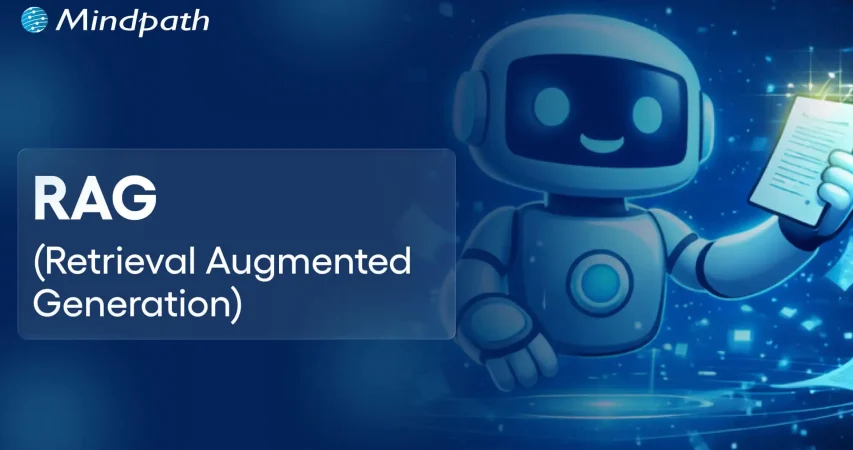
An Introduction to RAG (Retrieval Augmented Generation)

What is RAG in AI

An Introduction to RAG (Retrieval Augmented Generation)

The emergence of Retrieval Augmented Generation, or RAG, has certainly expanded the boundaries of Artificial Intelligence. If you’re wondering what is RAG in AI, the RAG refers to an advanced AI technique that can significantly improve generative models. This is possible since RAG enables them to access as well as integrate external and up-to-date information.

Within a short span of time, the concept of RAG has gained massive popularity. Its popularity was magnified after 2020 when the approach was formalized by Meta AI. The current interest in RAG comes from its capability to address the major challenges associated with large language models. It is time to explore the RAG concept in detail.

Looking to unlock the full potential of your data with cutting-edge AI technology? Mindpath’s AI development services provide RAG (Retrieval Augmented Generation) solutions to help businesses create smarter, more efficient applications.

What is RAG?

Before diving into the realm of Retrieval Augmented Generation, you should be able to define RAG. RAG refers to the process of optimization of the output of a large language model so that it can reference an authoritative knowledge base beyond its training data sources while giving a response.

You need to understand RAG in AI meaning, since it has the potential to expand the already powerful capabilities of LLMs. Thus, RAG makes sure that large language models can be applicable to specific domains or to the internal knowledge base of an organization. An RAG example involves the use of relevant and updated information by physicians to make accurate healthcare decisions.

Must Read: Future of Large Language Models

Features of RAG

Now that you can define RAG properly, you need to familiarize yourself with its key features. Some of the main features of Retrieval Augmented Generation are:

1. Retrieval Augmented Generation involves retrieval, augmentation, and generation of responses.

2. RAG has the potential to significantly curtail GenAI hallucinations and outdated knowledge to improve the factual accuracy of the responses.

3. Instead of solely relying on pre-existing training data, RAG enables AI models to retrieve relevant and authoritative information from external knowledge bases or databases to generate accurate and contextually rich responses.

4. The RAG process can enhance the quality of answers on the basis of the retrieved information.

Want to understand how models like RAG focus on the most relevant parts of data for accurate responses? Check out our guide on attention mechanism explained to explore how this core concept powers modern AI systems.

Importance of RAG

After knowing what is RAG in AI, it is essential to look at its significance. RAG is extremely important because it is capable of resolving the limitations of conventional large language models. In order to know RAG in AI meaning and its importance, you need to be aware of the challenges associated with traditional LLMs. The key challenges are:

1. Generating false information when there is no accurate response.

2. Generating generic or out-of-date information when users expect a specific or the latest response.

3. Creating responses from non-authoritative sources.

4. Creating inaccurate responses because of terminology confusion.

Now that you know what is RAG in AI, you can say that this process can solve some of the challenges associated with LLMs. This is because RAG redirects large language models to retrieve relevant information from authoritative and pre-determined knowledge sources. Individual users or organizations can have a greater degree of control over the generated response or output. An RAG example involves a customer chat support bot that can retrieve relevant documents to answer customer queries about a product or service.

Looking to truly understand how AI can transform everyday business operations and improve smarter decision-making? Check out the key benefits of AI to see how it drives real innovation and long-term efficiency.

Mechanism of RAG

Let’s move ahead and understand how RAG works. Knowing the underlying process relating to the RAG process is cardinal to understanding the concept thoroughly.

In the case of RAG, an information retrieval component comes into the picture, which uses user input to pull information from a new data source. Both the user query or input and the relevant information are provided to the LLM. The LLM then uses the new knowledge along with the training data for the purpose of creating better responses.

1. Steps Involved in the RAG Process

After knowing what is RAG in AI, you can understand the key steps that are involved in the RAG process. Understanding these aspects is crucial to knowing the value of RAG for enterprises as well as individual users.

2. Creating External Data

The data that is outside the original training dataset of the LLM is the external data. It may come from different data sources, such as databases or document repositories. Moreover, the external data may exist in diverse formats, such as long-form text or files. An AI technique known as embedding language models is responsible for converting data into numerical representations and storing them in a vector database.

3. Retrieval of Relevant Information

This step involves a relevancy search. It basically involves the conversion of the user’s query into a vector representation. It is then matched with the vector databases. The documents relevant to the input of the user will be returned. Mathematical vector calculations and representations help in computing as well as establishing the relevance.

Must Read: Vector Databases & Their Role in AI Applications

4. Augmenting the LLM Prompt

At this stage, the RAG model is responsible for augmenting the user input by adding relevant retrieved data in the context. This particular step involves the use of prompt engineering techniques for communicating effectively with the LLM. The augmented prompt plays a key role since it allows LLMs to produce an accurate response to the queries made by users.

5. Updating External Data

At this point, you may wonder – What if the data becomes old or stale? In order to maintain current information for retrieval purposes, the document has to be asynchronously updated, and the embedding representation of the document has to be updated. The user can do this through automated real-time processes. It can also be done through periodic batch processing. It is a common challenge in the context of data analytics that can be solved by adopting different data-science approaches.

Wondering how modern data practices actually make AI outputs smarter and more reliable in everyday use? Explore the latest data analytics trends shaping faster and more informed decision-making.

Use Cases of RAG

In the prevailing times, the relevance of RAG for enterprises has magnified exponentially. You need to be aware of some of the real-life RAG use cases, such as:

1. Customer Support Chatbots

One of the practical use cases of RAG involves chatbots or virtual assistants. RAG can play a key role in powering chatbots so that they can provide accurate and relevant information to customers.

2. Employee Training

While talking about RAG use cases, organizations must bear in mind that they can leverage RAG in order to create systems for training assessments. The role of RAG is also crucial to offer training and education resources during the onboarding process.

3. Document Assistance

RAG’s use is immense when it comes to drafting reports and generating content summaries. Its utility is also high in the context of populating documents with up-to-date and relevant information from diverse sources.

4. Software Development

RAG can act as a useful tool for developers who develop software applications. This process can help them generate codes. It can even provide them with suitable function suggestions. They can also rely on Retrieval Augmented Generation to fix bugs by retrieving information from diverse sources like libraries.

Want to build intelligent applications that integrate RAG for enhanced performance and scalability? Explore our insights on custom software development to create AI-powered solutions tailored to your business needs.

Final Words

The emergence of Retrieval Augmented Generation has been nothing less than revolutionary in the realm of Artificial Intelligence. RAG extends the utility of LLMs with external, specific knowledge. The RAG process depends on external knowledge sources for producing accurate and context-specific responses.

One must realize the importance of Rag. The insight can help you leverage the novel concept in an optimal manner and overcome the challenges associated with LLMs. With Mindpath’s expertise in providing AI development services, your company can derive optimum value from RAG and stay ahead of its competitors at every level.
Related Post

Discover how ReactJS development enables scalable, high-performance applications with benefits like optimized routing, state management, etc.
Easily automate data collection with Node.js web scraping! Use Axios and Cheerio to extract structured data from websites quickly.

Related Post

IT Staff Augmentation

Enterprise technology leaders are under constant pressure to leverage innovations while managing operational expenses effectively. Moreover, software development, digital product engineering or AI integration needs skilled expertise. So, hiring full-time experts can sometimes go out of your budget. In such a situation, staff augmentation has emerged as a strategic workforce model. It enables your company to minimize development costs without compromising on quality.

As per the recent trends by Verified Market Research, IT staff augmentation is ready to touch USD 857.2 billion by 2032. Unlike traditional hiring models, staff augmentation allows your company to extend its in-house teams on demand. Let us further discuss how cost-effective IT staff augmentation can boost your operations.

Looking for reliable staff augmentation solutions to fill critical skill gaps in your team? At Mindpath, we offer customized staff augmentation services that connect you with highly skilled professionals for seamless project execution.

What is Cost-Effective IT Staff Augmentation?

IT staff augmentation is generally a hiring model where your business will temporarily add skilled technology professionals to your existing teams. Further, such professionals work alongside your internal staff to support your ongoing projects while filling the skill gaps. Most importantly, it is capable of easily accelerating the development timelines.

  • Cost-effective IT staff augmentation allows you to retain full control over the project management while benefiting from the external expertise.
  • This approach is viable for companies that demand specialized technical skills for short-term projects.
  • It is also essential for people who want to scale their development teams quickly.
  • So, if you are looking forward to reducing IT hiring costs, this staff augmentation can be flexible without any long-term commitments.

As per the recent reports, around 26% of cybersecurity jobs go unfilled in the U.S because of the talent gap. Further, tech skills only last for 2.5 years, which requires constant up-skilling.

Curious about how to seamlessly integrate external experts into your existing workflows without delays? Discover how effective augmentation staff onboarding can streamline collaboration and boost productivity from day one.

Why Affordable IT Staffing Can Be Your Smartest Choice in 2026?

It takes around 35 days to hire IT professionals in the US. So, here, affordable IT staffing can be a great choice for you in the current age. Let us go through the reasons why IT staffing is convenient for your business.

1. It Prevents Exceptional Budgets

Augmentation can easily reduce the recruitment charges, employee overheads and training expenses. For example, outsourcing Indian staff allows organizations in the US to optimize their staff augmentation pricing without compromising on quality aspects.

2. It Offers Faster Access to Talent

Global organizations can easily select specialists from a huge pool of worldwide talent. So, instead of waiting for months, you can achieve the talent that your company desires.

3. Flexibility

Businesses can easily scale their team up or down as per the needs of their projects. So, you don’t need to deal with long-term contracts and inefficient headcount.

4. Bridge Your Skills Gaps

To seek digital transformation, you require niche expertise in cybersecurity, AI or cloud technologies. So, IT staff augmentation ensures you can hire the needed experts quickly. This approach is also viable for short-term project requirements.

5. Achieve Collaborative Terms

With remote work setting the trends, cost-effective IT staff augmentation can enable your company to work seamlessly with professionals from all around the globe.

Planning to scale your tech team quickly while maintaining efficiency in a remote-first environment? Check out how IT staff augmentation helps businesses access global talent while ensuring seamless collaboration.

Why Traditional IT Hiring is Expensive?

To understand the true values of staff augmentation, it is necessary to look at the expensive side of traditional hiring, as mentioned below.

1. Recruitment Expenses

You need to go through a series of steps, like job postings, recruiting agencies and internal HR resources. These aspects can increase your overall hiring charges.

2. Time-Taking Hiring Process

Finding the right candidate can take a long time. So, this aspect can delay your projects and overall productivity.

3. Training Approaches

Your new employees might require thorough training sessions and onboarding guidance to understand your workplace culture and functionality.

4. Essential Add-Ons

A company needs to offer a series of benefits to its employees for a long-term partnership. All these get added to the overall cost.

5. Risk of Hiring Wrong Candidates

Hiring the wrong candidate can result in project delays and additional recruitment expenses.

For businesses that handle multiple technology initiatives, these costs can quickly escalate their budget. So, you can easily reduce IT hiring costs through staff augmentation.

Wondering whether there’s a more flexible and cost-efficient alternative to traditional hiring models? Learn the key differences in staff augmentation vs managed services to make a more informed business decision.

A Quick Comparison between IT Staff Augmentation and Traditional Hiring

Here, you can go through the individual approaches of IT staff augmentation and traditional hiring through a table.

Major Elements Traditional Hiring Affordable IT Staffing
Time to Hire Comparatively slow and takes between 3 and 6 months. You can access quick onboarding within one to two weeks.
Cost Remains High Comparatively low
Flexibility Fixed employees are hard to scale. Offers on-demand scaling.
Suitable For Long-Term Projects Dynamic and for specialized roles.

How to Successfully Implement Staff Augmentation?

To upgrade your budget effectiveness and IT workforce optimization, your team requires a proper integration approach as given below.

1. Define Clear Skill Requirements

Always make sure to understand the precise technical expertise required by your company. Whether you need cloud engineers or developers, always stay strong with your decisions.

2. Prefer a Strategic Expert

Selecting the right partner ensures your access to professionals with proven industry-grade knowledge. Experts will always streamline the staff augmentation strategies with effective transformation goals. This can help the augmented teams to integrate effortlessly with the existing ore team.

Looking to hire the right talent without long recruitment cycles or overhead costs? Discover how staff augmentation hiring can help you quickly onboard skilled professionals aligned with your project goals.

Major Challenges that Most Businesses Face in IT Staff Augmentation

While IT staff augmentation leverages a series of benefits, you should also understand the challenges related to this hiring model. Further, being aware of these factors can help your business manage the augmented teams more efficiently while maximizing the value of your investments.

1. Getting Along with the Internal Team

One of the biggest risks is ensuring the augmented experts get along with your team members effectively. Differences in workflows and time zones might give rise to coordination gaps. So, it is essential to handle them efficiently.

2. Picking the Right Talent Partner

The success of cost-effective IT staff augmentation mainly depends on the quality of professionals being hired. So, working with unreliable teams can lead to skill mismatches while delaying your productivity & project delivery.

3. Maintaining Consistent Project Communication

When your team includes both in-house teams and external professionals, maintaining consistent communication can be a bit tough for you. Moreover, without proper coordination, you might slow down the progress, and it can affect your project quality.

4. Managing Security Elements

When your external professionals access the internal systems or sensitive data, your organization must include essential security measures. Additionally, you should implement strict access controls.

Despite all these challenges, businesses that adopt the right management practices can still leverage the essentiality of affordable IT staffing to build scalable teams.

Wondering how businesses are evolving their workforce strategies while maintaining security and efficiency? Discover the latest IT staff augmentation trends that are shaping how organizations scale teams and manage distributed talent securely.

Conclusion

Your enterprise must innovate continuously in this vast technology landscape. Traditional hiring models somehow limit your agility while increasing the fixed expenses. So, cost-effective staff augmentation can work as an alternative approach by providing flexible access to specialized talent.

Organizations that want to boost their technological relevance in a cost-efficient way, such as providers like Mindpath, can make a difference. Clients from all around the world have believed in our expertise, and this has led us to become an industry expert. So, schedule an appointment with us and let our professionals handle your requirements.

Discover how IT staff augmentation can optimize costs, enhance flexibility, and access specialized talent to boost your organization’s success.
Remote Development Teams

Managing a remote development team can feel like a unique challenge, right? With team members spread across different locations, how can you ensure everyone stays connected, motivated, and productive? What strategies can you implement to keep your team engaged and aligned with project goals? In this blog, we’ll explore practical tips to help you navigate the complexities of remote team management.  

Managing a remote development team is essential because it allows everyone to collaborate effectively even when they are separated by a long distance. Good management ensures that everyone understands their responsibilities and feels connected to the team. When developers are well-managed, they are more productive and satisfied with their job, which leads to better project outcomes. Furthermore, excellent management facilitates issue resolution and keeps the team focused on their objectives. In today’s environment, when many individuals work from several places, qualified management is essential for success. 

So, let’s dive into the tips for managing a remote development team! 

Tips For Managing Remote Development Team

1. Hire Trusted Developers

The first and most significant recommendation is to hire folks that you can trust. Remote work can assist teams become more productive, decrease stress, and save money for the business. However, hiring the wrong individuals might cause serious consequences. When working remotely, it is impossible to manage the team in person. Trust is crucial; team members must be dependable and provide outstanding outcomes. If someone doesn’t appear capable, they can check in regularly via Slack, Zoom, or other methods, which might cause tension and pressure for them. Constant inspection can have an adverse effect on team performance. Establishing a robust recruiting process is crucial for identifying people with the necessary abilities. 

2. Use Agile Methods

One of the most effective approaches is to use the Agile Methodology. This strategy improves communication, cooperation, and project delivery by incorporating market input. Agile works by establishing a flat team structure, eliminating needless hierarchies. It focusses on identifying key aspects of the program to be built based on real-world scenarios. Agile also promotes brief daily meetings known as stand-ups, in which all team members can offer their ideas and updates. Furthermore, the team examines each project update collectively to determine what could be improved, added, or eliminated. Teams that plan and work together can launch a Minimal Viable Product (MVP) as soon as feasible. This ensures that the final product properly fits the demands of the users. 

3. Enhance Communication Tools

An important principle for good communication is to never assume; instead, ask questions and speak out when in doubt. This idea can assist in avoiding misunderstandings within a remote collaboration. Misunderstandings are common while working remotely, so it’s essential to resolve them early with the correct tools and procedures. For example, a team can use Zoom for meetings and special events, Slack for fast reminders and announcements, and Google Drive or Coda for document sharing. These technologies can significantly enhance communication and eliminate misunderstanding. Regular video conferencing is vital for interacting with teammates and fostering collaboration. They let you discuss project progress, identify areas for improvement, and check in on personal problems. These discussions serve to foster trust and transparency in communication. 

4. Hold Regular Performance Reviews

It is essential to schedule frequent performance evaluations to assess both individual and group performance. These appraisals give helpful feedback and assist in identifying areas for development. Setting a constant timetable, whether biweekly or monthly, enables developers to expect comments and focus on improving their performance. These sessions also provide a fantastic chance to acknowledge and appreciate their accomplishments. Encouraging 360-degree input is another great method. This entails getting feedback not only from managers, but also from colleagues and stakeholders. This technique provides a more comprehensive understanding of a developer’s strengths and opportunities for improvement. Developing future action plans is a key component of performance evaluations. Work with each developer to create customized development plans based on the input obtained.  

5. Build Team Spirit

Developing a strong business culture in a remote workplace can be difficult, especially when many people imagine coworkers celebrating birthdays with cake or enjoying themselves after work. However, the essence of workplace culture lies not only in the activities themselves but also in the relationships that they build among team members. It takes purposeful effort to foster a team spirit that boosts everyone’s spirits. Consider organizing virtual team-building events, celebrating accomplishments, or simply checking in with team members. These actions can assist in establishing relationships and foster a positive remote work environment. 

6. Let Them Work Freely

It’s essential to provide engineers with enough room to complete their work. Clients frequently express their worry about how to closely monitor their developers’ work, which can lead to ambiguity regarding progress. The remedy is straightforward: avoid micromanaging. The results speak louder than words. 

While it is essential to analyze performance data, one of the most common mistakes that drive great engineers to quit is attempting to regulate their every move. Developers don’t spend their whole day coding; they frequently require time to think about answers and devise new solutions to challenges. 

The easiest method to evaluate their work is to focus on the results they produce, rather than continually watching their everyday actions. Trusting them to work autonomously leads to a more productive and motivated team. 

7. Know Your Team’s Dynamics

Different teams have distinct meeting and communication requirements. Some teams may benefit from regular meetings to keep focused on project specifics, particularly if their job requires a lot of cooperation. Others might thrive better with fewer, less frequent encounters. To properly manage a development team, you must first learn how each person works best. Recognizing the team’s speed, choosing the most effective tools, and calculating the appropriate number of meetings may all assist to minimize burnout and undue stress. By identifying and respecting individual work preferences, you may foster a productive and peaceful workplace that benefits the whole team’s performance. 

Hire Remote Developer at Mindpath

At Mindpath, we understand that hiring remote developers is a crucial step in bringing your project to life. Our streamlined process is designed to ensure you find the right talent while receiving the support you need throughout the development journey. Whether you’re building a new application or enhancing an existing one, we’re here to help you achieve your goals efficiently. Here’s how our process works: 

1. Gather Your Requirements

Start by reaching out to Mindpath to discuss your project goals and needs. We will review all details and create a comprehensive plan that outlines our approach, timeline, and estimated costs. 

2. Select the Right Talent

We’ll identify remote developers who are the best fit for your project. You will have the opportunity to interview candidates and choose developers who meet your specific requirements. 

3. Kick Off the Project

Once your development team is assembled, we’ll kick off the project with a clear plan and timeline. Our team will maintain regular communication, providing updates to ensure everything aligns with your vision. 

4. Receive Ongoing Support

Mindpath is committed to supporting you throughout the development process and even after project completion. Our goal is to ensure that all your objectives are met and that the project runs smoothly. 

Final Thought!

A remote development team has to be managed effectively using a combination of communication, trust, and culture-building techniques. By prioritizing these characteristics, you can create an environment in which developers feel respected and encouraged to do their best work. Remember that hiring the proper developers is only the beginning. Maintaining an open channel of communication, holding frequent performance evaluations, and cultivating team spirit are essential for keeping your team on track with project objectives. At Mindpath, we streamline the recruiting process to ensure you locate the perfect people for your unique need. We are here to help you throughout your development journey, ensuring that your goals are met and that your projects run smoothly. 

Ready to elevate your project with top-notch remote developers?

Partner with Mindpath for seamless collaboration and expert support.

Discover effective strategies for managing remote development teams, from hiring trusted developers to enhancing communication.
genai hallucinations

The whole world has welcomed artificial intelligence into almost every aspect of everyday life. At the same time, the concerns for careful and responsible use of AI have also been coming under the limelight. One of the notable highlights associated with responsible AI usage points at GenAI hallucinations, which can affect the credibility of generative AI. The use cases of generative AI have opened the doors to numerous opportunities for businesses worldwide across different sectors.

The arrival of generative AI improved efficiency across different areas, including the development of marketing materials and streamlining customer service. Generative AI also promises massive shifts in the conventional approaches to work. However, the insidious threat of generative AI hallucinations places huge roadblocks in the path to large-scale adoption of AI. Let us learn more about GenAI hallucinations and how to avoid them.

Deploying GenAI successfully requires more than just technology, it needs expertise and precision. Our AI development services help businesses design, train, and implement models that deliver reliable and consistent results

Understanding GenAI Hallucinations

Artificial intelligence has been modeled to think, act and work like humans. Just like humans come up with false or misleading answers when they don’t know how to respond to some questions, AI may also do the same. The basic explanation for generative AI hallucination is almost the same as generative AI models can offer nonsensical answers as factual responses. Businesses must know that AI hallucinations can invite legal challenges, affect critical decisions and lead to loss of trust.

You can get a better idea about GenAI hallucinations when you know why AI models hallucinate. AI hallucinations are the result of the approaches through which AI models learn and generate new content. Assume that a student has read multiple books in the library but has not learned how to use his knowledge in the real world. The student can connect different ideas and present convincing ideas, although some of them might not have any plausible impact.

Curious how Generative AI is transforming industries? Explore our blog on Generative AI Revolution to understand the innovations shaping the future of AI and its business applications.

Common Reasons Underlying GenAI Hallucinations

The definition of AI hallucination suggests that it represents any situation where generative AI models present false and nonsensical answers as factual output. At this point of time, you might want to dive deeper into the gen AI hallucination meaning to identify the factors that lead to AI hallucinations. The most common culprits for AI hallucinations include insufficient or biased training data, complex prompts, model architecture and overfitting.

Generative AI models learn from the training data and their effectiveness depends on the quality of data. If the data contains biases or is incomplete, then the AI models will reflect the same flaws in output of the models. Similarly, unclear prompts can also lead AI models to generate made-up information just to serve responses. The internal working and learning approach of gen AI models are also some of the notable factors responsible for hallucinations.

The consequences of these factors can be far-reaching, especially in terms of legal conflicts. On top of it, businesses should worry about AI hallucinations as they can have a negative impact on customer trust, operational efficiency and brand reputation. You can find gen AI hallucination examples in which lawyers were fined for wrong citations and businesses had to incur massive losses due to fabricated financial forecasts.

For instance, an attorney in New York used ChatGPT to conduct legal research for an injury claim. The federal judge noted that the lawyer had provided quotes and citations that never existed. The generative AI tool had not only made them up but also suggested that they were available in all major legal databases.

Wondering how businesses are putting Generative AI into action today? Explore our blog on Generative AI Use Cases in diverse industries to see real-world applications driving innovation across sectors.

How Can You Avoid GenAI Hallucinations?

Businesses must understand the consequences of AI hallucinations and follow a multi-layered approach to address the limitations. The best way to avoid them involves a combination of human oversight and technical safeguards. On top of it, businesses must follow a culture of critical evaluation with generative AI to prevent hallucinations. The following points can play a major role in strengthening a business with protection from hallucinations.

1. Pay Attention to Data Quality and Governance

The foremost solution to GenAI hallucinations is data quality as high-quality data is essential for creating reliable generative AI systems. What can a business do to ensure high-quality training data for their generative AI systems? The easiest way to remove hallucination in generative AI models is through cleaning your training data. It is important to clean the training data by removing duplicates, irrelevant entries and outdated information. On top of it, businesses must also use robust data cleaning methods to ensure accuracy, timeliness, validity and consistency.

The next crucial recommendation for improving data quality involves building a knowledge base for each business. The knowledge base will serve as a reliable source of truth, which offers company-specific and accurate information. In addition, businesses should also use diverse and representative data to reduce bias.

2. Choosing and Enhancing Gen AI Models

The choice of a generative AI model can have a significant influence on the possibilities of AI hallucinations. You should know how to identify the language model for specific tasks. For example, you may need advanced models like GPT-4 for complex applications while lighter models will be useful for simpler tasks. However, choosing the right AI models may be difficult in certain cases.

The list of ways to solve the problem of hallucinations in AI also points at techniques like Retrieval-Augmented Generation or RAG. The primary advantage of RAG is the ability to connect generative AI models to external data sources in real-time. With the help of RAG, AI models retrieve relevant information for responding to different queries. As a result, the models are less likely to hallucinate and will provide factual responses.

Also Read: Gen AI Tools

3. Prompt Engineering

The way you interact with generative AI models also affects the quality of their output. You must learn about the importance of prompt engineering in eliciting desired responses from AI models. Businesses can avoid GenAI hallucinations by following the best practices of prompt engineering. The first recommendation anyone would give for prompt engineering is to maintain accuracy in prompts. When you give clear and detailed instructions with the relevant context to an AI model, you can expect credible responses.

Businesses can also use advanced prompting techniques to improve accuracy alongside understanding the decision-making process of AI models. Effective prompt engineering can also help you fight against AI hallucinations by repeating key instructions at the beginning and end of the prompts to obtain desired responses.

4. The Human Element

The overview of some ChatGPT hallucination examples, like the one involving a New York attorney, suggests that human intervention could have solved the problem. Rather than trusting the output of AI models blindly, businesses should choose the human-in-the-loop validation approach. Continuous feedback loops for checking AI outputs against actual data can play a vital role in reducing AI hallucination.

Businesses should also implement critical evaluation training to help employees evaluate generative AI outputs. On top of it, every business must offer transparency into the working of their AI models to reduce confusion in the event of AI hallucinations.

What’s next for intelligent technologies? Read our blog on Generative AI Predictions to learn about the emerging trends defining the future of AI.

Final Thoughts

The answer to ‘what is an AI hallucination’ establishes a direct link between quality of data, prompting techniques and human-in-the-loop validation. AI hallucination is the result of the ways in which AI models learn and respond to user queries. With the growing adoption of generative AI, businesses must avoid GenAI hallucinations to protect their brand and avoid financial losses. Learn more about the effective solutions to AI hallucination now.

Learn what Gen AI hallucinations are, why they happen, and how to prevent them with effective strategies for building reliable AI systems.