Home

Hiring a Node.js Developer: Top Tips to Find the Perfect Fit for Your Project

Hiring a Node.js Developer: Top Tips to Find the Perfect Fit for Your Project

Join our Newsletter!

node js developer hire

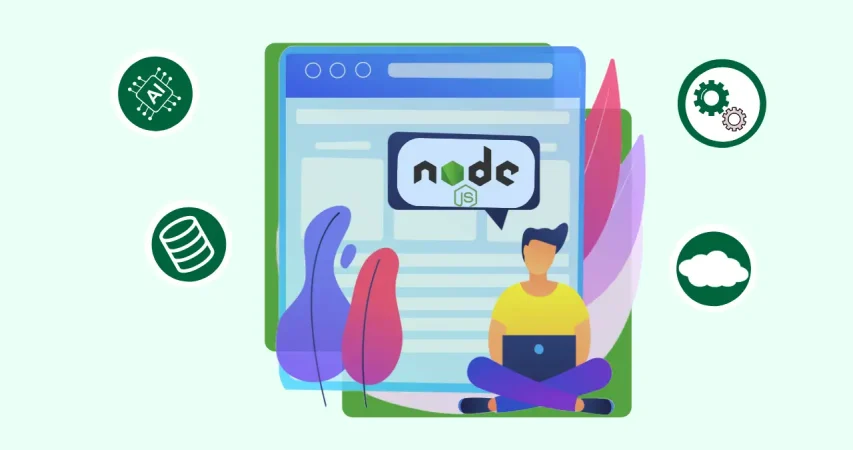
Imagine hiring a developer who can effortlessly build web applications that handle thousands of users at once. Sounds exciting, right? With Node.js developers, you can achieve this with ease. In this blog we will explore the key advantages of hiring a node.js developer that can be very beneficial for your project.  

Node.js is a famous open-source runtime environment for JavaScript that empowers one in developing fast and scalable applications. It makes use of the V8 Engine from Google Chrome for running code fast and efficiently. Unlike traditional servers, Node.js handles many requests at once using a single process, thanks to its non-blocking I/O operations. This makes it great for applications that need to manage a lot of connections. Moreover, a JavaScript developer can easily use it for front-end and back-end development with no additional study of a new language. Staying updated with the latest trends of Node.js ensures you leverage its full potential and keep your development practices current.

It is crucial to hire a node.js developer who can assist you in developing fast and efficient web applications. Node.js developers work with technology that has the ability to accommodate very many users at the same time without failing—instantly applicable for real-time applications such as chat apps or online games. They can build scalable systems that can grow with your business. Additionally, a good Node.js developer will be able to work both on the front and the back end of your application, which will potentially make your application flawless in terms of user experience. Hiring a Node.js developer will, in turn, save you time, improve performance, and assure that your app is being developed with the latest tools and practices. 

Let us dive deep into the advantages of hiring Node.js developers in today’s modern world, which will be beneficial for your project. 

Key Tips for Hiring a Node.js Developers    

1. Simplify Your Hiring Process 

Make it easy for the best Node.js developers to join your company. Instead, leverage industry-centric networks and professional groups to find candidates quickly and effectively. Keeping your process crystal clear and organized will help attract qualified people. 

2. Clarify Roles and Responsibilities 

While you hire a Node.js developer, clearly mention roles and responsibilities in the job description. The major role would include writing server-side codes, providing data security, and API development. This guides the appeal of candidates that fit the needs. You will remain focused and clear in your hiring process if you know exactly what the role involves. 

3. Review Portfolios  

Request portfolios and client reviews from the candidates to assess their experience and work quality. You should hire Node.js developers who have previously handled projects like yours. Also, one must check if they use testing tools like Mocha, Jasmine, Jest, and Ava for good code quality. A review of their portfolio will let you know about their practical skills and whether they deliver successful projects. 

4. Testing Soft Skills 

While hiring a Node.js developer, communication and problem-solving skills should be assessed if the work is going to be remote. Good collaboration and handling challenges effectively are key to the success of projects. One of the most critical areas in which soft skills are essential for smooth integration with the team and a productive work environment. 

5. Have a Talk About the Hiring Cost 

Be transparent with your budget. Costs can range with respect to the location and experience of developers. You should offer to pay competitively and state other benefits to attract the best candidates. Talking about money first sets your expectations clear and sets up a working relationship. 

6. Adaptability and Learning Test 

Since technology keeps on changing, you want to hire a Node.js developer who is flexible and ready to learn. Ask them about their experience with new tools and how they stay up-to-date on the latest industry trends. Adaptability and commitment to learning guarantee that developers will stay updated and be effective contributors towards the projects. 

Looking for a Node.js developer to bring your ideas into life?

At Mindpath, we have got a professional team ready to take any challenge from you and work on giving the best digital solutions.

Market demand for Node.js developers   

The demand to hire Node.js developers is increasing considerably. According to research, with the help of Node.js, it saves 68% of a developer’s productivity since a single language, JavaScript, enables a developer to write both frontend and backend code.   

Node.js is favored by younger developers: 46% of Node.js developers are in the age range of 25-35 years. This probably supports the assumption that Node.js has a great future: these developers will continue working with and enhancing this technology. About 36% of Node.js developers have top-rated tools and libraries in use, thus advocating for quality and innovations. Node.js is popular worldwide, having spread across some 85 countries. Development languages used by Node.js developers are more than 45. Node.js is a choice for startups and small businesses; 60% of developers work in companies with less than 100 employees. 

Most Node.js developers have more than 5 years of experience, thus laying a very strong base in the technology. The bulk of the talent is focused either on back-end or full-stack, clearly stipulating that Node.js is capable of handling complicated server-side tasks. About 85% of node.js is applied in web applications and 43% apply it in enterprise-level projects, thus putting emphasis on its wide scope of applicability. 

Hire Node.js Developers at Mindpath 

Mindpath has a great team of Node.js developers who can develop fast, powerful, and engaging digital solutions. We have rich experience in handling all types of projects, from commencement to completion. We make it possible to transform your idea into reality. We can provide the best solutions with the support of our expert Node.js team. Here are the steps to hire Node.js developers at Mindpath: 

1. Define Your Requirements 

Get in touch to discuss your project ideas and goals. We’ll dive into your needs, and then create a detailed proposal that includes our plan, timeline, and costs. 

2. Find Perfect Match 

We hand-pick Node.js developers who are a good match for your project. You get a chance to interview and choose the best candidates to work on your project according to your needs and vision. 

3. Launch Your Project 

We will undertake your project with a perfect team and begin with a fully itemized plan and schedule. We shall be keeping you posted for feedback to make sure everything is running according to your expectations. 

4. Continuous Support 

We don’t feel that our work ends with the launch. We’ll be here for you throughout development and when the project goes live, making sure everything goes your way, nice and smooth. 

Conclusion 

In a technological world that is ever-changing, Node.js has been at the top of web development trends since it introduced unmatched performance and scalability. It can handle a variety of requests efficiently, besides the advantage of using the same JavaScript for both frontend and backend development that makes Node.js a powerful tool for building modern web applications. This is further proved by the increasing need for Node.js developers in order to remain relevant in technology and, probably, to make some innovative solutions happen with the help of skilled professionals. Mindpath realizes how important it is to be ahead in this very dynamic field. Be assured that our team of Node.js experts will spare no effort in creating high-performance, scalable, and engaging solutions for every client’s needs.  

Looking for top-tier Node.js talent to elevate your project?ur It Projects?  

Mindpath offers expert developers ready to deliver innovative and high-performance solutions.

Support Is One Click Away

Featured Posts

Related Post

Decision Intelligence

Have you ever wondered how top companies make quick, informed decisions that keep them ahead of the competition? That’s where decision intelligence comes in! But what does this mean for businesses like yours? How can harnessing decision intelligence help you navigate uncertainty and drive success? In this blog, we will explore the fascinating world of decision intelligence and uncover its potential. So, let’s dive in!

What is Decision Intelligence?

Decision Intelligence (DI) is the way organizations utilize artificial intelligence (AI) to make smarter decisions. It focusses on achieving results that assist the organization to achieve its objectives. Companies can employ Decision Intelligence to improve the efficiency of each department and increase overall performance. A firm, for example, can utilize DI to analyze sales data, better understand client preferences, and develop new methods to generate profit. Businesses can become more efficient and productive by leveraging smart technology to support their choices.

Why is Decision Intelligence Important for Businesses?

Decision intelligence is important because it enables businesses to make rapid and precise decisions by combining AI and data. This implies that firms can resolve problems more quickly and better satisfy their customers’ requirements. Companies that use Decision Intelligence can collect and analyze data using smart technologies to predict the best results for their decisions. However, Decision Intelligence does not replace people in decision-making processes. Instead, it empowers people by improving their access to all corporate data. This allows them to comprehend the full picture and make the best decisions possible. Businesses can use Decision Intelligence to make data-driven choices at all levels. Additionally, it improves their operational visibility, which can offer thrilling outcomes that could revolutionize their success!

Benefits of Decision Intelligence (DI)

1. Better efficiency

One of the primary advantages of Decision Intelligence is its capacity to increase organizational efficiency. Decision Intelligence allows leaders to make faster and more informed decisions by delivering the relevant information at the right time. When leaders have access to real-time data, they can quickly analyze circumstances and comprehend the consequences of their decisions. This urgency is essential in today’s fast-paced corporate climate, when delays can result in missed opportunities or bad consequences. For example, if a corporation observes a rapid shift in client behavior, Decision Intelligence can assist executives in immediately analyzing the data, allowing them to adjust their strategy without wasting time.

Furthermore, Decision Intelligence enables organizations to simplify their operations. When executives have easy access to important insights, they can eliminate superfluous processes in the decision-making process. This not only saves time, but also allows teams to focus on what is genuinely important, resulting in improved cooperation and more successful outcomes. As a result, businesses using Decision Intelligence become more responsive. They can adjust to market developments, client requirements, and internal issues more quickly and adaptably.

2. Lower risks and uncertainty

Another significant benefit of Decision Intelligence is its capacity to assist organizations in reducing risks and uncertainties. While risks are always there in business, Decision Intelligence enables businesses to detect possible dangers earlier. Organizations can detect warning indicators, such as diminishing customer satisfaction, and take proactive efforts to resolve issues before they worsen.

In addition to recognizing risks, Decision Intelligence enables firms to investigate several potential consequences of their actions. Organizations can utilize predictive analytics to model numerous scenarios and better understand the possible consequences of their decisions. This competence allows leaders to balance the benefits and drawbacks of many alternatives, making it simpler to select the best course forward while minimizing unwanted consequences. Furthermore, decision intelligence enables organizations to design effective risk management methods. Companies that anticipate possible issues might develop plans to limit their effect. For example, if a company expects supply chain interruptions, it might seek alternate suppliers ahead of time.

3. Stronger teamwork

Improved teamwork is another significant advantage of Decision Intelligence. Decision Intelligence helps stakeholders align throughout the organization by providing a single source of truth for data and analytics. When everyone has access to the same correct information, it is simpler for teams to communicate effectively and collaborate on common goals.

With Decision Intelligence, different departments can turn to the same data, minimizing misconceptions and promoting a cohesive strategy. This transparency guarantees that everyone understands the same thing, whether it’s about sales objectives, customer feedback, or operational issues. When teams understand their common goals and have accurate facts to back up their talks, they can work more effectively. Furthermore, Decision Intelligence promotes collaboration by breaking down the barriers between departments. When individuals from several departments exchange thoughts and data, it results in improved problem-solving and new solutions.

4. Smarter decision-making

Improved decision-making is a major advantage of Decision Intelligence. Executives can more effectively recognize and analyze distinct scenarios by utilizing analytics in key moments. This helps people to better assess the probable repercussions of their choices, resulting in more informed judgements.

When leaders use data-driven insights, they can consider the benefits and drawbacks of several solutions before making a decision. For example, if a firm is thinking about releasing a new product, Decision Intelligence can help executives evaluate market trends and client preferences. This thorough examination enables them to make the best choice that matches the company’s objectives.

Also Read: 5 Conversational AI Trends To Watch Out For In 2024

Decision Intelligence Services at Mindpath

Mindpath’s Decision Intelligence services help organizations make informed choices by integrating advanced analytics with human insights. Unlike traditional artificial intelligence, which mostly automates processes and makes predictions, our methodology assists executives in evaluating many scenarios and outcomes, ensuring they have a comprehensive perspective of their corporate objectives.
By offering a single source of truth for data, we encourage stakeholder engagement and minimize divisions between departments. This alignment enables everyone to work towards shared goals, resulting in better informed, effective decision-making throughout the organization.

Wrapping Note!

In today’s fast-paced corporate environment, decision intelligence is essential for organizations attempting to succeed in the face of uncertainty. Companies can make better, quicker choices by integrating modern analytics and human insights. The benefits like increased efficiency, lower risks, stronger cooperation, and better decision-making, show how Decision Intelligence can alter operations and drive performance.

At Mindpath, we are dedicated to assisting organizations in achieving their objectives by using decision intelligence. By offering a single source of truth and encouraging cooperation, we enable organizations to successfully handle problems and grasp opportunities. Mindpath’s Decision Intelligence services can help you unleash your organization’s full potential.

Ready to transform your business with smarter decision-making?

Partner with Mindpath’s Decision Intelligence services for data-driven success.


Contact Us!

Discover how Decision Intelligence transforms businesses by improving efficiency, reducing risks and driving smarter decision-making.
sustainable technology

Sustainable technology has become one of the incredible sources of progress. It is discovering the beneficial combination of environmental responsibility along with innovations. The global green technology market size is going to reach USD 105.26 billion by 2032. (Source: Click) As per a Deloitte Survey, around 90% of companies consider sustainable tech to be improving their brand trust. (Source: Click)

The world is dealing with challenges of climate change and resource exhaustion. So, sustainable technology is striving to redefine the approach of development while reducing environmental impact and uplifting operational efficiency. Let us further explore what sustainability in technology defines today and how it is reshaping the industries. 

Looking to transform sustainability into a powerful growth strategy? Contact us at Mindpath to turn your vision into real business results.

What is Sustainability in Technology?

Sustainable technology is characterised by its focus on social and economic advancement while valuing natural resources. Further, it aims to offer products with minimal environmental invasion. 

1. The replacement includes transforming from non-biodegradable to biodegradable materials during the manufacturing efforts. Additionally, you also need to replace non-renewable resources with efficient renewable alternatives. 

2. The ultimate manufacturing process maintains a prohibition approach. So, it actively avoids pollution, degradation, and other harmful environmental consequences related to traditional strategies. 

3. Sustainability in technology is calculated by the efficiency of technology in terms of resource usage and energy. 

What are Some Business Elements that Drive Sustainable Technology Adoption?

Modern businesses are valuing sustainability technology not just to be ‘Green’, but to eliminate certain everyday challenges. 

1. Expectations of the Stakeholders

In the recent scenario, customers, investors, and employees are mainly valuing sustainability. So, firms that showcase their commitment to sustainable technology are more likely to shine. Starting from transparent supply chains to carbon-smart operations, you can build trust while adopting loyalty. 

2. Regulatory Pressure

Many governments and international bodies are being strict about the environmental standards. Regulations like CSRD and the UN Sustainable Development Goals influence corporate reporting requirements. This is forcing businesses to integrate technology that can track and report ESG performance effectively. 

3. Cost Efficiency

Sustainable technology is not just eco-friendly; it often reduces costs. You can get your hands on waste reduction systems, energy optimisation tools, and predictive maintenance. So, you can cut your operational expenses significantly. 

Wondering how businesses can reduce their IT energy consumption while still maintaining high performance and scalability? Explore how energy-efficient computing is helping organizations cut costs and lower their carbon footprint.

Top Sustainable Tech that is Encouraging Businesses in 2026

Sustainability and technology include a wide range of innovations. These viable innovations are capable of eliminating real-world problems. Here, you can go through some top sustainable technologies that are uplifting the functionality of businesses. 

1. AI-Enabled Energy Management Systems

Artificial intelligence and machine learning can effectively optimise how your business can consume energy. Such systems can assess real-time usage patterns and can adjust operations dynamically. Further, it can help your company eliminate energy charges while reducing carbon emissions.

2. Workflow Automation

Businesses are now shifting to digital processes, from contracts and records to project workflows. Moreover, it can reduce paper waste while aligning your operations. Further, sustainable documentation solutions are now essential to minimise official footprint while encouraging data security. 

3. IoT & Smart Building Tech

Internet of Things devices are known to be a leading sustainable tech in smart buildings and industrial facilities. Additionally, the sensors can trace energy use, equipment performance, and air quality. This can empower your business to cut down waste while preventing frequent breakdowns. It can also help your business operate more efficiently. 

4. Circular Economy Tech

The principles of the circular economy prioritise recycling, reuse, and repurposing instead of the traditional model. Moreover, some companies are now employing e-waste recovery systems that extract valuable materials like gold and copper from used electronics. This can prevent hazardous waste while fueling your revenue streams. It is the best example of sustainable technology you can think of. 

5. Sustainable Supply Chains

Blockchain and modern tracking systems can enhance your supply chain transparency. This is offering businesses the tools to monitor carbon emissions across partners. Further, this can impose ethical sourcing while meeting consumer requirements. 

These are some of the best sustainable technology examples your company can adopt to be ahead in the competition. 

What are Some Major Benefits of Sustainable Technology?

Sustainable technology mainly aims to lessen the negative social and environmental influences. Such an aspect can safeguard your company’s reputation and finances. This can also help you leverage a positive impact while valuing ethical principles. 

1. Keeps You Unique in the Market

Adopting sustainable technology can set your business apart in the crowded marketplace. Recently, consumers have been opting for environmentally conscious services and products. This offers a unique selling proposition while making you trustworthy among the customers. 

2. Managing Risks

The usage of sustainable technology can lessen company risks by helping businesses and the environment through the reduction of climate change’s negative effects. Moreover, companies leveraging exclusive ESG rankings find more favour from long-term investors. 

3. Encourages Financial Performance

Technology and sustainability combined allow efficient resource usage within your company. This strategic approach can upgrade your company’s value among the competitors while increasing its profits and competitiveness. 

Sustainable Tech Across Multiple Industries

83% of consumers believe that companies should majorly shape ESG best practices. So, a series of industries are valuing sustainability in technology adoption. 

1. Healthcare

Healthcare facilities have been using data-driven systems to minimise energy usage while streamlining patient care. Further, they are managing resources more sustainably through HVAC controls and digital records. 

2. Manufacturing Units

Real-time monitoring and smart automation allow factories to reduce energy waste while optimising production schedules. Further, predictive analytics can assist you in anticipating equipment failures. 

3. Retail Businesses

Sustainable supply chain tech is transforming how products move. Recently, retailers have been using sophisticated tracking systems to reduce inventory waste while optimising delivery routes. 

How are retailers managing complex digital systems while focusing on sustainable business growth? Discover the smart strategy behind retail IT outsourcing and how it supports modern retailers.

Challenges You Might Expect while Adopting Sustainability in Technology

Despite a lot of promises, sustainability adoption might face a lot of challenges, as given below. 

1. Integration and Complexity

Combining complicated systems like IoT devices, AI platforms, and legacy infrastructure might be difficult for you. So, it is essential for you to encourage strategic planning and expert implementation to be successful. 

2. Upfront Investment Charges

Sustainable systems generally need initial investment, and this can affect small businesses. However, falling technology charges and measurable ROI make adoption increasingly reliable. 

3. Governance and Regulatory Standards

As sustainability reporting becomes more regulated, businesses are now integrating robust frameworks for tracking and verifying data. So, your sustainability technology must evolve along with the recent global standards. 

Want to understand how AI is empowering companies to innovate faster and stay competitive in the digital era? Explore our article on AI and business transformation strategies to learn how businesses are using AI to boost efficiency and innovation.

Conclusion

Now you are well aware of what sustainability is in technology. So, adopting sustainable features has become a necessity for multiple businesses. Moreover, a significant mindset shift is essential for getting a successful, sustainable adoption. Companies that adopt such a perspective can enhance their competitive position. 

If you seek such reliable partners who understand both the strategic value of sustainability, Mindpath can be your viable option. We deliver custom approaches that can give rise to innovations while transforming your digital. 

FAQs

1. Why is sustainability in tech one of the most important adoptions for businesses?

Sustainability in tech can enhance your operational efficiency and help you comply with regulations. Further, it meets stakeholders’ expectations while enhancing your brand values.

2. How can technology track sustainability performance?

Effective tools like sensor networks and platforms can easily offer your business the data it requires on time.

3. How should I initiate my tech journey with sustainable functions?

Begin with a sustainable audit to understand your requirements and set your goals. Further, invest in scalable tech solutions that can evolve with your growing demands. 

4. What are some major examples of sustainable tech?

Some famous examples include IoT devices, AI-enabled energy systems, green data centres, etc. 

5. Is sustainable technology only viable for large enterprises?

Small and mid-level businesses can also adopt sustainable technology like cloud optimisation and digital workflows.

Discover how sustainable technology can enhance your business by improving recovery, attracting customers and boosting productivity.
Web design trends

In 2026, website design is all about going beyond the conventional approach. Web designers are now exploring more options, embracing a combination of user-centric, authentic, and bold web design trends. Well, the goal is to craft a website that is not just beautiful, but also interactive, human-centric, and memorable. 

As technology advances and expectations of users evolve, staying ahead of new trends in web design is crucial for businesses to stand out. Whether you are optimizing your local business site or creating a new one, these top web design trends in 2026 will surely trigger ideas and enhance your digital experience. Keep reading to explore some leading web design trends that are set to define modern websites with Mindpath. 

If you are looking to implement these latest modern web design trends in your business, you require expertise. Mindpath offers web development service that helps you stay ahead of your competitors and deliver a website tailored to your business needs by turning your ideas into reality.

Focus On Smart Design For A Smarter Web

In 2026, web design will no longer be a choice between personality and performance. It will be a combination of both. Designers are leveraging design systems and frameworks that offer super-fast load times without affecting brand storytelling and visual impact. 

This shift has created a new era where creative expression and technical precision go hand in hand. Websites are getting smarter, emotionally resonant and leaner, resulting in a digital experience where design creates a lasting impression and functionality drives engagement. 

Wondering who can bring these design trends to life? Discover our website design company blog to see how the right team can turn trends into impactful websites.

Let’s talk about the trends that businesses need to focus on to achieve designs that deliver. 

21 Web Design Trends to Consider in 2026

Trends in web design are driven by advanced technologies and a desire to develop sites that are highly functional, interactive, memorable, and have elements to showcase a brand’s identity authentically. From sustainable designs to hyper-personalized interfaces, here are 21 web design trends to consider. 

1. Expressive Fonts and Maximalist Typography

Typography is a major visual element in every website. Businesses can expect to see layered, bold, and oversized text that will be the centerpiece of a web page. Besides, web designers are now creating playful, custom typefaces along with high-contrast pairings for a powerful statement. 

2. Micro Animations/ Interactions

Small details can make a huge impact. Micro interactions can help reinforce actions and guide users. For example, button ripples, hover effects, form feedback, or loading indicators. These are subtle yet powerful and can enhance the overall user experience.  

3. Experimental Navigation

Are you still using dropdown and hamburger menu designs? Well, it’s time to take a break. 2026’s trending web designs focus on scroll-as-navigation, gesture-based, and radial navigation styles, increasing engagement. 

4. Brutalist Designs with Some Modern Twists

A reaction template-driven, overly polished designs, brutalism is back, but with a modern twist. This modern style features unpolished, raw elements, bold typography, subtle animations, and pops of color. This design can be an ideal way to add a unique attitude and authenticity to websites. 

5. Illustration-led Web Design

This is gaining popularity among web designers in 2026 for conceptual clarity, quick load times, as well as brand originality. Utilizing illustrations offers a visually engaging alternative to heavy images, making them an excellent choice for service-based websites. 

6. Immersive Scrolling

Most websites are now becoming cinematic due to the integration of scroll-triggered animations. As users move down pages, elements zoom or fade in, crafting a narrative-like or dynamic user journey. With this, you can make a simple scrolling into an immersive experience. 

7. Dark Mode and Custom Palettes

Dark mode has become a standard design, but designers are tweaking it to add more effects. You can now see custom dark mode and palettes that utilize rich grays along with muted tones, offering a more branded and sophisticated experience while reducing strain on the eyes. 

8. Monochromatic Design

It is a simple yet powerful visual approach that utilizes a single base color and its different tones, tints, and shades throughout websites. Such designs emphasize cohesion, elegance, and simplicity. The distraction factors will be less as it creates a unified aesthetic. 

9. Hyper-Personalized Interfaces

Inclusion of machine learning and AI in web design has enabled a new level of customization. Websites will adapt their layout and content to every user, providing them with dynamic content and tailored recommendations based on their browsing history.   

10. Sustainable Web Design Trends

In 2026, the focus will be more on developing environmentally-friendly websites. While designing and developing websites, developers would prioritize eco-friendly hosting providers, accessibility, and streamlined code. These things help lower carbon emissions related to the internet. 

Curious how AI is transforming modern web experiences? Explore our AI in Web Development blog to learn how smart features enhance usability and performance.

11. Sci-Fi Gaming and Futuristic UI Aesthetics

Website interfaces inspired by sci-fi films and games are getting popular.  How about HUD-style overlays, neon glows, glitchy transitions, etc.? These designs can create high-tech and bold digital experiences. 

12. Bento Grid Layouts

Influenced by the elegance of the Japanese bento box, this design utilizes a modular grid of boxes. These layouts offer an efficient and clean way to organize information in a structured way. These website layout ideas are an ideal option for complex content websites and portfolios. 

13. Neumorphism Web Design Trends

It combines flat and skeuomorphism design using minimal contrast and soft shadows for a monochromatic and clean look. It suits web apps but requires proper handling of UX to avoid usability problems. 

14. Power of White Space in Web Design

Emphasizing negative space in a web design can enhance focus and clarity by balancing content with open, clean areas. Strategic use of typography and spacing boosts readability, creates an intuitive experience, and guides user attention. You can consider Apple.com as an example. 

15. Custom Mouse and Cursors Interactions

Custom cursors can play a major role in branding. Designers use them to instill interactive flair and personality, with responsive shapes, sparkly trails, brand logos, and more. It may look simple, but it works well in making a website look unique. 

16. 3D Elements

Another popular modern web design that can make your site look stunning is the use of 3D elements. From interactive product demonstrations to full-screen 3D backgrounds, these elements add realism and depth, making your site more immersive and captivating. 

17. Smart and Dynamic Videos

Videos on websites are becoming ambient design elements. They are generally looped seamlessly, silent, and optimized for faster performance. By using videos on homepages, you can make the website engaging without reducing the site’s speed. 

18. Gamified Designs

When talking about 2026’s web design trends, we can’t ignore these designs. These designs add game-like elements to websites, like challenges, rewards, or points, enticing visitors to spend more time on websites. 

19. Combining Photos with Graphical Elements

Web designers are getting creative by combining photography with beautiful graphical overlays. For instance, elements like arrows, doodles, or collage elements can add a unique layer of creativity. 

20. Detailed Footers in Web Design Trends

Enhanced footers are now redefining web design and development trends. A footer has evolved from a basic contact section into a content-rich, dynamic section, playing a crucial role in brand storytelling. Check out the website of 360gardalife for inspiration. 

21. Collage-Like Scrapbook Layouts

These layouts create an asymmetrical, layered, and handcrafted feel. These designs mimic a scrapbook with text and images scattered in a compelling way. With it, you can add an artistic, human touch while avoiding those rigid grid systems. 

Planning a new web application for your business? Discover our Web App Development Roadmap blog to understand each stage and avoid common pitfalls.

Top Modern Website Design Examples

Are you searching for the best web design inspiration? Well, here are some modern website design examples you should check out. 

1. Stripe

Utilizes minimal UI, geometric shapes, and interactive visuals to craft a conversion-focused and sleek website.

2. Apple

The design combines 3D product previews, cinematic storytelling, seamless transitions, etc., for better user engagement. 

3. Spotify

Combines animated CTAs, dark mode, and bold colors to provide users with an immersive and personalized music discovery platform.

4. Mantis Pro

A perfect combination of high-contrast visuals, bold fonts and amazing layouts while emphasizing speed and performance. 

5. Datel

Includes layers, visuals, scroll animations, and modern typography that clearly highlight the brand’s product innovation and tech-forward approach. 

6. Velux

The design has interactive sliders, soft gradients, and natural imagery that help the brand support its vision, i.e., promoting sustainability.

These cool website designs clearly showcase how their functionality and design can be combined to craft memorable user experiences. 

Looking to make your website more engaging and user-friendly? Read about UI/UX Design Trends to learn what design elements boost interaction and retention.

Website Design Trends- More Innovations in the Future

Whether you are creating a new website or planning to revamp the existing one, here are some future-forward website design trends that you should consider. 

1. Voice User Interface

Voice search and commands integration streamline navigation and offer users hands-free browsing, enhancing accessibility.

2. AI-Powered Design

Various AI tools personalize content, optimize UX, and automate layouts, making a website faster, and smarter.  

3. IoT

Websites connected with smart devices can offer real-time data, personalized automation and remote-control features. 

4. Accessibility-First Design

Focus on inclusive designs to ensure easy access for every user, including people with disabilities, through keyboard navigation, alt text, and readable fonts. 

5. Minimalistic Design

The best web design utilizes strategic whitespace, focused content, and a clean layout to enhance readability, mobile performance while reducing load time

6. Integration of Blockchain

This will ensure enhanced security and transparency for identity verification and transactions on modern websites. 

7. 3D Visuals

3D elements add visual depth, interactivity, and realism, especially for immersive storytelling and product showcases. 

Apart from these web design trends, collaboration between developers and designers is vital. This will help you ensure that your new website is not just visually great, but also secure, high-performing and stable. 

Looking for the right team to bring your web ideas to life? Read our Website Development Company blog to see what to look for before hiring.

Create Web Designs that Move your Business Forward

The future of web design is an exciting combination of purpose, interactivity, sustainability, and authenticity. By incorporating these 21 web design trends 2026, businesses can craft a website that will not just look incredible, but also create an effective and engaging experience. 

For businesses looking to translate trending website designs into a visually appealing and high-performing website, partnering with an expert is crucial. This is where they can count on Mindpath. We offer web development services that integrate advanced technologies, a customer-centric approach, bespoke web design solutions, and follows the latest web development trends to create websites that every business needs. Let us craft digital experiences for businesses that engage, inspire, as well as convert.Â