A Business Guide to Hiring Top Node.js Developers in New York

Join our Newsletter!

Featured Posts

Support Is One Click Away

Home

A Business Guide to Hiring Top Node.js Developers in New York

A Business Guide to Hiring Top Node.js Developers in New York

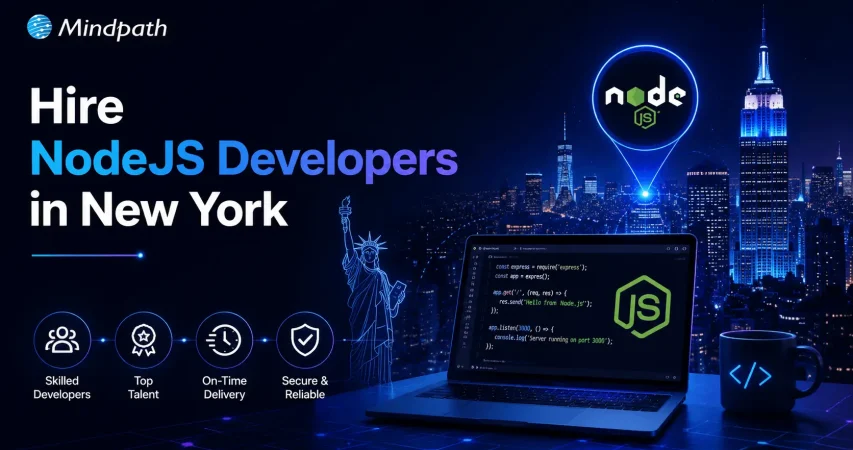
Are you looking to build a fast and scalable web application? Do you need expert NodeJS developers in New York to bring your ideas to life? Finding the right developers can be challenging, but with the right team, you can create high-performance applications that drive business success. But where can you find the best talent?

Hiring Node.js developers in New York is essential for businesses seeking scalable and high-performance applications. With its event-driven architecture and non-blocking I/O, Node.js enables fast and efficient development, making it a preferred choice for real-time applications, APIs, and enterprise solutions.

New York’s dynamic tech ecosystem offers access to highly skilled Node.js developers with expertise in modern frameworks and development best practices. Whether you’re building a startup or expanding an existing platform, choosing the right developers ensures seamless execution, optimized performance, and long-term success.

Let’s explore how you can hire top NodeJS developers to take your project to the next level!

Steps to Hire Node.js Developers in New York

Finding the right Node.js developer for your project in New York can be challenging, given the city’s competitive tech landscape. Whether you’re building a scalable web application, an API-driven platform, or a real-time service, hiring skilled Node.js developers ensure the success of your project. Follow these structured steps to streamline your hiring process and secure the best talent for your team.

1. Define the Job Requirements

Start by outlining a clear and detailed job description. Identify the key responsibilities and technical skills required, such as expertise in JavaScript, Node.js frameworks (Express.js, Nest.js), databases (MongoDB, PostgreSQL), and cloud services. Include soft skills like communication, problem-solving, and teamwork to ensure compatibility with your business culture. Additionally, specify the job type—whether onsite, remote, or hybrid—along with project goals and expected outcomes. A well-defined role attracts highly qualified Node.js developers in New York.

2. Structure a Hiring Process

Develop a structured hiring framework that enables you to evaluate candidates effectively. Start with resume screening to shortlist potential developers. Conduct technical assessments to gauge coding proficiency, followed by behavioral interviews to assess cultural fit. Consider assigning a test project that mirrors real-world development challenges. A well-organized hiring strategy ensures that you find a Node.js developer who meets your technical needs and aligns with your company’s values.

3. Source Qualified Candidates

To find the best Node.js developers, leverage multiple recruitment channels. Post job listings on platforms like LinkedIn, Indeed, and Glassdoor. Attend NYC-based tech meetups, conferences, and hackathons to network with developers. Partnering with a specialized Node.js development agency in New York can also provide access to pre-vetted professionals, saving time and effort. Utilizing diverse sourcing methods increases the chances of finding the right developer for your project.

4. Evaluate Technical Skills

Assess candidates by reviewing their portfolios and GitHub repositories. Examine past projects to check experience with Node.js, backend architectures, database management, and API integrations. Conduct coding tests to evaluate problem-solving abilities and efficiency. In addition to technical expertise, consider adaptability, communication, and teamwork skills. A thorough assessment ensures you select highly skilled and reliable Node.js developers in New York.

5. Conduct In-Depth Interviews

Implement a well-structured interview process that covers both technical and behavioral aspects. Begin with a screening call to discuss experience and expertise. Follow up with a technical interview, including questions on Node.js architecture, performance optimization, and database handling. Live coding sessions or case studies can help measure real-time problem-solving abilities. Team interviews further assess how well the candidate collaborates with others. A fast yet thorough interview process is crucial for securing top talent in the competitive New York tech market.

6. Finalize the Hiring Decision

Once interviews are complete, select the best candidate based on technical skills, problem-solving ability, and cultural fit. Conduct reference checks to validate past performance. Offer a competitive salary package in line with New York’s tech industry standards. Before onboarding, clearly define job expectations, workflows, and team structures. Providing a seamless onboarding experience helps new developers integrate quickly and contribute effectively. Hiring the right Node.js developer ensures the long-term success of your software development projects in New York. By following these steps, you can efficiently hire skilled Node.js developers in New York who bring expertise, innovation, and value to your business.

Factors to Consider While Hiring Expert Node.js Developers in New York

In today’s fast-paced digital world, businesses need skilled developers to build scalable and efficient applications. Factors to Consider while Hiring Expert Node.js Developers in New York include not just technical proficiency but also industry knowledge, problem-solving skills, and the ability to work within a team. Given New York’s competitive tech market, making the right hiring decisions is crucial for project success. Here’s what you need to consider:

1. Understanding of Scalable Architecture

Node.js is often used for building high-performance applications that require scalability. A great developer should understand microservices architecture, serverless computing, and cloud deployment strategies. This ensures that applications remain efficient as user demand grows.

2. Experience with Real-Time Applications

New York businesses, especially in finance and e-commerce, often require real-time features such as live chat, stock trading updates, or order tracking. Hiring a developer with experience in WebSockets, event-driven programming, and message queues ensures seamless real-time functionality.

3. Familiarity with DevOps and CI/CD

To maintain rapid development cycles, a Node.js developer should be comfortable with DevOps practices. Experience with Continuous Integration/Continuous Deployment (CI/CD) tools like Jenkins, GitHub Actions, or CircleCI helps streamline the software development process and improves reliability.

4. Security and Compliance Knowledge

With data security regulations such as GDPR and industry-specific compliance requirements in finance and healthcare, developers should be well-versed in security best practices. Understanding authentication mechanisms like OAuth, JWT, and secure API development is essential to protect user data.

5. Performance Optimization Skills

New York’s fast-moving tech industry demands applications that run efficiently. A skilled Node.js developer should know how to optimize code for speed, handle memory leaks, and implement caching strategies using Redis or similar technologies to enhance performance.

6. Problem-Solving and Debugging Expertise

Great developers don’t just write code—they solve problems. Strong debugging skills using tools like Chrome DevTools, Postman, or LogRocket can help identify and resolve issues quickly, reducing downtime and improving user experience.

7. API Development and Integration Abilities

Node.js is widely used for building RESTful and GraphQL APIs. A proficient developer should have experience designing scalable APIs and integrating third-party services, ensuring smooth communication between systems.

8. Adaptability to New Technologies

The tech landscape is always evolving, and top-tier developers continuously learn and adapt. Whether it’s adopting newer frameworks like Deno or incorporating AI-driven functionalities, hiring developers with a growth mindset ensures long-term success.

9. Effective Collaboration and Communication

A Node.js developer often works with front-end developers, designers, and project managers. Strong communication and teamwork skills ensure smooth coordination, helping projects stay on track and meet business objectives efficiently.

10. Understanding of Business Needs

Beyond technical expertise, a great developer understands the company’s vision and customer needs. Whether it’s an e-commerce platform requiring seamless transactions or a fintech app demanding high-level security, a developer who aligns with business goals contributes significantly to project success.

Key Skills to Prioritize When Hiring a Node.js Developer in New York

Finding a skilled Node.js developer requires assessing a blend of technical expertise and problem-solving abilities. Essential skills to look for when hiring a Node.js developer in New York include mastery of backend frameworks, database management, and API development. Additionally, strong debugging and performance optimization skills are necessary for building high-performing applications that can handle real-world demands.

1. Proficiency in Asynchronous Programming

Node.js is built on an event-driven, non-blocking I/O model, making asynchronous programming a fundamental skill. Developers should be comfortable working with callbacks, Promises, async/await, and event loops to ensure smooth execution of multiple tasks without blocking operations. Mastering these techniques helps improve application responsiveness, especially when dealing with real-time data processing or high-traffic applications.

2. Expertise in Backend Frameworks

A strong foundation in backend frameworks enhances the development process and ensures efficient server-side logic. Developers should be well-versed in frameworks like Express.js, NestJS, and Fastify, which simplify request handling, middleware integration, and API routing. Each framework offers unique advantages—Express.js is lightweight and flexible, NestJS provides a structured, modular architecture, and Fastify is optimized for performance. Choosing the right framework based on project requirements is key to scalable and maintainable development.

3. API Development and Integration

Modern web applications rely on robust APIs for seamless communication between the frontend and backend. Skilled Node.js developers should be able to design, develop, and integrate RESTful and GraphQL APIs while ensuring proper authentication, authorization, and validation. Implementing best practices such as rate limiting, caching, and API documentation using tools like Swagger improves efficiency and security. Developers should also be familiar with third-party API integrations for payment gateways, cloud services, and external databases.

4. Performance Optimization Techniques

Efficient performance management is critical for handling large-scale applications. Developers must be proficient in caching techniques (Redis, Memcached), load balancing, clustering, and stream processing to optimize application speed. Additionally, knowledge of event-driven architecture and WebSockets allows for real-time communication, making applications more dynamic. Writing optimized code, reducing redundant queries, and monitoring system performance using tools like New Relic or Prometheus contribute to better scalability and user experience.

5. Security Best Practices

With rising cybersecurity threats, securing a Node.js application is a top priority. Developers should be knowledgeable in preventing common vulnerabilities such as Cross-Site Scripting (XSS), SQL Injection, Cross-Site Request Forgery (CSRF), and data breaches. Implementing OAuth, JWT authentication, data encryption, and secure HTTP headers ensures robust protection. Regular security audits, dependency scanning using tools like Snyk, and best practices in access control further strengthen application security.

Breaking Down the Cost of Hiring Node.js Developers in New York

The cost of hiring Node.js developers in New York depends on experience, project complexity, and the hiring model. Whether you need a freelancer, an in-house developer, or a full-service agency, understanding pricing structures helps you make the best decision for your budget and project needs.

1. Hourly Rates Based on Experience

Junior Developers (0-2 years): Charge $12-$50 per hour for basic tasks like bug fixes and API integrations.

Mid-Level Developers (3-5 years): Earn $50-$100 per hour, handling backend development, databases, and performance optimization.

Senior Developers (5+ years): Command $80-$150+ per hour for complex system architecture and high-performance solutions.

While hiring locally ensures smoother collaboration, outsourcing to lower-cost regions can be a budget-friendly alternative.

2. Estimated Project-Based Pricing

Small Projects: Simple applications cost $12,000-$25,000.

Medium Projects: Custom apps with real-time features range from $25,000-$45,000.

Large-Scale Solutions: Enterprise-level applications often exceed $60,000.

A development agency typically charges between $72,000-$116,000 per year, providing full-cycle development with ongoing support.

3. Key Cost Influencers

Project Complexity: More advanced features require higher investment.

Hiring Model: Freelancers are cost-effective but lack ongoing support; in-house teams offer stability but add overhead costs; agencies provide expertise but at a premium.

Location: Hiring locally ensures real-time collaboration, while outsourcing lowers costs.

By weighing these factors, businesses can find a cost-effective yet skilled Node.js developer that aligns with their needs.

Hiring the right Node.js developers in New York is essential for building scalable, high-performance applications. With the city’s competitive tech landscape, businesses must follow a structured hiring process, evaluate technical expertise, and consider cost factors to secure top talent. Whether you’re developing a real-time application, API-driven platform, or enterprise solution, skilled Node.js developers ensure seamless execution, optimized performance, and long-term success. By making informed hiring decisions, you can build a strong development team that drives innovation and growth.

Looking for expert Node.js developers in New York? Mindpath offers top-tier development services tailored to your business needs, ensuring scalable, high-performance applications. Whether you need real-time solutions, API development, or enterprise-grade software, our skilled developers are ready to bring your vision to life.
Let’s build something great together—contact us today!

Related Post

Explore how is AI transforming future, impacting data privacy, job markets, and business automation. Learn about Mindpath’s AI Services.

Related Post

hire node js developers

In this new age of technology, speed and performance are more important than ever. If you are creating an enterprise chat application, an e-commerce site or a custom dashboard, the right technology and right people behind it can be a game-changer. It’s the time to think smart, if you are aiming to stay ahead in the competitive market. Well, choosing to hire Node.js developer can help you build fast, scalable and reliable web applications that can match your business goals perfectly. 

Node.js is relied on by some of the world’s largest brands due to its event-based architecture and non-blocking I/O model. Node.js enables developers to support numerous connections at the same time, leading to extremely efficient backend systems. When you recruit Node.js developers, you’re hiring professionals with experience in optimizing performance while maintaining minimal development expenses. In this blog, we will look at the primary reasons why you should hire Node.js developers to be a great business decision for your growth and success. 

Looking to turn your ideas into high-performance web applications? Mindpath offers expert Node.js development services that are intended to transform your ideas into applications. 

Overview of Node.js

Node.js is an open-source platform that allows developers to execute JavaScript on the server, rather than just in the browser. It’s built upon Google’s V8 engine, which is very fast, so it can execute tasks efficiently. Node.js allows developers to utilize the same language to code the front and back ends of a website, which means that building stuff is easier and quicker.

What is so special about Node.js is how efficiently it can deal with lots of users simultaneously without lagging. This is perfect for real-time applications such as chats platforms or live streaming. It’s also simple to scale up your business, so even if your users increase, Node.js can keep up with it. And there are thousands of pre-built tools available through npm that make it easier for developers to create better apps without having to build them from scratch. 

With the increased demand for Node.js, hiring Node.js developers has also become essential.

Let’s find out what benefits Node.js developers can offer:  

Why Hire Node.js Developers?

Node.js is becoming a top choice for businesses that need swift and responsive web solutions and seasoned developers can unlock its full potential to create glitch-free, real-time applications. These are the reasons to hire Node.js programmers for your next project: 

1. Build Apps that Grow With your Business

One big reason to bring in Node.js developers is their skill in building apps that grow with your business. As more people use your app, it needs to handle lots of users at the same time without slowing down. Node.js developers know how to make that happen. They use smart ways to manage traffic and keep everything running smoothly. Whether you’re starting small or expecting fast growth, they build your app ready for the future. If your app needs to respond quickly, handle real-time updates, or manage lots of users, these developers can handle that expertly. 

2. Affordable Development with Great Results

Using tools that don’t cost extra helps keep your project budget friendly. Developers skilled in Node.js know how to make the most of this free technology to build reliable and fast apps. Their experience means they can deliver quality work without unnecessary expenses. This balance of cost and performance makes a big difference for businesses looking to grow without overspending. With their help, you get a well-built application that won’t drain your resources but still meets your needs perfectly. 

3. Creating Interactive and Real-Time Experiences

When you want apps like chat, games, or teamwork tools that work instantly, developers with Node.js skills are the right choice. They understand how to build systems that don’t slow down, even when many users are active at once. Their work makes sure your app can handle lots of requests without waiting around, so everything feels fast and smooth. This means users can enjoy real-time updates and seamless interactions. Having these developers means your app will stay quick and responsive, giving your users a great experience every time they use it. 

Also Read: Advantages of NodeJS

4. Expertise in NPM

A good Node.js development company can offer you node.js developers who are experts in using NPM (Node Package Manager), the built-in tool that helps add new features quickly. Instead of building everything from scratch, these developers can easily find and use ready-made packages to speed up the process. This means your app can get new functions faster and updates happen smoothly. Their experience with NPM helps save time and effort, so your project moves ahead without delays. Hiring them means your app gets built efficiently while still being flexible for future changes.  

5. Offer Full Stack Development

With Node.js development, you get developers who can build both the front-end and the back end of your web app. They use the same language, JavaScript, for everything, which makes the process faster and more organized. These developers know how to create what users see and also set up the systems that keep your app working in the background. This means you don’t need two separate teams. It saves time, avoids confusion, and helps your app run smoothly from start to end. It’s a simple and smart way to get full-stack development done right. 

6. Perfect Fit for Microservices Architecture

Node.js developers are great at building apps using microservices Architecture. These are small parts of an app that can work on their own but also connect with other parts when needed. This makes the whole app easier to build, change, and grow. If one part needs an update, they can fix just that part without touching everything else. It keeps things flexible and clean. With Node.js developers, your app becomes easier to manage and ready to scale as your business grows. It’s a smart way to handle complex web apps without making things messy. 

7. Easy Accessibility

Node.js developers are easy to find because Node.js is based on JavaScript, a language most developers already know. This means that they don’t need much training to get started on your project. They can jump in quickly and begin working without long delays. This makes the whole process faster and smoother for you. Whether you’re starting something new or growing an existing app, having developers who already understand the tools saves time and effort. It’s a simple and smart choice when you want things done efficiently and without hassle. 

Looking to build fast and scalable NodeJS applications? Read our blog on hiring expert NodeJS Developers for High-Performance Apps to see how experienced developers can deliver robust, high-performing solutions for your business.

Ready to Build Powerful Applications with Node.js Developers?

Choosing to hire Node.js developers is one of the smartest choices for creating fast, real-time, and scalable web apps. These developers bring the right mix of front-end and back-end skills to keep your application running smoothly while handling more users as you grow. Their ability to work with modern tools and create user-friendly, high-performing apps makes them the right fit for businesses of all sizes. 

At Mindpath, our Node.js development services are designed to turn complex ideas into smooth, high-performing applications. Our developers are skilled in using the latest tools like NPM, real-time capabilities, and scalable systems to support your business needs. We bring both technical skill and practical experience to deliver solutions that are efficient, reliable, and easy to manage. 

Hire Node.js developers at Mindpath to give your business a strong edge in the digital space. Our team works closely with you to understand your goals, then builds powerful web solutions that meet them. Whether you’re starting small or planning big, we’ve got the skills to grow with you. 

Discover the transformative power of conversational AI chatbots. From cost savings to increased sales, learn how chatbots can drive growth.
what is conversational ai

Companies today understand that it’s essential to have satisfied customers at every touchpoint, to keep in front, and that is where the magic of Conversational AI resides. Are you wondering what is conversational AI? It is the technology that informs smart chatbots and virtual assistants that provide 24/7 interactions for infinitely scalable engagements. Organizations leverage conversational AI to reduce waiting hours, respond to customer inquiries in real-time, and keep delivering a consistent quality of service.

This amazing technology is enhancing efficiencies, saving costs, and maximizing customer satisfaction. Conversational AI stands to revolutionize the performance of an organization, as well as the measurement of its growth, by automating processes with personalized support. If you’re interested in how it works and what benefits it has in store for you, let’s discuss all its amazing features in this blog, step by step.

Are you looking to implement smart chatbots or a virtual assistant in your business to enhance customer engagement? Mindpath’s AI Development Services will help you achieve customer satisfaction with 24/7 support.

What is Conversational AI?

Conversational AI is smart technology that helps artificial intelligence bots like chatbots and virtual assistants talk with people in a natural, human-like way. It’s all about making AI more human, so interactions feel real and engaging. By understanding what we say and how we say it, these systems make conversations easier and more helpful for everyone.

Conversational AI is built using machine learning and natural language processing, and it harnesses the knowledge of millions of conversations. Learning from these conversations allows artificial intelligence bots to improve upon responding to questions, solving problems, and predicting what a customer may need next more accurately. It’s a powerful step toward making AI more human and building better customer experiences.

Also Read: How conversational AI chatbots help businesses!

Types of Conversational AI

There are different types of Conversational AI technologies a business can use to meet customers and deliver its services to them. Each one operates in its own way and could have its own niche when it comes to customer support, sales, or engagement objectives.

1. Voice Bots/Assistants

Voice bots and assistants are a type of conversational technology that interacts with people through spoken language. They listen to what a person says, figure out what they need, and respond naturally. This makes everyday tasks easier, from playing music to managing smart home devices.

2. AI Chatbots

AI chatbots are a powerful type of conversational AI designed to hold natural, human-like chats. These conversational agents use advanced language models to understand context and respond in a way that feels personal and clear. They help businesses handle complex questions and provide better support around the clock.

3. Interactive voice response (IVR)/Interactive voice assistants (IVA)

Interactive Voice Response and Interactive Voice Assistants are a type of conversational AI that helps people navigate phone systems using voice or keypad inputs. They understand what a caller needs and guide them to the right solution without long wait times. This makes customer service smoother, faster, and more convenient.

Wondering how conversational AI is advancing into systems capable of autonomous action and decision-making? Explore how Agentic AI is redefining intelligent, self-directed digital behavior.

Advantages of Conversational AI

Conversational AI has become an important part of how companies connect with people today. Here are some key advantages it can bring to your business.

Advantages of Conversational AI

1. Boosting Business Efficiency

Conversational Artificial Intelligence can manage many routine tasks without needing a human agent every time. This means your team can spend more time on important work while the AI handles simple customer conversations. With artificial intelligence conversation tools available 24/7, your business can solve customer queries faster and work more efficiently, showcasing the many benefits of chatbot technology for operational productivity.

2. Cost-Effective

A good conversational AI platform can handle customer calls and chats automatically, with little need for extra staff. By making AI more human and accurate, it helps you manage high volumes of requests without extra cost. This saves money on daily operations and reduces mistakes, keeping your business cost-effective.

3. Improved Customer Experience

Artificial intelligence bots make it easy for customers to get quick answers and help whenever they need it. This technology offers personalized replies and a smooth, contactless service for people all over the world. It creates a better customer experience and keeps people happy with your business.

4. Enables Personalization

This technology learns from each customer’s information, like location and past interactions, to offer a more personal chat experience. It can suggest helpful answers and next steps based on what each person needs. This makes solving problems faster and reduces the need for follow-up calls.

5. Smarter Data Collection

This technology helps you collect useful information from every customer conversation. By tracking what people say and how they interact, you can spot trends and understand what customers really want. This makes it easier to improve your sales and marketing strategies over time.

Want to explore the innovations shaping the future of conversational AI? Explore our blog on the top AI trends to discover the emerging technologies redefining intelligent communication.

Use Cases of Conversational AI

Conversational AI can be used in many ways to make business operations smoother and customer interactions better. Here are some common use cases that show how an example of conversational AI works in real life.

1. Conversational IVR Systems

Modern IVR systems let customers speak naturally instead of pressing buttons to find help. For example, airlines now use conversational IVR to let travelers say things like “Change my flight” or “Check flight status” and get quick answers without waiting for a live agent.

2. Seamless Transfer to Live Agents

When a bot can’t handle a request, it passes the chat to a live agent along with all the details, so nothing gets lost. For example, a telecom company’s virtual assistant can detect when a billing issue is too complex and smoothly transfer the full conversation to a specialist who can resolve it faster.

3. Round-the-Clock Support

These chatbots answer simple customer questions at any time of day without needing a live agent. For example, an online retailer’s chatbot can help shoppers check order status or find return instructions even after business hours.

4. Tailored Product Recommendation

This technology suggests items people might like based on what they’ve bought or browsed before. For example, a streaming service’s chatbot can recommend new shows or movies based on what you’ve just finished watching.

Ready to build conversational AI that boosts sales and strengthens customer engagement? Learn how AI in e-commerce transforms online shopping experiences and drives measurable business growth.

5. Effortless Onboarding

These assistants help new employees feel confident and prepared by guiding them through company policies and tasks step by step. For example, an HR team can use an AI onboarding assistant to help new hires complete paperwork, set up work tools, and get reminders about training sessions.

6. Task Automation

These bots connect chats to your business tools, so tasks like updating customer records or creating tickets happen instantly. For example, the best conversational AI chatbot for an e-commerce store can automatically create a return request and send an update to the warehouse team.

7. Faster Lead Conversion

These chatbots ask visitors the right questions to see if they’re a good fit for your product or service. For example, a real estate company’s chatbot can collect details about a buyer’s budget and location, then connect them with the right agent.

8. Timely Updates

These AI tools send helpful reminders and updates before customers even ask, keeping everyone informed and stress-free. For example, a healthcare provider can use this to remind patients about upcoming appointments or share wellness tips.

If you want to use AI to improve your healthcare services. Learn from our blog AI in Healthcare, where we highlight real-world use cases of conversational systems supporting medical professionals and patients.

Conversational AI Best Practices

Using Conversational AI, the right way can help you get the best results for your business and your customers. Here are some best practices to keep in mind as you build and manage your AI solutions.

Conversational AI Best Practices

1. Define Your Goals

Always be clear about why you want to use conversational AI and what you want to achieve. Make sure it fits well with your bigger business plans, so it truly adds value.

2. Pick the Perfect Tool

Pick a conversational AI tool that fits your industry and matches your budget and goals. Make sure it can grow with your business, so you get the most value over time.

3. Blend AI into Your Workflow

Connect your conversational AI with your other business tools so it works smoothly with your daily tasks. This makes your processes faster, more accurate, and more useful for your team.

4. Use the Right Balance of AI and Humans

Let AI handle simple, repetitive tasks while your team focuses on work that needs a human touch. Always set clear points where the bot should hand over to a person for the best customer experience.

Curious how AI can optimize your workforce and improve business outcomes? Check out AI redefining job roles in Tech to see how intelligent systems are reshaping employee roles and driving operational efficiency.

Take the Next Step with Conversational AI

Conversational AI is transforming how businesses connect with people by making everyday interactions faster and more personal. It helps companies work smarter, serve customers better, and grow with less effort. Now that you know what is conversational AI, you can start using it to create more value.

Mindpath offers professional AI development services to help you build and launch conversational AI that matches your business goals. Our experts create secure, easy-to-scale chatbots, voice assistants, and smart integrations. Let us help you deliver great customer experiences and stay ahead in the AI space.

Discover the power of Conversational AI! Learn its benefits, features, and how Mindpath can help transform your customer interactions.
Multimodal Generative AI

Have you ever wondered how AI can generate text, images, and even music? What if a single AI model could understand and create across multiple formats? This is where Multimodal Generative AI steps in. In this blog, we’ll dive into the fascinating world of Multimodal Generative AI and explore how it’s shaping the future of AI. 

What is Multimodal Generative AI?

Multimodal generative AI is an advanced form of AI that can comprehend and generate several types of data, including text, images, audio, and video. These systems can combine and analyze several types of input to process data from multiple sources and produce new content. Multimodal AI combines various sources of data to accomplish more complicated tasks and call for a greater understanding of the data. Although there is a lot of potential for this technology in fields like accessibility, education, and content creation, there are also issues to be resolved, like preserving accuracy and relevance and handling ethical concerns about privacy and authenticity. 

Benefits of Multimodal Generative AI

1. Improves Accessibility

Through the creation of various kinds of content, these systems improve accessibility and facilitate information access for all. By ensuring that people with different abilities can interact with content in ways that best meet their requirements, they contribute to promoting inclusion and understanding on various platforms. By offering substitute formats, these systems seek to remove obstacles and make the user experience more inclusive for all users.  

2. Creates High-Quality Content

Multimodal generative AI can lead to more complex and intelligent content by mixing several forms of data. It can include text, graphics, audio, and other components to provide interesting content. This skill enables the creation of a wide range of instructional materials or media that deepen comprehension and spark users’ interests. For everyone, it makes for a more engaging and educational experience by combining different forms. This method not only grabs the interest of individuals but also accommodates various learning styles, which makes it simpler for people to understand difficult ideas and concepts. This results in more effective and richer content that appeals to a larger audience.  

3. Boosts User Experience

Multimodal generative AI can adapt content in user interfaces to the context and the demands of the user. When voice isn’t possible, it can provide visual explanations to make sure customers receive information most conveniently. It also improves interactive experiences, like video games, by producing lifelike people and language that react differently to human input. 

Because of its versatility, technology becomes more user-friendly and accessible and creates a more engaging experience. Multimodal generative AI can offer tailored suggestions by comprehending the context, which raises customer satisfaction and facilitates more seamless, pleasurable interactions with digital material. 

4. Combines Data Effectively

These systems are capable of smoothly fusing data from many sources to deliver a more thorough and coherent knowledge of intricate circumstances. Their ability to integrate text, audio, and visual data improves analysis and decision-making. This capacity is especially useful for security, since it can improve threat identification and monitoring by combining textual, auditory, and visual analysis. 

These algorithms can find patterns and relationships by combining several kinds of data that would not be apparent when looking at a single source. By using a holistic strategy, organizations can improve their ability to respond to possible hazards and improve operational safety and efficiency.  

5. Improves Understanding and Insights

These models can get a better knowledge of both content and context than single-mode AI systems by combining many sources of data, such as text, pictures, and sound. With the capacity to understand both verbal and non-verbal aspects of a user’s question, this feature makes replies in applications such as virtual assistants more accurate and relevant. 

These systems improve communication and engagement by considering several factors, giving users a more efficient and natural experience. This enhanced comprehension leads to deeper interaction and more significant conversations, which eventually boosts the efficiency of AI applications as a whole. 

6. Drives Creative Marketing and Advertising

By combining consumer data from several sources to create personalized advertising material, multimodal generative AI can enhance marketing initiatives. These technologies can offer customized advertising materials that engage consumers on several sensory levels by analyzing interactions across various forms. Using this strategy, companies can generate ads that are more relevant and engaging for their target demographic, which improves consumer engagement and boosts the efficiency of marketing efforts.  

Use - Cases of Multimodal Generative AI

1. Human-Computer Interaction

Multimodal AI enables more natural and intuitive human-computer interactions by processing inputs from several sources, including voice, gestures, and facial expressions. This feature facilitates more seamless communication and allows customers to interact with technology in a more comfortable and familiar way. Multimodal AI improves user experiences and opens technology to a larger audience by comprehending various input formats. 

2. Healthcare

Multimodal models are essential for medical image analysis in the healthcare sector because they integrate data from several sources, including written reports, medical scans, and patient records. The capacity of medical professionals to diagnose patients accurately and create efficient treatment programs is improved by this integration. These technologies eventually enhance patient care and results by offering a greater understanding of a patient’s state. 

3. Multimedia Content Creation

Multimodal AI can generate multimedia material by mixing data from a variety of sources, such as text descriptions, audio recordings, and visual references. This feature makes the process of creating content more efficient and enables the automatic production of interesting and rich content. These systems improve efficiency and creativity by combining several modalities, which makes it simpler to create varied content that meets the tastes of various audiences.  

4. Sensory Integration Devices

Multimodal artificial intelligence (AI) improves augmented reality, virtual reality, and assistive technology user experiences by combining touch, visual, and audio inputs into one device. These gadgets build settings that are more interactive and immersive by merging many sensory inputs. This integration allows for a more thorough and pleasurable experience across a variety of apps while also improving user engagement and accessibility to technology. 

Multimodal artificial intelligence (AI) Services at Mindpath

Our AI development services help organizations better understand their requirements and make decisions by utilizing text, photos, audio, and other inputs. Our ability to integrate data from several sources gives us a full understanding of your initiatives and objectives. Our AI models make interactions more relevant and engaging by producing personalized information and responses based on your unique needs. By utilizing a variety of input methods, technology is made easier to use and more pleasurable for the user overall.  

Our services also provide valuable insights that assist businesses in making better decisions, leading to more effective strategies. At Mindpath, our aim is to harness the power of multimodal AI to empower your business and improve outcomes through innovative solutions. 

Final Thoughts

Multimodal generative AI is transforming the way humans engage with technology and consume content. It improves user experiences across a range of industries, increases accessibility, and fosters creativity by mixing diverse sources of data effortlessly. This technology has enormous potential to change industries and improve our daily lives as it develops further. At Mindpath, we’re thrilled to take the lead in applying multimodal AI to develop cutting-edge solutions that enable companies and improve user engagement. Unlock countless opportunities for development and innovation by embracing the AI of the future with us. 

Ready to unlock the potential of your projects?

At Mindpath, we harness the power of advanced AI solutions to elevate your business.

Discover how Multimodal Generative AI enhance creativity, accessibility, and user experiences across industries.