GenAI Hallucinations: A Business Guide to Reliable GenAI Outputs

Join our Newsletter!

Featured Posts

Support Is One Click Away

Home

GenAI Hallucinations: A Business Guide to Reliable GenAI Outputs

genai hallucinations

GenAI Hallucinations: A Business Guide to Reliable GenAI Outputs

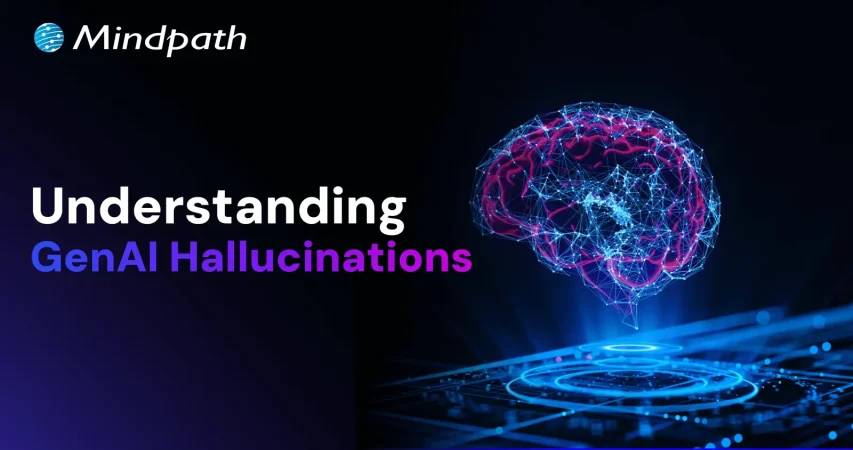
The whole world has welcomed artificial intelligence into almost every aspect of everyday life. At the same time, the concerns for careful and responsible use of AI have also been coming under the limelight. One of the notable highlights associated with responsible AI usage points at GenAI hallucinations, which can affect the credibility of generative AI. The use cases of generative AI have opened the doors to numerous opportunities for businesses worldwide across different sectors.

The arrival of generative AI improved efficiency across different areas, including the development of marketing materials and streamlining customer service. Generative AI also promises massive shifts in the conventional approaches to work. However, the insidious threat of generative AI hallucinations places huge roadblocks in the path to large-scale adoption of AI. Let us learn more about GenAI hallucinations and how to avoid them.

Deploying GenAI successfully requires more than just technology, it needs expertise and precision. Our AI development services help businesses design, train, and implement models that deliver reliable and consistent results

Understanding GenAI Hallucinations

Artificial intelligence has been modeled to think, act and work like humans. Just like humans come up with false or misleading answers when they don’t know how to respond to some questions, AI may also do the same. The basic explanation for generative AI hallucination is almost the same as generative AI models can offer nonsensical answers as factual responses. Businesses must know that AI hallucinations can invite legal challenges, affect critical decisions and lead to loss of trust.

You can get a better idea about GenAI hallucinations when you know why AI models hallucinate. AI hallucinations are the result of the approaches through which AI models learn and generate new content. Assume that a student has read multiple books in the library but has not learned how to use his knowledge in the real world. The student can connect different ideas and present convincing ideas, although some of them might not have any plausible impact.

Curious how Generative AI is transforming industries? Explore our blog on Generative AI Revolution to understand the innovations shaping the future of AI and its business applications.

Common Reasons Underlying GenAI Hallucinations

The definition of AI hallucination suggests that it represents any situation where generative AI models present false and nonsensical answers as factual output. At this point of time, you might want to dive deeper into the gen AI hallucination meaning to identify the factors that lead to AI hallucinations. The most common culprits for AI hallucinations include insufficient or biased training data, complex prompts, model architecture and overfitting.

Generative AI models learn from the training data and their effectiveness depends on the quality of data. If the data contains biases or is incomplete, then the AI models will reflect the same flaws in output of the models. Similarly, unclear prompts can also lead AI models to generate made-up information just to serve responses. The internal working and learning approach of gen AI models are also some of the notable factors responsible for hallucinations.

The consequences of these factors can be far-reaching, especially in terms of legal conflicts. On top of it, businesses should worry about AI hallucinations as they can have a negative impact on customer trust, operational efficiency and brand reputation. You can find gen AI hallucination examples in which lawyers were fined for wrong citations and businesses had to incur massive losses due to fabricated financial forecasts.

For instance, an attorney in New York used ChatGPT to conduct legal research for an injury claim. The federal judge noted that the lawyer had provided quotes and citations that never existed. The generative AI tool had not only made them up but also suggested that they were available in all major legal databases.

Wondering how businesses are putting Generative AI into action today? Explore our blog on Generative AI Use Cases in diverse industries to see real-world applications driving innovation across sectors.

How Can You Avoid GenAI Hallucinations?

Businesses must understand the consequences of AI hallucinations and follow a multi-layered approach to address the limitations. The best way to avoid them involves a combination of human oversight and technical safeguards. On top of it, businesses must follow a culture of critical evaluation with generative AI to prevent hallucinations. The following points can play a major role in strengthening a business with protection from hallucinations.

1. Pay Attention to Data Quality and Governance

The foremost solution to GenAI hallucinations is data quality as high-quality data is essential for creating reliable generative AI systems. What can a business do to ensure high-quality training data for their generative AI systems? The easiest way to remove hallucination in generative AI models is through cleaning your training data. It is important to clean the training data by removing duplicates, irrelevant entries and outdated information. On top of it, businesses must also use robust data cleaning methods to ensure accuracy, timeliness, validity and consistency.

The next crucial recommendation for improving data quality involves building a knowledge base for each business. The knowledge base will serve as a reliable source of truth, which offers company-specific and accurate information. In addition, businesses should also use diverse and representative data to reduce bias.

2. Choosing and Enhancing Gen AI Models

The choice of a generative AI model can have a significant influence on the possibilities of AI hallucinations. You should know how to identify the language model for specific tasks. For example, you may need advanced models like GPT-4 for complex applications while lighter models will be useful for simpler tasks. However, choosing the right AI models may be difficult in certain cases.

The list of ways to solve the problem of hallucinations in AI also points at techniques like Retrieval-Augmented Generation or RAG. The primary advantage of RAG is the ability to connect generative AI models to external data sources in real-time. With the help of RAG, AI models retrieve relevant information for responding to different queries. As a result, the models are less likely to hallucinate and will provide factual responses.

Also Read: Gen AI Tools

3. Prompt Engineering

The way you interact with generative AI models also affects the quality of their output. You must learn about the importance of prompt engineering in eliciting desired responses from AI models. Businesses can avoid GenAI hallucinations by following the best practices of prompt engineering. The first recommendation anyone would give for prompt engineering is to maintain accuracy in prompts. When you give clear and detailed instructions with the relevant context to an AI model, you can expect credible responses.

Businesses can also use advanced prompting techniques to improve accuracy alongside understanding the decision-making process of AI models. Effective prompt engineering can also help you fight against AI hallucinations by repeating key instructions at the beginning and end of the prompts to obtain desired responses.

4. The Human Element

The overview of some ChatGPT hallucination examples, like the one involving a New York attorney, suggests that human intervention could have solved the problem. Rather than trusting the output of AI models blindly, businesses should choose the human-in-the-loop validation approach. Continuous feedback loops for checking AI outputs against actual data can play a vital role in reducing AI hallucination.

Businesses should also implement critical evaluation training to help employees evaluate generative AI outputs. On top of it, every business must offer transparency into the working of their AI models to reduce confusion in the event of AI hallucinations.

What’s next for intelligent technologies? Read our blog on Generative AI Predictions to learn about the emerging trends defining the future of AI.

Final Thoughts

The answer to ‘what is an AI hallucination’ establishes a direct link between quality of data, prompting techniques and human-in-the-loop validation. AI hallucination is the result of the ways in which AI models learn and respond to user queries. With the growing adoption of generative AI, businesses must avoid GenAI hallucinations to protect their brand and avoid financial losses. Learn more about the effective solutions to AI hallucination now.

Related Post

Learn how to prevent cloud computing attacks with practical tips on security, API protection, and IAM to safeguard your business and data.
Discover why hiring a freelance full-stack developer in 2024 can boost your project’s efficiency, quality, and cost-effectiveness. Learn more with Mindpath!
Discover how DevOps can save your business costs by improving efficiency, and enhancing collaboration across teams for high-quality delivery.

Related Post

Reactjs web development

Are you looking forward to finding out what makes ReactJS web development incredibly popular among both developers and businesses today? All those smooth and dynamic websites and apps you use daily, many of them are built with ReactJS. If you’ve ever wanted to know how you can build something just as interactive and amazing, you’re in the right spot because ReactJS development unlocks so many possibilities for bringing your ideas to life.

ReactJS enables you to create UIs that will appear fast and be easy to use for users. Also, developers love that it is component-based and allows projects to progress from simple to complex as you grow them. The real-world project examples will display how individuals are leveraging ReactJS in different industries and how they solve problems using it. If you’re ready to bring your ideas to life, you’ll find plenty to learn in this blog.

Want to present your ReactJS project idea to the world, but don’t know how to bring it to life? At Mindpath, we offer ReactJS development services where our seasoned developers will provide full guidance from concept to launch, ensuring your project’s success.

What is ReactJS?

ReactJS is a popular tool that helps developers build the parts of a website that people see and use. It’s not a programming language, but a JavaScript library used for creating user interfaces. ReactJS makes it easier to build websites and apps that are fast and simple to manage. It uses Webpack to put all the code together and make sure everything runs smoothly in the browser. According to W3Techs, React is used by 7.1% of websites using a well-known JavaScript library, which is 5.8% of all websites.

ReactJS was first created by Jordan Walke, a software engineer at Facebook, in 2011. It was inspired by a tool called XHP that helped Facebook work with HTML better. ReactJS was first used for Facebook’s newsfeed, and then Instagram used it too. Today, it’s one of the most popular front-end tools.

Looking to future-proof your web applications with a technology that scales as your business grows? Discover the strategic top reasons to choose ReactJS for Progressive Web App development for business owners.

Benefits of ReactJS

When it comes to modern web development, understanding React JS benefits can help you decide if it’s the right fit for your projects. Many developers choose this library because it makes building user interfaces simpler and faster. Let’s look at some key ReactJS advantages that make it so popular.

1. Component-Based Structure

A big benefit of React development is its reusable components that make updates and maintenance simple. This keeps your project organized as it grows.

2. Faster Performance

React uses a virtual DOM that makes updates quick and smooth. This keeps websites and apps fast for a better user experience.

3. Cross-Platform Flexibility

With React Native, you can reuse your code for mobile apps too. This saves time when you want to create a React app for both web and mobile devices.

4. Easy to Learn and Use

Many developers choose web development with React because it’s simple to learn yet powerful. Its clear structure and helpful tools make building projects smooth for everyone.

5. Strong Community Support

ReactJS Web Development has a large, active community with helpful resources and tools. This makes building and fixing projects much easier for developers.

Wondering what separates a good ReactJS project from a truly successful one? Read the essential ReactJS Developer Skills for successful web projects to make smarter hiring and development decisions.

What are the Best Projects to Build with ReactJS?

React web development is trusted by businesses and developers to build many kinds of web apps that work smoothly and look great. It’s flexible enough to handle different goals, whether you want something simple or more advanced. You’ll see just how many possibilities open up when you choose ReactJS.

Best Projects to Build with ReactJS

1. Single Page Applications (SPAs)

SPAs load one main HTML page and update content without refreshing the whole page. This makes the user experience faster and smoother. Many developers use ReactJS Web Development to build SPAs like Trello or modern email platforms.

2. Interactive User Interfaces

Apps that need frequent user actions benefit from React’s component-based setup. It keeps interfaces dynamic and responsive to every click or input. Dashboards and social platforms are great examples of this.

3. Social Media Platforms

Social apps handle lots of data and need to stay quick and easy to use. React works well for feeds, notifications, and real-time chats. Platforms like Instagram and Facebook show how powerful it can be.

4. E-commerce Websites

Online stores have many parts, like product pages, shopping carts, and checkout steps. React helps keep all these features organized and easy to update. It’s a smart choice for anyone planning an online store.

Also Read: React vs Vue

5. Data Visualization Tools

React lets you build charts, graphs, and dashboards that help people see and understand data. These tools often need real-time updates as new data comes in. Using React makes complex data feel simple to explore.

6. Custom Web Applications

Businesses often need apps designed just for their work. ReactJS web development gives developers the tools to build custom features and workflows. This could be anything from task trackers to learning portals.

7. Booking Systems

Booking apps help people reserve flights, hotels, or services quickly. React keeps the process smooth with fast updates and clear forms. It’s trusted by many companies to handle large numbers of users at once.

8. Admin Panels and Dashboards

Businesses use admin panels to track performance and manage users or data. React’s reusable components make building these panels efficient. A well-built dashboard makes complex info clear and easy to manage.

Is your current team struggling to handle large-scale React applications? Learn why hiring a React Development Company might be the smarter choice. 

Real-World Examples of ReactJS Web Development

Many well-known companies rely on ReactJS Web Development to power their websites and apps. It helps them build fast, interactive experiences that keep users coming back. Here are some real-world examples of how ReactJS is used successfully.

Real-World Examples of ReactJS Web Development

1. Facebook

Facebook uses React to handle its entire web interface. They also depend on React Native to keep their mobile app running smoothly.

2. Instagram

Instagram depends on React to manage its photo feeds, stories, and user interactions. React’s virtual DOM makes the app fast and helps deliver an easy browsing and sharing experience.

3. Netflix

Netflix uses React to manage its user interface, from browsing shows to streaming. React’s efficient rendering keeps the platform responsive and smooth for millions of viewers.

4. Airbnb

Airbnb relies on React to display listings, filters, and booking options. Its component-based structure makes the platform simple to update with new features.

5. Walmart

Walmart’s online store uses React to manage its huge product catalog and shopping features. React helps deliver a consistent shopping experience with fast page updates.

6. Uber

Uber’s web dashboard for drivers and riders uses React for live updates like ride tracking and driver status. React makes real-time changes visible without slowing down the app.

7. Shopify

Shopify uses React to build dynamic storefronts and checkout pages. This keeps the shopping process smooth for both store owners and customers.

8. Dropbox

Dropbox uses React to create an easy-to-use file storage and sharing experience. The interface stays clear and quick to navigate thanks to React’s reusable components.

Looking to build a high-performance frontend that scales with your business and delivers real ROI? Learn from our ReactJS for App Development guide to understand how React empowers business owners to make smarter, future-ready technology decisions.

Ready to Unlock the Power of ReactJS Web Development?

ReactJS web development has proven its value for businesses and developers who want faster, interactive, and scalable web apps. From single-page applications to custom dashboards, React makes it easier to build projects people enjoy using. Real-world examples show just how flexible and powerful this library can be. With React, your ideas can become smooth, engaging digital experiences.

At Mindpath, we have built successful React and React Native projects for clients in many industries. Our team has strong expertise in developing user-friendly web apps and mobile apps that work beautifully together. We focus on clean code, reusable components, and performance that scales with your business. Let Mindpath be your trusted partner for professional ReactJS development services that bring your ideas to life.

Explore top projects built with ReactJS, from personal websites to SaaS apps. Learn why ReactJS is ideal for scalable, high-performance web solutions.
Web development technologies

If you think that web development is all about building a website, you are wrong! Web development is more about creating a scalable, intelligent digital experience that can help businesses convert visitors into loyal customers. In 2026, new web development technologies are changing how web apps and websites are developed and scaled, unlocking more engagement, efficiency, and growth potential. 

Whether you are an enterprise or a startup, here are the top website development technologies that would play an important role in your business growth in 2026. 

Looking to unlock new possibilities by integrating the latest web development technologies into your business? Partnering with Mindpath Web development services will offer you professional expert guidance on how to implement these technologies for your business growth.

What are Web Technologies?

Before exploring the latest web development technologies, let’s understand what it means. Web technologies are the tools, protocols, languages, and frameworks used to create as well as maintain websites and web apps. They include everything like front-end and back-end technologies, Web APIs, full-stack technologies, performance optimization tools, and more. 

Leveraging the right set of web development tools and technologies is crucial to creating a fast, scalable, and secure website that can support business growth. 

Major Technological Trends to Consider in 2026

A number of overarching web development trends are significantly shaping the process of web development. These are: 

1. Technologies and web development practices that focus on efficiency and speed will be important.

2. Accessible, engaging, and intuitive interfaces are necessary to retain users and drive conversions.

3. Businesses are looking for solutions that can grow with them, easily accommodating expanding features and increasing traffic. 

4. Customizing experiences for users through machine learning and AI will become a necessity for businesses. 

5. Businesses would focus more on sustainable web development practices. 

With these key trends in mind, let’s explore the vital web development technologies that every business should consider in 2026. 

Need solutions tailored to your business requirements? Explore more about custom web application to see how personalized apps improve performance and engagement.

Key Web Development Technologies List

Staying updated with the latest web development technologies is crucial for crafting websites and web apps that are flexible, future-ready, and fast. Here is a list of pivotal technologies shaping the process of web development. 

1. Machine Learning and Artificial Intelligence

While creating the top web technologies list, it would be wrong to avoid machine learning and AI in web development. AI-powered tools are automating various web development processes, like coding and testing. Besides, these tools also help streamline content generation and boost user personalization. 

On the other hand, Machine Learning models and libraries such as Scikit-learn, TensorFlow.js, and PyTorch help make a website capable of real-time analytics and more adaptive. As a result, businesses can now make intelligent/informed decisions. 

2. Headless CMS Architecture

Headless separates the front-end from the back-end. This allows developers to utilize modern programming languages, tools, and frameworks to develop customized websites and apps that perform smoothly across different platforms. 

With the help of tools such as GraphQL and WordPress REST API, WordPress’s capabilities can be combined with advanced front-end technologies such as Next.js, Vue, and React. 

3. Progressive Web Apps

Progressive Web Apps or PWAs combine mobile and web experiences, enabling seamless performance, push notifications, and offline access to enhance user engagement as well as retention. PWAs can be installed from the browsers; users don’t need to use app stores for this. Furthermore, these apps utilize HTTPS or TLS for data exchange to keep data secure. 

4. Jamstack

Jamstack combines JavaScript, APIs, and Markup together, allowing developers to separate front-end and back-end. This web development architecture ensures quick load times, improved SEO, robust CDN distribution, and higher security. This can be used for content-heavy websites, service booking platforms, or landing pages. 

Also Read: Application Security Best Practices for Web and Mobile Apps

5. Edge Computing and Serverless Platforms

Serverless platforms such as Oracle Cloud Functions, AWS Lambda, and Microsoft Azure allow the creation and deployment of web solutions without managing infrastructure. While using these platforms, developers just need to focus on writing code, and the cloud service providers will handle tasks like server provisioning, maintenance, scaling, etc. 

Edge computing helps bring processing near to the sources, significantly reducing latency and cost while improving privacy, security, and other features for businesses. 

6. HTMX

It allows developers to create dynamic web interfaces utilizing HTML attributes, lowering the use of heavy JavaScript frameworks. HTMX simplifies the development process and makes web apps offer faster performance. It can be an excellent option while developing form-heavy web apps, admin dashboards, and internal CRMs. 

7. WebAssembly

WebAssembly, or Wasm, allows browsers to run high-performance code like Rust and C++ at high speed. This means heavy or complex computations, such as video editing, gaming, cryptography, and 3D rendering, can now be done on the web. It is an ideal option for interactive learning platforms and simulation tools. 

8. Motion UI

Using motion UI frameworks, it is possible to animate interfaces. Businesses can boost user engagement through smart navigation cues, dynamic transitions, polished visual effects, and more. In short, motion UI elevates the intuitiveness and appeal of your websites and web applications.  

Want to build faster and dynamic websites? Check out our ReactJS Web Development Guide to learn how ReactJS powers modern web apps.

Most Popular Web Development Frameworks For 2026

Here is a table of the most popular web development frameworks businesses must adopt for a successful web development process. 

Front-end Technologies (List)

Framework Key Features Ideal For
Tailwind CSS  Rapid prototyping and utility-first Landing page and modern UI
React Virtual DOM, and reusable components Interactive dashboards, SPAs
Vue.js Flexibility, reactive components, and lightweight Small to medium-sized web applications
Next.js React-based, SSR, API integration, and routing Scalable and SEO-friendly platforms
Svelte Compact code, fast, and no virtual DOM Lightweight web applications
Framer Motion, and Animation Dynamic and engaging UI
Vite A huge plugin system, TypeScript support, and CSS processing Small to large web applications

Back-end Technologies (List)

Frameworks Key Features Ideal For
Laravel MVC, PHP, and elegant syntax  APIs, CMS, and e-Commerce
Node.js JS on server, and non-blocking I/O Real-time web apps and APIs
Express.js  Minimalist Node.js, performant, and clean Microservices and APIs
Supabase Open-source, REST API, branching, and custom domain Data-driven and scalable web applications
Ruby on Rails Convention over Configuration, active record, dynamic data magic, and scaffolding Web platforms and MVPs
Go Scalable, fast, and concurrency APIs and microservices
Spring Boot Java-based, auto-configuration, command line interface, and externalized configuration Large-scale and enterprise-grade web apps

Want to boost your website’s speed and scalability? Learn about web performance with Node.js to see how it powers web applications.

Why Businesses Should Embrace New Web Development Technologies?

Modern web development plays a vital role in shaping the way businesses interact with their customers. It can influence market share, conversion rates, operational efficiency, and engagement. However, some significant advantages of using new technologies in web development are: 

1. PWAs, motion design, and voice UIs can make the digital experience for users more memorable. 

2. APIs and the use of low-code platforms mean businesses can launch new products and features quicker than ever. 

3. Fast-loading web architectures like Jamstack or AMP and semantic code lead to improved visibility, increasing the reach.

4. Blockchain and serverless platforms make it easier to handle global users as well as business compliance. 

To witness these benefits, businesses should have a solid plan regarding the adoption of these web development technologies. Check out the section below to know more. 

Planning a web app as part of your technology strategy? Check out our web app development roadmap blog to understand each stage for building scalable and efficient applications.

How to Adopt These New Web Development Technologies?

If you are considering using these new web development technologies, then here are some tips to keep in mind to make the process hassle-free.

1. Ensure that the technology you want to use can support your business growth.

2. Choose one that offers enough documentation, resources as well as community support. 

3. Check whether the new technology will work well with your existing tools. 

4. Verify whether it meets data protection and compliance needs. 

5. Ensure that the new tool can help boost speed, UX, UI, and accessibility. 

6. While choosing between proprietary and open-source technologies, consider the cost factor and capabilities of both technologies. 

Want your web applications to be user-friendly and engaging? Read our UI/UX Design Trends blog to learn design practices that enhance usability and retention.

Creating a Course for Digital Dominance

Well, it is quite clear that businesses in 2026 must consider web development not just as a functional need, but as a crucial element for growth and innovation. With the help of the web development technologies list outlined above, businesses will be able to position themselves to engage with their customers effectively, innovate, and streamline their processes while supporting substantial growth. 

This is where Mindpath comes in. With a team of experienced and certified developers and a successful track record in creating dynamic and responsive websites, Mindpath empowers organizations through its web development services to translate their visions into digital reality. Besides, we leverage cutting-edge web development technologies. We understand the latest web development trends and can help you make informed technological decisions so that you can maintain your digital dominance. 

If scaling your digital presence and attaining measurable growth is your goal, Mindpath brings a perfect combination of skills, innovation, collaboration, and strategy to convert your vision into results. Begin your journey to a successful digital transformation in this evolving digital landscape with us! 

Data and analytics trends

The future of data and analytics has been unfolding faster than ever. So, it has become an utmost responsibility of the organizations to keep pace with each changing trend. The global data analytics market size is also expanding and is expected to reach USD 402.70 billion by 2032. Today, organizations are relying on real-time insights to make smarter decisions and maintain a competitive advantage. So, as we move closer to the next phase of digital transformation, it is essential to analyze the present and future directions for better approaches.

A shift from descriptive reporting to predictive analytics has already reshaped businesses. Looking ahead, data and analytics trends are going to approach deeper automation and effective integrations. Let us explore such impactful developments that are going to make your organization futuristic in 2026 and beyond.

Want to ensure your business stays ahead using 2026’s key data and analytics trends? Contact Us and discover how Mindpath can transform insights into results.

What are Some of the Empowering Data Analytics Trends 2026?

Data analytics has shifted from a support function to a strategic business driver. Previously, analytics efforts only prioritized traditional reporting. But today, modern systems are offering forward-looking insights. Let us get into some of the most diversifying data and analytics trends of the future.

1. The Growing Demand for Big Data Analytics

The efforts of exporting data for a month and analyzing it continuously have fallen out of the trend. In the near future, big data analytics will effectively prioritize data freshness with the ultimate goal of real-time analysis. This can help your business make better decisions while increasing its competitiveness.

As we move through data analytics trends of 2026, real-time analytics are becoming the default expectations for more industries. Further, organizations understand how to balance cost and latency with the usage of combined streaming and cached metrics layers. This helps in offering fresh enough data where it matters the most.

2. The Influential Demand of GenAI and RAG

We are going to enter into a transformative era in big data analytics, as three closely related abilities: GenAI, retrieval-augmented generation, and agents. They have gained massive traction in recent years. GenAI has already showcased its potential in data analytics trends 2025, and it is going to strengthen its pace in the upcoming years as well. GenAI pushes the boundaries of traditional data analysis and enables users to generate synthetic datasets and automate content building.

Further, this innovation opens up new capabilities for predictive analytics and data visualization, which were previously limited by the scope of datasets that were gathered manually.

RAG and AI agents, on the other hand, are going to leverage a unique set of opportunities and challenges as well. They can enhance AI models by augmenting them with real-time data retrieval or the ability to automate tasks with the use of tools.

As per the current trends in data analytics, we are going to watch GenAI and RAG shift from ad-hoc prototypes to standardized enterprise patterns.

Looking to see how data and analytics turn into practical AI-driven outcomes for enterprises? Explore generative AI applications to learn how organizations apply AI at scale.

3. Analytics Platforms will Handle Large Sets of Data

With the usage of cloud technology, elements like storage requirements and processing power can be infinite. Now, you don’t need to be tense about getting extra machines or physical storage, as you can use cloud storage to scale.

Further, with cloud data handling, many stakeholders can access the data simultaneously without facing any slowdowns or lags. So, unless you are adopting the right security elements, the data can be handled from anywhere and at any time.

4. The Rapid Usage of Real-time and Proactive Analytics

Nowadays, no one is appealing to the static and backward-looking reports. Latest trends in data analytics for business organizations are all about proactive alerts and real-time decision-making. Your systems should be able to detect the surface anomalies and predict outcomes. This can trigger better actions.

Organizations that can act on real-time insights are 1.6% more likely to gain double-digit annual revenue growth, as per McKinsey. So, predictive analytics is no longer optional; it should be your competitive necessity as per the data and analytics trends.

5. Democratization and Decentralization of the Data

For many years, business analysts had to leverage the efficiency of in-house data scientists when they wanted to extract and analyze data. But, things are going to be different as per data analytics trends 2026, with services and tools that enable non-technical audiences to assess data.

We are going to see more emphasis on analytics engineering. Plus, you can also experience the high demand for a visual approach. Modern business intelligence tools like Mode, Tableau, and Looker are all for visual exploration, dashboards, and best practices. In 2026, Gen-AI-enabled assistants are going to accelerate the shifts even faster.

Want to see how data-driven insights power smarter interactions in business? Discover about conversational AI to learn how analytics and AI combine to transform customer engagement.

6. The Transformation of Business Intelligence

Business intelligence is changing beyond traditional and tightly coupled dashboards towards headless analytics. So, in such a model, metrics are defined once in a governed semantic layer and can be served anywhere, like chatbots, dashboards, spreadsheets, etc.

Platforms like Looker, Power BI, and ThoughtSpot are going to magnify such a shift with natural language querying and AI-enabled analysis. The significant future of data analytics can enable quick enterprise adoption and fewer conflicting KPIs. Further, the analytics can seamlessly reach your users in the tools where they already work.

7. It will Be Easy to Process Data Variety

With a large volume of datasets, it might be challenging for you to manage all these in different formats. Moreover, you might lag behind in consistency, and manual work can give rise to a series of mistakes. This is where futuristic tools can be your ultimate savior.

Data and analytics trends are going to heighten the usage of tools like Fivetran that come with 160+ data connectors, from marketing analytics to ops analytics. So, you can gather data from hundreds of sources to generate reliable data pipelines.

Moreover, Snowflake has partnered with services like Qubole to create ML and AI capabilities in its data platform.

8. No-Code and Low-Code Implementation

As per the reports, around 77% of Asia Pacific employers are reported to find it difficult to hire reliable tech professionals. This has accelerated the adoption of no-code and low-code data integration tools. These are going to become a fundamental part of the data modernization strategy of 2026.

Modern platforms like Airbyte Cloud, Fivetran, and Microsoft Fabric enable business technologists to generate connectors and simple pipelines with less coding. As per Gartner, around 75% of new data integration flows will be generated by non-technical users in 2026.

Curious how predictive analytics and data trends influence executive decisions? Learn about data-driven decision making to learn how organizations leverage insights for growth.

9. An Incredible Shift in Responsible AI and Ethics

AI and machine learning have become integral aspects of big data analytics. So, it is critical for businesses to adopt responsible and ethical data practices. Several guidelines and risk-management frameworks have emerged globally for suitable AI usage. This can define accountability for models while monitoring performance and fairness metrics.

So, eminent companies are implementing AI governance frameworks that involve regular bias audits and diverse review boards. Further, as per data and analytic trends, organizations will invest more in training programs that can help their data teams understand the ethical implementations. Further, they can understand the clear guidelines for data gathering and usage while ensuring transparency.

10. Multi-Cloud and Hybrid Strategies

Most of the organizations are no longer betting on an individual cloud provider. Now, businesses need to adopt multi-cloud architectures and hybrid models for potential operations. As per the surveys, around four out of five companies use two or more IaaS/PaaS providers.

However, it is necessary to remember that multi-cloud environments might challenge you with architectural defaults. So, you must manage them properly. Leaders are now investing in cloud-agnostic architectures and data visualization.

Planning to choose the right cloud strategy for scalable data and analytics workloads? Check out multi-cloud vs. hybrid cloud to learn which approach supports future-ready analytics.

The Future of Data Analytics Beyond 2026

The future of data analytics trends 2026 extends beyond technology and tools. It showcases a diversifying shift in how organizations operate and compete.

1. Talking about long-term expectations, users are going to use analytics for continuous decision-making abilities.

2. Moreover, it is going to represent a better collaboration between humans and AI.

3. The whole ecosystem will be integrative while keeping your outcomes result-oriented.

Final Words

Data and analytics trends are reshaping how your business will operate and innovate in the future. As the data analytics trends of 2026 unfold, organizations must move beyond traditional aspects and adopt intelligent and automated capabilities. Latest trends in data analytics allow leaders to effectively prepare for the future and define their decision-making approaches.

At Mindpath, modern data and analytics solutions help organizations get the full potential of advanced analytics. This enables you to gain smarter strategies while improving performance and long-term digital values.