Staff Augmentation Trends Businesses Should Know

Join our Newsletter!

Featured Posts

Support Is One Click Away

Home

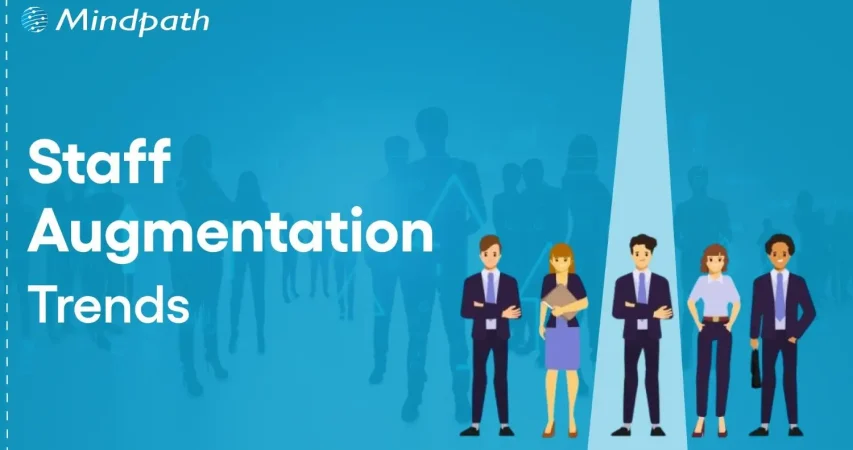
Staff Augmentation Trends Businesses Should Know

staff augmentation trends

Staff Augmentation Trends Businesses Should Know

The digital revolution has been empowering itself rapidly, and this is leading to a need for complex tech in business management. This is why organisations are dealing with hiring issues while keeping the prices minimal. Staff augmentation has turned out to be a strategic approach to deal with such risks.

The IT staff augmentation service is growing drastically and is ready to touch USD 857.2 billion by the year 2032. Further, it is growing at a rate of 13.2%. So, instead of being a niche workforce strategy, staff augmentation has become a mainstream model. In this blog, we will go through some reliable IT staff augmentation trends and why your business should acknowledge them.

Looking for a reliable partner to power your IT initiatives? Mindpath delivers premium IT staff augmentation services tailored to help you scale with confidence and drive project success.

What is the Meaning of Staff Augmentation?

Staff augmentation meaning is simple and viable for everyone. It is a flexible outsourcing strategy that allows your company to elevate their in-house with external professionals on a temporary or specific-period project basis. Traditional hiring can be time-consuming and rigid for many professionals. On the other hand, staff augmentation enables your business to quickly bring on experts with specific skills as per your requirements.

This is just like empowering your existing workforce with in-time talent. This approach can help you fill in the expertise gaps while managing seasonal demands. Most importantly, it can accelerate your strategic initiative.

  • Staff augmentation allows you to add or reduce team members as per the needs of your projects.
  • It can reduce the overhead charges of full-time hiring like taxes, benefits and long onboarding cycles.
  • You can be assured of skill-specific resourcing like cloud computing, AI and cybersecurity.

What are Some Top IT Staff Augmentation Trends to Leverage in 2026?

Let us go through some leading and meaningful IT staff augmentation trends that can make your hiring process viable in the current competitive landscape.

1. Hybrid Workforce Models

As per the recent research of ISACA, around 75% percent of employees prefer hybrid work practices. This has made many organisations leverage hybrid models. This is not only a smart recruitment approach, but a cost-efficient deal. Such Staff augmentation models can improve your team’s collaborative mediums.

Further, hybrid setups are essentially beneficial for companies that handle complicated development cycles. Around 25% of employers in the US are delivering a hybrid work culture to their workers.

2. AI and Modern Tech Implementation

AI-rich recruitment is no longer an option. It has become a mainstream necessity for employers. With the integration of AI-led tools, you can give rise to a faster and better screening assessment. Further, you can recruit skill sets that match your project requirements.

Such tools can also predict your future workforce needs. Additionally, automation and chatbots can enrich your team’s communication.

3. Adoption of Offshore and Nearshore Professionals

One of the incredible IT staff augmentation trends in the recent scenario is the hiring of offshore and nearshore experts. Nowadays, organisations are prioritising balancing factors like time zone compatibility, risks and cultural efficiency. Many organisations have claimed a reduction in operational charges due to such a viable option.

4. Cybersecurity Staff Augmentation

The trends and patterns of cyber threats have been increasing drastically. So, staff augmentation should be your foremost priority. Companies are willing to hire specialised compliance experts or security engineers through staff augmentation models to protect their infrastructure. This is becoming possible without even creating large in-house teams. Further, this approach can help you work within a regulated environment.

Must Read: AI in Cybersecurity

5. Communication-Oriented Hiring

No doubt, technical skills are important. But along with this, it is important for you to prioritise skills like collaboration and better communication. Staying in sync can help your team work towards a better goal without any mishaps.

With the rise in remote work, soft collaboration skills can facilitate better operations across multiple nations.

6. Changing Skill Advancement

As per the recent IT staff augmentation trends, organisations are valuing systems to facilitate continuous upliftment. So, IT teams are generally going through multiple training programs. Manpower is getting updated with the development of modern technologies. So, your preparation of future-rich teams can diminish your dependency on outside hiring.

7. Cloud Infrastructure Staffing

With the growth of cloud adoption, cloud infrastructure staffing is becoming prominent. Businesses are majorly augmenting teams with DevOps engineers, cloud architects and platform specialists. Such a trend can align seamlessly with DevOps staffing and cloud-centric strategies.

Wondering how companies stay flexible while scaling their teams quickly? Learn more about what is staff augmentation and why it’s a game-changer for modern businesses.

What are the Major Types of Staff Augmentation Models?

Understanding the different types of staff augmentation models can help you choose the right approach while keeping your decisions intact. Here, you can go through some main models that work potentially.

1. Short-term Augmentation

This type of process is appealing for quick turnarounds and urgent technical fixes. It generally lasts from a few weeks to several months.

2. Long-term Augmentation

When your company requires ongoing support for extensive projects, long-term augmentation can offer you continuity. Such types of staff augmentation can help you with deeper integration with your internal teams.

3. On-demand Augmentation

This model values hiring talent when your business requires it. The process remains flexible and mainly adopted in agile development criteria.

4. Team Augmentation

Instead of hiring individual talent, you can hire an entire team that can match your internal workflows.

Every types of staff augmentation vary in commitment and integration approaches. The choice completely depends on your project needs and workforce maturity.

Not sure which AI advancements are shaping staff augmentation trends? Explore the top AI models helping businesses stay competitive.

What are the Potential Benefits of IT Staff Augmentation?

The benefits of IT staff augmentation generally remain unmatched. Starting from saving your costs to hiring top talent, it can help your workflow remain streamlined. Let us discover some of the most essential benefits of staff augmentation in this section.

1. Minimal Hiring Uncertainty

With the help of staff augmentation, your company can approach top talent when you require it instead of being worried about long-term commitments. Moreover, there will be fewer chances of hiring inefficient profiles, as you are going for specialised individuals for specific tasks or projects.

2. Manageable Administrative Workloads

If your organisation is considering the help of staff augmentation providers, you can remain unburdened about the extra administrative work. Further, the providers can handle your payroll and other HR centric works. This approach can prevent you from extreme charges while saving your resources.

3. Adoption of New Technologies

With the usage of staff augmentation models, businesses can explore and experiment with advanced technologies without being tense about investing in large-scale solutions. As a result, you can hire experts to try out technologies when you require them.

Want to know how AI can enhance recruitment efficiency and strengthen your extended workforce strategy? Read our insights on Generative AI in HR to see how HR teams are leveraging intelligent automation.

What are Some Challenges of Adopting Staff Augmentation?

While staff augmentation can make you aware of many benefits, it also highlights certain challenges, as given below.

  • Your augmented teams might struggle to understand your internal work culture.
  • Misalignment can occur when the external workers are not completely informed. So, use structured communication channels.
  • External access to systems can give rise to compliance risks.
  • Your team might prioritise their skill development.

Conclusion

As IT staff augmentation trends have been shifting rapidly, your business needs a strategic augmentation partner to fulfill the hiring requirements. Starting from your remote workforces to data scientists, your augmented teams can help your companies navigate complicated digital transformations.

Partnering with professional providers ensures your organisation can pick the right expertise at the right time without compromising quality or alignment. Here, Midpath can be your ultimate preference. Experts in this company can understand your changing needs while helping you leverage the right talent solutions.

FAQs

1. What is technology staffing?

Technology staffing generally refers to the hiring of skilled IT professionals with the help of flexible models to meet project-specific requirements.

2. How is staff augmentation different from outsourcing?

Staff augmentation mainly supplements the internal team with external talent as per your company’s directions. On the other hand, outsourcing transfers responsibility for entire functions.

3. What are some eminent models of staff augmentation?

Some of the common staff augmentation models include long-term, short-term, and on-demand team augmentation.

4. How can IT staff augmentation be beneficial for you?

Through IT staff augmentation, you can have faster access to expertise while reducing the hiring team. Further, it can support your strategic initiatives without any long-term commitments.

5. Which roles are majorly augmented in businesses?

Frequently augmented roles include software developers and cloud engineers. Business also augments data scientists and cybersecurity experts for better alignment.

Related Post

Discover how top companies like LinkedIn, Netflix, and Walmart leverage Node.js for performance, scalability, and faster development. Learn more with Mindpath’s services.

Related Post

AI in finance

Generative AI revolution is the biggest force of transformation in the financial services industry right now. The capabilities of generative AI mark a significant leap for practical applications of AI in the real world across various sectors. You can find different examples of AI in finance that have been setting new benchmarks for innovation. Banking and financial services companies perceive generative AI as something more than a prevailing technology trend.

A report by McKinsey reveals that generative AI will have a significant impact on the banking and financial services sector. The report mentions that generative AI can deliver additional value of almost $240 billion to $340 billion every year in the banking industry. Companies in the financial services industry must know how generative AI can unlock new opportunities and prepare the foundation for innovation in finance.

Planning to integrate AI into your finance strategy to drive smarter decisions and growth? Mindpath’s AI Development Services provides customized AI solutions that turn data into actionable insights and innovation.

Is Generative AI Right for the Financial Services Sector?

Business leaders in the financial services industry know the challenges and complexities that come in the way of business growth. Starting from the intricacies of digital transformation to the continuous changes in customer habits, finance leaders have to deal with multiple responsibilities. You must know that the adoption of Generative AI for Business in finance creates new opportunities to achieve better efficiency.

You will find many examples of banking and finance companies that have adopted AI and transformed the way they work. Financial service providers have achieved faster budget cycle times and reduction in uncollectible balances with artificial intelligence. As the complexity of financial operations continues growing, companies look up to generative AI for various reasons. Companies in the banking and finance industry can use generative AI to find new opportunities for streamlining workflows with automation.

Planning to deliver highly customized financial services using AI? Learn about AI in personalized banking experiences to discover strategies that improve customer satisfaction and operational efficiency.

Does Generative AI Offer Any Benefits to the Financial Services Industry?

The interplay between AI and finance has created the foundation to achieve many new benchmarks in the industry. With the help of AI, financial institutions can meet emerging expectations of customers and resolve inefficiencies across various financial operations. The applications of generative AI in the domain of financial services offer more than just automation.

1. Enhancing Accuracy

One of the prominent reasons to rely on AI revolves around the assurance of freedom from human errors. The use cases of AI in compliance checks, financial reporting and audits provide the advantage of reduced errors. Artificial intelligence takes care of such tasks where attention to detail is extremely crucial and helps in reducing inconsistencies that may manifest due to human error. AI models can analyze large datasets and find anomalies to ensure strict regulatory compliance. As a result, all stakeholders can fulfill compliance requirements while ensuring better performance.

2. Introducing Hyper-Personalization

Personalization of products and services is one of the crucial measures to improve customer engagement in any industry. Generative AI finance applications can provide hyper-personalized solutions that deliver exactly what customers want. Generative AI can help in obtaining valuable and relevant insights from the financial history, spending patterns and risk profiles of customers. With the help of those insights, financial institutions can offer highly personalized recommendations to customers. For example, AI systems can recommend the ideal investment strategy depending on the portfolio and risk appetite of customers.

Must Read: Generative AI for Customer Service

The biggest strength of artificial intelligence is the capability for real-time data analysis. Financial institutions can leverage this facility to make well informed decisions at a faster pace, using AI in decision making to guide strategy and reduce errors. The use of artificial intelligence for finance helps in navigating volatile markets with more efficiency, where companies have to respond to sudden changes and take decisions instantly. You can find the best example of using AI for improved decision-making in systems that identify early signals of market instability. The ability to identify flaws earlier helps financial institutions follow preventive measures without discrepancies.

4. Optimizing Operational Costs

Cost optimization is a major advantage of applying artificial intelligence in the financial services sector. By automating repetitive and time-consuming tasks, generative AI offers the ideal instrument for cutting operating costs. Generative AI can be used by financial institutions to generate documents, answers common customer service questions and process insurance claims. AI systems also help in reducing costs through automation of mundane tasks that can be completed without human intervention. One of the best examples of cost optimization with AI is visible in the use of AI chatbots for customer service.

Ready to upgrade customer interactions using AI in finance? Discover conversational AI chatbot to learn how intelligent assistants improve efficiency and deliver tailored support.

Unraveling the Use Cases of AI in Financial Services

Many organizations believe that adopting artificial intelligence in financial services is a daunting challenge. Generative AI is a game-changer for many functions in financial institutions with proven and tested use cases. Understanding the use cases of generative AI across different financial operations can help you get a better idea of how to make the most of the technology in practical scenarios.

1. Risk Management

Artificial intelligence delivers the power to create tools that can evaluate market volatility, operational threats and credit risks. The ability to simulate various scenarios with artificial intelligence can help in creating synthetic datasets which provide the foundation for robust risk management strategies.

2. Customer Experience

Generative AI is already playing a vital role in transforming customer experiences with the help of virtual assistants. These assistants leverage artificial intelligence to provide personalized financial advice and resolve the queries of customers. Artificial intelligence is capable of analyzing customer profiles in real-time and offering personalized solutions that guarantee seamless service delivery.

3. Portfolio Optimization

You can also notice the growing influence of AI in financial industry for the use cases in investment. Generative AI can help you created advanced predictive models that provide asset performance analysis and portfolio diversification. Financial advisors can use generative AI to draw simulations of investment outcomes, thereby offering better and more accurate recommendations.

4. Fraud Prevention

The financial services industry is plagued by cases of fraud that lead to losses worth billions of dollars annually. Financial institutions can leverage generative AI to learn from large datasets of transactions to identify anomalies in transaction patterns. It provides the ideal tool for real-time fraud detection, thereby providing a heads up before malicious agents make their move. Generative AI also helps in simulation of different fraud scenarios and fine-tuning algorithms to detect emerging threats.

Want to stay ahead of the curve in AI-driven finance? Discover Gen AI trends to learn how emerging technologies are shaping smarter strategies and innovative solutions.

Success Stories of Generative AI in the World of Finance

The best way to learn how artificial intelligence has revolutionized finance would involve a review of some success stories. The advantages of AI in financial services have garnered the attention of numerous top companies. Companies in the domain of banking and finance need to take inspiration from institutions that have successfully used generative AI to address critical concerns.

Quest IndexGPT, an innovative generative AI solution developed by JP Morgan, has revolutionized the creation of investment indices.

JP Morgan created Quest IndexGPT, a revolutionary tool for creating investment indices by using generative AI. On the other hand, MasterCard leveraged generative AI for creating a proactive fraud detection system. The fraud detection technology helped MasterCard reduce false positives, thereby ensuring seamless customer experiences.

Ready to adopt the latest AI technologies for finance innovation? Explore Generative AI tools to check out how these platforms are reshaping analytics, automation, and personalized services.

Final Thoughts

You can notice the transformative impact of artificial intelligence in the domain of financial services across various areas. The growing use of AI in banking and finance has created new opportunities for transforming the way financial institutions work. In addition, artificial intelligence revolutionizes customer experience and risk management in the finance industry.

Mindpath is one of the leading providers of AI solutions tailored to client expectations. We have been delivering end-to-end generative AI development services for different industries, including the financial services sector. Our experience speaks for itself in the success stories shared by our clients. Book your first consultation with us and achieve new levels of efficiency in the financial services industry.

generative ai in market research

Generative AI is undoubtedly among the most promising technologies that have come into existence in recent years. The impact of Generative AI can be felt in diverse domains such as healthcare, business, and many more. The global generative AI market size is expected to touch USD 890.59 billion by the year 2032.

A particular area where generative AI is being used as a revolutionary tool is market research. Typically, businesses conduct market research, which helps them to make strategic decisions. In recent times, businesses across diverse industries have been leveraging generative AI in order to simplify their market research process. If you are curious to know, ‘How is generative AI in market research?’ You will find an answer to this question now.

Ready to take advantage of generative AI for smarter market research? At Mindpath, we offer AI development services to build custom solutions that deliver actionable insights and a competitive edge.

Role of Generative AI in Market Research

Before understanding the exact role of generative AI in market research, one must have clarity on “what is generative AI.” Generative AI refers to the type of AI technology that is capable of creating new content. Thus, this novel technology can create content in diverse formats like images, texts, video, and audio. It relies on the patterns that it has learned from the existing data.

Today, the role of generative AI in market research is of immense value. By integrating this novel technology, businesses are able to gain valuable insights into the latest market trends. Moreover, they are able to predict customer behavior and needs in an effective manner and deliver offerings in a prompt manner. According to McKinsey AI Report 2025, the potential of generative AI is immense. This innovative technology has the power to maximize the productivity of businesses.

Must Read: Generative AI Tools for Content & Code Creation

Benefits of Generative AI in Market Research

The economic potential of generative AI in the next productivity frontier is immense. In the market research landscape, generative AI is already playing an instrumental role in creating value for businesses. Some of the chief benefits of generative AI include:

1. Ability to gain faster insights

Generally, market research is a lengthy process for businesses. Traditionally, businesses took several days or even weeks to conduct market research. However, the adoption of generative AI in market research has simplified the entire process. Businesses can conduct market research in an efficient and accurate manner with the help of generative AI. Thanks to the novel technology, the boundaries of market research AI have expanded for businesses.

2. The bigger picture of customers

Thanks to generative AI, businesses are able to get a bigger picture of their existing as well as potential customers. By using the capabilities of generative AI, businesses are in a position to understand the exact preferences of their target audience. Moreover, they are able to create detailed customer profiles, which helps to create value for them.

3. Improved cost efficiency

Previously, businesses had to incur significant costs to carry out market research. Many businesses had to hire researchers or interviewers. Even if research was carried out in-house, it was time-consuming and expensive. However, the integration of generative AI in the market research process has made it much more cost-efficient. By adopting the novel technology, businesses are able to automate recurring tasks. Thus, the possibility of human errors is reduced significantly.

Curious how the generative AI revolution is reshaping market research? Explore the generative AI revolution to see how it’s transforming insights and decision-making.

Top Use Cases

Today, a greater number of businesses have started to rely on generative AI to conduct market research.  In order to understand the potential of this innovative technology, it is necessary to look at the real-world use cases of it. Some of the top use cases include:

1. Automation of data collection

Many business entities are adopting generative AI to automate how they gather data from the market. For example, they are able to generate survey questions. Moreover, this novel technology enables business entities to analyze the responses of their audience in an instant manner. As a result, it is possible to save valuable time and resources while undertaking market research activities.

2. Generation of research reports

After conducting research, businesses create reports based on the research findings and insights. The adoption of generative AI in the market research process has simplified how businesses create content for their reports. Instead of relying on manual report generation, businesses are able to use it to generate quality and accurate reports that are based on their market research. Thus, they can refer to these informative documents to craft their business strategies and plans.

3. Information synthesis

In the current era, a large number of data is available for businesses. This automatically makes the market research process very tedious in nature. However, by using generative AI for market research purposes, businesses today are able to synthesize information effectively. This is because generative AI is capable of sifting through a large volume of data in a precise and efficient manner. By synthesizing information at a comprehensive level, businesses are able to gain valuable and accurate insights.

Wondering how generative AI is changing industries beyond tech? Check out generative AI use cases in diverse industries to see its impact on marketing, healthcare, finance, and more.

Future Trends

The future trends for generative AI in market research are full of new opportunities and possibilities. It may redefine the entire market research landscape. As the impact of it can already be felt today, it is necessary for businesses to keep a tab on future trends. Some of the top future trends include:

1. Better collaboration between AI and humans

In the future, the use of generative AI for conducting market research may facilitate better collaboration between AI technology and human researchers. As a result, the overall richness of the research process may be enhanced. This type of collaboration can help businesses get better insights, which can impact their operations.

2. Higher personalization in research

The integration of generative AI in market research may contribute to heightened personalization. Businesses may rely on AI-driven solutions so that they can tailor their research approaches as well as strategies. So they may be in a position to get their hands on more precise and accurate insights. It can certainly empower business entities to take advantage of their research findings and create value for their market audience.

3. Real-time research

By using generative AI, businesses may be able to carry out research activities on a real-time basis. In the evolving market landscape, such a research technique can be of high strategic relevance for businesses. By gaining accurate insights in real time, businesses can deploy strategies in a proactive manner. Moreover, new opportunities can arise in their path to move ahead of their competition.

Looking to leverage the best tools for generative AI in market research? Explore top GenAI tools to learn how cutting-edge solutions enhance data analysis, insights, and decision-making.

Final Words

The adoption of generative AI in market research has been nothing less than revolutionary. The rapid adoption of novel technology in diverse areas is likely to contribute to the growth of the generative AI market in the future. Gradually, businesses have started realizing the amazing potential of it.

The benefits, as well as the use cases of generative AI in market research, highlight its promising nature. In fact, the future of generative AI in the market research context is very bright. Business entities need to capitalize on the capabilities of generative AI so that they can strengthen their market research process and gain an edge over their competitors. AI development services can help organizations design and implement custom generative AI solutions tailored to their market research needs.

Explore how generative AI is transforming market research, enhancing data management, collection, analysis, and insight sharing for smarter decision-making. 
web scraping with node js

Web scraping with Node.js allows developers to collect and use website data quickly and efficiently. It is useful to make smarter decisions, automate tasks, and enhance digital projects. The process is easy and feasible as Node.js is speedy and is compatible with JavaScript. Mastering this skill will create new prospects of dealing with real-time information and putting it into practical use in the contemporary web development projects.

This blog describes the concept of web scraping and how web scraping works in a step-by-step manner. You will get to know what web scraping is, why you should use Node.js, and how to begin using it in your projects. All ideas are simple to comprehend and straightforward. At the end, you will have a clear background on how to effectively gather, store and utilize web data for real-life applications.

Planning to gather web data efficiently for your business? Mindpath offers expert Node.js development services to create fast, scalable scraping solutions.

What is Node.js Web Scraping?

Web scraping with Node.js lets developers collect website data automatically and use it for real projects. Node web scraping refers to the creation of scripts that will retrieve web documents. These scripts read their contents and retrieve information such as prices, contacts, or news. It is easy to process static sites with such tools as Axios or Cheerio. The interactive websites can be managed with the aid of Puppeteer. The speed and efficiency of Node.js ensure a more scalable and faster scraping.

The Node web scraping operates by making requests, retrieving HTML, and extracting data on the page. JavaScript is used to handle both the static and dynamic sites. Using Node.js, developers have the ability to automate the process of logging in to a website. They can click buttons and gather information on numerous websites simultaneously. This strategy makes the process effective, valid, and prepared to apply it in the real world.

Curious why developers choose Node.js for large-scale web scraping? Explore the advantages of Node.js to see how its performance and event-driven model simplify data extraction.

Key Benefits of Web Scraping with Node.js

High-speed and efficient web scraping with Node.js provides developers with a quick and efficient tool to deal with web data. It assists teams to process vast information without any additional effort. These are the best advantages that make Node.js a robust option in the collection and use of data in real projects.

1. Fast and Efficient Processing

A Node.js scraper does not have to wait to make a number of web requests. Node.js web scraping will allow you to gather massive data within a short time.

2. Handles Modern Websites

It is common to use dynamic JavaScript loading content on websites today. Such tools as Puppeteer or Playwright allow developers to see a complete page and obtain data correctly.

3. Single Language Development

JavaScript can be utilized by developers to perform front-end and backend scraping. This makes coding easier and allows the workflow to be similar.

4. Wide Range of Tools

Node.js scraper may utilize such libraries as Axios to make requests, Cheerio to process them, and Puppeteer to automate. These are the tools that can make web scraping using Node.js flexible to any project.

Must Read: NodeJS Libraries for AI 

5. Scalable for Growth

The ability to work with large number of data streams simultaneously makes Node.js relevant to the large-scale web scraping project. It is capable of expanding along with your data requirements.

6. Easy Integration

Scraped information is often included in the form of JSON, which is automatically processed by the Node.js. This information may be inputted directly into web applications, databases, or analytics pipelines.

7. Automates Repetitive Tasks

Web scraping with Node.js provides an ability to log in, click on buttons, and scroll the pages automatically. A scraper made with Node.js saves time and makes the data collection regular.

8. Real-Time Data Monitoring

Using a Node.js scraper, it is possible to make continuous updates on the sites. This assists in the collection of new information within a short time to analyze or report.

Looking to ensure your Node.js scraping applications run fast and efficiently? Check out web performance with Node.js to learn how optimization techniques improve speed, scalability, and reliability.

Steps to Build a Node.js Web Scraper

Web scraping with Node.js lets developers collect data efficiently and apply it to real projects. A scraper to build needs the right planning and procedures. The key actions to develop a Node.js web scraper and begin the data extraction process successfully include the following.

Steps to Build a Node JS Scraper

1. Set Up Your Project

Make a new project folder and get it started using npm. This prepares your Node.js environment for web scraping with Node.js. The project will manage all dependencies through a package.json file.

2. Install Necessary Libraries

Install such tools as Axios to make the HTTP requests and Cheerio as the HTML parsing tool. The libraries simplify the creation of a Node.js scraper. They give you the core tools for web scraping with Node.js.

3. Choose Target Websites

Choose the sites that you would like to scrape. Ensure that you are obeying their rules and law. Target selection helps to make sure your web scraping of Node.js is safe and effective.

Must Read: Full-Stack Development with Node.js

4. Fetch and Parse Pages

Get the HTML of the page using Axios or any other HTTP library. Load it into Cheerio or other similar to navigate and choose elements. The next thing that needs to be done is to prepare your data that your Node.js scraper will extract.

5. Extract and Organize Data

Even define the information you require, such as prices, titles, or links. It should be collected using CSS selectors. Export the data that has been extracted in a simple, easy-to-use format: JSON, CSV, or database.

6. Execute and Improve

Install and run your Node.js scraper and verify the output. Include error management and rate limiting to prevent problems. Refining your process ensures web scraping with Node.js runs smoothly and efficiently.

Looking to simplify web scraping with Node.js? Explore essential Node.js libraries to make data extraction faster and more reliable.

Ready to Unlock the Power of Web Scraping with Node.js?

Web scraping with Node.js allows developers to collect and use data efficiently, making it easier to support smarter decisions, automation, and digital innovation. By understanding the right tools, techniques, and workflows, businesses that hire Node.js developer can work seamlessly with both static and dynamic websites, manage large datasets, integrate data into applications, and gain real-time insights to enhance project prosperity

Mindpath is a trusted Node.js development company offering expert web and Node.js development services to build fast, scalable, and secure applications. Their team creates custom solutions for web scraping, data integration, and automation. With experience in modern technologies, they deliver efficient and reliable results. Choosing Mindpath ensures your Node.js projects run smoothly, save time, and meet your business goals with high-quality support.