Decoding PHP and Node.js: Which Technology Wins for Modern Development?

Home

Decoding PHP and Node.js: Which Technology Wins for Modern Development?

Decoding PHP and Node.js: Which Technology Wins for Modern Development?

Join our Newsletter!

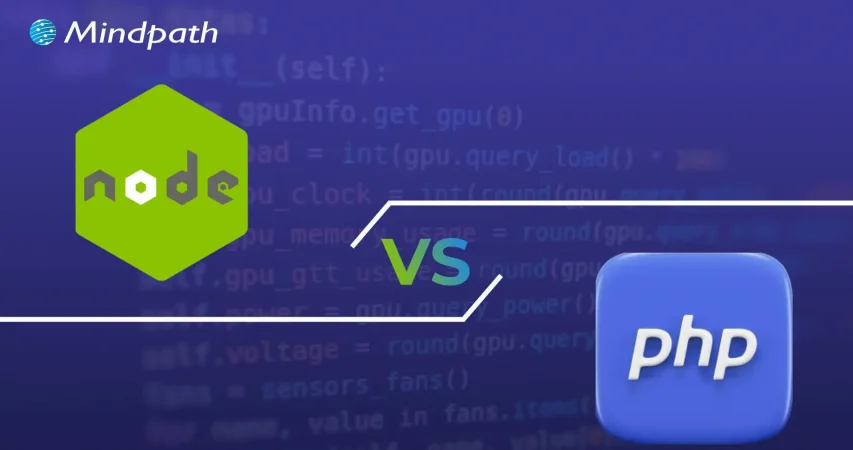
Php vs Nodejs

Today, web apps have completely changed the way businesses work. Modern users expect fast, responsive, and feature-rich digital experiences, from eCommerce sites and online banking to real-time messaging and streaming services. Because of this rapid growth, developers have had to use powerful backend technologies that can handle more requests.

The PHP vs. Node.js debate is still the most talked-about topic in the development community, even though there are many other options. Over the years, both technologies have changed a lot and are now widely used to make web apps that can grow. But when developers have to choose between php and node, they often have a hard time figuring out which one is better.

So, which one should you pick for backend development in the modern age? Let’s break it down in a way that is easy to understand and useful.

Looking to implement the right backend technology with expert support? Mindpath provides professional services to help you hire expert NodeJS developers for efficient and reliable development.

A Quick Introduction to PHP and Node.js

Before we start comparing, we need to know what these technologies really are.

PHP is a scripting language that runs on servers and is made for making websites. It has been around since the middle of the 1990s and is still used by a lot of websites today. PHP is one of the most popular backend technologies because many popular platforms, like WordPress, use it a lot.

Node.js is not a programming language; it is a runtime environment. It lets developers run JavaScript on the server. This means that developers can use the same language for both the front end and the back end, which makes development easier.

The main difference between php and node js for the backend is how they handle requests and run code.

How PHP and Node.js Work?

PHP works in a way that is synchronous. This means that it only handles one request at a time. Before moving on to the next request, each one has to finish the one before it. This method is stable and works well, but it can make things run slower when there are a lot of users at once.

Node.js works in an asynchronous, non-blocking way. It can handle more than one request at once without having to wait for one process to finish. This makes Node.js very fast, especially for apps that need to work in real time.

This difference has a big effect on how well php and node work, and it has a direct effect on speed and scalability.

Benefits of PHP

Even though PHP is an older technology, it is still very useful. Many types of projects can benefit from using php.

1. Strong Ecosystem

Laravel and Symfony are two of the many frameworks that make up PHP’s huge ecosystem. It also works with popular content management systems (CMS) like WordPress and Drupal, which speeds up development.

2. Easy to Learn

The syntax of PHP is simple, which makes it easy for beginners to use. Developers can quickly make working apps without having to learn a lot.

3. Wide Hosting Support

Most hosting companies support PHP. This makes it easier and cheaper to deploy.

4. Database Flexibility

PHP works well with a lot of different databases, such as MySQL, PostgreSQL, and even NoSQL databases like MongoDB.

5. Stability and Maturity

PHP has been in development for decades and now provides a stable and reliable environment for web apps.

Benefits of Node.js

Node.js is becoming more popular because it has a modern architecture and is flexible. Node.js is great for next-generation apps because of all the good things it can do.

1. High Performance

Node.js runs code quickly thanks to Google’s V8 engine. This speeds up and makes the application more efficient.

2. Non-Blocking Architecture

Because it uses an asynchronous model, it can handle many requests at once, which makes it very scalable.

3. Full-Stack Development

JavaScript can be used for both the front end and the back end, which makes things easier.

4. Large Package Ecosystem

The npm ecosystem has thousands of libraries that make development go faster.

5. Real-Time Capabilities

Node.js is great for chat apps and live streaming platforms that need to get updates in real time.

PHP vs Node: A Detailed Comparison

When choosing a backend technology, developers often compare PHP and NodeJS based on performance, scalability, and ease of development. Both have evolved significantly and are widely used in modern web applications. Understanding their differences helps in selecting the right tool for specific project needs.

1. Speed and Performance

When talking about the speed of PHP vs. Node, performance is very important.

PHP handles requests one at a time. When there is a lot of traffic, this can make the load time longer. But newer versions, like PHP 7 and 8, have made things run much better.

Node.js can handle many requests at once because its architecture doesn’t block. This gives it an advantage in applications that need to work quickly and well.

When it comes to performance, Node.js is usually faster for tasks that involve a lot of input and output, while PHP works well in structured, content-driven apps.

2. Development and Coding Experience

When comparing PHP and Node, the experience of the developer is also important.

To use PHP, you need to know about backend concepts. It works well with traditional stacks like LAMP (Linux, Apache, MySQL, PHP). It’s simple, but you might need to use more than one technology to do it.

Node.js makes development easier by using JavaScript for the whole stack. But you need to know how to do asynchronous programming, which can be hard for beginners.

Node.js is more flexible, while PHP is easier to use and understand.

3. Functionality and Use Cases

The answer to the question of which is better, php or node js, depends on what your project needs.

PHP is best for:

  • Websites that use a CMS
  • Blogs and platforms for content
  • Websites for eCommerce
  • Web apps that are old-fashioned

Node.js is great for:

  • Applications that happen in real time
  • Platforms for streaming
  • Microservices and APIs
  • Apps that only have one page

4. Database and Ecosystem

A Comparison of Databases and Ecosystems. People often use PHP with relational databases like MySQL. It works well with traditional database systems and is used a lot in CMS platforms.

Node.js works perfectly with both SQL and NoSQL databases. Because it is based on JSON, it works especially well with MongoDB and modern application architectures.

PHP has a bigger and more developed community when it comes to its ecosystem. Node.js, on the other hand, is growing quickly and fits in with current trends in software development.

PHP vs NodeJS: Comparison Table

Feature PHP NodeJS
Type Server-side scripting language Runtime environment for JavaScript
Execution Model Synchronous (handles one request at a time) Asynchronous, non-blocking (handles multiple requests at once)
Performance Good, improved in PHP 7 & 8 High performance, especially for real-time apps
Scalability Moderate Highly scalable
Development Style Backend-focused (LAMP stack) Full-stack (JavaScript for frontend & backend)
Ease of Learning Easy for beginners Slightly complex (async concepts required)
Best Use Cases CMS, blogs, eCommerce, content-driven apps Real-time apps, APIs, streaming, microservices
Database Support Strong with MySQL, PostgreSQL Works with both SQL & NoSQL (MongoDB preferred)
Ecosystem Mature, stable, large community Fast-growing, modern ecosystem
Real-Time Capability Limited Excellent (chat apps, live updates)

Can Node.js Work with PHP?

It’s not unusual for nodejs and php to work together. A lot of apps use both technologies to take advantage of their strengths.

For instance:

  • PHP can handle both CMS and server-side rendering.
  • Node.js can handle real-time things like chat and alerts.

This mixed method lets developers make apps that are more flexible and can grow.

Which One Should You Choose?

There is no one right answer to the question of which is better, php or node js.

Choose PHP if:

  •  You are making a website with a lot of content.
  • You need to be able to deploy quickly and get CMS support.
  • Your project is of a small to medium size.

Choose Node.js if:

  •  You need something that works in real time.
  • Your app needs to be able to grow quickly.
  • You want a single JavaScript stack.

Node.js is often better for modern development because it is fast and can handle a lot of traffic. But PHP is still a good and cheap choice for many projects.

Ready to Choose the Right Technology?

Choosing between PHP and NodeJS ultimately depends on your project goals, scalability needs, and development preferences. Both technologies offer unique strengths, PHP provides stability and simplicity, while NodeJS delivers speed and modern performance.

Define your requirements, evaluate your priorities, and choose the technology that best aligns with your vision. Start building smarter, faster, and more efficient applications. Contact us to discuss your project needs. Our team is here to help you make informed decisions and build efficient, scalable applications tailored to your goals. Reach out today!

FAQs:

1. What is the biggest difference between PHP and Node.js?

PHP is a scripting language that runs on the server, while Node.js is a runtime environment that runs JavaScript on the server.

2. Which is faster, PHP or Node.js?

Node.js is usually faster because it doesn’t block other code from running while it runs.

3. Is Node.js a better choice than PHP for backend development?

Node.js is better for apps that need to work in real time and grow, while PHP is best for websites that are mostly about content.

4. Is it possible to use Node.js and PHP together?

Yes, a lot of apps use both Node.js and PHP to take advantage of the best parts of each.

5. What are the advantages of using Node.js and PHP?

Node.js is fast and can handle a lot of traffic, while PHP is simple, stable, and has a lot of support.

Related Post

outsourcing software development

The modern world requires rapidity, precision, and intelligent choices in the construction of excellent software. Teams tend to take breaks and reconsider the scaling of their work without the loss of control or quality. That is where the outsourcing software development comes into the discussion and alters the speed. It generates interest, brings up practical issues and encourages open-minded judgment. Consequently, making the appropriate development decision becomes a business decision, rather than a band-aid solution.

Additionally, this method leads to knowledge, adaptability and quicker advances when managed with caution. It helps leaders to think more incisively questions and demand more definitive results. Simultaneously, it requires planning, trust and effective communication. Then the question is how do you take a step in confidence and purpose? In this blog, we walk through the complete picture, helping businesses understand the path, mindset, and decisions involved.

Planning to outsource software development to accelerate growth and reduce operational costs? Mindpath’s software development services offer reliable and customized solutions that ensure timely delivery and excellent performance.

Outsourcing Software Development – An Overview

Software development outsourcing refers to the process of collaborating with a third party to create, manage, or enhance software programs. Firms implement this strategy rather than relying on internal teams alone. It includes the development of applications, system upgrades, testing, and optimization. Companies remain focused, and specialists work effectively on technical matters.

Nowadays, outsource software development is not only about saving money. They are able to reach efficient engineers and new technologies more quickly. This model minimizes pressure on hiring and day-to-day management. Teams are easily scaled according to the requirements of the project. Consequently, companies become more rapid and provide high-quality digital products.

The three types of outsourcing software development are as follows:

1. Offshore Outsourcing

Offshore outsourcing is associated with teams located in distant countries with distinct time zones. In outsourcing software development, businesses prefer this model to save money and grow more quickly with global talent.

2. Nearshore Outsourcing

Nearshore outsourcing collaborates with teams in local countries with close time zones. This model fosters outsourcing software development through enhanced communication and faster cooperation.

3. Onshore Outsourcing

Onshore outsourcing employs developers in the same country. This model of outsourcing software development is highly favored by companies due to its high compliance, security, and real-time coordination.

Looking to access specialized talent beyond your local market? Check out offshore software development and discover how it improves efficiency and project flexibility.

Key Benefits of Outsourcing Software Development

The current businesses desire quicker outcomes and greater technological skills. Software outsourcing enables businesses to remain focused and expand effectively, and below are the main advantages that businesses enjoy.

1. Lower Development Costs

By outsourcing software development, businesses save on the cost of hiring, training and infrastructure costs. Teams handle budgets more efficiently and have a stable project development.

2. Access to Skilled Talent

The companies network with seasoned developers in various technologies. This access enhances the quality of projects and sustains technical-specific requirements.

3. Flexible Team Scaling

Businesses can easily change the size of teams according to project needs. This flexibility ensures business continues uninterrupted when the business grows or slows down.

Also Read: Software Development Cost

4. Faster Hiring Process

External partners provide ready developers without long recruitment delays. Projects continue without interruptions caused by staffing gaps.

5. Specialized Technical Skills

Teams gain direct access to experts in advanced technologies. This approach saves time and avoids heavy internal training efforts.

6. Quicker Product Launch

Development moves faster through parallel work and clear coordination. Companies release products sooner and stay competitive in dynamic markets.

Want to choose the right approach before outsourcing your next tech project? Discover types of software development to learn which model best fits your business goals and budget.

Key Factors to Consider Before Outsourcing Software Development

Selecting the appropriate partner must be well planned and with good business alignment. Outsourcing software development services is most effective when the companies consider the needs, risks, and long term objectives.

1. Clear Project Requirements

First, define goals, features, and budget limits clearly. Outsourcing software development succeeds when teams share the same understanding early.

2. Transparent Pricing Structure

Next, review pricing models and payment terms carefully. This move prevents unnoticed expenses and contributes to assured financial decisions.

3. Proven Expertise and Portfolio

Then, study previous projects and industry experience closely. Outsourcing software development works best when partners show strong, relevant results.

Also Read: Software Development Trends 

4. Reliable Delivery Timelines

After that, confirm the company meets deadlines consistently. Proper planning and skilled teams keep progress steady.

5. Company Reputation and Reviews

Also, read genuine client feedback on trusted platforms. These reviews show how the company handles challenges and commitments.

6. Strong Security and Communication

Finally, check data protection practices and communication tools. Regular updates and secure systems build trust throughout the project.

Curious how successful companies manage development from planning to deployment? Check out Software Development Life Cycle and discover how it improves transparency, control, and scalability.

Common Pitfalls to Avoid When Outsourcing Software Development

There are numerous companies that make haste decisions, and regret it subsequently. When teams are aware of likely risks and take action, outsourcing software development can result in success.

1. Most teams do not consider post-launch support and regret later. In the process of outsourcing software development, maintenance scope must always be verified to prevent security and performance problems.

2. There are companies that do not thoroughly investigate their partners and use Internet feedback as the only source. This shortcut tends to create low fit and project expectation failure.

3. Time zone issues and cultural differences are quick to decimate progress. These problems become severe in situations where projects require intense teamwork and expedited decision making.

4. Even in competent teams, weak communication leads to misunderstandings. Constant updates and discussions make the development stay on track with business objectives.

5. Most companies never pay attention to terms of NDA when signing contracts. This is an error that transfers the risk and restricts services even when fully paid.

Want to hire the right talent for your outsourced development projects? Discover the qualities of a good software engineer to learn what skills and traits ensure project success.

Ready to Make Smarter Software Decisions?

Outsourcing of software development assists businesses to operate at quicker speed without compromising on quality and control. It introduces talent and certain expertise, focus, and malleable development within a single strategy. This method is beneficial when organized effectively and helps to achieve improved outcomes and reduce risks. By making the right partner and goal alignment at an early stage, companies build confidence when selecting partners. Long-term success is defined by good communication and expectations.

At Mindpath, we support businesses with reliable teams and proven delivery experience. As a trusted software development outsource company, Mindpath focuses on clarity, speed, and quality. Our custom software development outsourcing services help you scale confidently while staying aligned with business goals. We value transparency, security, and strong collaboration at every step.

Are you looking for skilled NodeJS developers in California to build a fast and scalable web application? Do you need experts who can turn your ideas into reality with efficient backend solutions? Whether you’re launching a startup or upgrading an existing system, hiring the right NodeJS developers can make all the difference.

Finding the appropriate NodeJS developers in California is essential for organizations that want to create high-performance, scalable apps. With the growing need for real-time and data-intensive solutions, hiring competent NodeJS developers guarantees smooth backend operations, faster development, and better user experiences. Whether you’re building a powerful web application, an API, or a microservices architecture, having the proper team is essential. California, being a tech hotspot, has access to top NodeJS developers that can assist bring your concept to reality.

Let’s explore how you can find the best talent for your project!

Steps to Hire NodeJS Developers in California

1. Define Your Requirements

Before you begin the hiring process, carefully define your requirements for a Node.js developer. Determine the technological requirements, such as knowledge of JavaScript, Node.js frameworks (Express, Nest.js), databases (MongoDB, PostgreSQL), and cloud services (AWS, Azure). Depending on the intricacy of your project, you might need a junior, mid-level, or senior developer. Also, specify the sort of employment: full-time, contract, or freelance. Setting a budget is also important, as developer prices in California vary depending on experience and competence. A well-documented criteria list guarantees that you attract qualified individuals who meet your company’s demands.

2. Create A Detailed Job Listing

Once you’ve determined your needs, the following step is to write a thorough job description and promote it on appropriate sites. Include important tasks, necessary skills, preferable experience, and information about your organization. Posting on job boards like LinkedIn, Indeed, and Glassdoor, as well as specialized tech recruiting sites like Toptal, Upwork, or Stack Overflow Jobs, boosts your chances of obtaining top talent. If you want to find local talent in California, check into networking events, tech meetings, and development groups. A well-written job posting attracts talented Node.js developers while screening out unqualified applications.

3. Shortlist And Screen Candidates

After receiving submissions, thoroughly analyze resumes and portfolios to narrow down the most potential applicants. Look out for relevant Node.js programming experience, past projects, and industry-specific knowledge. Conduct a first screening via phone or video conversations to evaluate their communication skills, problem-solving strategy, and cultural fit. Examine credentials or other technical skills, such as DevOps understanding, API development, or performance optimization, as needed. Effective screening helps limit the pool of applicants to those that genuinely meet your project demands.

4. Conduct Technical Assessments

To employ a professional Node.js developer, a comprehensive technical examination is required. Begin with coding challenges on sites such as HackerRank, Codility, and LeetCode to assess problem-solving abilities, algorithmic thinking, and code efficiency. Assess their knowledge of asynchronous programming, RESTful APIs, error handling, and database management—all of which are required for Node.js development. In addition to standardized assessments, a live coding session or take-home project can help students analyze their approach to real-world challenges. This might entail creating a basic API, optimizing a database query, or addressing performance concerns. Reviewing their code quality, logic, and debugging abilities can help you establish their level of experience. In addition, evaluate their capacity to work with frameworks such as Express.js and technologies such as Docker or AWS, if applicable. A well-structured technical examination guarantees that you employ a qualified and efficient Node.js developer who can contribute effectively to your project’s success.

5. Conduct An Interview And Finalize The Hire

The final stage in recruiting a Node.js developer is to conduct organized interviews to assess both technical and soft abilities. Begin by addressing their prior projects, familiarity with Node.js frameworks, and problem-solving techniques. Enquire about real-world problems such as managing high-traffic apps, improving API performance, and adopting security best practices. This helps to examine their practical knowledge and ability to operate under pressure. In addition to technical capabilities, assess their communication, cooperation, and adaptability—all of which are required for smooth collaboration. Examine how they manage comments, contribute to debates, and fit within your company’s culture. A candidate that knows agile development, CI/CD pipelines, and cloud technologies can provide significant value. Once you’ve discovered the right developer, negotiate a wage, finalize contract conditions, and talk about job objectives. Ensure a smooth onboarding process by providing project details, necessary tools, and clear communication channels. A well-structured hiring process guarantees the right Node.js talent for your team.

Looking for skilled Node.js developers in California to build high-performance applications? At At Mindpath , we connect you with experienced Node.js experts who can deliver scalable, secure, and efficient solutions tailored to your business needs. Whether you’re developing a web app, API, or enterprise platform, our developers have the expertise to bring your vision to life.

Ready to hire the best Node.js talent in California? Contact Mindpath today and let’s build something great together!

Discover the ultimate guide to hiring Node.js developers in London. Learn about the skills, benefits, and cost factors involved in finding the right talent for your project.

Support Is One Click Away

Featured Posts

Related Post

Discover the ultimate guide to hiring Node.js developers in London. Learn about the skills, benefits, and cost factors involved in finding the right talent for your project.