Why Software Maintenance is Important for Your Business?

Home

Why Software Maintenance is Important for Your Business?

Why Software Maintenance is Important for Your Business?

Join our Newsletter!

software maintenance

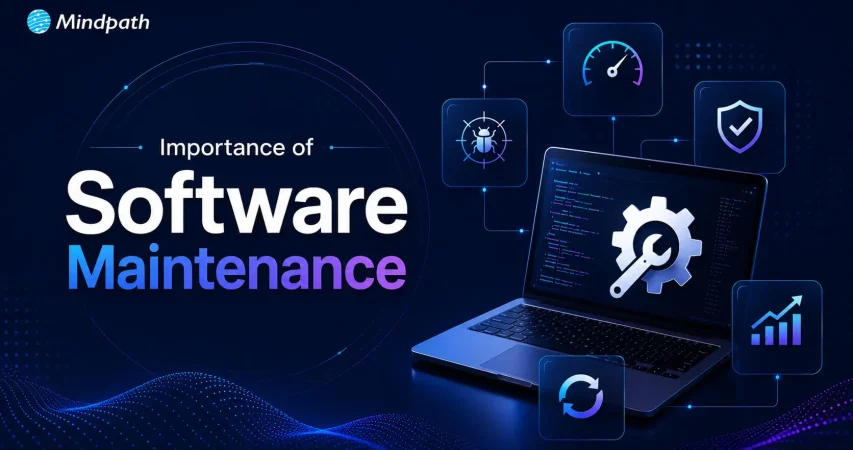
Digital systems are now a business necessity, and that is why software maintenance is a fundamental aspect of long-term success. All applications require ongoing maintenance to remain stable, secure, and in line with changing user requirements. Even the powerful systems begin to demonstrate sluggishness and unforeseen problems that impact daily operations and customer experience without appropriate maintenance of software.

The concern then is not with the creation of software, but rather its effectiveness after release. Most companies invest in development, but they neglect continuous updates, fixes and improvements that ensure systems remain dependable. Technology is evolving at a fast rate and frequent check up maintains smooth operation and improved management of business performance. In this blog, we will understand why software maintenance matters for sustainable growth.

Looking to extend the life of your software while maintaining top performance? Mindpath offers maintenance and support services to keep everything optimized and running efficiently.

What is Software Maintenance?

Software maintenance is defined as the process of ensuring that a software product is running properly once it has been launched. It comprises updates, system checks, and performance improvement. Maintenance of software ensures that applications remain safe, effective, and in line with the evolving user requirements and business objectives. It also helps maintain stability in the system in the long term.

It is not just about correction of mistakes but also enhancement of features and performance. Consistency of updates minimizes risks and failures. In the software engineering, it entails scheduled modifications and emergency repairs. These initiatives maintain the system steady, dependable and capable of providing uniform value to users.

These are some of the software maintenance types:

1. Adaptive Maintenance

It is concerned with making the system work in the new environment. It is the mechanism by which software remains capable of operating alongside new operating systems, rules, and regulations.

2. Corrective Maintenance

It is the work of identifying and removing bugs, flaws, and errors. It helps to keep the system running without any hick-ups and to prevent disruptions in day-to-day operations.

3. Perfective Maintenance

It is a process by which the system is improved through the users’ feedback. It entails incorporating features that are helpful and getting rid of the ones that have lost their relevance.

4. Preventative Maintenance

It aims to prevent possible problems in the future. Apart from that, it also changes the system to be more manageable, scalable, and maintainable with time.

The Importance of Software Maintenance in Modern Businesses

Today software plays an essential role in the running of the businesses as without it, they would hardly be able to keep track of the management or improve the efficiency and the quality of the user experiences. The following are the few main reasons that demonstrate the necessity of software in the modern business world.

1. Enhanced Security Protection

Periodic upgrades keep a program up to date with the changes in hackers’ tactics and the latest cyber threats. Promptly implemented patches help mitigate vulnerabilities and potential security breach that can lead to exposing sensitive business data.

2. Improved System Performance

Software that is being continuously developed gets faster and more capable of doing the work efficiently. Besides that, code and system processes that have been optimized.

3. Better User Experience

Incorporating user feedback is one of the best ways to build new features that will resonate with users and significantly improve things that people really care about. This is one of the best ways to keep the software relevant, simple to use and satisfying for the users as their needs always evolve.

4. Reduced Long Term Costs

Addressing issues early on will prevent from later encountering bigger and more costly problems. Consistent maintenance also plays a part in reducing downtime, avoiding major breakdowns and helping the business save both time and operational costs.

5. Seamless Compatibility

System updates make it compatible with newly introduced technologies and devices. Users are therefore able to upgrade their systems without worrying about disruptions or compatibility issues.

6. Reliable Issue Handling

Addressing bugs swiftly helps keep the software stable and dependable. Software maintenance support ensures issues are tackled early, thus preserving trust and sustaining system performance consistently.

7. Stronger Compliance Management

Update regularly helps to align with constantly changing legal and industry standards thereby minimizing the risk of non-compliance related penalties and ensuring adherence to laid down guidelines at all time.

8. Extended Software Lifespan

Frequent enhancements make the system stay functional for a longer period. Software updating regularly enables the software to respond to change and keep providing benefits even in a competitive environment.

Ready to Strengthen Your Business with Software Maintenance?

Software is a major factor for business success today. Consistent monitoring and upgrading of the programs result in efficient, dependable machines. Maintaining software is also a way of enhancing security, supporting expansion, and overall bettering the products. Organizations that channel their resources into it are always on their toes and have an efficient mechanism of risk management.

At Mindpath, we provide software maintenance and support services for modern businesses. Our experts constantly perform updates and resolve issues promptly. We collaborate in keeping the systems stable and functional. Hence, your range of products will be always protected, dependable, and suitable for any changes.

Frequently Asked Questions

1. Why does software maintenance matter even after a successful launch?

Many businesses assume the job ends after deployment, but software needs ongoing care to perform well. Regular updates, fixes, and improvements help avoid slowdowns, security risks, and user frustration. It ensures the system stays reliable and continues to support business operations effectively.

2. How often should a business plan software maintenance activities?

The frequency depends on the system, its usage, and industry requirements. However, regular monitoring and scheduled updates are essential to prevent issues. Consistent attention helps maintain performance, reduce unexpected failures, and keep the software aligned with changing business and user needs.

3. What are the risks of ignoring software maintenance for too long?

Ignoring maintenance can lead to performance issues, security vulnerabilities, and system failures. Over time, small problems can grow into major disruptions that affect business continuity. This can also result in higher repair costs and a poor user experience that impacts customer trust.

4. How does software maintenance support business growth in the long run?

Software maintenance helps systems adapt to new technologies and user expectations. It allows businesses to improve features, enhance performance, and stay competitive. With proper care, software continues to deliver value and supports smooth operations as the business grows.

5. Is software maintenance expensive for small or growing businesses?

Many businesses worry about costs, but software maintenance often prevents larger expenses. Regular updates and fixes reduce the chances of major failures and downtime. Investing in maintenance helps control costs over time while ensuring the system remains stable and efficient.
Related Post

ai in mobile apps

Every day, AI in mobile apps revolutionizes user interaction with technology. Just think of a single application that understands your behavior, foresees your requirements, and adjusts its capabilities for a smooth and unique experience. Enterprises are equipped with smart features such as conversational agents, personalized algorithms, and speech assistants to attract user interaction in a better way. This transformation is making regular applications become intelligent friends that facilitate actions and offer answers that are convenient and timely.

Beyond convenience, AI in application development brings innovation and returns efficiency. In a nutshell, developers can analyze real-time data, discover patterns, and tailor personalized experiences for users, keeping them more engaged for longer periods. Companies can gain insight into users through actionable data, and users enjoy quicker, seamless, and more meaningful interactions. As the future of AI continues to unfold, this new progress opens the doors to new opportunities in retailing, healthcare, education, and entertainment. This article shall delve into the positive impacts, utilization, and practical scenarios of AI in mobile apps. So, keep reading further!

Ready to bring AI into your mobile app development, but confused about where to start? Mindpath provides full guidance on mobile app development services to help you gain user attraction and create powerful digital experiences.

Evolution of AI in Mobile App Development

AI in mobile app evolution has changed the design of the same user simple tools into smart, user-engagement-focused experiences. The earliest examples of AI in mobile applications were predictive text and basic speech recognition, while mid-level AI brought in personalized recommendations, more intelligent search functions, and AI-enabled chatbots. All these technological innovations enabled the most efficient user-behavior apps to comprehend and reply to users without wasting time.

Currently, artificial intelligence in mobile applications powers advanced features such as real-time analytics, augmented reality, and the ability for apps to operate autonomously. Besides, AI dramatically simplifies the development process by automatic testing, code generation, and cross-platform integration. These innovations reflect the consistent trend of AI eventually transforming mobile into more intelligent, rapid, and personalized user experiences, hence driving app usage to be a natural daily occurrence.

Looking to understand how mobile apps can enhance the impact of AI and unlock greater value for your business? Discover more insights in our blog on the Mobile App Development, which benefits your business by improving customer engagement and driving measurable growth.

Benefits of Artificial Intelligence in Mobile Apps

AI-enabled mobile app development is a game-changer as it opens opportunities for intuitive, personalized and efficient apps. Developers can thus use smart features to build apps that not only attract users but also make their routine tasks effortless.

1. Tailored Experiences for Users

Mobile applications powered by Artificial Intelligence will eventually have the capability to study user behavior and preferences so as to offer customized content and recommendations. This means that the applications will be more engaging, and the users will have a custom-made experience which gives them the impression that the entire thing is just for them.

2. Stronger Security Measures

AI is one of the factors that revolutionize the environment of mobile applications to uncover unconventional user behaviour patterns with the aid of artificial intelligence technology, to prevent unauthorized access, and ensure the safety of the data. If you associate with a firm that is proficient in AI app development, then you will definitely have security protocols being implemented in a proper way.

3. Instant Customer Support

AI-driven virtual assistants solve problems right away, thus increasing user delight. Consequently, the need for human support is made smaller although the speed and correctness of the answers are maintained.

Also Read: AI for Customer Services 

4. Smarter Search and Navigation

The power of AI allows applications to interpret voice inputs, pictures and even the users’ thoughts in order to deliver more accurate search results. Thus, users are able to locate their desired items in less time, which means the experience is more fluid and user-friendly.

5. Predicting Trends and Behavior

The AI in mobile apps is capable of studying user actions which were done in the past to predict their future inclinations and the general trend of the market. Thus, enterprises will be able to have a clearer vision of the suitable decisions to take, which will further promote the involvement of clients.

6. Streamlined Tasks and Efficiency

Artificial intelligence can automate the execution of monotonous operations that include scheduling, setting of reminders, data handling, and so on, thereby saving valuable time and eliminating errors. A company can utilize AI app ideas to create apps that are both quality-excellence and user-friendly.

Curious how mobile apps can leverage AI to transform your business and stay ahead in 2025? Explore our blog on Mobile App Development Trends to discover how these innovations can enhance user experiences.

Use Cases of AI in Mobile App Development

Artificial Intelligence is transforming how mobile applications function and enabling them to become smarter, faster, and more adaptable. The use of artificial intelligence in mobile application development is progressing and promotes opportunities for interesting new applications across industries.

1. Personalized Content and Recommendations

AI in mobile apps can use advanced data analytics of users’ intent and behaviors to formulate personalized content and product recommendations and offerings. By suggesting items or services they might like, apps proactively enhance user engagement and satisfaction, and they also help businesses utilize data to make informed decisions.

2. Intelligent Virtual Assistants

Applications incorporate artificial intelligence technology for mobile app development, and voice assistants now exist that can take user directions. These voice assistants can help navigate tasks quickly, without even using your hands, allowing access to information obtained faster and can speed up your daily tasks.

3. Automated Task Management

AI takes over basic responsibilities, such as scheduling and reminders, or the organization of emails from mobile applications. This increases efficiency and minimizes the time a user will spend on monotonous tasks.

4. Enhanced Security and Fraud Detection

AI in mobile apps identifies unusual patterns of user behaviour and prevents fraud from happening right away. Businesses can leverage advanced monitoring and threat detection functionality to safeguard sensitive information and ensure user safety.

5. Industry-Specific Smart Solutions

Artificial intelligence powers the development of applications in the healthcare, finance, and e-commerce arenas which can provide personalized services, forecasts, and automation. Working with an AI application development company can help ensure applications comply with industry standards, while also improving the user experience.

Want to make sure that your applications are not only functional but also secure, compliant, and trustworthy for your users? Discover our blog on application security best practices to explore essential techniques for protecting your software and building trust.

Real-World AI in Mobile Application Examples

AI in mobile apps is transforming everyday interactions by making them smarter, faster, and more intuitive. Real-world examples show how AI improves user experiences, streamlines tasks, and delivers personalized solutions across different industries.

Real-World AI in Mobile Application Examples

1. Voice Control with Siri, Google Assistant, and Alexa

These virtual assistants use artificial intelligence in mobile applications to understand voice commands and perform tasks like setting reminders or controlling smart home devices.

2. Personalized Streaming on Netflix and Spotify

Streaming apps use AI in mobile apps to analyze user behavior and recommend movies, shows, or music that match individual preferences.

3. Smart Social Feeds on Facebook and Instagram

Social media platforms use AI mobile app development to personalize news feeds and suggest relevant content, friends, and groups for each user.

4. Tailored Shopping on Amazon

Amazon uses AI in mobile apps to recommend products based on browsing history and past purchases, creating a personalized shopping experience.

5. Visual Search with Google Lens

Google Lens uses AI technology for mobile app development to recognize images and provide instant results through photo-based searches.

Want to build a mobile app but don’t know which technology to use for better execution? Learn from the mobile app development technologies blog to understand what suits best for your business.

Ready to Build Smarter Mobile Apps with AI?

The use of AI in mobile apps introduces new opportunities for businesses and users. This advancement creates great user experiences, strengthens security, and provides more effective daily interaction. As industries pursue innovation, apps will work smarter, adapt more quickly, and become infinitely personal, helping brands engage with users, in meaningful and authentic ways.

Working with Mindpath gives organizations access to superior AI mobile application development services built for measurement. We build intelligent, fast, and user-friendly applications to support your organizational priorities. We provide a blend of strategy, innovation, and technology to design digital solutions that drive growth and maintain user engagement.

reactjs developer skills

The advantages of ReactJS have made every business owner think about its utility in developing web projects. It is the most powerful and commonly used JavaScript library for creating intuitive interfaces. If you want React developers in your team, then you must know the ReactJS developer skills that you should look for in candidates.

The declarative approach and component-based architecture of ReactJS have revolutionized front-end development completely. Knowing what skills to look for saves time and hiring costs. The right developer brings structure, speed, and scalability to your project. In this article, we break down the core ReactJS developer skills every successful web project depends on.

Want to hire ReactJS developers for your next web project? Explore more on Mindpath’s React JS development services to get expertise in developing a web application aligned with your business goals.

Discovering the Skillset of Expert ReactJS Developers

The general assumption about the skillset of ReactJS developers is that they know how to work with React. However, fluency in React itself is not the only addition in the React skill set for any developer. React developers must have a broader skillset beyond the library to craft impactful web projects. The following skills can help business owners identify the best React developers for their next web project.

1. HTML and CSS

The foremost addition in a list of ReactJS skills is the combination of HTML and CSS, which play a crucial role in organizing the styling of the web experience. React developers must know the concepts of semantic HTML and how to use the right HTML tags for better SEO and accessibility. ReactJS developers should have an in-depth understanding of the fundamentals of CSS, such as selectors, CSS Grid, responsive design principles, and the box model.

Apart from CSS fundamentals, the essential React skills for developers also include knowledge of CSS preprocessors and frameworks. Developers can use the pre-processors to streamline styling workflows and improve ease of maintenance in larger projects.

2. JavaScript ES6

JavaScript ES6 or ECMAScript 2015 brought many interesting features to the domain of modern web development. When you hire React developer for the next web project, you should check their level of fluency in JavaScript ES6. The distinctive features of JavaScript ES6, such as arrow functions, template literals, and ES6 classes, make React web development more efficient. For instance, arrow functions can ensure simpler syntax for functions and intuitive management of the context.

ReactJS developers must know how to leverage ES6 classes for a more structured use of JavaScript along the lines of component-based architecture. Developers can also use features like template literals to embed expressions in strings, thereby creating cleaner code.

3. Event Handling and DOM Manipulation

The virtual DOM in React is one of its distinctive features. All the listings for React JS developer jobs showcase the necessity of learning about DOM manipulation. At the same time, you must know that direct DOM manipulation is not required in React. On the other hand, developers must know the process through which the browser renders and interacts with the Document Object Model. DOM manipulation is required in scenarios where you want to build interactive and dynamic user interfaces.

Another crucial addition among skills required for ReactJS developer is event handling. It focuses on responding to different user events through event listeners and callback functions. Therefore, React developers must know the fundamentals of event delegation, capturing, and bubbling.

4. Git

You cannot think about hiring React developers who don’t know how to work with Git, the most popular version control system. Git helps in promoting team collaboration and source code revision management to ensure efficiency in the development lifecycle. ReactJS developers must know the fundamental concepts, such as commits, repositories, branches and merges. On top of it, developers must also know how to work with branching strategies, hosting platforms of Git and conflict management.

Git is a promising tool for frontend development with React as it provides the ideal foundation for collaborative development. Developers who know how to work with platforms like GitLab and GitHub can ensure better efficiency in team collaboration, project management and code reviews.

Must Read: Cost of Hiring ReactJS Developer

5. Redux

The list of technical skills you should search in the profiles of ReactJS developers also includes Redux. It is a specialized library used for state management in larger and more complex React applications. The cost of hiring ReactJS developers is justified when you notice how fluency in Redux can offer credible benefits to your web projects. The most promising features of Redux include centralized state management, application scalability and predictable state updates.

Redux works with a single storage for all states of an application, thereby ensuring consistency in management of state transition. Efficient state management also serves as a catalyst for easier scalability and managing increasing complexity without vulnerability to bugs. Centralized state management with Redux also ensures predictability in the behavior of your web applications, thereby facilitating easier maintenance and debugging.

6. JavaScript XML or JSX

Every ReactJS developer must know how to work with JavaScript XML or JSX. It is also one of the notable additions among react developer must-have skills as it serves a critical role in ensuring simpler development and management of UI components. JSX helps developers write HTML-like structures in JavaScript, offering a seamless blend of markup and JavaScript logic. JSX also provides an easier solution for creating and managing the user interface components of their web applications.

The other notable applications of JSX include data and logic integration. JSX can help in injecting data and logic directly into the UI, thereby ensuring dynamic content rendering, required for modern web applications. On top of it, the declarative nature of JSX ensures that the code is easily readable and accessible for debugging.

7. React Hooks

Professional ReactJS developers must also have strong command on React Hooks, a revolutionary feature for state management. Hooks have introduced new perspectives on managing React features in functional components. It is one of the essential ReactJS developer job skills and aspiring developers must know about the important hooks they must learn to create web applications.

The notable React Hooks that a developer must know include ‘useState’, ‘useEffect’, ‘useRef’ and ‘useContext’. Each hook serves a distinct function such as providing direct access to DOM elements or managing component-specific state. On top of it, ReactJS developers must know how to create reusable logic through custom hooks.

8. Testing, Debugging and Performance Optimization

The most important skill that you can find in expert React developers is testing and debugging skills. You can find answers to “why hire React developers?” in their skillsets that focus on comprehensive testing to create robust apps. The notable testing methods include unit testing, that involves testing the individual components independently or integration testing. React developers must also know how to work with debugging tools and browser developer tools to inspect the code.

Apart from testing and debugging, React developers must also know the best practices for performance optimization. Skilled ReactJS developers can use different techniques such as virtualization, code splitting and bundle size optimization to craft responsive applications.

Want to improve your application’s speed without increasing development time or infrastructure costs? Discover how optimizing React performance benefits business owners looking for efficiency and ROI.

Mandatory Soft Skills

Most of the discussions about skills of ReactJS developers focus only on the technical skills. Choosing a React JS development service for capitalizing on the expertise of skilled developers also requires attention to soft skills. You need developers who have the capabilities for critical thinking and problem-solving with efficient solutions. React developers must have skills for clear and concise communication that empowers them to work in collaboration with other teams.

React developers should also have attention to detail for crafting intuitive user experiences and writing code without bugs. Most important of all, ReactJS developers should strive to learn continuously and improve their skills to stay updated with emerging technologies and recent ReactJS trends.

Are You Hiring the Right ReactJS Developer for Your Project?

Choosing the wrong developer costs more than just time. The right ReactJS skills decide whether your web project scales or struggles long term. Businesses that hire with clarity build faster, iterate smarter, and deliver better user experiences consistently. Knowing exactly what to look for puts you ahead from day one.

The thought of hiring a developer from a reputed ReactJS development company might seem like a challenge. Interestingly, you can find the best ReactJS developers at Mindpath for your next web project; they help you build modern web solutions. The notable technical skills of React developers include knowledge of HTML and CSS, JSX, JavaScript ES6, React Hooks and direct DOM manipulation. On top of it, ReactJS developers must also have soft skills such as communication, adaptability, critical thinking and problem-solving. Learn how to pick the best ReactJS developers for your web projects now.

Frequently Asked Questions

1. How many years of experience should a ReactJS developer have before hiring?

Experience years alone do not define a good ReactJS developer. A developer with two years of focused React JS developer skills and strong project exposure often outperforms someone with five years of scattered experience. Always prioritize skill depth over tenure.

2. What is the difference between a ReactJS developer and a full-stack developer?

A ReactJS developer specializes in building front-end interfaces using the React library. A full-stack developer handles both front-end and back-end development. For projects that demand high-quality UI performance and speed, hiring a dedicated React specialist usually delivers better and more focused results.

3. How do ReactJS developer skills impact the overall cost of a web project?

Developers with stronger ReactJS developer skills write cleaner, more efficient code from the start. This reduces bug fixes, rework, and long-term maintenance costs significantly. Investing in skilled developers upfront is always cheaper than correcting poor development decisions midway through a project.

4. Is ReactJS still relevant for web development in 2026?

ReactJS remains one of the most widely used and actively maintained JavaScript libraries in 2026. Its component-based architecture, strong community support, and compatibility with modern tools keep it highly relevant. Businesses building scalable, fast, and interactive web applications still rely on React heavily.

5. Can a ReactJS developer work on mobile app projects as well?

Yes, ReactJS developers can transition into mobile development using React Native, which shares similar principles. However, mobile and web development require different performance considerations and design approaches. Businesses should clarify project scope upfront to ensure the developer has the right experience for both platforms.

Find out what makes a great ReactJS developer! Explore core skills like component-based architecture, hooks, state management, and more.

Support Is One Click Away

Featured Posts

Related Post

Discover how DevOps can save your business costs by improving efficiency, and enhancing collaboration across teams for high-quality delivery.
Discover the ultimate guide to hiring Node.js developers in London. Learn about the skills, benefits, and cost factors involved in finding the right talent for your project.