
Digital Transformation for Businesses: A Complete Guide

Join our Newsletter!

Featured Posts

Support Is One Click Away

Home

Digital Transformation for Businesses: A Complete Guide

digital transformation for businesses

Digital Transformation for Businesses: A Complete Guide

Do you think about your company’s future and ask yourself what digital transformation for businesses means? If so, you’re not alone! Many business owners and leaders are trying to figure out how they will continue to be relevant and competitive in a world that is constantly changing. Digital transformation is changing how you work, how you serve and support customers, and how your team grows. So why is it so important?

Digital transformation for businesses impacts every area of a business, from routine activities to strategic targets. It allows you to work smarter, make better decisions, and respond rapidly to changing customer demands. Adopting digital tools and an alternative mindset can help businesses maximise productivity and create new opportunities. Understanding the process is a prerequisite to helping your business flourish in today’s environment. In this blog, you’ll discover how.

Implementing digital transformation in your business can be challenging; you need expert guidance. Partnering with Mindpath will help you in exploring personalized strategies that will reshape your business. Contact us to start your transformation journey.

What is Digital Transformation?

Digital transformation is the use of modern technology across all areas of a business to change how it works inside and how it connects with customers. It can involve updating old systems, adding new tools, and finding better ways to get work done. Companies take this step to keep up with industry changes and market trends. It is a serious shift in how work is planned and delivered every day.

The digital transformation process requires the involvement of people at every level, from leaders to staff. It is not a single project but an ongoing effort, as technology and business needs keep evolving. Companies must stay open to new ideas and improvements to remain competitive. Digital transformation helps an organization stay prepared and flexible in a fast-changing world. It is a commitment to keep moving forward.

Curious which technologies can give small businesses a competitive edge? Explore emerging technologies for small businesses to see the innovations driving digital transformation.

Why is Digital Transformation Important?

Digital transformation is important because it helps companies keep up with changes in their industry and meet customer needs in new ways. It improves how businesses work by using smarter tools and systems, which makes daily tasks more organized and efficient. Focusing on digital transformation for small businesses can help smaller companies compete with bigger ones and stay prepared for what’s next.

One big reason companies choose digital transformation is to replace outdated manual work with better technology. This makes daily tasks easier and helps the whole company run more smoothly. According to digital transformation McKinsey research, 68% of people said they transform their operations mainly to modernize how they work. A clear plan helps every company adapt and stay ready for what comes next.

What are the 4 Types of Digital Transformation?

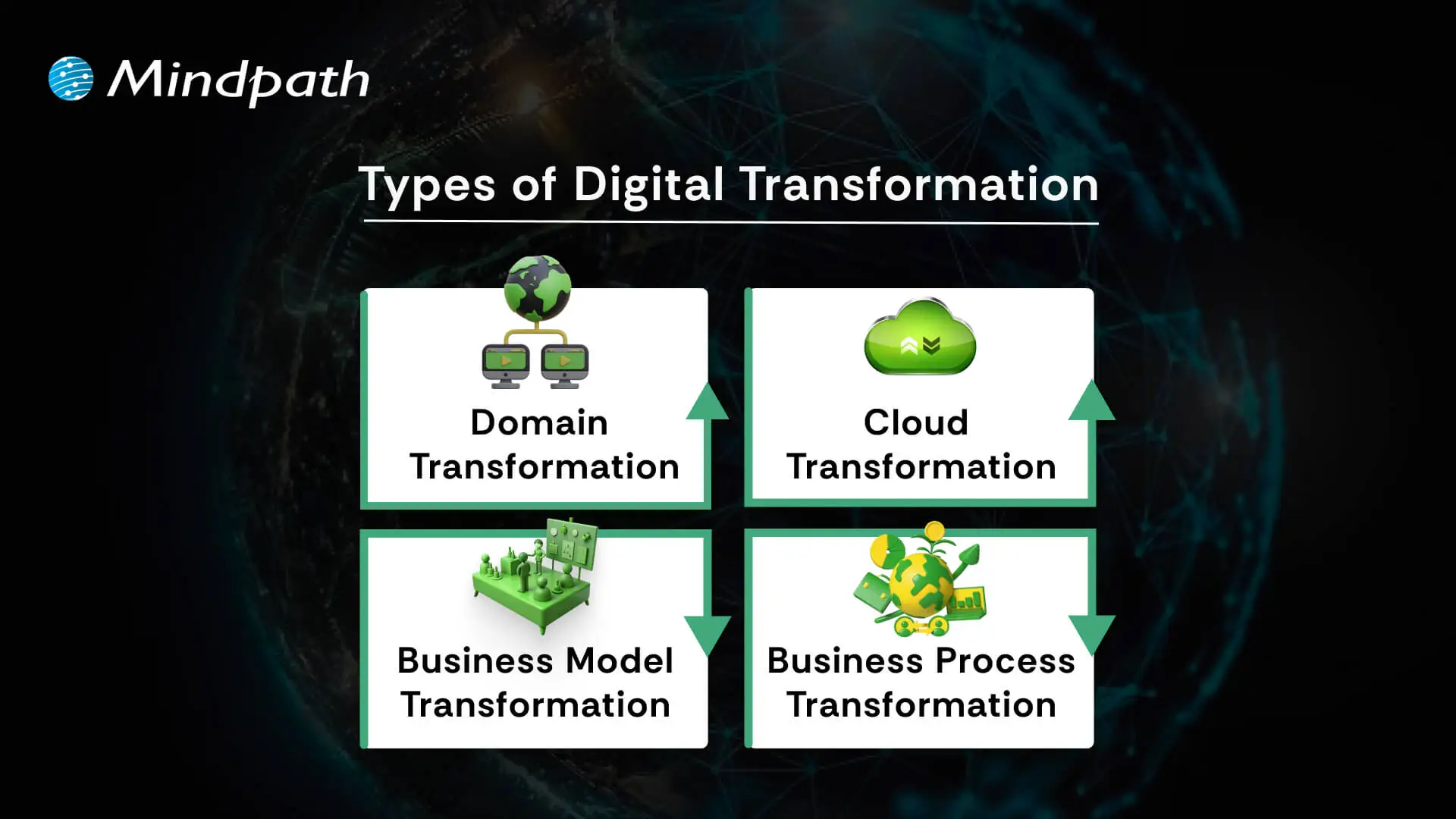
There are different ways a company can approach digital transformation depending on its goals and needs. Here are four main types of digital transformation every business should know about:
4 types of digital transformation

1. Domain Transformation

Domain transformation happens when a company enters a new market beyond its usual industry. This is often made possible by advanced digital transformation technologies.

2. Cloud Transformation

Cloud transformation moves data and systems to the cloud for better access and storage. Companies can choose public, private, or hybrid models for flexibility.

3. Business Model Transformation

Business model transformation means changing how a product or service is delivered by using modern digital tools. It’s a smart move within any digital transformation framework.

4. Business Process Transformation

Business process transformation improves how work gets done inside the company. It’s a big step in digital transformation for business success.

Benefits of Digital Transformation for Businesses

Digital transformation helps companies improve how they work and respond to changing demands. Below are some of the main benefits it can offer:

1. Cost Savings

One of the biggest advantages of digital transformation for businesses is saving money by removing outdated processes. With better systems in place, companies can spot problems sooner and use resources more wisely.

2. Better Customer Experiences

When processes run smoothly and technology is up to date, customers enjoy faster service and better support. Digital transformation for businesses also makes it easier to adapt based on customer feedback.

3. Support for Sustainability

Modern tools help companies design products and processes that use less energy and fewer materials. This cuts down waste and supports long-term environmental goals.

4. Faster Processes and Higher Productivity

When companies use smart tools and automation, everyday tasks become quicker and more accurate. This gives employees more time to focus on work that adds real value instead of getting stuck on repetitive jobs.

5. Valuable Data Insights

Digital transformation for businesses makes it easier to collect useful data and turn it into insights that help leaders make better choices. This way, different departments can understand trends and work together with clear, reliable information.

6. New Business Models

Following a clear digital transformation roadmap lets companies create fresh ways to reach customers and stay ahead in the market. New ideas and flexible services open the door to growth and higher revenue.

7. Strong Profit and Growth Potential

Companies that have a solid digital transformation strategy often see steady profit growth because they work more efficiently and serve more people. It also helps them expand into new areas over time.

8. Strong Competitive Edge

Digital transformation for businesses helps them stand out with fresh ideas and unique services. Companies that keep innovating stay ahead of the competition and handle change more easily.

9. Quick Adaptation to Change

Digital transformation for businesses gives them the tools to adjust plans when the market changes suddenly. This helps keep things running smoothly and protects the company’s future.

10. Simple Compliance and Regulations

Smart systems help track the right data to meet industry rules and quality standards. This makes it easier to share reports and pass audits without extra stress.

What are the 5 main areas of digital transformation?

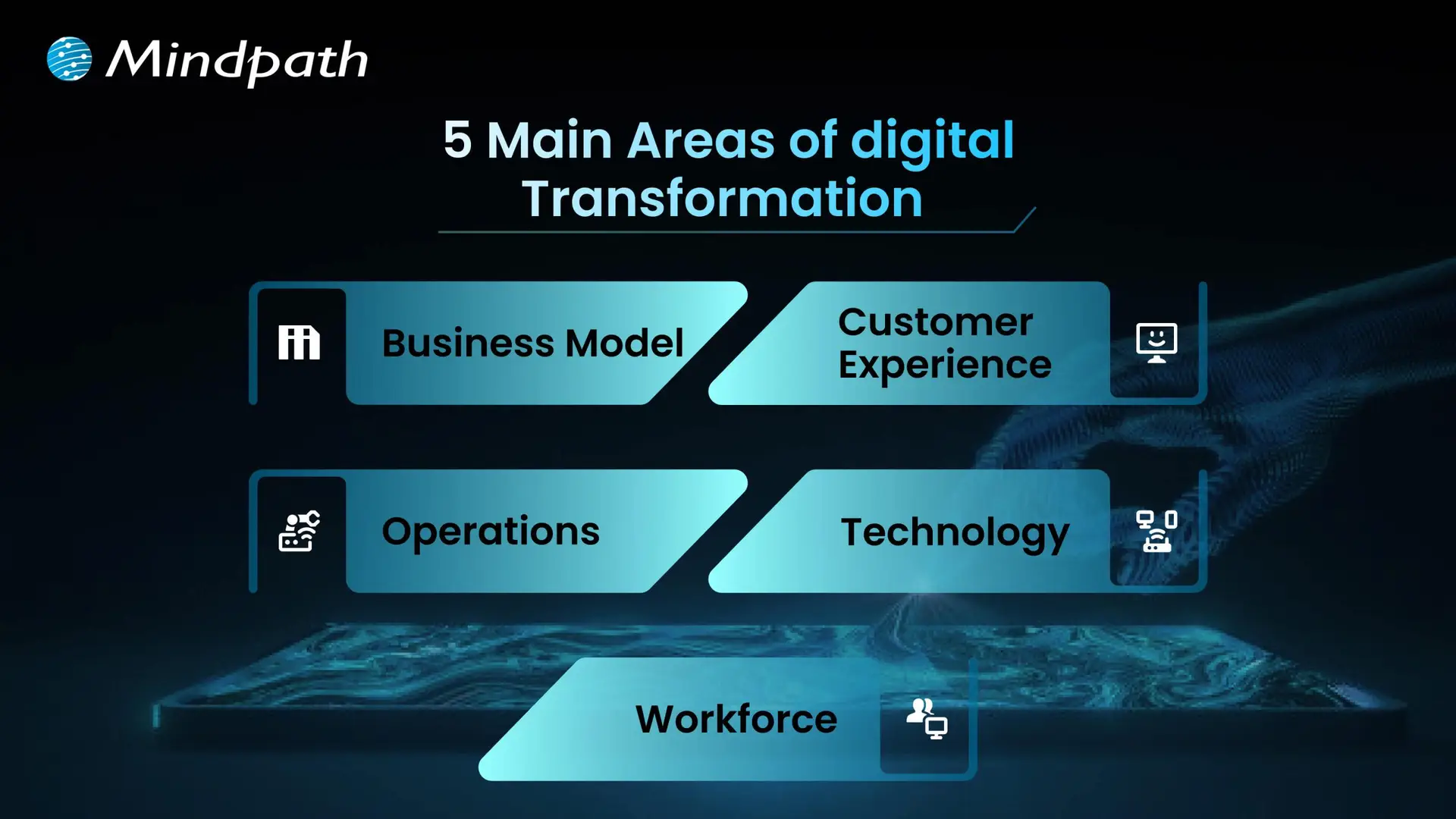
Every successful digital transformation covers key parts of a business to make sure changes bring real value. Here are the five main areas of digital transformation that companies focus on:
5 main areas of digital transformation

1. Business Model

Digital transformation often means rethinking how a business makes and delivers its products or services. Companies may find new ways to earn revenue using online platforms or new technologies. This helps them stay competitive and reach more people.

2. Customer Experience

Customer experience means using technology to make every interaction better for your customers. This could be through faster service, easier online tools, or more personal communication. The goal is to keep customers happy and loyal to your business.

3. Operations

Improving operations means making everyday work run more smoothly with digital tools. Automation and better systems help teams save time and avoid mistakes. This keeps the business running efficiently and ready for growth.

4. Technology

Every digital transformation depends on using the right technology, like cloud services, AI, or smart data tools. These tools help companies collect information, solve problems, and create new ideas. Staying updated with technology is key to long-term success.

5. Workforce

Employees need the skills to work well with new digital systems. Companies should train their teams and encourage learning new things regularly. This builds a flexible workforce that can handle changes and keep the business moving forward.

Real-world Examples of Digital Transformation

Knowing about real Digital transformation examples makes it easier to understand how technology can truly change a business. Here are some real-world cases that show what’s possible when companies embrace digital transformation.

Real World exmaples of Digital Transformation

1. Tailored Customer Rewards

Starbucks uses AI in its app to create rewards and suggestions that feel personal to each customer. This digital approach keeps customers happy and loyal to the brand.

2. Personalized Product Fit

Nike’s SNKRS app and foot scan tool help customers find shoes that fit perfectly. This smart use of technology makes shopping easier and gives Nike useful data for better designs.

3. On-Demand Entertainment

Netflix changed how people enjoy movies by moving from renting DVDs to streaming online. This gave people freedom to watch what they want, when they want, without late fees.

4. Cloud-Based Service Models

Adobe transformed from selling boxed software to offering cloud subscriptions like Creative Cloud and Document Cloud. This makes their tools easier to use and keeps customers updated with the latest features.

5. Interactive Buying Experience

Audi introduced Audi City, a digital showroom where people explore cars using large screens and virtual tools. This makes the car-buying process modern, fun, and more convenient in small spaces.

Ready to Future-Proof Your Business?

Digital transformation for business helps you stay competitive, meet customer needs, and grow in a fast-changing world. Using AI and business technology together lets you work smarter, adapt quickly, and make better choices every day. Embracing this change now opens the door for fresh ideas and keeps your company strong in any market.

At Mindpath, we empower you to develop a clear approach to digital transformation by bridging people, processes, and technology. Our experts will guide you through every step of the journey and will ensure your team is employing the best tools to drive ongoing digital transformation. Let’s make your organization agile, productive, and ready for growth using intelligent digital solutions tailored specifically to you.


Related Post

Discover why ReactJS is perfect for Progressive Web App (PWA) development. Learn how Mindpath can help you build high-quality PWAs.
Discover the cost to hire Node.js developers in London: £30-£70/hour for juniors and £70-£150/hour for experienced, depending on expertise and project complexity.
Discover how AI is transforming the world. Explore the top 10 benefits of artificial intelligence, from solving complex problems to enhancing customer experiences.

Related Post

The Complete Guide to Hiring Expert Node.js Developers in London
Hiring the right developer for your project is crucial, especially when it comes to complex web applications. If you’re looking for a solution that is scalable, high-performance, and capable of handling real-time data, Node.js might be the technology you need. But how do you ensure you’re hiring the best Node.js developers for your needs in a competitive tech hub like London? In this comprehensive guide, we’ll walk you through the essential aspects of hiring Node.js developers in London, what to look for in a candidate, and why London is an ideal place to find top-tier talent.

Why Hire Node.js Developers in London?

When it comes to building fast, scalable web applications, Node.js is one of the best frameworks available. Leveraging its ability to handle real-time data, build microservices, and manage high-performance APIs, many businesses are turning to Node.js developers to bring their vision to life. However, finding the right developers can be tricky. That’s where London comes in—a vibrant hub of innovation and tech talent.

Hiring Node.js developers in London gives you access to some of the most skilled professionals in the industry. These developers have a deep understanding of JavaScript and backend technologies, making them adept at creating modern, robust applications. Let’s dive into the benefits and considerations when hiring Node.js developers in this thriving city.

Key Benefits of Hiring Node.js Developers in London

1. Scalability and Performance

Node.js is known for its scalability and ability to handle large amounts of traffic. By hiring Node.js developers in London, you ensure your application is built to scale seamlessly. Whether your project involves real-time communications, an online marketplace, or a streaming service, Node.js can handle numerous requests simultaneously, making it ideal for high-performance apps. London’s developers are adept at building lightweight, fast, and scalable systems capable of supporting thousands of concurrent users without affecting performance. This makes it an excellent choice for businesses anticipating rapid growth or dealing with high user interaction.

2. Cost-Effectiveness

While London is known for its high living costs, it offers a wealth of skilled professionals at competitive rates. Node.js developers in London are highly efficient, and their expertise helps reduce development costs. Since Node.js operates on a single-threaded event loop, it reduces the need for additional servers, thus lowering infrastructure costs. Moreover, London-based developers are experienced in building scalable solutions, saving your company from costly redesigns or performance issues down the road.

3. Faster Development Cycles

One of the biggest advantages of Node.js is its speed. Because it allows developers to work on both the frontend and backend with JavaScript, development cycles are streamlined. Node.js also has a non-blocking architecture, which allows developers to build apps that process multiple requests at the same time without delay. This is especially beneficial for companies that need to get products to market quickly and react to changing business conditions.

4. Access to a Diverse Talent Pool

London boasts a large and diverse community of developers skilled in Node.js. The city’s reputation as a tech hub means that you can easily find developers with the right set of skills to meet your project requirements. Whether you need a single expert or an entire development team, London’s talent pool offers flexibility in terms of experience and specialization. Additionally, developers in London are well-versed in modern development practices like microservices, cloud computing, and API development, enabling them to tackle a variety of complex projects.

5. Expertise in Emerging Trends

London-based Node.js developers are often at the forefront of emerging technology trends. The city’s vibrant tech ecosystem ensures that developers are continuously learning and adapting to new tools and frameworks. Whether it’s serverless architecture, real-time applications, or the integration of microservices, London developers have firsthand experience in utilizing the latest technologies to build innovative solutions. Their deep knowledge of industry best practices ensures that your application will be developed with modern techniques, making it future proof.

Factors to Consider While Hiring Node.js Developers in London

When you start the hiring process, it’s crucial to know what to look for in a Node.js developer to ensure you find the right fit for your project. Experience, technical skills, problem-solving abilities, and familiarity with modern development tools all play a key role in making the right choice. Additionally, understanding the local job market and legal considerations can help streamline the process. Here are some of the key factors to consider while hiring Node.js developers in London to ensure you hire the best talent for your business needs.

1. Strong JavaScript Foundation

Since Node.js is built on JavaScript, your developers must have a deep understanding of the language. Developers should be proficient in core JavaScript concepts like closures, promises, asynchronous programming, and event loops. A strong foundation in JavaScript will ensure that your project runs smoothly and that the code is efficient and easy to maintain.

2. Experience with Popular Node.js Frameworks

Node.js frameworks like Express.js, Koa.js, and NestJS simplify the development process and make it faster. These frameworks offer tools to build scalable and efficient applications with minimal effort. Developers with experience using these frameworks will be able to deliver high-quality results in less time. When hiring, ensure the developer is comfortable with at least one of these frameworks to ensure efficiency.

3. Database Management Skills

Node.js developers should have experience working with databases such as MongoDB, MySQL, and PostgreSQL. Knowledge of both SQL and NoSQL databases is essential for building scalable and efficient applications. Developers should be able to design, query, and manage databases to store, retrieve, and manipulate data securely and efficiently.

4. Asynchronous Programming Expertise

Asynchronous programming is a key component of Node.js development. Node.js is non-blocking, meaning that it can process multiple requests simultaneously without delay. Developers need to be well-versed in callbacks, promises, and async/await to handle concurrent processes effectively. This is particularly important for real-time applications that need to respond quickly under heavy traffic loads.

5. Collaborative and Adaptable

In addition to technical skills, collaboration is essential. Node.js developers need to work well with other team members, including designers, front-end developers, and stakeholders. The ability to communicate effectively and adapt to changing requirements will ensure that your project stays on track and meets deadlines.

What Skills to Look for While Hiring Node.js Developers in London

Finding the right Node.js developer requires a deep understanding of the technical expertise needed for building high-performance applications. A skilled developer should have strong proficiency in JavaScript, experience with Node.js frameworks, and knowledge of database management and API development. Additionally, familiarity with performance optimization and security best practices is essential. Here are the critical skills to look for while hiring Node.js developers in London to ensure you select the best candidate for your project.

1. JavaScript Fundamentals: A solid understanding of JavaScript fundamentals, such as closures, scopes, and asynchronous programming, is essential for any Node.js developer. Mastery of these concepts will lead to clean, efficient code and optimal application performance.

2. Experience with Node.js Frameworks: Developers should have hands-on experience with popular Node.js frameworks such as Express, Koa, and NestJS. These frameworks help streamline the development process and offer tools for building scalable, secure applications.

3. Database Management: Node.js developers must be proficient in managing databases such as MongoDB, PostgreSQL, and MySQL. A strong grasp of data storage and retrieval methods is essential for building high-performance applications.

4. API Development: Node.js developers should have expertise in designing and implementing RESTful APIs. This is essential for integrating different parts of your application and enabling communication with external services.

5. Asynchronous Programming: Developers need to be familiar with asynchronous programming patterns like callbacks, promises, and async/await. This is vital for managing concurrent processes and ensuring the responsiveness of your application, especially under heavy traffic conditions.

6. Security Best Practices: Ensuring the security of your application is paramount. Developers should be well-versed in security best practices, such as input validation, data sanitization, and secure coding techniques to protect against vulnerabilities like SQL injection and cross-site scripting.

7. Version Control: Proficiency in Git is essential for managing code changes and collaborating with other developers. Node.js developers should be familiar with Git workflows to ensure smooth project development.

How Much Does It Cost to Hire Node.js Developers in London?

The cost of hiring Node.js developers in London can vary significantly based on their experience, the complexity of your project, and the company size. Here’s a breakdown of what you can expect:

1. Experience Level

Junior Developers: Junior developers with limited experience typically charge £30-£70 per hour. They are well-suited for handling simpler tasks but may need guidance on more complex issues.

Senior Developers: Experienced developers with advanced skills and expertise charge £70-£150 per hour. They are capable of managing complex projects, leading teams, and solving technical challenges, which justifies their higher rates.

2. Project Complexity

The complexity of your project also plays a key role in determining the cost. If your project requires advanced knowledge in areas like cloud computing, microservices, or real-time systems, you’ll need developers with specialized skills, which can increase rates.

3. Company Size and Location

Larger companies based in central London typically offer higher hourly rates, ranging from £70 to £150. Smaller startups or companies located in suburban areas may offer lower rates, often between £30 to £70 per hour, depending on their budget and project scale.

Wrapping Note!

Hiring skilled Node.js developers in London can significantly enhance the performance, scalability, and reliability of your web applications. With a rich talent pool, competitive pricing, and expertise in the latest technologies, London offers a great environment for finding developers who can bring your ideas to life. By considering factors such as experience, technical skills, and project requirements, you can ensure that you hire the right developers for your next big project.

Ready to take your project to the next level? Hire skilled Node.js developers At Mindpath in London and bring your vision to life with high-performance, scalable applications.

Contact us today to build a future-ready solution tailored to your needs!

Discover the ultimate guide to hiring Node.js developers in London. Learn about the skills, benefits, and cost factors involved in finding the right talent for your project.
devops best practices

Does your team prepare itself well enough to handle the fast pace of software development in 2026? As there are so many changes happening in the way businesses build and deliver products, it is very important to pause and think about what’s working and what’s not, isn’t it? The perfect solution for this lies in following DevOps best practices, so that you can keep your software development processes smooth and your teams connected.  

Well, DevOps can help your business improve teamwork, speed up release, and even reduce errors. Its goal is to create a robust process supporting development and operations. If you are asking what the best practices for DevOps are, and how they may help your business improve on delivery, performance, and collaborate between teams, then this blog can serve you better. 

Before delving into the main topic, let us first understand the fundamentals of DevOps. 

Want to reduce downtime and accelerate software delivery? Mindpath offers expert DevOps services, which help streamline your workflows, automate deployments, and improve overall efficiency.

What is DevOps?

DevOps is a proactive approach to linking development and IT operations teams to collaboratively work in a way that transforms the software development process. With DevOps, both teams can share responsibilities in building, testing, and releasing software. The main purpose of it is to improve speed, reduce errors, and deliver better results.

DevOps also improves communication across teams, which reduces delays and results in fewer disruptions. Automating repetitive tasks gives teams more time to focus on solving problems. It also allows for faster feedback loops, meaning teams can address problems quickly and improve product quality over time. This approach allows teams to adapt to change more easily while also scaling systems and keeping up with customer demand. 

Looking to elevate your business with smarter workflows? Check out our Benefits of DevOps blog to learn how it accelerates innovation while fostering collaboration across teams.

What are the 7 Key Principles of DevOps?

There are several main principles that define how teams work and deliver software. These principles provide an underpinning to enhance collaboration, automation, and improvement across a work ecosystem. Now, let’s explore the 7 key principles of DevOps: 

1. Strong Team Collaboration

DevOps brings developers and operations teams together to work as one. This helps solve problems faster and build better software. 

2. Customer-Centric Approach

Every decision is made by keeping the customer in mind. Teams collect feedback and use real-time tools to improve the user experience. 

3. Data-Driven Decisions

DevOps teams rely on real data-driven decisions before making changes. This helps them choose the right tools and improve their results with confidence. 

4. Automation Across the Workflow

Tasks like testing, deployment, and setup are automated to save time. This lets teams focus on planning, solving problems, and improving the product. 

5. Continuous Improvement

DevOps supports small and frequent updates instead of waiting for one big release. This helps teams meet user needs quickly and make steady progress. 

6. Embracing Failure as Learning

If something goes wrong, teams treat it as a chance to learn. This mindset helps them improve and make smarter decisions in the future. 

7. Shared Responsibility

In DevOps, the entire team takes responsibility for the software from beginning to end. Developers and operations work closely at every stage to build, test, and fix issues together. 

Struggling with speed, collaboration, or automation in DevOps? Our DevOps Challenges and Solutions blog explains how modern businesses address these issues.

What are the DevOps Best Practices?

To get the most out of DevOps, teams follow a set of proven methods that support faster delivery, better quality, and stronger teamwork. These top DevOps practices help create smooth workflows and make it easier to manage changes and fix problems quickly. Let’s explore the most effective DevOps methods that can drive real results. 

1. Continuous Integration/Continuous Deployment (CI/CD)

One helpful way to speed up your CI/CD pipeline is by using a smart testing platform that runs tests faster and more efficiently. It allows teams to run large sets of tests in parallel, get faster feedback, and use resources wisely to lower costs. A key benefit is that it keeps your tests stable across different environments, which helps improve software quality and delivery speed. 

2. Use Infrastructure as Code (IaC) for Better Control

Infrastructure as Code lets teams manage and set up their infrastructure using code instead of doing it manually. This makes deployments faster and keeps environments consistent across all stages of software delivery. Using IaC also helps track changes easily and improves teamwork by allowing developers to handle infrastructure in a clear and organized way. 

3. Integrate Security into Your DevOps Process

Adding security checks early in the development pipeline helps find and fix vulnerabilities before they cause problems. This approach keeps your software safe and ensures it meets important security rules. Using automated security tools makes it easier for teams to maintain strong protection without slowing down delivery. 

4. Leverage Configuration Management Tools

Configuration Management tools help automate system setup and updates to keep environments consistent across teams. They work well with CI/CD pipelines to speed up deployments and make collaboration easier. By using these tools, teams can also enforce security rules and track changes to meet compliance requirements. 

5. Adopt Shift-Left Testing for Faster Issue Detection

Starting to test early in the development process helps find problems before they grow bigger. Using automated and AI-driven testing tools makes it easier to catch errors quickly and improve the quality of the code. This approach also speeds up delivery by reducing the time spent fixing issues later on. 

Must Read: DevOps Trends

6. Automate Testing for Reliable Software

Automated testing is a key DevOps best practice that helps check code quality quickly and consistently. By using automated test tools in your DevOps pipeline, teams can find and fix problems early. This ensures every change is tested before going live, making software more reliable and ready for continuous delivery.  

7. Use Cloud Services for Flexibility and Speed

Cloud services make it easy to quickly set up and scale resources as needed while automating many tasks. They support key DevOps practices like automated pipelines, security integration, and managing infrastructure with code. Using cloud platforms helps teams deliver software faster and maintain smooth, reliable operations. 

8. Adopt Containerization

Using containerization is a smart DevOps best practice that helps keep software running the same way in development, testing, and production. Containers make it easier to scale applications and use resources more efficiently. This approach reduces errors and speeds up delivery by ensuring consistency across all stages. 

9. Implement Microservices Architecture

Microservices break down applications into smaller, independent parts that can be updated and scaled down on their own. This makes it easier for teams to manage and improve specific services without affecting the whole system. To make this work well, strong monitoring, testing, and automation are important to keep everything running smoothly. 

10. Focus on Continuous Improvement

Continuous improvement means always looking for ways to do things better by learning from past experiences. Teams can use the Plan-Do-Check-Act cycle to test small changes, check results, and keep improving. This helps them build better software faster and fix issues more quickly. 

Wondering how DevOps can accelerate growth and efficiency in your organization? Read our blog on DevOps for Businesses to discover strategies that streamline operations, enhance collaboration, and improve software delivery.

Want to Transform Your Software Delivery with DevOps Best Practices?

Following DevOps best practices helps teams build software faster, reduce errors, and work better together. By using automation, cloud tools, and early testing, your team can improve software quality and speed up delivery. These practices make workflows smoother and help your business keep up with fast-changing demands with time. 

At Mindpath, we apply proven DevOps practices like CI/CD, containerization, and infrastructure as code to streamline software delivery. Our expert teams focus on collaboration, automation, and continuous improvement to ensure secure, high-quality releases. With our DevOps-centric approach, your business can achieve better performance and faster results. 

Discover essential DevOps best practices to enhance efficiency, streamline processes, and boost collaboration for your business with Mindpath.
offshore software development for business growth

Would you like to grow your business quickly without spending a lot of money? If so, offshore software development may be an appealing option for you. Many companies today are choosing this model due to the cost-saving element, access to global talent, and keeping pace with digital technology. So, for companies that want to grow fast and provide more resources to their primary company without the pressure on their in-house or workforce, offshore development is a viable choice.

Now with this increased interest, offshore development services in 2026 are perceived as a way to stay agile and innovate faster while providing the continued influx of technology in the marketplace. Businesses of all sizes, including small startups and large enterprise clients, are increasingly leveraging offshore teams to produce robust and dependable software solutions. In this blog, we will explore why this trend is growing and how your organization can benefit from it.

Ready to take your business to the next level? Partner with Mindpath for expert offshore development services that drive innovation, efficiency, and growth. Contact Us!

What is Offshore Development?

Offshore development refers to hiring a software development team from abroad to either build or manage your software projects. It’s a form of software development outsourcing and allows companies to choose to work with teams located in different countries. It is beneficial for companies to consider going offshore for lower costs, accessing greater developer skill sets, and spending their time on their core business processes.

For instance, if a company in the UK hires a software development team from India to develop its web application, the rates in India will be cheaper than in the UK, while still maintaining high-skilled developers. Thus, using offshore development can help a company scale quickly and effectively with good quality work.

According to a Business Research Insights Survey, the software offshore market was worth roughly USD 160.9 billion in 2024, and is on track to reach USD 413 billion by 2033, with a CAGR of 11.04%.

Offshore Development Benefits for Businesses

There is a growing number of businesses opting for offshore teams to deliver their software needs. The benefits of offshore development have made it a popular option for organizations seeking smart and adaptable options for growth. Let’s have a look:

offshore development benefits for businesses

1. Cost-Effective Solution

Offshore development services help businesses lower their software development costs without losing quality. Companies can hire skilled developers from countries where salaries are more affordable compared to local markets. This approach offers a smart way to achieve cost-effective software development without compromising on results. The money saved can then be used in other important areas like marketing, research, or improving infrastructure.

2. Focus on Core Business Goals

Offshore development lets companies’ hand over routine tech tasks to external teams. This helps free up internal staff to work on more important goals and long-term plans. With fewer day-to-day responsibilities, businesses can focus better on innovation and growth. It also gives them more time to strengthen their position in the market.

3. Access to Global Expertise

Working with global software development teams allows companies to tap into a wide range of skills and knowledge. They can bring in experts who specialize in tools or technologies that are hard to find or too expensive locally. This helps businesses build better solutions and stay updated with the latest trends. It also brings fresh ideas and faster problem-solving from experienced professionals around the world.

Also Read: Qualities of a Good Software Engineer

4. Mitigating Risks Easily

Working with offshore teams helps reduce risks that may affect your local operations. This includes not just natural disasters or political changes, but also technical issues like system failures or delays in development. Offshore partners can quickly step in to handle problems and share responsibility when challenges arise. This setup keeps your projects moving and makes your business more stable and prepared.

5. Boost Productivity

Offshore teams usually have clear roles and focus on getting results. This helps manage projects better and use resources more effectively. Many offshore developers work in well-organized environments that support smooth and efficient work. As a result, they often deliver high-quality work on time and sometimes even ahead of expectations.

6. Access to Latest Technologies

Offshore teams give businesses access to modern tools like AI, cloud computing, blockchain, and IoT. Many offshore developers already have experience with these technologies and know how to use them well. This helps companies stay up to date and try new ideas without spending extra on training or new systems. It also supports faster innovation and better tech solutions.

7. Speed Up Product Launch

Tech talent outsourcing helps businesses work faster by using teams in different time zones. When one team finishes their day, the offshore team can continue the work, keeping the project going around the clock. This constant progress helps fix issues quickly and speeds up development. As a result, companies can launch their products sooner and meet deadlines with ease.

Want to know how this round-the-clock development approach works best ? Understanding the stages of the software development life cycle helps ensure offshore teams collaborate efficiently while maintaining quality and timelines.

Are you facing any confusion between offshore software development and onshore software development? Let us learn about the difference between them.

Offshore vs Onshore Development: A Comparison Table

When planning a software project, businesses often choose between offshore and onshore development based on their goals, budget, and timeline. Both options have their own advantages and challenges. The table below gives a clear comparison to help you decide which model suits your business needs best.

Factor 

Onshore Development 

Offshore Development 

Definition  Development done by a local team Development handled by a team in another country
Location Within the same country Access to cost-effective global locations
Proximity Easy access to the team Remote but manageable with clear planning
Cultural Fit  Shared work culture Diverse perspectives and global work culture
Communication Face-to-face communication possible Efficient digital communication tools
Talent Base Limited to local skills Broader access to global tech talent
Language Barrier Minimal language issues Clear strategies help overcome language gaps
Time Zone Same time zone, easy scheduling 24/7 progress through time zone advantage
Work Cycle Fixed to local business hours Continuous work with round-the-clock development

Looking to Scale Smartly with Offshore Software Development?

Offshore software development continues to be a smart and flexible solution for businesses in 2026. It helps reduce costs, improves access to global talent, and supports faster innovation. By using offshore teams, companies can stay competitive, scale quickly, and focus on their main business goals. No matter if you’re a startup or an established company, offshore development can support your long-term growth.

At Mindpath, we offer reliable offshore development services tailored to your business needs. Our expert teams are equipped with the latest tools and technologies to deliver high-quality solutions on time. With a focus on communication, transparency, and results, Mindpath helps you build the right IT outsourcing strategy for long-term success.

Discover the benefits of offshore development, including cost savings, access to skilled talent, and enhanced flexibility.