Transforming Learning: The Role of AR and VR in Education

Home

Transforming Learning: The Role of AR and VR in Education

Transforming Learning: The Role of AR and VR in Education

Join our Newsletter!

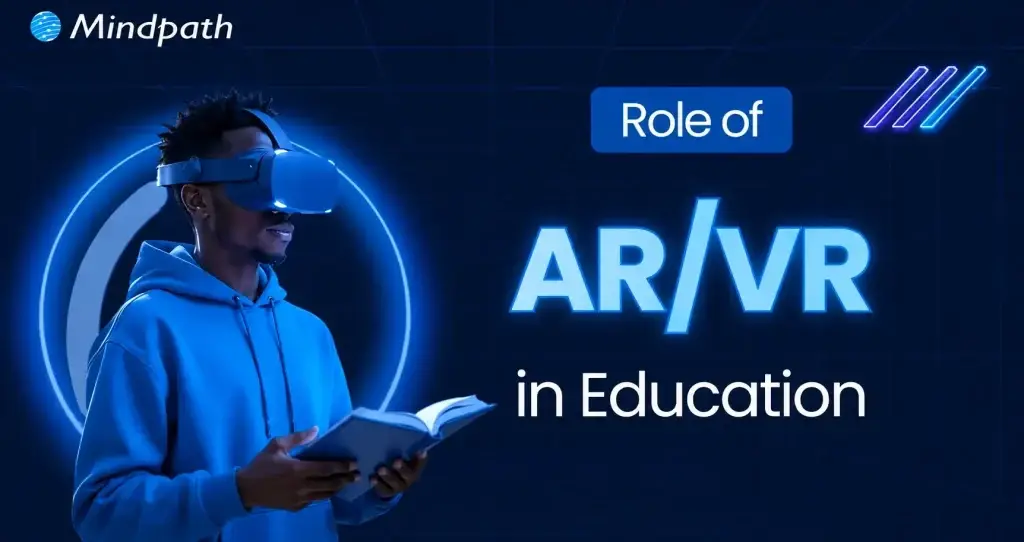
AR and VR in Education

Student engagement is a critical factor when it comes to effective education. While curriculum and subjects might differ globally, engagement remains the cornerstone of learning. Today’s learners are valuing the essentiality of more interactive and practical experiences. This is where the relevance of AR and VR in education makes a real impact.

Starting from virtual science labs to 3D anatomy lessons and skill training, these technologies are changing how students learn. This also impacts the teaching methods of educators. As per the reports, the AR and VR education market is going to reach USD 28.70 billion by 2030. In fact, it is quickly turning into a powerful tool that can serve proper engagement.

Looking to enhance learning and boost student engagement in a digital world? Contact us to discover how we help deliver immersive experiences with AR and VR solutions.

What are AR and VR in Education?

Before you go through the impact of these technologies, it is necessary to understand the critical difference between the two.

  • Augmented Reality adds digital elements like animation, 3D models, labels, and audio to the real world. It takes the help of devices like tablets, smartphones, or AR glasses. So, when it comes to a classroom setting, AR can turn your printed diagram into an interactive visual while putting life into the pages.
  • On the other hand, virtual reality places learners inside a complete digital environment using a headset. So, students can easily conduct experiments or walk through historic civilizations.

Together, these AR and VR technologies can generate more active and student-specific learning environments for the best results.

Why are AR and VR important in Today’s Modern Education?

No doubt traditional learning methods have relevance in the market. But they often struggle to keep students completely engaged. This gap has become significant in this digital-first world. So, you need to understand that learners need to understand concepts better. So, this is possible when they see, explore, and interact with information instead of only reading and hearing about it.

  • This is where the impact of augmented reality in education and the values of virtual reality come into the picture.
  • These valuable tools can make your learning more effective.
  • Further, they value multiple learning styles to help fill in the gap between theory and practical understanding.
  • Whether it is a school classroom or a corporate training session, AR and the impact of virtual reality in education can make information easier to absorb.

What are the Essential Benefits of AR and VR in Education?

There is a series of benefits of AR and VR in education that you can go through in this section. However, these technologies need to be used strategically for the best results.

1. Improved Understanding

Core subjects like science, engineering, and medicine generally include complicated concepts. So, AR and VR can easily simplify such topics by visualizing them in ways that are easier to understand.

For example, instead of looking at a flat image of the human heart, you can assess the rotating model while observing the functions of each section. This is one of the major benefits of augmented reality in education.

2. Personalized Learning

Every student has their own learning capabilities. Some might be visual learners, and some might need repetition or practical examples. AR and VR can help you understand such differences by offering adaptable learning experiences.

3. Better Knowledge Retention

Students will be able to remember what they actively experience through these valuable technologies. Immersive learning can boost your memory by including a participatory approach.

So, when the learners can interact with the concept more effectively, their learning becomes more successful.

4. Safe Practice Environments

One of the most practical benefits of VR in education is that it allows you to practice without any real-world challenges and risks. As a medical student, you can easily simulate surgeries, and engineering students can easily interact with machinery.

Major Examples of AR and VR

To better value the core of immersive learning, here are some major examples of AR and VR in education.

  • Virtual field trips can allow you to visit museums and historical sites right from the same location.
  • You can easily perform experiments in virtual science labs.
  • AR-enriched textbooks can easily turn printed pages into essential interactive learning tools.
  • You can experience technical and vocational training modules for machinery, construction, and equipment handling.

These real-life applications show that AR and VR are not limited anymore. Moreover, they are already solving real educational challenges.

Challenges of Adopting AR and VR

No doubt the use of AR and VR in education offers a series of benefits. However, successful implementation needs proper planning. Some of the major ones have been listed in this section.

  • Teacher training and onboarding process.
  • The high cost of hardware and software.
  • Technical maintenance and support.

These challenges are becoming easier to manage as the technologies have become more affordable. So, institutions that invest thoughtfully can seek long-term values.

Conclusion

The role of AR and VR in education has been drastically changing with a series of features. These technologies are helping educators generate more engaging lessons while enabling you to understand more complex topics. From better retention to higher engagement, the benefits of AR and VR remain effective.

So, if your business is looking forward to building future-ready learning experiences, the right technology partner can make all the difference. Mindpath can be your ultimate partner that can create and innovate impactful learning environments customized for your modern needs. We can offer you user-centric digital products that align with your needs.

FAQs

What is the Major Difference Between AR and VR in Education?

AR can add digital elements to the real-world environment, whereas VR generates a completely immersive digital space for better learning.

What are Some Essential Benefits of AR and VR in Education?

The major benefits include better engagement, improved understanding, and safe skill practice while helping you get more interactive learning experiences.

How to Use AR and VR in Classrooms?

You can use AR and VR for your virtual field trips, 3D visual learning, and even for lab practice. People also use it for language training and interactive lesson delivery.

Can AR and VR Improve My Learning Outcomes?

AR and VR can easily encourage your learning outcomes by making your lessons more interactive and visually practical.

Which Subjects Mainly Use AR and VR for Better Understanding?

AR and VR are majorly effective in subjects like science, medicine, engineering, and mathematics.

Related Post

Cloud computing attacks

Cloud computing has certainly revolutionized how business entities leverage technology to carry out their operations. In recent times, many businesses across diverse industries have already migrated to the cloud. These cloud computing trends have gained momentum so that businesses can take advantage of cloud computing technology. However, such a trend has also given rise to a broad range of attacks on cloud.

In the prevailing times, business entities need to know that Cloud computing attacks encompass different types of attacks by malicious actors. These malicious actors could be internal or external. However, they can cause significant damage to businesses in the highly volatile environment. Now is the perfect time to expand your knowledge relating to cloud computing attacks.

Want to strengthen your cloud security without increasing operational complexity? Mindpath’s managed cloud services provide the expertise and tools needed to secure your cloud operations

What are Cloud Computing Attacks?

A cloud computing attack refers to a malicious activity that can exploit vulnerabilities in the cloud infrastructure, applications, or services. The purpose of such attacks is to steal data, gain unauthorized access, or disrupt the usual services.  The rising instances of cloud attacks have become a major concern for businesses operating in diverse industries or sectors. 

Cloud attacks may be of various types. Businesses need to be able to answer: What are the security risks of cloud computing? They need to have an answer to this question before moving to the cloud. The knowledge in this area is vital to being prepared to face such risks in an effective and efficient manner. 

Want to strengthen your defences against cloud computing attacks? Discover cloud security tools that help identify threats and secure your workloads effectively.

Top Cloud Computing Attacks that Businesses Need to Be Aware of

The attacks on cloud that target cloud computing resources as well as infrastructure may vary considerably. It is essential for modern businesses to have a holistic insight into these threats as they have the potential to compromise the business operations and sustenance. Some of the key cloud security threats that you need to be familiar with include:

1. Denial-of-Service Attacks

The Denial-of-Service Attack is a cloud attack that intends to make a network or computer resource unavailable to the actual users. It basically floods a cloud server or service with fraudulent traffic. You need to bear in mind that a DoS attack involves a single source. On the other hand, a distributed denial of service attack may involve several compromised sources. 

As cloud environments are vulnerable, such types of attacks may lead to costly repercussions. Such attacks may lead to the disruption of service or loss of revenue for a business. Moreover, it may also cause serious damage to the reputation of a business. Understanding cloud computing vulnerabilities is essential to prevent such risks and protect cloud infrastructure.

2. Insider Threats

Insider threats refer to the cloud security threats that arise because of employees, former employees, partners, etc. They continue to affect the security in the cloud computing environment.  This threat may occur when an insider either intentionally or unintentionally does harm to the cloud security of an organization. 

The key issue that an entity needs to address is striking a balance between the privacy of employees and the security measures that have been adopted. This cloud cyber attack may be quite difficult to detect and prevent since it typically involves individuals who have the authority to access cloud assets.

3. Man-in-the-Middle Attacks

The Man in the Middle Attack takes place on the cloud when a malicious actor is able to intercept the interaction between the cloud user and the cloud service. This attack may also arise when an attacker intercepts the communication between two cloud services. The attacker basically positions themselves in the middle position in order to eavesdrop or steal sensitive information. 

These types of issues relating to cybersecurity in cloud computing need to be addressed as a priority. This is because such attacks can take advantage of cloud services that are misconfigured. They can also exploit the vulnerabilities that exist in SSL/TLS protocols. 

4. Account Hacking

Account hacking in the cloud environment refers to the unauthorized access or control of a cloud computing account by a malicious actor, such as a hacker. This can certainly allow the hacker to make use of related resources for their malicious purposes. Account hacking can also enable hackers to manipulate or steal the data that is stored on the cloud. 

Such cloud computing hacks may give rise to detrimental consequences for business entities. For instance, hackers or attackers may use password cracking techniques for the purpose of guessing or stealing the login credentials of others. Organizations need to prevent cyber attacks as they may lead to financial loss, and they can also tarnish the reputation of an organization. 

Struggling to manage infrastructure while scaling applications efficiently? Check out serverless architecture in cloud computing to learn how it lets you build and deploy apps without worrying about servers.

5. Cloud Malware Injection Attacks

Cloud Malware Injection refers to a type of cyber attack that involves the injection of malicious software, such as a virus or ransomware, into cloud resources or cloud infrastructure. Such types of attacks are gradually becoming common as more businesses are moving to the cloud. Such attacks can enable cybercriminals to compromise the infected or affected resources.  

Attackers may even steal or destroy data for their own malicious purposes. There exist numerous ways in which attackers may inject malware into the cloud infrastructure, such as by exploiting vulnerabilities in the cloud setting or by gaining unauthorized access to cloud accounts. 

6. Security Misconfiguration

In cloud computing, security misconfiguration refers to the lack of proper configuration of cloud computing resources or infrastructure. Due to the failure in terms of configuration, there may be compromised protection against cyber threats and attacks. Businesses need to bear in mind that incorrect security settings have the potential to leave the system and data vulnerable. 

Security misconfigurations are considered to be a serious issue that can lead to data breach incidents in the cloud. The issue may be the result of human error or lack of expertise. Similarly, the failure to alter insecure default settings may lead to security misconfiguration in the cloud. 

7. Side Channel Attacks

Side channel attacks in the cloud environment are able to take advantage of weaknesses or vulnerabilities in shared hardware resources. Such attacks are capable of extracting confidential data through the observation of indirect information such as power consumption and electromagnetic emissions. 

This attack involves the exploitation of information that has been leaked through the physical implementation of a system. In the cloud setting, malicious actors may carry out such types of attacks by positioning a malicious virtual machine on a legal physical host that is used by a business. This technique can enable the attacker to get access to all confidential information about the victim’s machine.  

8. Cookie Poisoning

Cookie poisoning is a type of cyber attack where an attacker is responsible for tampering with or altering the web cookies of the user. In cloud applications, this type of attack involves the unauthorized modification or the injection of malicious content into a cookie. 

Cookies are typically stored to personalise the experience of users or track their activities. Such attacks can poison the cookies of users without their knowledge to access the applications. It may lead to unauthorized access to accounts. Businesses need to deploy robust cloud security solutions so that such attacks can be prevented in an effective manner. 

Ready to take your applications to the next level in the cloud? Explore cloud-native development to learn how modern architectures improve performance and security.

Need for a Solid Cybersecurity Posture

Modern business entities need to maintain a robust cybersecurity posture. Such a posture can enable them to prevent cyberattacks. Business entities need to adopt solid cybersecurity tools and technologies so that they can safeguard sensitive information and maintain regular business operations. 

In prevailing times when cloud computing attacks are on the rise, entities across diverse industries need to prioritize their cybersecurity resilience. Proper cybersecurity preparedness is a must to ensure that organizations can effectively function in an uncertain environment. While operating in the cloud, business entities need to prioritise the adoption of robust cloud security solutions such as identity and access management, encryption, data loss prevention, and many more. 

Curious how AI can improve cloud security? Check out AI in cybersecurity to see how it detects threats faster and protects your systems.

Final Words

In the existing business landscape, more businesses are moving to the cloud. This has automatically created the need for businesses to broaden their insight relating to cloud computing attacks and threats. Several cloud attacks have been identified that are affecting businesses, such as Denial-of-Service Attacks, Insider Threats, Account hacking, and many more. 

Mindpath’s managed cloud services can ensure that your business is well protected against all types of cloud attacks. The professionals and experts will ensure that your business can derive optimum value from the cloud computing technology and stay protected from cybercriminals and other malicious actors. 

wordpress-react-combine project
Are you curious about how to elevate your web app to the next level? Imagine combining React’s cutting-edge user interfaces with WordPress’s robust content management. Interesting right? In this blog, we’ll guide you through the process of merging these technologies to build a web app that’s both visually stunning and highly functional. So, let’s dig in! 

Overview of React 

React is a JavaScript library that enables the building of user interfaces, mostly single-page applications. It gives a possibility to create interactive elements and dynamic web pages by breaking their content into smaller, re-usable components. It helps in managing updates to the user interface and hence makes applications faster and more responsive. React is essential to today’s digital makeup since it will help in the creation of a much faster, interactive, and dynamic web application that would go a long way in enhancing user experience. Due to its component-based architecture, React simplifies the development process and supports complex applications with high performance, making it a preferred choice for modern web development, where user engagement and responsiveness count the most. 

Overview of WordPress 

WordPress is an extremely popular content management system, and millions of websites are running on it worldwide. Its user interface is very simple, so users can easily create, edit, and manage website content without needing to know how to code. With high flexibility in themes and various plugins, WordPress can be put to any purpose—from personal blogging to the most complicated business sites. WordPress is important due to the flexibility and user-friendliness in creating and managing websites efficiently for any kind of user. It provides access to unlimited customization because of its extended base of themes and plugins, hence becoming a mainstay tool in the modern world for web developers and content creators. 

Why Combining React and WordPress Can Be Beneficial for Developers.   

Integration of React with WordPress enriches development by putting the power of both together. React is empowered for reusing the components, which means simplicity in terms of coding and speed in development. Fast rendering with efficient state management means web applications work harmoniously and respond as the user expects. JSX syntax, with its combination of JavaScript and HTML, enables easier writing and readability of codes. WordPress complements React by taking care of the content and providing a clear user interface. The fact that React can keep data away from the presentation and manage it nicely helps not to lose data under any conditions. Taken together, React and WordPress make the building process much faster and more convenient for creating powerful and extremely dynamic web apps. 

Key Considerations When Building Your Web App with React and WordPress    

1. Existing Infrastructure  

Your existing infrastructure does affect how well React and WordPress work together. If your current system is compatible, the integration of React will go through smoothly and more quickly. For example, a headless setup where React is doing the front end and WordPress the back end could be best for modern needs. This, however, requires more development work, changes in your back-end system, and special expertise to do it correctly. 

2. Maintenance And Updates  

Regular updating and maintenance are vital in the case of a React and WordPress site. In case you do not update them regularly, your site will eventually have performance issues, it will be vulnerable to security exploits, or even crash. When it’s headless—in a setup where React and WordPress run separately—the updates become easier; one could independently update the front end and back end, which will be helpful in keeping the site’s stability and safety. 

3. Developer Skillset  

It requires a wide skill set to build a website with React and WordPress. One needs to be proficient in JavaScript, to understand JSX, and to use state management tools like Redux. One would also want to be familiar with modern development tools like Webpack and Babel and know how to work with APIs. If these competencies are missing in your team, including an expert on a project basis will make the development process smoother and more efficient. 

4. SEO Considerations 

SEO is critical to have your website show up in search results and bring in visitors. Using React with WordPress, SEO can be a little more complex. As its client-side rendering, React may make it hard for search engines to index your content. You can either implement SSR or SSG to make it easier for search engines to crawl and rank your site. Besides, meta, sitemaps, and canonical URLs should be properly set up for effective SEO within a headless WordPress setup. 

Ready to elevate your website to new heights?

At Mindpath, we seamlessly integrate React with WordPress to create dynamic, responsive web experiences.

Configuring React to Work with WordPress      

1. Write Modular Code 

Breaking your code into smaller, self-contained parts makes it easier to handle and reuse. This is like keeping your workspace organized: when everything has its place, it’s much easier to find anything that you may need and use it. Small, reusable components in React are ways by which you can keep your code neat, making changes or fixes on parts of your site without affecting the other parts. 

2. Use A State Management Library   

A state management library, like Redux, that keeps every bit of information of your app in one place. This is good for complicated websites where you deal with a great deal of information. This way, it becomes easy to handle changes and updates for your website to run smoothly and in the desired manner. 

3. Optimize Performance   

Performance optimization of the website enables quick and enjoyable usability by the user. This is achieved through caching, breaking down the code into smaller pieces that load only when needed, or lazy loading—parts of the website only load after becoming visible to the user. Doing this will get your site up and running quickly; this will also improve responsiveness. 

4. Implement A Consistent API   

A good API—like WordPress REST API or GraphQLwill help your React app and WordPress site to communicate smoothly. A consistent API would mean that data flows between the two without any problems. REST APIs offer flexibility, but their design is often varied. GraphQL APIs are more homogeneous and predictable, so it helps in use and understanding. 

5. Plan For Extensibility   

Make a site that will expand and evolve over time without a problem. That means keeping ahead by finding out ways to add new features or update existing ones without breaking the rest of the site. Having an extensible design means it will let your site easily change to meet future needs without having to start from square one. 

6. Automated Testing 

Automated testing means running your code for errors using tools automatically. This will ensure that mistakes are noted and cured in the beginning, thus ensuring that your website does what you want it to. Automated testing saves time and keeps your site stable; this reduces the chances of problems frustrating users. 

Build Your Web Using React and WordPress with Mindpath    

The experienced team at Mindpath uses React to improve user experience and WordPress as the foundation for creating powerful websites. With its incredibly strong and practical content management system, editing and managing website material is effortless. By integrating React, we can increase your site’s speed and amount of interaction while engaging users on a deeper level. Create a dynamic frontend for your website using React to make it load quickly and react to user input as smoothly as possible.

Mindpath offers the best of both worlds: the ease and versatility of WordPress paired with the contemporary, dynamic capabilities of React. We take care of the technical setup and customization so you can have an outstanding website experience and concentrate on your content and business objectives. 

Conclusion  

Combining React and WordPress gives synergy to your Web application, offering a digital experience that is at once impressive and compelling. Being able to interact with dynamically displayed interfaces from React and a robust content management system like WordPress, you are assured of having a site that is at once engaging, powerful, yet very easy to manage. Inherently, this automatically ensures the improvement of user interaction and performance while also making it seamless to update content and manage sites. Embrace this mix of technologies to develop a web app which would be fast, functional, and future-ready. This way, your web presence will always be at the top of its game.
Mindpath excels at bringing this integration to life. Our expert team combines the power of React with WordPress to deliver an ultra-fast, interactive site that is also easy to maintain and update. With Mindpath, you can confidently navigate the complexities of modern web development, ensuring your digital presence is both cutting-edge and effortlessly managed. 

Looking to enhance your WordPress site with cutting-edge React features?

Mindpath is your go-to partner! We specialize in integrating React’s dynamic capabilities with WordPress’s robust CMS to deliver stunning web experiences.

Combine WordPress and React for powerful web apps. Discover how to leverage robust content management with dynamic interfaces for enhanced user experience.

Support Is One Click Away

Featured Posts

Related Post

Discover the benefits of headless CMS for faster content delivery, personalized experiences, and seamless integration.