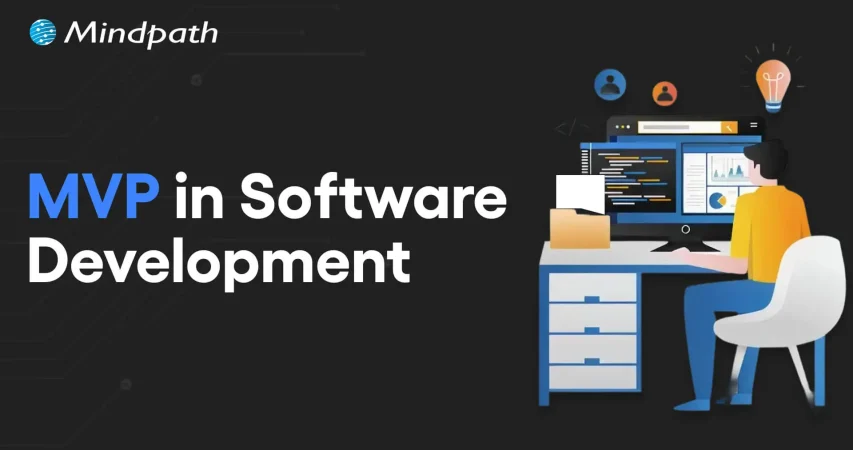
MVP in Software Development, also known as Minimum Viable Product, is an initial, functional version of a software application built with only the core features necessary to solve a primary problem and be released to early users. The fundamental goal of MVP development is to validate market demand, gather real-world user feedback, and reach the market quickly with minimal investment.
As innovation in the current market setting is growing at a rapid pace, it is essential for businesses to realize the importance of software development MVPs. You need to develop an MVP before investing a significant amount of money in the full-scale product. This strategic development methodology can be implemented by the development team without having to build a complete software product. It is the right time to explore the relevance of MVP in software development.
Wondering how to validate your software idea before committing full resources? Mindpath’s MVP development services help businesses build functional prototypes and gather real user feedback quickly.
What is MVP Development?
In the era of digitalization, startup businesses may wonder – what is MVP in software development? In simple words, MVP or Minimum Viable Product, is a development strategy where a new product or software is launched with only the core features necessary to satisfy early adopters. Unlike a beta version, an MVP is purpose-built to validate market demand and gather actionable user feedback with minimal time and financial investment.
This basic version consists of the essential features and functions. These elements are included by taking into consideration the pain points of clients. The core idea behind the MVP development process is to build customer-oriented software applications. It helps businesses to ascertain whether their product is up to the mark or if it requires improvement. MVP development focuses on minimizing costs and business operations. It even helps to build the software in a smarter and efficient manner.
Stages for Building an MVP
In order to build an MVP in the context of software development, a systematic approach has to be adopted. The MVP development process involves a series of stages that you need to be aware of. You need to follow the steps in a methodical manner so that you can succeed while developing an MVP.
1. Defining the Problem
The fundamental step is to know the problem or pain points of your users. If businesses do not have insight into this area, they may end up creating an app that no one will use. So you need to clearly define the specific problem that your software application is going to solve. At this stage, startup businesses can consider using MVP development services. Otherwise, they can sit and discuss with their development team the problem that the application is going to solve. It is also important to understand how important the application will be for people who will be using it.
2. Knowing the Target Audience
At this stage of the MVP development process, it is essential for you to decide who will be your target audience. A common mistake that some developers make is that they decide to create an app for everyone. It is advisable to target a niche group when startups develop an application. It can help narrow the focus of the project and develop well-functioning software. Businesses need to build the target audience persona and make it as detailed as possible. Some of the details that should be included in the persona include profession, age, and income group.
3. Ascertaining Key Features
Startups need to determine the key features that the first version of the product must have. It is an important thing you need to look at after defining the problem and identifying your target audience. At this stage, businesses need to list down all the possible features of the product. Then you must decide the essential features that need to be incorporated to make the software application usable. From the list of features, you can choose the most essential features that need to be included in the MVP.
Must Read: MVP for Startups
4. Building the MVP
Once you have clarity about the features of your MVP, it is time to start creating the product. At this stage, you have to determine the programming language, framework, and other tools that you plan to use. You can even consider taking the help of an MVP development company if you wish to build your MVP. At this particular stage, you do not have to think about making a perfect product. Instead, startup businesses must focus on building a product that is usable for the intended audience. The ultimate goal must be to develop a functional product within the shortest period of time.
5. Testing the Product
After you have created your MVP, it is time to test it. You must reach out to early adopters who are going to be the actual users of your software application. It is vital to search for the people who match the created buyer persona. You must request them to try out your MVP. If it is possible, you can reach out to them via social media or email. At this stage, your ultimate goal should be to get a good number of people and gather feedback from them. Collecting honest feedback is crucial to making improvements in the software application MVP.
6. Using Feedback for Product Improvement
Once users start giving feedback about your MVP, you need to start collecting it. Moreover, you need to see what the best way is to implement them so that your software can meet the needs of the target audience. Initially, you need to focus on how your software solves the problem for users. If you receive positive feedback, you need to look at additional features that you can incorporate into your actual product. The feedback loop can guide you to develop the ideal product that can effectively meet the needs of the intended users.
Ready to push your MVP from idea to functional product? Explore our blog on hiring full stack developers for MVP to learn what abilities truly drive strong outcomes.
Advantages of Developing a Successful MVP
The creation of an effective MVP can give rise to a host of advantages for startup businesses. You need to be aware of the chief benefits.
1. An MVP can help a business quickly decide whether the solution genuinely resonates with the target audience or not. It can save valuable time as well as resources of your business while helping you to test the core assumptions with the actual users.
2. An MVP can enable businesses to test their business concept with limited investment, as it can minimize the financial exposure that is associated with full-scale software development. So businesses can avoid making costly mistakes.
3. The invaluable feedback that businesses can gather can help in iterating and refining the product. So you can take into account the actual needs and preferences of your customers and create value for them through the software solution.
4. An MVP can help you launch your software application sooner in the market. This will be possible since you can focus on the essential features and key functionalities. The MVP can help you gain a competitive edge in the market setting.
In the current times, when the needs and preferences of customers are rapidly changing, businesses need to understand the importance of an MVP. A successful MVP can enable businesses to create something that can create value at a comprehensive level.
Curious about the different ways software can be built? Check out our guide on the types of software development to learn which approach fits your project best.
Final Words
In the context of software development, the relevance of a minimum viable product cannot be ignored. If businesses plan to develop a new software solution in the market, they need to adopt the MVP approach. The systematic development approach can enable businesses to create software that can create value for the ultimate users in the market. Businesses need to understand the strategic value of a minimum viable product. The knowledge can empower them to build software applications that perfectly match the needs of their target audience.
Mindpath’s MVP development services can help businesses develop their minimum viable product in an effective and efficient manner. Our experts will guide you to make refinements in your software by taking into account the needs of your target audience.