Types of Artificial Intelligence – ANI, AGI, and ASI 

Join our Newsletter!

Featured Posts

Support Is One Click Away

Home

Types of Artificial Intelligence – ANI, AGI, and ASI 

types of artificial intelligence  

Types of Artificial Intelligence – ANI, AGI, and ASI 

Artificial intelligence is quickly becoming the backbone technology of our modern day, enabling a wide-ranging variety of advanced technologies, from smart assistants on our phones to an advanced analytics platform. AI enables machines to translate data into useful information by recognizing patterns in the data and eventually making decisions that once required human intelligence. Learning the different types of artificial intelligence is critical to understanding how such human-like systems function and advance from there. As innovation unfolds in real-time, AI is quickly becoming the key enabler of automation, personalization, and intelligent decision-making across industries.

At present, AI development aims toward systems that can reason, adapt, and improve efficiency in the real world. The advancement of these changing and evolving technologies is increasing limitations and changing the way we interact with digital systems. In this blog, we will cover the main types of AI that exist and how each level leads to the next generation of intelligent technology.

Want to step into the future of technology with AI? Mindpath’s  AI development services will help you provide smart and intelligent solutions tailored to your business demands.

Understanding the Types of Artificial Intelligence

Artificial intelligence uses data, logic, and algorithms to simulate human thought processing and action in machines, enabling computers to recognize patterns, make decisions, and learn from past experience. According to SAS, AI systems can manage vast amounts of data and apply logic in real time to intelligently and effectively handle functions like speech processing, visual analysis, image recognition, and natural language understanding.

It is important to understand the types of artificial intelligence, as they indicate how sophisticated a system is and what it can actually do. Knowing about the various AI classifications will provide clarity regarding what AI systems exist today, and what systems are theoretical at this point in time. This knowledge can help businesses select the proper technology, manage risk, and plan strategies more confidently in a world that is becoming increasingly unified through intelligent automation.

Here are the three types of artificial intelligence:

1. Artificial Narrow Intelligence (ANI)

2. Artificial General Intelligence (AGI)

3. Artificial Super Intelligence (ASI)

Ever wondered how AI systems focus on the most relevant information while processing massive datasets? Discover the attention mechanism to learn why it is foundational to deep learning models and advanced AI intelligence.

What is ANI AI?

Artificial narrow intelligence, or ANI artificial intelligence, operates within a specific functional role, or related functions, within a narrow field of inquiry. ANI does this very effectively, but it cannot go beyond what it has been programmed to do. Businesses use ANI to promote efficiency in work, and individuals employ ANI daily in ways such as digital assistants and recommendation systems to help them work more efficiently, quickly, and accurately.

ANI works by identifying data from prescribed sources and performing assigned tasks with accuracy. It improves business processes from manufacturing to services to customers. ANI also learns over time and employs machine learning and deep learning techniques. Businesses can rely on ANI to increase productivity, reduce risk, and support humans in executing rote or specialized tasks.

Here are the benefits of ANI AI:

1. Higher Efficiency

ANI automates repetitive tasks like data entry and scheduling. Employees can instead work on creative and complex work.

2. Faster Decisions

ANI analyzes large datasets quickly. Companies can confidently make decisions that are based on data.

3. Stronger Security

ANI monitors transactions and user activity in real time. It detects fraud faster than individuals can.

4. Better Customer Support

AI chatbots help customers with whatever they want 24/7. Human agents will manage more complex customer questions.

5. Smarter Marketing

Recommendation engines make intelligent suggestions around helpful products and content. This increases engagement and sales.

Want to see how ANI-powered chatbots deliver real business value? Discover AI chatbot examples to learn how intelligent automation boosts engagement and conversions.

What is AGI AI?

AGI artificial intelligence is a kind of system that can think, learn, and understand like a human being. It does not only refer to a system that is limited to specific tasks like ANI. AGI can reason logically, solve problems, and understand languages in varying contexts. It is significant progress in the domain of artificial intelligence types.

AGI uses information collected previously to create new experiences and applicability of information in a new experience. It can also make decisions relating to healthcare, finance, and technology without the need for detailed programming. AGI artificial intelligence is set apart by its adaptability and flexibility and gives a clear guide to the extent of sophistication apparent between different types of artificial intelligence in ability to cross over between a humanistic understanding of the world and efficiency of a machine.

Here are the benefits of AGI Artificial Intelligence:

1. Faster Research

AGI examines enormous datasets at incredible speeds. It speeds and improves advances in medicine, science, and technology.

2. Solve Big Problems

AGI can help tackle global challenges, including climate change and resource management. It may create sustainable or efficient solutions.

3. Boost Productivity

AGI can automate mundane or advanced activities. This will allow humans to focus their time on creative and strategic input.

4. Personalized Services

AGI can personalize education and healthcare for them. It can suggest educational paths and treatment plans based on specific personalized information.

5. Better Collaboration

AGI reads tone, intention, and context in conversations. It guides humans and gives insights about what is happening in real-time.

Wondering how advanced AI capabilities align with long-term business goals? Discover AI in business strategy to learn how organizations use intelligent systems to gain a competitive advantage.

What is ASI AI?

ASI, artificial intelligence, is a stage of AI that is beyond human intelligence. It is capable of thinking, learning, and solving problems in many areas independently. It handles complex tasks with superhuman speed and accuracy, unlike ANI and AGI, which have limitations. ASI sits at the top of the types of artificial intelligence levels.

ASI or Artificial Super Intelligence could create profound change in areas such as science, medicine, and the arts, by processing greater amounts of data, making choices, and understanding emotions greater than human capacity. Although ASI technology is still hypothetical, investigating the implications and possibilities prepares researchers and organizations for the next generation of artificial intelligence and its social benefits.

Here are the benefits of ASI Artificial Intelligence:

1. Smarter Decisions

ASI examines vast sets of data and simulates complicated systems. It can help solve problems like health, climate change, and poverty.

2. Faster Innovation

ASI automates research and experimentation. It brings breakthroughs in science, technology, and even space exploration.

3. Higher Productivity

ASI efficiently performs any cognitive task. While efficiency increases, humans can spend their time on more creative and strategic work.

4. Personalized Customer Experience

ASI is accurate in anticipating customer needs. ASI provides personalized marketing and services that are well-targeted.

5. Stronger Risk Management

ASI can quickly identify potential threats. It can protect against fraud and strengthen cybersecurity across operations.

Need efficient AI training without excessive computing costs? Discover Low-Rank Adaptation (LoRA) to learn how modern AI models are optimized while maintaining performance and scalability.

ANI vs AGI vs ASI: A Detailed Comparison

Comparing ANI, AGI, and ASI shows how these different forms of intelligence operate. This table explains their capabilities, learning ability, and impact within the types of artificial intelligence.

Category ANI (Artificial Narrow Intelligence) AGI (Artificial General Intelligence) ASI (Artificial Superintelligence)
Intelligence Level Performs specific tasks well Performs human-level tasks across all areas Performs tasks beyond human intelligence
Learning Ability Learns only in its trained tasks Learns and applies knowledge across multiple areas Learns independently and creates new knowledge
Capabilities Limited to single tasks Matches human reasoning and problem-solving Solves complex problems instantly and invents new methods
Development Status Already in use Theoretical, may take decades to develop Hypothetical, comes after AGI
Resource Needs Moderate computing power and data High computing power and advanced hardware Extremely high computing power and energy required
Applications Chatbots, recommendations, image recognition Scientific research, education, creative industries Global problem-solving, advanced research, innovation

Ready to Unlock Your Business Growth with the Power of AI?

Understanding types of artificial intelligence like ANI, AGI, and ASI helps businesses and individuals see the potential of AI in everyday life and industry. From improving efficiency and decision-making to driving innovation and solving complex problems, AI is transforming the way we work, create, and interact with technology in ways that were once unimaginable.

Mindpath offers professional AI development services to help companies implement ANI, AGI, and ASI solutions. Our team builds intelligent systems that enhance business productivity, automate processes, and deliver personalized experiences. With expertise in the latest types of artificial intelligence, Mindpath ensures your AI projects are efficient, scalable, and aligned with your strategic goals for measurable results.

Related Post

Discover how ReactJS powers scalable, high-performance web apps. Learn key features, optimization tips, and how Mindpath can help.
Discover how Generative AI is revolutionizing customer service with automation, efficiency, enhancing customer experience and more.

Related Post

WordPress development services

When companies get ready to build a reputable online position, finding well-suited WordPress development services is a critical step. It involves building a functional website that loads quickly and continues to engage the visitor. In a competitive marketplace, companies will be expecting advanced features, secure environments, and designs that reflect their brand. This is where those with professional experience can deliver outstanding results.

What can companies realistically expect from investing in these services? Expectations generally revolve around the key themes of customization, scalability, and ongoing support that allow a business to scale without the technical pieces creating problems. When working with the right website development company, companies can explore solutions that are practicable, innovative, and in line with their goals. In this blog, we will discuss what companies should expect from WordPress services.

Want to build a visually appealing site with a team that thinks beyond code and provides guidance? Mindpath offers wordpress development services that combine design, performance, and transform your website into a powerful business tool.

Understanding WordPress Development Services

The WordPress development service provides businesses with the ability to build, customize, and maintain websites with the WordPress CMS; designing custom themes, building plugins, and making sure the site runs smoothly. They also take an active role in enhancing load time, security, and ensuring mobile adaptability. This way, every website is professional-looking and working efficiently for the user.

These services also involve e-commerce integration through tools such as WooCommerce, so businesses can sell products online with ease. Professionals offer routine updates, troubleshooting, and assistance that keep websites functioning well. Organizations can have scalable and user-friendly platforms that are capable of evolving with their needs.

Also Read: WooCommerce vs. Shopify

Types of WordPress Development Services

Companies today utilize top WordPress development services for building secure, flexible, and manageable websites. These services offer an array of different solutions for different business needs and establish solid organic growth online.

Types of WordPress Development Services

1. Custom WordPress Development

Custom WordPress development service is aimed at developing websites with custom designs and functions. Developers use tools such as ACF to create custom fields and, in all cases, deliver solutions that meet the needs of the businesses.

2. Plugin Development and Customization

Plugins are used to expand the functionality of a WordPress website to suit particular needs. Developers can build new plugins or customize existing plugins to provide the functions that a business needs exactly.

3. Website with Page Builder

The use of a website page builder like Elementor, Divi, or Beaver Builder makes the design visually attractive and allows for more options for a non-technical person to build and design layouts.

4. Headless WordPress

Headless WordPress separates the back-end and front-end of WP in order to allow a developer to use frameworks like React or Vue.js. This gives you faster speeds and finer items of design customization.

5. WordPress Multisite

Businesses with more than one website can use Multisite to manage many WordPress sites in one installation. An example of a use case would be if a business has a brand site and sub-blogs.

Wondering how to make your WordPress site accessible to all users? Read our web accessibility guidelines blog to learn best practices for inclusive design.

6. WordPress Migration Services

Many times, proper attention is needed when migrating a website to WordPress to ensure there are no downtimes or loss of data in the transition. Specialists assist with a seamless transition by safely transferring the content, settings and functionality from the old website.

7. Custom Theme Development

A custom theme is developed to define an identity and aesthetic style for the website. This service makes certain that the website presents a unique look and feel that fits the brand guidelines.

8. E-commerce Integration

Companies can leverage WooCommerce to transform WordPress into a completely functional online store. Developers will add features like shopping carts, secure payment processing, and product catalogs.

9. Website Performance Optimization

Enhancing website loading speed and overall performance improves user experience and SEO rankings. Developing professionals are working on caching solutions, code optimization, etc. to keep sites and pages loading quickly.

10. Security and Maintenance Services

Continual updates and security are critical to protecting you from threats/downtime. Developers provide site monitoring, timely fixes, and sometimes other unrelated maintenance and management tasks to keep everything operating normally.

Concerned about WordPress security risks? Check out safeguarding common WordPress vulnerabilities to protect your site from common threats.

Advantages of Custom WordPress Development Services

Teaming up with a WordPress web development company you trust provides businesses with additional advantages beyond simply having a website. With professional support, businesses can custom-build solutions that improve performance, provide security, and give assurance of future growth.

1. Expert Knowledge

Expertise in WordPress development will add real value to your website project. WordPress developers code in PHP, CSS, and JavaScript, manage a secure database, and generate a high-quality website design. They can also integrate analytics tools that allow you to track user behavior and engagement trends informing better business decisions.

2. Personalized Solutions

Professional WordPress development services create unique websites that are configured for your specific business needs. They select the appropriate compatible plugins and themes for your site and may develop custom WordPress plugins, if necessary, for unique functionality and features. This guarantees you have a completely customized site that will also not detract from your site’s speed and responsiveness.

3. Save Time and Cost

Partnering with dedicated WordPress development service providers will accelerate website development while ensuring quality work. Their professionals will be effectively using the right tools to work through plugin integration, debugging and theme customization. While there can be an initial investment, it is cost-effective because you can save later on maintenance and updating in the future.

4. Strong Website Security

A competent team providing WordPress application development services uses security measures to ensure your site remains secure. Firewalls, encryption and periodic security audits are some examples of techniques they may use to assess the risk of unauthorized access to your site. As a result, they use these techniques to secure sensitive data and deliver your site reliably.

Want to ensure your WordPress site runs smoothly? Read our WordPress and PHP compatibility guide to understand which PHP versions and practices work best.

5. Better User Experience

Optimization of WordPress site design centers on performance, responsiveness, and usability. Expert designers develop mobile-friendly layouts and seamless user journeys to lower bounce rates. Better user experience leads to increased engagement and higher business revenue overall.

6. Scalable Solutions

Utilizing proficient WordPress development services allows for flexibility in alignment with your business growth. For example, you can hire developers for specific projects like custom WordPress development or for e-commerce extensions, allowing for flexibility in resourcing and flexibility during transitions with the business.

7. SEO-Friendly Content

Developing your website with an expert WordPress development company will position your site to succeed with SEO. They will optimize themes, use meta tags, and initiate your site with several SEO plugins to help showcase your content and reach your intended audience, all while providing a better chance of ranking well in search engines.

8. Access to Latest Trends

WordPress development services are focused on keeping your site fresh in design, technology, and user experience. They all update your site with new features, mobile betterment, and use of new tools to keep ahead of other sites. It is a benefit for your site to meet standards while exciting users.

Want to ensure your WordPress developer meets all requirements? Explore our WordPress developer checklist to make informed hiring decisions.

Ready to Transform Your Website with Expert WordPress Development Services?

Investing in professional WordPress development services ensures your website is fast, secure, and tailored to your business needs. These services offer customization, scalability, and ongoing support to enhance user experience, improve SEO, and drive growth. Companies can rely on experts to deliver solutions that keep their websites modern, functional, and aligned with their brand goals.

At Mindpath, our WordPress development services provide businesses with custom themes, plugin development, and e-commerce integration. We optimize your website for peak performance, security, and user engagement. With our expert team, you can focus on growing your business while we handle all aspects of website design, development, and ongoing support.

DevOps challenges

DevOps has played a crucial role in transforming conventional approaches to software development. Businesses utilize DevOps to ensure faster software delivery with improved quality and better collaboration between development and operations teams. However, the discussions about DevOps challenges don’t come into the limelight, with most of the emphasis being on the benefits of DevOps.

Most of the teams working with the DevOps approach experience many struggles and roadblocks, which can be frustrating at times. Awareness of the prominent challenges for DevOps and their solutions can help a business owner find the best strategic approach for DevOps implementation. This post will help you discover some of the prominent challenges in DevOps and their potential solutions.

Don’t know how to tackle the challenges in the DevOps process? Our experts will provide practical strategies that help you move forward and streamline your operations. Contact us to get personalized support to achieve successful DevOps implementation.

Why does DevOps Face Challenges?

The most common answers to “What is DevOps?” paint it as a combination of software development and IT operations. However, you need to dive a little deeper to understand what DevOps actually entails. DevOps is not about introducing a new department in the organization or bringing a specific set of tools for better results. As a matter of fact, DevOps is a paradigm shift that requires businesses to change how they think about collaboration and communication.

You can notice that success in DevOps initiatives is more about the cultural and philosophical shift rather than the technical aspects. Even with the undeniable benefits of DevOps attracting the eyes of business owners, there is no way to ignore the challenges. Many organizations fail in DevOps implementation due to their inability to recognize the challenges that are not purely technical.

Exploring the Most Prominent DevOps Challenges

The utility of DevOps is clearly evident in the different advantages like faster time to market, easier recovery from incidents, reduced deployment failures, and enhanced efficiency. However, a lack of awareness of the challenges with DevOps can lead businesses to waste resources and end up with substandard results. The following sections will help you learn about the most critical challenges for DevOps implementation.

1. Cultural Resistance and Fragmentation

The most prominent challenge for DevOps is the cultural shift that comes with it. The traditional approach to software development involved development and operations teams working in silos. Both teams had different goals, mindsets, and metrics for the same project, thereby leading to conflict. For instance, developers focus on faster delivery and innovation, while the operations team emphasizes stability above everything.

The fundamental difference between the two teams can create problems in the adoption of the DevOps methodology for new projects. One of the notable problems that arises from differences between the development and operations teams is the ‘us vs. them’ mentality. In addition, professionals in both teams accustomed to traditional workflows will showcase resistance to new tools and practices. Furthermore, the lack of active involvement of leadership also creates difficulties for the cultural shift required in DevOps.

2. Complexity of Tools and Integration Process

Any business that wants to embrace DevOps can capitalize on a wide range of tools for every phase of the software development lifecycle. You can find DevOps tools for almost everything, including CI/CD, security, version control, and monitoring. The assurance of access to so many tools offers the flexibility to choose any tool according to your needs. At the same time, it also creates challenges for DevOps projects as choosing the right tools can be a considerably daunting task. Some businesses end up adopting a lot of tools that don’t align with each other, thereby leading to inefficiencies.

Businesses have to face difficulties in achieving seamless integration between different DevOps tools. On top of it, DevOps teams must learn about a wide range of tools, which calls for investing a lot of time in training. The challenges due to the complexity of tools also focus on the inconsistencies in development, testing and production environments that lead to deployment failures.

Looking to optimize your CI/CD pipeline with smarter automation and streamlined processes? Visit our blog on DevOps Best Practices to discover the strategies high-performing teams use to achieve consistent, stable releases.

3. Lack of Attention to Security

The next prominent challenge for businesses in the adoption of DevOps is the lack of attention to security. Since DevOps aims at ensuring faster software delivery, most of the focus of DevOps solutions is on speed. However, businesses forget about security until the final stages of the software development cycle. Pushing security to the later stages of development as an afterthought is responsible for many challenges in DevOps. One of the most critical outcomes of ignoring security till the last stage of development focuses on compliance issues. Without integrating security practices from the beginning, any DevOps initiative is likely to face regulatory penalties.

The delayed attention to security results in the discovery of bugs and errors in the final stages of development. As a result, businesses have to spend more resources and time fixing such errors. The possibilities of bugs passing undetected through different stages of development can lead to the creation of insecure code. The problems arising from insecure code, such as data loss and breaches, can damage the reputation of an organization.

4. Rigidity of Legacy Systems

Most of the organizations embracing DevOps work with legacy systems and applications in their infrastructure. The adoption of DevOps for businesses with legacy systems is a daunting task, as the old systems were not designed for agile paradigms. You can think of monolithic architectures that involve large and tightly coupled applications, which create difficulties in frequent modification, testing, and deployment.

The automation-first principle in DevOps is not applicable in legacy processes that rely heavily on manual configuration and deployment. Businesses have to go through nightmares to discover the complex dependencies in legacy systems during transformation efforts. At the same time, businesses must also remember that older systems have more security vulnerabilities, making it difficult to integrate them into a DevOps pipeline.

Planning to integrate security into your DevOps workflow? Explore our blog on DevSecOps to learn how automated security checks and continuous monitoring strengthen every stage of development.

Discovering the Ideal Solutions to DevOps Challenges

The insights on challenges for DevOps reveal that adopting a unified approach to development and IT operations is not easy. However, businesses can overcome these challenges by following a holistic approach to address the limitations of people, processes, and technology. The following sections offer an overview of some of the proven solutions to the challenges of DevOps implementation.

1. Culture of Collaborating and Sharing Responsibility

The foremost addition among the biggest DevOps trends points to efforts to break down silos and establish cross-functional teams. DevOps initiatives require shared goals around desired business objectives rather than focusing on KPIs of individual departments. Business owners must foster open communication and transparency between teams to create new paths for collaboration and knowledge sharing. Most important of all, leaders must showcase active participation in the projects and communicate with team members. When all team members share the same goals and responsibilities, the chances of cultural resistance and conflicts are reduced by a huge margin.

2. Adoption of Standardized Combination of Tools

The large assortment of tools for DevOps is obviously one of the most complex challenges for business owners. However, the solution suggests that adopting a standard set of tools with a thoughtful approach can prevent confusion. For instance, businesses must identify the critical areas for automation while choosing DevOps services and select tools that perform the best in the concerned areas. Most important of all, businesses must choose tools that facilitate easier integration with existing systems. Platforms such as Azure DevOps or GitLab can be the best picks for DevOps with their integrated version control, project management, and CI/CD capabilities.

3. Security from Early Stages

Another proven solution to a formidable DevOps challenge is the adoption of security as a shared responsibility in all stages of the development cycle. Integration of security practices and tools in the early stages of development can involve scanning the source code during development and testing applications to identify vulnerabilities in the running state. DevOps teams should also use techniques like software composition analysis to recognize and resolve open-source vulnerabilities. The other proven solutions to embrace security in the early stages include automated security checks for CI/CD pipelines and security training.

Looking to combine fast DevOps practices with automated security checks? Check out our blog on DevOps vs DevSecOps to understand how DevSecOps adds proactive, automated safeguards to every stage of your pipeline.

Want to Simplify DevOps and Achieve Faster Time to Market?

The overview of the notable DevOps challenges and the solutions recommended for them showcases that embracing DevOps is not easy. On the other hand, a holistic and strategic approach to fighting against the challenges can help businesses embrace DevOps easily. The right DevOps strategy will not only ensure faster time to market but also achieve new benchmarks of competitive advantage.

We at Mindpath have been serving our clients with end-to-end IT solutions, including DevOps services tailored to their needs and vision. Our experts have the experience required to understand the client’s vision and offer relevant solutions. Talk to our DevOps consultants and discover the ideal way to make the most of DevOps benefits now.

Frequently Asked Questions

1. Why do some DevOps implementations fail despite having the right tools?

Failure often happens when organizations focus only on tools and ignore cultural alignment. Without proper collaboration, shared goals, and leadership support, even the best tools cannot deliver results. DevOps success depends equally on mindset, communication, and well-defined processes.

2. How can organizations measure the success of their DevOps adoption?

Success can be measured through key indicators such as deployment frequency, lead time for changes, system reliability, and recovery time after failures. These metrics help assess efficiency, stability, and the overall impact of DevOps practices on business performance.

3. What role does leadership play in overcoming DevOps challenges?

Leadership plays a critical role in driving cultural change and setting clear goals. Strong leadership ensures team alignment, encourages collaboration, and supports continuous improvement. Without active involvement from leadership, DevOps initiatives may struggle to gain momentum and direction.

4. How can teams manage the transition from legacy systems to a DevOps environment?

The transition should be gradual, starting with identifying critical systems and modernizing them step by step. Breaking monolithic systems into smaller components, automating processes, and testing continuously helps reduce risks and ensures a smoother shift to DevOps practices.

5. Why is continuous learning important in a DevOps environment?

DevOps involves evolving tools, practices, and technologies. Continuous learning helps teams stay updated, adapt to changes, and improve their workflows. It also enables better problem-solving and ensures that teams can effectively handle new challenges as they arise.

Discover key DevOps challenges and effective solutions to streamline development and operations, and boost deployment efficiency.
scalable software architecture

Business and technology leaders have to deal with one of the biggest challenges that come with rapid growth, which is scalability. You have to think how to expand technical teams, accelerate product development and obtain new funding as your business grows. This is where CTOs are under pressure to rely on scalable software architecture to accommodate the new demands emerging as the business grows bigger. Do you think that scalability in 2026 is all about managing a holiday season spike in demand for your products and services?

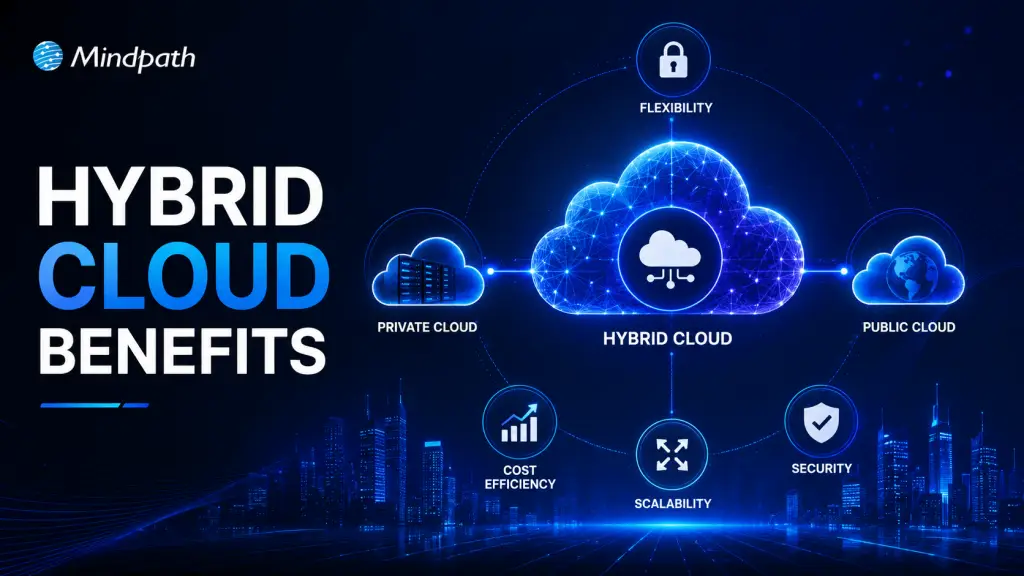
Technology leaders have to think beyond adopting specific solutions and build architectures that can survive amidst the chaos of emerging technologies. Gartner predicted that almost 90% of organizations worldwide will have adopted hybrid cloud architectures by 2027 (Source). Do you notice that buying more servers or adopting cloud architecture will only pile up costs on a business? CTOs should think of ideal solutions that help them in scaling technology without increasing the cost burden.

Ready to scale your technology without increasing operational costs or complexity? Mindpath offers managed IT services to help you optimize infrastructure, reduce expenses, and support sustainable business growth.

Unraveling the Need to Choose an Ideal Approach for Scaling Technology

Many business leaders are worried about the ‘how’ of scaling technology and miss the ‘what’ of scaling. It is important to understand that cost-efficient tech scaling is possible only when CTOs know scaling as something more than handling an increasing amount of work. You have to focus on the difference between horizontal and vertical scaling to figure out how to achieve scaling at lower costs.

Vertical scaling is similar to buying a bigger and faster grill for your burger shop when you get more customers. Even though the new grill will work for some time, you will eventually have to need another grill to meet growing demand. On the other hand, horizontal scaling is like building ten more shops with a small machine, which offers limitless capability to deal with increasing demand.

You can consider vertical scaling as something like trying to make cars drive faster on a highway. Horizontal scaling is like adding more lanes to the highway, thereby making driving safer while reducing traffic on the highway. It definitely sounds like a recipe for long-term growth in the context of software architecture.

Must Read: Multi Cloud vs. Hybrid Cloud

Defining the Mental Approach to Scaling Technology

CTOs should also think about the type of approach they want to follow for scaling technology. Most of the companies choose cloud optimization or other scalability techniques as a reactive measure. It means that organizations respond to increasing traffic or system downtime by pressurizing CTOs to bring more power. However, the reactive approach does not rely on planning and ultimately leads to a pile of unorganized resources, which increase costs.

How would a CTO think of an innovative solution to this problem? The ideal answer will come with a predictive approach to scaling technology. CTOs should assume that their software architecture will grow in future and they will focus on building architectures that can accommodate the growth naturally. It is just like building a Lego set with the help of clear instructions rather than throwing them in a pile.

The high level of planning and organization of resources in the predictive approach to scaling ensures easier management alongside reducing costs.

Planning to scale your technology infrastructure without inflating your cloud expenses? Explore our guide on cloud cost optimization to discover strategies for reducing costs while maintaining performance and scalability.

Solving the Technology Scaling Problem with Architecture

Every CTO must know that the decisions made for designing the architecture of software will have the largest impact on costs of scaling in future. Fixing the problems in a faulty architecture will be more expensive than building the right one in the first place. Which software architectures do you think will improve engineering efficiency and provide room for scaling technology at lower costs?

1. Explore the Potential of Serverless Computing

The traditional approaches to software architecture revolved primarily around renting a server and keeping it operational even when no one is using the app. Serverless computing offers a promising solution to build your software architecture in a way that delivers specific functions as services.

With serverless architecture in cloud computing, you will only have to pay when someone actually uses your app or clicks a button. If your app does not have any users, then you don’t have to pay anything, thereby saving your from costs you pay for idle time.

2. Building Smaller Components with Microservices

One of the biggest trends in software architecture that has gained traction in recent times is the use of microservices. You don’t have to build a huge and resource-intensive application with microservices. On the contrary, you build small and independent pieces for your app, which will work in unison with each other.

If one of your components is busy and experiencing more traffic, then you can focus on scaling that component alone. As a result, you will save a lot of money by avoiding the need to scale the whole application.

Looking to break down your monolithic applications for greater flexibility and scalability? Discover our guide on transitioning from monolith to microservices to explore how this approach reduces complexity and optimizes costs.

How Will Data Management Help in Scalable Software Architecture?

Databases form a huge portion of the tech stack in your software architecture. The ideal solution to achieve efficient architecture scaling with reduced costs will obviously involve choosing smarter approaches for database management. You can end up with a huge budget to achieve scalable systems design when you fail in database management. CTOs should opt for innovative approaches to manage databases to design software architecture for enhanced scalability.

1. Caching

Your app adds more to your budget every time it requests the database for information. Caching involves maintaining a ‘cheat sheet’ of the most frequently provided answers. It ensures that your app will not recalculate a complex request and ask the database for information. On the contrary, your app will look towards the cache and help you manage most of the traffic to your app.

2. Storage Tiers

Data storage takes up a lot of your budget and choosing one monolithic approach to data storage is not cost-efficient during scaling. Therefore, you should choose a mix of hot and cold storage for your data to reduce data storage fees. Hot storage is the ideal option for data required in everyday uses of your app while cold storage stores data that is required only for audits or history. You can move old data to cold storage and reduce your monthly storage fees during scaling initiatives.

Looking to build scalable and resilient applications that fully leverage the cloud? Discover our guide on cloud-native development to explore how this approach enhances performance, flexibility, and cost-efficiency.

Scaling Technology without Bankruptcy with Spot Instances

The CTO will also have to think about the financial aspects of scaling solely for performance. You can build scalable software architecture with AI resources that eat up a huge share of your scaling budget. Will it prove feasible in the long run? No. It is important to look for modern orchestration tools that consider budget as a huge constraint. For instance, configuration of Kubernetes clusters to scale up with spot instances for non-critical workloads will offer cheaper cloud capacity.

Final Thoughts

The burden of the responsibility of scaling technology has a huge impact on the decisions taken by CTOs. It is important to know that building scalable architectures from scratch is the ideal approach to scale with high costs. You can choose microservices and serverless computing to facilitate easier scalability with lower costs. Most important of all, CTOs have to choose resources that are cost-aware and provide the benefits of scaling.

Mindpath is a leading IT service provider, specializing in technology scaling solutions. We have built software architectures for diverse use cases for different organizations across industries. Our primary focus on quality alongside helping clients achieve resource efficiency makes us a reliable choice for technology scaling initiatives. Reach out to our experts and discover the ideal approach to scale technology without excessive scaling costs now.

FAQs

1. What are the key strategies to achieve secure scalability?

You can achieve secure scalability by focusing zero trust architecture, continuous code reviews and privileged access management. Zero trust architecture indicates that you don’t assume trust in any element of the software architecture. Continuous code reviews help in avoiding amplification of vulnerabilities as you scale up technology stacks. Privileged access management helps in implementing strict access controls for security.

2. What are the notable techniques to maintain performance while scaling?

The ideal approach to scaling technology involves maintaining performance as the demand grows. You can rely on microservices architecture and caching as the most reliable techniques to maintain performance while scaling. Microservices facilitate independent scaling of certain components of the application while ensuring resource optimization. Caching helps in reducing load times without burdening you with database costs.

3. Does serverless computing means that there will be no servers?

Serverless computing is a new paradigm in computing in which the management of the server remains completely invisible to the user. Traditional computing requires attention to the OS, memory and health of the server. On the other hand, serverless computing ensures that the provider takes care of all these aspects of server management. It ensures that you incur costs only for the time your code was running.

4. What are the key parameters you need to focus on in technology scaling?

The key parameters that you should focus on in technology scaling include performance, security, data protection and control. It is important to decide the type of approach you want to follow between predictive and reactive scaling. At the same time, you should also choose architectural decisions like serverless computing and microservices architecture for reducing costs.