
Transforming Travel: Top Emerging Tech Trends Shaping the Industry

Join our Newsletter!

Featured Posts

Support Is One Click Away

Home

Transforming Travel: Top Emerging Tech Trends Shaping the Industry

travel technology

Transforming Travel: Top Emerging Tech Trends Shaping the Industry

Technology has helped in transforming various industries, including finance, retail, and tourism. The advent of travel technology has created new opportunities to enhance the value propositions in tourism, alongside enhancing productivity. Which technology has had the biggest influence on the travel and tourism industry? You can find the answers to this question in an overview of the top technological trends in tourism.

The transformative impact of different technologies has created endless possibilities for enhancing guest experience and customer service. With the adoption of technology in travel and tourism, businesses can find an effective solution to add value to the lives of customers. Let us learn about the top technology trends that have the potential to revolutionize tourism. 

Technology is redefining the travel experience, and businesses must adopt these technologies to stay ahead in the competitive market. Mindpath’s services in AI development, custom chatbots, and web development will support your business journey towards digital transformation.

Understanding Travel Technology

The travel and tourism industry came to a halt for almost a year in response to the global pandemic in 2020. However, change was inevitable, and the tourism industry recognized the importance of embracing technology and digital transformation like other sectors. The introduction of tech in tourism brought a new wave of opportunities to address existing flaws and pursue innovation in delivering better customer experiences. 

According to the World Travel and Tourism Council, the total global economic contribution of the tourism sector is expected to be almost $11.7 trillion in 2025 (Source). For an industry with such potential, technology is no longer a luxury as organizations compete with each other to achieve an advantage. 

The basic premise of travel technology involves the use of IT, e-commerce, and other technologies in the domain of travel and tourism. It primarily aims at enhancing the customer experience while assisting businesses and employees in the tourism and hospitality sector.

One of the best examples of the use of technology in the domain of travel and tourism points at mobile apps for booking trips online. The apps not only provide an easy solution to book tickets and hotels but also represent a shift towards technology-driven experiences in tourism.

Struggling to keep up with changing traveler expectations and digital innovation? Explore our blog digital transformation for businesses to learn how technology drives efficiency, personalization, and growth.

Is Technology Really Necessary for Travel and Tourism?

The example of online booking apps in the travel and tourism sector is not the only instance of the use of technology in the industry. As companies embrace technology in the tourism industry in various forms, it is reasonable to wonder about its relevance. How will technology help in the travel, tourism, and hospitality sector? Technology can help in streamlining and automating processes that require consistent human involvement. As a result, businesses can reduce costs and staffing requirements while achieving better financial results.

The impact of technology in the domain of travel and tourism is also evident in easier access to advanced data insights. With the help of technology, businesses can collect huge amounts of data to improve informed decision-making. In-depth understanding of customer behavior and market trends can help a business create better strategies. The use of technology in the tourism industry will also create the ideal grounds for continuous innovation. Businesses in travel and tourism can leverage technology to stay relevant and attract new customers with improved experiences.   

Curious which technologies help travel apps scale and perform globally? Discover our blog mobile app development technologies to learn how modern development stacks support innovation in the travel industry.

Unraveling the Biggest Tech Trends in Travel and Tourism

The utility of technology in the travel and tourism sector is not limited to booking apps. You can find different technologies in the tourism industry making waves with their ability to revolutionize travel experiences. What are the notable tech trends that will have a significant impact on tourism? The following technology trends will stand out as the biggest contenders for transforming the travel and tourism sector.

1. Sustainable Technology

The growing awareness of the environmental impact of tourism has led many people to think of sustainable solutions. Therefore, travel and tourism companies have to think of innovative technological solutions that have minimal impact on the environment. 

Sustainability will be one of the keywords for tourism technology of the future, as evident in the existing customer behavior trends. For instance, more travelers prefer eco-friendly destinations and use technology for all travel-related needs that reduce the wastage of natural resources.

2. Artificial Intelligence

If you take a look around in the modern technological landscape, AI might be the brightest trend you will notice among other technologies. Artificial intelligence has redefined the benchmarks of efficiency in the approaches to embracing technology in the travel industry with its diverse capabilities. AI and machine learning can bring a lot of benefits to travel and tourism businesses in customer service, demand forecasts, and service recommendations. 

Many companies in the travel and tourism sector leverage AI and ML to predict customer demand and offer personalized recommendations. How would you feel if a travel operator recommends hotels and restaurants that serve your favorite food? AI can also help travel and tourism companies in the form of chatbots and smart virtual assistants. The AI-powered solutions can not only answer customer queries but also offer personalized itineraries and travel plans.

3. Augmented and Virtual Reality

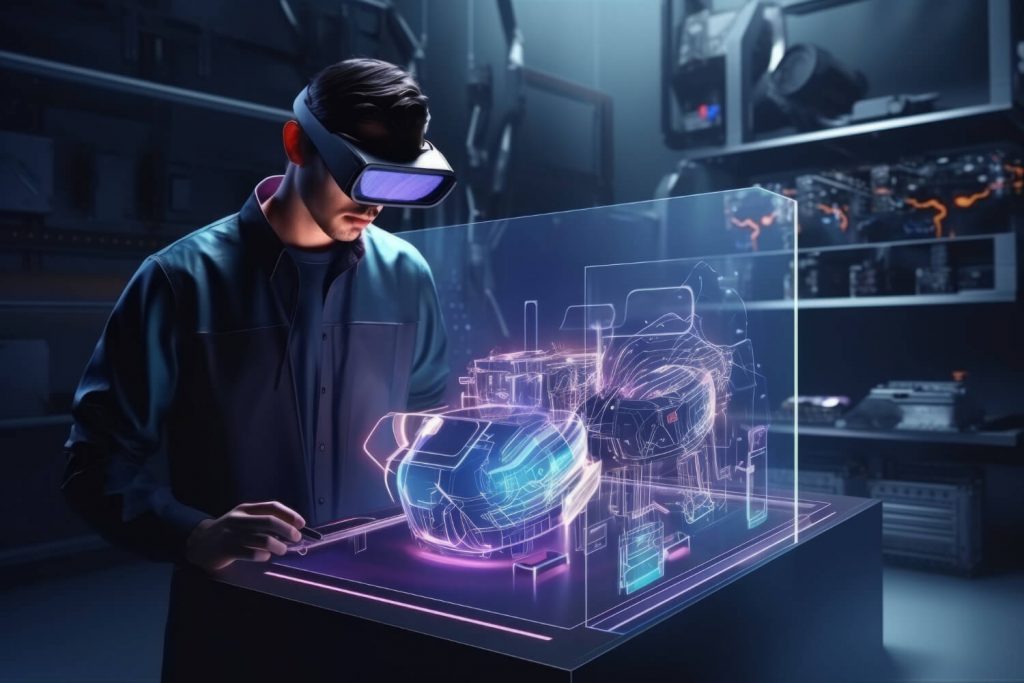
The evolution of virtual reality and augmented reality has offered new ways to experience the world around us, along with virtual worlds. AR/VR technologies provide one of the most promising examples of the potential of travel industry technology to offer better customer experiences. Augmented reality helps in changing how travellers think about their experiences before booking their vacations or business trips. 

The best example of using AR/VR technologies is evident in the case of some airline companies that help passengers experience the in-flight facilities before boarding the flight. Travellers can also get 360-degree virtual tours of hotels or travel destinations while sitting in their homes with AR/VR technologies. Augmented and virtual reality will emerge as the most powerful marketing tools for travel and tourism companies.     

Also Read: Top AI Trends

4. Hyper-Personalization

Another big trend that redefines the utility of technology in tourism is hyper-personalization. The emphasis on hyper-personalization has increased significantly as travel and tourism companies want to deliver exactly what their customers want. Artificial intelligence has made this easier as innovative AI solutions can help in personalizing travel experiences to varying degrees of customer satisfaction.

Travel and tourism companies can leverage AI to generate personalized recommendations and plans for their customers. Custom AI tools can help travel operators find insights from analysis of past behavior, weather conditions, and preferences of travelers. The extensive use of information technology for tourism has enabled easier access to huge collections of user data. Subsequently, those insights can help the companies recommend personalized travel plans that improve customer satisfaction while achieving business efficiency.

5. Voice Search and Voice Control

Voice assistants are one of the prominent highlights in the existing tech landscape. The growing dependence on voice assistants for search is one of the travel tech trends that is hard to ignore. Almost half of all travelers search for travel accommodations and book tickets through voice commands. It is just a matter of time before voice search and voice control become the norm in tourism and hospitality.

Voice search has already become an attractive feature in hotels that allow guests to control room temperature and adjust lighting. You can expect this technology to grow in the future and promote innovations in the travel industry while attracting new customers. Voice assistants in hotel rooms can also help customers request hotel services without interacting with the front desk, thereby improving their experience.

6. Generative AI

The utility of generative AI in travel and tourism also deserves special mention among notable tech trends in the industry. Generative AI can blend tourism and technology in an intuitive manner with the help of language models like ChatGPT. Travel and tourism companies can use ChatGPT or similar tools to create new content for their marketing efforts. On top of it, the language models can help companies provide prompt replies to customer queries and enhance customer satisfaction.

The significance of generative AI in strengthening the technology tourism connection is visible in its different use cases. One of the foremost outcomes of adopting generative AI tools in tourism is the assurance of better productivity. For instance, generative AI tools can help companies with booking and reservations, alongside providing personalized solutions to customer queries.

Wondering how travel businesses can leverage AI beyond basic automation? Learn from our blog about generative AI use cases in diverse industries to see how intelligent content and virtual assistants drive engagement.

Final Thoughts

The top tech trends in travel and tourism showcase that customer experience is the biggest goal of the industry’s transformation. Artificial intelligence, AR/VR, sustainable technology, and voice control are a few of the notable trends that will shape the future of travel technology and the industry itself. Without effective solutions to tap into these technologies, your business is not going anywhere. What do you think is the biggest tech trend that your travel and tourism business should be capitalizing on?

We, at Mindpath, specialize in services for AI development, custom chatbot development, and custom web development. Our end-to-end IT solutions cater to the needs of various sectors, including the travel and hospitality industry. Over the years, our experts have looked at the evolution of technology and the tourism industry from close quarters. We have created many customer success stories with our strategic approach to every project. Contact us to discover the next big tech trend for your travel and tourism company now.

Related Post

Discover why hiring a freelance full-stack developer in 2024 can boost your project’s efficiency, quality, and cost-effectiveness. Learn more with Mindpath!
AI drives hyperpersonalization with smarter recommendations, chatbots, and tailored marketing to boost customer experience and growth.

Related Post

AI and AR

Ever thought, what if your device could not only display an enhanced reality but also predict your next move? How would industries change if machines could learn from real-world environments and respond intelligently in real-time? Could the combination of Artificial Intelligence (AI) and Augmented Reality (AR) completely reshape the way we interact with technology and each other? 

In this blog, we’ll explore how AI and AR are working together to unlock groundbreaking possibilities, transform industries, and shape the future of our digital world. So, let’s dig in! 

Overview of AI and AR

The term artificial intelligence (AI) refers to the ability of machines to think and learn like humans. AI recognizes patterns in data rather than being given step-by-step instructions, which allows it to improve over time. It drives advancements in technology such as facial recognition, voice assistants, and intelligent robots that learn from their mistakes and carry out tasks more effectively. 

Augmented Reality (AR) is a technology that combines digital data with the real world in real time. Unlike virtual reality, which provides a wholly simulated experience, augmented reality (AR) overlays digital images, sounds, or information on top of what you see in the world around you. It is frequently utilized with devices such as smartphones or special glasses, allowing users to engage with a combination of real and virtual components, making ordinary situations more dynamic and informative. 

Benefits of Combining AI and AR Technologies

1. Enhance User Experience

When working with advanced equipment, traditional paper manuals and 2D instructions can lead to confusion among personnel. However, by merging AI with augmented reality, customers may see crisp 3D graphics, receive real-time instruction, and receive quick alerts to possible concerns. This not only makes jobs easier to grasp, but it also enables workers to accomplish them faster and with fewer errors. The immersive experience also keeps people engaged, which boosts their confidence and overall productivity on the job. 

2. Strengthen Safety Measures

AI-powered AR provides users with real-time warnings and notifications to assist them avoid unexpected events and risks. It also offers immersive, interactive training and work instructions that are more comprehensive than standard paper manuals. AR increases workers’ awareness of possible hazards and ensures them adhere to safety measures more rigorously. This not only lowers the likelihood of mishaps, but also promotes a safer and more secure workplace. 

3. Minimize Mistakes

Using large, printed instructions can be exhausting and increase the possibility of errors. AI-enhanced augmented reality aids by offering clear, real-time visual instruction and automated adjustments. It functions as an “extra set of eyes,” ensuring that workers remain precise even when exhausted at the end of a shift. This assistance reduces mistakes, enhances job accuracy, and assures consistent performance, resulting in superior overall outcomes. 

4. Maximize Productivity

AI-enhanced augmented reality solutions increase productivity by making work processes more interesting and efficient. Immersive AR experiences, paired with real-time AI insights, enable users to understand complicated tasks faster and more accurately. This eliminates the need for subject matter experts to give ongoing assistance to new staff, therefore speeding up training and onboarding. Additionally, AR can streamline ordinary processes such as reporting and data collecting, saving workers time and allowing them to focus on more important duties. As a result, productivity increases, and overall workplace efficiency improves. 

5. Promote Sustainability

AI-enhanced AR work instructions give frontline workers exact instructions, guaranteeing tasks are executed precisely the first time. This lowers the possibility of mistakes, eliminates the need for rework, and avoids costly scrap, which assists to preserve resources and reduce waste. AR promotes more sustainable practices within your organization by reducing wasteful material consumption and increasing overall efficiency. Furthermore, the reduction in errors and rework means that fewer resources are spent rectifying mistakes, which strengthens your company’s commitment to environmental responsibility and sustainability. 

Curious how AI and AR can revolutionize your business?

Mindpath delivers cutting-edge solutions tailored to your needs.

Use Cases of AI in AR

1. Virtual Shopping Assistants

AI-powered AR applications add a new layer of involvement to online shopping by allowing users to try on simulated clothes and other accessories. This tool allows shoppers to see how goods will appear in real-time, making their shopping experience more personalized and enjoyable. Customers may make better-informed choices and have a more engaging and convenient shopping experience from home by seeing how different goods fit and appear without physically trying them on. 

2. Language Translation

AR applications powered by AI provide real-time translation of signs, menus, and text, making communication easier for travelers. These apps allow users to easily navigate new areas by overlaying translated text right onto their screen. This quick translation function improves travel experiences by reducing language barriers, allowing users to connect more confidently, grasp local information, and enjoy their vacation without worrying about misconceptions. 

3. AR Navigation

AI enhances AR navigation apps by merging real-time data, such as traffic conditions and nearby points of interest, with the user’s surroundings. This connection delivers up-to-date, clear instructions and notifications, allowing users to avoid delays, select the best routes, and easily explore nearby facilities. AI-powered AR simplifies and enhances the experience of navigating both familiar and unfamiliar regions by combining crucial navigation information with the actual environment. 

4. Industrial Maintenance

Combining AR and AI provides considerable benefits for industrial maintenance by sending real-time instructions and visual data directly to professionals. This system delivers interactive, step-by-step instructions and precise data overlays, allowing personnel to complete difficult maintenance chores accurately. AR improves decision-making and troubleshooting by using AI to analyze equipment status and identify possible difficulties. This decreases the chance of mistakes, shortens downtime, and increases overall efficiency, ensuring that machinery runs smoothly, and maintenance activities are handled quickly and effectively. 

5. Medical Imaging

AI-powered AR improves medical imaging by superimposing diagnostic data directly on a patient’s body during operation. This real-time integration allows medical practitioners to observe crucial data, such as anatomical structures and pathology, with higher accuracy. AR helps to enhance surgical results by offering visual context and direction, enabling for improved planning and execution of difficult medical techniques. 

How can Mindpath Help?

Mindpath can help you integrate AI and AR technology into your business. We provide solutions that improve user experience, safety, minimize mistakes, and increase productivity in a variety of sectors. Our team creates personalized AR apps for real-time advice, AI-powered insights, and seamless data integration. Whether you want enhanced navigation, virtual shopping assistants, or effective industrial maintenance solutions, Mindpath is here to provide clever, user-friendly technology that suits your individual requirements. 

End Note

As AI and AR technologies advance, their ability to disrupt industries and improve everyday lives is limitless. By seamlessly merging these advancements, we may explore new levels of interactivity, efficiency, and insights. From transforming how we purchase and navigate to enhancing safety and precision in industrial and medical domains, the collaboration of AI and AR is paving the way for a smarter, more connected future. Mindpath is pleased to be at the forefront of this technological transformation, providing bespoke solutions that leverage the power of AI and augmented reality to drive your success and creativity. Explore these options with us to see how we might help you design the future. 

Ready to Transform Your Business?

Discover how Mindpath’s AI and AR solutions can elevate your operations.

Discover how AI and AR combine to revolutionize industries, enhance user experiences, and drive innovation. Read to explore the impact.
What is devsecops

In the digital world of the 21st century, DevSecOps has undoubtedly become the backbone of secure software delivery. It has perfectly blended DevOps and security practices in order to protect applications from cyber threats without hampering innovation. With the surge in cloud DevSecOps organizations across diverse sectors are embedding automated testing and compliance, along with continuous monitoring, directly into CI/CD pipelines.

It is the right time for you to know how DevSecOps works and why it matters for DevOps cybersecurity. DevSecOps is now essential for resilience, whether you are developing cloud-native apps or securing your software supply chain. It is time to look at how businesses can implement DevSecOps in the real world.

Curious about how DevSecOps implementation helps businesses in achieving secure and scalable pipelines? Contact us and let our experts provide you with full guidance.

An Insight into DevSecOps

In recent times, DevSecOps has certainly surfaced as an innovative approach for Development, Security, and Operations. It combines security into every single phase of the software development lifecycle to create software efficiently while curbing vulnerabilities. 

DevSecOps solutions make sure that security is shared across the development and security teams, in addition to the operations team. It is achieved through the automation of security processes and practices within CI/CD pipelines. This approach has gained massive popularity in the past few years since it fosters collaboration while empowering business entities to deliver secure and high-quality software solutions. 

Also Read: Benefits of DevOps

Key Benefits of DevSecOps

The DevSecOps concept gives rise to a host of benefits for users, including professionals as well as businesses. Now that you know what is DevSecOps, it is time to get familiar with its key benefits. 

1. Faster Delivery of Software

DevSecOps creates the opportunity for you to integrate security into the development pipeline. Thus, it allows businesses to rapidly deliver highly secure code. It is capable of addressing issues early on and while streamlining the release process. 

2. Better Agility

Automation serves as a catalyst and reduces bottlenecks relating to manual security. It allows security teams to lay emphasis on high-value tasks. Moreover, they feel empowered to respond in a prompt manner to threats and risks.

3. Diminished Time to Market

The concept of cybersecurity DevOps is capable of catching as well as fixing vulnerabilities at an early stage. It therefore minimizes the requirement for expensive as well as time-consuming remedial actions at a later stage. It is good news for software developers since it accelerates software project timelines. 

4. Top-Notch Security 

You need to leverage DevSecOps so that you can strengthen the security posture when it comes to custom software development. Security gaps can be reduced exponentially as DevSecOps embeds security into each stage of the DevOps lifecycle.

6. Better Compliance with Laws and Regulations

You need to use DevSecOps tools since they ensure compliance at all stages of software development. With security checks that are automated and compliance tools, modern businesses can rest assured about their compliance requirements.

Curious about the latest shifts reshaping how software and websites are built and deployed? Check out our blog on DevOps trends to stay ahead of the curve and make sure your projects leverage modern best practices.

Steps to Implement DevSecOps

The implementation of DevSecOps means weaving security into each and every phase of the DevOps pipeline without compromising the delivery. At present, organizations face rising cyber risks along with stricter compliance standards, which makes a structured approach essential. You need to follow the steps below in order to effectively implement DevSecOps while developing a software solution.

Step 1 – Evaluate your Current Security Practices

While implementing DevSecOps, the very first step that you need to take involves the assessment of your current security practices. You need to do a careful and comprehensive evaluation of the security tools and processes that are in place. You also need to identify gaps along with appropriate areas of improvement while taking into account the organizational goals and context.

Step 2 – Establishment of Security Goals and Objectives

Now it is time to establish security objectives. You must keep in mind to define clear and well-defined security goals and objectives that are perfectly aligned with the vision of your organization. At this stage, you can even consider involving stakeholders from the development, security, and operations teams. It is vital to prioritize shared understanding along with unified commitment. 

Step 3 – Implementation of Security Training and Awareness Programs

You need to conduct training programs at this stage of the implementation process. These training programs can play a strategic role and help the staff members to cultivate essential skills and capabilities. It is also essential to promote security awareness while fostering an accountable security culture within the organization. 

Step 4 – Integration of Security into the Software Development Lifecycle

At this stage, you need to combine security practices and controls at every phase of the software development lifecycle. You must focus on implementing tools along with automation that are capable of facilitating secure code reviews as well as vulnerability scanning. The tools must also support threat modelling. 

Step 5 – Emphasizing Continuous Security and Automation

It is vital to prioritize automation when it comes to cybersecurity DevOps. So you need to automate security testing, such as dynamic analysis and static analysis. You must also consider automating software composition analysis so that you can get feedback on an ongoing basis. It is a wise decision to integrate security into the continuous integration and deployment pipelines, as it can help ensure security checks at every stage. 

Must Read: DevOps vs DevSecOps

Step 6 – Implementation of Infrastructure as a Code Security

You must also apply the security principles to Infrastructure as a Code (IaC) scripts and templates. It is undoubtedly a critical step when it comes to DevSecOps implementation. Businesses must ensure that they leverage version control for the Infrastructure as a Code template for maintaining traceability. You can even consider applying policy as code frameworks in order to enforce security baselines for cloud resources.

Step 7 – Fostering Communication and Collaboration

You need to encourage cross-team collaboration along with transparent communication. You can ensure this through regular meetings and by using shared tools. It is essential to prioritize joint decision-making. It is equally important to set up and maintain a DevSecOps culture so that it can promote trust along with accountability within the organization.

Step 8 – Implementation of Continuous Monitoring and Incident Response

It is critical at this stage to adopt continuous monitoring of applications and infrastructure. This is because such a practice can help in detecting as well as responding to security incidents in a prompt manner. You must also establish an incident response plan that can facilitate effective and efficient mitigation in case of a security breach.

Step 9 – Focus on Regular Assessment

One cannot overemphasize the importance of regular assessment and improvement while implementing DevSecOps. You must conduct assessments to evaluate the effectiveness of the implemented DevSecOps practices periodically. It is equally essential to improve the security processes and adjust to emerging threats on an ongoing basis. Businesses must also make sure to incorporate the feedback from the key stakeholders.

Step 10 – Remaining Abreast with the Latest Security Practices

It is imperative for modern businesses to stay updated with the latest security trends and industry standards. You need to bear in mind that your business needs to engage in continuous learning. So in your organization, you need to encourage security professionals to take an active part in training programs as well as online communities.

Facing hurdles in your deployment process? Read our guide on DevOps challenges and solutions to learn actionable strategies for smoother, more efficient workflows.

Best Practices While Implementing DevSecOps

There are a number of best practices that you need to keep in mind while implementing DevSecOps within your business. You need to adopt these practices so that you can derive optimum value from DevSecOps implementation. 

1. Emphasis on Security

You need to shift security to the left. It means that the security component has to be integrated at an early stage in the software development lifecycle. Several practices, such as threat modelling and secure coding practices, need to take place during the development stage in order to reduce the risk before the production stage. 

2. Automation

The role of automation is indispensable when it comes to DevSecOps implementation. You need to embed appropriate security controls into CI/CD pipelines and ensure static as well as dynamic code analysis. 

3. Importance of Continuous Testing

Continuous testing is an essential component of DevSecOps as it allows teams to identify security gaps and vulnerabilities. You need to test code on a continuous basis so that the number of security issues can be reduced before that may reach the production stage. 

Ready to modernize your tech operations and accelerate product delivery? Explore our blog on DevOps for Businesses to learn how DevOps helps businesses build, deploy, and scale with confidence.

Final Words

DevSecOps is no longer an optional thing for businesses when it comes to developing software solutions. It serves as the ultimate foundation for building secure and resilient software applications that are compliant in today’s world. Businesses need to integrate DevOps and security practices across the entire pipeline in order to reduce security risks and uncertainties. If DevSecOps implementation is done in the right manner, it can foster innovation and business resilience. 

The top-notch DevOps services of Mindpath can ensure that your business can successfully adopt DevSecOps. With the help of expert guidance and support, your business can achieve innovation, which can give it an edge in its operational domain.

Learn how to implement DevSecOps in the cloud to enhance security. Discover the key steps to safeguard your cloud infrastructure.
Stability AI guide

In this generative AI revolution, one name that stands out as a leader of open-source AI models is Stability AI. The company has introduced many powerful AI models that have completely changed the way of generating digital content. In this comprehensive Stability AI guide, we will discuss more about this platform.

If you are looking to explore the most powerful, flexible, and accessible toolkit to create audio, videos, images, and more, this Stability AI guide is for you. Read on to find out what it is and the various models offered by Stability AI. Besides, here you will find the answer to an important question: “How can I use Stability AI?”

Want to explore Stability AI but need guidance on turning its capabilities into real business value? Mindpath provides end-to-end AI development services that bring your AI ideas to life with reliable, future-ready solutions.

What is Stability AI?

Let’s start this Stability AI guide by understanding the basics – what Stability AI is. Stability AI is a renowned company that was established in 2019. It strives to provide powerful and open-source AI models to perform different tasks. The brand is known for its Stable Diffusion model, a powerful image generation model.

Different from other platforms, Stability AI releases the source code and the weights of their models, as it emphasizes openness. This has made it a top choice among startups, hobbyists, and artists. Developers can easily fine-tune and build upon various models offered by Stability AI. The product portfolio of Stability AI expands beyond just image creation. The ecosystem includes multiple models for all types of digital content.

Must Read: Generative AI Tools for Content Creation

Now that you learn about Stability AI, it’s time to move into an important question in this Stability AI guide, i.e., how does it work?

How Does Stability AI Work?

In general, Stability AI creates as well as trains various foundational models, or we can say large neural networks. These models can generate content based on the patterns they have learned from different datasets. All these models are trained utilizing diffusion techniques, and the most popular of these is Stable Diffusion.

It basically starts with random noise. Next, by reversing the diffusion process, it eliminates the noise for generating realistic images that are based on the prompts of the user. For language-related tasks, Stability AI has advanced models such as StableVicuna and Stable LM. Stability AI wants to make modern AI technologies easier to access by making AI models open-source and offering comprehensive documentation.

Want to know what makes generative AI models so powerful? Discover the attention mechanism to learn how neural networks focus on important information during generation.

Understanding Various Stability AI Models

In order to maximize the use of Stability AI, it is essential to learn about its fundamental models. After all, these models are the basis of the incredible functionality of this platform. Continue reading this Stability AI guide and explore the key models. This will assist you in choosing the right one for your needs.

1. Stable Diffusion 3.5

This represents the ability of Stability AI to create an image based on text. This model produces high-quality and detailed images based on the user’s prompt. It is available in different sizes, like Medium, Turbo, and Large. It demonstrates a perfect combination of speed and quality. Whether you need an AI model for concept design, artwork, social media posts and product mockups, you can count on it.

2. Stable Diffusion XL

Even though it is an old model, it can still produce high-resolution and large images without compromising detail. It balances between quality and performance. This is the reason why this model is still being used by many workflows and community UIs.

3. Stable LM 2 12B

It is one of the popular Stability AI models, well-known for various types of natural language processing tasks. It supports 12 billion parameters and performs efficiently for tasks like question answering and text generation, as well as summarization.

4. Stable Point Aware 3D

We can say that it is a groundbreaking AI model for quick yet efficient 3D content generation. It can convert 2D images into detailed 3D models. It has made 3D modelling more accessible and easier than before. This model is valuable for industrial design, VR/ AR and gaming industries.

5. Stable Audio Open 1.0

This particular model lets users to create sound effects, instrumental tracks and music using text prompts. Using this, you can produce original audio content without worrying about royalty constraints. As the model is open-source, you can also fine-tune it for different projects.

You don’t need to learn about all these models at once. Just begin with Stable Diffusion as it is simple to learn.

Curious how generative AI models like Stability AI actually work? Read the Large Language Model (LLM) guide to gain clear insights into how these models process data and generate intelligent outputs.

How Can I Use Stability AI?

If you are wondering, “How can I use Stability AI?” then you are not alone. Well, the good news is that there is no specific answer to this question. You can get started with this platform through different methods. Check out the below sections to explore the methods.

1. Utilizing a Hosted Platform

This is the most convenient and quickest method of using Stability AI. You don’t have to deal with configuring the tools or downloads. All you have to do is use platforms such as DreamStudio or others using Stability AI models.

You can sign up for an account with platforms like Sinkin AI, Playground AI, DreamStudio, Childdrop or Invoke AI. Then, type your text prompt and click on the Generate button to view the result.

It is an ideal method if you want to learn the potential of Stability AI without developing any technical skills.

2. Online UI Built on Stable Diffusion

Do you want to have better control without dealing with code? There are many third-party websites offering easy-to-use interfaces developed on Stable Diffusion. These sites provide you with advanced features such as upscaling, guidance scale, negative prompts and more.

The best part is that you still don’t have to worry about local installation and spending money on high-end GPUs.

3. Run Stability AI Models Locally

This approach should be used when a user has a strong GPU and decent technical abilities. With this method, you can run AI models on your own system. It gives you maximum control, and you can switch between various models as per your needs.

Furthermore, you can even find-tune models and add LoRA. What’s more? Once configured, you can use features like outpainting, inpainting and more.

Local installation can be challenging and has a steeper learning curve. But in the long run, you will find it more secure, fast as well as highly customizable.

In short, as a beginner, you can prefer to follow the first two methods. After developing the required skills and knowledge, you can install the models locally and enjoy more creative possibilities.

Looking to customize AI models for your projects? Read OpenAI’s Fine-Tuning API tutorial to discover techniques for fine-tuning AI models and improving performance.

Real-World Stability AI Examples

Let’s end this Stability AI guide with some Stability AI examples that show the ways businesses and individuals are utilizing Stability AI.

1. For Creators

Using Stability AI image generator, creators can generate album covers, concept arts, book illustrations and more. The media tools make it easy to create unique visuals for digital campaigns and branding.

2. For Businesses

Organizations can use Stability AI to automate various tasks and save resources as well as time. Stability AI enables the creation of quality digital content, whether it is a video or a prototype design of a new product. These examples clearly show that you don’t need to be a technically skilled individual to leverage the power of Stability AI. It is one of the most effective AI solutions for small businesses, helping them streamline operations and create professional content without heavy technical expertise.

Want to understand how AI agents improve the performance of Stability AI? Explore the role of AI Agents to see how they guide generative processes and expand what Stability AI can achieve.

Unlock Your Creative Potential with Stability AI

Undoubtedly, Stability AI has made it easier to get access to stunning generative art as well as visual content. It offers a vibrant ecosystem of communities, tools, and tutorials along with powerful models. If you are using it for the first time, this Stability AI guide will help you learn more about it.

A clear answer to “How can I use Stability AI?” is quite simple, i.e., keep prompting. And if you need more help with this, Mindpath is here to guide you through our AI development services. The expert team at Mindpath can help you with model selection, deployment strategies, and prompt engineering. We ensure your creative journey is future-ready and efficient.