SaaS Challenges Every Business Faces and How to Solve Them

Join our Newsletter!

Featured Posts

Support Is One Click Away

Home

SaaS Challenges Every Business Faces and How to Solve Them

challenges of saas

SaaS Challenges Every Business Faces and How to Solve Them

The software realm has been growing like never before. New software solutions have been emerging frequently. Customers need to bear in mind that the market is extremely fierce at the moment. However, there is a broad range of SaaS challenges that businesses have to struggle with.

It is time to look at some of the challenges of the Software as a Service solution that exist today. Businesses need to bear in mind that there exist countless obstacles that they have to encounter in their path. The insight into these challenges is the fundamental step to identifying effective solutions that can help to overcome the problems.

Ready to overcome the common challenges that slow business growth? Our SaaS Development Services help streamline development while improving reliability and scalability.

What is SaaS?

Software as a service, or SaaS, refers to the method of software delivery. In the SaaS model, applications are basically hosted by a provider and made available to users via the internet. This arrangement enables users to gain access to software solutions on a subscription basis, and they do not have to manage or install them on their own devices.

Some of the common examples of SaaS solutions for businesses include CRM software, online productivity tools, and many more. The emergence of SaaS is certainly a breath of fresh air for businesses. However, it is important to bear in mind that businesses may encounter a plethora of SaaS challenges in their path.

Planning to adapt your business strategy to emerging software trends? Discover SaaS trends to check out the innovations driving growth and efficiency.

Common SaaS Challenges That Businesses Encounter and Their Solutions

Using Saas comes with its own hurdles and challenges. If you use SaaS, you may be facing a number of these challenges. You need to be aware of the challenges of SaaS so that you can find the right solutions to address them.

1. Use of Similar Types of Products

One of the most common challenges is related to the use of overlapping products. A large firm is likely to have a large number of SaaS tools in its IT stack. It may give rise to visibility concerns. Without proper visibility, it may be very challenging to identify whether teams are using the same or different SaaS tools.

For example, different teams may be using varying cost management SaaS apps. Although the two tools may be different, they may have the same functionality. It implies that your company may be paying for similar features and functionalities twice.

Solution 

A suitable solution to deal with these challenges of SaaS is to use a robust Software as a Service management tool. This tool can help you identify any kind of overlap between diverse software solutions. Once you have identified that there is a product or feature overlap, you can identify novel techniques to cut down unnecessary costs.

2. Shadowing Information Technology

A common challenge that business entities may face from a SaaS IT stack revolves around shadow Information Technology. It basically encompasses all the Information Technology systems and solutions that your business makes use of without the approval or knowledge of the Information Technology team. Shadow IT may also refer to the situation when a firm and its personnel have bought an app, implying the company has to pay for a similar kind of tool twice. These challenges come with their unique set of risks, such as a high possibility of data breach, etc.

Solution 

You can partner with a company that can help your IT team uncover every tool or app that is used by the employees. Such a partner can help flag the applications that are not yet provisioned. This implies that your business will have proper visibility into shadow Information Technology prior to it becoming a major problem that is difficult to handle.

3. High Spending on Software

Overspending is a serious issue that business entities need to avoid at all costs, regardless of their size and nature. The companies that leverage SaaS solutions may spend too much money on software. This is a serious challenge that may give rise to complexities in the long run for the business. Businesses must be careful while choosing their SaaS solutions so that they can keep a tab on the money that they have.

Solution 

It is essential for your business to plan an annual budget. It can give you an insight into the money that you need to spend on your software solutions or SaaS stack. You also need to broaden your knowledge into cost aspects relating to the contract, account use, and many more. You can take help from the biggest SaaS companies to gain insight into these aspects.

4. Lack of Understanding of SaaS Contracts

One of the common challenges of SaaS arises when companies have limited insight into SaaS contracts. With the growth of your SaaS solution, the total software contracts may also grow. After the contract has been signed and the application has been implemented, you need to have a solid understanding of the contract and its requirements. In the absence of a proper understanding, you may not be able to leverage the software solution to the fullest.

Solution 

In order to address such challenges of SaaS, it is essential for you to keep the contract details and data in an organized manner. This approach will help you manage the details of the biggest SaaS companies with whom you partner in an organized fashion. You can use novel tools to manage software-related contract details in a well-organized and manageable manner. With the help of such tools, you can receive notifications on a real-time basis so that you can keep tabs on the contractual obligations. The organized information can certainly create value for your business in diverse ways.

5. Poor Data Security Measures

While talking about SaaS problems, one cannot ignore the issue relating to poor data security measures. It may increase the risk relating to data breaches, phishing scams, and many more. As Saas tools house tons of useful information about your company, SaaS problems may give rise to serious consequences for your business. The lack of a robust cybersecurity posture on the cloud can impact your business in diverse ways.

Solution 

You can leverage cloud cybersecurity tools in order to derive optimum value from SaaS. You can also implement practices such as strong Identity and Access Management (IAM) and adopt the principle of least privilege. Moreover, it is essential to monitor the activities of users on a regular basis so that you can identify any suspicious activities that may exist.

A plethora of challenges and issues of SaaS may arise that business entities need to be aware of in the current times, as the use of Saas is gaining momentum like never before. So companies need to familiarize themselves with the top issues of SaaS. The insight can certainly empower you to effectively leverage Saas solutions in the business context.

Looking to overcome common SaaS challenges with the right development partner? Check out how to choose the right SaaS development services to learn how selecting the right team ensures success.

Final Words

Businesses that use SaaS need to keep track of their SaaS stack. It is a fundamental step that will empower you to be aware of the challenges that arise in your path. The insight will act as a stepping stone that can help you find appropriate solutions to address the identified challenges.

SaaS can give rise to both opportunities and challenges for businesses. In such situations, businesses must be aware of both these areas so that they can use these novel solutions optimally. Some of the common challenges that have been identified include the use of overlapping products, excessive shadow IT, etc. Mindpath’s excellent SaaS development services are designed to help businesses address the SaaS challenges and resolve them with expertise.

Related Post

Learn how to implement DevSecOps in the cloud to enhance security. Discover the key steps to safeguard your cloud infrastructure.
Want to know about the potential conversational AI use cases? You have reached the right place;

Related Post

Mobile app development technologies

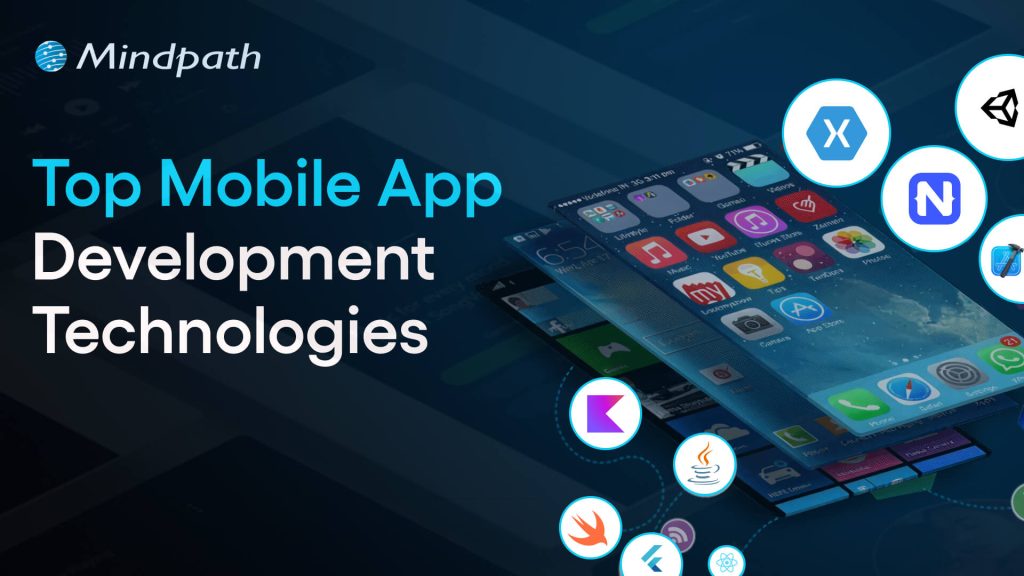
Mobile app development technologies are important in the fast-paced environment of technology because they define how companies engage with users and keep them engaged. Each swipe, tap, and click is based on technology that is getting faster, smarter, and more interactive. If you’ve ever noticed, some apps feel effortlessly smooth, and others do not. The difference is usually related to the frameworks and platforms chosen for the business objectives and user expectations, and understanding these technologies provides a big advantage over others.

Delving into the newest trends in mobile application development often presents a plethora of choices that can seem confusing. However, choosing the appropriate technology can improve app performance, security, and the overall user experience. Developers routinely test technologies, frameworks, languages, and software solutions to create apps that can more easily rise above the fray. In this blog, we will explore the latest trends and the specific technologies that power the successful mobile app today.

Want to use top mobile app development technologies into a functional app? Mindpath offers mobile app development services, which will turn your imagination into a fully working, high-quality app.

What are Mobile App Development Technologies?

Mobile app development technologies refer to the programming languages, frameworks, and tools used to develop applications for mobile devices. These technologies provide developers with the means to develop compatible applications that would run across devices on platforms such as Android and iOS.

The landscape of mobile development technologies consists of native development tools, cross-platform frameworks, and backend services. The combination of these tools enables the development of applications that provide rich user experiences, work with cloud services, and utilize the native features provided by the device. Choosing the appropriate technology allows developers to build all of these easily, efficiently, and in a scalable way.

Also Read: AI in Mobile Apps

Top Mobile App Development Technologies in 2025

In order to remain competitive as an app developer, it is important to stay informed about the best technology for mobile app development in 2025. The choice of development tools can positively affect the performance, usability, and scalability of modern applications.

1. Flutter 3.22

Flutter 3.22 is a highly favored mobile app development platform to help developers develop applications for mobile devices, the web, desktop, and embedded devices. It provides high-performance and smooth animations that allow applications to run quickly and feel responsive. Developers also appreciate its professionally designed UI components, making it easy for developers to create stunning and consistent user interfaces.

2. Kotlin Multiplatform Mobile (KMM)

Kotlin Multiplatform Mobile (KMM) is a mobile app development framework that allows developers to share code for Android and iOS apps. It utilizes the modern, efficient programming language Kotlin to simplify the process of creating a mobile app for two platforms at once. This translates into a significant time saving, might help to reduce errors, and assure consistent behavior across your Android and iOS devices.

3. C++

C++ is among the most robust mobile app development technologies currently available for building high-performance applications. It enables developers to take direct control of system resources, which is often favored for complex applications or graphics-intensive applications. Also, by using C++, you can rest assured your apps are running as efficiently as possible, even as they traverse between different platforms.

4. Swift

Swift, a mobile application technology developed by Apple, is for building native iOS applications. It is fast, safe, and reliable, while also allowing seamless integration into AI and machine learning. With Swift, developers can build iPhone and iPad apps that are fast, safe, and modern.

5. AR/VR Integration Tools

AR/VR integration tools are tools for mobile app development that help developers add augmented reality and virtual reality features to an app. Integrating augmented and virtual reality features into apps is a valuable way to engage users while making an experience much more entertaining or immersive. These integrations are extremely popular in gaming and even found in some education and retail apps to enhance user experiences.

Ready to build smart mobile apps, but still wondering how AI can transform your development approach? Discover our blog on the benefits of AI in mobile app development to understand how AI can reshape modern app development.

6. AI-Assisted Development Tools

AI-Assisted Development Tools refer to tools such as GitHub Copilot and Amazon CodeWhisperer that support the automation of coding tasks. They streamline developers’ efforts in application development through code suggestions, error detection, and execution of tests. The upshot is that developers can create apps faster and also more efficiently.

7. React Native

React Native is another top mobile app development technology that enables developers to create apps for both iOS and Android using JavaScript. It provides a native look and feels with one complete codebase, reducing development time and duplication of effort. Companies are drawn to React Native because of its quick development period and strong support from the community.

8. Ionic

Ionic is a hybrid app framework and is a popular option among mobile app development technologies, allowing developers to write cross-platform apps using HTML, CSS, and JavaScript. It allows developers to write one codebase to operate on multiple devices. Ionic is very much favored by developers to create efficient and visually striking apps.

9. NativeScript

NativeScript is a flexible framework that matches the up-to-date trends in mobile application development with the ability to create fully native apps using JavaScript, TypeScript, Angular, or Vue.js. With NativeScript, you have full access to the native APIs offered by the OS, meaning that your application will work and perform like a truly native solution. NativeScript enables developers to build highly efficient and rich-featured mobile applications.

10. Xamarin (.NET MAUI)

Xamarin (.NET MAUI) is a framework aligned with mobile app development trends through the creation of native apps for Android, iOS, Windows, and macOS. While using C# and the .NET ecosystem, developers can share code and have a consistent experience across all platforms. Overall, this reduces development time, and provides high-quality apps.

Want to understand where custom mobile applications are creating real competitive advantages across the market? Discover our blog on the Custom Mobile Application Development Services to uncover high-impact opportunities and emerging trends.

Ready to Build the Next Successful Mobile App?

Mobile app development technologies continue to evolve, offering smarter tools and faster frameworks to help developers create better apps. Choosing the appropriate technology guarantees improved performance, security, and scalability. With the growth of innovation, staying up to date with current tools is critical for a company to provide seamless and engaging mobile experiences.

At Mindpath, we provide expert mobile app development services intended to turn your ideas into strong digital solutions.  Our experienced developers create secure, high-performing, and easy-to-use applications by applying modern tools and proven approaches. Partner with us to build an app that empowers your brand and creates long-lasting value for your users.

Generative AI in Manufacturing

Have you ever wondered how manufacturing could become faster, smarter, and more innovative? Imagine a factory where machines design better products, optimize processes, and predict issues before they happen. Sounds futuristic, right? In this blog, we will explore the use cases of GenAI in Manufacturing! 

Generative artificial intelligence (generative AI) is a form of AI capable of producing new content and ideas, such as conversations, stories, images, videos, and music. AI technologies aim to replicate human intelligence in nontraditional computer tasks such as image identification, natural language processing (NLP), and translation. Generative AI represents the next phase in artificial intelligence. You can teach it to understand human language, programming languages, art, chemistry, biology, or any other complicated topic. It leverages previously trained data to tackle new issues.  

Generative AI is emerging as a game changer in manufacturing, providing solutions that go beyond typical automation. It enables organizations to build smarter products, optimize operations, and minimize waste, all while lowering costs and saving time. Generative AI is propelling the industrial industry towards a more sustainable and competitive future by allowing for speedier innovation and more efficiency. 

Let’s dive in to explore more about Generative AI use cases in Manufacturing! 

Generative AI Use Cases in Manufacturing

1. Enhancing Quality Control

Generative AI is revolutionizing manufacturing quality control by allowing for proactive issue discovery and solutions. Traditional approaches frequently fail to detect subtle equipment faults, relying mainly on personal observation and knowledge. Generative AI closes this gap by providing improved capabilities that simplify the process. 

Manufacturing gear is equipped with sensors that collect operating data on a regular basis. Generative AI systems analyze this data in real time, detecting even little abnormalities that can indicate a problem. This proactive strategy enables manufacturers to solve issues before they worsen, decreasing downtime and minimizing costly disruptions. Generative AI promotes smooth manufacturing processes and consistent product quality by giving real-time warnings and intelligent insight. Its capacity to self-monitor and immediately report faults makes it a vital tool for ensuring operational excellence in production. 

2. Improving Customer Support

Generative AI is changing the way manufacturers interact with their customers by offering seamless, human-like service. It can respond to customer questions, provide product details, and provide help around-the-clock, serving as a virtual agent to guarantee that clients always get timely assistance. By taking over basic requests, generative AI frees up human customer support teams to focus on more difficult duties. This increases efficiency and productivity while still ensuring high-quality client encounters. 

Generative AI also analyses massive volumes of client data, including comments, preferences, and purchase history. Using this information, it can tailor suggestions, improve user experiences, and anticipate possible problems. With its capacity to learn from each encounter, generative AI constantly improves its replies, making customer service more precise and personalized over time. This not only improves customer satisfaction but also strengthens connections and loyalty. 

3. Streamlining Knowledge Management

In manufacturing, expansion frequently results in fragmented systems and procedures, making it difficult for personnel to access the information they want. Generative AI, such as ChatGPT-powered workplace knowledge bots, provides a solution for improving efficiency and facilitating access to vital information. These AI-powered bots can swiftly search through large databases, such as product manuals and corporate procedures, to deliver exact responses to employee queries. By centralizing information, they save time searching and allow staff to focus on more important activities. 

Generative AI also adjusts and learns from new data, ensuring that the information it gives is always relevant and up to date. Furthermore, it can extract insights from historical systems even when documentation is lacking, allowing manufacturers to conserve and leverage their collected expertise.  This sophisticated knowledge management leads to faster decision-making, smoother operations, and a culture of continuous improvement, all of which are essential components of success in the competitive manufacturing business. 

4. Advancing Product Design

Generative AI is revolutionizing product design by utilizing machine learning to investigate infinite design options. Engineers begin by establishing specific objectives, such as increasing efficiency, lowering weight, optimizing materials, or satisfying performance standards. Artificial intelligence then creates a diverse set of design possibilities, including unorthodox solutions that might not be evident to human designers. The AI refines its results via iterative learning, always improving until it finds the most effective design. This method allows for speedier innovation, resulting in goods that are not only cost-effective and high performing, but also distinctive and adapted to individual requirements. Generative AI enables manufacturers to push the frontiers of innovation and usefulness, establishing them as industry leaders while drastically reducing product development time and costs. 

5. Optimizing Machine Operations

Generative AI is revolutionizing machine automation in manufacturing by analyzing massive volumes of operational and performance data to optimize operations. Machines equipped with sensors collect data on anything from equipment health to supply chain efficiency, which is then used to train AI models that increase performance. 

One important use is estimating Overall Equipment Effectiveness (OEE), an essential indicator for evaluating the effectiveness of industrial processes. OEE is calculated using three factors: availability, performance, and quality, which are impacted by measures such as run time, downtime, speed, and output. Generative AI models analyze real-time sensor data to improve the accuracy of OEE estimates and discover abnormalities that can indicate difficulties, such as unexpected downtime or quality concerns. By constantly learning from operational data, these AI solutions improve machine performance, decrease waste, and assure smoother, more effective production processes. As generative AI evolves, its role in business optimization will expand, creating more chances for improvement in industrial operations. 

Also Read: GenAI in Retail & E-Commerce

AI Development Services at Mindpath

Mindpath provides experienced Generative AI development services to assist your organization innovate and enhance productivity. Our team employs powerful AI models to develop solutions that can revolutionize the way you design goods, manage operations, and communicate with customers. Our generative AI systems can help you automate processes, improve customer service, and optimize product designs. We collaborate closely with you to understand your company objectives and create AI-powered solutions that address your particular requirements. With Mindpath’s Generative AI services, you can explore new ideas, increase productivity, and remain ahead of the competition. 

Final Thought!

Generative AI is definitely reshaping the future of manufacturing by providing strong solutions for optimizing processes, improving quality control, and driving innovation. From improved product design to automated customer service, cutting-edge technology is assisting manufacturers in streamlining operations, lowering costs, and increasing productivity. Businesses that integrate generative AI into their operations can not only remain competitive but also lead the route for the industry’s future. 

At Mindpath, we are dedicated to achieving the full potential of generative AI to help your company discover new opportunities. With our bespoke AI development services, we enable businesses to innovate, optimize, and prosper in an ever-changing environment. Let us assist you in transforming your production processes and propelling your organization to new heights. 

Ready to transform your manufacturing processes with Generative AI?

Partner with Mindpath today to explore customized AI solutions that drive innovation and efficiency!

Discover how Generative AI is revolutionizing manufacturing with smarter designs, enhanced operations, quality control, and customer support.
AI consulting services

In today’s competitive environment, organizations are consistently searching for more intelligent ways to grow, innovate, and differentiate themselves. AI consulting services support organizations to seize the opportunities that become realizable by developing distinct ways to harness data and technology as opportunities. As the velocity of digital innovation changes radically for organizations, it is clear that we can no longer take the same approaches. Why not explore the tools and experience that enable organizations to remain fluid and agile?

While organizations continue to embrace new technologies, the challenge comes in figuring out how to apply them effectively. The value of having expert advice is where the innovation matches business objectives, ultimately with measurable outcomes. Instead of being confused when adopting new technology, organizations are provided with clarity and direction as a result of skilled consultants. The right balance between strategy and technology allows organizations to leverage their growth journey with smarter decisions and sustainable results. This blog will explore why today’s organizations should consider AI consulting services as their path forward.

Want to lead the future with the use of AI in your organization, but don’t know where to begin? Our AI consulting services will guide you at every step to stay ahead and unlock measurable growth.

The Growing Demand for AI Consulting Services

Future Market Insights projects that the global AI consulting services market will grow from USD 11.07 billion in 2025 to USD 90.99 billion in 2035, representing a CAGR of 26.2% during this period. This increase represents a substantial business demand for specialist expertise as businesses look to consulting firms to navigate the additional complexities around AI adoption.

Among various industries, such as finance, healthcare, retail, and manufacturing, are generating demand from their businesses through their significant investments in AI-driven transformation. Many industries have developed into vastly different businesses fueled by big data, cloud computing, and advanced analytics, and companies are seeking AI consulting firms to provide clout to their AI strategy, system integration, governance, and security. As the use of digital technology expands through adoption, consulting firms help ensure the efficiency, ethics, and scale of innovation.

Also Read: AI in Healthcare.

Why Modern Businesses Need AI Consulting Services?

A powerful AI strategy for business growth will help organizations remain competitive in a digital world. Here are the key points to illustrate the significance of AI consulting services for contemporary businesses.

1. Expertise That Drives Value

AI consulting services give businesses the opportunity to have professionals who understand machine learning, natural language processing, and data analytics review the work. Their job is to take complex technology and make it into solutions that provide measurable outcomes. This prevents companies from spending time on unscheduled or misguided AI initiatives.

2. Building the Right Strategy

Building an AI business strategy necessitates linking technology to the company’s goals. AI consultants collaborate with the leadership teams of the companies to develop a strategy that places short-term wins and the ultimate goal into context. Understanding that context to forge the innovation pathway creates more informed decisions than through deliberations without a guide, which highlights the value of AI consulting services.

3. Assessing AI Readiness

An effective AI readiness assessment enables organizations to determine where they have gaps in data, infrastructure, and skills. Before deploying a project, AI experts from consulting firms will assess these aspects to mitigate risks and adopt AI with far fewer hurdles. This preparation will allow organizations to take advantage of the potential upside expected from their AI investment, with support from AI consulting services.

4. Guiding Through Adoption

Companies using AI adoption consulting move faster from experimentation to actual production performance. The consultant will work to apply these frameworks and best practices in a manner that creates successful adoption of AI within the company’s workflow, while avoiding disruption to current operations. The consultants direct what companies should be doing to innovate at a reasonable execution speed that allows safe scaling of that innovation.

5. Risk and Compliance Management

AI raises ethical, fairness, and compliance issues. AI consulting services provide a risk management set of capabilities that will enable organizations first to satisfy impending laws, second to safeguard their reputation, and third to make sure that every AI solution that is implemented is fair, transparent, and trusted.

Curious about what the actual benefit of AI consulting provides to your business in managing complex operations? Discover our blog on the benefits of AI consulting to understand how AI expertise and guidance can help business growth.

6. Cost-Effective Solutions

To pursue an AI consultant for businesses is likely cheaper than assembling a large internal AI team. The consultant already has the knowledge and reuses it. This minimizes time spent building knowledge and making mistakes. As such, companies are spending their time and money growing rather than waiting for long training cycles, which is why many turn to AI consulting services.

7. Driving Innovation Across Industries

Artificial Intelligence consulting companies are experts in new technology. They bring businesses new opportunities that leverage predictive analytics, computer vision, and automation that the in-house team may not even be aware of. This engages the workforce to think innovatively and keeps the enterprise ahead of the competition.

8. Tailored Support for Smaller Enterprises

AI consulting for small businesses ensures that even the smallest of businesses have access to cutting-edge expertise. The consultants are used to delivering tailored and scalable solutions that meet the budget but still provide excellent value. It allows start-ups and SMEs to compete using AI.

9. Creating a Practical Guide

An AI Consulting guide developed by consultants helps organizations understand the steps from planning to deployment. This guide covers tools, talent, risks, and governance practices tailored to the company. It acts as a reference point for making confident AI decisions.

10. Partnering With AI Consulting Firms for Growth

The biggest reason for hiring AI consulting firms is that they can integrate strategy, technology, and execution. The consultants help customers accelerate projects, reduce risks, and build systems that yield predictable business outcomes. Therefore, consultants become trusted partners under long-term digital transformation.

Many businesses have successfully driven digital transformation with the help of AI consultants. Learn more about this in our blog on the role of AI consultant.

Ready to Unlock Your Business Potential with AI?

AI consulting services enable organizations to use technology to improve processes, facilitate innovation, and demonstrate value. With the help of professional advice, organizations can navigate their AI adoption, mitigate risks, and scale their efforts and solutions. This can help align the use of AI to specific business goals and generate demonstration efficiencies, growth, and long-term value amid a rapidly changing digital and competitive landscape.

At Mindpath, we offer customized consulting services for AI that help organizations develop actionable plans, realize more advanced solutions, and optimize outcomes. Mindpath experts assist organizations with AI readiness, AI adoption, and AI innovation. They ensure that the technology aligns with unique business objectives. Mindpath focuses on measurable impact to enable enterprises to speed up growth, lower risks, and achieve ongoing success.