Home

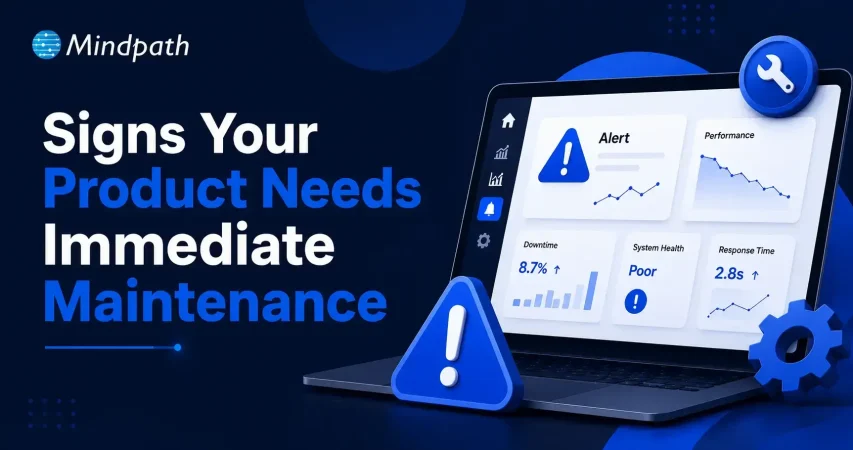
Signs Your Product Needs Immediate Maintenance Support

Signs Your Product Needs Immediate Maintenance Support

Lorem ipsum dolor sit amet, consectetur adipiscing elit. Ut elit tellus, luctus nec ullamcorper mattis, pulvinar dapibus leo.

Join our Newsletter!

maintenance support

Failure can be indicated well before it is seen. Reliable delivery teams begin to become aware of minor disruptions at an early stage. When systems exhibit minor yet consistent problems, maintenance support is needed. Are there minor errors that are occurring more frequently than anticipated? Do the response times seem a little bit out of tune during normal operations? These signals do not tend to be loud; however, they reflect more technical gaps that require consideration.

Besides, regular delays, unplanned downtime, and user complaints are hard to come by on their own. They accumulate pressure against business continuity and trust, over time, by users. Consequently, a prompt response maintains systems as dependable and effective. By neglecting the early warning signs, risks and cost are likely to rise. In this blog, key indicators will highlight when immediate maintenance action becomes necessary.

Ready to fix recurring issues before they start affecting your customers and revenue? Mindpath offers maintenance and support services to quickly resolve problems and keep your product running smoothly.

Why are Maintenance and Support Services Essential for a Business Product?

Business products need consistent performance to meet user expectations and market demands. Even small issues can affect reliability and growth. Maintenance support keeps systems stable, secure, and aligned with changing needs, ensuring smooth operations over time.

As businesses grow, products face higher traffic, security risks, and shifting user behavior. Regular updates and monitoring improve efficiency. Strong support services help businesses adapt quickly, protect performance, and maintain long term value without unexpected setbacks.

Here are the key points why support and maintenance are important:

1. Stronger Security and Risk Control

Frequent updates are used to address vulnerabilities before they are a major problem. This safeguards data, compliance, and minimizes exposure to cyber risks.

2. Better User Experience

Ongoing improvements make interfaces smoother and faster to use. As a result, users stay satisfied and engage more with the product.

3. Reduced Costs Over Time

Regular upkeep averts serious problems that require costly repairs. This will reduce the long term costs and eliminate the surprises of costs of repairs.

4. Improved Performance and Scalability

Regular optimisation and monitoring of systems is more effective. They are also capable of managing more workloads as the business needs increase.

5. Less Downtime and Smooth Operations

Active surveillance detects problems earlier than they can impact performance. This will maintain uniform operation and minimize unplanned disruptions.

6. Continued Relevance and Flexibility

The updates maintain products in line with new technologies and market demands. This assists companies remain competitive and prepared to change.

Key Signs Your Product Needs Immediate Maintenance Support

Products are capable of alerting to a decrease in their performance through early signs, and fixing them with the help of maintenance and support at once is the best way to do that. Not reacting quickly to these signs can lead to instability, whereas, by taking timely actions, we can keep the systems dependable.

1. System Struggles to Handle Growth

When ‍ the user base increases, the application either runs very slow or stops working altogether. Software maintenance support can help not only in improving the scalability of the application but also in ensuring smooth performance during system ‍ ‌‍ ‍‌growth.

2. Frequent Crashes and Downtime

During ordinary operation, the system crashes, sticking or having to be continually restarted. This is not only a reflection of its instability but also a signal for the need of quick measures that would strive to bring back the regular functioning.

3. Slow Speed and Response Issues

One of the main reasons why users get frustrated with an application is when pages take too long to load. Not only does it affect user experience, but it can also lead to low user engagement. In this regard, application maintenance support is a great solution to optimize performance and minimize latency.

4. Rising User Complaints

Another sign of a troubled product is when users start reporting problems more frequently such as errors, missing features, or poor usability. In fact, this could be a clear indication that the product is no longer satisfying the users and hence, requires immediate improvement.

5. Security Gaps and Risks

If updates are not implemented, the system becomes vulnerable to exposure and unauthorized access. Therefore, regular patches are not only vital for data security but are also the best way to keep the application safe from security loopholes.

6. Outdated Technology Stack

With technology advancing rapidly, the use of outdated frameworks and systems often becomes a major hindrance to performance and compatibility. This is why only technology updates lead to better efficiency and at the same time meet the needs of modern users.

7. Hard-to-Manage Code Structure

Simple changes take too long due to complex and unstructured code. This slows development and signals the need for code optimization.

8. Failed Backup and Data Risks

Backup processes fail or recovery tests do not work properly. This increases the risk of data loss and demands immediate attention.

9. Overloaded Support Team

The team spends most time fixing urgent issues instead of improving the product. This shows deeper system problems that need structured maintenance.

10. Broken Integrations and Features

Third-party tools or APIs stop working as expected. This not only affects the product operation but the entire functioning also gets disrupted.

Is Your Product Ready for Reliable Performance?

Ignoring early warning signs can impact performance, security, and user trust. Timely maintenance support helps businesses stay ahead of issues and ensure smooth operations. A proactive approach keeps systems stable, efficient, and aligned with changing business needs.

At Mindpath, we provide maintenance and support services to keep your product running without disruptions. Our team ensures consistent performance, quick issue resolution, and long-term stability, helping businesses focus on growth with confidence and reliability.

Frequently Asked Questions

1. How often should a product receive maintenance support to stay stable?

Regular maintenance depends on product complexity and usage levels. High traffic systems need more frequent monitoring and updates. Consistent checks help prevent unexpected issues, improve performance, and ensure the product continues to meet user expectations without interruptions.

2. What happens if early signs of product issues are ignored?

Ignoring small issues can lead to serious performance failures, security risks, and poor user experience. Over time, this increases downtime and repair costs. Addressing problems early helps maintain stability and avoids major disruptions that can affect business operations.

3. How does maintenance support help in improving user satisfaction?

Maintenance support ensures smooth performance, faster load times, and fewer errors. Users expect reliable and quick experiences. Continuous improvements and timely fixes help meet these expectations, leading to better engagement, trust, and long-term user retention.

4. Is maintenance support necessary even when the product is performing well?

Even well-performing products require regular updates and monitoring. Hidden issues can grow over time without visible signs. Proactive maintenance support helps prevent future problems, keeps systems secure, and ensures consistent performance as business needs evolve.

5. Can regular support reduce long-term product costs?

Yes, regular maintenance helps identify and fix small issues before they become expensive problems. It reduces the need for emergency repairs and system overhauls. This approach ensures better resource management and keeps overall operational costs under control.
Support Is One Click Away

Featured Posts

Related Post

ecommerce software development  

E-commerce is rapidly changing, and brands have to cope with it on a daily basis. Customer journeys need fast loading, effective information display, and dependable performance across all the devices. This compulsion makes e-commerce software development a fundamental business priority and not a peripheral activity. It influences product loading processes, payment processing, and growth of systems. We, as technology experts, are well aware of this change. It calls on teams to rebuild platforms in a purposeful, precise, and long-term growth perspective.

Based on this fact, attention turns to the planning and reinforcement of platforms. Intelligent e-commerce systems bridge the gap between business objectives and reality. They permit change and maintain performance. They also enhance brand confidence in an increasingly competitive environment. The connection between technology and strategy results in smarter decision-making. It initiates necessary debates in emerging businesses. So, this blog focuses on analyzing this field in detail and discussing what really makes e-commerce sites successful. Let’s dive in to know more!

Ready to transform your online store with a reliable and feature-rich platform? Mindpath’s software development services help businesses build innovative and scalable e-commerce solutions.

What Does E-commerce Software Development Mean?

To put it simply, e-commerce software development implies the development of digital systems that can assist businesses in selling online without any issues. These systems handle products, prices, orders, and activities of customers centrally. They assist e-stores in loading quickly and operating without failure. They are created by developers to suit the needs of customers and business objectives. Due to increasing online demand, powerful software assists brands to remain organized, responsive and engage in daily sales activity.

The process also facilitates growth and flexibility as business goes online. Through e-commerce development services, teams create a platform to facilitate payments, track orders, and manage users conveniently. Quality software links all the store’s functions intelligently. It makes teamwork easy and customers’ shopping straightforward. Such transparency enables businesses to win trust and provide a uniform online experience.

Key Benefits of E-commerce Software Development

In the contemporary world, online selling requires more than a simple web site. Brands seek speed, control and growing demand platforms. The e-commerce software development services facilitate this transition with smarter digital basics. The following are some of the main advantages which make this method worth considering.

1. Built for Your Business Needs

Each business operates in its unique way, and software must be aware of that fact. E-commerce software development assists teams to mould features in accordance with actual workflow and objectives.

2. Ready to Grow with Demand

E-commerce stores evolve with the growth of products, customers, and purchase orders. E-commerce software development helps it grow without slowing down systems and disrupting normal operations.

3. Better Control Over Design and Experience

Brands desire stores that are appealing and feel right to the customers. This method offers complete ownership over layout and flow as well as shopping experience.

4. Smooth Connection with Existing Tools

Several companies are already utilizing accounting, inventory, or CRM software. All these systems are linked through a well-planned software that maintains smooth operations of the system.

5. Faster Performance for Shoppers

Speed is important when the customers are browsing or paying over the internet. Powerful development pays attention to a rapid load and seamless action in each step.

6. Stronger Protection for Customer Data

E-commerce sites deal with personal customer information on daily basis. Dedicated systems implement protection rules which secure data and establish enduring customer confidence.

Curious how businesses build platforms aligned with their exact workflows? Check out custom software development and discover how it ensures better control and security.

Features of an E-commerce Software Development

The demand of e-commerce software will keep increasing as the online firms continue to grow all over the world. Grand View Research estimated the market of e-commerce software in the world to be USD 7.12 billion in 2022. The market has the potential of reaching USD 20.90 billion in 2030 with a CAGR of 15.3 percent. This expansion is an indication that it requires functionality to handle inventory, taxation, and day-to-day operations.

1. Simple Navigation Flow

Good layouts enable the user to navigate through easily without wasting time. E-commerce software development makes categories and checkout user-friendly.

2. Smart Product Control

The stores update and sort listings effectively. This will enable customers to find products easier and also make shopping more enjoyable.

3. Secure Payment Handling

There are various payment methods, which enhances customer confidence. E-commerce software solution development assures that all dealings remain secure and intact.

4. Order Tracking System

Teams have a chance to track orders between placement and delivery. This enhances coordination, as well as minimizes errors in shipping.

5. Mobile-Ready Experience

Mobile users anticipate hassle-free browsing and purchase. Responsive design will ensure an easy experience across all gadgets.

Want to keep your online store competitive in a rapidly evolving market? Discover software development trends to learn how modern innovations are transforming e commerce platforms.

Emerging Trends in E-commerce Software Development

E-commerce environment continues to evolve along with technology and consumer demands. The trends in e-commerce software development are currently geared towards enhancing growth and user satisfaction.

1. Mobile-First Shopping

Smartphones are now taking over the online purchases. E-commerce software development achieves seamless and quick experiences across all mobile devices.

2. Smarter Recommendations

AI and ML can assist platforms in recommending the products that the users desire. This enhances interaction and marketing prospects successfully.

3. Virtual Product Experience

AR allows customers to have a virtual experience on the use of products and then purchase. It enhances confidence and decreases returns in online shopping.

4. Voice-Activated Buying

Voice commerce enables purchases by commands. It accelerates and simplifies the process of shopping among the tech-savvy customers.

5. Subscription Models

Subscription-based services provide customers with products at regular intervals. Recurring orders and automated billing are efficiently supported on platforms.

Want to plan your e commerce project without unexpected expenses? Discover software development cost to learn what factors influence budgeting and long term investment.

What to Consider While Choosing the Right E-commerce Software Development Company?

Choosing the appropriate partner determines the success of your online shop. E-commerce software development requires skills, trustworthiness and business insight.

1. Find a company that has high competence in e-commerce software development and a track record. Check on their previous works so that they could be able to cope with their business requirements.

2. Ensure that the technology stack that they are based on is reliable and up to date. Ensure that they are adept at such popular platforms such as Shopify, Magento or WooCommerce.

3. Check out their capabilities regarding the capacity to customize solutions to your business needs. A dynamic strategy assists in developing a platform that actually suits your operations.

4. Make sure that the firm is capable of developing scaled systems that increase with your business. With time, your platform is supposed to support increased traffic, products, and transactions.

5. Pay attention to effective communication and cooperation during the project. The development process is smooth and predictable due to regular updates and open discussions.

6. Consider their after-launch services such as support and maintenance. Constant support makes your online store efficient and modern.

Planning to upgrade your existing e commerce system for better performance? Discover how a skilled software development agency can modernize your platform with advanced technologies.

Ready to Take Your E-commerce to the Next Level?

E-commerce is changing at an alarming rate, and good software is one of the major factors to remain competitive. E-commerce software development assists companies to handle merchandise, finances and customer experiences effectively. It helps in growth, enhances performance, and establishes trust. Selecting suitable software and features is a guarantee of ease of operation, ease of use, and success over time. With intelligent planning and development, online stores become viable and scalable business platforms.

At Mindpath, we provide professional software development services that are specific to your business objectives. Our team is highly skilled in e-commerce software development and incorporates modern technologies in speed, security, and efficiency. They provide platforms that grow with your business, are easy to manage, and improve user experiences. Ongoing support and development means your online store will be competitive, receptive, and available to future possibilities.

Hire nodeJS developer

In today’s digital-first economy, companies are always under pressure to make apps that work well, can grow, and work in real time. Backend technology is very important for success, whether a startup is making its first product or a big company is updating its old systems. Node.js is one of the most popular backend technologies for making apps that can grow and run quickly.

Because of this, businesses all over the world are looking for NodeJS developers who can use this powerful runtime environment to make apps for the web and mobile devices. You can’t just hire someone who knows Node.js. You should make a plan, decide what skills you need, think about how much it will cost, and choose the best way to hire people.

This full guide will teach you everything you need to know about hiring a Node.js developer, including why companies like Node.js, what skills to look for, how to hire someone, how much it will cost, and the best ways to make sure your project is done on time.

Looking to turn your project idea into a powerful digital solution? Mindpath provides professional services where you can hire expert NodeJS developers for scalable and customized development.

Understanding Node.js: A Brief Overview

Node.js is a free, cross-platform runtime environment that lets developers run JavaScript on the server side. It uses Google’s V8 engine and is known for being fast and able to handle a lot of connections at once.

Everyone knows that Node.js has an event-driven, non-blocking I/O architecture. It lets Node.js handle more than one request at a time without having to wait for the first one to finish. This is great for apps that need to be able to grow quickly and work in real time.

Node.js doesn’t use more than one thread like other server-side languages do. It has an event loop and a model that only uses one thread. This speeds things up and cuts down on extra work, especially for apps that do a lot of input and output, like APIs, streaming platforms, and chat apps.

Node.js also supports the idea of “JavaScript everywhere,” which means that developers can write both the front end and the back end in the same language. This makes it easier to work together, makes projects less complicated, and makes it easier to develop.

Also Read: Advantages of NodeJS 

Why Businesses Choose to Hire NodeJS Developers?

It’s not a coincidence that more and more people want Node.js; it really helps businesses. There are many good reasons for businesses to hire NodeJS developers.

1. Exceptional Scalability

Node.js can handle thousands of connections at once without getting slower. Apps stay responsive even when they’re under a lot of stress because of how they’re built. This is great for platforms that can grow, like e-commerce sites, SaaS apps, and social media sites.

2. High Performance

Node.js uses the V8 engine to turn JavaScript into machine code, which makes the program run faster. Node.js apps are popular because they are fast and responsive, which is how they work.

3. Real-Time Application Capabilities

Node.js is used a lot for chat programs, tools for working together, and online games that need to work right away. It is a great choice for apps that need live updates because it can process data right away.

4. Rich Ecosystem (NPM)

Node Package Manager (NPM) gives Node.js one of the biggest collections of open-source libraries. There are over a million packages available, so developers can save time by using pre-made modules instead of making everything from scratch.

5. Cost-Effective Development

Using Node.js can help businesses save a lot of money on development. You won’t need as many separate development teams if you use JavaScript for both the front end and the back end. Companies can also hire NodeJS developers who work from home in places where costs are lower and still get good work.

6. Strong Community Support

A lot of developers are always working on Node.js and adding to it. This makes sure you get regular updates, better security, and a lot of help and information.

Types of NodeJS Developers You Can Hire

It’s important to know what levels of experience a NodeJS developer has and what they can do for you before you hire them.

1. Junior NodeJS Developers (0 to 2 Years):

Most of the time, junior developers are new to the field and only know the basics of JavaScript and Node.js. They can do basic tasks like writing simple APIs, fixing bugs in code, and helping more experienced developers. They do best when they work on small projects or with a group.

2. Mid-Level NodeJS Developers (2–5 Years):

Mid-level developers have already built applications and navigated databases, APIs, and frameworks. They’re capable of independent work, contributing to architectural decisions, and tackling moderately complex tasks.

3. Senior NodeJS Developers (5+ Years):

Senior developers know a lot about how to build systems, improve their performance, and make them bigger. They can manage teams, choose the architecture, and make sure that development follows best practices. For big or important projects, it’s very important to hire senior developers.

Must-Have NodeJS Developer Skills

If you want to hire good NodeJS developers, you need to look at both their technical and soft skills.

1. Proficiency in JavaScript and TypeScript

Node.js is built on JavaScript, so developers need to know a lot about ES6+ features, promises, callbacks, and asynchronous programming. When you want to make apps that can grow, it’s helpful to know TypeScript.

2. Experience with Node.js Frameworks

Frameworks like Express.js, NestJS, and Koa help you build things faster. At least one of these frameworks should be known by a good developer.

3. Database Management Skills

Node.js developers should know how to use both SQL databases, like MySQL and PostgreSQL, and NoSQL databases, like MongoDB. It’s important to know how to model data and make queries work better.

4. API Development and Integration

One of the most important things Node.js developers do is build and connect RESTful APIs. Knowing GraphQL is also becoming more and more useful.

5. Understanding of DevOps and Cloud Platforms

People who work in modern development need to know how to use tools like Docker and Kubernetes, as well as cloud platforms like AWS, Azure, and Google Cloud.

6. Version Control Systems

If you want to work together on development, you need to know how to use Git and sites like GitHub or GitLab.

7. Problem-Solving and Communication Skills

You need more than just technical skills. Developers need to be able to communicate clearly, understand what the project needs, and fix problems right away.

Hiring Models: Choosing the Right Approach

When you hire dedicated NodeJS developers, it’s very important to pick the right hiring model.

1. Freelancers

Freelancers are great for short-term jobs or jobs that need to be done quickly. They might not stick around for long, but they can help you save money and give you more options.

2. In-House Developers

Full-time, in-house developers are easier to manage, talk to, and work with. But it costs more, like building things, paying people, and giving them benefits.

3. Outsourcing to Agencies

When companies outsource, they can quickly add to their teams and hire people who have already been checked out by other companies. It’s a good choice for businesses that want to focus on their main tasks.

4. Dedicated Developers

With a dedicated developer, you get the best of both worlds: they only work on your project. Many individuals opt for this approach when embarking on lengthy projects.

Step-by-Step Process to Hire NodeJS Developers

A structured hiring process makes it easier to find the right people.

Step 1: Define Your Requirements

Start by clearly outlining your project goals, scope, and expected outcomes. Identify the type of application you want to build, whether it’s a real-time platform, API, or web application. Define the required technologies, level of expertise (junior, mid, senior), and project timeline. A well-defined requirement helps you attract the right candidates and avoids confusion later in the hiring process.

Step 2: Choose the Right Hiring Model

Decide how you want to hire based on your project needs and budget. You can choose freelancers for short-term or small tasks, in-house developers for long-term collaboration, or outsource the project to a NodeJS development company for end-to-end solutions. Each model has its own advantages, so selecting the right one ensures better efficiency and cost management.

Step 3: Create a Detailed Job Description

Write a clear and comprehensive job description that includes required technical skills (JavaScript, NodeJS frameworks, APIs), experience level, roles, responsibilities, and expectations. Mention project details, work environment, and deliverables. A strong job description helps filter out unqualified candidates and attracts the right talent.

Step 4: Source Candidates Effectively

Use multiple platforms to find qualified developers. You can explore job portals, freelance platforms, LinkedIn, developer communities, and NodeJS development agencies. Leveraging different channels increases your chances of finding experienced and reliable candidates.

Step 5: Conduct Technical Screening

Evaluate candidates through coding tests, technical interviews, and portfolio reviews. Assess their understanding of NodeJS concepts, API development, database handling, and problem-solving skills. Real-world tasks or assignments can help you understand how they approach practical challenges.

Step 6: Assess Soft Skills

Technical knowledge alone is not enough. Evaluate communication skills, teamwork, adaptability, and time management. A developer with strong soft skills can collaborate effectively, understand business requirements, and contribute to a positive work environment.

Step 7: Finalize and Onboard

Once you select the right candidate, complete the hiring process with proper documentation, contracts, and onboarding. Provide clear guidelines, tools, and access to resources so they can start working efficiently. A smooth onboarding process ensures faster integration and better productivity.

Cost of Hiring NodeJS Developers

There are many things that affect the cost of hiring a NodeJS developer, such as their experience, where they live, and how you want to hire them.

1. Hourly Rates (USA)

(Based on U.S. Bureau of Labor Statistics data)

  • Junior Developers: $22–$30/hour
  • Mid-Level Developers: $30–$55/hour
  • Senior Developers: $55–$75+/hour

2. Annual Salaries (USA)

(Source: U.S. Bureau of Labor Statistics)

  • Junior: ~$48,000 – $70,000
  • Mid-Level: ~$80,000 – $110,000
  • Senior: $120,000 – $160,000+

Factors Affecting Cost

  • Developer experience
  • Project complexity
  • Geographic location
  • Engagement model

You can save a lot of money by hiring developers from India or Eastern Europe, and the work will still be good.

Where to Hire NodeJS Developers

Depending on what you need, you can hire NodeJS developers from a number of places.

1. Job Portals

LinkedIn, Indeed, and Stack Overflow are just a few of the places where you can find full-time developers.

2. Freelance Platforms

Freelancers from all over the world work on Upwork, Toptal, and Fiverr.

3. Development Agencies

Agencies often bring back developers they’ve previously collaborated with, streamlining the hiring process. This method is generally faster and less of a hassle.

4. Developer Communities

You can find good developers and see what they’ve done on GitHub, in tech forums, and at meetups.

Benefits of Hiring Dedicated NodeJS Developers

When you hire dedicated developers, you gain several advantages:

  • Full commitment to your project
  • Faster development cycles
  • Better communication and collaboration
  • Scalability and flexibility

In addition, dedicated NodeJS developers offer the following benefits:

1. Consistent focus and productivity

Dedicated developers work exclusively on your project, ensuring steady progress and minimal distractions.

2. Better understanding of your business needs

Over time, they gain deeper insights into your goals, leading to more tailored and effective solutions.

3. Improved code quality and maintainability

Continuous involvement helps maintain coding standards, resulting in cleaner and more reliable code.

4. Faster issue resolution and support

Since they are fully involved, bugs and issues are identified and resolved quickly.

5. Seamless team integration

Dedicated developers act as an extension of your in-house team, aligning with your workflows and tools.

6. Cost efficiency in the long run

Reduces overhead costs related to hiring, training, and managing multiple resources.

7. Greater control and transparency

You have direct communication and visibility over progress, timelines, and deliverables.

Dedicated developers act as an extension of your in-house team, ensuring consistent progress and high-quality results.

However, while hiring dedicated NodeJS developers, businesses should also be aware of common mistakes that can impact project success:

  • Not defining clear requirements
  • Hiring based solely on cost
  • Ignoring communication and soft skills
  • Skipping technical evaluations
  • Choosing the wrong hiring model

Avoiding these mistakes ensures that you not only hire the right talent but also maximize the benefits of working with dedicated developers.

Ready to Hire the Right NodeJS Developer for Your Project?

Choosing the right Node.js developer is a big deal; the person you pick can make or break your project’s chances. Every step of the way is important, from grasping the technology to evaluating what candidates can do and figuring out the best way to hire them.

This guide provides a comprehensive overview, helping you navigate the decision-making process: should you bring on remote NodeJS developers, assemble your own team, or outsource the project entirely?

Businesses can hire expert NodeJS developers to make high-performance, scalable apps that help them grow if they follow best practices and put quality ahead of cost.

FAQs

1. Why do I need to hire NodeJS developers?

Node.js developers utilize a robust backend architecture, enabling them to create applications that are both swift and capable of scaling. These applications are designed to function in real-time.

2. What are the most important skills that a NodeJS programmer should have?

You should know how to use Node.js frameworks, JavaScript, make APIs, manage databases, and connect to the cloud.

3. How much does it cost to hire a developer who knows NodeJS?

A junior developer can charge as little as $25 per hour, while a senior developer can charge as much as $150 per hour. This depends on where they live and how long they’ve been doing it.

4. What is the best hiring model?

Freelancers are good for short-term work, dedicated developers are good for long-term work, and agencies are good for work that needs to grow.

5. Where can I hire NodeJS developers?

Job boards, freelance sites, development agencies, and developer communities like GitHub are all places where you can find people to hire.

generative AI trends

The technology world is growing at a quicker pace and 2026 is already proving to be a big year for innovation. Among the most discussed advancements, there are some exciting generative AI trends that are transforming how we produce content, design products and engage with digital tools. From smart video production to sophisticated code composition, generative AI is no longer a notion but is actually transforming the way things are reshaping in the real world.

Generative AI is applied across majority of industries today to facilitate work, enhance individual experiences, and assist individuals in generating more innovative ideas. In 2026, we are seeing a quick surge in adoption in healthcare, marketing, education and entertainment fields. Businesses are also embracing these tools to lead in innovation and customer experience. Intriguing, isn’t it?

Are you interested to know about some generative AI trends for 2026? Well, we have got you covered. This blog will walk you through top gen AI trends shaping 2026 and how they’re influencing the future of technology.

Want to integrate generative AI into your workflows for competitive advantage? At Mindpath, our AI Development Services deliver tailored, scalable AI solutions for your business.

Demystifying Generative AI: The Next-Gen Innovation

Generative AI is an intelligent technology that has the ability to assist in the development of new contents, images, videos or even computer code. It learns from what already exists and then applies what it has learned to create something new. For companies, this means they can utilize AI to create content, create products, or even assist with customers’ questions. It’s similar to having a super useful assistant who always learns and becomes proficient at various tasks. 

Generative AI is assisting companies in so many easy and intelligent ways. It saves time by performing daily tasks such as writing, designing, or responding to messages. So, teams can concentrate on more important things. It also assists organizations in making quicker decisions by getting data interpreted quickly. Customers receive better and more personalized service, which makes them satisfied. Additionally, it helps in creating new ideas and saving costs by doing work faster. Since the market is expanding very quickly, a Statista study approximates that generative AI will reach approximately $66.89 billion in 2026 and increase to $442.07 billion by 2031, demonstrating the growing importance of GenAI for business in driving efficiency, innovation, and customer engagement.

Also Read: Top AI Trends 

Now let us have a look at the generative AI trends for 2026:

Top Generative AI Trends to Look for in 2026

GenAI trends are progressing rapidly in 2026, revolutionizing the way we work and innovate. These trends are enhancing tools to be smarter, quicker, and more useful. Here are the leading GenAI trends that are shaping the future this year: 

1. Hyper-Personalization with GenAI

One of the key current trends in artificial intelligence is hyper-personalization. GenAI helps create content and messages that match each person’s unique needs and interests. It looks at large amounts of data to understand what someone likes, then gives them a more personal and meaningful experience. This makes communication more effective and helps build stronger connections. Hyper-personalization is becoming more important for better results, improved engagement, and customer satisfaction across many different industries. 

2. Multimodal Generative AI

AI is now getting better at understanding many types of information at once, like pictures, text, speech, and even video. This is called multimodal AI. For example, some tools can turn spoken words into text or show pictures based on what you write. New models like GPT-4V and LLaVa are making this possible. They help people talk to AI in smarter ways, using both words and visuals. This makes AI more useful and helpful in many different tasks. 

3. Conversational AI

Conversational AI is getting much better at having real conversations with people. Thanks to new tools like GPT, it can understand what you say, remember past chats, and reply in a way that feels natural. It’s like talking to someone who really listens and gives helpful answers. In 2026, this kind of AI can handle longer and more detailed chats, making it great for customer support, virtual helpers, and more. It feels less like a robot and more like a real helper. 

4. AI-Powered Apps and Services

One of the top ai industry trends is how apps and services are becoming much smarter by adding AI features. These AI-powered tools help people do their work faster and in a more personalized way. For example, writing apps learn your unique style to suggest better words and ideas, while health apps can offer treatment advice based on your personal health data. Shopping apps can recommend products you might like. In 2026, many industries use AI inside their software to make experiences easier, smarter, and more helpful for users every day. 

If you’re planning to integrate generative AI into your business strategy. Check out generative AI use cases to learn how companies are leveraging this technology to boost innovation and gain a competitive edge.

5. AI Boosting Creativity

AI is making creativity easier and more exciting for everyone. Tools like Dall-E can turn simple ideas into pictures, music, animations, and sounds, helping artists and creators bring their visions to life quickly. These AI tools keep getting better, allowing people to explore new ways to create art and express themselves. This technology is changing how creative work happens, giving both professionals and hobbyists fresh opportunities to make unique and interesting content in many different fields. 

6. AI Helping in Scientific Research

Generative AI predictions show that AI is making big changes in scientific research. It helps by quickly summarizing long and complex research papers, especially in medicine and pharma. This means researchers can understand important information faster without reading everything. These AI tools save time and make it easier to find key facts, helping scientists work better and faster. This leads to smarter decisions and faster progress in creating new treatments and improving healthcare for patients. 

7. Open Source and Generative AI

Open source is playing a big role in the growth of generative AI. It lets many people from different places work together to improve AI tools and make them better. This teamwork helps find and fix problems faster while making sure AI is fair and trustworthy. Open-source projects also share knowledge and resources, making AI development more open and honest. According to the McKinsey generative AI report, companies that see AI as key to their success are over 40% more likely to use open-source AI tools. In the tech industry, 72% of companies use open-source AI models, showing how important this approach is for advancing AI. 

8. Human in the Generative AI Loop

In 2026, a growing trend is people working closely with AI, called Human-in-the-Loop. This means humans help guide and check AI to make sure it follows rules and fits real-life needs. This teamwork makes AI results more accurate and reliable. By combining human skills with AI’s power, companies can get smart and creative results while keeping control over what the AI produces. This helps AI work better for many different uses. 

Looking to leverage generative AI for smarter, more adaptive app solutions? Explore our blog on Generative AI in App Development highlights practical applications, transformative benefits, and strategies to stay ahead in the digital landscape.

Ready to Embrace GenAI Trends for 2026?

The generative AI trends of 2026 are already changing how we create, communicate, and solve problems. From boosting creativity to transforming research and business services, these trends are making technology smarter and more helpful than ever. As industries keep exploring AI’s possibilities, it’s clear that generative AI will keep shaping the future in exciting and meaningful ways. 

If you’re looking to stay ahead in this fast-changing landscape, Mindpath’s GenAI solutions are here to help. Our expert team builds powerful and easy-to-use AI development services tailored to your business needs. Whether it’s integrating generative AI tools or developing custom applications, Mindpath ensures you get innovative, ethical, and result-driven AI experiences that truly make a difference. 

Frequently Asked Questions

1. How can businesses start adopting generative AI trends in 2026?

Businesses can begin by identifying repetitive or creative tasks that can benefit from automation. Adopting tools aligned with current generative AI trends such as content creation, analytics, or personalization is a good first step. A pilot project helps measure ROI before scaling across departments.

2. Will generative AI replace creative professionals?

No, generative AI is designed to assist, not replace, creative professionals. It speeds up brainstorming, drafting, and design processes, but human creativity, emotional understanding, and strategic thinking remain essential for producing meaningful and high-quality work.

3. Is generative AI expensive to implement?

The cost depends on the scale and complexity of implementation. Many cloud-based AI tools offer flexible pricing models, making them accessible even for small businesses. Starting small and scaling gradually can help manage costs effectively while still benefiting from innovation.

4. How do generative AI trends impact data privacy and security?

As generative AI trends grow, businesses must prioritize strong data governance. Secure APIs, encrypted storage, and compliance with regulations are essential. Organizations should also ensure transparency in how AI models use data to maintain customer trust and avoid legal risks.

5. What skills are important for working with generative AI tools?

Key skills include data literacy, prompt engineering, critical thinking, and understanding AI ethics. While technical knowledge is helpful, many modern tools are user-friendly. Professionals who can combine domain expertise with AI capabilities will have a strong advantage in 2026 and beyond.