Companies need backend technologies that can handle real-time data, are quick, and can grow with the business in today’s digital-first economy. Node.js is now one of the most popular backend tools for building SaaS platforms, fintech apps, and business software.
California is one of the best places to find Node.js developers because it is home to Silicon Valley and some of the biggest tech companies in the world. You need to know a lot about skills, costs, hiring models, and market demand to hire the right people here.
This guide gives you a complete, research-based look at how to hire NodeJS developers in California. It covers everything from the skills and costs to the steps you need to take and the best ways to do it.
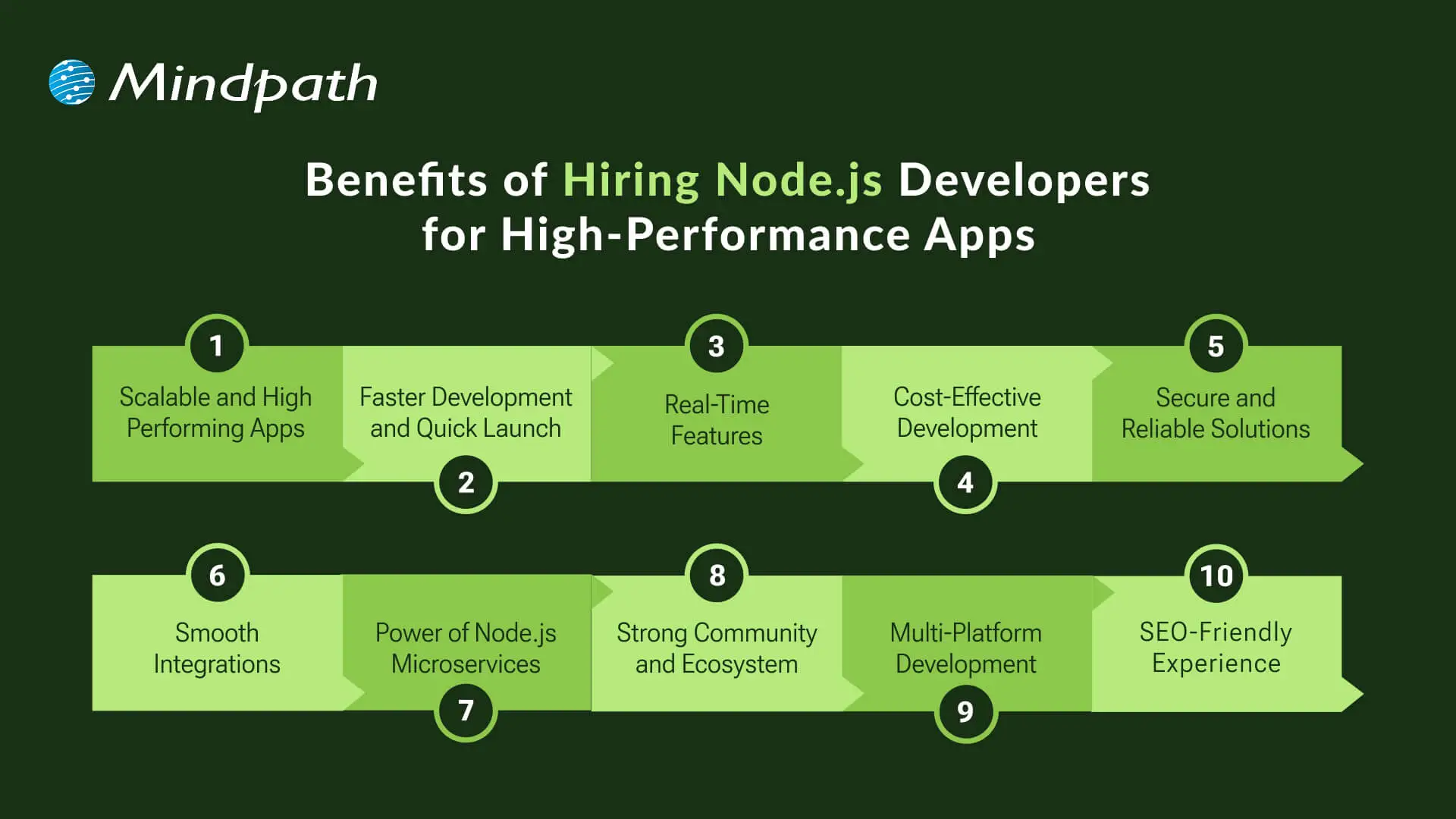
Key Benefits of Hiring NodeJS Developers
Node.js is popular because it is fast and can make apps that can grow. Its event-driven, non-blocking architecture makes it great for modern apps like APIs, real-time apps, and microservices. Let’s dive in to understand the key benefits of hiring nodejs developer in California.
1. High performance and Scalability
Node.js is great for apps that get a lot of traffic because it can handle many requests at the same time.
2. Faster development
Node.js uses JavaScript on both the front end and the back end, which makes development faster and more productive.
3. Strong Ecosystem
NPM, which stands for Node Package Manager, lets developers use thousands of libraries to get their work done faster.
4. Ideal for Real-Time Applications
A lot of people use Node.js to build live apps like messaging apps and streaming services.
5. The Availability of Skilled Workers in California
California has a strong tech ecosystem that helps businesses find the best workers.
What Skills Should You Look for in a Node.js Developer?
You need to know what skills a developer needs in order to hire the right one. Not all JavaScript developers know a lot about Node.js.
1. Core Technical Skills
- A lot of experience with JavaScript (ES6+).
- Getting the back end to work with Node.js
- Familiarity with frameworks like NestJS or Express.js
- Creating RESTful APIs
- Taking care of databases like MySQL, MongoDB, and PostgreSQL
- Version control tools like Git
2. Advanced Skills (For Experienced Developers)
- The structure of microservices
- Cloud platforms, such as AWS, Azure, and Google Cloud
- Computing without servers
- Making things work better
- Best ways to keep things safe
Senior developers often make more money because they can design systems that can grow and handle complex architectures.
3. Soft Skills
- Being able to solve problems
- The ability to talk to people
- Working as a team
- Managing time
Strategic Hiring Models: Choosing the Right Fit for Your Node.js Project
When looking to hire Node.js developers in California, businesses are no longer restricted to traditional hiring methods. Depending on your project’s budget, timeline, and security requirements, you have four distinct hiring models to choose from. Selecting the right one is critical for balancing cost with technical output.
1. In-House Hiring
Building an internal, full-time engineering team is the traditional route, ideal for core product development that requires deep institutional knowledge.
2. Freelance Developers
For short-term projects, bug fixes, or highly specialized micro-tasks, hiring independent freelancers from platforms like Upwork or Toptal can be an attractive option.
3. Dedicated Developers
This model involves partnering with a specialized IT agency to “hire” full-time developers who work exclusively on your project but remain legally employed by the agency.
4. Remote & Distributed Developers
With the rise of robust remote work infrastructure, you are no longer limited by geographical borders. You can hire full-time or contract developers who work entirely from home.
The Cost of Hiring NodeJS Developers in California
When budgeting for your next major software project, relying on anecdotal salary data, Reddit threads, or outdated job boards is a fast track to under-budgeting. If you want to secure top-tier talent in one of the most competitive tech ecosystems in the world, you need to understand the actual market rates.
To give you an accurate, transparent look at the current landscape, we cross-referenced real-world agency pricing with official government labor statistics from the U.S. Bureau of Labor Statistics (BLS) and the California Employment Development Department (EDD).
Because the government classifies Node.js engineers under the broader “Software Developers” category, we can use their highly regulated data to validate exactly what elite talent costs in the Golden State today.
1. Annual Salary Benchmarks (Full-Time / In-House)
If your goal is to hire an in-house, full-time Node.js developer, the baseline costs are substantial. You are competing directly with Silicon Valley giants and well-funded startups.
- The Baseline Average: Historical BLS data and active job aggregators have long placed the median tech salary in California around $137,600.
- The Current Competitive Rate: As demand for advanced back-end architecture and highly scalable applications grows, the official BLS mean annual wage for Software Developers in California has surged to $173,780.
- The Silicon Valley Premium: If you are hiring in hyper-competitive tech hubs like the San Jose-Sunnyvale-Santa Clara metropolitan area, you must pay a premium. The government reports an average annual salary of $199,800 for top-tier engineers in these regions.
Keep in Mind: These numbers represent base salaries. When you factor in recruitment costs, health benefits, equity, and equipment, the true cost of an in-house hire is often 20% to 30% higher than their base pay.
2. Hourly Rates & The “Agency Markup” Explained
For many agile companies, hiring full-time W-2 employees is not the most efficient solution. Choosing to work with dedicated freelancers or a staff augmentation agency changes the pricing model to an hourly rate.
Our market research shows that hiring a mid-level to senior Node.js developer on a contract basis generally costs between $80 and $150+ per hour. Here is exactly how that aligns with official government data:
- The Government Base Rate: The BLS reports the mean hourly base wage for a developer in California is $83.55, climbing to $96.06 in Silicon Valley.
- The Fully Loaded Cost: It is critical to understand that the BLS tracks raw W-2 base pay. When you hire through an agency or a premium contractor, the hourly rate includes overhead, software licenses, healthcare benefits, and the agency’s operational margin.
This standard 20% to 40% markup perfectly explains why a base wage of $83–$96 per hour translates directly to the $120 to $150+ per hour billing rate you will see on professional agency proposals.
California is expensive, but it also houses the most innovative and experienced developers in the world. Paying these rates ensures you are securing engineers who possess the elite architectural knowledge required to build secure, scalable, and high-performance Node.js applications that won’t break under pressure.
Step-by-Step Guide to Hire Node.js Developers in California
Hiring top-tier Node.js developers in California means navigating one of the world’s most dynamic and fiercely competitive tech ecosystems. To attract and secure high-impact engineers who can drive your vision forward, you must execute a strategic, rigorous, and highly targeted hiring process that filters out the average and hones in on the exceptional.
Step 1: Define Precise Project Requirements
Begin by pinpointing the exact architectural scope, determining whether you are constructing a high-frequency trading platform, a globally scaled SaaS product, a real-time communication tool, or a complex enterprise backend. Clearly define the necessary tech stack, including proficiency in databases and cloud infrastructure. Establishing firm timelines, budget constraints, and core deliverables at this stage creates a roadmap that ensures alignment and prevents costly scope creep down the line.
Step 2: Strategically Select Your Hiring Model
Building an in-house team might be essential for highly secure, proprietary projects requiring deep institutional knowledge. Conversely, you might opt for remote developers across the US or adjacent time zones to optimize costs without sacrificing synchronous collaboration. If your goal is to rapidly scale for a specific sprint or product launch, partnering with vetted agencies to onboard dedicated Node.js developers can provide immediate, high-impact momentum without the long-term commitments of traditional employment.
Step 3: Craft a High-Impact, Technical Job Description
Clearly outline the day-to-day responsibilities, key deliverables, and performance expectations, which serves a dual purpose: it acts as a magnet for highly qualified candidates who thrive on clarity, while simultaneously functioning as an immediate filter to deter applicants who lack the requisite depth of experience.
Step 4: Deploy Sourcing Strategies
Actively scout open-source contributors on GitHub and technical forums to find nodejs developers who demonstrate genuine passion and peer-validated skills. Furthermore, leverage internal referral networks or collaborate with elite, specialized technical recruitment agencies that maintain exclusive pipelines of passive, high-caliber candidates who are not actively browsing public job listings.
Step 5: Conduct Technical Evaluations
Assess their ability to design scalable backend architectures, seamlessly integrate complex databases, and identify performance bottlenecks under heavy load. By presenting them with assignments mirroring your actual codebase or architectural challenges, you gain unparalleled insight into their practical problem-solving methodologies and coding standards.
Step 6: Assess Soft Skills and Cultural Alignment
Evaluate candidates’ adaptability, time management, and approach to teamwork, particularly their receptiveness during code reviews and their ability to mentor junior peers. Ultimately, you are looking for developers who not only write exceptional code but also elevate the entire team’s dynamic and align seamlessly with your company’s core values and operational tempo.
Step 7: Finalize Hiring and Execute Onboarding
Provide the new developer with immediate, frictionless access to all required repositories, project management tools, and comprehensive system documentation so they can begin familiarizing themselves with the architecture on day one. A meticulously planned onboarding phase minimizes friction, accelerates the developer’s path to their first code commit, and establishes a foundation of trust and productivity that secures long-term retention.
Ready to Bypass the California Hiring Headache?
You can work with some of the best tech experts in the world if you hire Node.js developers in California. But it costs a lot and there are a lot of other people who want it. Finding NodeJS developers in California is the most important thing, whether you hire them in person or online. We at Mindpath have a dedicated team of nodejs developer from mid to high level experience. Contact us today with your requirements and we’ll provide you with the best nodejs developer in California.
FAQs:
1. How much does it cost to hire a NodeJS developer in California?
The average salary is between $137,000 and $138,000 a year, but it can be as low as $90,000 and as high as $175,000 or more, depending on how much experience you have.
2. Is it possible to hire NodeJS developers who work from home for projects in California?
A lot of people do use remote developers, and they can be a lot cheaper, costing between $20 and $90 an hour.
3. What skills should a NodeJS developer have?
Some important skills are knowing how to use the cloud, how to build APIs, how to manage databases, and how to understand microservices.
4. How long does it take to hire a NodeJS developer?
It usually takes 5 to 8 weeks to hire someone through a staffing agency. It can take even longer through more traditional methods.
5. Should I hire a full-time NodeJS developer or a freelancer?
Freelancers are great for small or short-term jobs, but dedicated developers are better for big, long-term projects.