Harnessing GenAI: Enhancing Customer Engagement in Retail and E-Commerce

Join our Newsletter!

Featured Posts

Support Is One Click Away

Home

Harnessing GenAI: Enhancing Customer Engagement in Retail and E-Commerce

generative AI in retail

Harnessing GenAI: Enhancing Customer Engagement in Retail and E-Commerce

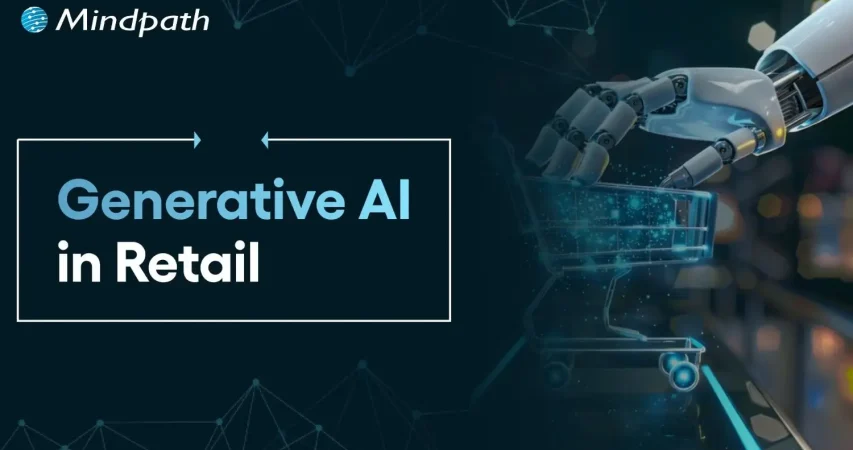
Every business in any industry you can think of depends heavily on their customers and how well they engage with the business. The two most prominent sectors that cannot compromise with customer engagement are retail and ecommerce. With the growing adoption of generative AI in retail and ecommerce, business leaders have been trying to figure out ways to leverage generative AI to enhance customer engagement.

According to a report by McKinsey, generative AI can add almost $4.4 trillion to the global economy in different use cases (Source). On top of it, around 75% of the value delivered by generative AI will be focused on four areas, which also include marketing. This is where retail and ecommerce businesses can look for an opportunity as generative AI can transform interactions with customers.

Looking to transform your business with intelligent automation and creative AI insights? At Mindpath, we implement Generative AI developement services strategies that empower companies to innovate faster and make smarter decisions.

Understanding the Rise of Generative AI in Retail and Ecommerce

Few years ago, no one would have believed that artificial intelligence will become a part of everyday lives of people. The arrival of generative AI changed the narrative and you can witness generative AI use cases in retail and ecommerce transforming how brands engage with customers. Generative AI can not only help in generating text and images but also offers the opportunity to extract valuable insights.

You can witness the growing influence of generative AI in the domain of retail and ecommerce through some statistics about generative AI.

  • McKinsey has predicted that generative AI could add value of $400 billion to $660 billion annually in the retail and consumer packaged goods sector (Source).
  • NVIDIA has pointed out that almost 90% of retail businesses have been actively using AI in different operations (Source).
  • The adoption of generative AI in the world of ecommerce can lead to 300% growth in revenue and a 150% rise in conversion rates (Source).

All these numbers showcase exactly why business leaders in retail and ecommerce want to discover the true potential of generative AI. The estimates of value derived from generative AI create curiosity regarding the different ways in which retail and ecommerce businesses can leverage generative AI.

Wondering how AI can do more than just enhance customer experiences in retail? Discover the real-world applications of generative AI in business in this detailed guide.

How Does Generative Improve Customer Engagement?

A major share of the impact of generative AI applications in retail and ecommerce will revolve around customer engagement. Many people will believe that the use cases of gen AI in retail and ecommerce focus on automation alone. However, generative AI brings a novel blend of automation, automated content generation and deep analysis to introduce benefits for consumers and marketers.

The ideal approach to understand how retail and ecommerce businesses can leverage gen AI will involve a review of its use cases.

1. Making Every Customer Experience Feel Personal

All brands in the retail and ecommerce space consider personalization as their top priority to grow their market share. You must have noticed how digital retail and ecommerce platforms provide the “You May Also Like” sections below product pages. However, the problem arises when the products recommended in those sections are completely irrelevant. Would you buy an electric bulb when you are purchasing wires to repair a circuit box?

The first step to harnessing generative AI for improvement in customer engagement begins with improving personalization. Generative AI can help with comprehensive analysis of browsing history and purchasing patterns of customer to find valuable insights. In addition, the utility of generative AI in sentiment analysis can also help in identifying what customers actually want.

The power of generative AI can enhance personalization and makes every customer feel that the brand thinks about them. With the help of generative AI, brands can present more accurate product suggestions and use targeted promotions for relevant audience. The improvements in customer experience through personalization play a vital role in enhancing customer engagement.

2. Transforming Supply Chain Operations with Smart Decisions

Ask any retailer about their biggest concerns and they will obviously speak of supply chain management. Can you imagine the plight of a business owner who has a lot of stock or runs low on stock? In both cases, the business is suffering from ineffective supply chain management. The introduction of generative AI in ecommerce turned things around by providing a powerful tool for data analysis. Generative AI can easily facilitate comprehensive analysis of historical sales data and trends along with external factors to draw accurate demand forecasts.

How does the analysis of historical sales data and external sales factors improve customer engagement? You can think of a retail or ecommerce business that uses generative AI to predict if the demand will increase before the holiday season. As a result, it can avoid scenarios where it has run out of stock in the middle of the holiday season.

Generative AI also makes supply chain operations a lot smarter with accurate predictions for deliver times. In ecommerce, customers can get real-time updates on shipping status and delivery dates with better transparency. You can clearly notice how generative AI enhances customer engagement by streamlining supply chain management and enhancing transparency.

Also Read:  AI in Business Strategy

3. Turning Customer Interactions into Productive Conversations

The endless wait for replies from customer service representatives has come to an end with the arrival of generative AI. You can notice generative AI use cases in ecommerce evolving beyond the benefits of automated customer service. Generative AI serves as the driving force behind creation of virtual assistants and conversational AI chatbots that make online shopping more seamless. The AI-powered assistants can simulate conversations that customers are likely to have with in-store sales executives.

Big brands in the retail and ecommerce space like Walmart and Amazon have introduced AI chatbots to provide customer assistance. How are these chatbots assisting customers in their shopping experiences? Customers can use them to track prices during peak shopping seasons, such as during Black Friday sales. The chatbots also help customers in comparing products and creating shopping lists without any complaints.

The AI-powered virtual assistants bridge the customer experience gap between shopping online and in-store purchases. Generative AI empowers chatbots to use customer data and find out what exactly customers are looking for. The personalized guidance in their interactions with customers gets better as the virtual assistants learn continuously and offer accurate recommendations.

4. Supercharging Marketing Efforts with Generative AI Content

The search for top use cases of generative AI in online commerce and digital retail spaces will also lead you to marketing. Without targeted marketing, brands cannot retain customers and lose a major share of customer engagement. The larger generative AI market sheds light on how generative AI applications enhance the work of marketing professionals. Generative AI works like the young marketing intern who can work endlessly for hours while churning out creative ideas.

Retail and ecommerce brands have been using generative AI to craft compelling product descriptions, social media posts and ad copies. The best thing about leveraging generative AI to supercharge your marketing efforts is the opportunity to use genuinely out-of-the-box content. For instance, some retail companies use generative AI to create multiple versions of ad copies and test them.

Generative AI also opens the doors for creating highly personalized marketing content, including personalized email and SMS campaigns. Brands can design product descriptions that offer the highest conversion rates. Tailoring your marketing content to the target audience ensures that the content appeals to the audience and improves engagement.

Want to know which AI solutions are truly transforming customer experiences in retail? Explore actionable agentic AI examples here to enhance your customer engagement.

Final Thoughts

The ability to leverage generative AI in retail and ecommerce has offered a new ray of hope for customer engagement. You can witness the use cases of generative AI transform different aspects of how brands engage with their customers. For example, you can witness generative AI revolutionizing marketing with automated content generation. At the same time, generative AI drives virtual assistants and also reviews the sentiment in customer reviews.

Mindpath is your reliable partner in developing generative AI solutions tailored for the retail and ecommerce spaces. We have helped many brands establish strong foundations in customer engagement performance by providing the best-in-class generative AI solutions. You can consult with our experts and discover the ideal ways to incorporate generative AI and increase customer engagement.
FAQs

1. What are the common use cases of generative AI in retail?

The use cases of generative AI can help in achieving a complete end-to-end transformation of the retail experience. You can leverage generative AI in the retail space to create personalized shopping experiences, achieve accurate demand forecasts and streamline supply chain operations. Retail businesses can also use generative AI to create virtual agents to help customers resolve queries and product issues.

2. How can generative AI improve supply chain management?

Generative AI plays a vital role in improving supply chain management with smarter decision making. Retail and ecommerce brands can use generative AI to analyze historical and real-time sales data to predict demand with accuracy. As a result, businesses can optimize their inventory levels and make better decisions. In addition, brands can also optimize their supply chain operations by identifying bottlenecks and improving efficiency.

3. Can you use generative AI to evaluate customer sentiment?

Yes, generative AI is one of the most powerful tools to evaluate customer sentiment. Businesses in digital retail and ecommerce space can use sentiment analysis on customer feedback, social media posts and reviews. It helps in understanding where the brand is performing well and where it needs to improve. The utility of generative AI in sentiment analysis helps brands in making data-driven decisions to improve customer engagement.

4. Will generative AI replace in-store sales assistants?

Generative AI provides a smarter improvement over in-store sales assistants to enhance the shopping experiences of customers. You can notice how an AI chatbot can answer an endless streak of questions from shoppers while offering them exactly what they want. AI-powered chatbots can not only provide instant answers to queries but also analyze shopping behavior patterns to recommend relevant products.

5. What is the ideal approach to embrace generative AI in retail and ecommerce?

You can incorporate generative AI in retail and ecommerce businesses by following a strategic approach. Brands should always begin with a clear strategy and rely on the right tools and high-quality data. Most important of all, every brand adopting generative AI should choose the right partner. The foremost priority of brands incorporating generative AI in their business should be customer experience.

Related Post

Discover the latest DevOps trends to enhance collaboration, streamline processes, and drive business success.

Related Post

IT Staff Augmentation

You can’t delay your product launches, as your competitors might win the trust of your audiences before you. Yet many organizations are still dealing with long hiring cycles and limited IT skills. This is where the potential of IT staff augmentation becomes a significant inclusion. The following market is going to reach USD 857.2 billion by 2032 (Source). This is the best way to scale your teams instantly without compromising control over your project.

Traditional hiring is slow and expensive. On the other hand, outsourcing can sometimes make you lose control of your work. Staff augmentation combines flexibility that encourages direct oversight. Further, it accesses your companies to temporarily scale the teams.

Let us further discuss the diversifying role of IT staff augmentation services and how it can help your team become extensively competitive.

Need to expand your team without the long hiring cycles and overhead costs? Mindpath offers tailored staff augmentation services designed to provide on-demand expertise and boost your operational efficiency.

What is Staff Augmentation?

IT staff augmentation is simply the practice of extending your in-house IT team with external experts for a certain project or duration.

  • Instead of hiring full-time employees for every role, you can bring in specialists like QA engineers, developers, DevOps engineers, etc., based on your project needs.
  • This process is a bit different from traditional outsourcing, where the external professionals integrate directly into your existing teams, culture, and processes.
  • The outsourced experts can use your tools while sticking to your reliable work processes. Additionally, they report everything to the head.
  • This allows you to only pay for the expertise when you require it. This is also viable for industries where project workloads change, and specific technologies are needed to scale IT teams.

Must Read: Staff Augmentation Trends

What are the Major Differences Between Traditional Hiring and Outsourcing?

Here, you can go through the ultimate difference between traditional hiring and outsourcing.

1. Traditional Hiring

Hiring full-time employees offers your business a sense of stability and permanence. Teams can develop a workplace culture while sharing knowledge with each other. This approach can be reliable for long-term commitment. However, it has to deal with high-cost salaries. Further, you need to train your team with efficient workshops. It can also be challenging if the role needs niche expertise.

2. Outsourcing

Outsourcing follows a different route. Here, your whole company will hand over the project or a whole business function to a third-party vendor. Moreover, outsourcing can somehow minimize the management overload. But you need to be aware of certain risks like communication gaps, misalignment in vision, and lack of transparency.

3. IT Staff Augmentation

This approach offers you a flexible staffing model while allowing your company to leverage traditional and outsourcing facilities at once. Instead of giving up a project, you will enjoy the ownership. However, you can upgrade your team by plugging in the experts as required.

Planning to choose between flexible staffing and fully managed solutions? Discover our staff augmentation vs managed services comparison to learn what works best.

How Does IT Staff Augmentation Encourage Project Scalability Solutions?

Modern projects rarely value accurate timelines. Your requirements might change, and unexpected challenges might arise. Further, a rigid structure might struggle to keep up with the speed of the projects. This is where project scalability solutions can be a great preference.

1. On-Demand Skill Access

Instead of waiting to find the right candidate, businesses can effectively onboard expert professionals for specific roles. These experts can join your company immediately to initiate the project.

2. Flexible Resource Allocation

With a flexible staffing model, you only consider the talent you need. If a certain phase of the project is complete, you can scale down the external support without cutting off the internal staff.

3. Faster Time to Market

When you can easily fill in the talent gaps and scale teams up and down, your project timelines will decrease. Further, your complicated features will be built at a time while lessening the feedback loop. In addition to this, your deployment will become much more seamless. IT staff augmentation has a direct influence on your ability to offer desirable results to your customers sooner.

4. Minimal Hiring Risks

As we have discussed earlier, traditional hiring generally includes making long-term commitments. With IT staff augmentation, you can evaluate if the performance fits in real time. If an engagement is not offering you desirable results, you can adjust it without any long-term consequences.

5. Better Innovation

Bringing in diverse talent introduces new ideas and concepts along with best practices. Moreover, new skills can increase your creativity and assist your teams in adopting modern approaches faster.

This is an effective benefit that can encourage your future projects even after the augmentation timeline ends.

Looking to speed up your hiring process while scaling projects efficiently? Check out our staff augmentation hiring guide to learn how to find the right talent faster while reducing hiring delays and improving project outcomes.

What are Some Top Staff Augmentation Benefits?

Understanding the staff augmentation benefits can help you understand why this approach has become popular in recent years.

1. Enjoy Your Access to Global Talent Pools

Staff augmentation is not limited to a certain location. You can easily access global talent pools to find eminent skills that are hard to source locally. As the current world is valuing remote work, this access expands your options.

2. Cost Efficiency

This approach allows you to invest budget in innovation instead of overhead. Full-time employee hiring includes benefits along with salaries and proper training. On the other hand, staff augmentation is a bit more reliable as you pay for what is required. This is how you can leverage innovations without going out of your budget.

3. Seamless Integration

Unlike outsourcing, where the whole project is handed over to a third party, staff augmentation empowers your internal team to stay in control. Further, the external professionals work with the internal staff to make your project result-oriented.

4. Scalability Without Ruining Quality

As your project needs have been growing, your team can extend the resources. This can help you conduct the project within the given timeline without burdening the internal team members.

Wondering how to create a smooth onboarding experience for external talent? Discover our augmentation staff onboarding guide to learn practical techniques for better integration.

Common Use Cases of Staff Augmentation

Businesses across multiple industries use IT staff augmentation in several scenarios, as listed below.

1. Quick Product Development

When you launch MVPs and new digital services, time is the most necessary asset. A flexible staffing model can help your company gather high-performance teams as soon as possible.

2. Short-Term Projects

For major initiatives like performance tuning, security audits, and QA cycles, hiring full-time employees might not make any sense. So, augmented professionals fit such temporary requirements precisely.

3. Technology Transitions

Migration to microservices or enterprise platforms often needs skills that your internal staff might not have. So, staff augmentation fills these gaps efficiently.

Planning to build a high-performing team without increasing overhead costs? Discover our cost effective IT staff augmentation blog to learn efficient scaling methods.

Best Practices for Successful IT Staff Augmentation

For IT staff augmentation to leverage real value, organizations should initiate the best practices as given below.

1. Clearly Define Your Requirements

Always be authentic about what you desire. Further, ensure the type of technologies you want to use. You need to be clear and mindful so that professionals can match your interests.

2. Select the Right Providers

Evaluate the IT staff augmentation teams based on their quality and depth of talent. Further, screen their initiation process and check their industry reputation and client feedback to scale IT teams.

3. Ensure Cultural and Communication Alignment

Soft skills matter as much as technical skills. Further, pick staff who can collaborate effectively with your team.

Final Words

IT staff augmentation is not just a short-term effort. It is a long-term strategy for companies that want to stay innovative and competitive in the current age. Moreover, it offers the precise balance between cost efficiency, control, and speed. This allows your companies to prioritize growth without facing any talent shortages.

If you are ready to grow efficiently while delivering your projects confidently, explore Mindpath as your leading partner. We can help your company understand the IT staffing strategies from the core. Further, we can customize solutions that are just made for you.

Discover how IT staff augmentation boosts project scalability with quick access to talent, cost-effective scaling, and expert support.
AI in Hyperpersonalization

Have you ever noticed how some brands seem to know exactly what you need, sometimes before you do? Imagine opening a shopping app and seeing recommendations that feel almost handpicked just for you. This level of personalization is no coincidence—it’s powered by AI and is known as hyperpersonalization. But how exactly does AI make this happen? And what does it mean for the future of customer experiences? Let’s dive into how AI is redefining what it means to truly know your customer.  

What is Hyperpersonalization?

Hyper-personalization leverages Artificial Intelligence and real-time data to provide highly personalized experiences, showcasing items and information that are specific to each customer’s tastes. By analyzing individual purchasing behaviors, prior purchases, and browsing habits, AI allows companies to give suggestions that are tailored to each customer’s distinct interests and preferences. 

This high degree of personalization enables organizations to go beyond generic ideas, resulting in a more seamless and engaging client experience. It’s an effective strategy that improves convenience and strengthens brand loyalty by making each customer feel understood and cherished. Hyper-personalization allows marketers to constantly offer relevant, customized information that engages with each client on a personal level. 

The Role of AI in Hyperpersonalization

1. Smarter Product Recommendations

AI’s ability to comprehend user preferences and behaviors is crucial in revolutionizing the way product suggestions are generated. AI can forecast what you will be interested in next based on data such as previous purchases, browsing history, and even time spent on certain things. This goes beyond mere ideas; it tailors each recommendation to your own preferences and needs. 

For example, if you’ve been looking for shoes, AI can recommend a pair that matches your style or even forecast the type of shoes you’d like based on recent searches or seasonal patterns. These recommendations sometimes appear to be “reading your mind,” displaying goods you never considered, but once you see them, they feel like a great fit. This degree of personalization improves the whole buying experience. You spend less time looking for what you want because the AI finds it for you, making each interaction seem more relevant and easier. With hyperpersonalization, AI guarantees that the goods you view are constantly relevant to your tastes, improving your entire shopping experience. 

2. Friendlier Chatbots

AI-powered chatbots have gone a long way towards providing more lifelike, human-like conversations. Instead of robotic, one-size-fits-all replies, these chatbots can now tailor their tone, vocabulary, and behavior to the context of the interaction and the user’s specific demands. They employ powerful AI algorithms to comprehend not just what you’re saying, but also the emotions and meaning behind it. 

These AI chatbots can also personalize replies by recalling prior encounters, recognizing your preferences, and offering relevant solutions. Whether you need help with a product, troubleshooting, or completing a purchase, the chatbot customizes its replies to your individual needs, exactly like a real agent would. AI chatbots boost customer service by making conversations feel more personal and human, resulting in a more engaging and fulfilling experience for customers, allowing businesses to provide 24/7 help without losing quality or empathy.    

3. Better Campaign Strategies

AI-powered solutions have transformed the way businesses approach marketing campaigns, allowing them to analyze massive volumes of data and forecast campaign outcomes more accurately. These technologies look at customer behavior, market trends, and previous campaign performance to spot patterns that might not be visible. Understanding these trends allows AI to assist businesses fine-tune their strategy, ensuring they are targeting the appropriate audience with the right message at the right time. 

Furthermore, AI can enhance processes by automating repetitive operations like segmenting audiences, providing personalized content, and managing digital marketing. This automation minimizes human work and improves marketing teams’ efficiency, allowing them to focus on higher-level strategy and creativity.  AI analyzing data in real time makes marketing campaigns more fluid and responsive. Brands can swiftly alter campaigns based on performance analytics, increasing their ability to remain relevant and adapt to changing client requirements. This increased efficiency not only enhances campaign efficiency, but also enables a more personalized marketing strategy, offering bespoke content and experiences that engage with specific customers. 

4. Tailored Marketing Materials

AI allows organizations to go beyond basic marketing messages by providing highly personalized content that addresses individual tastes and behaviors. AI can generate marketing materials that are specifically tailored to you by analyzing data such as your previous purchases, browsing habits, social media activity, and even real-time elements such as location or current trends. 

Furthermore, AI can adapt the tone, structure, and timing of the material to the individual’s preferences. It can provide a product recommendation at the ideal time, such as when you’re planning a trip or getting ready for a vacation, ensuring that the offer feels timely and relevant. By combining various data points and external variables, AI enables companies to generate targeted, relevant marketing that improves the customer experience and drives stronger connections with their audience.  

Also Read: Top 10 Benefits of Artificial Intelligence in 2024 

AI Development Services at Mindpath

Mindpath specializes in AI development services that help organizations grow and prosper by leveraging smart technologies. Our AI solutions are intended to increase efficiency, improve customer experiences, and make more informed business decisions. We develop specialized AI systems that can analyze vast volumes of data, forecast future trends, and automate repetitive operations, allowing your processes to run quicker and more accurately.  Our AI services may be customized to meet your specific company needs, from creating pleasant chatbots to providing personalized product suggestions. Whether you want to optimize operations or engage customers with intelligent, automated solutions, Mindpath has the AI technologies you need. Our team collaborates closely with you to guarantee that the AI technology we build helps you succeed and stay ahead. 

Final Thoughts!

AI is truly transforming the way businesses connect with their customers, creating a future where experiences are not only personalized but also highly intuitive. Through smarter product recommendations, friendlier chatbots, optimized campaign strategies, and tailored marketing materials, AI is helping brands build stronger, more meaningful relationships with their audiences. At Mindpath, we are dedicated to bringing these advancements to life with our custom AI development services, ensuring that your business stays ahead of the curve and delivers exceptional, personalized experiences. By harnessing the power of AI, you can enhance customer engagement, streamline operations, and create more impactful marketing strategies that drive long-term success. 

Ready to elevate your customer experiences with AI?

Partner with Mindpath today to explore our custom AI development solutions and stay ahead in your industry!

AI drives hyperpersonalization with smarter recommendations, chatbots, and tailored marketing to boost customer experience and growth.
Future of Large Language Models (LLMS)

Large Language Models (LLMs) are one of the most transformative, or we can say critical, breakthroughs in AI. LLMs are redefining how people communicate, create, and make decisions. It is believed that the future of large language models (LLMs) will have a greater influence and go beyond just chatbots. AI models like Claude, Bard, and ChatGPT have shown their ability to produce human-like text. However, we are just beginning to explore what LLMs can do. Next-generation LLMs will be multimodal and hyper-intelligent, capable of managing more complicated tasks. This blog will discuss the present state of LLMs and their future in AI. Most importantly, we will understand how to guide modern AI responsible for safe, inclusive and meaningful impact.

Want to explore how the next wave of LLM advancements can transform your customer experiences? Mindpath’s AI development services will help you implement cutting-edge LLM capabilities tailored to your unique goals and industry.

Basics of Large Language Models (LLMs)

Let us explain this to you in simple words. Large Language Models (LLMs) are sophisticated and advanced artificial intelligence systems. These systems have the capabilities to understand and generate human-like text. 

These models are developed utilizing deep learning methods or transformer architecture. It enables them to easily analyze a massive amount of data to generate relevant text. LLMs can handle different tasks, such as content generation, translation, and summarization. 

Must Read: Generative AI Tools for Content & Code Creation

Evolution of LLMs – Understanding the Key Milestones

Before we start a detailed discussion on the future of large language models (LLMs), it would be nice to take a moment to appreciate how far LLMs have come. From just a simple, rule-based chatbot to a multimodal AI system, LLMs’ evolution is quite extraordinary.

1. Pre-2010- Laying the Foundation

  • 1950s -1970: NLP groundwork was laid out by AI research. A major milestone was Eliza. This was the first chatbot that could mimic human-like interaction. It was written in rule-based scripts.
  • 1980s- 1990s: NLP changed to statistical techniques and could support data-driven and more flexible language processing.

2. The Emergence of Vector Representations

  • 2010:  Many NLP works were powered by Machine Learning. 
  • 2013: Google presented Word2vec to the world. It effectively captured semantic relations and improved the performance of NLP.

3. Rise of RNNs and Attention

  • 2014: Seq2seq or Sequence-to-sequence models and RNNs or Recurrent Neural Networks witnessed massive popularity.
  • 2015: The attention mechanism came to the limelight. It also allowed AI models to emphasize important components in a sequence, which enhanced the speed and quality of translation.
  • 2017: The paper “Attention is All You Need” introduced the transformer architecture. That revolutionized NLP and allowed better sequence handling. 

Wondering what enables LLMs to focus on the most relevant information in a sentence? Discover attention mechanism explained and check out how it works in real AI models.

4. Emergence of BERT & GPT

  • 2018: OpenAI released a system called Generative Pretrained Transformer or GPT. It showcased unsupervised learning of AI models. On the other hand, Google launched Bidirectional Encoder Representations from Transformers or BERT in October. The aim was to enhance the contextual understanding of models.

5. Scaling Up

  • 2019: OpenAI launched GPT-2 with around 1.5 billion parameters. It produced context-based, extended text. 
  • 2020: GPT-3 was introduced with 175 billion parameters. The model was incredible in answering questions, text generation and translation.

6. Multimodality and Democratisation

  • 2021 – 2022: Newer models began to appear. That includes the Meta OPT and Google LaMDA. OpenAI introduced a multimodal AI model, DALL-E, capable of generating images with text analysis.

Apart from these, GPT-4 and other creative systems, including Midjourney, increased the capabilities of multimodality. 

7. Open Innovation, Efficiency, and Localization

  • 2024: LLMs witnessed significant improvements in alignment, training efficiency and reasoning. Furthermore, open-source models also gained traction. The use of lighter architectures enabled on-device deployment. 
  • Organizations adopted fine-tuned LLMs and RAG or Retrieval-augmented Generation for domain-specific and secure use. 
  • 2025: LLMs are embedded in different sectors such as finance, education and healthcare. The rising adoption forced organization to shift focus to data privacy and regulatory compliance. 

From rule-based models to today’s multimodal, responsible AI systems, this timeline reflects the remarkable evolution of large language models (LLMs). Now, let’s talk about the future of Large Language Models (LLMs) and the driving factors behind the rising trends.

Planning to customize large language models for specific business use cases? Check out OpenAI’s Fine-Tuning API tutorial to learn how tailored AI models improve performance.

The Future of Large Language Models (LLMs)

The future of Large Language Models (LLMs) goes beyond chat-based interactions, establishing a foundation for significant advancements. It will not be wrong to say that new models are set to revolutionize how organizations function. 

The introduction of the LLMs into the major workflows will enable organizations to experience unprecedented levels of strategic foresight, accuracy and automation. Now, let’s understand about the influence of LLM on major AI-centric industries.

1. Healthcare

Large language models are significantly reshaping the global healthcare industry by: 

  • Supporting bioinformatics and making the process of drug discovery quick and effective. 
  • Automating documentation to lower the administrative workload. 
  • Summarizing multiple medical literature quickly to enable evidence-based, quick decisions. 
  • Improved patient engagement through interactive and intelligent chatbots.

Must Read: AI in Healthcare

2. FinTech

Even though the adaptation rate is not that high, every financial institution can benefit from the integration of LLMs through: 

  • Automated yet accurate financial reconciliation and reporting. 
  • Pattern-based risk modelling and fraud detection. 
  • Processing and handling complex regulatory frameworks while ensuring maximum accuracy. 

3. Legal Tech

In the field of legal services, large language models enable:

  • Real-time tracking of compliance. 
  • Faster contract analysis as well as drafting.
  • Improved legal research, covering multiple jurisdictions. 
  • Precise summarization of case laws and legal precedents.

4. SaaS and Enterprise

The LLMs are transforming several enterprise operations by: 

  • Enhancing team collaboration and communication.
  • Automating workflows in different departments. 
  • Helping developers with tasks like documentation, debugging, code generation and more. 
  • Creating as well as maintaining dynamic knowledge bases. 

Also Read: Saas Trends

5. Marketing

In marketing, these models support creativity and performance through: 

  • Automating SEO-rich product descriptions and blog writing. 
  • Creating hyper-personalized emails, social media content and ad copy. 
  • Increasing ad campaign targeting using predictive language modelling.
  • Understanding and analyzing market trends and customer sentiment. 

These applications clearly demonstrate that the future of Large Language Models (LLMs) will be defined by scalable impact, niche-specific intelligence, and deep integration. Almost every industry is now adopting customized LLMs, and this increases the potential for LLMs’ transformation. 

Want to fine-tune large language models without high computational costs? Check out Low-Rank Adaptation (LoRA) to learn an efficient approach to model customization.

Key LLMs Trends to Watch

As large language models (LLMs) are continuously evolving, various key LLM trends are emerging. These trends will surely redefine LLMs’ trajectory in the coming years.

1. Smart and Smaller Models

Lightweight and efficient AI models such as TinyLlaMA and Mistral have proved that performance and efficiency can coexist. 

2. Retrieval-Augmented Generation

RAG significantly influences how LLMs process external data. The combination of real-time data retrieval and generative capabilities has enabled models to offer accurate responses. 

3. Multilingual Mastery

LLMs will become fluent in different languages, enabling global accessibility. 

4. Community-Driven Advancement

Various community-driven AI models will influence innovation, especially in research and education. 

5. Autonomous Agents

LLMs will be autonomous. They will perform tasks like planning and execution without any human intervention.

These amazing trends are an indication of a bright future of Large Language Models (LLMs), where they will transform from passive to highly intelligent systems.

Ready to understand how different AI categories shape the evolution of large language models? Check out types of AI to learn how each form impacts modern LLM development.

Challenges and Considerations

The increased impact of LLMs in industries presents certain issues. These problems should be addressed to make the deployment sustainable and responsible.

1. Improving equity and minimizing bias. 

2. Maximizing energy efficiency and sustainability in models.

3. Designing LLMs keeping privacy, regulation, and copyright in mind.

Well, collaborative governance, interdisciplinary research, and transparent development methods will have important roles in the future of LLMs in AI.

Curious how organizations turn LLM innovation into real business value? Discover AI consulting to check out strategic approaches for deploying AI effectively.

Looking Ahead – Moving Toward a Massive Transformation

ChatGPT may have brought the large language models (LLMs) to the limelight, but the true transformation of LLMs is just beginning. It can be said that the future of large language models (LLMs) is more exciting. They will change how users interact with AI models and how these models collaborate with users across different industries. 

However, you should keep in mind that staying ahead of the trends means leveraging more than just tools. It requires an extensive knowledge on the philosophy that backs the models. And this is where Mindpath can help. Whether you are optimizing your existing AI system or creating AI-integrated workflows, our AI development services can assist you in harnessing the true power of modern LLMs. From ethical guidance to tailored implementation and optimization, we can handle everything. Consider us as your trusted AI partner and prepare to unleash the transformative capabilities of LLMs.